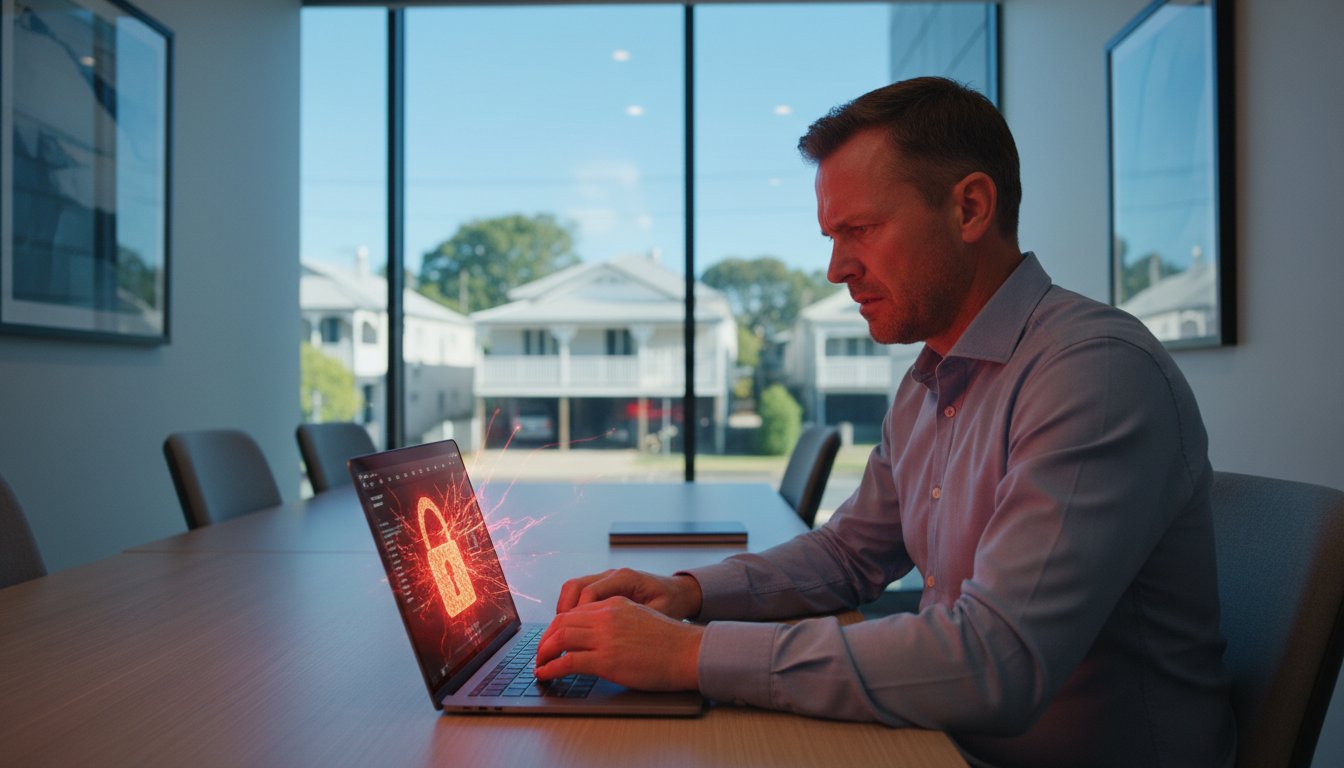

The Australian Signals Directorate’s 2023 report revealed that a cybercrime is now reported every 6 minutes, with small businesses facing average recovery costs of over A$46,000 per incident. When you’re running a local shop or office, these numbers represent the very real fear of losing your hard-earned customer data or facing days of silence during a sudden power outage. You likely feel that a single hardware failure or a severe storm could stop your operations in their tracks. It’s completely normal to feel anxious about complex terms like business continuity vs disaster recovery, but you don’t need to panic.

We understand that you want to keep your business running no matter what happens. This guide breaks down the essential differences between these two concepts to give you total clarity. You’ll discover a straightforward framework to build resilience and gain the peace of mind that comes with knowing your systems are protected. We’ll show you how to ensure your business stays connected and functional, even when the unexpected occurs in 2026.

Key Takeaways

  • Understand the vital distinction between business continuity vs disaster recovery to ensure your entire organisation remains operational during an unexpected crisis.
  • Learn how to calculate RTO and RPO metrics so you can set realistic expectations for data protection and system uptime in your local business.
  • Discover a practical checklist for identifying your critical assets and conducting a Business Impact Analysis to safeguard your business against future downtime.
  • Find out how partnering with a Toowoomba expert like Chaim Lee allows you to offload technical IT recovery while you focus on leading your team.

The Core Definitions: What are Business Continuity and Disaster Recovery?

Understanding business continuity vs disaster recovery is the first step toward protecting what you’ve built. Business Continuity (BC) acts as your broad umbrella strategy. It’s about keeping the whole operation alive while a crisis is unfolding. This involves Business continuity planning to ensure your staff know exactly what to do when things go wrong. Disaster Recovery (DR) is a specific part of that plan. It focuses on the technical side, such as getting your servers back online and restoring lost data.

Think of BC as being proactive and DR as being reactive. BC plans for the “during” phase of an event; DR plans for the “after.” In 2026, BCDR functions as a unified risk management strategy that bridges the gap between immediate survival and long-term technical resilience.

To better understand how these two concepts work together, watch this helpful video:

Business Continuity: The Broad Perspective

BC isn’t just about computers. It covers your people, your physical office, and how you communicate. It includes manual workarounds that keep the doors open when technology fails. For example, if a local Toowoomba shop loses its NBN connection, a BC plan might involve switching to a pre-configured 5G backup or using mobile EFTPOS terminals to keep sales moving. It’s about the practical “how-to” of staying operational. The goal is to maintain a minimum level of service so your customers stay happy and your revenue doesn’t stop.

A solid BC strategy usually addresses several key areas:

  • Alternative locations: Where staff work if the office is inaccessible.
  • Communication: How you notify staff and customers about the situation.
  • Manual processes: How to take orders or manage inventory without the primary software.
  • Safety: Ensuring the immediate physical security of all team members.

Disaster Recovery: The Technical Backbone

DR is the engine that powers your return to normal operations. It focuses on the restoration of servers, laptops, cloud data, and software. While BC keeps you moving, DR ensures you have a destination to return to. It involves the heavy lifting of rebuilding databases and syncing cloud files after a hardware failure or cyber attack. It’s the technical insurance policy that protects your digital life’s work.

If you find yourself in a situation where files are missing or systems are corrupted, professional Data Recovery Services are often the first step in that technical journey. DR is what happens behind the scenes to make sure your “business as usual” state is actually achievable. Without it, the manual workarounds used in your BC plan would eventually become unsustainable, leading to long-term financial loss.

Key Differences: Scope, Objectives, and Timelines

Understanding the distinction between business continuity vs disaster recovery helps you allocate resources where they matter most. Think of Business Continuity (BC) as your “Plan B” for staying open, while Disaster Recovery (DR) is the technical engine that gets your systems back online. They work together, but they serve different masters within your company.

The scope of Business Continuity is broad and organizational. It focuses on people, communication, and logistics. If your office in Toowoomba becomes inaccessible, BC dictates how your staff will work from home and how you will notify your clients. The objective is operational resilience. You want to keep the doors open, even if the building is gone.

Disaster Recovery has a narrower, technical scope. It focuses on your infrastructure: servers, backups, hardware, and networks. The objective is data integrity and system uptime. While BC keeps the business moving, DR focuses on the IT Disaster Recovery Plan to ensure your digital assets are safe and accessible. Execution timelines also differ significantly:

  • BC Execution: Starts the moment a disruption is detected. It is your immediate response to keep operations running.
  • DR Execution: Usually begins once the immediate threat is contained and the extent of the technical damage is known.
  • BC Responsibility: Involves your whole team, from management to front-line staff.
  • DR Responsibility: Typically handled by your IT support partner who manages the “heavy lifting” of data restoration.

How the Timelines Overlap

Visualise a timeline starting at the moment of impact. BC starts at second zero. You’re redirecting phones and checking on staff safety. DR starts shortly after, once your IT team can assess the servers. A gap between these two can lead to business failure. If your team is ready to work (BC) but the systems are still down (DR), you’re losing money every minute. We’ve seen that local businesses often struggle to sync these phases. Investing in reliable IT support for business is the best way to bridge this gap and ensure your tech recovery keeps pace with your staff’s needs.

Why Small Businesses Often Confuse the Two

A common misconception is that “having a backup” means you have a full business continuity plan. It doesn’t. A working backup is a vital part of DR, but it’s useless if you have no staff or office to use it. If a major storm hits and your hardware is destroyed, having data in the cloud is great, but you still need a plan for how your team will access that data without their usual workstations. DR restores the files; BC restores the function. Don’t panic if you only have one or the other right now. We can help you protect and connect every part of your operation so you’re ready for anything 2026 throws at you.

RTO and RPO: The Two Metrics Every Small Business Must Understand

When you sit down to plan your business continuity vs disaster recovery strategy, you’ll encounter two technical terms that define your entire approach: RTO and RPO. These aren’t just IT jargon; they are the financial guardrails for your business. Think of it this way: your RTO is your stopwatch, and your RPO is your safety net.

If a server fails or a ransomware attack locks your files, these metrics tell you how quickly you’ll be back in business and how much work you’ll have to redo. Balancing these two determines the cost and complexity of your setup. A “zero downtime” goal sounds great, but it requires significant investment. For most local firms, finding the “sweet spot” is about managing risk without breaking the bank.

Setting Your RTO (Recovery Time Objective)

RTO answers the question: “How long can we afford to be offline?” This is the duration between the moment a disaster strikes and the moment your services are operational again. Every hour of downtime has a literal price tag. For a retail store in Grand Central Toowoomba, an RTO of 4 hours might be the limit before customers head elsewhere. Losing a full day of trade could cost upwards of A$2,500 in lost revenue and staff wages.

In contrast, a local tradie might manage with a 24 hour RTO. Since they spend most of their time on-site and handle admin in the evenings, they don’t need immediate server access to keep working. To calculate your RTO, add up your hourly operating costs, lost sales, and potential late fees. This total helps you decide if you need a “quick-fix” solution or a more robust failover system.

Setting Your RPO (Recovery Point Objective)

RPO focuses on data: “How much data can we afford to lose?” It defines the maximum age of the files you recover from backup. If you back up your data at 5:00 PM every day and your system crashes at 4:00 PM the next day, you’ve lost 23 hours of work. For a law firm or an accounting practice, losing a day of billable entries is a nightmare.

Your RPO dictates your backup frequency. Modern systems allow for “near-continuous” data protection, backing up every 15 minutes. Achieving these tight windows often depends on your local infrastructure. Investing in Hardware Upgrades like NVMe SSDs and high-speed networking can drastically reduce the time it takes to push data to the cloud or a local NAS. When your hardware is fast, your RPO can be much shorter, ensuring that a business continuity vs disaster recovery event doesn’t result in weeks of re-keying data.

Building Your Plan: A Practical Checklist for Small Businesses

Creating a strategy for business continuity vs disaster recovery doesn’t have to be an overwhelming task. At Aspire Computing, we’ve helped Toowoomba businesses stay online since 1999 by focusing on practical, actionable steps. A 2024 report by the Australian Cyber Security Centre (ACSC) highlighted that small businesses are targets for cybercrime every 6 minutes, making a clear plan essential for your survival. Use this five-step checklist to protect your livelihood.

  • Step 1: Conduct a Business Impact Analysis (BIA). Identify which functions are the heartbeat of your company. If your main server fails, how many hours can you operate before losing significant revenue? For a small AU retailer, downtime can cost upwards of A$450 per hour in lost sales and wages.
  • Step 2: Inventory your critical assets. Create a detailed list of every laptop, software license, and customer database. You can’t recover what you haven’t tracked. Include serial numbers and warranty details for all hardware.
  • Step 3: Assign roles. Confusion is the enemy of recovery. Decide exactly who calls the IT experts at Aspire and who handles customer communications. Clear ownership prevents tasks from falling through the cracks during a crisis.
  • Step 4: Implement redundant systems. Relying on a single point of failure is risky. Set up automated cloud backups and a secondary 5G internet connection. Redundancy ensures that when one system fails, another takes over immediately.
  • Step 5: Test and Revise. A plan that sits in a drawer isn’t a plan; it’s a piece of paper. Conduct a “fire drill” every six months. Statistics show that businesses that test their recovery plans reduce their eventual downtime by 40%.

The “Don’t Panic” Approach to Documentation

You don’t need a 50-page manual that nobody will read. For most home offices and small teams, a simple 2-page “cheat sheet” is much more effective. This document should list emergency contacts, login procedures for cloud backups, and the first three steps to take when things go wrong. It’s vital to store a physical copy in a fireproof safe and a digital version in a secure cloud folder. If your office computer crashes, your plan needs to be accessible from your phone or a tablet.

Local Risks in the Toowoomba Region

Our region faces specific challenges like sudden summer storms and frequent power surges that can fry sensitive motherboards. Business continuity vs disaster recovery planning here must include high-quality surge protection and uninterruptible power supplies (UPS). Physical damage isn’t the only threat, though. Cyber-attacks often spike during regional disruptions. Integrating a robust virus and malware removal strategy into your plan ensures that a small infection doesn’t turn into a total data wipeout during a storm recovery.

Ready to secure your business against the unexpected? Talk to the experts at Aspire Computing today to build a resilient tech setup that keeps you connected.

Aspire to Protect: How Professional IT Support Secures Your Future

Managing a small business is a full-time job. You shouldn’t have to be an IT expert on top of that. Aspire Computing steps in to handle the technical heavy lifting so you can stay focused on your clients. Since 1999, Chaim Lee has provided reliable, approachable support to the Toowoomba community. We understand that while you focus on the broader strategy of business continuity vs disaster recovery, you need a partner who can execute the technical recovery side perfectly.

Our “Active Protection” model is built on prevention. We don’t just wait for things to break. We use proactive monitoring to catch hardware failures or security gaps before they turn into emergencies. Industry data suggests that proactive maintenance can prevent up to 70% of common IT issues. By stopping disasters before they require a full-scale recovery, we save you time, money, and significant stress. It’s about keeping you connected without the panic of unexpected downtime.

  • 24/7 monitoring of critical systems to catch errors early.
  • Regular, verified data backups that actually work when needed.
  • Security updates and patch management to block cyber threats.
  • Fast local support that understands the Toowoomba business landscape.

Personalised BCDR Solutions

One size never fits all in IT. A solo consultant working from a home office in Newtown has different requirements than a multi-staff accounting firm in the CBD. We tailor every plan to your specific goals and budget. Because we’re local, we can be on-site anywhere in Toowoomba quickly. You get the peace of mind that comes from having a trusted expert just a phone call away, rather than a distant, anonymous help desk.

Get Started with an IT Health Check

The best time to test your plan is when everything is running smoothly. Don’t wait for a system crash or a ransomware demand to find out your backups are six months out of date. We invite you to contact Aspire Computing for a baseline IT Health Check. We’ll look at your current setup and identify any weak points in your security. It’s all part of our commitment to help you Aspire to Protect and Connect. Let’s ensure your business is resilient and ready for 2026.

Secure Your Business Future for 2026 and Beyond

Navigating the landscape of business continuity vs disaster recovery doesn’t have to be a source of stress for Darling Downs business owners. You now understand that while disaster recovery focuses on the technical restoration of data, business continuity ensures your entire operation stays functional during a crisis. Industry research indicates that 40% of small businesses fail to reopen after a major data loss event. This makes your RTO and RPO targets the most important numbers in your 2026 strategy.

Since 1999, Aspire Computing has helped Toowoomba businesses build these resilient frameworks. Chaim Lee, a qualified IT expert, provides the personal service you need to bridge the gap between technical jargon and practical protection. Whether you require on-site support in the Garden City or remote assistance across the region, we’re here to help you stay connected. It’s about more than just backups; it’s about your peace of mind and long term stability.

Talk to the Experts at Aspire Computing about your Business Continuity Plan

You’ve worked hard to build your business. Let’s make sure it’s ready for anything the future holds.

Frequently Asked Questions

Is business continuity the same as disaster recovery?

No, they are different but related parts of your protection strategy. Business continuity is the broad plan to keep your entire business running during a crisis, while disaster recovery focuses specifically on the technical process of restoring your IT systems and data. Understanding business continuity vs disaster recovery helps you see that one is about your people and processes, while the other is about your technology and backups.

What are the 4 elements of business continuity?

The four core elements include risk assessment, business impact analysis, strategy development, and plan testing. You start by identifying potential threats like floods or cyber attacks. Next, you determine which business functions are most critical to your survival. Then you create a practical roadmap for staff to follow. Finally, you must test the plan to ensure it works before a real emergency happens.

What is an example of a disaster recovery plan for a small business?

A solid example is the 3-2-1 backup strategy combined with a clear restoration guide. You keep three copies of your data on two different media types, with one copy stored offsite in a secure Australian data centre. If your office hardware fails, the plan provides a step-by-step checklist for your IT provider to restore those files onto a temporary machine so you can keep working.

Do I need both BC and DR if I only have one laptop?

You definitely need both to stay protected. Your disaster recovery plan is the backup you use to get your files back if the laptop dies or is stolen. Your business continuity plan is the “Plan B” for how you’ll answer client emails or process invoices while that laptop is being repaired or replaced. Without both, a single hardware fault could stop your income for several days.

How often should a small business test its disaster recovery plan?

You should test your recovery plan at least every six months. The Australian Cyber Security Centre suggests regular testing because hardware fails and software updates can sometimes break older backup routines. A quick test twice a year ensures your data is actually recoverable. It gives you the peace of mind that you won’t face a nasty surprise when you’re already stressed by a computer failure.

What is the difference between RTO and RPO in simple terms?

RTO is your “downtime” goal, while RPO is your “data loss” limit. If your RTO is four hours, you need your systems running again within that window. If your RPO is two hours, you’re saying you can’t afford to lose more than two hours of typing or data entry. We use these numbers to build a recovery system that fits your specific budget and business needs.

Can cloud storage like OneDrive count as a disaster recovery plan?

OneDrive is a sync tool rather than a full backup solution. It’s great for sharing, but if a virus deletes a file on your laptop, it usually deletes the cloud version simultaneously. A true disaster recovery plan uses dedicated software to take “point-in-time” snapshots. This allows us to roll your data back to exactly how it looked at 9:00 AM yesterday, even if a disaster happened at noon today.

How much does it cost to set up a basic business continuity plan?

The plan itself costs nothing but your time to document your processes. For the technical tools, basic cloud backup services for Australian small businesses typically start around A$15 to A$40 per month per user based on 2024 market rates. This small monthly investment is a fraction of the A$5,000 or more that a single day of total business downtime can cost a local micro-business.

Imagine it’s 8:00 PM on a Sunday and your laptop suddenly won’t boot, trapping your university thesis or five years of family photos behind a blank screen. This scenario plays out for dozens of residents every month, causing immediate stress about data loss and expensive repair bills. When you’re facing a digital crisis, you need the notebook repairs Toowoomba locals have relied on for over 25 years. At Aspire Computing, we understand that your device is your vital lifeline to the world.

We agree that being without your computer is a massive inconvenience that can stall your career or studies. Our team, led by Chaim Lee, is here to ensure you don’t have to choose between a working device and your household budget. We promise a fast, transparent service that secures your data and returns a machine that performs better than it did before the break. This article explains our proven repair process, our commitment to data security, and how we’ve been helping the community to protect and connect since 1999.

Key Takeaways

  • Understand when to repair or replace your device by applying the “50% Rule” to ensure your tech budget is spent wisely in 2026.
  • Access expert notebook repairs Toowoomba that go beyond surface-level fixes to provide comprehensive hardware and software restoration.
  • Learn how to troubleshoot modern hardware failures, from faulty USB-C ports to cracked screens, with fast local turnaround times.
  • Protect your digital life with a pre-repair security checklist and discover professional options for recovering data when your notebook won’t power on.
  • Find out how Aspire Computing’s 25 years of local experience and “No Fix, No Fee” policy provide total peace of mind for your laptop service.

Professional Notebook Repairs in Toowoomba: Getting You Back Online

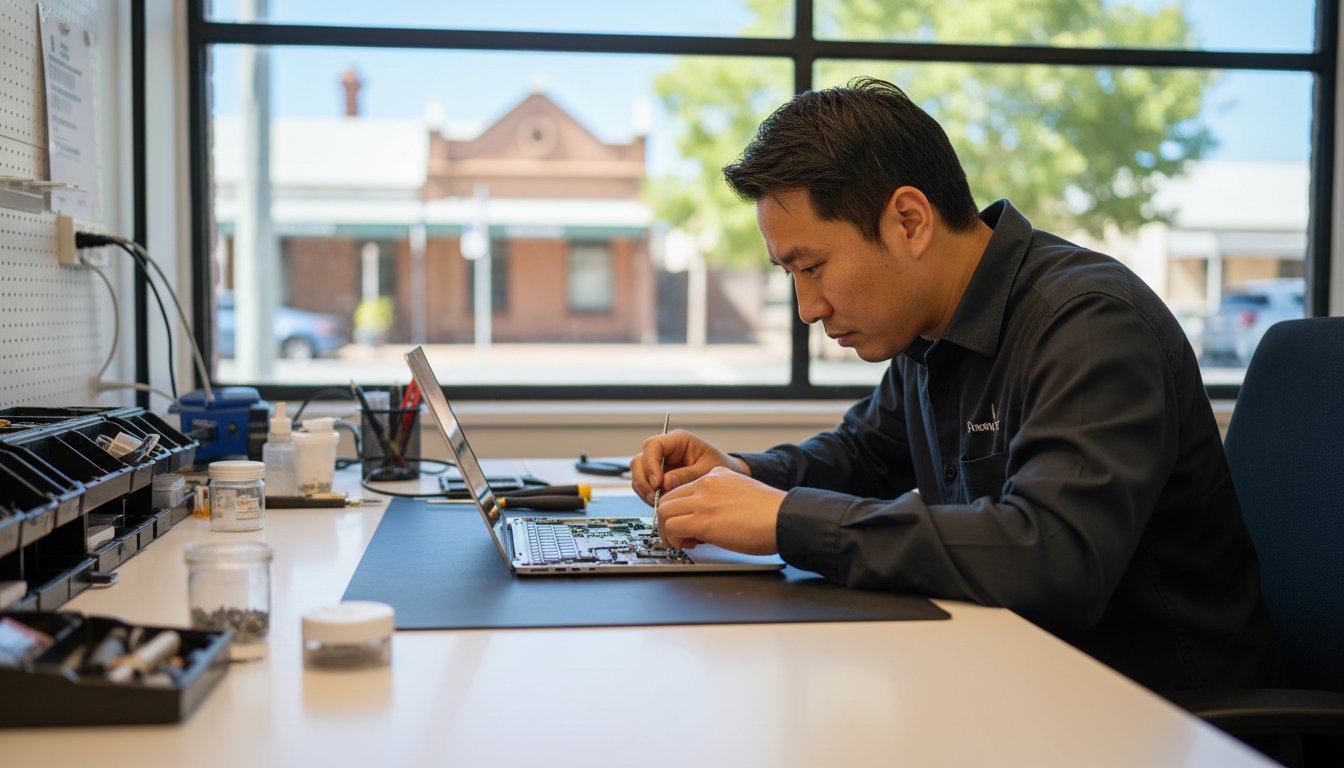
When your laptop fails, it’s more than a minor inconvenience. Professional notebook repairs Toowoomba involve a deep dive into both hardware stability and software integrity. This means going beyond a simple reboot to perform comprehensive computer maintenance and restoration. Aspire Computing has provided this level of technical support since 1999, giving us over 25 years of experience in the local market. This longevity means we’ve seen every evolution of mobile computing, from early portable units to the latest high-performance ultrabooks.

Our core message is simple: don’t panic. Whether it’s a blue screen during a business presentation or a liquid spill at home, we handle tech emergencies with a calm, methodical approach. Having a local expert in Toowoomba means you aren’t waiting weeks for a mail-in service centre to look at your device. We prioritize fast turnaround times because we know your digital life can’t stay on hold. We focus on getting you back online quickly, often providing same-day assessments for urgent situations.

To better understand our approach to local service, watch this helpful video:

The Aspire Difference: Local Accountability

Chaim Lee is the face of Aspire Computing, bringing a personal touch to every repair. Unlike large corporate chains where your device is just a ticket number, you know exactly who is working on your machine. We serve the entire Toowoomba region, extending our reach to the Darling Downs and Lockyer Valley with dedicated on-site support. Our “Protect and Connect” philosophy ensures your data stays safe while your hardware maintains peak performance. This approach means we don’t just fix the immediate break; we look at the health of your entire digital ecosystem to prevent future downtime. We provide clear answers and accountable service for every client.

On-Site vs. Remote Notebook Support

Choosing the right support method depends on the nature of the fault. On-site repair is essential for physical hardware failures, power jack issues, or screen replacements where we need to be physically present. It’s also the best choice when your internet connection itself is the problem. For software tune-ups, virus removal, or email configuration, our remote support offers a fast and convenient alternative. We evaluate your specific notebook problem to decide the most efficient path. Remote sessions allow us to start work almost immediately, often resolving complex software glitches in under 60 minutes without you ever leaving your home or office. This flexibility is a key part of our notebook repairs Toowoomba service model.

Common Notebook Hardware and Software Issues We Solve Daily

Dealing with a malfunctioning laptop can be incredibly frustrating. At Aspire Computing, we’ve helped thousands of locals since 1999, so we know exactly how to handle your tech headaches. Whether your device won’t charge or the screen is flickering, our notebook repairs Toowoomba service is designed to be fast and dependable. We focus on getting your digital life back on track without the corporate jargon. Don’t panic if your technology fails; we’re here to provide a calm and professional solution.

Screen replacements are one of our most frequent tasks. Modern LED and OLED displays are thin and fragile, making them prone to vertical lines or “ink spots” after a minor bump. We also see a rise in USB-C charging port failures. These modern ports are convenient but can easily break away from the motherboard. If your laptop only charges at a certain angle, it’s time for a professional look before the port fails completely. We’ve seen a 25% increase in these specific port repairs over the last 18 months as manufacturers move away from traditional barrel connectors.

Liquid spills require immediate action. If you’ve knocked over your coffee, turn the power off instantly. We use specialized techniques to recover motherboards from corrosion. Heat management is another priority. Thin laptops often struggle with airflow, leading to loud fan noise and thermal throttling. We provide deep internal cleans and high-quality thermal paste application to drop your operating temperatures by as much as 15 degrees Celsius, extending the life of your hardware significantly.

Software Performance and Security

Is your laptop lagging? We perform comprehensive Windows tune-ups to eliminate “bloatware” and background processes that drain your RAM. Security is paramount, so we offer thorough virus and malware removal to protect your personal identity. If you’re struggling with Windows 11 compatibility or driver conflicts, we ensure your operating system is stable and fully updated. If you’re worried about your data, talk to our experts today for a quick assessment of your system’s health.

Hardware Failures and Component Repairs

Sticky keys or an unresponsive trackpad can ruin your productivity. We source quality replacement parts for all major brands. Toowoomba’s dust is a silent killer for electronics; it builds up inside the chassis and causes components to bake. We also specialize in hinge and chassis repairs. If your laptop casing is pulling apart when you open the lid, we can often reinforce it to prevent a total structural failure. When a device is truly at the end of its life, we advocate for recycling consumer electronics to ensure hazardous materials are handled responsibly and kept out of our local environment.

Repair or Replace? Making the Smart Choice for Your Notebook in 2026

Deciding whether to invest in a fix or buy a brand-new device is a common dilemma for many locals. At Aspire Computing, we use the 50% rule to help you decide. If the cost of notebook repairs Toowoomba exceeds half the price of a comparable new machine, replacement is usually the logical path. However, this isn’t a hard limit. A high-end laptop from 2021 often features better build quality and a superior display than a budget A$700 model sold today. Keeping a premium machine running is often the smarter financial move.

Choosing repair over replacement also supports our local environment. Australia generates more than 500,000 tonnes of e-waste every year. By extending the life of your device, you help reduce the pressure on Darling Downs landfills. A simple component swap can often provide a 40% boost in efficiency, making an older machine feel snappier than it did on the day you bought it.

When to Choose a Hardware Upgrade

Your notebook might not be broken; it might just be struggling with modern software demands. Upgrading to a Solid State Drive (SSD) is the single most effective way to improve performance. It can reduce boot times from minutes to seconds. Increasing your RAM is also vital for business multitasking and running multiple browser tabs without lag. You can learn more about our hardware upgrades and how we tailor these solutions to your specific needs.

When Replacement is the Better Option

There are times when a new system is necessary. Major motherboard failures or extensive liquid damage often fall into the category of being “beyond economical repair.” We also consider software longevity. If your current processor isn’t compatible with the latest Windows security updates, your data could be at risk.

If we determine a replacement is best, our priority shifts to your data security. Before you retire an old device, it’s essential to erase all personal data to prevent identity theft. Chaim and the team can then manage the entire transition, moving your documents, photos, and emails to a new, reliable system so you don’t miss a beat.

Preparing Your Laptop for a Repair: A Security and Data Checklist

Bringing your device in for notebook repairs Toowoomba doesn’t have to be a stressful experience. While we take every precaution to protect your hardware, you play a vital role in ensuring a smooth service. You should never assume your files are 100% safe when a technician opens the casing. Even a standard hardware fix can involve software updates or configuration changes that might impact your data. If your laptop won’t turn on at all, don’t panic. Our team uses specialized hardware to access the storage drive directly, which is a core part of our recovery process.

Clear communication is the fastest way to get your machine back on your desk. A detailed “symptom list” helps us pinpoint the cause without guessing. If your screen flickers only when the hinge is at a certain angle, or if the fan gets loud only during video calls, tell us. These specifics can save 30 to 60 minutes of diagnostic time, which keeps your costs down and the repair moving forward.

Data Privacy and Backup Steps

Your privacy is our priority, but the best protection is a fresh backup. Before you drop off your laptop, copy your essential documents and family photos to an external hard drive or a secure cloud service. If your system is already unresponsive and you’re worried about losing years of memories, you can explore our data recovery services to understand how we retrieve files from damaged drives. Remember to log out of sensitive accounts like banking or private messaging. If we need your login password to verify a repair, we’ll ask you for it securely during check-in.

What to Provide Your Technician

We always ask that you provide your power adapter. Many laptops use proprietary charging pins, and we need your specific cord to test if the battery is drawing power correctly or if the charging port is loose. Leave your laptop bag and mouse at home; these extra items can get misplaced in a busy workshop. Finally, ensure we have your best contact number. We often find secondary issues during a notebook repairs Toowoomba session, and we need a quick way to reach you for cost authorization so your repair isn’t delayed by a missed call.

Ready to get your technology back in peak condition? Talk to the experts at Aspire Computing today for reliable local support.

Why Aspire Computing is Toowoomba’s Trusted Choice for Laptop Service

Since 1999, Aspire Computing has been a steady hand for locals facing technology hurdles. We’ve spent more than 25 years building a reputation for excellence across the Darling Downs. When you’re looking for notebook repairs Toowoomba experts can handle, experience is the most important factor. Our team has seen the evolution of portable tech from the early days of bulky units to the latest high-performance ultrabooks. This history gives us the insight to diagnose complex faults that newer shops might miss.

We operate with a “No Fix, No Fee” mindset because we believe in fair service. It’s a simple policy that puts the customer first. If we can’t provide a solution for your specific hardware or software issue, you won’t be charged for the labor. This transparency is part of our commitment to honest, local support. We know that small business owners and home office workers depend on their devices for their livelihood. A single day of downtime can be costly. We focus on business continuity, ensuring your systems are resilient and your data is protected during every repair.

A Personal Message from Chaim Lee

Our roots are deep in Newtown and the wider Toowoomba community. I’ve personally overseen the growth of Aspire Computing with a focus on personal accountability and trust. We don’t see ourselves as just another repair shop; we’re your local technology partners. We treat every notebook as if it were our own, ensuring every screw is tightened and every software update is applied correctly. You can view our full range of computer repairs in Toowoomba to learn more about our commitment to quality service.

Ready to Fix Your Notebook?

We’ve made the repair process as easy as possible for busy professionals and families. Our workshop is conveniently located at 46 Brigalow St, Newtown QLD 4350. You can drop your device off during business hours for a thorough assessment by our technicians. If you can’t make it to us, we offer mobile service options for those who can’t leave the home or office. Simply call our team or request a callback through our website to book your slot. We aim for a fast return so your digital life stays on track.

At the end of the day, our goal is to ensure your technology serves you, not the other way around. We invite you to Aspire to Protect and Connect your technology with the help of local experts who care about your results.

Get Your Notebook Back to Peak Performance Today

Dealing with a broken laptop is stressful, but you don’t have to navigate technical glitches alone. Whether you’re weighing up a repair against a new purchase in 2026 or need a quick software fix, making an informed choice protects your budget and your data. Following a security checklist before any service ensures your personal information remains private while the hardware gets the attention it needs. Since 1999, we’ve helped locals secure their digital lives while ensuring their devices run smoothly and efficiently.

When you need reliable notebook repairs Toowoomba residents can trust, Chaim Lee and the team provide the expertise you need. We offer both on-site and remote support to get you back online without the hassle. We’re here to help you protect and connect your technology with professional care that’s been proven for over 25 years. Our goal is to provide a fast return to service with quality assurance you can count on every time.

Talk to the Toowoomba experts; contact Aspire Computing today. We’ll help you find the right solution so you can get back to what matters most with total confidence.

Frequently Asked Questions

How much does a typical notebook repair in Toowoomba cost?

Repair costs depend on the specific hardware issue and the parts required for your device. While we provide custom quotes for every job, industry data suggests computer technicians in Australia typically charge between A$80 and A$150 per hour for labor. We focus on providing a clear assessment before starting any notebook repairs Toowoomba residents can rely on for total pricing transparency.

How long will I be without my laptop during a repair?

Most standard repairs are completed within 24 to 48 hours depending on parts availability. If we have the necessary components in stock, we aim for a fast return to ensure your digital continuity. Complex data recovery or rare replacement screens might extend this timeframe to 5 business days. We always keep you updated on our progress throughout the entire process.

Can you recover my data if my notebook won’t turn on?

We can usually recover your files even if the device fails to power up at all. Our technicians use specialized hardware to bypass the notebook’s power system and access the storage drive directly. Since 1999, we’ve helped over 5,000 local clients protect and connect their digital lives by retrieving photos and documents from damaged hardware. Don’t panic if your screen stays black.

Do you provide on-site notebook repairs in Highfields or Westbrook?

We offer on-site service calls to Highfields, Westbrook, and the greater Toowoomba region for your convenience. Our mobile technicians come to your home or office to resolve software issues and networking problems quickly. For complex hardware failures, we may suggest bringing the unit to our workshop. This ensures we have every professional tool necessary for a quality, long-lasting fix.

Is it worth fixing a notebook screen or should I buy a new one?

Repairing a screen is often more cost-effective if your laptop is less than 4 years old. A high-quality replacement panel typically costs a small fraction of a new A$1,200 mid-range laptop. If the rest of your hardware is performing well, a screen replacement is a sustainable choice that extends the life of your device. We provide honest advice on whether the repair is viable.

Do you repair all brands, including Apple MacBooks and Dell?

We service all major brands including Apple, Dell, HP, Lenovo, and Asus. Our team has the technical specificity to handle MacBook logic board issues or Dell battery replacements with equal expertise. Whether it’s a hardware upgrade or a software glitch, we apply the same professional standards to every brand. We’ve been supporting Toowoomba’s diverse range of devices for over 25 years.

Can you speed up a slow notebook without deleting my files?

We can significantly improve your performance through hardware upgrades and software optimization without touching your personal data. Replacing an old mechanical drive with a Solid State Drive (SSD) can make a notebook up to 10 times faster. We also perform system tune-ups to remove background processes that drain resources. This is a common part of our notebook repairs Toowoomba service.

What should I do if I spilled water on my notebook keyboard?

Turn the device off immediately and unplug the power cable to prevent a short circuit. Do not try to turn it back on, even if it looks dry after an hour or two. Bring it to a professional as soon as possible so we can clean the internal components with isopropyl alcohol. Quick action often prevents permanent corrosion of the motherboard and saves your data.

Imagine it is 9:00 AM on a Monday in your Toowoomba office when your network suddenly drops, leaving your team unable to process a single order. You call for a quick fix, but three days later you are hit with a surprise A$850 invoice that completely derails your monthly cash flow. This happens because many businesses rely on outdated IT support pricing models that prioritise reactive repairs over proactive protection, a cycle that 45 percent of Australian small businesses find difficult to break.

We know how frustrating it is to feel like you are constantly guessing what your technology will cost or paying for services you don’t actually use. You want your systems to work reliably so you can focus on your clients, not on decoding a complex bill. At Aspire Computing, we have helped locals since 1999, and we believe that clear communication is just as important as technical expertise.

This guide provides a straightforward breakdown of how IT costs work in 2026, including the difference between per user and per device rates. You will learn how to secure predictable monthly spending and minimal downtime, ensuring you have the right local support to protect and connect your business.

Key Takeaways

  • Understand why the industry is moving away from reactive “break/fix” services and how the 2026 landscape simplifies your technology planning.
  • Compare the total cost of ownership between A$150/hr emergency repair bills and predictable monthly subscriptions to find the most stable IT support pricing models.
  • Identify the common red flags in “one-size-fits-all” quotes and learn which hidden factors truly determine your business’s unique technology rate.
  • Use our step-by-step audit framework to evaluate your current IT health and discover the essential questions to ask for total pricing transparency.
  • Explore the strategic benefits of choosing a local expert in Toowoomba and the Darling Downs to ensure personal accountability and faster on-site support.

Understanding the 4 Main IT Support Pricing Models in 2026

In 2026, the digital environment for small businesses has shifted from simple hardware maintenance to complex AI-driven security and cloud management. Relying on old-fashioned “wait and see” methods leads to expensive downtime that costs Australian small businesses an average of A$5,000 per hour in lost productivity. Most Toowoomba business owners now look for predictable IT support pricing models that offer stability rather than surprise invoices. At Aspire Computing, we’ve helped locals since 1999 navigate these changes with a focus on reliability. Managed IT Services is a proactive partnership where your provider takes full responsibility for your technology’s health and security.

To better understand how these modern strategies work for your business, watch this helpful video:

The Break/Fix Model (Ad-Hoc Support)

This is the traditional “pay-as-you-go” approach. It remains common for home offices and micro-businesses across the Darling Downs who have very basic needs. You call a technician only when something stops working. While it seems cheap initially, it carries hidden risks. You aren’t a priority client during peak times, and emergency call-out fees can exceed A$250 per hour. It creates a conflict of interest because the provider only makes money when your business suffers a failure, which is the opposite of what a growing company needs.

Managed IT Services (Fixed Monthly Fee)

This model provides all-inclusive support designed to prevent issues before they occur. It’s become the gold standard for small business security because it aligns the goals of the business and the IT provider. A Managed IT services agreement typically covers 24/7 monitoring, automated backups, and unlimited helpdesk support. At Aspire Computing, we’ve seen that businesses using this model experience 60% fewer critical system failures compared to those on ad-hoc plans. It’s about continuity and peace of mind rather than just fixing broken parts.

Per-User vs. Per-Device Pricing

When looking at IT support pricing models, you’ll often choose between paying for each person or each piece of hardware. Per-device pricing was standard when everyone had one desktop. In 2026, the average Toowoomba employee uses 2.5 devices, including laptops, tablets, and smartphones. Per-user pricing scales better because it covers the individual regardless of how many gadgets they use to get the job done. It’s simpler for your accounts department and provides a clearer picture of your true cost per employee. Per-device models can still work for offices with shared workstations, but they often lead to “billing creep” as you add more mobile tech to your fleet.

Break/Fix vs. Managed IT: Which Model Actually Saves You Money?

Choosing between different IT support pricing models often feels like a gamble for local firms. On one hand, the break/fix model involves calling a technician only when something stops working. You might pay a one-off fee of A$150 per hour. On the other hand, Managed IT offers a predictable monthly subscription. While the hourly rate seems cheaper upfront, the Total Cost of Ownership (TCO) tells a different story. When you rely on reactive repairs, you aren’t just paying for the technician’s time. You’re also paying the “Downtime Tax.”

If your team of five people is idle for four hours while waiting for a repair, and your average revenue is A$400 per hour, that single failure just cost you A$1,600 in lost productivity. This is in addition to the repair bill itself. According to Cybersecurity for Small Business guidelines, many small firms struggle because they don’t invest in professional solutions until a breach occurs. It’s a harsh reality that “cheap” IT support often leads to expensive data recovery services that can cost thousands of dollars more than a preventative plan.

The Predictability Factor for Small Business Cash Flow

Many Toowoomba business owners prefer fixed costs because they make budgeting simple. Managed IT eliminates the “bill shock” that occurs when a major server failure or network crash results in a massive, unexpected invoice. By using Active Protection, you ensure your systems are monitored constantly. This shifts the financial risk from your business to the provider. Since the provider receives a flat fee, they’re incentivised to keep your systems running perfectly to avoid extra work. This alignment of interests is a core benefit of modern IT support pricing models.

Proactive Maintenance vs. Reactive Panic

Waiting for a “non-working computer” is a risky strategy for 2026. Managed Service Providers (MSPs) handle software updates and security patches in the background. This silent work prevents the hardware failures that cause reactive panic. A robust plan includes Virus and Malware Removal as a standard feature, ensuring your data stays safe without you having to manually check for threats.

  • Managed IT reduces the frequency of critical failures.
  • Break/fix models reward the technician for the time your systems are broken.
  • Predictable monthly fees allow for better long-term hardware replacement cycles.

If you’re unsure which path fits your budget, talk to the experts at Aspire Computing for a clear breakdown of how we can protect your business continuity.

Beyond the Base Fee: Factors That Influence Your IT Support Quote

If a provider offers a flat rate before they’ve seen your server rack or asked about your software, treat it as a red flag. A one-size-fits-all approach usually means you’ll either pay for services you don’t use or get hit with “out-of-scope” charges later. The most effective IT support pricing models are tailored to the specific weight your technology carries. A small retail shop with one point-of-sale terminal has vastly different needs than a legal firm managing thousands of digital files and strict deadlines.

Technology complexity is a primary driver of your monthly rate. If your business relies on specialised software, local servers, or complex cloud integrations, your support team spends more time on monitoring and updates. Industry requirements also play a massive role. Healthcare providers and financial planners in Australia must adhere to rigorous data handling standards, which requires more frequent auditing and higher-tier security protocols. Additionally, your provider’s ability to supply and maintain quality hardware from trusted brands like Canon or Epson adds significant value. It ensures your printers and peripherals work seamlessly with your network, reducing the “finger-pointing” that happens when multiple vendors are involved.

Cybersecurity and Data Protection Requirements

By 2026, basic antivirus software is no longer a viable defence. Modern security packages now include Endpoint Detection and Response (EDR), mandatory Multi-Factor Authentication (MFA), and advanced encryption. These tools require active management and constant tuning to stay ahead of threats. Following the significant Australian Privacy Act updates in 2024, small businesses face much higher expectations for data protection. Investing in these preventative measures is a strategic choice. While we focus on keeping your systems running, Data Recovery Services are naturally more expensive and time-consuming than preventative backups. It is always more cost-effective to protect your data now than to try and piece it together after a failure.

On-Site vs. Remote Support Logistics

Where your support happens affects what you pay. Remote-only helpdesks often have lower entry prices, but they hit a wall when hardware fails physically. For businesses in regional areas like Newtown or the Lockyer Valley, having access to local technicians is a practical necessity. You can’t fix a blown power supply or a severed internet cable over a Zoom call. We find that a hybrid model works best for most Australian small businesses. Use remote support for quick software fixes and “how-to” questions to keep your IT support pricing models lean. Save on-site visits for physical tasks like Hardware Upgrades or network cabling. This balance ensures you get fast help for minor issues without losing the security of a local expert who can walk through your front door when things get difficult.

How to Audit Your Business Needs Before Signing a Contract

Choosing between different IT support pricing models feels overwhelming if you don’t know exactly what you’re protecting. You shouldn’t pay for a “Gold” plan if your business only needs “Silver” level care. Before you sign any long term agreement, it’s vital to look under the hood of your own operations. This prevents you from buying “shelfware,” which is the industry term for services you pay for but never actually use. For example, if you’re paying for a 50-user security license but only have 35 staff, you’re throwing away hundreds of Australian dollars every month.

Follow this simple framework to evaluate your current IT health:

  • Inventory your assets: List every laptop, desktop, tablet, and server.
  • Check software subscriptions: Identify every monthly fee you pay for cloud apps.
  • Review past invoices: Look at your last six months of technical issues to see where your money went.
  • Analyze staff habits: Do your employees work strictly 9 to 5, or do they need support on weekends?

When you talk to potential providers, ask about their pricing transparency. Don’t be afraid to ask if travel fees to your specific Toowoomba suburb are included. Ask what happens if you need help at 6:00 PM on a Friday. Performing a thorough hardware audit helps you identify aging machines before they fail, preventing the A$2,000 emergency replacement cost that often follows a sudden breakdown.

Assessing Your Downtime Tolerance

You need to decide how long your business can realistically stay offline. Can you survive 4 hours without email? What about 48 hours without your main database? If you’re a professional services firm, your billable hours are your lifeblood. In 2024, industry data suggested that even minor downtime costs Australian small businesses an average of A$500 per hour in lost productivity. Matching your Service Level Agreement (SLA) to these needs is essential. A “Best Effort” support plan might look cheap on paper, but it offers no guarantees on how quickly a technician will respond when things go wrong.

Evaluating Your Existing Infrastructure

Old hardware costs more to support over time. This is often called the “Legacy Tax.” If your fleet is more than four years old, it’s more likely to trigger support tickets. You also need to consider how peripheral equipment like Printer Supply and Repair fits into your total IT budget. If your printers aren’t covered in your main contract, a single breakdown could result in an unexpected A$300 call-out fee.

Planning for the future is just as important as fixing today’s problems. With Windows 10 reaching its end-of-life in late 2025, your 2026 budget must account for hardware that supports Windows 11. If your current provider hasn’t mentioned this transition yet, they aren’t looking out for your long term interests. We can help you map out a plan that keeps your tech modern and your costs predictable.

Finding the Right IT Partner in Toowoomba and the Darling Downs

Choosing a provider for your technology needs shouldn’t feel like calling an anonymous help desk in another time zone. While national chains might offer flashy marketing, they often lack the personal accountability that comes with being a member of the local community. When your server fails or a cyber threat emerges, you need a partner who understands the specific challenges of businesses in regional Queensland. Local experts offer a level of dedication that a distant corporate office simply can’t match.

A local partner means you know your technician by name. You aren’t just a ticket number in a queue; you’re a neighbour whose business success matters to the person fixing your computer. This personal connection ensures that the advice you receive regarding IT support pricing models is honest and tailored to your actual requirements, rather than a one-size-fits-all package designed to meet a corporate sales quota.

The Value of Local On-Site Support

Being just around the corner in Toowoomba is a massive advantage during a crisis. If your office in Newtown or a storefront in the surrounding regional valleys loses connectivity, a remote technician in a capital city can’t physically plug in a replacement router for you. Don’t panic when things go wrong; local support ensures your business continuity remains intact through physical presence. We provide hands-on IT Support for Business that prioritises fast response times and practical solutions. This proximity allows us to recommend IT support pricing models that reflect actual local needs rather than inflated national averages. We serve a wide range of areas, including:

  • Toowoomba City and Newtown
  • Highfields and surrounding suburbs
  • The Lockyer Valley and Darling Downs regions

The Chaim Lee Approach: Personalised IT Care

Chaim Lee has been helping local businesses since 1999. With over 25 years of experience, he’s seen how technology has evolved from basic setups to complex cloud environments. This history allows Aspire Computing to bridge the gap between big-city technical capabilities and the friendly, one-on-one service you expect in the Darling Downs. Our “Aspire to Protect and Connect” philosophy means we don’t just fix what’s broken; we proactively secure your data and keep your team online. Our experience leads to better pricing advice because we know which tools are essential for your industry and which are unnecessary expenses.

Finding the right fit for your budget is easier when you speak directly to the expert who will be doing the work. We provide tailored quotes that match your specific operational goals and local market conditions. Our goal is to provide quality, professional service that keeps your technology running smoothly without hidden costs.

Don’t guess which model is right for your business. Contact us today for a free IT health check to evaluate your current setup. We’ll help you determine the best path forward to ensure your technology is protected, connected, and ready for 2026.

Take Control of Your Technology Budget for 2026

Choosing the right way to pay for your tech shouldn’t feel like a gamble. You’ve seen how auditing your specific business requirements prevents paying for bloated service packages you’ll never use. While the break/fix approach might seem cheaper on a Tuesday morning, most Australian small businesses find that managed IT provides better long term budget stability and security. Finding a partner who understands the local Darling Downs landscape ensures you get help when it counts. Since 1999, we’ve helped hundreds of local firms move away from tech panic and toward reliable, high performing systems.

Navigating the various IT support pricing models is much easier when you have an expert who prioritizes your continuity. Don’t let confusing quotes or hidden fees slow your growth. Talk to Chaim and the team at Aspire Computing for a transparent IT quote today. As local Toowoomba experts specialized in small business and home office setups, we’re here to help you protect and connect your operations. You deserve technology that works as hard as you do.

Frequently Asked Questions

What is the average hourly rate for IT support in Toowoomba for 2026?

The average hourly rate for professional IT support in Toowoomba for 2026 is expected to range between A$160 and A$250 per hour. These rates reflect the rising costs of specialized technical labor and local inflation trends in regional Queensland. While on-site visits might carry a call-out fee, many businesses find that local expertise saves money by reducing travel time and getting systems back online faster than distant providers.

Is Managed IT support more expensive than hiring an in-house tech?

Managed IT support is significantly more affordable for small businesses compared to hiring a full-time in-house technician. In Australia, a qualified IT manager earns an average salary between A$105,000 and A$145,000 plus superannuation and benefits. A managed service agreement for a 15-person office typically costs between A$1,800 and A$3,500 per month. This allows you to access a whole team of experts for a fraction of a single salary.

Do most IT support pricing models include the cost of hardware?

Most standard IT support pricing models do not include the purchase price of hardware like laptops, servers, or printers. These are usually treated as separate capital expenses or one-off procurement projects. However, some providers offer “Hardware-as-a-Service” (HaaS) options where you lease equipment as part of your monthly fee. Standard contracts focus on the labor, monitoring, and maintenance required to keep your existing devices running smoothly without interruptions.

Can I switch from a Break/Fix model to a Managed Service contract later?

You can definitely switch from a Break/Fix model to a Managed Service contract at any time. Many businesses start with on-demand repairs and move to a contract once they realize that unpredictable downtime costs more than a flat monthly fee. We often recommend an initial system audit to ensure your technology meets a baseline standard before the contract begins. This transition helps stabilize your budget and ensures your technology is protected proactively.

What are “hidden fees” I should look for in an IT support contract?

Look for hidden fees such as after-hours surcharges, onboarding costs, and travel fees for on-site visits. Some contracts might also charge extra for major project work like server migrations or setting up a new office location. Always check if your agreement includes a “fair use” policy for remote helpdesk support. Reviewing these details upfront prevents surprise invoices and ensures your chosen IT support pricing models align with your actual business operations.

How many users do I need to make a monthly IT contract worth the cost?

A monthly IT contract usually becomes cost-effective once your business reaches 5 to 10 users. At this size, the complexity of managing updates, security patches, and user permissions across multiple devices outweighs the cost of a managed plan. Businesses with fewer than 5 users might stick to Break/Fix, but they often miss out on proactive security. A flat-fee model provides peace of mind and prevents a single failure from blowing your budget.

Does IT support pricing usually include cybersecurity and backups?

Modern IT support pricing models almost always include basic cybersecurity and backup monitoring as standard features. This typically covers antivirus software, firewall management, and daily cloud backups of your essential data. However, advanced protections like 24/7 Security Operations Centre (SOC) monitoring or specialized ransomware recovery might require a higher-tier plan. It’s vital to confirm exactly what data is being backed up and how quickly the provider can restore it during an emergency.

Why do some IT companies charge “Per Device” instead of “Per User”?

IT companies charge “Per Device” when a business has shared workstations, such as in a retail shop or a medical clinic. If three different staff members use the same computer, a per-device fee is often cheaper for the client. Conversely, “Per User” pricing is better for modern offices where one person uses a laptop, a tablet, and a smartphone. This model covers the individual regardless of how many gadgets they use to get their work done.

Imagine you just plugged in your external drive to find last year’s tax records, but instead of your files, you hear a rhythmic clicking sound. It is a gut-wrenching moment that 46% of computer users experience at least once a year according to 2023 industry reports. You might be tempted to download the first tool you find online, but the choice between data recovery software vs professional service isn’t always about price. We understand the panic that sets in when irreplaceable family photos or vital business documents seem to vanish. It’s natural to want a quick fix, but sometimes a cheap software download can turn a recoverable issue into a permanent data loss.

This article provides a clear “stop/go” framework to help you decide when to trust DIY methods and when calling a professional is the only way to save your files. We’ll explain the true cost of a failed recovery attempt and how to identify physical drive failure before you cause more damage. At Aspire Computing, we’ve supported the Toowoomba community since 1999, so we know exactly how to protect your digital life. We will walk you through the technical risks so you can make an informed decision and get back to work with confidence.

Key Takeaways

  • Understand the critical difference between logical errors and physical drive failure to avoid the “broken leg” mistake of running software on a damaged disk.
  • Learn to identify the specific scenarios where a budget-friendly DIY tool is a safe bet, helping you settle the debate of data recovery software vs professional service before risking your data.
  • Discover why the repeated “stress tests” performed by recovery software can cause permanent mechanical damage to a clicking or beeping hard drive.
  • Explore what happens inside a professional Class 100 Cleanroom and why specialised equipment is often the only way to retrieve data from a physically failed device.
  • Get peace of mind with a local expert diagnostic in Toowoomba to ensure you don’t risk your precious memories or business data with the wrong recovery method.

The Data Recovery Dilemma: Logical vs. Physical Failure

Losing years of family photos or critical business spreadsheets feels like a punch to the stomach. Your first instinct is likely to search for a quick fix online, but your next move determines if those files are gone forever. At Aspire Computing, we’ve helped Australians since 1999 recover from these exact moments. The most vital rule is simple: don’t panic. Panic leads to impulsive DIY attempts that often turn a recoverable situation into a permanent loss. Deciding between data recovery software vs professional service depends entirely on how your drive failed.

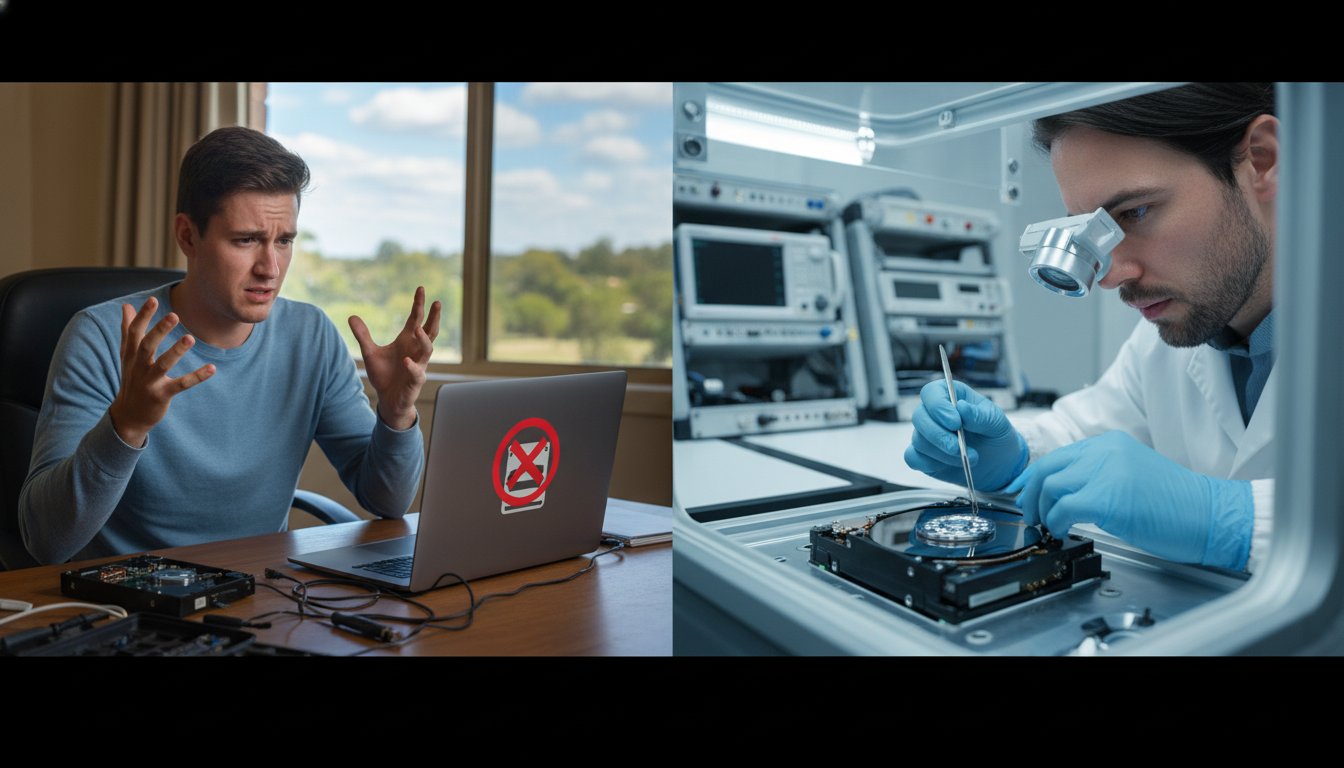
To choose the right path, you must understand the two main types of data recovery: logical and physical. Logical failure happens when the drive’s hardware is healthy, but the software or file structure is corrupted. Physical failure means the internal components, like the read/write heads or the motor, have actually broken down. Using software on a physically damaged drive is like running a marathon on a fractured leg. The more you “run” the drive by keeping it powered on, the more the internal parts grind against each other, destroying the data surfaces.

To better understand this concept, watch this helpful video:

Roughly 20% of data loss cases involve physical damage that requires a controlled cleanroom environment. If you suspect hardware damage, software won’t help; it will only make things worse. In Australia, professional lab recovery for mechanical failures can range from A$500 to over A$3,000 depending on the complexity. However, if the issue is purely logical, you might save money by using a data recovery software vs professional service approach. Use the checklists below to self-diagnose your device’s health before you take action.

Signs of Logical Data Loss (Software-Safe)

  • You accidentally deleted files or emptied the Recycle Bin on your PC.
  • A drive was formatted by mistake, but it still sounds smooth and quiet when plugged in.
  • The file system shows as “RAW” in Windows, yet the drive is still detected at its full correct capacity.
  • The drive is visible in Disk Management and doesn’t cause your computer to freeze or lag.

Warning Signs of Physical Drive Failure (Danger Zone)

  • The drive makes audible cues like clicking, rhythmic beeping, or a high-pitched grinding sound.
  • Your computer stops responding or slows down to a crawl the moment the drive is connected.
  • The device is not detected in the BIOS or Disk Management at all.
  • You see frequent “I/O Device Error” messages, which often indicate the hardware is struggling to read basic sectors.

When Data Recovery Software is a Safe and Effective Choice

If you’ve accidentally hit delete on a precious folder, don’t panic. For many logical errors, a DIY approach is quite effective. You can typically find reputable software for between A$75 and A$150. This is often the first crossroad in the data recovery software vs professional service debate. Tools like Recuva or the open-source PhotoRec work by scanning the drive for file headers that the operating system has marked as empty space.

The most vital rule is to never install software on the drive you’re trying to save. Doing so can overwrite the very data you want back. Instead, use a secondary drive or a “Live USB” to run the data recovery process safely. This keeps the original drive in a read-only state, which is the only way to ensure you don’t cause further damage. If you’re unsure about the health of your hardware, it’s always safer to talk to the experts at Aspire Computing before proceeding.

The Best Use Cases for DIY Software

Software is a great choice for healthy hardware. If you’ve accidentally formatted a 64GB SD card from your camera or deleted a Word doc from a functioning HDD, DIY tools usually succeed. These programs are designed to rebuild minor partition table corruption on secondary storage. Since 1999, we’ve seen these tools save thousands of family photos that seemed lost forever. It’s an excellent first step for non-mechanical issues on external media.

The SSD Exception: Understanding TRIM

Modern Solid State Drives (SSDs) are different. They use a command called TRIM, which was introduced around 2010 to maintain drive speed. When you delete a file on an SSD, TRIM tells the controller to immediately wipe those data blocks. This makes data recovery software vs professional service a simpler choice; software rarely works for deleted files on modern laptops. Professional intervention is usually the only way to bypass these hardware-level commands, though even then, the window of opportunity is small. If your SSD has failed or files were deleted, stop using the device immediately to prevent the TRIM command from completing its cycle.

The Fatal Mistake: Why Software Can Destroy a Failing Drive

When your computer stops booting or your external drive starts clicking, the temptation to download a quick fix is high. However, running DIY software on a physically failing hard drive is the most common reason for permanent data loss. Inside a traditional hard drive, platters spin at speeds up to 7,200 RPM while read/write heads hover nanometres above the surface. If a component is failing, the drive’s mechanical balance is compromised. Software works by scanning every single sector on the disk to find lost files. This acts as an unintended stress test, forcing a crippled drive to work at maximum capacity for hours on end.

This intense activity often leads to a “Head Crash,” where the read head makes physical contact with the spinning platter. This doesn’t just delete files; it physically scrapes the magnetic coating off the disk. When evaluating software vs. service, the biggest risk is that a simple A$300 recovery can quickly escalate into a A$3,000 clean-room disaster if the media is physically shredded. At Aspire Computing, we’ve seen many cases where “just trying it once” with a home utility turned a recoverable drive into a paperweight.

The Danger of Continued Power-On

Every second a failing drive spins, it edges closer to total failure. One of the biggest threats to your data is actually Windows “Automatic Repair.” This utility is designed to fix software errors by writing new data to the drive, which can overwrite your deleted files or cause a mechanical breakdown. Media damage is the permanent removal of the magnetic layer from a platter.

Why Free Software Often Lacks Safety Features

Most consumer-grade software is designed for healthy drives with simple file system errors. These tools are often aggressive and try to “repair” the directory structure. In contrast, professional tools are strictly “read-only” to ensure no data is altered. Using the wrong tool for data recovery software vs professional service decisions can lead to the software overwriting the very blocks of data you need to save. Professional technicians always follow a strict protocol:

  • Immediate power-down of the affected device to prevent further wear.
  • Creating a bit-by-bit “clone” of the drive using specialised hardware-level imagers.
  • Performing all recovery attempts on the clone, never the original failing hardware.

Since Chaim Lee founded Aspire Computing in 1999, we’ve prioritised these safety steps to protect our clients’ digital lives. Don’t risk a permanent crash by running unverified software on a drive that’s making unusual noises. It’s always safer to talk to the experts first.

Professional Data Recovery Services: What Happens Behind the Lab Door

If you’ve looked at the price of expert help, you might have felt a moment of sticker shock. It’s common to wonder why a specialist quote is higher than a software subscription. The reality is that professional labs operate more like surgical theatres than IT offices. When we weigh the choice of data recovery software vs professional service, we’re looking at the difference between a basic DIY fix and a high-tech intervention. Professional recovery involves expensive infrastructure and decades of engineering expertise that software simply cannot replicate.

The core of a professional lab is the Class 100 Cleanroom. These environments are strictly controlled to ensure fewer than 100 particles of dust per cubic foot of air. This is vital because a modern hard drive platter spins at 7,200 RPM, with the read/write head hovering just nanometres above the surface. A single microscopic speck of dust, which is about 0.5 microns in size, acts like a boulder on a highway. If dust enters a drive opened in a normal room, it will cause a “head crash,” destroying your data forever. Labs provide the only safe environment for these delicate physical repairs.

Firmware and Component Repair

Many “dead” drives don’t actually have broken parts; they have corrupted internal software called firmware. This is the drive’s own operating system that tells it how to function. When firmware fails, your PC won’t even recognise the device is plugged in. No retail software can reach this level of the hardware. Engineers use specialized hardware imagers to bypass these errors and communicate directly with the drive’s microcode.

If the failure is mechanical, engineers perform a “head swap.” This requires sourcing an identical “donor drive” from the same manufacturing batch to ensure the parts match perfectly. They then transplant the healthy heads into your damaged drive with extreme precision. These labs also use advanced imagers that can skip over bad sectors, saving the healthy data before the drive fails completely. It’s a methodical process designed to get your files back without causing further stress to the hardware.

Security and Confidentiality

For Australian businesses handling sensitive medical records or financial data, security is a non-negotiable factor. Sending a drive to a professional lab ensures a clear chain of custody and high-level encryption protocols. Most reputable specialists also offer a “No Data, No Fee” guarantee. This means you don’t pay the full recovery fee unless they successfully retrieve your critical files, which provides peace of mind during a stressful situation.

Deciding if the investment is worth it often comes down to the value of what’s lost. For a business, the cost of several days of downtime can far exceed the A$800 to A$2,000 typically spent on recovery. For families, the sentimental value of ten years of photos is often priceless. If your data is irreplaceable, skipping the DIY attempts and going straight to a lab is the safest path to success. You can learn more about the technical steps involved by visiting our Data Recovery Services page.

Don’t risk your precious memories or business files with trial and error. Talk to the experts at Aspire Computing for a professional assessment of your drive.

Choosing the Right Path in Toowoomba: How Aspire Computing Helps

When you realise your files are missing, your first instinct might be to download a random tool or ship your drive to a lab in Sydney or Brisbane. For residents across Toowoomba and the Darling Downs, there is a better way. Aspire Computing provides a local, honest first-look diagnostic that cuts through the confusion of data recovery software vs professional service. Chaim Lee brings technical expertise directly to your door, whether you are in Highfields, Westbrook, or the Toowoomba CBD. We come to you, so you don’t have to worry about your sensitive hardware getting lost in the mail.

Our approach is built on personal accountability. Since 1999, Chaim has helped locals recover from digital disasters with a calm, professional manner that takes the panic out of the situation. We don’t just look at the drive; we look at the whole picture. Sometimes the solution is a simple fix that doesn’t require expensive, invasive procedures. By choosing a local expert, you get a face-to-face explanation of what went wrong and a clear path to getting your data back safely.

Local Diagnostic vs. Expensive Mail-In Labs

Large national labs often charge hundreds of dollars just for an initial assessment, and that is before you pay for shipping. Often, the issue isn’t a catastrophic internal failure but a faulty power cable or a failed external enclosure. Our “Don’t Panic” assessment identifies these external hardware failures immediately. If your PC is acting up, a Computer Repairs Toowoomba check-up can often resolve the issue for a fraction of the cost of a lab recovery. We determine the exact failure type before you spend a single cent on software that might not even work for your specific problem.

  • Avoid high shipping costs and the risk of transit damage.
  • Identify simple hardware faults like faulty ports or cables.
  • Receive a transparent quote based on Australian market rates.
  • Get an honest opinion on whether data recovery software vs professional service is the right move for your budget.

Preventing Future Data Loss

Recovery is a last resort; active protection is the real goal. We help Toowoomba small businesses and home offices implement the 3-2-1 backup rule. This means keeping three copies of your data, on two different media types, with one copy stored securely off-site. Moving from aging mechanical hard drives to modern Hardware Upgrades like Solid State Drives (SSDs) also significantly reduces the risk of physical failure. Our “Protect and Connect” philosophy ensures your system is resilient, fast, and always backed up so this nightmare never happens again.

Don’t let a hardware failure ruin your week or your business continuity. Contact Chaim at Aspire Computing today for a professional data assessment and get your digital life back on track with a local expert you can trust.

Secure Your Files With a Toowoomba Expert

Losing your photos or business documents is stressful, but you don’t have to navigate the data recovery software vs professional service debate alone. If your hard drive is making clicking sounds or has suffered a physical drop, stop what you’re doing immediately. Running DIY software on a failing drive often causes permanent data loss by putting too much strain on damaged components. Since 1999, Aspire Computing has provided the reassurance and technical skill needed to rescue lost data for the local community.

Chaim Lee offers a personal touch that big corporate labs can’t match, providing on-site support throughout Toowoomba and surrounding suburbs. We’ve spent over 24 years refining our recovery processes to ensure your hardware receives the highest level of care. Choosing a professional path isn’t just about technical tools; it’s about the peace of mind that comes from experienced local hands. Don’t risk your digital life on a guess when expert help is right around the corner.

Talk to the experts at Aspire Computing for a professional data assessment

Your data is important, and we’re here to help you get it back safely.

Frequently Asked Questions

Is it safe to use free data recovery software?

Free data recovery software is safe only if your storage device is physically healthy and you’re recovering a few accidentally deleted files. If your drive makes unusual noises or freezes your computer, using software can cause permanent data loss by forcing the failing hardware to work harder. You should always install the software on a separate drive to avoid overwriting the very data you’re trying to save.

How much does professional data recovery cost in Australia?

Professional data recovery in Australia typically ranges from A$300 for basic logical fixes to over A$3,000 for complex mechanical repairs. These figures reflect 2023 industry price standards for laboratory work across Queensland and New South Wales. The final price depends on whether your drive needs a cleanroom environment or specific donor parts to function during the extraction process.

Can I recover files from a clicking hard drive using software?

You cannot recover files from a clicking hard drive using software because the sound indicates a physical mechanical failure. A clicking noise usually means the read/write heads are failing or making contact with the platters. Running software on a clicking drive often leads to a total “head crash,” which makes your data unrecoverable even for specialists with advanced equipment.

Why is my SSD not showing up after I deleted a file?

Your SSD might not show up because of the TRIM command, which is a feature found in roughly 95 percent of modern solid state drives. When you delete a file, TRIM tells the SSD to wipe those data blocks immediately to maintain high performance. This background process can sometimes cause the drive controller to stop responding or make the deleted partition appear invisible to your operating system.

What should I do immediately after I realise my data is missing?

Stop using the device immediately and power it down to prevent the system from overwriting your lost files. Every minute the computer stays on, it writes background logs and temporary files that can destroy your data forever. Understanding the risks of data recovery software vs professional service is vital here, as continuing to use the drive reduces your recovery success rate to below 15 percent.

How long does professional data recovery usually take?

Most professional data recovery cases take between 2 and 10 business days to complete from start to finish. Simple logical recoveries are often finished within 48 hours, while complex mechanical failures requiring donor parts from interstate can take longer. At Aspire Computing, we focus on a fast return to ensure your digital life or business continuity isn’t disrupted for more than a week.

Can data be recovered from a physically smashed laptop or external drive?

Yes, data can often be recovered from physically smashed devices using advanced cleanroom techniques or chip-off recovery. Even if the outer casing is destroyed, the internal platters or NAND flash memory chips usually remain intact. Experts can transplant these components into a donor chassis or use specialized readers to extract your files safely from the damaged hardware.

Does Aspire Computing offer a “No Data, No Fee” policy?

Aspire Computing provides a transparent assessment and we’ll discuss our “No Data, No Fee” policy options with you before we begin any recovery work. This approach ensures you don’t face unexpected laboratory costs if your files are determined to be completely unrecoverable. Chaim Lee has helped the Toowoomba community with honest tech support since 1999, so we prioritize your peace of mind throughout the process.

In 2023, the Australian Signals Directorate (ASD) revealed that the average cost of a cyber attack for a small business hit A$46,000. For a local team, that isn’t just a statistic; it’s a potential disaster that could threaten your entire operation. You likely feel like a target despite your size, and the constant threat of phishing makes every new notification feel like a risk. Finding the right email security solutions for business shouldn’t feel like learning a second language filled with confusing terms like SPF, DKIM, or DMARC.

We understand that you want to protect your livelihood without getting lost in technical manuals. It is completely normal to feel overwhelmed by the complexity of modern digital threats. This 2026 guide promises to clear the air by offering practical, affordable strategies tailored specifically for small Australian teams. We will walk through the essential security layers you need to stay safe and explain how a local expert can manage the technical setup. You deserve the peace of mind that comes from knowing your data is secure while you focus on what you do best.

Key Takeaways

  • Learn why being “too small to target” is a dangerous myth and how the 2026 threat landscape specifically impacts Australian small teams.
  • Discover how modern email security solutions for business use advanced threat protection and plain-English authentication to shield your inbox from evolving risks.
  • Uncover the hidden costs of DIY enterprise software and why local, managed IT support provides more reliable monitoring for small offices.
  • Follow a practical checklist to secure your business today, including how to audit user permissions and implement MFA across all your accounts.
  • Explore how a personalised approach from a local expert ensures your Toowoomba business stays protected and connected without the stress of tech failures.

Why Small Business Email Security Solutions are Critical in 2026

Think of email security solutions for business as a multi-layered shield rather than a simple lock on a door. In 2026, a basic spam filter isn’t enough to stop modern intruders. These solutions combine technical filters, encryption, and verification protocols to catch threats before they reach your inbox. At Aspire Computing, we see these tools as the foundation of a healthy digital workspace. We focus on our “Protect and Connect” philosophy, ensuring your team stays safe without losing the ability to communicate with your clients effectively.

To better understand why these layers are so vital, watch this helpful video:

The “Too Small to Target” myth has become a costly mistake for many Australian owners. Recent data from the Australian Signals Directorate indicates that small businesses are now the primary targets for automated attacks. By 2026, reports show that 62 percent of all cyberattacks in Australia target small to medium enterprises. These aren’t personal vendettas; they’re automated bots looking for any open door. When you lack robust email authentication standards, your business becomes an easy mark for spoofing and identity theft.

Human intuition used to be a reliable backup, but AI-driven phishing has changed the game. Scammers now use large language models to write perfect, typo-free emails that mimic the exact tone of your suppliers or bank. You can’t just look for “bad grammar” anymore. You need technology that analyses the hidden metadata of every message to catch what the human eye misses.

The Evolution of Email Threats: Phishing to Ransomware

Modern scams have moved far beyond simple “lost inheritance” emails. Today, social engineering is the tool of choice, where attackers spend weeks watching your public social media to craft a believable lie. If an employee clicks a malicious link, it can lead to a total system lockdown. The average cost of data recovery for Australian businesses has climbed to over A$46,000 per incident. This is why we integrate email safety with our virus and malware removal services to provide a complete safety net.

Business Continuity and Reputation

In close-knit Toowoomba communities, your reputation is your most valuable asset. If a hacker sends out malicious links from your business address, it damages the trust you’ve built with your clients over years. Recovering from that social damage is often harder than fixing the technical glitch. Implementing professional email security solutions for business ensures you maintain business continuity by preventing downtime and protecting your professional image. Email security is the first line of defence for small business data.

Core Components of a Modern Email Security Solution

Email security solutions for business have moved far beyond the basic spam filters of the early 2000s. Modern systems act as a multi-layered shield, protecting your team from sophisticated scams that often bypass traditional defenses. At Aspire Computing, we focus on four key pillars to keep your business running without interruption. Our goal is to provide quality assurance so you can focus on your work while we handle the technical heavy lifting.

First, Advanced Threat Protection (ATP) provides a proactive defense. It doesn’t just look for known “bad” addresses; it analyzes the behavior of every incoming message. Email authentication protocols like SPF, DKIM, and DMARC work together to verify that a sender is who they claim to be. Think of SPF as an approved guest list for your server. DKIM acts like a digital wax seal on the envelope to prove it hasn’t been opened. DMARC provides the instructions for what to do if that seal looks tampered with. These tools help prevent “spoofing,” where hackers pretend to be your bank or a trusted supplier.

Data Loss Prevention (DLP) and encryption ensure your sensitive information stays private. DLP monitors outgoing mail to stop employees from accidentally sending credit card numbers or client files to the wrong person. Encryption turns your messages into a code that only the intended recipient can read. Implementing these cybersecurity best practices helps your business meet Australian privacy standards and builds trust with your clients.

Automated Threat Detection

Modern security tools use AI to scan every attachment and URL in real-time. Instead of waiting for a user to click a link, the system opens it first in a “sandbox,” which is an isolated virtual environment. If the file tries to perform a malicious action, the system blocks it before it ever reaches your inbox. This “active” approach is vital because passive filters only catch threats that have already been identified elsewhere. By the time a new virus is “known,” it might have already hit thousands of small businesses.

Identity and Access Management

In 2026, Multi-Factor Authentication (MFA) is the non-negotiable baseline for any secure office. It adds a second layer of verification, like a code sent to your phone, making it much harder for hackers to use stolen passwords. We also recommend integrating with password managers to ensure every account has a unique, complex login. This is critical because approximately 90% of data breaches start with a single phishing email. If you’re worried about your current setup, we can help you talk to the experts to find the right email security solutions for business that fit your team’s specific needs.

Enterprise Software vs. Local Managed IT Support

Big enterprise platforms like Proofpoint or Mimecast offer robust email security solutions for business, but they’re built for massive corporations with dedicated IT departments. For a small team in Australia, the “hidden costs” of these high-end tools often outweigh the benefits. You might pay a monthly subscription fee per user, but the real expense lies in the 20 to 30 hours of complex configuration required to make them work properly. Without a specialist to tune the filters, these systems either block too much or let dangerous files through.

A “set and forget” approach is a recipe for disaster. Security threats evolve daily, and a software license won’t call you if your account starts sending out thousands of spam emails at 3:00 AM. Relying on a local expert like Chaim Lee provides a level of accountability that a faceless software vendor can’t match. When things go wrong, you don’t want to wait in a support queue for a global call centre. You want a local partner who understands your business continuity is at stake.

The Problem with DIY Security

Many small businesses rely on the “out of the box” settings in Microsoft 365 or Google Workspace. These default configurations are designed for ease of use, not maximum protection. It’s common for teams to miss critical steps like setting up DKIM or DMARC records, which are essential for verifying your identity to other mail servers. According to official guidance on Cybersecurity for Small Business, fundamental protection requires active management of your digital footprint.

DIY setups often lead to two extremes. Either your security is so loose that phishing emails land in your primary inbox, or it’s so tight that legitimate client quotes end up in the “Junk” folder. These false positives can cost you thousands in lost revenue. Finding the right balance requires a professional who can monitor your mail flow and adjust settings based on your specific industry needs.

The Benefits of a Managed Security Ecosystem

A managed solution moves your business from reactive repairs to proactive monitoring. At Aspire Computing, we focus on a “Protect and Connect” service agreement that looks at your technology as a whole. This ecosystem ensures your email security solutions for business are integrated with your physical devices. Our managed services don’t just watch your inbox; they include regular hardware upgrades and software tune-ups to keep your computers running at peak performance.

  • Proactive Monitoring: We spot unusual login patterns before a breach occurs.
  • System Synergy: Your email security, antivirus, and backups work together without conflict.
  • Local Accountability: You have a direct line to Chaim Lee for immediate assistance.
  • Reduced Downtime: Regular maintenance prevents the “blue screen” moments that halt productivity.

This holistic approach provides peace of mind. You can focus on your clients while we handle the technical heavy lifting. Knowing that your digital environment is being watched by an expert who has been serving the community since 1999 makes all the difference in your daily operations.

Practical Steps to Secure Your Business Inbox Today

Taking control of your digital safety doesn’t have to be an overwhelming project. You can start protecting your small team right now by following five clear steps. First, audit your user permissions to ensure only current employees have access to sensitive data. Second, enable Multi-Factor Authentication (MFA) on every business and personal account. According to 2023 data from the Australian Cyber Security Centre, MFA is one of the most effective ways to stop unauthorized access. It’s a simple change that provides immediate peace of mind for your entire workforce.

Third, you should implement professional email security solutions for business. These gateways act as a sophisticated filter, catching 99% of malicious attachments before they ever reach an employee’s screen. Fourth, commit to ongoing team training. Finally, schedule regular security health checks with a professional. Aspire Computing has been helping local firms since 1999, ensuring their technology remains a reliable asset rather than a security liability. When you have a clear plan, you don’t have to panic about the latest digital threats.

The 5-Minute Email Security Audit

Start by opening your admin console to check for unusual login locations in your account history. If you see a login from a country where you don’t have staff, change your passwords immediately and sign out of all sessions. Next, verify that your backup and data recovery systems are actually functioning. A backup is only useful if it’s current and restorable. Finally, review third-party app permissions connected to your inbox. Revoke access for any old integrations or “productivity” tools you no longer use to reduce your potential attack surface.

Staff Training: The Human Firewall

Technology is only half the battle. Your team needs to recognize 2026-style phishing attempts, which frequently use AI to mimic the specific writing style of your colleagues. Run simple, internal tests with fake “Urgent Invoice” emails to see who clicks. Don’t punish those who fail; use it as a practical teaching moment. You want to create a culture where employees feel safe reporting a suspicious link immediately instead of hiding a potential mistake. This transparency is your best defense against a full-scale breach.

Local businesses in Toowoomba are seeing a rise in “CEO Fraud” scams. These involve a criminal impersonating a business owner to request an urgent bank transfer to a new account. In 2023, Scamwatch reported that Australian businesses lost over A$91 million to business email compromise. Because we live in a close-knit community, these attackers often use local references to seem more believable. Staying alert and verifying financial requests via a quick phone call can save your business thousands of dollars.

If you want to ensure your team is truly protected, talk to the experts at Aspire Computing for a comprehensive security review.

How Aspire Computing Secures Toowoomba Businesses

Small business owners in the Darling Downs shouldn’t have to be cybersecurity experts to keep their data safe. Since 1999, Chaim Lee has provided reliable, hands-on help to the Toowoomba community, ensuring that technology works for you, not against you. Whether you operate from a home office in the Lockyer Valley or a commercial shopfront in the CBD, we provide personalised IT support that bridges the gap between complex tech and daily operations. We understand that for a small team, a single compromised account can halt productivity for days.

Effective email security solutions for business aren’t just about blocking spam. They require a holistic view of your digital environment. We integrate these protections into our broader IT support for business, making sure your hardware, software, and cloud services communicate securely. By managing the technical backend, we ensure your team stays connected without the constant threat of phishing or data breaches. Our experience spanning over two decades allows us to identify vulnerabilities that generic software might miss.

Our “Protect and Connect” Approach

We take over the heavy lifting of technical setups so you can focus on your actual work. Our philosophy is simple: we protect your assets and keep you connected to your clients. When things go wrong, don’t panic. We’re known for quick fixes and fast returns, offering both on-site visits and remote assistance to resolve issues before they disrupt your day. This commitment to local, professional service has built our reputation as a trusted expert. We don’t just install email security solutions for business; we provide the ongoing maintenance that keeps those systems effective against 2026’s emerging threats.

  • Personalised setups for home offices and small teams.
  • Reliable on-site support across Toowoomba, Highfields, and Gatton.
  • Expertise in hardware repairs, data recovery, and cloud security.
  • Fast response times to minimise business downtime.

Ready to Secure Your Business?

Cyber threats change quickly, but your response should be calm and calculated. If you’re worried about your current setup, we offer convenient on-site service in Newtown and across the region to assess your risks. You don’t need to struggle with confusing settings or DIY fixes that might leave backdoors open to hackers. We’re here to provide the assurance you need to work confidently every day. Contact Aspire Computing for a free security health check today and let us help you build a more resilient business for the future.

Secure Your Business Communications for 2026

Protecting your team from evolving digital threats doesn’t have to be a source of stress. In 2026, the landscape of cyber attacks has shifted, making robust email security solutions for business a necessity rather than a luxury for small teams. You’ve seen how effective protection requires a combination of automated enterprise software and the nuanced oversight of local managed IT support. Whether it’s preventing a phishing attempt or securing cloud file sharing, the right setup ensures your operations stay online and your data remains private.

Aspire Computing has been serving the Toowoomba community since 1999. As an owner-operated business led by Chaim Lee, we provide the personal accountability that distant corporate providers can’t match. We offer both on-site and remote support to ensure your systems are always resilient. Our goal is to alleviate the panic of technology failures through proactive maintenance and expert guidance. Don’t let a single malicious link compromise your hard work or reputation.

Talk to the Toowoomba Experts at Aspire Computing

We’re ready to help you Aspire to Protect and Connect.

Frequently Asked Questions

Is Microsoft 365 or Google Workspace secure enough for my business?

While these platforms provide baseline protection, they often lack the advanced features needed to stop sophisticated 2026 era phishing. The Australian Cyber Security Centre (ACSC) reported that business email compromise remains a top threat to local firms. Relying only on default settings leaves gaps that specialized email security solutions for business can close by filtering out malicious links before they reach your inbox.

How much do email security solutions for business cost?

Costs vary depending on your team size and the level of protection required. Most cloud based security add-ons for small businesses in Australia range from A$4 to A$12 per user, per month. This investment is small compared to the potential loss from a single data breach. At Aspire Computing, we focus on providing quality assurance and continuity to ensure your budget works as hard as your technology does.

What is the most common email threat for small businesses in Australia?

Phishing and Business Email Compromise (BEC) are the most prevalent threats facing Australian teams today. According to ACCC Scamwatch data, BEC scams cost Australian businesses over A$91 million in total reported losses during 2023. These attacks often involve impersonating a supplier or boss to redirect payments. Implementing robust email security solutions for business is the most effective way to detect these fraudulent requests before money leaves your account.

Can I install email security software myself, or do I need a professional?

You can certainly attempt a DIY installation, but professional configuration ensures your active protection is actually working. Since 1999, Chaim Lee has helped Toowoomba businesses avoid the common configuration errors that leave systems vulnerable. A professional setup includes testing your MX records and SPF settings to ensure your emails aren’t marked as spam. Our goal is to help you Aspire to Protect and Connect without the technical headache.

What should I do if I think my business email has been hacked?

First, don’t panic! Immediately change your password to a complex, unique phrase and sign out of all active sessions across all devices. You should then enable Multi-Factor Authentication (MFA) if it wasn’t already active. Contact a trusted IT expert to audit your mail rules, as hackers often set up forwarding rules to steal your data silently. We can provide a quick fix and a fast return to normal operations.

Does email security slow down the sending and receiving of messages?

Modern security layers are designed to be efficient and typically add less than a second of delay to message delivery. The scanning process happens in the cloud before the email even hits your local network. This means your business continuity remains intact while your team stays protected. You won’t notice a difference in speed, but you will notice a significant drop in the amount of junk and dangerous mail hitting your inbox.

Why should I choose a local Toowoomba IT provider over a national company?

Choosing a local expert like Aspire Computing means you get personal accountability and someone who can be on-site in suburbs like Middle Ridge or Rangeville quickly. National companies often treat small teams like a ticket number in a distant queue. We’ve been part of the Toowoomba community since 1999, providing the kind of reliable, approachable service that a call centre simply can’t match. We’re your neighbours, and we’re committed to your success.

Last November, a local business owner faced a A$46,000 recovery bill after a ransomware attack crippled their operations for five days. It’s the kind of phone call no manager wants to make, and it’s exactly why people ask what does a vCIO do to prevent these disasters before they happen. You likely feel the same frustration when unexpected IT costs break your monthly budget or when your current systems can’t keep up with your team’s expansion. It’s common to feel overwhelmed by technical jargon and the constant pressure of evolving security threats.

In this guide, we’ll show you how a Virtual CIO moves your company away from expensive, reactive repairs and toward a future of strategic growth. You’ll discover how to create a clear technology roadmap that aligns with your 2025 goals, ensuring your IT spending remains predictable while providing the security and peace of mind you deserve. We’ll break down the specific ways expert leadership protects your continuity and connects your team more effectively, giving you the confidence to focus on your business rather than your hardware.

Key Takeaways

  • Shift from reactive “emergency” repairs to a proactive 12-to-36-month technology roadmap that aligns every IT investment with your long-term business goals.
  • Understand exactly what does a vCIO do to bridge the gap between basic technical support and high-level strategic leadership.
  • Learn how to distinguish between “keeping the lights on” via managed services and making high-impact decisions on systems that drive business growth.
  • Discover the specific productivity and security benefits for Toowoomba businesses, including professional virus removal and robust continuity planning.
  • Find out how Chaim Lee and the Aspire team apply an “Enterprise-level” strategy to help local businesses stay protected and connected.

What is a vCIO and Why Does Your Business Need One?

When your business grows, technology stops being just a tool and starts being the engine that drives your success. A Virtual Chief Information Officer, or vCIO, is a strategic partner who works with you on a fractional basis. Instead of just fixing a printer or resetting a password, they look at how your entire digital infrastructure helps you reach your specific business goals. People often ask, what does a vCIO do? The answer is simple: they provide the high-level leadership of a Chief Information Officer (CIO) without the heavy executive price tag. This makes expert guidance accessible for local businesses across Toowoomba.

To better understand this concept, watch this helpful video:

A vCIO is different from your standard “on-call” computer repair technician. While a technician reacts to problems that have already happened, a vCIO focuses on the future. They help you plan your budget, secure your data, and choose software that actually makes your life easier. Understanding what does a vCIO do helps you move from being a victim of technology to being a master of it.

The Key Differences Between a CIO and a vCIO

A full-time CIO in Australia often commands a salary exceeding A$180,000 per year. For a small business, that’s a massive overhead that rarely makes sense. The vCIO model saves you thousands because you only pay for the time and expertise you actually use. Since a vCIO is an external expert from a team like Aspire Computing, they bring an objective perspective. They aren’t involved in internal office politics; they only care about what works for your bottom line. This model is also highly scalable. You can increase their involvement if you are planning a major expansion in 2025, or scale back during quieter periods.

Signs Your Business Has Outgrown Reactive IT Support

Many businesses get stuck in the “break-fix” cycle, which is both stressful and expensive. Industry data shows that proactive IT management can reduce unexpected downtime by up to 50 percent compared to reactive models. You’ve likely outgrown standard support if you only hear from your IT provider when something is broken. This leads to unpredictable costs where you might spend A$200 one month and A$5,000 the next because a server failed. If your staff are constantly complaining about slow systems or using “workarounds” to get their jobs done, your productivity is suffering. A vCIO identifies these bottlenecks and fixes them before they stop your workflow.

Core Responsibilities: What Does a vCIO Actually Do?

Understanding what does a vCIO do starts with looking past basic tech support to see the bigger picture of your business. While a standard technician fixes what is broken, a vCIO ensures your systems don’t break in the first place. They act as a professional translator, turning technical jargon into clear business outcomes that help you make informed decisions. By leading digital transformation and cloud migration projects, they ensure your team stays connected and productive from anywhere in Australia.

Strategic Planning and Technology Roadmapping

A vCIO develops a 12-to-36-month technology roadmap designed to prevent the “panic buy” that happens when a critical server fails unexpectedly. Instead of rushing to spend A$5,000 on emergency hardware, you follow a structured plan for upgrades. This alignment ensures that every software choice you make supports your long-term expansion plans rather than creating a bottleneck. A technology roadmap is a living document that provides a clear path for sustainable business growth.

IT Budgeting and Financial Predictability

One of the most valuable aspects of what does a vCIO do is moving your business from unpredictable repair bills to a flat-fee, planned investment model. They perform deep dives into your accounts to identify “Shadow IT” costs. These are often forgotten A$20 or A$50 monthly subscriptions that provide no value or duplicate services you already have. By calculating the ROI of new technology before you spend a single dollar, a vCIO ensures your IT budget is an investment in efficiency rather than a black hole of expenses.

  • Reviewing all recurring software licenses to eliminate waste.
  • Predicting hardware lifecycles to spread out replacement costs.
  • Comparing vendor quotes to ensure you get the best value in the Australian market.

Risk Management and Cybersecurity Oversight

Security is not just about a password; it’s about meeting Australian Privacy Principles and industry-specific compliance standards. A vCIO analyses your current infrastructure to find hidden bottlenecks and security risks that could leave your data vulnerable. They focus on business continuity, creating a plan for what happens if your data vanishes tomorrow due to a cyber attack or hardware failure. If you ever face a crisis, having a strategy for Data Recovery Services is the difference between a minor hiccup and a total business shutdown.

Managing these moving parts requires a partner who understands the local landscape. If you are feeling overwhelmed by your current setup, it might be time to talk to the experts at Aspire Computing to see how a strategic plan can protect your business.

vCIO vs. Managed IT Services: Understanding the Difference

Many business owners confuse Managed IT Services with the role of a vCIO. It’s helpful to think of it this way: your Managed Service Provider (MSP) keeps the lights on, while the vCIO decides where those lights should go. One focuses on maintaining the current state, while the other focuses on the future direction of your business. Understanding the distinction ensures you don’t hire a technician when you actually need a consultant.

Tactical Support: The Foundation of IT

Tactical support is the backbone of your daily operations. This includes the team you call when a server goes down or a staff member can’t access their email. You still need reliable Computer Repairs in Toowoomba for those immediate hardware failures that stop work in its tracks. Helpdesks and remote monitoring tools ensure your systems stay secure and updated through routine maintenance.

This level of service provides the raw data a vCIO needs to make informed decisions. For instance, if tactical reports show that 15% of your fleet fails every month, it signals a need for a strategic hardware refresh rather than another quick fix. Tactical support handles the “how” of technology, ensuring your tools work as intended every morning.

Strategic Leadership: The vCIO Advantage

When business owners ask what does a vCIO do, they are often looking for leadership rather than just repairs. The vCIO focuses on “why” you use technology. Instead of just fixing a printer, they look at whether your business should move to a digital workflow to save A$5,000 annually in paper and toner costs. They handle vendor management and negotiate software contracts to ensure you aren’t overpaying for licenses or trapped in bad agreements. This role bridges the gap between technical teams and business owners, translating complex jargon into clear business outcomes. Understanding what does a vCIO do helps you move from reactive firefighting to proactive growth.

A common misconception is that a standard MSP will automatically provide this level of strategic advice. Most MSPs focus on uptime and response times. To succeed, most Australian small businesses need a hybrid of both. Without tactical support, your strategy fails because the basics don’t work. Without a vCIO, you might have perfectly functioning computers that are running outdated, expensive software that holds your growth back.

  • Tactical: Fixing a printer or resetting a staff password.
  • Strategic: Choosing the right ERP system to streamline your supply chain.
  • Tactical: Running antivirus scans and installing patches.
  • Strategic: Designing a multi-year cybersecurity roadmap to protect your intellectual property.

The Real-World Benefits for Toowoomba Small Businesses

For local businesses operating everywhere from Ruthven Street to the industrial hubs in Wilsonton, technology should be an asset, not a constant headache. When you truly understand what does a vCIO do, you realize it’s about much more than just fixing a broken printer. It’s about ensuring your team stays productive without fighting slow workflows or recurring glitches every Monday morning. Having a dedicated strategist means your IT setup finally matches your business goals.

A vCIO provides peace of mind by watching the big picture of your tech stack. They ensure you aren’t just reacting to problems, but preventing them. This includes managing your hardware lifecycle so you aren’t surprised by a sudden A$5,000 server replacement. You get professional guidance on every purchase, ensuring any new hardware or software is a sound investment for your specific needs.

Improving Operational Efficiency

A vCIO streamlines your daily tasks through automation and smarter software integration. They help reduce downtime by spotting potential hardware failures before they actually crash your system. A vCIO identifies hidden time-wasters in your office by auditing how many cumulative hours your staff lose to manual data entry between incompatible programs or waiting for outdated workstations to boot up. By fixing these small leaks, you’ll see a measurable boost in staff morale and output.

Security is another area where efficiency meets protection. By implementing proactive Virus and Malware Removal and constant monitoring, your business avoids the catastrophic downtime caused by cyberattacks. It’s much cheaper to prevent an infection than it is to recover lost data after a breach.

Future-Proofing Your Technology

Local businesses in the Darling Downs need to be just as tech-savvy as firms in Brisbane or Sydney to stay competitive. A vCIO ensures your systems are flexible enough to handle remote work or expansion to multiple office locations without a total system overhaul. They keep your business ahead of the curve by evaluating emerging tools like AI and cloud computing, making sure you don’t invest in dead-end technology.

  • Scalability: Your tech grows at the same pace as your client list.
  • Remote Readiness: Secure access for staff working from home or on-site.
  • Strategic Budgeting: No more “emergency” IT spending that drains your cash flow.

Knowing exactly what does a vCIO do helps you move from a “break-fix” mentality to a growth mindset. You can focus on your customers while an expert handles the digital foundation of your company.

Ready to see how strategic IT can transform your business? Talk to the experts at Aspire Computing today.

Aspire Computing: Your Local vCIO Partner

Since 1999, Chaim Lee and the Aspire Computing team have helped Toowoomba businesses thrive by providing enterprise-level strategy without the corporate distance. We believe that small businesses deserve the same high-calibre technology planning as major corporations. Our “Protect and Connect” philosophy is the heartbeat of our service. It means we don’t just fix broken screens; we ensure your business continuity by securing your data and keeping your team linked to the tools they need. When you wonder what does a vCIO do for a local firm, the answer lies in personal accountability. We aren’t a faceless national call centre. We are local experts who understand the Toowoomba business climate and the specific challenges of regional Queensland infrastructure.

The Aspire process is methodical and designed to eliminate tech-induced panic. It begins with a free IT health check to identify immediate risks. From there, we build a comprehensive roadmap that aligns your hardware and software spending with your 12-month growth targets. This proactive approach prevents the “emergency spending” cycles that drain small business bank accounts.

Tailored IT Support for Business

We provide IT Support for Business that focuses on driving measurable results. For example, we recently helped a local professional services firm transition from a reactive “break-fix” model to a proactive managed strategy. Before the shift, they averaged 14 hours of unplanned downtime per month. By implementing a vCIO framework, we reduced that downtime to less than 30 minutes. This personal touch is vital. Having a vCIO who knows your staff by name and understands your specific office workflow makes a world of difference. We don’t just manage your servers; we support your people.

Get Started with a Strategic IT Audit

Your first consultation with Chaim Lee is a deep dive into your current setup. We don’t use confusing jargon to hide simple truths. During this audit, we look for three critical factors in every small business network:

  • Security Vulnerabilities: We identify gaps where ransomware or malware could enter your system.
  • Backup Integrity: We verify if your data recovery plan actually works in a real-world disaster scenario.
  • System Bottlenecks: We find the old hardware or slow software that is currently costing your staff time and frustration.

Don’t leave your business growth to chance. Understanding what does a vCIO do is the first step toward a more stable, profitable future. Contact Aspire Computing today for a professional IT assessment and let’s start building your technology roadmap together.

Take the Next Step Toward Smarter Business Technology

Technology shouldn’t be a source of constant worry or unexpected costs. By understanding what does a vCIO do, you can move your business away from reactive repairs and toward a proactive strategy that supports your long term goals. A virtual CIO provides the high level expertise you need to make informed decisions about your digital infrastructure without the overhead of a full time executive. This ensures your systems are always ready to support your growth while keeping your data secure.

Since 1999, Aspire Computing has been a trusted partner for Toowoomba small businesses. You’ll work directly with our owner, Chaim Lee, receiving the kind of personal, local service that larger corporate providers can’t match. We focus on practical solutions that improve performance and ensure business continuity. Don’t let technical complexity stand in the way of your success. With the right roadmap in place, you can focus on running your business while we handle the technical heavy lifting.

Talk to the Experts at Aspire Computing about vCIO services and discover how strategic IT can transform your operations. We look forward to helping you protect and connect your business for years to come.

Frequently Asked Questions

Is a vCIO the same as an IT consultant?

No, a vCIO is not the same as an IT consultant because they focus on long-term business strategy rather than one-off technical projects. While a consultant might help you migrate to a new server or fix a specific network issue, your vCIO acts as a part-time executive who aligns your technology with your three-year business goals. They provide ongoing leadership and personal accountability that goes beyond just fixing immediate problems.

How much does a vCIO cost for a small business?

Hiring a vCIO typically costs between A$2,000 and A$5,000 per month depending on the complexity of your environment and the level of involvement required. This is significantly more affordable than the A$200,000 average annual salary for a full-time Chief Information Officer in Australia according to 2023 recruitment data. You get executive-level expertise without the heavy overhead of a permanent C-suite employee.

Can a vCIO help with my cybersecurity and data backups?

Yes, a vCIO creates the strategic framework for your cybersecurity and data backup protocols to ensure business continuity. They don’t just install antivirus software; they implement standards like the Essential Eight, which is a set of mitigation strategies developed by the Australian Signals Directorate. This helps protect your local business from the 33% increase in cybercrime reported by the ACSC in recent years.

Does my business need a vCIO if I only have five employees?

Even a business with five employees needs a vCIO if you handle sensitive data or plan to scale your operations quickly. When you’re small, you don’t need a full-time presence, but you do need someone to explain what does a vCIO do to help you avoid expensive technical debt. A few hours of strategic planning each quarter ensures your small team uses the right tools to stay productive and secure.

What is the first thing a vCIO does when they start working with a client?

The first thing a vCIO does is conduct a comprehensive technology audit to identify risks and inefficiencies in your current setup. They review your hardware lifecycle, software licensing, and security vulnerabilities to see where you’re at risk. This assessment results in a 12-month roadmap that prioritises your most urgent needs. It ensures every dollar you spend on IT actually supports your business objectives instead of just being a quick fix.

Will a vCIO replace my current IT support person or company?

A vCIO usually complements your existing IT support rather than replacing it. Think of the vCIO as the architect who designs the building and your IT support as the builder who maintains it. They provide the high-level vision and management that helps your technical team stay focused on daily tasks. This partnership ensures that your daily support aligns with your long-term growth and continuity.

How often do I need to meet with my vCIO?

Most small businesses meet with their vCIO for a formal Strategic Business Review every 90 days. These quarterly meetings are essential to track progress on your IT roadmap and adjust for any market changes or new challenges. During high-growth periods or major migrations, you might speak with them once a month to ensure everything stays on track. It’s about finding a rhythm that keeps your technology reliable and your business connected.

Last Tuesday, a local business owner in the Toowoomba CBD watched their screen flicker and die, realizing three years of tax records and irreplaceable family photos were suddenly inaccessible. It is a gut-wrenching moment that triggers immediate panic, especially when you realize that every failed reboot attempt could be making the damage worse. If you are currently staring at a blank screen or hearing a clicking hard drive, please don’t panic. Seeking urgent data recovery Toowoomba is the most critical step you can take right now to prevent permanent loss. Since Chaim Lee established our local service in 1999, we have helped thousands of residents navigate these high-stress failures with professional care.

We understand that your data represents more than just bits and bytes; it is your livelihood and your memories. You likely feel overwhelmed by the choice between risky DIY software and trusting a professional with your private information. This guide will show you how to stop further data loss immediately and connect with a local expert who can provide the fast turnaround you need to get back to work. We will walk through the recovery process for 2026, explain why local service beats mail-in labs, and help you get your critical files back safely. At Aspire Computing, we aim to protect and connect our community through every digital crisis.

Key Takeaways

  • Master the essential “don’t panic” protocol, including why powering down your device immediately is the most important step to prevent permanent data loss.
  • Discover why local urgent data recovery Toowoomba services offer a faster, more secure alternative to the shipping delays of national mail-in providers.
  • Understand the vital difference between simple software issues and physical hardware failures that require a specialized professional environment for safe retrieval.
  • Identify how local environmental factors, such as Queensland storm-related power surges, can trigger sudden hardware failure and how to safeguard your files.
  • Learn how 25+ years of local expertise and a dedicated “Protect and Connect” mission can help restore your digital continuity quickly and professionally.

What Qualifies as Urgent Data Recovery in Toowoomba?

Losing access to your business records or family photos feels like a crisis. Technically, urgent data recovery refers to the immediate process of retrieving inaccessible data from storage media when standard access methods fail. In our region, this need is often triggered by sudden hardware breakdowns, accidental deletions, or the volatile Queensland weather. Data from the 2024 storm season showed a 15% increase in hardware failures across the Darling Downs due to power surges, making urgent data recovery Toowoomba a vital service for local continuity.

Time is your biggest enemy when a drive begins to fail. A hard drive is a mechanical device with parts moving at thousands of revolutions per minute. If the internal components are damaged, every second the device stays powered on increases the risk of the “heads” scratching the data-carrying platters. We’ve seen cases where recovery success rates drop from 98% to below 40% simply because a user kept restarting a failing laptop. The good news is that most data is recoverable if you stop using the device immediately. At Aspire Computing, we’ve been helping locals “Protect and Connect” since 1999, and we know that a calm, professional approach is the first step toward a successful result.

To better understand how professional recovery works in Australia, watch this helpful video:

Signs You Need Immediate Professional Help

Recognising the warning signs can save your files. If you hear the “Click of Death,” which is a rhythmic ticking or grinding sound, shut down the computer immediately. This sound means the mechanical arm is failing and could be carving circles into your data. Other red flags include Blue Screen of Death (BSOD) loops during your busiest work hours or a “No Bootable Device” error. These aren’t just glitches; they are clear indicators that your hardware is no longer communicating with your system. Don’t panic, but do seek urgent data recovery Toowoomba experts before the damage becomes permanent.

The Risk of “Quick Fix” DIY Software

It’s tempting to download a free tool to fix the problem yourself, but this is often where permanent data loss happens. Running recovery software on a physically failing drive is like running a marathon on a broken leg; it forces the drive to work harder, leading to total platter destruction. Many “free” tools online are also bundled with malware or may inadvertently overwrite the very sectors you’re trying to save. If your computer doesn’t recognise the drive in the BIOS or if it’s making any unusual noises, DIY efforts become destructive. You can learn more about our professional approach at Aspire Computing to ensure your hardware is handled with the right equipment.

The Science of Retrieval: How Professional Recovery Beats DIY

Don’t panic if your screen goes dark or your external drive stops responding. While the instinct to download “free” recovery software is strong, these tools often cause more harm than good by overworking a failing drive. At Aspire Computing, our professional diagnostic process involves a methodical four-step triage. We’ve been helping locals since 1999, and we know that urgent data recovery Toowoomba requires a controlled approach rather than guesswork.

Our team uses hardware-level imaging tools that communicate directly with the drive controller. These tools bypass the operating system errors that cause standard computers to hang or crash. By creating a bit-for-bit clone of your media, we work on the copy rather than the original hardware. This preserves the integrity of your files and prevents further mechanical degradation.

Security is a cornerstone of our service. In 2024, the average cost of a data breach for Australian businesses rose to A$4.62 million. We follow strict privacy protocols to ensure your sensitive business files remain confidential during the retrieval process. This involves developing a solid recovery plan that aligns with high security standards, ensuring your private information never leaves our secure local environment.

Recovering from Physical Drive Failure

Physical damage is often audible. If you hear clicking, grinding, or whirring, your drive’s spindle motor may have seized or the read/write heads might be stuck. Opening a drive casing outside of a certified clean-room environment is a fatal mistake because even a single dust particle can destroy the magnetic platters. Our Data Recovery Services ensure that physical repairs happen in controlled settings. We specialize in handling delicate internal components to maximize the chance of a 100% file return for your urgent data recovery Toowoomba needs.

Logical Recovery: SSDs and Formatted Drives

Logical Failure is a corruption of the file system structure where the hardware remains functional but the data is inaccessible. Recovering files from a formatted SSD is significantly more complex than a traditional hard drive due to the TRIM command. TRIM tells the SSD to wipe data blocks immediately after a file is deleted to maintain write speeds. We use specialized forensic protocols to intercept these processes before the data is permanently purged. Whether you accidentally emptied the recycle bin or lost a partition, we act fast to lock the drive state. If you are unsure about the health of your storage, you can always talk to the experts at Aspire for a professional assessment.

Local Toowoomba Expertise vs. National Mail-In Services

Don’t panic when your hard drive clicks or your SSD suddenly goes dark. The first instinct for many is to search for the biggest lab in Australia, but bigger isn’t always better. Choosing a local specialist over a national mail-in service often determines whether you recover your files today or next week. When you opt for urgent data recovery Toowoomba, you’re choosing speed, accountability, and a personal touch that faceless corporations can’t provide.

The trust factor is the most significant advantage of staying local. Instead of handing your sensitive personal photos or confidential business records to a courier, you can hand them directly to a professional. Shipping a damaged drive to Brisbane or Sydney introduces risks, including physical shock during transit and a guaranteed 72 to 120 hour delay just for shipping. We’ve seen cases where the vibration of a delivery truck turned a minor mechanical issue into a permanent data loss event. By staying in the Garden City, you eliminate these variables entirely.

  • On-site Recovery: Ideal for minor software glitches or RAID issues where the hardware stays in your office.
  • Workshop Recovery: Necessary for physical repairs in a controlled environment to ensure the highest success rate.
  • Local Economy: Your investment supports Darling Downs IT infrastructure rather than a distant head office.

Why Proximity Matters in an Emergency

In a data crisis, every hour feels like a day. We offer immediate drop-off options in Newtown and surrounding suburbs, allowing us to begin the diagnostic process within minutes of your arrival. You’ll speak directly with Chaim Lee, the expert who will actually perform the work, rather than an anonymous ticketing system. This direct line of communication ensures you’re updated at every stage of the recovery. For broader technical issues beyond just files, our team also provides comprehensive Computer Repairs Toowoomba to get your entire system back online quickly.

Tailored Solutions for Small Businesses and Home Offices

Toowoomba’s small business community has unique uptime requirements. We understand that a local accounting firm or a family farm can’t afford the five-figure price tags often quoted by enterprise forensic labs in Sydney. Our pricing models are designed to be cost-effective for the Darling Downs market. Since 1999, we’ve focused on practical results that protect your continuity. Beyond just getting your files back, we provide personalized advice on “Active Protection” strategies. This ensures that once we complete your urgent data recovery Toowoomba, you have a robust backup system in place to prevent the next disaster from ever happening.

Immediate Steps to Take When You Suspect Data Loss

When your screen goes blank or your hard drive starts making a rhythmic clicking sound, your first instinct might be to try every software tool you can find. Stop. For urgent data recovery Toowoomba, the actions you take in the first 60 seconds often determine whether your files are gone forever or can be fully restored. At Aspire Computing, we’ve seen how DIY attempts can turn a simple software glitch into permanent hardware failure. Following a strict protocol protects your precious memories and business records.

  • Step 1: Power down immediately. If you hear grinding or clicking, the drive’s read/write heads might be touching the platters. Continuing to run the device causes physical degradation that no software can fix.
  • Step 2: Cut the power for liquid spills. If you’ve spilled coffee on your laptop, don’t just shut it down. Disconnect the power cable and remove the battery if possible to prevent short circuits on the motherboard.
  • Step 3: Document the symptoms. Write down exactly what happened. Did you see a “Blue Screen of Death”? Did the system hang at 15% during an update? These details help our technicians pinpoint the fault faster.
  • Step 4: Avoid internet myths. Never put your hard drive in the freezer. This 20-year-old myth causes condensation to form inside the drive, which destroys the magnetic media when it thaws.
  • Step 5: Call a specialist. Contact a local expert who has been serving the Darling Downs since 1999 for a professional assessment.

The “Don’t Panic” Checklist

It’s easy to feel overwhelmed, but staying calm saves data. Powering off is the single most important recovery step you can take. Do not run CHKDSK or system “repair” utilities, as these often overwrite the very data you’re trying to save. When you’re ready to bring the device to us, place the hard drive in an anti-static bag if you have one. If not, wrap it securely in bubble wrap and place it in a sturdy box to prevent vibration damage during transport. This ensures your urgent data recovery Toowoomba project starts with the best possible chance of success.

Preparing for Your Recovery Consultation

Before you arrive at our workshop, take a moment to identify your highest priority files. Whether it’s 50GB of family photos or a critical database for your business, knowing what matters most helps us focus our efforts. Check your secondary storage too. Sometimes a version of the file exists on a forgotten USB stick or an old OneDrive sync from three months ago. When you visit, please bring the host device and any specific power adapters or proprietary cables required for the unit. Having the original power supply is vital for testing laptop hardware safely.

If you’re facing a digital emergency, don’t wait for the situation to get worse. Talk to the experts at Aspire Computing for professional assistance today.

Aspire to Protect: Your Local Partner for Data Continuity

Data loss feels like a crisis because it is. At Aspire Computing, our “Protect and Connect” mission focuses on more than just the immediate fix; we want your systems to be resilient. Chaim Lee brings over 25 years of technical expertise to every case, having started this journey back in 1999. When you need urgent data recovery Toowoomba residents and businesses can rely on, Chaim’s experience often makes the difference between a total loss and a successful restoration. He understands the stress of a clicking hard drive or a non-responsive server, and he works to resolve those issues with professional precision.

Recovery is the first step, but “Active Protection” is the ultimate goal. For local businesses, a managed backup solution isn’t a luxury; it’s a requirement for continuity. We help you set up systems that monitor your data health in real-time. This proactive stance ensures that if a drive fails, your downtime is measured in minutes rather than days. It’s about moving from a reactive “fix it when it breaks” mindset to a controlled environment where your digital assets are always secure. We treat your data with the same care we would our own.

Our Commitment to Toowoomba and Darling Downs

We’ve been part of this community for decades, serving everyone from families in Newtown to agricultural businesses across the Lockyer Valley. We don’t believe in distant, corporate support. You’ll deal directly with experts who value your time and peace of mind. By providing a personal approach to IT support, we help alleviate the anxiety that comes with technical failures. Our local presence means we can offer on-site support when remote fixes aren’t enough. You can learn more about our history and services on the Aspire Computing Homepage.

Future-Proofing Your Data

We recommend a strict 3-2-1 backup strategy for every client. This involves keeping three copies of your data on two different types of media, with one copy stored securely offsite. We also look at hardware reliability. Replacing an aging mechanical drive with a modern SSD can reduce failure rates by up to 50% while significantly boosting speed. If you’re currently facing a crisis, don’t wait. Contact Aspire Computing right now for urgent data recovery Toowoomba services that get you back on track quickly and safely. Don’t panic; we are here to help.

Take Control of Your Data Recovery Now

Losing access to critical files feels like a disaster, but it doesn’t have to be a permanent loss. Professional intervention beats risky DIY software every time, especially when your business continuity is at stake. Choosing local expertise allows you to skip the long wait times of national mail-in services and get your hardware into expert hands immediately. Since 1999, Aspire Computing has supported the Toowoomba community with reliable, high-quality technical solutions. Owner Chaim Lee provides the personal accountability and deep experience you need during a digital crisis. We offer both on-site visits and remote support to ensure your recovery process is as convenient as possible. When you require urgent data recovery Toowoomba specialists can provide, acting within the first few hours is the best way to guarantee a successful retrieval. We’re dedicated to our mission to protect and connect your digital world. You don’t have to face technical failures alone.

Don’t Panic! Contact Aspire Computing for Urgent Data Help

Frequently Asked Questions

Is data recovery always successful for hard drives?

Success isn’t guaranteed, but professional recovery services see a 90% success rate for most mechanical and logical failures. The outcome depends heavily on the physical state of the platters and whether the data was overwritten. If you hear clicking or grinding sounds, turn the device off immediately. This prevents further physical scratching, which is the most common cause of permanent data loss.

How much does urgent data recovery cost in Toowoomba?

Costs for urgent data recovery Toowoomba residents require vary based on the drive’s damage and the total storage capacity. Emergency services typically involve a priority fee because we dedicate a technician and equipment to your case around the clock. Since we started in 1999, we’ve found that providing a firm quote after a physical diagnostic is the only way to ensure pricing accuracy for our clients.

Can you recover data from a water-damaged laptop?

Yes, we can often recover files from liquid-damaged devices if you act quickly. Corrosive minerals in water begin attacking the delicate circuitry within 24 hours of exposure. Don’t try to power the laptop on or dry it with a hair dryer, as this often causes short circuits. Bring the device to us immediately so we can professionally clean the components and stabilize the storage media.

How long does the data recovery process usually take?

Our urgent data recovery Toowoomba service aims for a 24 to 48-hour turnaround for time-sensitive situations. Standard recoveries usually take 3 to 5 business days depending on the drive’s health. We prioritize emergency cases to help local businesses and individuals maintain continuity. If we need to source specific donor parts for an older drive, we’ll notify you of any shipping delays immediately.

Is it safe to use data recovery software I found online?

Using DIY software is risky because it often writes new data to the drive while searching for lost files. This process can overwrite your deleted photos or documents, making them gone forever. If your drive has a physical hardware fault, running software puts intense stress on the failing components. It’s much safer to let an expert technician assess the drive’s health before attempting any software-based retrieval.

What happens if my data cannot be recovered?

If the storage media is physically destroyed or the data is completely overwritten, recovery might be impossible. We follow a professional “No Data, No Fee” policy for many of our recovery services to give you peace of mind. You won’t pay the full recovery price if we can’t get your essential files back. We’ll also provide advice on setting up a 3-2-1 backup system to protect your future data.

Can you recover files from a phone or tablet?

We recover data from both Android and iOS devices, including those with smashed screens or failed batteries. Our team handles complex logic board repairs and chip-off recoveries for mobile devices that won’t boot. Whether it’s precious family photos or critical work messages, we use specialized tools to bypass software locks and hardware failures. Most mobile recoveries are completed within 72 hours of receiving the device.

Do I need to bring my whole computer or just the hard drive?

You can bring the entire computer or just the drive, but bringing the whole unit is often better. Our technicians can safely extract the drive for you, which prevents static damage or physical mishaps during removal. We also check the rest of your hardware to ensure a failing power supply or motherboard didn’t cause the drive failure. This comprehensive approach helps us protect your data and connect you back to your digital life faster.

Last Tuesday, a small business owner in Toowoomba lost nearly four hours of billable work because the Wi-Fi signal simply vanished in the middle of a high-stakes video call. It is a frustrating reality for many, as recent Australian tech surveys indicate that 68% of small office teams struggle with persistent dead zones. You probably feel the same frustration when a simple file upload takes ten minutes instead of ten seconds. At Aspire Computing, we believe technology should support your growth, not hinder it. If you are tired of technical jargon and patchy service, don’t panic. This guide explains exactly how to improve wifi signal in office environments using practical, expert-backed methods we have perfected since 1999.

We agree that your focus should be on your clients, not on troubleshooting router settings or moving your laptop around the room to find a sweet spot. You deserve a stable, seamless connection that covers every square metre of your workspace. In this article, we will reveal five proven strategies to eliminate interference and boost performance. We will preview the best hardware upgrades for 2026 and share the simple placement tips that help us live up to our mission to protect and connect your business. By the time you finish reading, you will have a clear roadmap to a faster, more reliable office network.

Key Takeaways

  • Learn how to distinguish between NBN line speed issues and internal wireless dead zones using a simple “wired vs wireless” diagnostic test.
  • Master the “Centre and Elevate” rule to understand how to improve wifi signal in office spaces without spending a cent on new hardware.
  • Discover why Mesh Wi-Fi networks provide a more seamless and reliable connection for roaming staff compared to traditional, lag-prone range extenders.
  • Understand the critical link between modern hardware and network security, ensuring your business data stays protected while performance remains high.
  • Identify the signs that your DIY fixes have reached their limit and when a professional Toowoomba Wi-Fi audit is needed to restore your office productivity.

Is it Your Internet or Your Wi-Fi? Diagnosing Office Dead Zones

When your connection drops during a crucial client meeting, the first instinct is often to blame the service provider. However, there is a significant difference between your NBN line speed and your wireless signal distribution. Your NBN plan determines how much data reaches your office, while your Wi-Fi setup dictates how that data travels to your devices. Having a basic understanding of Wi-Fi technology helps you see that your router is essentially a two-way radio. If the radio signal cannot reach your laptop, the fastest internet plan in Australia won’t help you.

To isolate the culprit, perform a simple “wired vs wireless” speed test. Plug a laptop directly into your router using an Ethernet cable and run a speed test. If the results match your NBN plan speeds, your internet connection is healthy. If your speeds plummet the moment you unplug the cable and walk five metres away, you are dealing with a signal distribution problem. At Aspire Computing, we always tell our clients: don’t panic! Most connectivity issues in small offices stem from physical interference rather than hardware failure.

To better understand this concept, watch this helpful video:

The NBN Factor in Toowoomba

Your NBN plan tier serves as the ceiling for your office performance. If you are running a team of 10 on a basic NBN 25 plan, you will experience lag regardless of your router quality. In the Darling Downs region, weather events or local maintenance can occasionally cause service drops. Before you start moving furniture to figure out how to improve wifi signal in office spaces, check the NBN Co network status page for local outages in Toowoomba. Ensure your router is placed as close to the NBN connection box as possible; long, poor-quality cables between the two can degrade your signal before it even goes wireless.

Mapping Your Office Dead Zones

Identifying “Wi-Fi killers” is the next step in your diagnostic journey. Thick concrete walls, glass partitions, and metal filing cabinets are notorious for absorbing or reflecting signals. You can map these areas by downloading a free signal heat map app on your smartphone and walking through your office.

Pay close attention to these common issues:

  • Metal Obstacles: Large cabinets or reinforced walls can block signals entirely.
  • The Kitchen Microwave: Most microwaves operate on the 2.4GHz frequency, which can cause total signal dropouts during lunch hour.
  • High-Traffic Areas: Boardrooms and open-plan desks need the strongest signal density to support multiple devices simultaneously.

Since 1999, we have seen how simple environmental changes can transform a “dead” office into a high-performance workspace. Learning how to improve wifi signal in office

Optimising Your Router Placement and Settings

Before you invest in expensive new hardware, it’s vital to ensure your current equipment is working at its peak. Many small business owners don’t realise that how to improve wifi signal in office spaces often starts with a simple power cycle. Restarting your router clears the internal cache and resets the processor, which can resolve 15% of common connectivity drops immediately. It’s a quick fix that ensures your hardware isn’t bogged down by weeks of accumulated background tasks. Don’t panic if things feel sluggish; sometimes a 30-second reset is all it takes to restore your connection.

Updating your firmware is another essential step that’s frequently overlooked. Manufacturers release these updates to patch security vulnerabilities and improve data handling efficiency. According to 2024 industry reports, keeping firmware current can boost throughput by up to 12% in high-traffic environments. If your router hasn’t been updated since 2023, you’re likely missing out on these performance gains. If you’re unsure how to access these settings or want to ensure your security is airtight, you can always talk to the experts at Aspire Computing for professional guidance.

Finding the “Sweet Spot” for Your Router

Hiding your router in a cupboard or a bottom drawer might keep the office looking tidy, but it’s killing your productivity. Signal strength drops significantly when it has to pass through solid objects. For instance, a standard brick wall can reduce signal power by 50%, while metal filing cabinets act as a shield, blocking the signal almost entirely. The “Centre and Elevate” rule is your best friend here. Place the router in a central, open area and mount it at least 2 metres high to allow the signal to disperse downward and outward without hitting desks or chairs.

  • Avoid Interference: Keep the router away from microwaves, cordless phones, and Bluetooth speakers. These devices often operate on the 2.4GHz frequency and will cause signal noise.
  • Antenna Alignment: For a single-floor office, keep antennas vertical. If you’re in a multi-storey building, tilt one antenna horizontally to help the signal reach the floors above and below.
  • Open Spaces: Ensure there’s a clear line of sight to as many workstations as possible to maintain a stable, high-quality connection.

Tweaking Internal Settings for Performance

Modern routers offer two main frequency bands: 2.4GHz and 5GHz. The 2.4GHz band is excellent for range and passing through walls, but it’s slower and more prone to interference. The 5GHz band offers much faster speeds and is less crowded, making it ideal for video calls and large file transfers. Encourage your team to connect laptops to the 5GHz band while leaving lower-priority devices, like smart printers, on the 2.4GHz band. A Wi-Fi Channel is a frequency lane for data.

In a busy Australian office complex, your Wi-Fi might be fighting for space with dozens of other networks. Using a Wi-Fi analyser tool can show you which channels are the most congested. For the 2.4GHz band, stick to channels 1, 6, or 11, as these don’t overlap with each other. Switching to a less populated channel can provide a 25% increase in stability during peak business hours. Taking these small, methodical steps will show you how to improve wifi signal in office environments without needing a complete technical overhaul.

Mesh Networks vs. Range Extenders: Which is Best for Your Office?

Many small business owners search for a quick fix when they wonder how to improve wifi signal in office spaces. Often, the first instinct is to grab a cheap A$50 range extender from a local retailer. While this seems like a budget-friendly solution, it usually creates more technical debt than it solves. In a 2026 business environment where video conferencing and cloud-based tools are non-negotiable, the hardware you choose determines whether your team stays productive or spends their afternoon restarting routers.

The Problem with Traditional Boosters

Traditional boosters or extenders work by “borrowing” your existing signal and rebroadcasting it. This process typically cuts your available bandwidth in half immediately. Because the extender must use the same radio frequency to talk to both the router and your laptop, it creates a bottleneck that leads to significant lag. If your main office speed is 100 Mbps, a staff member sitting near a booster might only see 40 Mbps or less.

  • Connection Drops: Boosters create a separate network name (SSID). When you walk from the reception to a meeting room, your device clings to the weak original signal instead of switching to the booster, causing your Zoom call to drop.
  • Signal Patchwork: Using multiple boosters creates “noise” and interference. It’s a messy solution that fails our “Aspire to Connect” standard for reliable business infrastructure.
  • Hardware Stress: Cheap extenders often overheat when more than five devices connect simultaneously, leading to frequent hardware crashes.

Why Mesh is the Modern Office Standard

Mesh Wi-Fi is the superior way to manage how to improve wifi signal in office settings. Instead of one router doing all the work, a mesh system uses several “nodes” that work together as a single, intelligent unit. For a Toowoomba business growing from five to twenty employees, mesh offers the scalability required to keep up with demand without a total network overhaul.

A quality 3-node business mesh system, which might range from A$600 to A$1,200 depending on the Wi-Fi 6E or Wi-Fi 7 specifications, provides a unified network. Your team can move throughout the building with a single SSID, and the system automatically “hands off” the connection to the strongest node without any interruption. Mesh systems also feature self-healing properties. If one node in the kitchen loses power, the other nodes instantly reroute data to ensure the rest of the office stays online.

While wireless mesh is powerful, there are times when professional cabling is the better investment. If your office handles high-bandwidth tasks like 4K video rendering or local server backups, we recommend a “wired backhaul.” This involves running physical Cat6 cables to each mesh node. It combines the flexibility of Wi-Fi with the rock-solid stability of a wired connection. At Aspire Computing, we often find that a hybrid approach—cabling the heavy-use workstations while using mesh for mobile devices—provides the best return on investment for local businesses.

Hardware Upgrades and Security: The ‘Protect and Connect’ Approach

If your office router was installed back in 2021, it’s likely the primary reason you are searching for how to improve wifi signal in office. By 2026 standards, a five year old router is a significant bottleneck. Hardware from that era wasn’t designed to handle the constant data demands of modern cloud AI and 4K video conferencing that define today’s workplace. At Aspire Computing, we often find that simple hardware exhaustion causes more “slow internet” complaints than the actual NBN connection does.

Upgrading to Wi-Fi 6 and Beyond

Modern Wi-Fi 6 (802.11ax) hardware offers more than just a speed boost. It provides a 40% increase in peak data rates and, more importantly, handles 4x the capacity of older standards. This means your signal stays strong even when every staff member is on a high-bandwidth call at once. To get these results, your devices must be compatible. If your team is using older laptops, the new router won’t reach its full potential. You can review our Hardware Upgrades guide to determine if your current office kit supports these 2026 speeds.

Securing Your Signal

There’s a direct link between network security and wireless performance. When “Wi-Fi intruders” or unauthorized users access your signal, they don’t just pose a data risk; they actively steal your bandwidth. Chaim Lee emphasizes “Active Protection” for our Darling Downs clients to ensure that every megabit you pay for is used by your staff, not the business next door.

We recommend several steps to protect and connect your team:

  • Implement WPA3 Encryption: This is the 2026 standard for wireless security, offering much tougher protection against password-cracking attempts than the older WPA2.
  • Set Up a Guest Network: Never let visitors on your primary staff network. A separate guest Wi-Fi keeps your sensitive data isolated and ensures guest devices don’t hog the bandwidth needed for core operations.
  • Regular Firmware Updates: Outdated firmware can lead to 15% slower speeds and unpatched security holes.

Aspire Computing has been helping Toowoomba businesses since 1999. We select hardware that lasts, focusing on professional-grade access points rather than cheap consumer models. This approach is the most reliable way to solve the puzzle of how to improve wifi signal in office environments permanently. This ensures your business stays online without the frustration of daily restarts. If you’re ready to stop the lag, contact our experts to audit your office hardware today.

Professional Wi-Fi Audits for Toowoomba Businesses

DIY fixes are helpful for minor glitches, but they have a ceiling. If you have already moved your router, updated your firmware, and swapped channels without success, you need an expert. Professional on-site Wi-Fi analysis takes the guesswork out of connectivity. Instead of hoping for the best, we use specialized tools to measure signal strength, latency, and packet loss across every square metre of your workspace.

During a professional audit, we identify hidden interference that standard devices cannot detect. This includes electronic noise from neighboring businesses or legacy hardware that clutters the 2.4GHz and 5GHz bands. In Toowoomba, many small businesses operate out of heritage buildings or converted industrial spaces. These structures often feature thick double-brick walls, timber framing, or metal sheeting that act as a shield against wireless signals. We provide a custom blueprint that accounts for these physical barriers, ensuring your hardware is placed exactly where it needs to be to maintain a stable connection.

Reliable IT support is about more than just speed; it is about business continuity. If your network drops out during a client presentation or a payment processing cycle, it costs you money. A professional audit ensures your infrastructure is robust enough to handle the demands of 2026, from high-definition video conferencing to cloud-based inventory management. We focus on creating a network that grows with you, preventing the “bottleneck” effect that happens when a business adds more staff than its router can handle.

The Aspire Computing Difference

We have served the Toowoomba community since 1999. With over 25 years of local experience, we understand the specific signal challenges faced by businesses in the Darling Downs region. You don’t have to deal with a faceless corporate helpdesk. Instead, you receive personalized service directly from Chaim Lee. This local accountability means we care about your uptime as much as you do. To see how we integrate wireless stability into your broader tech strategy, read our Small Business IT Support guide.

Next Steps for a Faster Office

Improving your connection doesn’t have to be a headache. You can book an on-site consultation where we perform a full network design tailored to your specific office layout. We also offer remote support options for quick configuration tweaks and security updates. Our mission is to “Protect and Connect” your business, ensuring your technology works for you, not against you. Contact us today to learn exactly how to improve wifi signal in office environments and eliminate dead zones for good. Don’t let a poor signal hold your team back from reaching its full potential.

Future-Proof Your Office Connectivity

A slow connection doesn’t just frustrate your team; it stalls your business growth. You’ve learned that how to improve wifi signal in office environments starts with smart router placement and choosing mesh systems over outdated range extenders. Since 1999, Aspire Computing has helped small businesses across Toowoomba and the Darling Downs navigate these technical shifts. Whether it’s a hardware upgrade or a security patch, your network needs a solid foundation to handle the digital demands of 2026.

Don’t let dead zones dictate your productivity. Chaim Lee and his team provide expert on-site Wi-Fi analysis to find exactly where your signal drops. This personal service ensures your “Protect and Connect” strategy is tailored to your specific floor plan. It’s time to stop guessing and start optimizing with a professional audit.

Talk to the Toowoomba experts at Aspire Computing for a Wi-Fi health check

We’ll help you stay connected so you can focus on what you do best.

Frequently Asked Questions

How can I tell if my router or my NBN is the problem?

To figure out if your router or your NBN is the bottleneck, plug a laptop directly into the NBN connection box with an Ethernet cable. If your speed test matches your plan, such as NBN 100, then your router is the problem. This is a vital first step when learning how to improve wifi signal in office settings without wasting money on unnecessary hardware.

Do Wi-Fi boosters actually work in a large office?

Boosters generally aren’t the best solution because they often cut your bandwidth by 50 percent. They simply repeat an existing signal, which can lead to drops in a 200 square metre office. We recommend using a mesh system or hardwired Access Points instead. These options provide a seamless connection for your staff as they move between different rooms or desks.

What is the best frequency for office Wi-Fi: 2.4GHz or 5GHz?

You should use 5GHz for high-speed tasks like video calls and 2.4GHz for older devices or long distances. The 5GHz band offers much faster data rates but only reaches about 15 metres through walls. In contrast, 2.4GHz can reach up to 45 metres. Most modern routers handle this automatically, but manual steering ensures your most important devices stay on the faster band.

How many devices can one office router typically handle?

A standard consumer router usually struggles once you connect more than 20 devices. For a small business in 2026, you need a professional grade router that can manage 100 concurrent connections. This count includes every smartphone, laptop, and smart office gadget. If your connection feels sluggish with 15 staff members, your hardware is likely reaching its physical processing limit.

Can my office printer affect my Wi-Fi signal?

Yes, wireless printers can cause significant interference if they use a feature called Wi-Fi Direct. These printers broadcast their own signal on the 2.4GHz band, which creates noise for your main network. We’ve seen signal quality drop by 30 percent when printers are placed too close to the router. Connecting your printer via an Ethernet cable is a quick fix to keep the airwaves clear.

Is it worth upgrading to Wi-Fi 6 for a small business in 2026?

Upgrading to Wi-Fi 6 or 6E is a smart move for any small business this year. Wi-Fi 6 supports 4 times more devices than older standards and handles congestion much better in busy areas. It’s one of the most effective ways to learn how to improve wifi signal in office spaces where everyone has a phone, laptop, and tablet connected at once.

How often should I restart my office router for best performance?

You should aim to restart your office router once every 30 days to clear its internal memory. This simple habit helps resolve IP address conflicts and refreshes background processes that might be lagging. If you find yourself needing to restart the device every morning, it’s a sign that your hardware is failing or can’t handle your current office traffic levels.

Does a guest Wi-Fi network slow down the main office connection?

A guest network doesn’t slow down your Wi-Fi technology, but it does use your total NBN bandwidth. If five guests are streaming high definition video, they could consume 125Mbps of your plan’s capacity. We suggest setting up a bandwidth limit on your guest network. This ensures your team always has the speed they need for priority tasks while still keeping visitors connected.

Imagine it’s 4:50 PM on a Friday afternoon in Toowoomba, and you’re trying to print a final contract, but your printer suddenly decides it’s “offline” for no reason. It’s a frustrating scenario we’ve seen over 500 times since we started Aspire Computing in 1999. Finding the best printer for a small office 2026 isn’t just about looking at the fastest page speeds; it’s about choosing a machine that won’t let you down when your business is on the line.

We understand that you’re tired of hidden toner costs and wireless security gaps that put your data at risk. You deserve technology that protects and connects your team without the constant headache of technical glitches or a lack of local support. This guide will reveal the most reliable and cost-effective printing solutions for 2026, backed by our 25 years of local IT experience in the Toowoomba region. You’ll learn how to avoid common hardware traps and exactly which models offer the best return on investment for your specific business needs.

Key Takeaways

  • Understand whether the latest high-capacity ink tank systems or traditional laser toner models will provide the best cost-per-page for your specific printing volume.
  • Learn how to choose the best printer for a small office 2026 by prioritizing advanced cyber security features and Wi-Fi 7 connectivity to protect your business data.
  • Identify the ideal hardware category for your team, from compact home office solutions to multifunction workhorses designed for up to 10 employees.
  • Discover why professional on-site setup is essential for ensuring your new device is correctly integrated into your secure network without the risks of standard “plug and play” configurations.
  • Gain peace of mind with expert advice from local specialists on how to maintain business continuity through proper driver setup and staff training.

Choosing the Best Printer for a Small Office in 2026

In 2026, the office environment has moved far beyond simple connectivity. Security and hardware resilience are now the top priorities for any local workspace. Finding the best printer for a small office 2026 means looking for a device that shields your sensitive data while delivering consistent, high-quality output. A printer is no longer just an accessory; it is a vital network endpoint. If you need a foundational look at what is a printer and how the core technology functions, it is essentially a peripheral that creates a persistent human-readable representation of graphics or text on paper.

Modern small office needs have shifted toward high-speed multifunctionality. You need to scan directly to secure cloud folders, print from various mobile devices, and maintain a high monthly page volume without constant mechanical failures. We’ve noticed a significant change in buyer habits recently. Businesses are moving away from “disposable” $99 printers that end up in landfills after 12 months. Instead, they are investing in sustainable, repairable machines designed to last five years or more. This shift reduces long-term costs and supports a more eco-friendly business model.

To better understand how to select the right hardware for your workspace, watch this helpful video:

Why Your Printer Choice Affects Business Continuity

A failed printer does much more than stop a document from appearing in the tray. It brings invoicing to a halt, delays shipping labels, and stalls vital client communications. For a small Toowoomba business, even four hours of downtime can result in missed deadlines and frustrated customers. Don’t fall into the trap of “panic buying” the first cheap unit you see at a retail chain when your current machine breaks. Strategic hardware investment ensures your workflow remains uninterrupted. By selecting the best printer for a small office 2026, you are choosing reliability that keeps your business moving forward every day.

The Aspire Approach: More Than Just a Box

Since 1999, we’ve helped Darling Downs businesses stay ahead of technical hurdles. At Aspire Computing, we don’t just sell you a box and leave you to figure it out. Our “Protect and Connect” philosophy means we recommend brands like Canon, Epson, and Brother because they offer local reliability and readily available spare parts. We focus on three core pillars for every recommendation:

  • Security: Robust protocols to prevent unauthorized access to your documents.
  • Efficiency: Fast first-page-out times and high-capacity ink tanks to lower running costs.
  • Support: Hardware that our local team can actually service and maintain over its lifespan.

We believe technology should work for you, not the other way around. Choosing the right printer is a long-term decision that impacts your daily efficiency and peace of mind.

Laser vs. Inkjet: Which Technology Wins for Business in 2026?

Choosing the best printer for a small office 2026 requires a fresh look at how technology has shifted. For decades, laser was the only choice for serious work. Now, high-capacity ink tanks provide a legitimate challenge. The decision depends on your monthly volume and what you actually print. While laser remains the gold standard for speed, the gap is closing fast.

The Case for Laser: Speed and Precision

Laser printers remain the reliable choice for text-heavy environments. Law firms and accounting practices in Toowoomba still rely on monochrome lasers because they produce sharp, smudge-proof text. A mid-range laser in 2026 typically offers a monthly duty cycle of 50,000 pages or more. This means the hardware is built to last through heavy use without failing. To identify the best printer for a small office 2026, you must weigh these durability advantages against your specific document needs.

Toner is a dry powder. It doesn’t dry out or clog print heads if you leave the office for a two-week holiday. This reliability is why many professionals check Top Small Office Printer Categories before committing to a purchase. If your office prints 500 pages in one day and then nothing for a week, laser technology offers the peace of mind you need. Consider these performance benchmarks for 2026 models:

  • Print Speeds: High-end lasers now reach 45 pages per minute (PPM).
  • First-Page-Out: Most business lasers deliver the first sheet in under 5.5 seconds.
  • Longevity: Toner cartridges often yield 10,000 pages before needing a replacement.

The Rise of EcoTank and Business Inkjet

Modern ink tank systems have changed the financial math for small businesses. These machines use large refillable reservoirs instead of small, expensive cartridges. This can reduce your printing costs by up to 90% compared to traditional cartridge models. It also significantly cuts down on plastic waste, which helps your office meet sustainability goals. If you find your current setup is slowing you down or costing too much in consumables, a quick hardware upgrade might be the solution to keep your workflow moving.

Inkjets win when you need high-resolution colour for marketing flyers or internal presentations. While lasers are faster, modern business inkjets now achieve 25 PPM with almost no warm-up time. They excel in “mixed” environments where you print both spreadsheets and colour-rich reports. Because they don’t use a fuser unit to melt toner, they also consume about 80% less energy during a print cycle than their laser counterparts. This makes them a smart choice for offices looking to reduce their carbon footprint without sacrificing quality.

Key Features Your Small Office Printer Needs to Have

Choosing the best printer for a small office 2026 requires looking beyond the sticker price. You need a machine that fits your workflow while keeping your data safe from evolving threats. A 2025 security report found that unsecured printers are a primary entry point for network intrusions in Australian businesses. When you review PCMag’s Best Business Printers of 2026, you’ll see that security and connectivity now take priority over raw print speed.

Protecting Your Data at the Printer

Modern printers are essentially computers with hard drives and network access. If you don’t manage them, they become a security risk. Secure Print is a vital feature for 2026. It holds your document in a digital queue until you enter a PIN at the device. This stops sensitive payroll or client details from sitting in the output tray where others can see them. We often find that “unmanaged” printers lack the latest firmware, which leaves your office open to hackers. If you’re worried about your network safety, the Virus and Malware Removal experts at Aspire Computing can help you audit your hardware to ensure your office remains a secure environment.

Workflow Efficiency and Automation

Efficiency isn’t just about how many pages per minute a machine can churn out. It’s about how quickly you can move paper into your digital systems. In 2026, your printer should act as a bridge between your physical and digital files.

  • Cloud Integration: Look for models that scan directly to OneDrive, SharePoint, or Google Drive. This cuts out the middle step of emailing files to yourself.
  • Automatic Document Feeders (ADF): Don’t settle for a flatbed scanner if you handle multi-page contracts. An ADF can process 50 sheets at once, which is a 400% time saving over manual scanning.
  • Wi-Fi 7 and Mobile Apps: With Wi-Fi 7 becoming standard in 2026, your printer should offer lag-free wireless printing. Smart apps allow you to order toner or scan documents from your phone while you’re away from your desk.

The real cost of a printer isn’t what you pay at the checkout. You must calculate the Total Cost of Ownership (TCO) over a 3-year period. This includes the price of toner, maintenance kits, and energy use. A cheaper unit often uses high-cost cartridges that make it more expensive by month 18 of operation. When searching for the best printer for a small office 2026, look for high-yield ink tanks or high-capacity toner cartridges to keep your long-term expenses low. Aspire Computing helps you “Protect and Connect” by ensuring your hardware choices align with your actual usage patterns and budget.

Top Small Office Printer Categories for 2026

Choosing the best printer for a small office 2026 requires looking past the initial price tag. You need to consider how your team actually works. We’ve categorised the leading options to help you identify the right fit for your specific environment.

  • Best All-Rounder: For teams of 5 to 10 employees, a multifunction laser printer is the standard workhorse. These units manage high-speed scanning and double-sided printing, ensuring your workflow stays consistent during busy periods.
  • Best for Home Offices: If you’re working from a dedicated home space, noise and size matter. The 2026 trend favours ink tank models that offer a compact footprint and incredibly low cost-per-page without the loud mechanical noise of older lasers.
  • Best for High-Volume: When your business generates 3,000 or more pages every month, you need a machine with a high duty cycle. These models feature expanded paper trays and larger toner cartridges to reduce maintenance interruptions.
  • Best for Creative Work: If you need to produce professional colour results locally for client presentations, high-resolution inkjet technology is the winner. These machines provide the depth and accuracy required for marketing materials and architectural renders.

The Workgroup Favourites

The 2026 models from Brother and Canon have shifted focus toward “repairable” designs. We prioritise these brands because they provide accessible spare parts and modular components. It’s much better for your bottom line when we can replace a specific roller or fuser rather than telling you the whole machine is scrap. Since Chaim Lee established Aspire Computing in 1999, we’ve focused on hardware that lasts. Selecting a durable workgroup printer ensures your office stays connected and productive. You can find more details on our local support services in our Printer Supply and Repair guide.

Specialised Solutions: Tabloid and Wide Format

Many businesses across the Darling Downs and Lockyer Valley require A3 printing for site plans, spreadsheets, or posters. While these machines have a larger footprint, the 2026 designs are more streamlined than ever. Balancing this size against your available office space is vital. We often help local firms integrate these wide-format solutions so they can keep their marketing production in-house. This saves significant time compared to outsourcing small print runs and keeps your sensitive data secure within your local network. Finding the best printer for a small office 2026 often means looking at these versatile A3 options to future-proof your operations.

If you need help selecting the right hardware for your specific workspace, talk to the experts at Aspire Computing for professional advice.

Professional Setup and Support in Toowoomba

Buying the best printer for a small office 2026 is only the first step toward business efficiency. While manufacturers often promise “plug and play” simplicity, this marketing claim rarely holds up in a secure business environment. A printer that isn’t configured correctly can become a significant security vulnerability on your network. Since 1999, we’ve seen how basic setups often lead to dropped connections, driver conflicts, and frustrated staff members who can’t access essential features.

Professional on-site installation ensures your hardware works perfectly from day one. We handle the technical heavy lifting, including:

  • Secure Driver Configuration: We ensure every PC and laptop in your office communicates seamlessly with the new unit without software glitches.
  • Network Security: Our team protects your printer from unauthorized access by ensuring data encryption and secure port management.
  • Staff Training: We show your team how to use advanced features like scan-to-cloud, secure release printing, and double-sided functions to reduce waste.

Ongoing maintenance is the difference between a five-year equipment lifespan and a hardware failure after eighteen months. Dust and toner buildup are responsible for approximately 70% of common printer jams and internal errors. Our ‘Quick Fix’ and ‘Fast Return’ philosophy means we prioritize getting your office back to work. We don’t believe in long wait times; if a part needs replacing, we source it quickly to maintain your business continuity and productivity.

Local Expertise You Can Trust

When you call for support, you aren’t reaching a distant, anonymous call center. You’re talking to Chaim Lee and a team that takes personal accountability for your technology. We’ve built our reputation on being a reliable, local expert for the Toowoomba and Newtown communities. Whether you’re based in the CBD or a surrounding regional Queensland suburb, we provide the same level of dependable service. If you’re struggling with more than just printing, our Computer Repairs Toowoomba services cover everything from hardware upgrades to total system recoveries.

Getting Started with a Tech Audit

Choosing the best printer for a small office 2026 requires a clear understanding of your specific workflow. We offer a comprehensive business tech health check to ensure your new printer fits into your existing ecosystem without causing bottlenecks. This audit examines your current network speed, security protocols, and device compatibility. If you’re currently facing issues, we offer both on-site and remote printer troubleshooting to resolve problems fast. Don’t panic about your office tech; talk to the local experts today to keep your business moving forward.

Future-Proof Your Toowoomba Workspace

Selecting the right hardware shouldn’t be a source of stress for your team. By weighing the benefits of laser versus inkjet technology and prioritizing features like cloud integration, you’ve already taken the first step toward a more efficient workflow. Finding the best printer for a small office 2026 involves balancing these technical specs with the peace of mind that comes from expert local maintenance. Since 1999, Aspire Computing has provided stable IT solutions to the Toowoomba community, ensuring that your hardware works as hard as you do.

Our technicians specialize in professional setup and on-site support for industry leaders like Canon, Epson, and Brother. We understand that a printer failure can halt your entire day, so we focus on quick fixes and dependable advice to keep your business moving. Don’t let technical hurdles slow down your growth. Reach out to a local expert who values your business continuity as much as you do. Talk to the Toowoomba Printer Experts at Aspire Computing today to find a solution that fits your specific needs. We’re ready to help you protect and connect your office for the years ahead.

Frequently Asked Questions

Is it cheaper to buy a new printer or repair an old one in 2026?

Buying a new printer is usually the smarter financial move if your current machine is over 4 years old or if the repair quote exceeds 50 percent of a new unit’s price. By 2026, the rising cost of specialized labor and the difficulty of sourcing legacy components make repairs less viable for entry-level models. We recommend a repair only for high-end enterprise machines that have significant life left in their internal drums and rollers.

What is the most cost-effective printer for a small business with low volume?

An ink tank printer is the most economical choice for businesses that print fewer than 100 pages per month but still want professional results. These machines use high-capacity refillable bottles that can lower your running costs by up to 80 percent compared to traditional cartridges. It’s often the best printer for a small office 2026 if you want to avoid the high price of frequent cartridge replacements and reduce plastic waste.

Do I really need a laser printer for my home office in Toowoomba?

You should opt for a laser printer if you primarily print text and want a device that handles Toowoomba’s dry climate without issues. Liquid ink can dry out and clog print heads during our low-humidity winter months, leading to wasted supplies and poor print quality. Laser toner is a dry powder that doesn’t evaporate, so it stays ready to use even if you leave the printer idle for several weeks.

How do I secure my office printer from cyber threats?

You can secure your device by changing the default administrator password and disabling unused network protocols like Telnet or FTP. A 2024 security report indicated that 68 percent of office printers remain vulnerable because they use factory-set credentials. We recommend placing your printer behind a managed firewall and updating the firmware every 6 months to protect your network from unauthorized access and data leaks.

Which printer brands are the easiest to get repaired in regional Queensland?

Brother and HP are the most reliable brands for regional Queensland users because they maintain the largest network of authorized service providers. Brother has supported Australian businesses since 1977, ensuring that parts are stocked locally in hubs like the Darling Downs. Choosing these brands means you won’t have to wait weeks for a technician or pay exorbitant shipping fees for parts coming from overseas warehouses.

What is the difference between an ink tank printer and a cartridge printer?

The main difference lies in how the ink is stored and delivered to the page. Cartridge printers use small, disposable plastic shells that often hold less than 10ml of ink, while tank printers use large, refillable reservoirs. A single tank refill can often handle 6,000 pages, which is significantly more than the 200 pages you might get from a standard cartridge. This makes tank systems much more efficient for long-term use.

Can Aspire Computing help set up my printer on a complex office network?

Yes, Aspire Computing provides expert setup services to ensure your printer integrates perfectly with your existing network architecture. Chaim Lee and our team have been solving connectivity issues for Toowoomba businesses since 1999, handling everything from wireless configuration to secure scan-to-email settings. We make sure your equipment is both functional and secure, following our mission to protect and connect your local business technology.

Should I buy a printer from a big-box retailer or a specialised IT provider?

Buying from a specialized IT provider is the best way to ensure you receive a machine that matches your actual monthly duty cycle and security needs. Big-box retailers focus on high-volume sales of consumer-grade hardware that may not withstand heavy office use. We help you select the best printer for a small office 2026 and provide ongoing professional support that retail chains simply don’t offer after you leave the store.

Did you know that the average cost of data breach for small business Australia has climbed to over $46,000 per incident according to the latest ACSC Annual Cyber Threat Report? For a local business in Toowoomba or the Darling Downs, that figure represents much more than a line item on a balance sheet. It is a direct threat to your livelihood that could lead to permanent closure. You likely feel that enterprise-level security is out of reach or that your current setup is “good enough” until something goes wrong. It’s completely normal to feel overwhelmed by the technical jargon and the rising tide of digital threats.

At Aspire Computing, our mission is to help you protect and connect without the confusion. Chaim Lee and our team have been supporting local businesses since 1999, so we know exactly where the vulnerabilities lie in a small office network. This 2026 survival guide reveals the hidden financial impacts of cyber attacks and offers practical, budget-friendly strategies to secure your data today. We will walk you through actionable steps to harden your PC security and show you how to find the right local support to keep your business running smoothly. Let’s ensure your hard work stays protected from digital threats.

Key Takeaways

  • Understand the financial reality where the average cost of data breach for small business Australia now exceeds $56,000 per incident.
  • Identify the hidden operational and reputational risks that cause 60% of small businesses to fail following a major cyber event.
  • Learn why local Toowoomba contractors are often targeted as entry points and how to secure your software against common vulnerabilities.
  • Discover practical, low-cost strategies like Multi-Factor Authentication and the ‘3-2-1’ backup method to keep your data safe.
  • Explore how a tailored “Protect and Connect” approach can ensure your technology stays functional and resilient against modern threats.

The Real Cost of a Data Breach for Australian Small Businesses in 2026

Cyber security isn’t just a technical problem for IT departments anymore. It’s a fundamental business survival issue. Current data from the Australian Signals Directorate (ASD) shows that the average cost of data breach for small business Australia now exceeds $56,000 per incident. For a local shop or a professional service firm, this isn’t pocket change. It’s a figure that can wipe out an entire year of profit in a single afternoon.

To understand the gravity of the situation, we first need to define what is a data breach in the modern context. It involves any incident where sensitive, protected, or confidential data is copied, transmitted, viewed, or stolen by an unauthorised individual. By 2026, the strategy used by cybercriminals has shifted significantly. They no longer spend months “big game hunting” for a single multi-million dollar payout from a corporation. Instead, they prefer volume attacks. They use automated scripts to target hundreds of small businesses simultaneously, knowing that many lack the robust defences of larger firms.

To better understand this concept, watch this helpful video:

The statistics are sobering. Recent industry reports indicate that 60% of Australian small businesses fail within six months of a major breach. This failure happens because the cost of data breach for small business Australia isn’t just a one-time invoice. It’s a long-tail disaster. While the direct financial loss hurts, the permanent damage to your reputation and the total halt of business continuity are often what finish a company off.

Direct Financial Impacts: The Immediate Hit

  • Ransom payments: While hackers demand them, the ASD strongly advises against paying, as it doesn’t guarantee data recovery and marks you as a “soft target” for future attacks.
  • Forensic costs: You’ll need emergency IT experts to find the hole in your security and patch it before you can safely go back online.
  • Legal and notification fees: Under the Australian Privacy Act, you’re legally required to notify affected parties, which often involves significant legal consultation.

2026 Reporting Requirements: The OAIC and You

For a business in the Darling Downs or Toowoomba region, a notifiable data breach occurs whenever Personal Identifiable Information (PII) is accessed by someone who shouldn’t have it. This includes customer names, addresses, or credit card details. If you’re a local health clinic or a bookkeeping firm, the sensitivity of this data increases your liability. The Notifiable Data Breaches (NDB) scheme in 2026 mandates that any organisation covered by the Privacy Act must notify the Office of the Australian Information Commissioner (OAIC) and affected individuals if a breach is likely to result in serious harm. Failing to secure this data can lead to fines reaching into the millions, depending on the severity of the negligence.

Beyond the Invoice: The Hidden Costs of Cyber Crime

Many owners look at the immediate ransom demand or a potential fine and think they’ve seen the full picture. They haven’t. The true cost of data breach for small business Australia often stems from the slow bleed of capital that follows the initial attack. Beyond the repair bills, you face a “cyber tax” in the form of skyrocketing insurance premiums. Industry reports show some premiums rose by 20 percent or more following major 2024 incidents. You also risk losing sensitive business strategy documents or intellectual property. This can hand your competitors years of your hard work in a single afternoon.

The Official Australian data breach statistics show that while health and finance sectors are top targets, no industry is immune. When a breach occurs, the impact on your daily operations is immediate and punishing. If your staff can’t access their files, your burn rate stays the same while your revenue hits zero. You’re still paying for wages, rent, and utilities, but you aren’t producing anything to cover those costs.

The ‘Downtime’ Trap: Why Speed of Recovery Matters

Every hour your systems are offline adds to your financial loss. For a small team of five, just four hours of downtime can cost thousands in lost productivity alone. This is why professional data recovery services are vital. They act as your first line of financial defence by retrieving what you thought was lost. When hardware failure is part of the attack, getting fast, local computer repairs in Toowoomba ensures you’re back online before the day’s profits evaporate. Speed isn’t just a convenience; it’s a survival strategy.

Customer Churn and Brand Damage

Trust is the hardest asset to build and the easiest to break. In a tight-knit community like Toowoomba, word-of-mouth travels fast. National corporations have massive marketing budgets to paper over their mistakes, but local businesses don’t have that luxury. It costs five times more to acquire a new customer than to keep an existing one. If a breach happens, you risk losing that loyalty forever.

A “Don’t Panic” communication plan can save your reputation. Being honest and proactive with your clients helps preserve the relationship you’ve spent years building. If you’re worried about your current security levels, you can always talk to the experts at Aspire Computing to review your current protections and keep your business moving forward.

Why Toowoomba Small Businesses are Prime Targets in 2026

Many local business owners in the Garden City believe they’re too small to be noticed by international hackers. This is a dangerous misconception. In 2026, cybercriminals heavily rely on the “Entry Point” theory. They don’t always want your data alone; they want your connections. By compromising a small contractor in the Darling Downs, a hacker can often leapfrog into the systems of much larger Queensland enterprises or government departments. You aren’t just a target; you’re a gateway.

Automated bot-scanners don’t care about your business name or your reputation. These bots roam the internet 24/7 looking for specific vulnerabilities like unpatched local software or outdated Windows versions. If your system is open, they’ll find it. The global cost of a data breach continues to rise, and for a local firm, the financial hit is often impossible to recover from. When you calculate the cost of data breach for small business Australia, you have to include the immediate loss of trust from your regional supply chain partners in the Lockyer Valley and beyond.

The Rise of Business Email Compromise (BEC)

Local real estate agents, legal firms, and trade businesses are currently the most targeted sectors for BEC in Toowoomba. These scams involve hackers intercepting your email threads and sending fake invoices with altered bank details. It’s a sophisticated “quick” trick that costs Australian businesses millions every year. Always watch for red flags like a supplier suddenly changing their banking details or an email that uses an unusually urgent tone. If an invoice looks “off,” pick up the phone and call the supplier to verify it before you hit send on that payment.

Outdated Hardware: A Welcome Mat for Hackers

If your office computer feels sluggish, it might be more than just old age. Slow performance is frequently a symptom of hidden malware or virus infections running in the background. In 2026, your home office router and printer are also high-risk areas that hackers exploit to bypass standard firewalls. We tell our clients that hardware upgrades are a security necessity, not a luxury. Newer equipment supports the latest encryption and security protocols that old machines simply can’t handle. Keeping your hardware current is one of the easiest ways to lower the cost of data breach for small business Australia by preventing the breach before it starts.

  • Entry Point Risk: Small firms are used as back doors into larger QLD corporations.
  • Automated Attacks: Bots scan for unpatched software regardless of business size.
  • Regional Impact: A breach in Toowoomba can ripple through the entire Darling Downs supply chain.
  • BEC Scams: Real estate and trades are prime targets for invoice redirection.

5 Practical Steps to Protect Your Business on a Budget

Protecting your livelihood does not require a massive IT department or a six-figure budget. By focusing on a few high-impact strategies, you can significantly reduce the cost of data breach for small business Australia. Cybersecurity is about building layers of defense that make your business a difficult target for opportunistic hackers. Here are five ways to start today.

  • Implement Multi-Factor Authentication (MFA): Enable MFA on every account, especially email, accounting software, and banking. Microsoft research shows that MFA blocks 99.9% of automated cyberattacks. It’s the single most effective tool you have to stop unauthorized access.
  • Establish a ‘3-2-1’ Backup Strategy: Keep three copies of your data, on two different media types (like a local drive and the cloud), with one copy stored offsite. If a fire or ransomware hits your office, your business stays alive because your data is safe elsewhere.
  • Regularly Patch and Update Software: Set your operating systems and apps to “auto-update.” Cybercriminals often exploit vulnerabilities that were fixed months ago; you simply need to let the software install the solution.
  • Staff Training: Your team is your “human firewall.” A quick 10 minute chat about how to spot suspicious links can prevent a disaster that costs thousands. Your employees are your best defense against phishing.
  • Annual IT Health Check: Schedule a yearly review with a local specialist. It is much better to find a weak spot during a routine check in January than to discover a breach in July.

The Power of Active Protection

Waiting for something to break before fixing it is a recipe for disaster. Moving to proactive monitoring means we catch issues before they turn into downtime. A comprehensive virus and malware removal audit can uncover dormant threats that are currently hiding in your system. We also recommend using a managed password manager. It ensures your team uses complex, unique passwords without the headache of forgetting them. It is the cheapest insurance policy your business will ever buy.

Securing the ‘Home Office’ Perimeter

Many Toowoomba professionals now work from home, which expands the digital footprint of your business. Your NBN connection and home Wi-Fi are often the weakest links in your security chain. Ensure your router has a strong, unique password and that your Wi-Fi uses WPA3 encryption where possible. While they offer basic protection for casual browsing, free antivirus programs lack the advanced behavioral analysis and real-time threat intelligence required to defend a business against modern ransomware. This oversight often increases the total cost of data breach for small business Australia because the recovery process takes much longer.

Don’t leave your security to chance. We have been helping Toowoomba businesses stay safe and connected since 1999. Talk to the experts at Aspire Computing to start your proactive protection plan today.

Aspire to Protect: Your Local Partner in Cyber Resilience

Chaim Lee has served the Toowoomba small business community since 1999. For over 25 years, Aspire Computing has focused on a single, vital mission: ensuring your technology works perfectly while staying shielded from threats. Our “Protect and Connect” philosophy means we don’t just fix what is broken; we build a digital fortress around your operations. Whether you are operating out of a home office or managing a busy storefront in the Darling Downs, our team provides the stability you need to grow without fear.

The cost of data breach for small business Australia continues to climb, with recent reports from the OAIC showing that small-to-medium enterprises are frequent targets for ransomware and credential theft. We bridge the gap between basic computer repair and complex enterprise-grade security. You don’t need a massive IT department to get high-level protection. We bring those same rigorous standards to your local business, ensuring your PCs, laptops, and network remain resilient against modern cyber threats.

Why Local IT Support Beats a Distant Call Centre

When your system crashes or you suspect a security breach, you can’t afford to wait in a phone queue for a technician who doesn’t know your name. Speed is your best defence. We provide fast on-site and remote support across Toowoomba and the surrounding regions. Every minute of downtime is a direct hit to your bottom line. Dealing with a real person like Chaim ensures accountability. You get tailored solutions for your specific hardware, from printers to servers, rather than a generic script from a distant call centre.

  • Rapid Response: We prioritise local businesses to minimise expensive downtime.
  • Personal Accountability: You talk directly to the experts who know your history and your setup.
  • Customised Security: We don’t use “one size fits all” software; we match protection to your specific risks.

Ready to Secure Your Business?

Don’t wait for a crisis to find out if your backups work or if your firewall is active. We offer a “no-panic” IT health assessment to identify vulnerabilities before hackers do. Our team has extensive experience in IT support for business, helping owners simplify their tech while boosting their security posture. We help you understand the cost of data breach for small business Australia by showing you exactly where your risks lie and how to mitigate them affordably.

Your business deserves the peace of mind that comes with professional, local oversight. We are ready to help you protect your data and connect your team more efficiently than ever before. Contact Aspire Computing today for a fast, local security review and take the first step toward true cyber resilience.

Secure Your Toowoomba Business for 2026 and Beyond

Protecting your livelihood requires more than just a strong password. You now understand that the total cost of data breach for small business Australia involves both immediate financial losses and long term damage to your professional reputation. Since 1999, Chaim Lee and our team have seen how rapid technology shifts can leave local firms vulnerable. Whether you operate from a shopfront in the CBD or manage a remote team across the Darling Downs, proactive security is your best defense against 2026’s evolving cyber threats. We specialize in small business IT support that keeps your systems running without the corporate jargon or distance.

You don’t have to navigate these digital risks alone. Our team provides both on-site and remote assistance to ensure your data stays where it belongs. It’s time to move from feeling uncertain to feeling resilient. Talk to Chaim and the experts at Aspire Computing for a local security health check today. We’re here to help you stay connected and protected so you can focus on growing your business. Your legacy deserves the peace of mind that comes from over twenty-five years of local expertise.

Frequently Asked Questions

How much does a cyber attack cost an Australian small business on average?

The average cost of a cyber attack for an Australian small business is $46,000 according to the ACSC 2023 Cyber Threat Report. This figure covers direct financial losses and the immediate technical work required to restore systems. As we look toward 2026, the total cost of data breach for small business Australia is expected to climb as recovery processes become more complex and time consuming.

Is my business too small to be targeted by hackers in 2026?

No business is too small for a cyber attack because modern hackers use automated scripts to scan the entire internet for vulnerabilities. The ACSC receives a cybercrime report every 6 minutes, and many of these victims are local mum-and-pop shops. Criminals often prefer smaller targets because they assume your security isn’t as robust as a large corporation’s defense system.

What are the mandatory reporting requirements for a data breach in Australia?

You must report a data breach to the OAIC and any affected individuals if the incident is likely to result in serious harm. This is a requirement under the Notifiable Data Breaches scheme for businesses with an annual turnover of $3 million or those that handle sensitive health information. Failing to notify the authorities within 30 days of discovering a breach can lead to substantial fines under the Privacy Act 1988.

Can data recovery services help after a ransomware attack?

Professional data recovery services can help restore your files if you have a clean, off-site backup that hasn’t been touched by the encryption. We focus on business continuity to ensure you can get back to work without paying a cent to criminals. It’s much safer to rely on a structured recovery plan than to hope a hacker provides a working decryption key after receiving payment.

How can I tell if my business computer has been compromised?

You might notice your computer running significantly slower or see unexpected pop-up windows appearing on your desktop. If your mouse moves on its own or you find new software that you didn’t install, it’s a clear sign of a compromise. Don’t panic, but you should disconnect from the internet immediately if you see strange outgoing emails in your sent folder that you didn’t write.

What is the most common type of cyber attack for Australian SMBs?

Business Email Compromise is the most common and financially damaging attack currently facing small businesses in Australia. During the 2023 financial year, these scams cost local businesses over $80 million in self-reported losses. These attacks usually involve a hacker intercepting an invoice and changing the bank details so your payment goes directly into their account instead of your supplier’s.

Does cyber insurance cover the full cost of a data breach?

Cyber insurance typically covers the cost of forensic investigations and legal advice, but it doesn’t always cover the full cost of a data breach. Many policies won’t pay out if you haven’t maintained your software updates or if the breach was caused by a known vulnerability you failed to fix. You’ll also find that insurance can’t repair the long-term damage to your brand’s reputation after customer data is leaked.

How often should I perform an IT security health check?

You should schedule a professional IT security health check at least every six months to ensure your protections are up to date. At Aspire Computing, we believe regular maintenance is the best way to protect and connect your business to your customers safely. If you add new hardware or move your files to the cloud, you should perform an additional check to ensure no new gaps have been created in your perimeter.