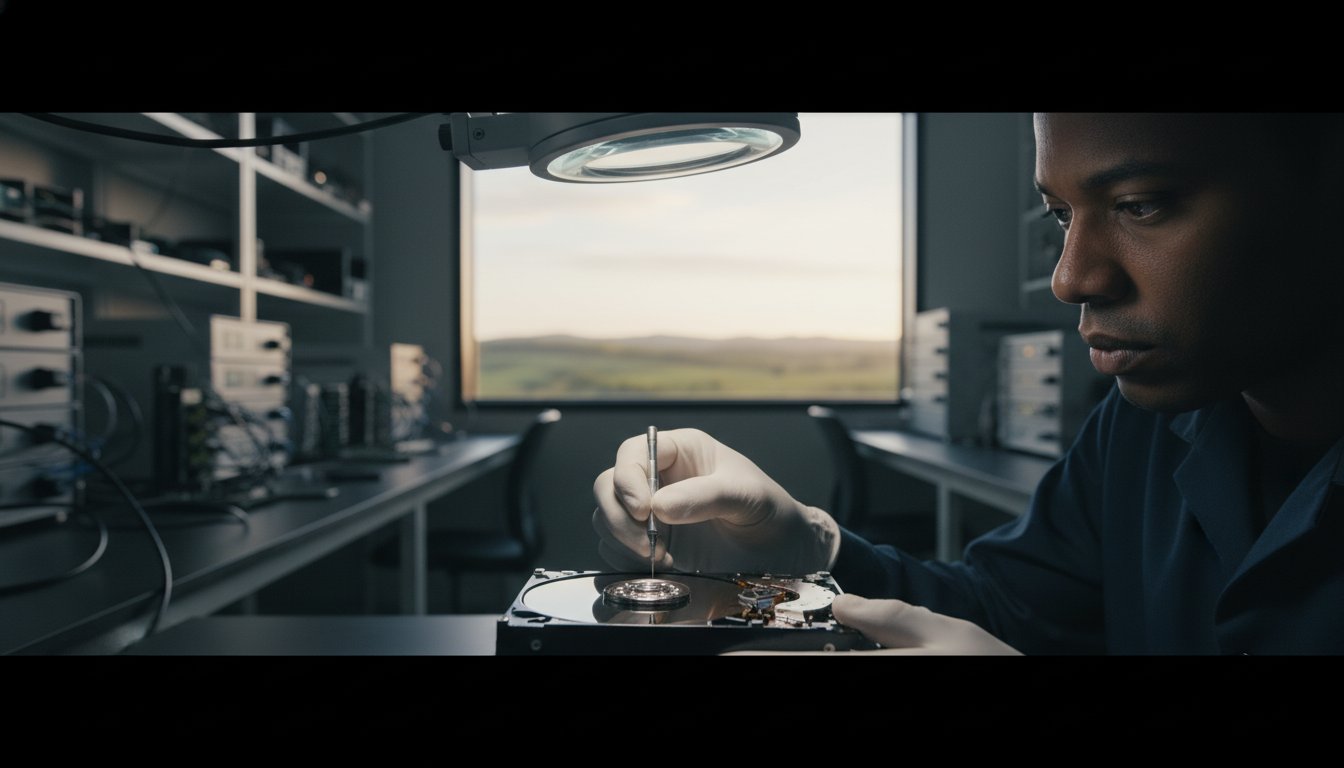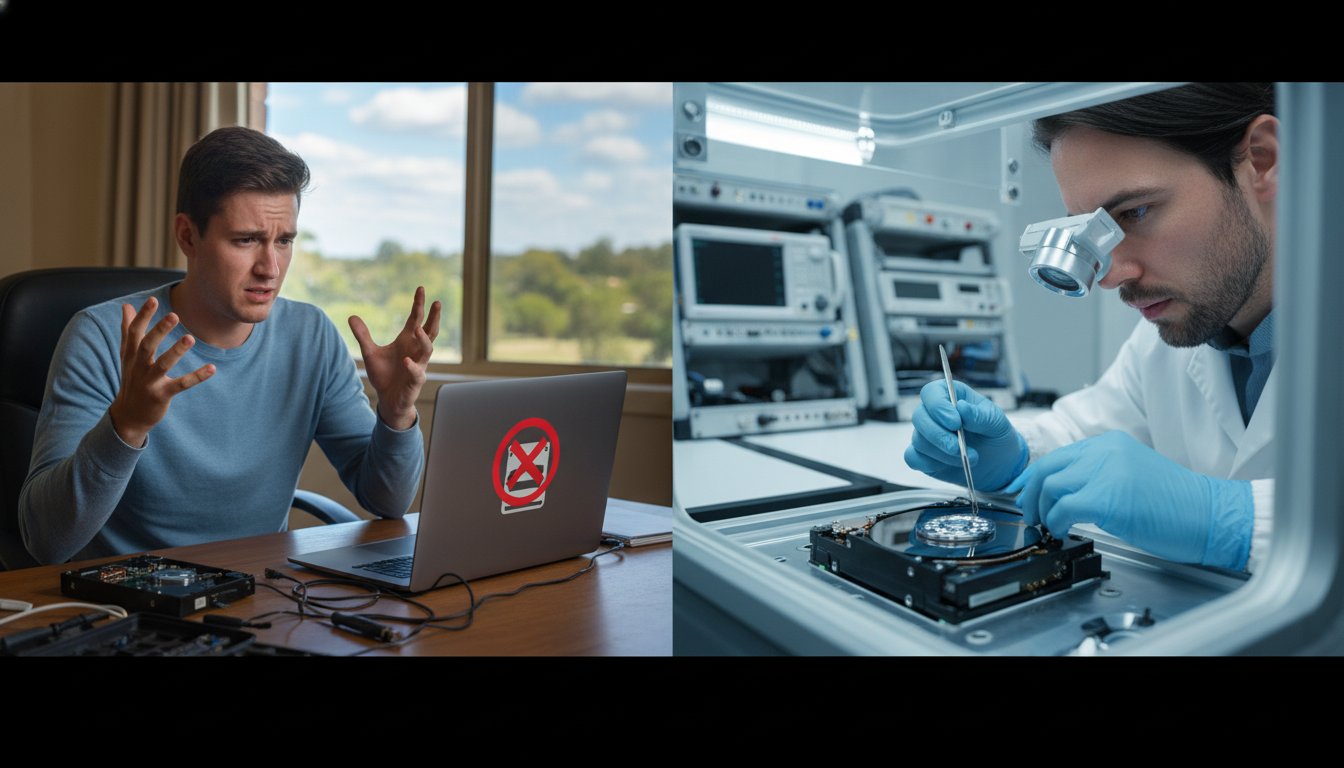
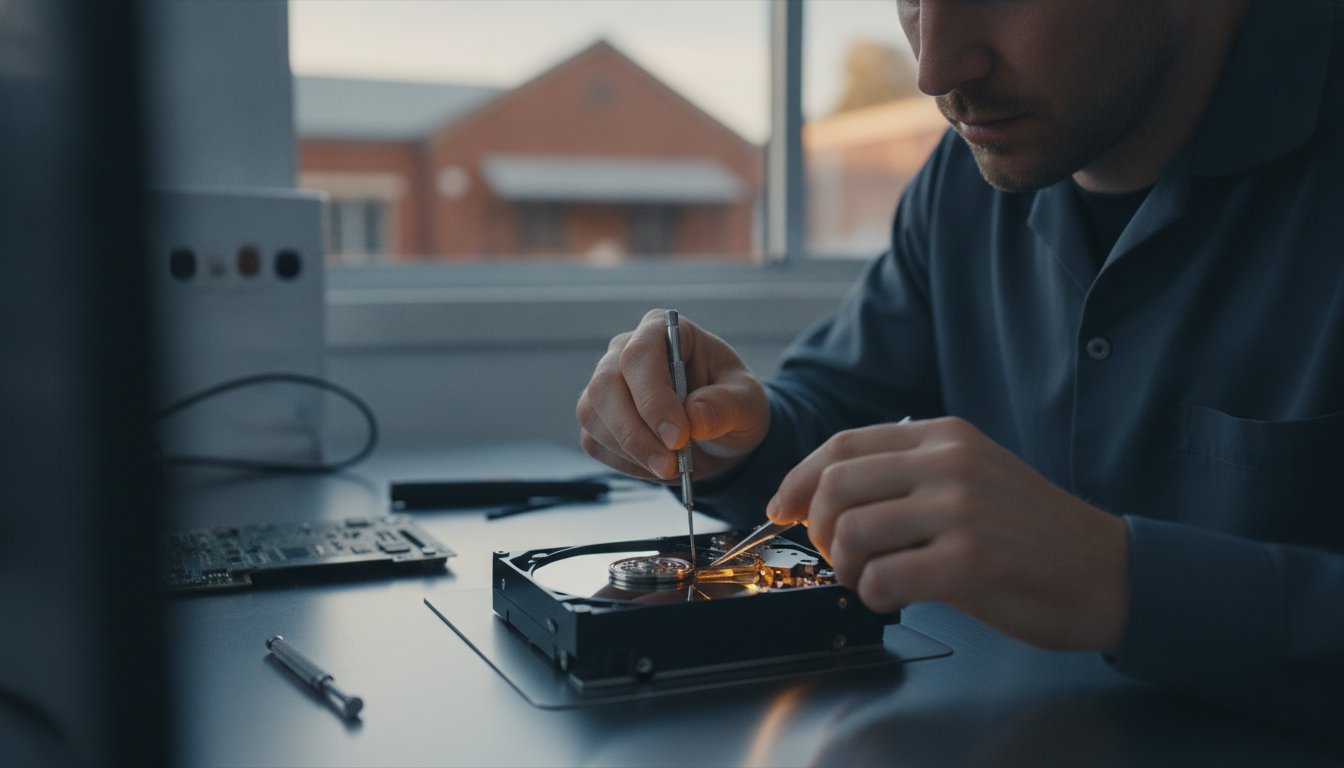
Professional Laptop Data Recovery Toowoomba: Getting Your Files Back Safely

Imagine opening your laptop to find years of family photos or critical business accounts have simply vanished. If you’re facing a clicking drive or a “device not found” error, you need reliable laptop data recovery Toowoomba services before a small glitch becomes a permanent loss.

We understand the immediate anxiety of losing your files and the confusion over whether to try a DIY fix or call in a professional. It’s frustrating to feel like your data is held hostage by a failing machine. You want your files back safely without the stress of hidden costs or the risk of mailing your device to a distant city. It’s a common worry, but having a local expert you can talk to face-to-face makes a world of difference.

In this article, you’ll discover how professional data recovery works and why local expertise in Toowoomba matters for your privacy and peace of mind. We will outline the exact steps to take when your drive fails and help you understand the recovery process from start to finish. We also explore how to distinguish between simple software glitches and serious hardware failures so you can make an informed decision for your device.

Key Takeaways

  • Understand the critical difference between simple logical errors and physical hardware failure to prevent permanent file loss.
  • Learn how professional laptop data recovery Toowoomba services use non-destructive diagnostics and drive imaging to safely clone and retrieve your data.
  • Discover why powering down your laptop immediately and documenting strange noises like clicking is the most important “first aid” step you can take.
  • Identify the hidden risks of using DIY recovery software on failing hardware and when it’s safer to consult a local expert face-to-face.
  • Establish a reliable future-proofing strategy using the 3-2-1 backup rule to ensure your business and personal files are always protected.

What Are Data Recovery Services and Why Do You Need Them?

When your laptop screen stays black or you see a flashing question mark, the initial panic is overwhelming. You likely have years of work, family memories, or financial documents stored on that drive. Data recovery is the specialized process of salvaging this information when it becomes inaccessible through normal means. Understanding what data recovery is can help lower your anxiety; in many cases, the files are still physically present on the storage platters or chips, even if your computer can’t find them.

Since 1999, Aspire Computing has provided professional laptop data recovery Toowoomba residents can rely on. From our local workshop in Newtown, we’ve helped countless home users and small businesses across the Darling Downs get their digital lives back on track. We focus on a reassuring, personal approach because we know how much these files matter to you.

To better understand how these files are retrieved from a technical perspective, watch this helpful video:

Logical vs. Physical Failure: Knowing the Difference

The strategy for a successful recovery depends entirely on the type of failure your device has suffered. We categorize these into two main groups: logical and physical. A logical failure occurs when the hardware is healthy, but the data is inaccessible due to accidental deletion, formatting, or file system corruption. It’s essentially a broken map to your files.

Physical failure is more serious. This involves mechanical damage, such as a crashing head in a hard drive or electronic component burnout on a modern SSD. If you hear clicking, grinding, or humming, you’re likely dealing with physical damage. At Aspire Computing, we treat these scenarios with distinct protocols. Physical failures require specialized tools to prevent further platter damage, while logical issues focus on sophisticated software reconstruction of the file directory.

Common Data Loss Scenarios for Toowoomba Laptop Users

Living in the Darling Downs brings specific challenges for electronics. The Toowoomba storm season often results in sudden power surges that can fry a laptop’s motherboard or drive controller. We also see many morning coffee mishaps or accidental liquid spills that happen during busy workdays in home offices. These liquids can quickly corrode delicate internal circuits.

Mechanical failure is another frequent culprit we see for laptop data recovery Toowoomba. Laptops are portable, so they get dropped, bumped in transit, or simply wear out over several years of constant use. Regardless of how it happened, the first rule is to stop using the device immediately. Continuing to power on a failing drive can overwrite the very files you want to save or turn a minor mechanical issue into a total loss.

The Professional Data Recovery Process: How Your Files Are Saved

Our approach to laptop data recovery Toowoomba starts with a strict safety first protocol. We don’t just plug your drive into a standard computer and hope for the best. That common mistake often leads to permanent data loss. Instead, we follow a methodical four step process designed to maximize the chances of a full recovery while protecting the integrity of your original files.

We start with a non-destructive diagnostic. This allows us to identify whether your drive has a burnt-out circuit board or a mechanical head failure without risking any further damage. Once we understand the health of the drive, we move to the imaging phase. We use specialized hardware to create a bit-for-bit clone of your drive. This clone is a perfect digital mirror of your data. By working on the clone rather than your original failing device, we ensure your hardware isn’t stressed any further.

After we have a stable image, we perform a logical reconstruction of the file system. This is where we piece together the directory structure, restoring your folders and files to their original state. Finally, we perform a secure data transfer. Your recovered files are moved to a brand new, reliable storage device. If you’re worried your drive is reaching its end, a professional hardware assessment can save you from a future emergency.

HDD vs. SSD Recovery: Different Tech, Different Challenges

Traditional Hard Disk Drives (HDDs) are mechanical. They contain spinning platters and moving read heads that eventually wear out or fail after a physical shock. Recovering data from these often involves stabilizing the mechanical components. Solid State Drives (SSDs) are different. They use flash memory and complex controllers. SSDs present unique challenges like the TRIM command, which can permanently wipe deleted data quickly. Controller failures in SSDs require deep technical knowledge of firmware. At Aspire Computing, we handle both laptop and desktop drive formats, regardless of the underlying technology.

RAID and Server Recovery for Toowoomba Businesses

RAID systems are common in Toowoomba small businesses, but they often create a false sense of security. Many owners believe RAID is a backup; it isn’t. It’s a system for redundancy. When parity errors occur or multiple drives fail simultaneously, the entire volume can vanish. Recovering these systems requires reconstructing the specific RAID array parameters. We help local businesses navigate these complex failures to get their operations back online. For more advice on keeping your office running smoothly, check out our guide on IT support for business.

Professional Recovery vs. DIY Software: When to Call an Expert

It’s tempting to download a “free” tool the moment you realize your files are missing. Software certainly has its place for simple tasks, like recovering a document you accidentally deleted from a healthy, functioning drive. However, the moment your hardware shows signs of fatigue, these tools often do more harm than good. Running consumer software on a failing drive is like forcing a car with a broken engine to keep driving at 100km/h. It accelerates the mechanical crash and can turn a recoverable situation into a permanent loss.

When you weigh the cost of a professional diagnostic against the value of your irreplaceable wedding photos or critical business tax records, the choice becomes clearer. A local specialist in laptop data recovery Toowoomba provides a safe, controlled environment where your drive isn’t stressed beyond its limits. We use hardware-level imagers that handle read errors far more gracefully than any Windows or Mac software ever could.

Security is another major factor that many users overlook. Many online recovery tools require you to upload data to untrusted cloud servers or grant deep permissions to your system. By choosing a local workshop in the Darling Downs, your sensitive information stays offline and under the personal supervision of a trusted expert. You don’t have to wonder who is looking at your files or where they are being stored.

The Danger of Free Recovery Tools

Free tools found on the internet often come with hidden strings. They may contain malware or aggressive adware that compromises your entire system’s security. Even worse, some tools require installation onto the same drive that contains the missing data. This act alone can overwrite the very sectors you want to save. Professional data recovery tools operate in read-only mode to prevent overwriting, a protection standard that consumer-grade software rarely provides.

Why Experience Matters: Aspire’s 25+ Years of Expertise

There is no substitute for time spent in the workshop. Since 1999, we’ve seen every type of storage failure imaginable, from the earliest hard drives to the latest high-speed NVMe chips. This long history allows us to provide a reassuring approach, explaining complex technical issues in plain English so you never feel left in the dark. We don’t just recover data; we provide a bridge to getting your technology back in working order. If your laptop needs more than just file retrieval, our Computer Repairs Toowoomba service can get your machine back to peak performance.

First Aid for Your Data: What to Do When a Drive Fails

The first hour after a drive failure is the most critical period for successful file retrieval. Your immediate reaction often determines whether your data is saved or lost forever. If your computer freezes or you receive a “disk boot failure” message, power down your laptop immediately and unplug it from the wall. If you suspect a mechanical issue, every second the drive remains powered on increases the risk of the read heads scratching the internal platters.

Before you pack your device for laptop data recovery Toowoomba, take a moment to listen for clues. If you hear clicking, grinding, or a faint humming sound, document it. These specific noises indicate a physical hardware failure. You must avoid running built-in repair utilities like CheckDisk or Mac’s First Aid in these scenarios. These tools are designed to fix software errors on healthy hardware. On a physically damaged drive, they perform intensive read/write operations that can cause a total mechanical collapse.

If your laptop has suffered a liquid spill, the rules change slightly. Keep the device in a static-safe environment. While some suggest rice, a better approach is to place the laptop in a large, sealed Ziploc bag to prevent the liquid from evaporating and leaving behind corrosive mineral deposits before a technician can clean it professionally. Getting the device to a workshop as quickly as possible is the best way to stop corrosion in its tracks.

The Local Advantage: Why Toowoomba Residents Benefit

Choosing a local expert gives you a significant security advantage over national providers. Many competitors require you to post your drive to a capital city, which introduces the risk of your sensitive hardware being lost or further damaged in the mail. By dropping your drive off at our workshop in Newtown, you eliminate shipping risks and get a faster turnaround on your status updates. We understand the local environment and have served the Darling Downs, Lockyer Valley, and Toowoomba suburbs for over two decades. You can speak directly to the person handling your data, ensuring total accountability.

Preparing for Your Diagnostic Appointment

To get the fastest results for your laptop data recovery Toowoomba, come prepared for your assessment. You should bring the laptop itself and the power cable, as the failure is sometimes related to the charging system rather than the drive. It’s also helpful to provide a short list of the most critical files or folders you need. This allows us to prioritize those specific sectors during the imaging process. When describing the failure, be as specific as possible about what happened right before the crash. If you’re ready to get started, Contact Aspire Computing today for a local assessment and expert advice.

Beyond Recovery: Preventing Future Data Disasters

While we specialize in laptop data recovery Toowoomba, our ultimate goal is to help you reach a point where you never need those services again. Successful recovery is a welcome relief, but it’s a reactive solution to a highly stressful event. Establishing a robust backup routine is the only way to guarantee your files stay safe regardless of hardware failure, theft, or accidental damage. We want to help you move from a state of digital anxiety to total peace of mind.

We recommend all our clients follow the industry-standard 3-2-1 backup rule. This strategy requires you to keep three copies of your data. Two of these copies should be stored on different types of media, such as your laptop’s internal drive and an external hard drive. The final copy must be stored off-site, usually in a secure cloud environment. This structure ensures that even if a local disaster like a fire or flood occurs in Toowoomba, your critical data remains accessible from any location.

Proactive maintenance plays a massive role in prevention. Many mechanical failures happen because a drive has simply reached the end of its functional life. Investing in hardware upgrades, such as swapping an aging mechanical hard drive for a modern Solid State Drive (SSD), significantly reduces the risk of a sudden mechanical crash. SSDs have no moving parts, making them far more resilient to the bumps and drops common with portable laptops.

Managed Backup and Business Continuity

For small business owners in the Darling Downs, simple file recovery isn’t enough to stay operational. You need a business continuity plan. This involves moving from reactive recovery to proactive data protection. We help local businesses implement encrypted cloud backups that synchronize automatically throughout the workday. When you pair these with local physical copies, you get the speed of local retrieval and the security of off-site storage. Maintaining system integrity through regular virus and malware removal also ensures your backups aren’t compromised by hidden threats.

Your Local Tech Partner in Toowoomba

Choosing a local partner means you have an approachable expert who understands your specific setup. We’ve been part of the Toowoomba community since 1999, and we’ve seen how technology has evolved over the decades. We treat every laptop that enters our Newtown workshop with the same care we give our own devices. Whether you’re currently facing a crisis or want to prevent one, we’re here to provide the local expertise you can trust. Get your files back with Aspire Computing and let’s secure your digital life for the long term.

Secure Your Digital Legacy Today

Losing access to your files is a stressful experience, but it doesn’t have to be a permanent one. By following the right first aid steps and avoiding the risks of unverified DIY software, you’ve already improved your chances of a successful recovery. Professional laptop data recovery Toowoomba services provide the specialized equipment and controlled environment needed to retrieve data safely from failing hardware; a level of care that consumer software simply cannot match.

At Aspire Computing, we’ve been serving the Toowoomba and Darling Downs region since 1999. You don’t need to worry about the risks of mailing your sensitive devices to a distant city. Our local workshop in Newtown is ready to help you face-to-face. Whether you’re a home user with precious photos or a small business managing a complex server, we bring over two decades of expertise to every job we handle.

Don’t leave your data to chance. Reach out today to discuss your situation with a local expert who treats your files with the same care as their own. Book Your Data Recovery Diagnostic in Toowoomba. We’re here to help you get back to normal as quickly and safely as possible.

Frequently Asked Questions

How much do data recovery services in Toowoomba typically cost?

The cost depends entirely on the type of failure and the amount of time required to stabilize the drive. Logical recoveries involving simple file corruption are generally the most affordable. Physical failures that require replacement parts or intensive hardware cloning are more complex and carry a higher cost. We provide a clear diagnostic first so you understand the specific requirements for your case before we begin any work.

Can you recover data from a hard drive that makes a clicking noise?

Yes, recovery is often possible, but you must stop using the drive immediately. A clicking sound usually indicates a physical failure where the read heads are struggling to find their position. If you keep the drive powered on, those heads can physically scratch the data platters and cause permanent loss. We use specialized equipment to stabilize these drives and clone the data safely in our workshop.

How long does the data recovery process usually take?

Most laptop data recovery Toowoomba projects are completed within two to five business days. The exact timeframe depends on the drive’s capacity and how many “bad sectors” our tools have to navigate. If a drive is physically failing, we have to read the data much more slowly to ensure we don’t cause further mechanical stress. We always keep you updated on the progress of your recovery.

Is it possible to recover files permanently deleted from the Recycle Bin?

Recovery is highly likely if you stop using the computer the moment you realize the mistake. When you delete a file, the computer doesn’t actually erase the data; it just marks that space as available for new information. If you continue to browse the web or save new documents, you might overwrite the very files you want to save. We use professional forensic tools to find and rebuild these “marked” files.

What happens if my data cannot be recovered by the technician?

If the data is truly unrecoverable due to severe platter damage or total chip failure, we will explain the technical reasons why. We follow a non-destructive diagnostic process to ensure we don’t make the situation worse. You will have a clear understanding of the state of your hardware, and we can then discuss options for a hardware replacement to get your laptop working again.

Can you recover data from a water-damaged laptop or device?

We can often retrieve data from liquid-damaged devices if the internal storage chips haven’t been short-circuited. The biggest threat is corrosion, which starts the moment the liquid hits the internal circuit boards. Don’t try to dry it out with a hairdryer or put it in rice. Bring it to us as soon as possible so we can professionally clean the components and access the data before corrosion sets in.

Is my data kept private and secure during the recovery process?

We treat your privacy with the highest priority. Your sensitive personal or business files never leave our secure Newtown workshop and are never uploaded to untrusted cloud servers. As a local expert serving the Darling Downs since 1999, we take personal accountability for your digital security. Once the recovery is complete and you’ve verified your files, we securely wipe any temporary clones we made during the process.

Do I need to bring my whole laptop in or just the hard drive?

It’s usually best to bring the entire laptop. Sometimes what looks like a drive failure is actually a problem with the laptop’s motherboard, power connector, or internal cables. Having the whole machine allows us to perform a complete diagnostic and rule out other issues. If the drive is healthy but the laptop is broken, we can often perform the laptop data recovery Toowoomba and then help you move your files to a new device.

Imagine sitting at your desk in Toowoomba, ready to open that folder of family photos or your critical business records, only to hear a rhythmic, metallic clicking sound. That sinking feeling in your stomach is something we see often at Aspire Computing. With the annualized failure rate for hard drives sitting at 1.36 percent as of 2025, you aren’t alone in this crisis. If you’re currently staring at a blank screen, don’t panic. You can still achieve a successful data recovery from a failed hard drive Toowoomba without sending your device to a distant, overpriced corporate lab.

We understand the anxiety surrounding your privacy and the fear that your files are gone forever. It’s a heavy burden, especially since 60 percent of small businesses that suffer severe data loss shut down within six months. This guide promises to help you identify the exact type of failure you’re facing and the precise steps to take to protect your data. We’ll explore how local expertise provides the fastest path to recovery and why some DIY software can actually make things worse. You’ll learn how to distinguish between simple software glitches and physical damage, ensuring your important folders are back where they belong.

Key Takeaways

  • Learn why a “failed” drive doesn’t mean your files are gone and why staying calm is your first step toward a successful recovery.
  • Discover how to distinguish between logical file system errors and physical hardware damage to avoid making the situation worse.
  • Understand why attempting data recovery from a failed hard drive Toowoomba with retail software can often lead to permanent data loss.
  • See why working face-to-face with a local expert like Chaim Lee eliminates shipping risks and provides the personal reassurance you need.
  • Explore our non-destructive diagnostic process designed to safely identify your recovery options without further risking your precious files.

Understanding Hard Drive Failure: Why Your Data is Likely Still There

Hard drive failure happens when the mechanical or electronic parts of your storage device stop working properly. It’s a stressful moment, but it doesn’t mean your files have vanished into thin air. If you’re currently seeking data recovery from a failed hard drive Toowoomba, the most important rule is simple: don’t panic. Most data remains physically on the internal platters even when the drive refuses to boot. In 2025, the annualized failure rate for hard disks was 1.36 percent, which means thousands of users face this exact issue every week. At Aspire Computing, we see these cases daily and know that with the right approach, your folders are usually still retrievable.

Your actions in the first five minutes after a crash are critical. If you hear a strange noise or your screen freezes, power the device down immediately. Don’t just shut down through Windows; unplug the power cable from the wall. This stops the read/write heads from physically scraping across the magnetic platters. This scraping, known as scoring, can grind away the actual magnetic film where your data lives, making it impossible to recover. By 2026, data recovery technology has advanced significantly. We now use AI-driven tools and machine learning to bypass damaged sectors and reconstruct files that older methods might have missed entirely.

Common Signs of a Failing Hard Drive

The most famous warning sign is the “Tick of Death,” a rhythmic clicking or grinding sound. This happens when the mechanical arm fails to find its position and hits the internal stop. You might also experience frequent Blue Screen of Death (BSOD) errors or sudden system freezes that require a hard restart. Another red flag is the “Cyclic Redundancy Check” (CRC) error. This occurs when the drive’s firmware detects that data has been corrupted or is unreadable, often because the physical storage medium is starting to degrade. If files start disappearing or folders take minutes to open, your drive is likely in its final stages of life.

The Difference Between HDD and SSD Failure

Traditional Hard Disk Drives (HDDs) usually suffer from mechanical issues, such as motor seizures or head crashes, because they have moving parts. Solid State Drives (SSDs) have no moving parts, but they often fail due to controller chip malfunctions or electrical surges. Recovering data from an SSD is often more complex and requires specialized digital tools to communicate directly with the memory chips. Sometimes, a drive might suffer from an “invisible” failure where the firmware, the internal software that runs the drive, becomes corrupted. This makes the drive appear physically dead to your computer, even though the data chips or platters are perfectly healthy.

Logical vs. Physical Failure: Diagnosing Your Drive in Toowoomba

Identifying the specific problem is the first priority. Logical failures happen when the drive is physically healthy but the file system is corrupted, accidentally formatted, or deleted. In these cases, we use a technique called “ghosting” or “cloning.” This creates a bit-for-bit copy of your drive onto our secure equipment. We then work on the copy, not your original hardware. This ensures that if something goes wrong during the scan, your original data remains untouched. While enterprise data recovery focuses on massive server arrays, the same principles of non-destructive cloning apply to your home or small business drive right here in Newtown. Understanding this difference is vital when starting data recovery from a failed hard drive Toowoomba.

Physical failure is more serious. This involves head crashes, motor seizures, or PCB (circuit board) damage. If your drive isn’t spinning or makes the clicking noises mentioned earlier, it’s likely a physical issue. Repairing these requires a clean room environment. A single speck of dust is larger than the gap between the read head and the platter. If dust gets inside, it acts like a boulder, causing permanent damage. If you suspect hardware damage, seeking professional Data Recovery Services is the only way to safely inspect the internal components without risking your files.

When is a Drive “Beyond Repair”?

People often worry their data is gone forever after a crash. A drive is truly beyond repair only when the magnetic platters have severe physical scoring. This happens when the read head physically touches and scrapes the surface. You should never open a hard drive case yourself. Doing so outside of a controlled lab introduces contaminants that can destroy your files in seconds. Professional diagnostics can often find hope where “free” internet software fails because we use hardware-level tools that bypass the operating system entirely.

Software Corruption and Malware

Sometimes, what looks like a hardware death is actually a sophisticated virus. Certain malware can lock the master boot record, making the computer think the drive has failed. This is why our process often bridges the gap between data recovery and Virus and Malware Removal. Ransomware is a particularly stressful example, as it encrypts your files and demands payment. If you see a ransom note, shut down immediately. Recovering from a failed hard drive Toowoomba is much more successful when we catch these infections before they overwrite your backup files. If you aren’t sure what’s wrong, feel free to talk to our local experts for a clear diagnosis.

Professional Recovery vs. DIY Software: The Risks

When your computer stops booting or your external drive disappears from the desktop, your first instinct might be to search for a quick fix online. You’ll find dozens of “free” tools promising instant results. However, attempting data recovery from a failed hard drive Toowoomba using consumer software can be a dangerous gamble with your most precious memories. Professional recovery is fundamentally different from clicking a ‘scan’ button on a downloaded app. Consumer software relies on your computer’s operating system to communicate with the drive. If the drive is physically failing, the OS will keep trying to read bad sectors, forcing the mechanical arm to work harder until it finally crashes for good.

Professional experts like Chaim Lee at Aspire Computing use hardware-based imagers rather than simple software. These specialized devices control the drive at a firmware level, skipping damaged areas and reducing the physical stress on internal components. This surgical approach is a key distinction highlighted in the Forbes Advisor’s guide to data recovery services, which notes that professional labs have tools that far exceed anything available to the general public. There’s also the issue of privacy. When you use a free online repair site, you don’t know where your data is stored or who has access to your private tax documents and family photos.

The Pros and Cons of DIY Data Recovery

DIY recovery has its place, but only under very specific conditions. If you’ve accidentally deleted a file on a perfectly healthy drive, software might work. But if the drive is showing any signs of failure, the risks usually outweigh the rewards.

  • Pros: It’s a low-cost option for simple accidental deletions on functional hardware where no physical damage exists.
  • Cons: You risk overwriting the very data you want to save. Installing recovery software on the failing drive is the most common way people destroy their own files permanently.

The “One Shot” rule is real in this industry. A failing drive often has a limited number of rotations left before the motor or heads give out completely. Spending those final rotations on a slow, aggressive software scan usually means the drive will be dead before a professional gets a chance to see it. This can turn a fixable $200 job into an unrecoverable disaster.

Why Clean Room Technology Matters

Hard drives are incredible marvels of engineering. The platters inside spin at 7200 RPM, while the read heads hover just nanometers above the surface. A single speck of dust is massive by comparison. If dust enters the drive casing, it acts like a piece of shrapnel. This is why we emphasize that if you hear a clicking or grinding noise, software will never fix the problem. You need specialized tools to bypass faulty internal components in a controlled, dust-free environment. If you’re facing data recovery from a failed hard drive Toowoomba, stop the software scans the moment you suspect a physical issue. Keeping the drive powered off is the best way to protect your chance of a successful recovery.

Why Local Toowoomba Data Recovery Beats National Lab Mailing

Many national companies claim to have a presence in our city, but they’re often just mailing addresses or drop-off points. When you need data recovery from a failed hard drive Toowoomba, you deserve to speak with the person actually performing the work. Mailing your drive across the country introduces unnecessary risks. Even with careful packaging, shipping a sensitive, failing mechanical device in a cardboard box is a gamble. Vibration and impact during transit can turn a minor head issue into a catastrophic platter scrape. By choosing a local expert, you eliminate these shipping risks entirely and keep your hardware in safe hands.

At Aspire Computing, we’ve been part of the community since 1999. Chaim Lee provides the face-to-face reassurance that big corporate labs simply can’t match. You can walk into our office in Newtown and explain exactly which folders are most important to you. This personal connection ensures your priorities are our priorities. National labs often have a queue system that can leave you waiting weeks just for an initial assessment. Because we’re local, our diagnostics often happen within 24 to 48 hours. This faster turnaround is essential for local businesses that need to maintain continuity.

Convenience for Toowoomba Suburbs

We serve the entire region, including Newtown, Darling Heights, Mount Lofty, and the surrounding Lockyer Valley. For small businesses that can’t afford to leave the office, we offer on-site pickup options. Being local means we understand the specific environmental factors that affect hardware here. We’ve seen how the frequent power surges in Queensland can fry a drive’s PCB. Our deep understanding of computer repairs Toowoomba allows us to diagnose these local issues quickly and effectively.

Personal Accountability and Privacy

Privacy is a major concern for our clients, especially those handling sensitive medical or legal data. When you use a national lab, your drive might be handled by dozens of anonymous technicians in a different state. With Aspire Computing, your data stays right here in Toowoomba. We provide a direct line of communication; you’ll never be stuck in a call center queue. This level of personal accountability is why local residents have trusted us for over 25 years. If you’re worried about your files, talk to our local experts today for a confidential consultation and get your data back safely.

  • Talk directly to the technician handling your drive.
  • Avoid the risk of your data being lost or damaged in the post.
  • Benefit from same-day or next-day local diagnostics.
  • Ensure your sensitive information never leaves the Toowoomba region.

The Aspire Computing Recovery Process: Your Path to Getting Files Back

We know that losing access to your files feels like a digital emergency. Our process for data recovery from a failed hard drive Toowoomba is designed to be methodical, transparent, and above all, safe for your data. We don’t believe in guesswork. Instead, we follow a structured path that keeps you informed at every stage, ensuring you feel in control of your information. Our goal is to move you from a state of panic to a state of relief as quickly as possible.

Our five-step method begins with a free initial consultation. You’ll talk directly to Chaim Lee about what happened and which specific files or folders you need most. Next, we perform a non-destructive diagnostic. This means we assess the drive’s condition using specialized equipment that doesn’t risk further damage to the internal platters. Once we identify the issue, we provide a clear quote and a list of recoverable files. You’ll know exactly what can be saved before we proceed. After your approval, we perform the secure recovery, transferring your data to a healthy new drive or secure cloud storage. Finally, we invite you to verify the data to ensure everything you expected is present and functional.

What Happens After Recovery?

Getting your files back is a huge relief, but it’s also a wake-up call. To prevent a repeat of this stress, we help you implement a robust Data Backup system. Whether it’s high-quality external drives or automated cloud file sharing, having a secondary copy is non-negotiable. For our local companies, we integrate these protection layers into a broader it support for business strategy. This ensures your continuity is protected against hardware failure, accidental deletion, or cyber threats. Our goal is to ensure you never have to face a data crisis again.

Ready to Recover Your Data?

Time is a critical factor when dealing with hardware failure. The longer a failed drive sits or is subjected to repeated boot attempts, the higher the risk of the magnetic surface degrading. Professional data recovery from a failed hard drive Toowoomba is most successful when the drive is handled early. Don’t wait until a minor mechanical issue becomes a permanent loss. You can find us on Brigalow St in Newtown for immediate, local assistance. We’re here to provide the expert help you need to get your digital life back on track. Contact Chaim Lee today for a local data recovery quote and let us help you protect and connect your technology once more.

Secure Your Files and Restore Your Peace of Mind

Facing a silent computer screen or a clicking drive is overwhelming, but your files are rarely gone forever. You now know how to spot the signs of failure and why powering down immediately is the most important step you can take. By choosing a local approach over national mailing labs, you protect your hardware from transit damage and keep your sensitive data within our community. Professional intervention ensures that a simple software glitch doesn’t turn into a permanent hardware disaster.

Aspire Computing has been a trusted part of the region since 1999. We specialize in helping home offices and small businesses with expert technical support that big corporate labs can’t replicate. When you need data recovery from a failed hard drive Toowoomba, our methodical, non-destructive process gives you the best chance of a successful result. Don’t let a hardware crash disrupt your life any longer. Talk to Chaim Lee at Aspire Computing for Expert Data Recovery and let us help you get your data back safely. Your precious files are worth the professional care we provide.

Frequently Asked Questions

How much does data recovery cost in Toowoomba?

Costs depend on the complexity of the failure and the parts required. Verified industry data for 2026 shows professional assessments are the only way to get an accurate quote. For example, some specialized providers start at $195 for simple issues and reach $990 for mechanical repairs. We provide a clear quote after our diagnostic so you aren’t hit with hidden fees. This transparency helps you decide if the recovery is viable for your budget.

Can you recover data from a hard drive that won’t spin?

Yes, we can recover data from a drive that doesn’t spin. This problem typically stems from a seized motor or a failed circuit board (PCB). These are physical hardware failures that require specialized tools to bypass or repair. It’s a complex process, but our technical expertise allows us to stabilize the drive long enough to extract your folders. Never try to “force” the drive to spin, as this causes permanent damage.

How long does the data recovery process usually take?

Local diagnostics usually take between 24 and 48 hours. The actual recovery time depends on the drive’s capacity and the health of the hardware. A simple logical recovery might finish in three days, while a failing physical drive could take five business days to image safely. Choosing a local expert means you don’t waste time on shipping, which often adds an extra 10 days to the total turnaround at national labs.

Is it possible to recover files after a factory reset or formatting?

Recovery is often possible after a format or reset if you stop using the device immediately. When you format a drive, the computer marks the space as “empty,” but the actual data remains until it is overwritten by new files. Successful data recovery from a failed hard drive Toowoomba depends on how much the drive has been used since the reset. We use deep-scan tools to reconstruct these lost file headers.

What should I do if my external hard drive is clicking?

You should unplug the drive from the wall or USB port right away. A clicking sound indicates the read/write heads are failing to find their position and are physically hitting the internal stop. Every click represents a risk of the head scratching the platter surface. Don’t try to run “fix-it” software you found online. These tools can’t fix mechanical parts and will only accelerate the drive’s total collapse.

Do you provide data recovery for small businesses in the Lockyer Valley?

Yes, we support small businesses throughout Toowoomba and the Lockyer Valley. We understand that data loss can halt your operations, so we offer flexible service options to get you back online. Our 25 years of experience means we’re familiar with the specific IT needs of local agricultural and professional firms. Whether you’re in Gatton or Withcott, we can arrange a secure way to assess your failing hardware.

Can you recover data from a water-damaged laptop?

Recovery is possible if the internal storage media hasn’t been destroyed by corrosion or short circuits. If your laptop gets wet, don’t try to turn it on or dry it with a hairdryer. These actions can fry the delicate electronics. We carefully remove the drive and clean the components using professional grade solutions. As long as the platters or memory chips are intact, we can usually retrieve your important documents.

Will my data be kept confidential during the recovery process?

We guarantee complete confidentiality for all recovered data. Your files stay right here in Toowoomba and aren’t sent to a massive, anonymous processing center. As a local business established in 1999, our reputation relies on the trust of our clients. Chaim Lee personally ensures that your sensitive business records or private family photos are handled with the highest level of security and professional ethics throughout the entire process.

Imagine you just plugged in your external drive to find last year’s tax records, but instead of your files, you hear a rhythmic clicking sound. It is a gut-wrenching moment that 46% of computer users experience at least once a year according to 2023 industry reports. You might be tempted to download the first tool you find online, but the choice between data recovery software vs professional service isn’t always about price. We understand the panic that sets in when irreplaceable family photos or vital business documents seem to vanish. It’s natural to want a quick fix, but sometimes a cheap software download can turn a recoverable issue into a permanent data loss.

This article provides a clear “stop/go” framework to help you decide when to trust DIY methods and when calling a professional is the only way to save your files. We’ll explain the true cost of a failed recovery attempt and how to identify physical drive failure before you cause more damage. At Aspire Computing, we’ve supported the Toowoomba community since 1999, so we know exactly how to protect your digital life. We will walk you through the technical risks so you can make an informed decision and get back to work with confidence.

Key Takeaways

  • Understand the critical difference between logical errors and physical drive failure to avoid the “broken leg” mistake of running software on a damaged disk.
  • Learn to identify the specific scenarios where a budget-friendly DIY tool is a safe bet, helping you settle the debate of data recovery software vs professional service before risking your data.
  • Discover why the repeated “stress tests” performed by recovery software can cause permanent mechanical damage to a clicking or beeping hard drive.
  • Explore what happens inside a professional Class 100 Cleanroom and why specialised equipment is often the only way to retrieve data from a physically failed device.
  • Get peace of mind with a local expert diagnostic in Toowoomba to ensure you don’t risk your precious memories or business data with the wrong recovery method.

The Data Recovery Dilemma: Logical vs. Physical Failure

Losing years of family photos or critical business spreadsheets feels like a punch to the stomach. Your first instinct is likely to search for a quick fix online, but your next move determines if those files are gone forever. At Aspire Computing, we’ve helped Australians since 1999 recover from these exact moments. The most vital rule is simple: don’t panic. Panic leads to impulsive DIY attempts that often turn a recoverable situation into a permanent loss. Deciding between data recovery software vs professional service depends entirely on how your drive failed.

To choose the right path, you must understand the two main types of data recovery: logical and physical. Logical failure happens when the drive’s hardware is healthy, but the software or file structure is corrupted. Physical failure means the internal components, like the read/write heads or the motor, have actually broken down. Using software on a physically damaged drive is like running a marathon on a fractured leg. The more you “run” the drive by keeping it powered on, the more the internal parts grind against each other, destroying the data surfaces.

To better understand this concept, watch this helpful video:

Roughly 20% of data loss cases involve physical damage that requires a controlled cleanroom environment. If you suspect hardware damage, software won’t help; it will only make things worse. In Australia, professional lab recovery for mechanical failures can range from A$500 to over A$3,000 depending on the complexity. However, if the issue is purely logical, you might save money by using a data recovery software vs professional service approach. Use the checklists below to self-diagnose your device’s health before you take action.

Signs of Logical Data Loss (Software-Safe)

  • You accidentally deleted files or emptied the Recycle Bin on your PC.
  • A drive was formatted by mistake, but it still sounds smooth and quiet when plugged in.
  • The file system shows as “RAW” in Windows, yet the drive is still detected at its full correct capacity.
  • The drive is visible in Disk Management and doesn’t cause your computer to freeze or lag.

Warning Signs of Physical Drive Failure (Danger Zone)

  • The drive makes audible cues like clicking, rhythmic beeping, or a high-pitched grinding sound.
  • Your computer stops responding or slows down to a crawl the moment the drive is connected.
  • The device is not detected in the BIOS or Disk Management at all.
  • You see frequent “I/O Device Error” messages, which often indicate the hardware is struggling to read basic sectors.

When Data Recovery Software is a Safe and Effective Choice

If you’ve accidentally hit delete on a precious folder, don’t panic. For many logical errors, a DIY approach is quite effective. You can typically find reputable software for between A$75 and A$150. This is often the first crossroad in the data recovery software vs professional service debate. Tools like Recuva or the open-source PhotoRec work by scanning the drive for file headers that the operating system has marked as empty space.

The most vital rule is to never install software on the drive you’re trying to save. Doing so can overwrite the very data you want back. Instead, use a secondary drive or a “Live USB” to run the data recovery process safely. This keeps the original drive in a read-only state, which is the only way to ensure you don’t cause further damage. If you’re unsure about the health of your hardware, it’s always safer to talk to the experts at Aspire Computing before proceeding.

The Best Use Cases for DIY Software

Software is a great choice for healthy hardware. If you’ve accidentally formatted a 64GB SD card from your camera or deleted a Word doc from a functioning HDD, DIY tools usually succeed. These programs are designed to rebuild minor partition table corruption on secondary storage. Since 1999, we’ve seen these tools save thousands of family photos that seemed lost forever. It’s an excellent first step for non-mechanical issues on external media.

The SSD Exception: Understanding TRIM

Modern Solid State Drives (SSDs) are different. They use a command called TRIM, which was introduced around 2010 to maintain drive speed. When you delete a file on an SSD, TRIM tells the controller to immediately wipe those data blocks. This makes data recovery software vs professional service a simpler choice; software rarely works for deleted files on modern laptops. Professional intervention is usually the only way to bypass these hardware-level commands, though even then, the window of opportunity is small. If your SSD has failed or files were deleted, stop using the device immediately to prevent the TRIM command from completing its cycle.

The Fatal Mistake: Why Software Can Destroy a Failing Drive

When your computer stops booting or your external drive starts clicking, the temptation to download a quick fix is high. However, running DIY software on a physically failing hard drive is the most common reason for permanent data loss. Inside a traditional hard drive, platters spin at speeds up to 7,200 RPM while read/write heads hover nanometres above the surface. If a component is failing, the drive’s mechanical balance is compromised. Software works by scanning every single sector on the disk to find lost files. This acts as an unintended stress test, forcing a crippled drive to work at maximum capacity for hours on end.

This intense activity often leads to a “Head Crash,” where the read head makes physical contact with the spinning platter. This doesn’t just delete files; it physically scrapes the magnetic coating off the disk. When evaluating software vs. service, the biggest risk is that a simple A$300 recovery can quickly escalate into a A$3,000 clean-room disaster if the media is physically shredded. At Aspire Computing, we’ve seen many cases where “just trying it once” with a home utility turned a recoverable drive into a paperweight.

The Danger of Continued Power-On

Every second a failing drive spins, it edges closer to total failure. One of the biggest threats to your data is actually Windows “Automatic Repair.” This utility is designed to fix software errors by writing new data to the drive, which can overwrite your deleted files or cause a mechanical breakdown. Media damage is the permanent removal of the magnetic layer from a platter.

Why Free Software Often Lacks Safety Features

Most consumer-grade software is designed for healthy drives with simple file system errors. These tools are often aggressive and try to “repair” the directory structure. In contrast, professional tools are strictly “read-only” to ensure no data is altered. Using the wrong tool for data recovery software vs professional service decisions can lead to the software overwriting the very blocks of data you need to save. Professional technicians always follow a strict protocol:

  • Immediate power-down of the affected device to prevent further wear.
  • Creating a bit-by-bit “clone” of the drive using specialised hardware-level imagers.
  • Performing all recovery attempts on the clone, never the original failing hardware.

Since Chaim Lee founded Aspire Computing in 1999, we’ve prioritised these safety steps to protect our clients’ digital lives. Don’t risk a permanent crash by running unverified software on a drive that’s making unusual noises. It’s always safer to talk to the experts first.

Professional Data Recovery Services: What Happens Behind the Lab Door

If you’ve looked at the price of expert help, you might have felt a moment of sticker shock. It’s common to wonder why a specialist quote is higher than a software subscription. The reality is that professional labs operate more like surgical theatres than IT offices. When we weigh the choice of data recovery software vs professional service, we’re looking at the difference between a basic DIY fix and a high-tech intervention. Professional recovery involves expensive infrastructure and decades of engineering expertise that software simply cannot replicate.

The core of a professional lab is the Class 100 Cleanroom. These environments are strictly controlled to ensure fewer than 100 particles of dust per cubic foot of air. This is vital because a modern hard drive platter spins at 7,200 RPM, with the read/write head hovering just nanometres above the surface. A single microscopic speck of dust, which is about 0.5 microns in size, acts like a boulder on a highway. If dust enters a drive opened in a normal room, it will cause a “head crash,” destroying your data forever. Labs provide the only safe environment for these delicate physical repairs.

Firmware and Component Repair

Many “dead” drives don’t actually have broken parts; they have corrupted internal software called firmware. This is the drive’s own operating system that tells it how to function. When firmware fails, your PC won’t even recognise the device is plugged in. No retail software can reach this level of the hardware. Engineers use specialized hardware imagers to bypass these errors and communicate directly with the drive’s microcode.

If the failure is mechanical, engineers perform a “head swap.” This requires sourcing an identical “donor drive” from the same manufacturing batch to ensure the parts match perfectly. They then transplant the healthy heads into your damaged drive with extreme precision. These labs also use advanced imagers that can skip over bad sectors, saving the healthy data before the drive fails completely. It’s a methodical process designed to get your files back without causing further stress to the hardware.

Security and Confidentiality

For Australian businesses handling sensitive medical records or financial data, security is a non-negotiable factor. Sending a drive to a professional lab ensures a clear chain of custody and high-level encryption protocols. Most reputable specialists also offer a “No Data, No Fee” guarantee. This means you don’t pay the full recovery fee unless they successfully retrieve your critical files, which provides peace of mind during a stressful situation.

Deciding if the investment is worth it often comes down to the value of what’s lost. For a business, the cost of several days of downtime can far exceed the A$800 to A$2,000 typically spent on recovery. For families, the sentimental value of ten years of photos is often priceless. If your data is irreplaceable, skipping the DIY attempts and going straight to a lab is the safest path to success. You can learn more about the technical steps involved by visiting our Data Recovery Services page.

Don’t risk your precious memories or business files with trial and error. Talk to the experts at Aspire Computing for a professional assessment of your drive.

Choosing the Right Path in Toowoomba: How Aspire Computing Helps

When you realise your files are missing, your first instinct might be to download a random tool or ship your drive to a lab in Sydney or Brisbane. For residents across Toowoomba and the Darling Downs, there is a better way. Aspire Computing provides a local, honest first-look diagnostic that cuts through the confusion of data recovery software vs professional service. Chaim Lee brings technical expertise directly to your door, whether you are in Highfields, Westbrook, or the Toowoomba CBD. We come to you, so you don’t have to worry about your sensitive hardware getting lost in the mail.

Our approach is built on personal accountability. Since 1999, Chaim has helped locals recover from digital disasters with a calm, professional manner that takes the panic out of the situation. We don’t just look at the drive; we look at the whole picture. Sometimes the solution is a simple fix that doesn’t require expensive, invasive procedures. By choosing a local expert, you get a face-to-face explanation of what went wrong and a clear path to getting your data back safely.

Local Diagnostic vs. Expensive Mail-In Labs

Large national labs often charge hundreds of dollars just for an initial assessment, and that is before you pay for shipping. Often, the issue isn’t a catastrophic internal failure but a faulty power cable or a failed external enclosure. Our “Don’t Panic” assessment identifies these external hardware failures immediately. If your PC is acting up, a Computer Repairs Toowoomba check-up can often resolve the issue for a fraction of the cost of a lab recovery. We determine the exact failure type before you spend a single cent on software that might not even work for your specific problem.

  • Avoid high shipping costs and the risk of transit damage.
  • Identify simple hardware faults like faulty ports or cables.
  • Receive a transparent quote based on Australian market rates.
  • Get an honest opinion on whether data recovery software vs professional service is the right move for your budget.

Preventing Future Data Loss

Recovery is a last resort; active protection is the real goal. We help Toowoomba small businesses and home offices implement the 3-2-1 backup rule. This means keeping three copies of your data, on two different media types, with one copy stored securely off-site. Moving from aging mechanical hard drives to modern Hardware Upgrades like Solid State Drives (SSDs) also significantly reduces the risk of physical failure. Our “Protect and Connect” philosophy ensures your system is resilient, fast, and always backed up so this nightmare never happens again.

Don’t let a hardware failure ruin your week or your business continuity. Contact Chaim at Aspire Computing today for a professional data assessment and get your digital life back on track with a local expert you can trust.

Secure Your Files With a Toowoomba Expert

Losing your photos or business documents is stressful, but you don’t have to navigate the data recovery software vs professional service debate alone. If your hard drive is making clicking sounds or has suffered a physical drop, stop what you’re doing immediately. Running DIY software on a failing drive often causes permanent data loss by putting too much strain on damaged components. Since 1999, Aspire Computing has provided the reassurance and technical skill needed to rescue lost data for the local community.

Chaim Lee offers a personal touch that big corporate labs can’t match, providing on-site support throughout Toowoomba and surrounding suburbs. We’ve spent over 24 years refining our recovery processes to ensure your hardware receives the highest level of care. Choosing a professional path isn’t just about technical tools; it’s about the peace of mind that comes from experienced local hands. Don’t risk your digital life on a guess when expert help is right around the corner.

Talk to the experts at Aspire Computing for a professional data assessment

Your data is important, and we’re here to help you get it back safely.

Frequently Asked Questions

Is it safe to use free data recovery software?

Free data recovery software is safe only if your storage device is physically healthy and you’re recovering a few accidentally deleted files. If your drive makes unusual noises or freezes your computer, using software can cause permanent data loss by forcing the failing hardware to work harder. You should always install the software on a separate drive to avoid overwriting the very data you’re trying to save.

How much does professional data recovery cost in Australia?

Professional data recovery in Australia typically ranges from A$300 for basic logical fixes to over A$3,000 for complex mechanical repairs. These figures reflect 2023 industry price standards for laboratory work across Queensland and New South Wales. The final price depends on whether your drive needs a cleanroom environment or specific donor parts to function during the extraction process.

Can I recover files from a clicking hard drive using software?

You cannot recover files from a clicking hard drive using software because the sound indicates a physical mechanical failure. A clicking noise usually means the read/write heads are failing or making contact with the platters. Running software on a clicking drive often leads to a total “head crash,” which makes your data unrecoverable even for specialists with advanced equipment.

Why is my SSD not showing up after I deleted a file?

Your SSD might not show up because of the TRIM command, which is a feature found in roughly 95 percent of modern solid state drives. When you delete a file, TRIM tells the SSD to wipe those data blocks immediately to maintain high performance. This background process can sometimes cause the drive controller to stop responding or make the deleted partition appear invisible to your operating system.

What should I do immediately after I realise my data is missing?

Stop using the device immediately and power it down to prevent the system from overwriting your lost files. Every minute the computer stays on, it writes background logs and temporary files that can destroy your data forever. Understanding the risks of data recovery software vs professional service is vital here, as continuing to use the drive reduces your recovery success rate to below 15 percent.

How long does professional data recovery usually take?

Most professional data recovery cases take between 2 and 10 business days to complete from start to finish. Simple logical recoveries are often finished within 48 hours, while complex mechanical failures requiring donor parts from interstate can take longer. At Aspire Computing, we focus on a fast return to ensure your digital life or business continuity isn’t disrupted for more than a week.

Can data be recovered from a physically smashed laptop or external drive?

Yes, data can often be recovered from physically smashed devices using advanced cleanroom techniques or chip-off recovery. Even if the outer casing is destroyed, the internal platters or NAND flash memory chips usually remain intact. Experts can transplant these components into a donor chassis or use specialized readers to extract your files safely from the damaged hardware.

Does Aspire Computing offer a “No Data, No Fee” policy?

Aspire Computing provides a transparent assessment and we’ll discuss our “No Data, No Fee” policy options with you before we begin any recovery work. This approach ensures you don’t face unexpected laboratory costs if your files are determined to be completely unrecoverable. Chaim Lee has helped the Toowoomba community with honest tech support since 1999, so we prioritize your peace of mind throughout the process.