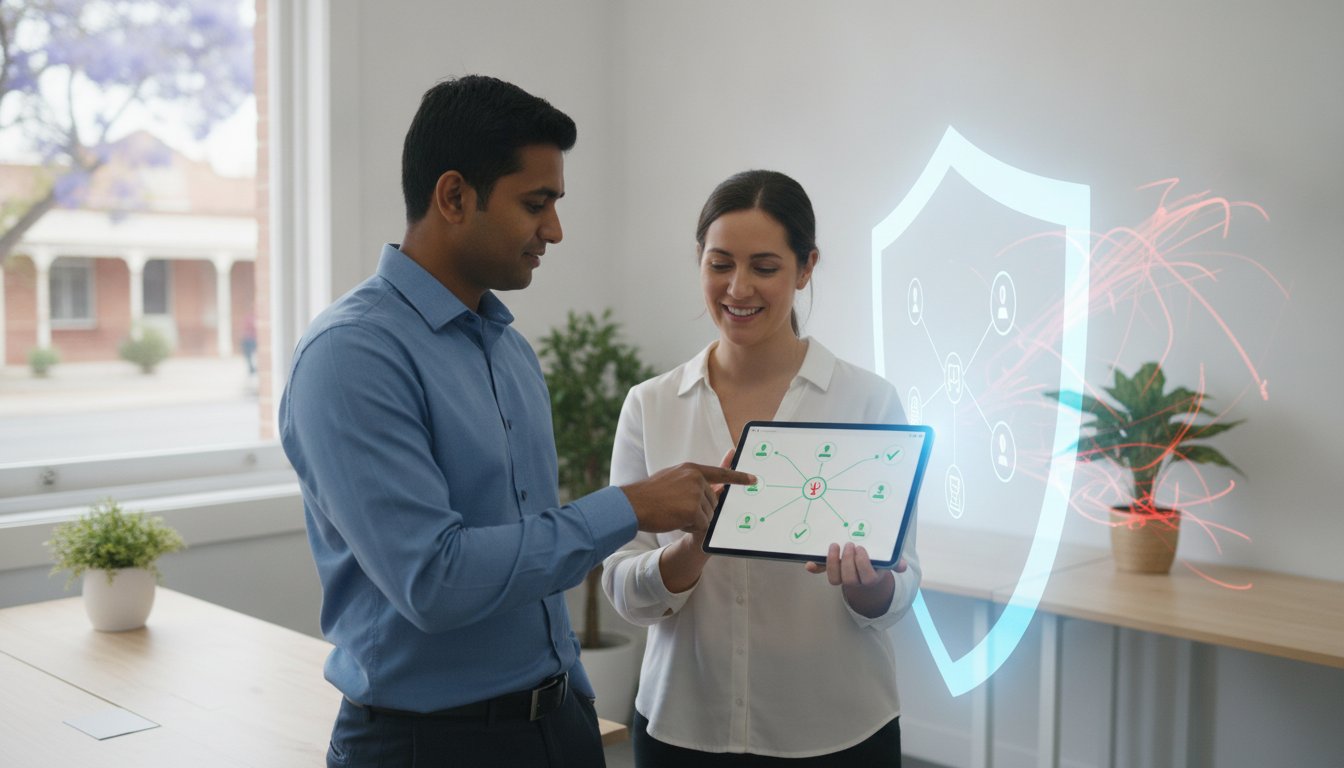
MFA for Small Business: 2026 Cyber Security Guide

With a cybercrime reported every six minutes in Australia, is your front door actually locked, or is it just closed? For many local owners, the fear of a compromised bank account is a constant weight. I’ve seen firsthand how the average $56,600 cost of a cyber attack can devastate a family-run company. You might feel frustrated by complex login hurdles or confused about which security methods actually work, but ignoring the threat isn’t an option anymore. Implementing multi-factor authentication for small business is the single most effective step you can take to protect your livelihood.

I agree that technology should make your life easier, not harder. You want peace of mind that your client data is safe and that you’re meeting the latest 2026 insurance requirements without slowing down your staff. This expert-led guide will show you how to stop 99.9% of common attacks using practical, repeatable steps. We will explore the newest Australian privacy reforms, compare user-friendly tools like Microsoft Entra ID and Cisco Duo, and provide a clear roadmap to secure your business for the year ahead.

Key Takeaways

  • Learn why relying on passwords alone is a major risk in 2026 and how a second layer of defense stops nearly all automated credential attacks.
  • Discover why Toowoomba firms are often targeted by cybercriminals and the specific impact a breach can have on a local family business.
  • Find the perfect balance between security and convenience when selecting the best multi-factor authentication for small business teams.
  • Master a five-step implementation plan that secures your banking and email accounts without disrupting your staff’s daily productivity.
  • Understand how to integrate MFA into your existing IT support plan to ensure your hardware and software work together seamlessly.

What is MFA and Why is it Essential?

If you rely on a single password to protect your business banking or client records, you’ve essentially left the key in your front door. By 2026, AI-powered hacking tools can crack traditional passwords in seconds. What is multi-factor authentication exactly? It is a security system that requires at least two different forms of identification before granting access to an account. Think of it as a digital deadbolt for your company. Even if a criminal steals your password, they still can’t get inside without that second, physical “key” in your hand.

Implementing multi-factor authentication for small business is no longer just a recommendation; it’s a necessity for survival. Statistics from 2026 show that 43% of all reported cybercrime in Australia now targets small firms. Hackers use automated “credential stuffing” to test stolen passwords across thousands of sites at once. Microsoft reports that MFA can block 99.9% of these automated attacks. For a local Toowoomba business, this simple layer of protection is the difference between a normal Monday morning and a $56,600 recovery bill.

The Three Factors of Authentication

To be truly secure, MFA relies on combining different categories of evidence. Using two passwords isn’t MFA because both belong to the same category. A robust system uses a mix of these three factors:

  • Something you know: This is your traditional password, a PIN, or the answer to a secret question.
  • Something you have: This includes physical items like your mobile phone, a smart card, or a dedicated security key.
  • Something you are: These are biometrics, such as your fingerprint or facial recognition data.

MFA vs. Two-Step Verification

Many people confuse basic “Two-Step Verification” with professional-grade MFA. If you receive a six-digit code via SMS, you’re using Two-Step Verification. While this is better than nothing, it’s vulnerable to “SIM swapping” where hackers redirect your texts to their own devices. Professional multi-factor authentication for small business usually involves authenticator apps or physical hardware keys that don’t rely on the cellular network. Possession factors, such as physical security keys or hardware-bound tokens, represent the gold standard for security in 2026 because they cannot be easily intercepted by remote attackers. This distinction is vital for meeting the Australian Cyber Security Centre (ACSC) Essential Eight requirements.

Why Small Businesses in Toowoomba are Targets for Cyber Crime

Many business owners in Newtown or the wider Darling Downs region believe they’re too small to be a target. They assume hackers only go after big banks or government departments. This is the “Low Hanging Fruit” theory in action. Cybercriminals know that while a large corporation has a dedicated IT team, a local family business might still rely on a single, shared password for their accounting software. It makes you an easy win. In Queensland, we’ve seen a sharp rise in Business Email Compromise (BEC), where hackers intercept invoices and redirect payments to their own accounts. This isn’t just a technical glitch; it’s a direct threat to your cash flow. Implementing multi-factor authentication for small business is the most practical way to stop these automated account takeovers before they start.

This simple switch effectively neutralises the automated scripts hackers use to guess their way into your systems. Following CISA guidance on MFA ensures you aren’t just ticking a box, but building a genuine wall around your data. If you’re unsure where your current security stands, a quick check-up as part of your cyber security plan can identify these gaps before a hacker does.

Meeting Australian Regulatory Standards

The Australian Cyber Security Centre (ACSC) lists MFA as a core component of the “Essential Eight” framework. It’s the most critical step you can take to secure your environment. With the 2026 Privacy Act reforms, the “fair and reasonable” test for data protection means that if you handle customer information without MFA, you could face significant legal scrutiny. You’re now required to notify the OAIC within 72 hours of a data breach, making preventative measures more important than ever for local firms.

Cyber Insurance and MFA Requirements

Your insurance broker has likely already asked about your security controls. In 2026, many Australian insurers will flatly refuse to provide professional indemnity or cyber coverage if you don’t have multi-factor authentication for small business systems enabled. It’s no longer a “nice to have” feature; it’s a prerequisite for a policy. Maintaining strong security protocols can often lead to lower premiums, as you’re seen as a lower risk. To prove your compliance, you’ll need to show that MFA is enforced across all critical accounts, from your email to your remote access tools.

Choosing the Right MFA Method for Your Team

Selecting the right method depends on your team’s daily workflow. You don’t want to create a bottleneck that stops work. However, some methods are objectively safer than others. In 2026, the goal for multi-factor authentication for small business is to find a balance where security feels invisible. You need a system that protects your data without making your staff want to bypass it.

Many people start with SMS codes because they’re familiar. But hackers have adapted. SIM swapping allows criminals to intercept these texts by tricking a telco into moving your number to their device. The NIST guide to MFA for small business notes that SMS is now considered a restricted method due to these vulnerabilities. It’s better than a password alone, but it’s not the gold standard for a Darling Downs firm handling sensitive client data.

Authenticator Apps: The Practical Choice

Apps like Microsoft Authenticator or Google Authenticator are the most popular choice for local teams. Instead of waiting for a text, you receive a push notification on your smartphone. You simply tap Approve and you’re logged in. This is faster than typing in codes and much harder for a remote hacker to intercept. If an employee leaves your company, you can revoke their access centrally, ensuring they can’t access business accounts from their personal device later.

Physical Security Keys (YubiKeys)

For high-value accounts, such as your business banking or payroll, a physical USB security key is the ultimate defense. These devices are phishing-resistant because they require you to physically touch the key while it’s plugged into your computer. Hardware keys are the best defence against man-in-the-middle attacks because they require a physical touch to verify the person is actually present at the computer. It’s a simple, robust solution for owners who want the highest level of protection available today.

Biometrics are also playing a larger role in 2026. Using FaceID or a fingerprint on a laptop is incredibly fast. It combines something you have (the device) with something you are (your biometric data). This technology is making multi-factor authentication for small business easier to use than ever before.

MFA for Small Business: 2026 Cyber Security Guide

5 Steps to Implement MFA Without Disrupting Your Business

Switching to multi-factor authentication for small business doesn’t have to be a chaotic event. A staged rollout ensures your team stays productive while your security tightens. I always recommend a methodical five-step process to my clients in Toowoomba to keep things simple and predictable. It’s about building a system that works for your specific workflow rather than against it.

  • Step 1: Audit critical accounts. Identify where your most sensitive data lives. Focus on your business email, accounting software like Xero or MYOB, and your banking portals first.
  • Step 2: Choose a centralised strategy. Using a single platform makes it easier to manage permissions from one dashboard. This prevents you from having to manage ten different MFA apps for every employee.
  • Step 3: Conduct a pilot test. Pick one or two staff members to trial the system for a week. They can help you spot any login friction or “dead zones” in your office before the full team joins.
  • Step 4: Roll out with documentation. Provide your team with a simple, visual guide. Clear, step-by-step instructions reduce the number of support calls and help staff feel confident.
  • Step 5: Set up emergency recovery. Every account should have a secondary way to get in if a device is lost or broken.

Managing the “Human Element”

Your staff are your first line of defence. People often resist new security measures if they feel like a chore. Explain that MFA isn’t a lack of trust; it’s a tool to protect their hard work and the company’s reputation. You can reduce daily frustration by enabling “Remember this device” for trusted office computers. This means they only need to verify their identity once every 30 days on that specific machine. For more tips on training your team to spot threats, check out our guide on IT Support for Business. Getting buy-in early makes the technical transition much smoother.

Emergency Access: Don’t Get Locked Out

Getting locked out of your own business is a nightmare that can stop your operations for days. Always generate and save “Backup Codes” when you first set up MFA. Store these in a secure physical safe or an encrypted password manager. Establishing a protocol for lost phones is also vital. If a staff member loses their device while out in Newtown, you need a process to revoke that old access and set up a new one immediately. Never use a single personal phone for every business account. It creates a single point of failure that can paralyse your operations. If you want a hand setting up these safety nets, I provide on-site IT support and security consulting to ensure your business remains both secure and accessible.

Integrating MFA into Your Local IT Strategy

Security is most effective when it’s part of a holistic plan. You shouldn’t view multi-factor authentication for small business as a standalone tool. Instead, it works alongside your existing virus and malware removal efforts to create a multi-layered shield. While antivirus software stops malicious code from running on your machines, MFA stops the person trying to log in with stolen credentials. This combination is what keeps a Toowoomba firm resilient against modern threats.

Your physical equipment plays a major role in how smoothly these security layers function. Many older office computers lack the sensors required for modern biometric logins like facial recognition or fingerprint scanning. Targeted hardware upgrades can equip your team with the necessary tools to make logging in both faster and more secure. When security is built into the hardware, it feels less like a hurdle and more like a natural part of the workday. This approach moves your business toward a “Zero Trust” model, where every access request is verified regardless of whether the staff member is in the office or working remotely.

The Link Between MFA and Data Recovery

MFA is the first line of defence in a business continuity plan. Most ransomware attacks begin with a compromised password. Once inside, hackers often target your cloud backups first to ensure you can’t restore your files without paying them. By securing your backup portals with multi-factor authentication for small business, you effectively lock the vault. This simple step often prevents the need for emergency data recovery services caused by malicious deletions or encryption. It’s much easier to prevent a breach than it is to recover lost data after a total system wipe.

How Aspire Computing Simplifies Your Security

I understand that technical changes can feel overwhelming for a small team. That’s why I focus on providing personalised, on-site setup for home offices and small shops across Newtown and the wider Darling Downs. I’ll help you troubleshoot device compatibility for older hardware and ensure every staff member knows exactly how to use their new login tools. My goal is to provide dependable, experienced assistance that reduces your anxiety about cyber threats. As new risks emerge in 2026, I offer ongoing support to ensure your security settings evolve. You don’t have to manage this alone; I’m here to ensure your business remains stable, secure, and ready for whatever comes next.

Protecting Your Darling Downs Business for the Future

Securing your company shouldn’t be a source of constant anxiety. By now, it’s clear that multi-factor authentication for small business is the most practical way to defend your livelihood against 99.9% of automated attacks. You’ve seen how this simple layer meets the 2026 Australian Privacy Act standards and keeps your insurance premiums manageable. Whether you’re in Newtown or across the Darling Downs, these steps provide the peace of mind you deserve.

Since 1999, I’ve helped local owners navigate technical shifts with dependable, professional support. My approach is built on personal accountability and expert knowledge of Australian cyber security standards. You don’t have to tackle these complex security requirements alone. I’m here to ensure your systems are stable and your client data is locked tight.

Secure your Toowoomba business today with a professional IT security audit from Aspire Computing. Taking action now prevents the frustration of a technical failure later. Let’s work together to make your business resilient and ready for the years ahead.

Frequently Asked Questions

Is multi-factor authentication really necessary for a one-person business?

Yes, because hackers target the value of your data rather than the size of your team. A single compromised email account can lead to devastating identity theft or business bank fraud. Even for a sole trader, multi-factor authentication for small business remains the most effective way to block automated attacks. Since 43% of Australian cybercrime targets small firms, protecting your personal access is vital for maintaining your professional reputation.

What happens if I lose the phone I use for my MFA codes?

You can regain access using the backup codes generated during your initial setup. It is critical to store these codes in a secure physical location or an encrypted password manager before an emergency happens. If you lose your device, you should immediately revoke its access from your centralised accounts. I can help you establish a robust recovery protocol to ensure a lost phone doesn’t result in permanent lockout from your systems.

Can MFA be bypassed by sophisticated hackers?

While no system is 100% foolproof, MFA makes a breach significantly more difficult and expensive for criminals. Sophisticated hackers may attempt MFA fatigue attacks by spamming your phone with approval requests. To counter this, using phishing-resistant methods like physical security keys provides a much higher level of protection. Moving toward a Zero Trust model helps ensure that even sophisticated attempts are blocked by requiring multiple, distinct layers of verification.

Does MFA work if my office has poor mobile reception in rural QLD?

Yes, MFA works perfectly without a mobile signal if you use the right methods. Authenticator apps and physical security keys generate codes locally on the device; this means they don’t require an active internet connection or SMS reception to function. This is a great solution for businesses in rural areas of the Darling Downs where coverage can be spotty. Avoiding SMS-based codes ensures your security remains consistent regardless of your office location.

Is it safe to use biometrics like fingerprints for business security?

Biometrics are considered one of the most secure and convenient forms of authentication available in 2026. Modern devices store your fingerprint or facial data in a secure, encrypted chip on the hardware itself; they do not send it to the cloud. This makes it nearly impossible for hackers to steal your biometric profile remotely. When combined with a physical device, biometrics create a powerful defense that is both highly secure and user-friendly.

How much does it cost to implement MFA for a small team?

The cost varies depending on your current software and the level of security you require. Many platforms, such as Microsoft 365 and Google Workspace, include basic multi-factor authentication for small business at no extra charge. You may choose to invest in physical security keys or professional IT support to ensure the rollout is handled correctly. While there is an initial investment in time, it is significantly lower than the cost of a data breach recovery.

Do I need MFA if I already have a very strong, unique password?

Yes, because even the strongest password can be stolen through phishing or malware. Hackers don’t always guess passwords; they often use keyloggers or fake login pages to trick you into handing them over. A password is only a single barrier, whereas MFA requires a second, physical proof of identity that a remote hacker cannot easily obtain. Relying on a password alone is no longer sufficient to meet modern Australian security standards or insurance requirements.

Which is better: an authenticator app or an SMS code?

Authenticator apps are much safer than SMS codes. SMS is vulnerable to SIM swapping attacks, where criminals intercept your messages by taking control of your phone number. Apps like Microsoft Authenticator use encrypted notifications that are harder to compromise. Additionally, apps work without mobile reception and provide a smoother user experience with simple Push notifications. For professional business security, moving away from SMS is a recommended step for any Toowoomba firm.

Ransomware Protection for Small Business: The 2026 Australian Guide

Imagine walking into your Toowoomba office tomorrow morning only to find every client file, invoice, and spreadsheet locked behind a digital ransom note. With the average ransom payment for Australian businesses reaching $711,000 in 2026, this is no longer just a “big city” problem. It is a localized threat that can stall your operations in an instant.

We understand that staying on top of IT security feels like a full-time job you didn’t sign up for. You’re likely feeling the pressure of new regulations like the Cyber Security Act 2024 and mandatory 72-hour reporting rules, all while trying to manage a limited budget. Finding effective ransomware protection for small business shouldn’t mean draining your savings or spending hours on complex configurations just to stay compliant with Australian privacy standards.

This guide offers a practical, budget-friendly roadmap for local owners who need security that actually works. We’ll show you how to navigate the retirement of the Essential Eight, ensure your backups are truly bulletproof, and build a clear action plan that gives you back your peace of mind. By the end, you will have the confidence that your office is shielded from evolving threats with strategies that fit your schedule and your bottom line.

Key Takeaways

  • Understand the 2026 shift toward “double extortion” ransomware and how it threatens both your business data and your client privacy.
  • Learn how the Australian Signals Directorate’s Essential Eight framework provides a proven roadmap to stop 85% of common cyber attacks.
  • Secure your office with reliable ransomware protection for small business using the 3-2-1 backup rule to guarantee your data is always recoverable.
  • Discover practical ways to harden your network through Multi-Factor Authentication and modern endpoint security without breaking your budget.
  • See why partnering with a local Toowoomba expert ensures your security strategy remains compliant with the latest Australian standards and reporting rules.

Understanding Ransomware Threats in 2026

Ransomware is no longer just a scary word for global corporations. In 2026, it’s a specific type of malicious software designed to lock your files and demand money for the key. Understanding Ransomware today requires looking past simple encryption. Most attackers now use “double extortion.” This means they steal a copy of your sensitive data before locking your systems. If you refuse to pay, they threaten to leak your client records or financial details on the public web.

You might think being based in Newtown or the Toowoomba CBD keeps you off the radar. It’s actually the opposite. Automated bots scan the internet 24/7, searching for any open digital door. They don’t care about your industry or location. These bots find vulnerabilities in seconds, making regional Queensland businesses prime targets for high-volume, automated attacks.

To better understand how these threats operate, watch this helpful video:

The true cost of an attack goes far beyond the ransom demand. For a local firm, the real sting is the downtime. Every hour your team can’t access files represents lost revenue and frustrated customers. When you factor in the damage to your reputation and the legal liabilities under the Cyber Security Act 2024, the impact can be permanent. Implementing robust ransomware protection for small business is about protecting your livelihood, not just your laptop.

Common Ransomware Delivery Methods

Attackers usually find their way into your office through three main channels. Phishing remains the most common, where staff members accidentally click a link in a fake invoice or shipping alert. Vulnerable remote access tools are another weak point. If you use Remote Desktop Protocol (RDP) with a weak password, you’re essentially leaving your front door unlocked. Finally, unpatched software in common office tools provides “zero-day” exploits that bots can use to slip past basic security.

The “Never Pay” Rule in Australia

The Australian Signals Directorate (ASD) strongly discourages paying any ransom. There’s zero guarantee that the criminals will actually return your data or delete the stolen copies. In fact, paying often backfires. It marks your business as a “payer” in criminal databases, which often leads to a second attack just months later. Effective ransomware protection for small business focuses on building a “recovery-first” strategy so you never have to consider a payout.

The ‘Essential Eight’ for Toowoomba Small Businesses

The Australian Signals Directorate (ASD) developed a framework called the Essential Eight. It is a set of technical steps designed to block up to 85% of common cyber attacks. While the ASD announced plans to transition to a new “Essentials” series starting in late 2026, these core strategies remain the most effective form of ransomware protection for small business today. Most local firms should aim for “Maturity Level 1.” This level provides a solid baseline of security without requiring a massive enterprise budget or a dedicated IT department.

Reaching this baseline quickly is much easier with a local partner who understands your specific setup. We focus on the “Top Four” strategies first because they provide the most immediate protection for your data. These include application control, patching applications, patching operating systems, and restricting administrative privileges. By starting with these, you close the most common doors that hackers use to enter small business networks in the Darling Downs.

Patching and Application Control

Patching is the process of updating your software to fix security holes. In 2026, waiting weeks to click “update” is a massive risk. You should aim to patch critical vulnerabilities within 48 hours of a release. Application control takes this a step further. It ensures that only pre-approved programs can run on your business PCs. This stops malicious files from executing, even if a staff member accidentally clicks a bad link. Many owners feel that if a computer works fine, they shouldn’t mess with it. However, updates are rarely about new features. They are about plugging the gaps that ransomware bots are actively searching for.

Restricting Administrative Privileges

Administrative privileges act as a digital master key that allows a user, or a hacker who has stolen their login, to change settings, install software, and access every corner of your network. Many small business owners use an “Admin” account for their daily tasks, like checking emails or browsing the web. This is a dangerous habit. If your account is compromised while you have admin rights, the ransomware gains full permission to lock your entire system instantly.

We help teams implement the “principle of least privilege.” This means staff only have the access levels they actually need for their daily work. If someone needs to install new software, they can use a separate, secure login for that specific task. This simple separation of duties prevents a single compromised password from bringing down your whole office. If you are unsure where your current vulnerabilities lie, our team can help you implement cyber security strategies tailored to your local business needs.

Data Backups: Your Ultimate Ransomware Safety Net

While the Essential Eight strategies discussed earlier prevent most attacks, backups are your only 100% cure. If a hacker manages to slip through your defences, having a clean copy of your data means you don’t have to pay a cent to get your files back. This is the cornerstone of effective ransomware protection for small business. However, a backup is only useful if it actually works when you need it. You should treat your backup system like a fire extinguisher; it needs regular checks to ensure it’s ready for an emergency. We always tell our clients that it isn’t a backup until you’ve successfully performed a test restore.

We recommend following the industry-standard 3-2-1 rule for all Toowoomba offices. This means keeping three copies of your data on two different types of media, with at least one copy stored off-site. For example, you might have your live data on your server, a second copy on a local drive, and a third copy in a secure Australian cloud vault. If you’ve already suffered a data loss event and need help, learn more about our professional data recovery services to see how we can get your business back on its feet.

Cloud vs. Physical Backups

Cloud services like OneDrive or Dropbox are convenient for daily work, but they aren’t a complete security solution. If ransomware encrypts your local files, those changes often sync immediately to the cloud, locking your online copies too. Physical backups, such as external hard drives or Network Attached Storage (NAS) devices, provide a faster recovery option for regional businesses with large amounts of data. The key in 2026 is ensuring your backups are “air-gapped.” This means the backup drive is physically disconnected from the network when not in use, so ransomware cannot reach it.

Business Continuity Planning

You need to consider your Recovery Time Objective (RTO). This is the amount of time your business can afford to be offline before the financial damage becomes critical. Simple file backups only save your documents, which means you might spend days reinstalling Windows and your software after an attack. System imaging creates a complete snapshot of your entire computer setup, allowing your business to resume work in hours rather than days if a disaster strikes. This level of preparation is a vital part of ransomware protection for small business that keeps your doors open no matter what happens.

Ransomware Protection for Small Business: The 2026 Australian Guide

Practical Steps to Harden Your Small Business Network

Implementing Multi-Factor Authentication (MFA) across all your business accounts is the most effective step you can take today. MFA adds a second layer of verification, such as a code sent to your phone, which stops 99% of bulk password attacks. This simple change is a cornerstone of effective ransomware protection for small business. It ensures that even if a hacker steals your password, they cannot access your data without that physical second device.

You should also consider moving beyond basic anti-virus software. Modern threats in 2026 require Endpoint Detection and Response (EDR). While traditional anti-virus looks for known “signatures” of old viruses, EDR monitors your system for suspicious behavior. If a program suddenly starts encrypting thousands of files at once, EDR can freeze the process automatically. To ensure your current systems are clean before you upgrade, explore our virus and malware removal services for a complete security sweep.

Securing your office Wi-Fi and remote connections is equally vital. If your staff work from home or at local cafes, they should use a secure, encrypted connection to access office files. We recommend disabling guest access to your main business network and ensuring your office router uses the latest WPA3 encryption. These technical hurdles make your business a much harder target for automated bots searching for an easy entry point.

Password Management and Hygiene

Using a password like “Winter2026!” is no longer secure. Hackers use automated tools that can guess simple variations of seasons and years in seconds. A business-grade password manager allows your team to generate and store unique, complex passwords for every single service. This reduces the risk of credential theft significantly. You must also train your staff to recognize AI-generated phishing attempts. These modern scams use perfectly written English and cloned voices to trick employees into giving away access codes.

Software and Hardware Supply

Using “End of Life” hardware is a major risk because these devices no longer receive security updates from the manufacturer. If your office PCs are more than five years old, they may not support the latest ransomware protection features built into Windows 11 or Windows 12. You should also audit your office peripherals. Printers and scanners are often overlooked, yet they can act as backdoors into your network if their default passwords aren’t changed. Keeping your hardware current is a practical investment in your long-term stability. If you need help securing your network, contact us for a cyber security audit tailored to your Toowoomba office.

Why Toowoomba Businesses Trust Aspire Computing for Security

Aspire Computing has been a fixture of the local business community since 1999. With over 25 years of experience protecting firms across the Darling Downs and Lockyer Valley, we have seen how cyber threats have evolved from simple viruses to the complex ransomware of 2026. This long history in data recovery and malware removal gives us a unique perspective. We know exactly what happens when things go wrong, which is why we are so passionate about prevention. We bridge the gap between complex government advice and your daily operations, making security manageable for any sized team.

Choosing a local expert means you aren’t just a ticket number in a corporate call centre. Whether your office is in Newtown or the Toowoomba CBD, we can be on-site quickly to manage your hardware or provide remote IT support when you need it most. We understand that local owners face unique budget constraints. You need effective ransomware protection for small business that doesn’t require an enterprise-level investment. We help you implement the most critical security steps, focusing on the strategies that offer the highest level of protection for your specific budget.

A Personal Approach to Cyber Security

When you work with us, you get direct access to the business owner and lead technician. This personal accountability is rare in the IT industry today. We provide calm, reliable advice that cuts through the noise of technical jargon. Our tailored security audits are designed specifically for home offices and small business premises. We look at your actual workflow and identify where your specific risks lie. This ensures your security plan is functional and doesn’t get in the way of your work.

Next Steps: Get Your Free IT Health Check

A professional security assessment is the first step toward true peace of mind. During our IT health check, we identify the “low-hanging fruit” that can secure your business immediately. This often includes checking your backup reliability, verifying your MFA settings, and ensuring your software is correctly patched. These simple changes can block the majority of automated attacks we see targeting regional Queensland today. Identifying these gaps early is the most cost-effective way to prevent a disaster.

We invite you to contact Aspire Computing for a reassuring, no-jargon consultation. We will explain your current security posture in plain English and provide a clear action plan to harden your defences. Our goal is to provide cyber security solutions that keep your data safe and your business running smoothly. Don’t wait for a digital ransom note to appear; let’s secure your office today.

Take Control of Your Business Security Today

Securing your office against modern threats doesn’t have to be an overwhelming task. By focusing on the Essential Eight framework and maintaining air-gapped backups, you create a resilient environment that prioritises recovery over ransom. These practical steps ensure your client data stays private and your operations remain steady, even as Australian regulations become more stringent in 2026.

Effective ransomware protection for small business is most successful when it’s tailored to your local workflow. Since 1999, we have provided on-site support across regional Queensland, specialising in data recovery and malware removal. We understand the specific challenges facing Toowoomba firms and offer the calm, professional guidance you need to stay safe without needing an enterprise-sized budget.

Secure your business with a local expert—Contact Aspire Computing today for a straightforward assessment of your current setup. You’ve worked hard to build your business; let’s work together to make sure it’s protected for the years ahead. We are here to help you move forward with confidence.

Frequently Asked Questions

Is my small business really a target for ransomware in Toowoomba?

Yes, every business with an internet connection is a potential target. Cybercriminals use automated bots to scan for vulnerabilities regardless of your location. Whether you are a small medical clinic in Newtown or a retail shop in the Toowoomba CBD, the threat is real. In 2026, many regional Queensland businesses are targeted because hackers assume they have weaker security than large city firms.

Will my cyber insurance pay out if I don’t follow the Essential Eight?

It depends on your specific policy, but many insurers now require businesses to meet a baseline like the Essential Eight to remain covered. If an investigation shows you lacked basic controls like Multi-Factor Authentication, your claim might be denied. It is vital to review your policy requirements carefully. We help local firms implement these standards to ensure they stay compliant with their insurance obligations.

How much does professional ransomware protection cost for a small office?

The cost of ransomware protection for small business varies depending on the number of devices and the complexity of your network. We focus on providing budget-friendly strategies that prioritise the most critical risks first. Instead of a one-size-fits-all price, we tailor our security audits and support plans to fit your specific home office or small business needs. This ensures you only pay for the protection you actually require.

Can ransomware infect my cloud backups like OneDrive or Google Drive?

Yes, ransomware can infect cloud storage if it is set to sync automatically. If a file on your computer is encrypted by malware, the cloud service will often see this as a “change” and upload the locked version to your account. This is why we recommend “air-gapped” backups. Keeping a disconnected physical copy of your data ensures you have a clean version that the ransomware cannot reach or lock.

What should I do the moment I suspect a ransomware infection?

Disconnect your computer from the internet and the office network immediately. Unplug the ethernet cable or turn off the Wi-Fi to stop the infection from spreading to other devices. Do not shut the computer down, as this can sometimes trigger more data loss or erase evidence needed for recovery. Once the device is isolated, contact a local expert to begin the process of malware removal and data restoration.

Is a standard anti-virus programme enough to stop modern ransomware?

No, standard anti-virus is often insufficient against the sophisticated “double extortion” threats seen in 2026. Traditional software looks for known viruses, but modern ransomware changes its code constantly to avoid detection. You need Endpoint Detection and Response (EDR) which monitors for suspicious system behavior. This proactive approach is a key part of modern ransomware protection for small business that stops an attack before it can lock your files.

How often should I test my business data backups?

You should test your backups at least once a month. A backup is only a “hope” until you have successfully performed a full restore. Testing ensures that your data is not corrupted and that your recovery process works as expected. Regular checks give you the confidence that your business can be back online within hours rather than days if a hardware failure or cyber attack occurs.

Do I need to report a ransomware attack to the Australian government?

Under the Cyber Security Act 2024, businesses with an annual turnover of $3 million or more must report ransomware payments to the Australian Signals Directorate within 72 hours. If you haven’t made a payment, reporting the attack itself remains voluntary but is highly recommended. Notifying the government helps track local threats and provides your business with access to official recovery resources and support during a technical failure.

Small Business IT Support Toowoomba: Reliable Tech Help for Local Growth

Did you know the average self-reported loss from a single cybercrime incident for an Australian small business is now approximately $56,600? For a local office in Newtown or a trade business in the Darling Downs, that isn’t just a statistic; it’s a potential catastrophe. Securing reliable small business IT support Toowoomba is the most effective way to move from tech anxiety to total confidence. You’ve likely experienced the daily frustration of crawling internet speeds or the underlying fear that your data isn’t quite as safe as it should be.

It’s hard to focus on your customers when you’re constantly fighting with slow computers or printer errors. You deserve a stable network and the peace of mind that comes from knowing a local expert has your back. This guide shows you how tailored IT solutions secure your operations and keep your technology running without the typical stress. We’ll explore how personal, professional support turns your biggest tech headaches into a streamlined system that actually helps your business thrive.

Key Takeaways

  • Learn why regional NBN and connectivity challenges require a local provider who understands the unique Toowoomba landscape.
  • Discover how regular PC tune-ups and hardware maintenance can prevent slow performance and unexpected system failures.
  • Understand the vital role of small business IT support Toowoomba in securing your data against increasing cyber threats and malware.
  • Identify the key criteria for evaluating tech partners, focusing on on-site availability and a proven history with local small businesses.
  • See how a personalized, owner-led approach provides a more reliable and accountable alternative to large, anonymous IT franchises.

Running a business in regional Queensland brings a specific set of hurdles that city-based firms rarely encounter. From the rolling hills of the Darling Downs to the busy streets of Toowoomba, local companies face unique connectivity gaps and hardware challenges. Since 1999, the way we use technology has shifted from simple offline spreadsheets to complex cloud-based operations. This evolution means even a minor glitch in your internet connection or a printer error can halt your entire workflow. Reliable small business IT support Toowoomba is no longer a luxury; it’s the backbone of your daily growth.

Many businesses are moving away from reactive “break-fix” models toward Managed services to ensure their systems stay online. When your NBN drops out or your server fails, you don’t want to explain your business model to a stranger in a distant call centre. You need someone who knows the local infrastructure and the specific quirks of our regional network. To better understand this concept, watch this helpful video:

Why Local IT Support Matters in the Darling Downs

If you’re operating out of Newtown or the Lockyer Valley, having a technician who can physically visit your site is a game-changer. Local support isn’t just about fixing a broken laptop; it’s about building a relationship with an expert who knows your name and your specific office setup. National franchises often rely on scripted responses that don’t account for our local conditions. A dedicated local contact ensures that when a hardware failure happens, the solution is fast and tailored to your actual environment. This personal accountability reduces the anxiety that usually follows a technical failure.

Common Tech Hurdles for Toowoomba Home Offices

The rise of the home-based professional in Toowoomba has blurred the lines between residential and business tech needs. Many locals struggle to balance high-demand professional software with standard residential internet speeds. Managing hardware lifespan for PCs, laptops, and printers becomes critical when your home office is your primary source of income. Small business IT support Toowoomba helps you bridge the gap between “making do” with home tech and having a professional, secure office environment. This includes setting up secure remote access so you can work from anywhere in the Darling Downs without risking a data breach.

Essential IT Support Services to Keep Your Business Running

Every small firm depends on a handful of critical tools to stay operational. When your laptop won’t boot or your network slows to a crawl, your productivity stops instantly. Effective small business IT support Toowoomba focuses on keeping these core systems healthy through expert care. We provide comprehensive hardware diagnostics to find the root cause of failures quickly, whether it’s a failing hard drive or a faulty power supply. It’s about getting you back to work with as little stress as possible.

It isn’t always a hardware problem that slows you down. Over time, Windows systems accumulate digital clutter that drains performance. Regular software troubleshooting and Windows tune-ups can significantly improve speed without the cost of a new machine. If you’re facing software conflicts or configuration errors, remote IT support allows for rapid resolution. This means many issues can be fixed without waiting for a technician to arrive on-site, keeping your workflow moving.

Printers are another vital piece of the puzzle that often causes the most frustration. We handle printer supply and repair to ensure your office hardware never lets you down during a deadline. By focusing on reliable brands and proper maintenance, you can avoid the common headaches of paper jams and connectivity drops. If your current equipment is showing its age, a professional hardware upgrade can often restore the speed you need for local growth.

Proactive vs. Reactive IT: What’s Best for Your Business?

Many owners only call for help when something breaks. This “break-fix” model is fine for occasional computer repairs, but it often leads to higher costs and more downtime in the long run. Proactive maintenance involves regular checks and updates to catch problems before they crash your system. At Aspire Computing, we tailor these services to your specific business size. You don’t need a massive enterprise plan to benefit from professional oversight that prevents major system failures.

Hardware and Software Supply: Getting the Right Tools

Sourcing the right tools is just as important as fixing them when they fail. We recommend quality brands like Canon and Epson because they offer the reliability small businesses need. Sourcing hardware through a local expert ensures you get parts that are compatible and easy to service. Whether you need a Windows 11 upgrade or a hardware upgrade to extend a device’s lifespan, professional installation is key. Proper setup ensures your new tools integrate perfectly with your existing network from day one.

Protecting Your Business with Modern Cybersecurity & Data Recovery

Cybersecurity is no longer a luxury reserved for big corporations. For a local firm, a single digital breach can be devastating. Effective small business IT support Toowoomba must prioritize defense as much as it does daily maintenance. We focus on building a shield around your operations so you can grow without the constant fear of a technical disaster. This starts with a clear understanding of your specific risks and the tools needed to mitigate them.

If you suspect an infection, immediate virus and malware removal is critical to stop the spread. We don’t just clean the system; we identify how the threat entered your network to prevent a repeat incident. This proactive stance keeps your computers stable and your staff productive. Alongside cleanup, we implement robust data backup solutions. These systems protect your critical business files automatically, ensuring you always have a safe copy of your work stored away from potential threats.

Business continuity is the final piece of the security puzzle. It’s the plan that keeps you running even when the unexpected happens. Whether it’s a hardware failure or a malicious attack, having a recovery strategy ensures you have a clear path to get back online. We help you move from a state of tech anxiety to one of total confidence in your digital resilience.

Why Cybersecurity is a Business Risk, Not Just a Tech Issue

A data breach costs more than just money; it damages the hard-earned trust you’ve built with your Toowoomba clients. According to recent industry data, the average self-reported loss from cybercrime for an Australian small business is approximately $56,600. This is a significant blow for any local firm. Securing your home office network is a simple but vital step in preventing these losses. Our security audits identify vulnerabilities before attackers do, protecting your professional reputation and your bottom line.

Data Recovery Services in Toowoomba: When the Worst Happens

Sometimes, hardware fails despite the best precautions. Common causes of data loss in small business environments include mechanical drive failure, accidental deletion, or power surges during intense Queensland storms. When the worst happens, our specialized Data Recovery Services provide a methodical way to retrieve lost or corrupted files. We use a precise process to recover your information safely, treating your data with the highest level of confidentiality. Our goal is to minimize your downtime and restore your files as quickly as possible.

Small Business IT Support Toowoomba: Reliable Tech Help for Local Growth

How to Evaluate IT Support Providers in the Toowoomba Region

Picking a technology partner shouldn’t feel like a gamble. For a local firm, the right choice determines how quickly you bounce back from a system crash or a network outage. Finding the right small business IT support Toowoomba means looking beyond a glossy website. You need a partner who understands the regional landscape and the specific infrastructure of the Darling Downs. A provider with a physical presence in the area can offer on-site assistance when remote fixes simply aren’t enough.

A reliable provider must demonstrate deep experience with small business hardware. Large franchises often prioritize enterprise-level clients, leaving smaller offices waiting for days. You deserve personalized service rather than a generic helpdesk experience where you’re just another ticket number. Look for a technician who knows your business by name and understands your specific office setup. This personal accountability is what distinguishes a local expert from a distant corporate service.

History matters when it involves your data and hardware. Verify the provider’s credentials and their long-term history in the Toowoomba region. A business that has operated since 1999, like Aspire Computing, offers a level of stability that newer startups can’t match. Ensure they provide a hybrid model of both remote and on-site assistance. This flexibility allows for rapid resolution of software issues while maintaining the ability to fix physical hardware on-site in suburbs like Newtown.

Key Questions to Ask a Potential IT Partner

Before signing any agreement, ask direct questions about their service delivery. Do they offer on-site support for your specific suburb or regional area? Inquire about their specific experience with Hardware Upgrades and repairs for your particular brand of laptop or PC. It’s also vital to know how they handle urgent data recovery or immediate security threats. Clear answers here will show if they truly understand the pressures of running a local small business.

Assessing Reliability and Response Times

Reliability is built over decades, not months. A 25-year history in Toowoomba is a strong marker that a technician has seen every type of tech shift and regional challenge. This includes understanding local NBN nuances and how regional connectivity affects your daily operations. You need to balance a fast turnaround with thorough, professional repair work. If you’re tired of waiting for callbacks from national providers, it’s time to contact a local expert today for support that actually shows up.

Aspire Computing: Your Trusted Local IT Partner Since 1999

Aspire Computing has been a fixture in the local community since 1999. While technology has changed drastically since then, our commitment to providing reliable small business IT support Toowoomba hasn’t wavered. We understand that for a local firm, technology isn’t just about bits and bytes; it’s about the ability to serve your customers and grow your livelihood. Dealing with a large, anonymous franchise often feels like being a number in a queue. We offer a different experience by putting a face to the name and providing a direct line to an expert who knows your business history.

Our service area covers Toowoomba, the Darling Downs, and the Lockyer Valley. We aim to reduce the anxiety that naturally follows a technical failure. Whether it’s a server that won’t boot or a network that keeps dropping out, we provide professional, reassuring help that gets you back on track. We bridge the gap between simple home computer repair and complex business systems. This ensures that even home-based professionals in suburbs like Newtown have access to high-quality security and reliability without the enterprise-level price tag. Our mission is to keep your technology running smoothly so you can focus on what you do best.

We take pride in being more than just a repair shop. We’re a partner in your growth. By offering specialized small business IT support Toowoomba, including PC and laptop repair, data recovery, and hardware upgrades, we ensure your tools are always ready for the job. Our long-standing history in the industry means we’ve seen every tech trend come and go, allowing us to provide stability and expertise that newer providers simply can’t match. You can trust that our advice is always grounded in practical experience and a deep understanding of local small business needs.

The Advantage of Personalized, Owner-Led Support

When you call Aspire Computing, you’re dealing directly with a local expert. This owner-led approach ensures a level of personal accountability that you won’t find with national helpdesks. We provide trustworthy advice based on over two decades of industry experience. Our focus is on creating tailored solutions that fit small business budgets perfectly. You won’t find hidden fees or complex contracts here; just straightforward, honest assistance designed to keep your technology running smoothly. We believe in building long-term relationships based on transparency and results.

Ready to Secure Your Business Technology?

If you’re tired of fighting with your computers, it’s time to partner with someone who truly understands your needs. We provide on-site help across Toowoomba and surrounding suburbs, ensuring your hardware is always in peak condition. You can explore our full range of IT Support for Business to see how we can help you scale safely. Call Aspire Computing today for a reliable, local solution to your tech problems. Let’s work together to secure your business and keep your local growth on track.

Secure Your Business Future with Expert Tech Care

Technology should be a tool that drives your local growth, not a source of constant frustration. By shifting from reactive fixes to proactive maintenance and prioritizing robust cybersecurity, you protect both your professional reputation and your bottom line. We’ve looked at how tailored small business IT support Toowoomba can transform your daily operations from a series of tech headaches into a streamlined, secure workflow. You deserve a system that works as hard as you do.

Aspire Computing has been a steady partner for local firms since 1999. We provide both on-site and remote assistance, bringing expert local knowledge of the Darling Downs and Lockyer Valley directly to your doorstep. You don’t have to navigate complex technical failures alone when a trusted, experienced expert is just a phone call away. It’s time to move past tech anxiety and focus on what you do best.

Take the first step toward a more stable and secure digital environment today. Get Reliable Local IT Support from Aspire Computing and rediscover the confidence of knowing your technology is in expert hands. We’re ready to help your business thrive.

Frequently Asked Questions

What is included in small business IT support?

Small business IT support Toowoomba includes a range of services designed to keep your technology reliable and secure. At Aspire Computing, this covers PC and laptop repairs, hardware upgrades, and printer supply. We also focus heavily on cybersecurity, providing virus removal, data backup, and business continuity planning. Whether you need on-site help or remote troubleshooting, the goal is to ensure your network and devices support your daily growth without unexpected failures.

Do you provide on-site IT support in the Darling Downs?

Yes, we provide comprehensive on-site assistance throughout the Darling Downs and Lockyer Valley. Our service area includes Toowoomba and surrounding suburbs like Newtown, ensuring you have a local expert available when hardware issues require a physical visit. Having a technician who can come to your office or home workspace reduces the downtime associated with transporting equipment. We combine this local presence with remote support for faster resolution of software related problems.

How much does IT support for a small business in Toowoomba cost?

The cost of small business IT support Toowoomba varies based on your specific needs, such as the number of devices or the complexity of your network. Some businesses prefer a break-fix model for occasional repairs, while others benefit from proactive maintenance plans. Since we specialize in supporting smaller firms and home offices, we focus on providing cost-effective solutions without the high overheads or hidden fees often found with larger national franchises.

Can you fix my business printer and office network?

We certainly can. Printer supply and repair is a core part of our service offering, ensuring your office hardware remains dependable. Beyond physical repairs, we troubleshoot office network issues to improve connectivity and speed. This includes configuring routers, securing your Wi-Fi, and ensuring your devices communicate properly with each other. A stable network is vital for productivity, and we work to eliminate the common hurdles that slow your team down.

Is remote IT support secure for my small business data?

Remote support is highly secure when handled by a professional using industry standard tools. We use encrypted connections to access your system only with your explicit permission. This allows us to resolve software glitches, perform Windows tune-ups, and update security settings quickly without needing an on-site visit. It’s a convenient way to get expert help while maintaining the confidentiality of your business data and ensuring your systems remain protected from external threats.

What should I do if my business computer has a virus?

If you suspect a virus, disconnect the computer from your network immediately to prevent the infection from spreading. Don’t enter any passwords or access sensitive files until the system is cleaned. Contact us for professional virus and malware removal. We don’t just delete the threat; we identify the entry point and strengthen your defenses. This methodical approach ensures your professional reputation stays intact and your data remains secure from future attacks.

Do you support both PCs and laptops for business use?

Yes, we provide expert support for both desktop PCs and laptops. This includes hardware repairs, such as replacing faulty components, and performance boosting hardware upgrades like adding more memory or faster storage. We understand that many Toowoomba professionals rely on laptops for flexibility, so we focus on ensuring these portable devices are as secure and reliable as a traditional office workstation. Our goal is to extend the lifespan of your existing technology.

Can you help with NBN connection issues in Toowoomba?

We specialize in helping local firms navigate regional connectivity challenges. While we aren’t an internet service provider, we can troubleshoot the hardware and configuration issues that often cause slow NBN speeds. This includes checking your internal wiring, optimizing router settings, and ensuring your office network isn’t the bottleneck. Having a local expert who understands Toowoomba’s digital landscape helps you get the best possible performance from your business connection.

How to Prevent Hard Drive Failure: 7 Warning Signs and Proactive Tips for 2026

Did you know that nearly half of all hard drives fail within their first year of operation? A 2026 study of over 5,000 failed drives found that a staggering 49.8% didn’t even make it to their first birthday. For many of us in Toowoomba, this isn’t just a statistic; it represents the potential loss of priceless family memories or critical business data. It’s a heavy burden to worry about when your computer starts making a strange clicking sound or feels a bit sluggish. Learning how to prevent hard drive failure is the best way to ensure your digital life stays intact without needing to be a tech expert.

I understand the anxiety that comes with technical glitches, especially since 30.5% of drives fail without any prior SMART warnings. I’m here to help you protect your hardware through simple, proactive steps. You’ll discover how to decode the “silent” warnings your hardware sends before it’s too late. We will explore the seven most common warning signs, demystify technical jargon, and outline a reliable backup strategy tailored for our local climate. By the end of this guide, you’ll know exactly how to extend your drive’s life and precisely when it’s time to call in a professional for help.

Key Takeaways

  • Learn how Toowoomba’s unique humidity and summer heat impact your hardware and what you can do to mitigate these environmental risks.
  • Discover practical steps on how to prevent hard drive failure by maintaining optimal airflow and using high-quality surge protectors.
  • Identify the critical differences between the noisy “death rattle” of traditional hard drives and the silent failure modes of modern SSDs.
  • Master the immediate “Emergency Triage” steps to take the moment you suspect a drive is failing to maximize your chances of successful data recovery.
  • Understand how to use SMART technology to monitor your drive’s health and catch potential issues before they lead to permanent data loss.

Why Hard Drives Fail: Understanding Mechanical and Digital Risks

Living on the Range in Toowoomba brings specific challenges for our technology. While we might enjoy the seasonal changes, our computers often struggle with the shifting environment. Understanding the fundamentals of hard disk drive failure is essential for anyone looking to secure their data. In 2026, storage devices are smaller and faster than ever, but this compact design makes them increasingly sensitive to physical movement and heat.

The Darling Downs region is known for its summer humidity and occasional power instability. These factors play a major role in how local hardware degrades over time. Whether you use a traditional mechanical drive or a modern flash-based system, knowing the risks helps you understand how to prevent hard drive failure before a total crash occurs. High-density 2026 hardware is particularly vulnerable to physical shock, meaning even a small bump to your laptop can have serious consequences.

Mechanical Wear vs. Electronic Failure

Hard Disk Drives (HDDs) rely on physical platters spinning at thousands of revolutions per minute. A tiny read/write head hovers just nanometres above these surfaces. Any physical shock can cause a “head crash,” where the head touches the platter and destroys data. Because these drives have moving parts, they eventually wear out through simple friction and mechanical fatigue. Solid State Drives (SSDs) are different. They have no moving parts but possess a finite “write life.” Every time you save a file, the electronic cells degrade slightly until they can no longer hold a charge.

In many Toowoomba home offices, dust and poor ventilation are the primary culprits for early hardware death. Our local dust can quickly clog intake fans; this forces the drive to operate at higher temperatures, which significantly shortens the lifespan of both HDDs and SSDs. Maintaining a clean, cool environment is a simple but effective strategy for any computer user.

The Silent Killer: Logical Data Corruption

Not every failure is physical. Logical corruption happens when the drive’s hardware is fine, but the file system becomes scrambled. This often occurs during sudden power loss. Our regional grid can experience brownouts or surges during storm season. If your system loses power while installing a Windows update, the data can become “orphaned” or corrupted. This mimics the symptoms of a hardware crash, such as being unable to boot into your operating system.

It’s a common mistake to try and fix these issues with software “tune-up” tools. If the underlying cause is actually a physical component failing, running intensive repair software can make the damage worse. If your computer is acting up, Aspire Computing can help determine if the issue is a simple software fix or a sign of a dying drive. Remember, you can’t fix a broken motor with a software patch.

Proactive Prevention: How to Extend Your Drive’s Lifespan

Preventing data loss isn’t just about luck; it’s about consistent habits. While modern drives are faster than their predecessors, they remain delicate pieces of engineering. Understanding how to prevent hard drive failure starts with controlling your machine’s physical environment. Small changes in how you handle your computer can mean the difference between a drive that lasts five years and one that fails in its first 362 days, which was the median lifespan found in a 2026 study of failed drives.

Heat is the primary enemy of all computer hardware. In the Darling Downs, our summer temperatures can easily push internal components past their safe operating limits. When a drive runs too hot, the lubricants in mechanical HDDs can thin out, and the delicate electronic cells in SSDs can degrade faster. To stay ahead of potential issues, you should regularly Check Your Hard Drive’s Health using diagnostic tools to ensure your cooling system is doing its job effectively.

Power stability is another critical factor for Queensland residents. Our region is prone to sudden storms and power surges that can fry sensitive circuitry instantly. A high-quality surge protector is a basic requirement, but it isn’t always enough. If you’re using a desktop or a small business server, an Uninterruptible Power Supply (UPS) provides a much-needed buffer. It gives your system enough battery life to shut down safely during a blackout, preventing the logical corruption that occurs when power is cut mid-write.

Environmental Controls for Toowoomba Users

Humidity and dust management are essential for anyone living on the Range. High humidity can lead to subtle corrosion on internal connectors over time, while dust acts as an insulator that traps heat. I recommend cleaning your computer’s dust filters at least every three months. This prevents thermal throttling, where your computer slows down to protect itself from melting. For small businesses, keeping servers in a climate-controlled room is the gold standard for hardware longevity.

Digital Hygiene Practices

Your software habits also impact your hardware’s physical health. For example, an overfilled SSD will wear out faster because the drive has fewer empty cells to rotate data through, a process known as wear-levelling. Aim to keep at least 20% of your drive empty. Additionally, keeping your system free of malicious software is vital. Regular Virus and Malware Removal prevents background processes from overworking your drive and causing unnecessary wear. These habits are the foundation of how to prevent hard drive failure over the long term. If you’re unsure about your current setup, a quick consultation with Aspire Computing can provide peace of mind and help you establish a better protection plan.

SSD vs. HDD: How Warning Signs Differ for Modern Drives

Many computer users assume all drives give a clear warning before they stop working. While a traditional Hard Disk Drive (HDD) might click or grind, a Solid State Drive (SSD) often fails in total silence. Understanding these distinct symptoms is a vital part of learning how to prevent hard drive failure. Because modern laptops and desktops almost exclusively use NVMe or SATA SSDs, you can no longer rely on your ears to detect a problem. You need to watch for digital cues instead.

Most storage devices manufactured in 2026 include SMART (Self-Monitoring, Analysis, and Reporting Technology). This internal system tracks performance metrics and error rates. However, it isn’t a perfect safety net. A July 2026 study revealed that 30.5% of failed drives had zero pending sector counts, meaning they died without any prior SMART warnings. This is why I always recommend a combination of software monitoring and physical observation. If your system feels “off,” it’s better to investigate early.

If a failure does occur, the recovery process differs greatly between the two technologies. Traditional HDDs are often mechanical puzzles where we might replace a motor or a read/write head. In contrast, SSD data recovery is significantly more complex. These drives use sophisticated encryption and wear-levelling algorithms that scramble data across chips. If the controller chip fails, the data remains trapped in a digital jigsaw puzzle that requires specialist tools to solve. For complex cases, Aspire Computing provides specialised data recovery services to help Toowoomba residents retrieve their lost files.

The SSD Warning Checklist

SSDs are incredibly fast, but they have a finite lifespan based on how much data you write to them. Watch for these three specific red flags:

  • Read-only mode: Your drive suddenly prevents you from saving or deleting files but still lets you open them. This is a final safety measure the drive takes when it reaches its write-cycle limit.
  • Frequent Bad Block errors: You might see system logs mentioning “bad blocks” or notice that certain applications take a long time to load or frequently freeze.
  • BIOS/UEFI disappearance: Your computer may occasionally fail to boot, showing a “No Boot Device Found” screen. This often happens as the controller chip begins to fail intermittently.

HDD-Specific Mechanical Red Flags

Mechanical drives are much more vocal about their problems. You might notice increasingly long boot times as the motor struggles to spin the internal platters up to their required speed. During heavy file transfers, listen for grinding or rhythmic clicking sounds, often called the “death rattle.” Hard Disk Drives often provide a grace period of noise before total failure, giving you a small window of time to secure your data.

How to Prevent Hard Drive Failure: 7 Warning Signs and Proactive Tips for 2026

The 7 Most Critical Hard Drive Failure Signs to Watch For

Recognising the early symptoms of a hardware crash can be the difference between a simple upgrade and a total data disaster. While our previous sections focused on long-term maintenance, this checklist helps you spot immediate threats. If you notice these signs, your window for learning how to prevent hard drive failure has likely closed, and your focus must shift to immediate data protection. Reacting quickly to these warnings is your final line of defence against permanent loss.

Strange noises are the most obvious red flags for mechanical drives. If you hear rhythmic clicking, grinding, or whirring, it’s often the “death rattle” of a failing motor or head assembly. Beyond sounds, pay attention to frequent system crashes. The Blue Screen of Death (BSOD) is often blamed on software, but it’s frequently triggered by the operating system being unable to read a critical file from a failing sector. Similarly, if files or folders suddenly disappear or show corrupted characters, your drive’s internal index is likely crumbling. Understanding how to prevent hard drive failure involves knowing when the hardware is past the point of no return.

Extremely slow performance is another subtle sign. When a drive is dying, it spends more time retrying failed read operations. This causes the entire system to freeze during simple tasks like opening a PDF or browsing the web. Don’t assume it’s just “old age” or a simple virus. If your computer feels like it’s wading through treacle, the hardware itself might be the bottleneck.

Audible and Physical Warning Signs

  • The Click of Death: In traditional HDDs, this sound indicates the read/write head is struggling to find its home position. It’s a clear signal that the drive is physically failing.
  • Excessive Heat: If your laptop casing feels unusually hot to the touch near the storage bay, the drive’s internal components may be overworking or suffering from excessive friction.
  • Vibrations: A computer tower that vibrates more than usual can indicate an unbalanced spinning platter. This is a sign of imminent mechanical collapse for HDD owners.

System Behaviour and Error Messages

Watch for “Operating System Not Found” or “No Boot Device” errors when you turn your computer on. These suggest the hardware is no longer communicating with the motherboard. Frequent “chkdsk” prompts on startup are another warning; Windows is trying to repair file system errors that keep reappearing due to physical damage. Finally, the “spinning wheel of death” during file transfers often indicates a hardware bottleneck where the drive simply cannot keep up with data requests. If your computer is showing any of these seven critical signs, don’t wait for a total crash. I recommend you stop using the device immediately to prevent further damage. You can contact Aspire Computing for an expert assessment and professional data recovery services before your memories or business records are lost for good.

Emergency Triage: What to Do When Failure is Detected

If you’ve spotted the red flags I mentioned earlier, the next few minutes are critical. Your primary goal is to preserve the data still on the drive. While we’ve discussed how to prevent hard drive failure through long-term care, sometimes hardware simply reaches its limit. When this happens, follow these triage steps immediately. Don’t panic; taking a methodical approach gives you the best chance of a positive outcome.

First, stop using the computer. Shut it down properly and leave it off. Every second a failing drive spins, the read/write head could be scraping across the platter, turning your data into unrecoverable dust. Second, verify your backups from a different, healthy device. Check your cloud storage accounts or plug your external backup drive into another machine to see exactly what has been saved. Knowing what is already secure will reduce your anxiety during the recovery process.

Third, never run a defrag or a “stress test” on a suspect drive. These processes are incredibly intensive and will likely finish off a dying component before you can get your files off. Finally, if your data isn’t backed up and the files are important, seek professional Data Recovery Services here in Toowoomba. Expert intervention is much safer than any home remedy, especially when dealing with physical mechanical issues.

The Dangers of DIY Fixes

I’ve seen many people try the “freezer trick” after reading about it on old internet forums. Please don’t do this. Putting a drive in the freezer causes moisture to condense inside the housing when it warms up, which can permanently destroy the delicate electronics. Similarly, avoid running “free” recovery software on a drive that is making noise. These tools often work the drive hard, overwriting the very files you’re trying to save. Opening a hard drive yourself is also a major risk. Even a single speck of dust can cause a head crash, which is why professionals use certified clean room environments.

Securing Your Future Data

Once your data is safe, it’s time to look forward. A proactive PC Hardware Upgrade to a high-quality SSD is the best way to avoid mechanical failures in the future. For Toowoomba small businesses, I recommend setting up automated, redundant backup systems. This typically involves the 3-2-1 rule: three copies of your data, on two different media types, with one copy off-site. Regular health checks are essential for Darling Downs home offices to catch issues before they become emergencies. This total approach is the ultimate answer to how to prevent hard drive failure and ensure your digital life remains secure.

Secure Your Digital Legacy with Proactive Care

Protecting your data from the unique environmental challenges of the Darling Downs doesn’t have to be overwhelming. By managing heat and dust, monitoring for the “death rattle” of mechanical drives, and understanding the silent failure modes of modern SSDs, you’ve taken the first steps in learning how to prevent hard drive failure. Remember that 30.5% of drives fail without any SMART warnings; this makes a robust backup strategy your most valuable asset.

If your computer is already showing signs of distress or you need a professional health check, I’m here to help. Since 1999, I’ve provided specialised hardware diagnostics and data recovery for home offices and small businesses across our community. Whether you need on-site support or a high-performance hardware upgrade, getting expert assistance early can save years of memories and critical records.

Contact Aspire Computing for Expert Data Recovery and Repairs in Toowoomba. Your peace of mind is just a conversation away, and I’m committed to keeping your technology running reliably.

Frequently Asked Questions

Can a failing hard drive be fixed or repaired?

A failing hard drive cannot typically be repaired for continued use. While technicians can replace internal components like the read/write head or motor to retrieve your files, the drive’s physical integrity is permanently compromised. Once a drive starts showing signs of failure, it’s safer to recover the data and replace the unit. Attempting to “fix” it with software often causes more damage to the delicate platters inside the housing.

How long do hard drives and SSDs usually last in 2026?

In 2026, drive longevity depends heavily on the specific technology used. While enterprise-grade SSDs are more durable, a recent study of failed consumer drives found an average lifespan of 807 days. This marks a significant 23.2% decrease in reliability compared to three years ago. High-capacity drives over 20TB are becoming more common but require careful handling. Most users can expect a well-maintained SSD to serve them reliably for five to seven years in a stable environment.

What does a clicking hard drive sound like?

A clicking hard drive produces a rhythmic, mechanical sound often referred to as the “Click of Death.” It sounds like a tiny metallic tapping or a repetitive “tick-tick-tick” as the read/write head struggles to find its position on the platter. If you hear this, it indicates a severe mechanical fault. You should shut down your computer immediately to avoid scratching the internal disks, which can make professional data recovery much more difficult.

Will my computer still turn on if the hard drive has failed?

Yes, your computer will usually still turn on, but it won’t load your operating system. You’ll likely see a black screen with an error message like “No Boot Device Found” or “Operating System Not Found.” The motherboard is still functional, but it cannot access the files needed to start Windows. If this happens, don’t keep restarting the machine. Repeatedly trying to boot a failed drive can cause permanent physical damage to the storage media.

Is it better to repair a hard drive or replace it with an SSD?

It’s almost always better to replace a failing hard drive with a Solid State Drive (SSD). SSDs have no moving parts, making them much more resistant to physical shock and the vibrations that kill traditional hard drives. They also offer a massive speed boost for your system. While we can perform specialised data recovery on your old drive, we recommend a hardware upgrade to an SSD to ensure your computer remains reliable for years to come.

Can Toowoombas heat cause my hard drive to fail faster?

Toowoomba’s summer heat and high humidity definitely accelerate hardware degradation. High temperatures cause the mechanical parts in hard drives to expand and lubricants to thin, leading to increased friction. Humidity can also lead to subtle corrosion on internal electronic contacts. Maintaining good airflow in your home office and using a dehumidifier during the wet season are practical ways to help protect your equipment and learn how to prevent hard drive failure in our local climate.

What is SMART data and how do I check it?

SMART stands for Self-Monitoring, Analysis, and Reporting Technology. It tracks internal metrics like reallocated sectors and power-on hours to predict potential crashes. You can check these values using free utilities like CrystalDiskInfo. However, don’t rely on it exclusively. Since nearly a third of drives fail without any SMART warning, I recommend using these tools as just one part of your broader strategy for how to prevent hard drive failure and data loss.

Does a Blue Screen of Death always mean my hard drive is failing?

A Blue Screen of Death (BSOD) is a general error indicating a system-level crash. While it can be caused by faulty RAM or driver conflicts, it often points to a drive that can’t read a critical system file. If your BSOD is accompanied by slow performance or disappearing folders, the hardware is likely the culprit. I recommend a professional diagnostic to rule out simple software bugs before assuming your storage hardware has reached its end of life.

Small Business Data Backup Solutions: A 2026 Guide to Protecting Your Local Business

Did you know that 75% of small business owners now rank cyberattacks as their top concern, even ahead of inflation? It is a startling shift for 2026, but it makes sense when you consider that 60% of small companies that suffer a major data loss close their doors within six months. You have likely felt that same knot in your stomach when thinking about ransomware or a sudden server failure. Finding the right small business data backup solutions shouldn’t be a source of constant stress, yet the process is often complicated by slow NBN upload speeds and confusing software options.

I understand that you want your technology to just work. You deserve a set and forget system that offers quick recovery after a crash and the peace of mind that comes from having a local expert watching over your files. This guide explores how to secure your business data with a strategy that actually works. We will cover how to protect against AI-powered threats, the evolution of the 3-2-1-1 backup rule, and how to build a recovery plan that ensures you never lose a single client file to hardware failure or cybercrime.

Key Takeaways

  • Understand why modern threats like AI-driven ransomware make reliable data protection a survival requirement for small businesses in 2026.
  • Learn how to apply the 3-2-1 backup rule to create multiple layers of security that protect against both physical disasters and digital theft.
  • Compare the pros and cons of cloud, local, and hybrid small business data backup solutions to find the perfect fit for your office’s internet speed and data volume.
  • Follow a step-by-step process to audit your mission-critical files and set up a recovery system that you can actually trust when things go wrong.
  • Discover the benefits of working with a local Toowoomba expert to ensure your systems are monitored and managed with personal accountability.

Why Small Business Data Backup is Non-Negotiable in 2026

Losing your business data feels like a punch to the gut. In 2026, the stakes are higher than ever. Research shows that 75% of small business owners now rank cyberattacks as their primary threat, even above inflation. While the technical definition of a data backup is simply a copy of data used to restore the original after a loss, the reality for a local shop or office is far more personal. If you lose your client records or financial history, you aren’t just losing files. You’re losing the reputation you spent years building in the Toowoomba community.

Implementing reliable small business data backup solutions is no longer a luxury for the tech-savvy. It’s a survival requirement. Many owners assume “the cloud” is a magic bullet that handles everything automatically. However, without a clear strategy, cloud storage can become a disorganized mess that fails when you need it most. Professional backup systems are designed to be proactive. It’s always more affordable to invest in a solid defense than to face the staggering costs and uncertain outcomes of reactive data recovery after a total system collapse.

To better understand how these systems work together to protect your hardware, watch this helpful video:

The Hidden Risks of “DIY” Backup Methods

Relying on a single USB drive tucked in a desk drawer is a recipe for disaster. These drives are fragile and easy to lose. If a summer storm rolls across the Darling Downs and causes a major power surge, that plugged-in drive could die right along with your computer. Manual backups also rely on you remembering to do them. In a busy office, it’s easy to skip a day, then a week, and suddenly you realize your last save was months ago. This “hope for the best” approach leaves you vulnerable to hardware failure and simple human error.

Ransomware: A Growing Threat for Toowoomba Businesses

Modern malware has become incredibly sophisticated, often using AI to find the weakest entry points in small business networks. Ransomware is a type of cyberattack where criminals lock your digital files and demand a fee for the key, often causing a total halt to your business operations. To fight this, we now use “immutable” backups. These are copies of your data that cannot be changed or deleted by anyone, including a hacker. At Aspire Computing, we focus on these robust small business data backup solutions to ensure that even if a breach occurs, your files remain safe and recoverable.

The 3-2-1 Backup Rule: Your Gold Standard for Data Safety

You might wonder why a strategy from the year 2000 still matters in 2026. The 3-2-1 rule is a simple but powerful framework that has protected businesses for decades. It stands for having three copies of your data, stored on two different types of media, with one of those copies kept off-site. While technology changes fast, this logic remains the gold standard because it addresses every major risk factor. It is the foundation of effective small business data backup solutions. If your main computer fails, you have a local copy. If your office is damaged by a fire or flood, you have a remote copy.

Applying this to a modern home office or a retail shop in Toowoomba is easier than it sounds. You don’t need a massive server room to achieve professional-grade safety. By combining a physical drive on your desk with an automated remote service, you create a safety net that works even when you are busy running your business. Even in the age of remote work, “off-site” is critical. It ensures that your data exists in a completely different physical location, protecting you from local disasters that could affect your entire building or suburb.

Local Backups: For Speed and Immediate Access

Local backups involve saving your data to hardware physically located in your office, such as an External Hard Drive or Network Attached Storage (NAS). The biggest advantage here is speed. If you need to recover a massive file, pulling it from a local drive is almost instant. This is particularly important for Toowoomba businesses handling high-volume data like video production or CAD drawings. However, local hardware is vulnerable to the same physical risks as your main computer. If a power surge hits or a theft occurs, both your computer and your local backup could be lost at once. That is why local storage is only one part of the puzzle.

Cloud Backups: Your Safety Net Against Local Disasters

Cloud backup is your “off-site” insurance policy. It is important to distinguish this from “sync” services like Dropbox or OneDrive. While sync services are great for collaboration, they often mirror mistakes. If you accidentally delete a file or a virus encrypts your data, that change is often synced immediately to the cloud. A true backup service keeps historical versions of your files, allowing you to roll back to a time before the error occurred.

These small business data backup solutions use end-to-end encryption to keep your data private and secure. Most importantly, they are automated. You don’t have to remember to click save or swap out tapes. The software works quietly in the background. If you are unsure which software fits your specific needs, you can always ask a local expert for a recommendation to ensure your setup is truly robust.

Comparing Backup Solutions: Cloud, Local, or Hybrid?

Every business in Toowoomba has a unique digital footprint. A retail shop managing daily transaction logs has different needs than a tradesperson storing thousands of high-resolution project photos. When you look at small business data backup solutions, you generally choose between three models. Cloud-only setups are great for small teams that don’t generate massive files and have reliable internet. Local-only systems offer the fastest recovery speeds for high-volume data, but they carry a high physical risk. If your office is damaged, your data goes with it.

For most local businesses, we recommend a hybrid approach. This model gives you the “best of both worlds” by keeping a fast copy on-site and a secure copy in the cloud. It is particularly effective for industries like medical or legal services where data compliance and quick access are equally important. By using a hybrid strategy, you ensure that a simple hardware failure doesn’t stop your workday, while a larger disaster doesn’t end your business.

NBN Considerations for Toowoomba Businesses

Your NBN connection is the engine room of your cloud strategy. While many people focus on download speeds, your upload speed is what actually determines your backup success. If your upload speed is slow, a large backup might not finish overnight. This can lead to your systems slowing down during the day as the backup competes with your emails and video calls. We also see businesses run into unexpected data caps on certain plans. It’s vital to have a local IT expert audit your connection before you commit to a cloud-heavy strategy. This ensures your internet plan can actually support your data volume without causing frustration.

Choosing Between Managed and Unmanaged Solutions

An unmanaged solution is essentially a DIY approach. You buy the software, set it up, and hope it works every night. The risk here is that these systems can fail silently. You might not realize there is a problem until the day you actually need to recover a file. A managed solution provides a much higher level of security. With a managed service, an expert monitors your backup dashboard daily. If a session fails, we step in to fix it immediately. For a business without a dedicated IT staff, the peace of mind that comes from professional monitoring is often far more valuable than the software itself. It’s about having personal accountability and knowing a local expert is watching over your systems.

Small Business Data Backup Solutions: A 2026 Guide to Protecting Your Local Business

How to Implement and Test Your Backup Strategy

This model of dedicated oversight is common in many essential services; for example, in the disability sector, providers like WithCare Support Services help families explore Supported Independent Living (SIL) to ensure their loved ones have the same level of professional, round-the-clock support in their daily environments.

A great backup plan is more than just a piece of software. It is a methodical approach to protecting what matters most. Before you install any small business data backup solutions, you must start with a data audit. Not every file on your computer is equally important. Separate your mission-critical data, such as accounting records, client databases, and current project files, from “nice to have” items like old marketing drafts or archived emails. This allows you to prioritize your most vital assets and ensure they are protected with the highest frequency.

Setting your backup frequency depends on how much data you can afford to lose. For a busy office, we often recommend hourly or even real-time backups for critical databases. For static files, a daily sweep is usually sufficient. However, the most important part of implementation is the recovery test. A backup is essentially useless if you cannot restore it when a crisis hits. You need to prove the system works before you actually need it.

Step-by-Step Setup for a Small Office

The setup process begins by installing agent software on every device, including laptops that often leave the office. These mobile devices are frequently at the highest risk for theft or physical damage. During installation, you will configure your encryption keys. These keys ensure that only you can read your data, but you must store them in a secure, physical location. If these keys are lost, the data is unrecoverable. Finally, set up automated email alerts. You shouldn’t have to log in every day to check the status; the system should proactively tell you if a job has failed.

The Monthly Recovery Drill

We recommend performing a “test restore” at least once a month. This simple drill involves picking a random folder and restoring it to a temporary location. Once restored, open the files to verify their integrity and ensure they haven’t been corrupted. This process only takes a few minutes but provides immense peace of mind. Document these steps in a simple guide kept in your office. If an emergency occurs while you are away, your staff should be able to follow the instructions to recover files quickly. If you want a professional to handle this monitoring and testing for you, contact Aspire Computing for managed data backup services today.

Protect Your Business with Aspire Computing Toowoomba

Since 1999, Aspire Computing has been the trusted face of IT support across Toowoomba and the Darling Downs. We believe that technology should serve your business, not complicate it. When you choose us, you aren’t just buying a software license. You’re partnering with a local expert who understands the unique challenges of running a business in our region. This personal accountability is what sets us apart from anonymous providers. We offer managed IT support that takes the technical burden off your shoulders, allowing you to focus on your clients while we monitor your small business data backup solutions in the background.

Even the best backup strategy can face extreme challenges. If a drive is physically crushed or a system is severely compromised, you need more than just a download link. We provide specialized data recovery services as the ultimate safety net for your most critical information. While we always aim for proactive protection, our extensive experience in reactive recovery means we know exactly how to get your files back if the unthinkable happens. This dual expertise ensures your business continuity is always our top priority, giving you the confidence to operate without fear of data loss.

Why a Local Partner Beats a Global Call Centre

When your server goes down or your files disappear, the last thing you want is to wait on hold for an overseas call centre. Global providers often rely on generic scripts that don’t account for local variables like NBN limitations or Toowoomba’s specific infrastructure. We offer on-site assistance when you need it most, arriving at your place of business to solve problems directly. We can look at your hardware and provide a solution that fits your specific workflow. Our help is professional and reassuring. We speak your language, not technical jargon, so you always know exactly what is happening with your systems.

Get a Professional IT Health Check

Prevention is always better than a cure. We offer a comprehensive IT health check to audit your current systems for hidden vulnerabilities before they become expensive problems. This audit looks at your hardware age, your current backup success rates, and your overall security posture. Part of this strategy includes a robust virus and malware removal plan to keep your network clean. By securing your endpoints, we prevent data loss before it even starts. Contact us today to set up a tailored strategy for your small business data backup solutions and gain the peace of mind that comes from professional, local care.

Take Control of Your Digital Security

Protecting your livelihood shouldn’t feel like a constant battle against technology. By implementing the 3-2-1 backup rule and choosing a hybrid model that fits your local NBN speeds, you build a resilient foundation for your company. These small business data backup solutions ensure that whether you face a hardware crash or a cyberattack, your data remains safe and your doors stay open. Regular testing and professional monitoring turn a complex technical task into a reliable safety net that works quietly in the background.

Aspire Computing has been part of the Toowoomba community since 1999. As local experts in both proactive protection and reactive data recovery, we understand the accountability that comes with helping a neighbor. You don’t have to manage these risks alone. Contact Aspire Computing for a local IT health check and backup audit to ensure your systems are ready for whatever 2026 brings. It’s time to replace your technical anxiety with the peace of mind that comes from professional, on-site support. Your business is too valuable to leave to chance.

Frequently Asked Questions

What is the best backup solution for a very small business?

A hybrid model is the most effective choice for a small office. This setup combines a local external drive for near-instant file recovery with an automated cloud service for off-site protection. By using both methods, you cover your business against common hardware failures and physical disasters like fire or theft. For micro-businesses in Toowoomba, this provides high-level security without the need for complex server infrastructure or expensive maintenance.

How often should a small business back up its data?

You should back up your business data at least once every 24 hours. For shops or offices with high transaction volumes, hourly or even real-time backups are a much safer choice. The right frequency depends on how much data you can afford to lose. Setting up automated small business data backup solutions ensures these saves happen consistently every day without relying on your memory or manual effort. Once your automated systems are handling the heavy lifting for your records, you can learn more about Tax Falcon to see how they provide a similarly streamlined approach for Australians lodging their tax returns.

Yes, professional cloud backup is highly secure when configured with end-to-end encryption. This process scrambles your files before they leave your computer, meaning they can only be unlocked with your private key. In 2026, reputable providers use AES-256 bit encryption, which is the same standard used by banks and government agencies. It is significantly safer than leaving unencrypted client data on a portable USB drive that could be lost or stolen.

What is the difference between data backup and data recovery?

Data backup is the proactive process of making copies of your files to prevent loss. Data recovery is the reactive process of retrieving those files after a system failure, accidental deletion, or cyberattack. Think of the backup as your insurance policy and recovery as the claim process. You need both to ensure business continuity. If your backups fail, you may need specialist data recovery services to reconstruct lost information from damaged hardware.

How much does a professional backup solution cost for a small business?

The cost of small business data backup solutions depends on your total data volume and the number of devices you need to protect. While industry software subscriptions often start with modest annual fees for basic storage, managed services provide additional monitoring and support. The investment is almost always much lower than the thousands of dollars lost during even a single day of total business downtime or the high cost of emergency recovery.

Can I use a free cloud service like Google Drive for my business backup?

Free services like Google Drive or OneDrive are synchronization tools rather than true backup solutions. If a file is deleted or infected by ransomware on your computer, the change is instantly synced to the cloud, which could destroy your only copy. Professional backup software keeps multiple point-in-time versions of your files. This allows you to roll back to a clean version from yesterday or last week if something goes wrong today.

What happens if my backup fails and I lose my data?

If your backup fails and you lose data, you should immediately stop using the affected computer to prevent overwriting any remaining file fragments. This is when you need to contact professional data recovery specialists. We use advanced tools to scan damaged drives and extract files that are no longer accessible through your operating system. Acting quickly and seeking expert help gives you the best chance of getting your important business documents back.

Do I need an IT department to manage my backups?

You don’t need a dedicated in-house IT department to manage your backups effectively. Many small businesses in the Darling Downs partner with a local managed service provider like Aspire Computing. We act as your external IT team, monitoring your backup status every day and fixing errors before you even notice them. This gives you professional-grade protection and personal accountability without the overhead cost of hiring full-time technical staff for your office.

Essential Eight Guide for Toowoomba Small Businesses

Did you know the average cost of a data breach in Australia has climbed to a staggering $4.26 million? For a local shop here in Toowoomba, a hit like that isn’t just a minor setback; it’s often the end of the road. You’ve likely heard that the essential eight for small business is the gold standard for protection, but between the technical jargon and the government acronyms, it’s easy to feel overwhelmed. You want to protect your hard work without needing an enterprise-sized IT budget or a degree in cyber security.

It’s completely normal to feel frustrated by talk of “Maturity Levels” when you’re just trying to keep your systems running smoothly. This guide simplifies the Australian government’s framework into a clear, prioritized list of actions tailored for our local business community. I’ll show you exactly which security steps matter most for your specific setup and how to stay prepared as the framework evolves into the new “Essentials series.” You’ll walk away with the confidence that your business is shielded and a clear understanding of which protections actually fit your budget.

Key Takeaways

  • Understand how eight specific strategies work together to shield your business from the most common ransomware and malware attacks.
  • Learn to implement the essential eight for small business without needing a massive IT department or an enterprise-sized budget.
  • Identify the specific “Maturity Level” your business actually needs to stay safe without overspending on unnecessary technical tools.
  • Access a practical 5-step checklist that starts with a simple audit of your current office equipment and software.
  • Discover the peace of mind that comes from having a local expert handle your technical setup so you can focus on your customers.

What is the Essential Eight and Why Does Your Small Business Need It?

The Essential Eight is a prioritized list of cyber security strategies developed by the Australian Signals Directorate (ASD). Think of it as a survival kit for your digital operations. While it started as a guide for government agencies, it’s now the recognized gold standard for any organization in Australia and New Zealand. The core goal is simple but powerful: implementing these eight controls can protect your business against roughly 85% of common cyber threats. It’s about building a baseline of defense that makes it much harder for hackers to get inside your systems.

As we move through 2026, the Australian Cyber Security Centre has begun transitioning toward a new “Essentials series.” However, the essential eight for small business remains the foundational framework you need to master. The work you do now to secure your systems will directly translate into these new standards. For organizations looking for professional guidance through these changes, BA Tech offers strategic digital consulting and advisory services. For local business owners, this isn’t just a technical checklist anymore. It’s a vital part of staying operational and maintaining the trust of your customers.

The Threat Landscape for Toowoomba Businesses

It’s a common mistake to think that hackers only target big corporations in Brisbane or Sydney. In reality, regional areas like the Darling Downs are often viewed as “soft targets” because smaller teams might have less time to focus on IT security. We see a lot of Business Email Compromise (BEC) and sophisticated phishing scams targeting local industries. A breach isn’t just a technical glitch; it’s a massive financial blow. With the average cost of a data breach in Australia hitting $4.26 million, the downtime and data recovery expenses can be business-ending for a small family firm.

How the Essential Eight Saves You Money

Investing in prevention is always more affordable than paying for a cure. Implementing the essential eight for small business helps you avoid the high costs of emergency virus and malware removal or complex data recovery services. There’s also a direct financial benefit when it comes to your overheads. Many insurance providers now require proof of these security controls before they’ll even issue a policy. By showing you have these protections in place, you can often secure lower cyber insurance premiums. Most importantly, it ensures business continuity. When your systems are stable and secure, you don’t lose days of productivity to a preventable technical failure.

At Aspire Computing, I’ve helped Toowoomba businesses since 1999 to find that balance between high-end security and functional utility. You don’t need a massive budget to be safe; you just need to focus on the right priorities.

Breaking Down the 8 Strategies: Cyber Security in Plain English

Understanding the essential eight for small business starts with seeing these strategies as practical tools rather than just IT jargon. The framework consists of eight technical controls: Application Control, Patching Applications, Microsoft Office Macro Settings, User Application Hardening, Restricting Administrative Privileges, Patching Operating Systems, Multi-factor Authentication (MFA), and Regular Backups. These aren’t just boxes to tick. They are layers of defense that protect your livelihood every time you open an email, process a payment, or log into your cloud accounting software.

The official explanation of what is the Essential Eight categorizes these into three clear goals. First, you want to stop attacks from happening. Second, if an attacker does get in, you want to limit the damage they can do. Third, you must ensure you can recover quickly. You don’t need to reach the highest maturity level for every single item immediately to be significantly safer than you were yesterday. Most Toowoomba businesses find that a staged approach is much more sustainable for their budget and their daily operations.

The ‘Big Three’ for Immediate Protection

If you only have the time or budget to start with a few areas, focus on these three. Multi-factor Authentication (MFA) is your primary defense against account takeovers. By requiring a second code on your phone, you make it nearly impossible for a hacker to use a stolen password. Regular backups act as your ultimate insurance policy. If you face a ransomware demand, having a secure, off-site backup means you can restore your data without paying a cent. Finally, patching applications involves updating your software regularly to close “digital backdoors” before criminals can find them.

Managing Access and Office Security

Security also involves how your team interacts with their computers. Restricting administrative privileges ensures that staff don’t have “Full Control” over their systems by default. If a staff member accidentally clicks a malicious link, the damage is contained because the computer won’t allow unauthorized software to install itself. We also configure macro settings to block dangerous scripts hidden in Word or Excel files. Disabling unnecessary features through user application hardening further reduces the ways an attacker can exploit your web browser. If you’re unsure where your current setup stands, a quick cyber security review can reveal which of these areas needs the most attention first.

Maturity Levels Explained: What ‘Level One’ Means for You

The Australian Signals Directorate uses a specific scale to measure how well a business has implemented these security strategies. This scale ranges from Level 0 to Level 3. Level 0 indicates that a business has significant gaps in its defense, leaving it vulnerable to even simple attacks. On the other end, Level 3 is designed for organizations that are likely to be targeted by highly skilled, well-funded adversaries. For the vast majority of our local firms, the essential eight for small business focuses on reaching Maturity Level One. It provides a robust, professional baseline of defense without requiring a massive enterprise IT department.

You can review the full technical documentation for the Essential Eight Maturity Levels on the official government site. However, you don’t need to be a computer scientist to understand where your business stands. Think of it like home security. Level 0 is leaving your front door unlocked and the windows open. Level One is like having solid deadbolts, a basic alarm system, and a motion-sensor light. It’s a practical, effective way to make your business a much harder target for criminals looking for an easy win.

Is Maturity Level One Enough?

Most cyber criminals are looking for “low-hanging fruit.” They use automated tools to scan thousands of businesses at once, searching for known weaknesses they can exploit quickly. Maturity Level One focuses on the most common, automated attack methods used by cyber criminals. For a typical office here in Toowoomba, this level of protection is usually sufficient. You only need to consider moving to Level Two or Three if your business handles extremely sensitive government data or if you operate in a high-risk industry that attracts sophisticated, targeted attention.

Common Misconceptions About Maturity Models

A common myth I hear from local owners is that having a basic antivirus program means they are already at a safe level. This is simply not true. Antivirus is a helpful tool, but it’s only one small piece of a much larger puzzle. Another misconception is that implementing the essential eight for small business is a one-time project you can finish and forget about. In reality, it’s an ongoing process of maintenance and updates. Software changes, new threats emerge, and your team’s habits need to stay sharp. My approach is always to find the sweet spot where you are protected but your business still runs smoothly. We want to avoid the trap of “over-securing” your systems to the point where your staff can’t do their jobs efficiently.

Essential Eight Guide for Toowoomba Small Businesses

A 5-Step Implementation Checklist for Your Business

Moving from theory to practice doesn’t have to be daunting. If you’re ready to implement the essential eight for small business, follow this structured approach. It breaks down the technical requirements into manageable tasks you can tackle over a few weeks. By following a logical order, you ensure that the most critical gaps are closed first without disrupting your daily workflow.

  • Step 1: Audit your assets. Walk through your office and list every laptop, PC, and server. You can’t protect what you don’t know exists, so make sure you’ve identified every device connected to your network.
  • Step 2: Enable MFA. Turn on Multi-factor Authentication for your email, banking, and cloud storage. This is the single most effective barrier against remote hackers trying to use stolen passwords.
  • Step 3: Build a backup culture. Don’t just rely on one cloud drive. Ensure you have an on-site physical backup and a separate off-site copy that is disconnected from your main network to protect against ransomware.
  • Step 4: Restrict admin rights. Check your user accounts. Most staff should use a standard account for daily tasks like email and browsing. Use the administrative login only when you need to install new software or change system settings.
  • Step 5: Commit to ‘Patch Tuesday’. Set aside the second Tuesday of every month to check that all your apps and Windows systems are fully updated. This closes the digital backdoors that hackers love to exploit.

Prioritising Your Rollout

I always recommend starting with patching and backups. These two steps create a safety net that protects you while you work on more complex configurations like macro settings. When you begin these changes, talk to your team about why they matter. Explain that MFA and restricted rights are there to protect their work and the business’s reputation. The quickest wins come from enabling MFA and verifying your backups; these two actions provide the most protection for the least amount of technical effort.

Tools to Help You Manage the Framework

You don’t have to do everything manually. A reliable password manager makes it easy for your team to use long, unique passphrases without the frustration of forgetting them. You should also ensure that automated update schedules are active within Windows 10 and 11 settings. For more detailed advice on keeping your systems clean and safe, check out my Virus and Malware Removal Guide. If this checklist still feels like a lot to handle alone, I can provide personalized cyber security support to get your Toowoomba office up to standard quickly and efficiently.

How Aspire Computing Simplifies Your Cyber Journey

Implementing the essential eight for small business shouldn’t feel like a burden that stops you from doing your actual work. At Aspire Computing, I believe that security and functional utility must go hand in hand. My goal is to provide you with a system that’s both shielded from threats and easy to use every day. While big enterprise-focused firms might offer complex, expensive solutions, I focus on practical, local support that fits the reality of running a business here in Toowoomba.

Security is only one part of a healthy IT setup. I provide a holistic service that covers everything from hardware upgrades and printer repairs to virus removal and data recovery. This means your security measures are integrated directly into your hardware and daily routines. If your printer stops working or your laptop feels sluggish after an update, you have one point of contact who understands your entire system. This comprehensive approach ensures that your business stays stable, reliable, and secure without the need for multiple service providers.

Our Approach to Small Business Security

When you work with Aspire Computing, you’re not just another ticket in a national database. You deal directly with me, the owner. This personal accountability is the foundation of my business. I’ve been serving the Toowoomba and Darling Downs community since 1999, building a reputation for trustworthy and approachable service. I offer the convenience of on-site visits to your office or remote IT support for those times when you need a quick fix. To see how these security measures fit into a broader plan, you can read more in my guide on IT Support for Business.

Getting Started Today

The best way to begin your journey toward better security is with a simple IT Health Check. I’ll sit down with you, audit your current equipment, and identify the most critical gaps in your defense. I can help with the “hard stuff” that often causes frustration, such as application hardening and complex Microsoft Office macro configurations. We’ll work through the essential eight for small business at a pace that suits your budget and your team’s needs. Don’t wait for a technical failure to realize your systems are vulnerable. Contact Aspire Computing today to secure your Toowoomba business for 2026 and ensure your digital operations are as resilient as they are efficient.

While technical resilience is vital, your overall growth strategy also deserves professional attention. For comprehensive business advisory services featuring dedicated on-site support, SY Mathews can help you navigate the complexities of running a small business effectively.

Securing Your Toowoomba Business for the Future

Cyber security doesn’t have to be a source of constant stress or a drain on your budget. By focusing on the essential eight for small business, you’ve already taken the most important step toward protecting your livelihood. Reaching Maturity Level One is a practical, achievable goal that shields you from the most common automated threats. Whether it’s enabling MFA or establishing a reliable backup culture, these small changes create a powerful defense for your local operations.

You don’t have to navigate these technical updates alone. As a local Toowoomba expert serving the Darling Downs since 1999, I specialize in small business cyber security. I offer both on-site and remote support to ensure your systems remain stable and secure as the framework evolves into the new Essentials series. Taking a proactive approach today prevents the anxiety of a technical failure tomorrow.

Book Your Small Business IT Health Check with Aspire Computing Today. Let’s make sure your business is resilient, functional, and ready for whatever comes next.

Frequently Asked Questions

Is the Essential Eight mandatory for small businesses in Australia?

No, the framework isn’t currently a legal requirement for most private small businesses. However, it’s increasingly becoming a prerequisite for securing cyber insurance and winning government contracts. Even without a mandate, following these steps is the best way to ensure your business remains operational and protected from common digital threats.

How much does it cost to implement the Essential Eight?

The cost depends on your current technology, but many of the strategies involve configuring settings you already own in Windows or Microsoft 365. Prevention is always more affordable than the alternative. Investing in these basic defenses now is significantly cheaper than paying for emergency data recovery or lost productivity after a major security breach.

Can I implement the Essential Eight myself or do I need an IT professional?

You can certainly handle basic steps like turning on MFA or setting up a simple backup routine yourself. However, more technical areas like restricting administrative privileges or hardening applications can be tricky. A local professional can help you implement these changes correctly so you don’t accidentally block your staff from doing their daily work.

What is the difference between Maturity Level One and Maturity Level Two?

Maturity Level One focuses on stopping “opportunistic” attackers who use automated tools to find easy targets. Level Two is a step up, designed to protect against adversaries who are more persistent and have a higher level of technical skill. Most local firms find that reaching Level One provides excellent protection without being overly complex.

Does having an antivirus mean I’m already following the Essential Eight?

No, an antivirus program is just one tool in your kit and doesn’t cover the full framework. The essential eight for small business provides a much broader defense by addressing vulnerabilities that antivirus software can’t fix, such as outdated applications, weak login methods, and poorly managed user permissions.

What should I do if my business is already the victim of a cyber attack?

Immediately disconnect the infected computer from your internet and office network to stop the threat from spreading. Change your bank and email passwords from a different, clean device right away. Once the situation is contained, contact a local expert to assist with professional virus removal and to check if your backups are safe for data recovery.

How often should I review my Essential Eight compliance?

You should conduct a thorough review of your security at least once a year or whenever you hire new staff and buy new equipment. While a full audit is an annual task, some parts of the framework require more frequent attention. For example, you should be patching your software and checking your backups every single month.

Which of the eight strategies is the most important for a home-based business?

Multi-factor Authentication (MFA) and regular backups are the most vital for home-based setups. MFA stops hackers from accessing your business accounts even if they guess your password. Meanwhile, having a solid backup ensures that a simple hardware failure or a ransomware infection doesn’t lead to the permanent loss of your important business files.

What is Phishing? A Complete Guide to Staying Safe in 2026

In the first three months of 2026, Australians reported over 45,000 scams to Scamwatch, resulting in staggering losses of more than $76 million. You likely feel the pressure every time your inbox pings, wondering: what is phishing, and how can I tell if this latest message is a clever trap? It is completely normal to feel overwhelmed by the constant stream of sophisticated messages appearing on your phone or computer.

I understand how stressful it is to worry about your identity or your bank balance every time you open an email. Scammers are now using artificial intelligence to mimic voices and impersonate government agencies like the ATO or myGov with frightening accuracy. My goal is to replace that anxiety with confidence. This guide will show you exactly how to identify these modern threats and provide a clear recovery plan if you ever find yourself in a difficult situation.

We will break down the specific tactics being used in 2026, from fake delivery alerts to social media scams. Whether you are a home user in Toowoomba or a small business owner in the Lockyer Valley, you will learn the practical steps needed to keep your data safe and your mind at ease.

Key Takeaways

  • Understand that what is phishing involves scammers using clever impersonation and psychological tricks to steal your private passwords and financial data.
  • Learn to spot the specific red flags used in 2026, such as artificial urgency and suspicious sender domains that don’t match official Australian organisations.
  • Recognise the shift toward mobile scams, including fraudulent text messages impersonating Australia Post, the ATO, and myGov.
  • Establish a clear recovery plan to follow if you accidentally click a link, including how to disconnect your device and perform a professional malware scan.
  • Adopt proactive security habits like using a password manager and keeping your software updated to build a stronger defence for your home or small business.

What is Phishing? Defining the Digital Deception

Phishing is a cyber attack where scammers impersonate trusted organisations to steal sensitive data. It is a digital con game that has become increasingly complex. To understand the broader history and technical background of this threat, you can explore the Wikipedia entry on What is Phishing? to see how these tactics have evolved over the decades.

The core objective is simple: tricking you into revealing passwords, credit card numbers, or installing malware on your system. In 2026, the game has changed. We no longer see just the poorly written emails with obvious typos that were common years ago. Modern attackers use sophisticated AI to create perfect replicas of messages from your bank, the ATO, or even your boss. They want your information, and they are getting better at hiding their true intentions.

To see these concepts in action, watch this helpful video:

For small businesses in Toowoomba and the Darling Downs, these digital “fishing” trips are a serious threat. Scammers know that local businesses often have fewer technical barriers than large corporations. They target our community because a single successful click can lead to a lucrative payoff through business email compromise or ransomware. If you’re worried your business might be at risk, our team at Aspire Computing can help audit your current security.

The Anatomy of a Phishing Attack

Every attack follows a predictable pattern designed to bypass your natural suspicion. It usually consists of three distinct stages:

  • The Hook: A message that creates a sense of urgency or fear. You might see a warning that your account is suspended or a notice about an “unpaid” invoice that requires immediate attention.
  • The Bait: This is a link to a fake website or a malicious attachment designed to look official. Scammers spend a lot of time making these look identical to the real thing.
  • The Catch: The moment you enter your details or download a file, you’ve given the scammer access. They can then use this information to drain bank accounts or lock your files.

Phishing vs. Spam: Understanding the Difference

It’s easy to confuse these two, but the difference is critical. Spam is just annoying junk mail, like unwanted advertisements for products you’ll never buy. Phishing is a malicious attempt to commit fraud and cause real financial or personal harm. While spam is a nuisance, phishing is a crime. Your standard spam filter might catch 99% of junk, but highly targeted “spear phishing” attempts often slip through because they don’t look like mass mailings.

Phishing is a calculated act of digital deception that uses psychological manipulation to trick victims into compromising their own security.

Common Types of Phishing Scams in Australia

Understanding what is phishing requires more than a simple definition; you need to recognise the specific disguises these scams wear in your daily life. In the first half of 2026, phishing attacks in Australia grew by 16%, with email remaining the most common contact method. Scammers frequently mimic trusted organisations like Australia Post, Linkt, or the ATO to steal your personal data. These messages often look perfect, using official logos and professional language to lower your guard.

While email is the traditional route, vishing and smishing are becoming just as dangerous. Vishing involves voice calls where scammers pretend to be from “NBN support” or your bank’s fraud department. They use high-pressure tactics to get you to reveal one-time passwords or grant remote access to your computer. Smishing, or SMS phishing, uses text messages about unpaid tolls or “unclaimed packages” to lure you into clicking malicious links. The FTC offers detailed guides on how to spot and avoid phishing scams, which can help you stay ahead of these evolving threats.

Whaling and Business Email Compromise (BEC)

Whaling is a specialised form of phishing that targets high-level executives and business owners. The goal is usually to steal large sums of money or sensitive corporate data. This often leads to Business Email Compromise (BEC), where a scammer hacks a legitimate business email account. They then send fake invoices to clients or staff, asking for payments to be redirected to a new bank account. Queensland businesses have been hit hard by these scams, often losing thousands of dollars because the request appeared to come from a trusted local partner or supplier.

Smishing and Trending Social Media Scams

Family impersonation scams, often called “Hi Mum” or “Hi Grandma” scams, surged by over 454% globally in early 2026. These typically start on WhatsApp or Messenger with a message from an unknown number claiming to be a loved one who has lost their phone. They quickly pivot to asking for emergency money. In the Darling Downs region, we have also seen a rise in “Quishing,” where scammers place fake QR codes over legitimate ones on restaurant menus or parking meters. These codes lead to fraudulent payment sites designed to capture your credit card details.

If you suspect your office network has been compromised by a suspicious link, our team offers professional cyber security audits to secure your systems. Vigilance is your best defence, but having an expert to call provides true peace of mind.

How to Spot a Phishing Scam: Your Red Flag Checklist

Identifying a scam is often about noticing the small details that feel slightly out of place. When you understand what is phishing, you start to see the psychological levers scammers pull to get what they want. They don’t just want your data; they want you to act before you think. Most modern attacks rely on a manufactured sense of urgency. You might receive a message claiming your account will be closed in two hours or that there is a warrant for your arrest due to an unpaid fine. This pressure is designed to make you bypass your natural caution.

Another major red flag is the use of generic greetings. Legitimate organisations you have an account with will almost always use your proper name. If you receive an “urgent” message addressed to “Dear Customer” or “Dear Member,” your suspicion should immediately rise. While AI has made it easier for criminals to produce clean text, many scams still feature awkward phrasing or unusual layouts. Look for inconsistent fonts, blurry logos, or strange spacing. These are clear signs that the message didn’t come from a professional marketing or support team.

Technical Indicators You Can Check

Before you click any button in an email, hover your mouse cursor over the link without clicking it. A small box will appear in the corner of your screen showing the actual destination URL. If the link claims to be from your bank but the hover text shows a string of random numbers or an unrelated domain, it is a scam. You should also inspect the “From” field with a critical eye. Scammers often use addresses that look nearly identical to the real ones, like support@my-bank-security.com instead of the official domain. To verify a website address, look closely at the domain name in your browser’s address bar to ensure it matches the official site exactly without any extra words or unusual characters.

The “Stop, Check, Protect” Framework

The best way to stay safe is to follow a simple routine whenever you receive an unexpected request. First, stop. Don’t react to messages that demand immediate money or personal data. Second, check the details. Use a trusted source like the official list of Common phishing scams in Australia to see if others are reporting similar threats. Always contact the organisation directly using a phone number you find on their official website or a previous paper statement. Finally, protect your accounts by enabling multi-factor authentication (MFA). This creates a vital second layer of security that keeps your information safe even if a scammer manages to steal your password.

What is Phishing? A Complete Guide to Staying Safe in 2026

Accidentally clicking a malicious link can happen to anyone, even those who understand exactly what is phishing. The moment you realise something is wrong, your priority is to limit the damage. First, disconnect your device from the internet immediately. Turn off your Wi-Fi or physically unplug the Ethernet cable. This simple action breaks the connection between your computer and the scammer, stopping any data exfiltration or hidden malware from communicating with its home server.

Once you are offline, you need to scan for malware. Phishing links often trigger silent downloads of keyloggers that record every keystroke you type, including your passwords. If you aren’t confident doing this yourself, our Virus and Malware Removal: Your Complete Guide to a Secure PC provides a structured way to handle these threats. Use a separate, known-safe device like your smartphone to change your passwords. Focus on your primary email and banking accounts first, as these are the keys to your digital identity. If you entered any financial details on a fraudulent page, call your bank’s fraud department instantly to freeze your cards.

Securing Your Accounts and Identity

Reporting the incident is an important step that helps protect other Australians. Log the details with Scamwatch and inform your telecommunications provider if the scam arrived via a text message. This data helps authorities track the specific types of attacks targeting the Darling Downs and Lockyer Valley. After the immediate threat is gone, ensure you have Multi-Factor Authentication (MFA) enabled on all critical accounts. MFA provides a vital second layer of security; even if a scammer steals your password, they still cannot access your account without that unique code from your phone or authenticator app.

When to Call a Professional IT Expert

There are times when a standard antivirus scan isn’t enough for total peace of mind. If your computer begins to run slowly, displays unusual pop-ups, or behaves strangely after a suspicious click, you likely have a deep-seated infection. While some people attempt a factory reset, this can lead to the permanent loss of business files or family photos if not done correctly. A professional can perform a deep clean of your system while ensuring your data remains intact.

Since 1999, we have helped Toowoomba residents and small businesses recover from digital breaches with confidence. We offer on-site support to clean your system and verify your security settings. If you need expert help to secure your device after a click, contact us for professional cyber security assistance and breach recovery.

Proactive Defence: Securing Your Business and Home Office

Building a strong defence starts with the realisation that what is phishing is essentially an attempt to exploit a weakness in your system or your judgment. You can close many of these technical gaps by simply keeping your software and Windows operating system updated. These updates often contain critical security patches that block the vulnerabilities scammers try to use. Combine this with a reliable password manager. Using the same password across multiple sites is a major risk. A manager allows you to maintain unique, complex credentials for every account without having to remember them all.

Your best protection is often the “human firewall.” This means educating your family and staff to stay vigilant. If everyone in your home or office knows how to spot a suspicious request, the scammer’s job becomes much harder. Overall scam activity in Australia surged by 32% in the first half of 2026. This rising threat level makes a professional IT health check essential for Toowoomba small businesses. Identifying hidden risks before they are exploited provides the peace of mind you need to operate safely.

Advanced Security Measures for Small Businesses

Phishing is frequently the entry point for ransomware. To protect your operations, you must set up automated, off-site data backups. If a staff member accidentally clicks a link and your files are encrypted, a clean backup ensures you can restore your data without paying a cent to criminals. This is a core part of effective business continuity. You can find more detailed strategies in our IT Support for Business: A Small Business Owner’s Guide. For growing companies, a virtual Chief Information Officer can help you build a long-term cyber security strategy that evolves as new threats emerge.

Local Support for Your Digital Safety

At Aspire Computing, we believe that digital security should be straightforward and stress-free. We have been helping the Toowoomba community stay safe online since 1999. Our team provides expert, reassuring help tailored to your specific needs, whether you are a home user or running a local shop. We offer convenient on-site service across suburbs like Newtown, Darling Heights, and the wider Darling Downs region. You don’t have to face these technical challenges alone. Contact Aspire Computing for a security audit or malware removal today.

Take Control of Your Digital Security Today

Staying safe online in 2026 requires a mix of technical tools and personal vigilance. You now have the knowledge to spot the red flags of an attack, from artificial urgency to suspicious sender domains. By implementing multi-factor authentication and keeping your system updated, you significantly reduce your risk of falling victim to a scam. Understanding what is phishing is your first step toward a more secure digital life, but you don’t have to manage these threats alone.

If you feel uncertain about a message you received or want to ensure your home or business network is truly protected, I am here to help. Since 1999, I have provided personal, owner-led IT support to the Toowoomba community, specializing in expert virus and malware removal. My goal is to replace your anxiety with the confidence that your technology is stable and secure.

Don’t wait for a breach to happen before taking action. You can Book a Security Check-Up with Aspire Computing today to secure your devices and gain true peace of mind. Let’s work together to keep your data safe and your family protected.

Frequently Asked Questions

Can I get a virus just by opening a phishing email?

You usually cannot get a virus simply by opening and reading a text-based email. However, the risk changes if you download an attachment or click a link that triggers a background download. Some advanced attacks exploit vulnerabilities in outdated email software to run malicious code the moment the message is viewed. It is always safest to delete suspicious messages immediately without interacting with any images or hidden files.

How can I tell if a text message from Australia Post is real?

A legitimate text from Australia Post will never ask you to click a link to pay redirection fees or provide personal details. They typically use a dedicated app or official tracking numbers that you can enter directly on their website. If a message contains a link with unusual characters or a non-official domain, it is a scam. Always check your actual parcel status through the official app instead of trusting an unexpected SMS.

What should I do if I gave my password to a phishing site?

Change your password immediately on the affected site and any other accounts where you used the same login. You should also enable multi-factor authentication (MFA) to prevent the scammer from gaining access even with your stolen credentials. If you are worried about what is phishing and its impact on your system, scan your device for malware to ensure no hidden tracking software was installed during the breach.

What is the “Hi Mum” scam and how does it work?

The “Hi Mum” scam is a family impersonation attack where a criminal messages you on WhatsApp or SMS claiming to be your child on a new number. They usually say their old phone is broken and they need urgent help to pay a bill. Scammers use this emotional pressure to trick parents into transferring money. Always call your loved one on their original number to verify their identity before sending any funds.

Is it safe to click on “Unsubscribe” in a suspicious email?

No, you should never click “Unsubscribe” in an email that looks like a scam. Clicking that link confirms to the scammer that your email address is active and monitored, which often leads to an increase in malicious messages. It can also redirect you to a site that installs malware on your device. Instead of clicking any links, simply mark the email as spam and delete it from your inbox to stay safe.

How do I report a phishing scam in Australia?

You can report scams directly to the National Anti-Scam Centre through the Scamwatch website. If you have lost money or personal data, you should also lodge a report with ReportCyber to alert the Australian Federal Police. For fraudulent text messages, you can forward the SMS to the ACMA at 0429 999 888. These reports help authorities track and disrupt scam networks across the country to protect other residents.

Can a phishing attack steal my bank details if I don’t enter them?

Yes, a phishing attack can steal your details even if you don’t type them into a form. This happens if you click a link that installs a keylogger or “stealer” malware on your computer. This software records your screen or captures your login details the next time you visit your bank’s legitimate website. This is why understanding what is phishing is so important for protecting your financial security from these hidden threats.

Does having antivirus software stop all phishing attacks?

Antivirus software is a vital tool, but it cannot stop every phishing attack. While it can block known malicious links and attachments, it cannot prevent you from being tricked into giving away your password on a fake website. Cyber security is a layered approach that combines reliable software with your own vigilance. You are the final line of defence when it comes to identifying a fraudulent message that looks legitimate.

Small Business Firewall Toowoomba: Secure Your Local Network in 2026

Did you know that as of December 10, 2026, the Australian government has removed the privacy law exemptions for small firms, meaning a single data breach could now cost your Toowoomba business an average of $40,000? It’s a heavy burden to carry when you’re already busy managing daily operations. You probably feel the pressure to secure your network but worry that complex security settings will only end up slowing down your internet or confusing your staff with technical jargon.

I understand that you need a solution that works quietly in the background. Finding the right small business firewall Toowoomba experts recommend doesn’t have to be a headache. This article will show you how to implement a robust defense that protects your client data and keeps your connection fast. We’ll explore the latest 2026 security standards, simplify the technical talk around network protection, and explain how a local approach to IT support can give you back your peace of mind.

Key Takeaways

  • Learn why a dedicated firewall acts as a vital digital gatekeeper against the increasing cyber risks facing Darling Downs firms in 2026.
  • Understand why standard ISP routers often lack the sophisticated threat detection required for a robust small business firewall Toowoomba installation.
  • Discover the “Defense in Depth” approach and how layering hardware and software protection creates a more resilient office network.
  • Identify critical features like Intrusion Prevention Systems (IPS) that actively block malicious traffic before it can compromise your client data.
  • See how 25 years of local experience can help you configure a security solution that protects your business without slowing down your daily workflow.

Why Your Toowoomba Small Business Needs a Dedicated Firewall

Imagine your office network as a physical building. You wouldn’t leave the front door wide open in the middle of the night. A firewall acts as your digital gatekeeper. It stands between your private office network and the vast, often dangerous landscape of the public internet, filtering every piece of data that tries to pass through. To understand the technical foundation of this security, it helps to know what a firewall is: a system designed to prevent unauthorised access to or from a private network. For a small business firewall Toowoomba setup, this means having a dedicated device that monitors traffic 24/7 to ensure your business stays online and your data remains private.

To better understand this concept, watch this helpful video:

Many local business owners traditionally relied on a reactive “break-fix” approach to IT. They waited for a computer to crash or a virus to appear before seeking help. In 2026, this approach is a recipe for disaster. Modern threats move too fast for reactive repairs. A dedicated firewall provides a proactive network defence. It stops malicious traffic before it ever touches your laptops or servers. This shift from fixing problems to preventing them is the cornerstone of modern business continuity.

The Reality of Cyber Threats in the Darling Downs

Small businesses in Toowoomba are often viewed as “soft targets” by cybercriminals. Hackers use automated tools to scan thousands of networks at once, looking for weak points. Research indicates that approximately 60% of small businesses in Australia have experienced a cyberattack. With the average cost of a single cybercrime incident for a small business now sitting around $40,000, the stakes are incredibly high. A data breach doesn’t just cost money; it damages the reputation you’ve built within the Toowoomba community. A robust firewall identifies and blocks ransomware and phishing attempts, protecting your hard-earned assets from these digital predators.

Compliance and Client Trust

The legal landscape for data privacy has shifted. As of December 10, 2026, the small business exemption in the Privacy Act 1988 was removed. This means your firm is now legally required to comply with the Australian Privacy Principles, regardless of your annual turnover. Implementing professional security hardware is a practical way to meet these compliance standards. It also sends a powerful message to your customers. When you can tell your clients that their sensitive files are protected by a business-grade firewall, you build lasting trust. Additionally, a proper firewall allows for network segmentation, keeping guest Wi-Fi separate from internal systems. For tax and accounting professionals who must navigate these strict privacy rules, Apex Tech 4 Tax Pros offers specialized cybersecurity solutions and security plans. If you need help securing your local network, Aspire Computing offers the local expertise to get it done right.

Hardware vs. Software Firewalls: What’s Best for Your Office?

Choosing between hardware and software firewalls is like deciding between a perimeter fence and a lock on every internal door. Both serve a purpose, but they work differently to protect your assets. A hardware firewall is a physical device that sits between your NBN connection and your office network. It provides “perimeter” protection, stopping threats before they even enter your building. Software firewalls, on the other hand, live on individual devices like your laptops or PCs. In 2026, relying on just one layer is no longer enough. Following cybersecurity best practices means adopting a “Defense in Depth” strategy, where multiple layers of security work together to catch what the other might miss.

One detail often overlooked by generic IT guides is how your small business firewall Toowoomba setup interacts with local NBN infrastructure. In parts of Toowoomba and the Darling Downs, NBN speeds can be inconsistent. A poorly configured software firewall can eat up your computer’s processing power, while a low-quality hardware firewall can become a bottleneck for your entire office’s internet speed. Finding the right balance ensures your security doesn’t come at the cost of your productivity.

The Power of Hardware Firewalls

Hardware firewalls use a process called “stateful packet inspection.” While that sounds technical, think of it as a security guard who doesn’t just check IDs but also remembers who is supposed to be in the building and what they are doing. This allows the device to block suspicious data instantly. These dedicated appliances are essential for protecting devices that cannot run their own security software, such as your office printers or VoIP phone systems. Because they are dedicated machines, they offer long-term reliability and don’t slow down your staff’s daily PC tasks. For a typical 5-person office in Toowoomba, a single hardware appliance is often more cost-effective than managing individual high-end subscriptions on every device.

When Software Firewalls are Enough

Software firewalls, like Windows Defender, are excellent secondary lines of defence. They are particularly useful for remote workers who might occasionally take a laptop home or to a local cafe. While they are great at monitoring what a specific app is doing, they shouldn’t be your only shield. They are best used as part of a broader plan for virus and malware removal and prevention. If you’re unsure if your current setup is actually blocking threats, I can provide a quick remote IT support check to verify your network’s health and ensure your “fence” is standing tall.

Why Your Standard NBN Router Isn’t a Real Security Solution

When you sign up for a new NBN plan in Toowoomba, your provider usually sends you a free “all-in-one” modem and router. It is a convenient way to get online, but it’s built for home use, not for protecting a commercial network. These consumer-grade devices prioritize ease of setup over deep security. They often lack the advanced threat detection required to stop modern cyberattacks. Relying solely on an ISP box for your small business firewall Toowoomba needs is like putting a screen door on a bank vault. It might keep out the flies, but it won’t stop a determined intruder.

One major issue is how these basic routers handle encrypted traffic. Most of the data moving across the web today is encrypted for privacy. Inspecting that data for hidden malware takes significant processing power. Basic home-office gear simply doesn’t have the brains to do this quickly. When you try to run security features on a standard router, your internet speed often drops. This leads to the frustration of slow connections that many local firms experience. A professional firewall has dedicated hardware specifically designed to handle these tasks without slowing down your workflow.

Consumer vs. Business Grade Hardware

Business-grade firewalls are built with dedicated processors for security tasks. Unlike the all-in-one NBN modems, these appliances give you full visibility into your network. You can see exactly what devices are connected and what data is leaving your office. This transparency is a key part of securing your network. Without it, a breach could happen right under your nose, and you wouldn’t know until the damage was done. Consumer routers also lack the ability to prioritize business-critical traffic over less important data.

The Risk of Outdated Firmware

Many local business owners forget that their router is essentially a small computer that needs regular updates. These updates, called firmware, fix security holes that hackers love to exploit. ISP-issued hardware is notorious for having default passwords that are easily guessed by automated hacking scripts. If you don’t have professional it support for business, these critical updates often go ignored for years. This leaves a permanent open door into your office. I make sure these updates happen automatically, so your small business firewall Toowoomba setup never falls behind the latest threats.

Small Business Firewall Toowoomba: Secure Your Local Network in 2026

Key Features to Look for in a Small Business Firewall

Selecting a small business firewall Toowoomba owners can rely on means looking for specific features that handle the heavy lifting of modern security. It isn’t enough to just “have a firewall” anymore. You need a device that includes an Intrusion Prevention System (IPS). Think of an IPS as a security guard who doesn’t just watch the cameras but actively tackles intruders the moment they step onto the property. It identifies patterns of known attacks and shuts down the connection before a single byte of malicious data reaches your server.

Content filtering is another essential tool for the modern office. It acts as a filter for your staff’s web browsing, blocking access to known phishing sites or dangerous domains. Beyond security, it can also help manage office productivity by limiting access to high-bandwidth streaming sites that might otherwise clog your connection. This ensures your network remains dedicated to business tasks rather than background entertainment. When these features work together, they create a quiet, efficient environment where you can focus on your work without worrying about digital threats.

Throughput and NBN Compatibility

Many firms in the Darling Downs have upgraded to 1Gbps NBN plans to keep up with cloud-based software. However, every piece of data entering your office must be inspected by your firewall. This “inspection” requires significant processing power. If your firewall’s throughput is too low, it will act as a bottleneck, slowing your 1000Mbps connection down to a fraction of its potential. You shouldn’t pay for high-speed NBN only to have your security gear throttle your productivity. I always ensure the hardware we select is rated to handle your specific connection speed with all security features turned on.

Remote Access and the Hybrid Workforce

With hybrid work becoming the norm, protecting staff in suburbs like Newtown or Highfields is a top priority. A business-grade firewall provides secure VPN (Virtual Private Network) tunnels for your remote team. This is far safer than “opening ports” on a router, which is like leaving a window unlocked for a specific person. I also recommend hardware that integrates easily with multi-factor authentication (MFA). This adds an extra layer of safety, ensuring that even if a staff member’s password is stolen, your office network remains locked. If you’re ready to secure your team’s access, contact me for a professional firewall setup that fits your specific office needs.

Expert Firewall Setup and Cyber Security in Toowoomba

Setting up a small business firewall Toowoomba companies can trust requires more than just plugging in a box and hoping for the best. A professional configuration ensures that all the high-end features we’ve discussed, like IPS and content filtering, are actually working to protect your specific network. I take a methodical approach to your security. This begins with understanding your unique office layout and how your team interacts with the internet. Since establishing Aspire Computing in 1999, I’ve seen how quickly technology changes; however, the need for a stable, local expert remains constant.

Configuring a firewall yourself often leads to “security gaps” or, just as commonly, settings that are so restrictive they stop your team from working efficiently. I provide on-site setup to ensure your hardware is integrated perfectly with your local NBN connection. This personal touch allows me to troubleshoot physical cabling issues or signal interference that a remote help desk would simply miss. Beyond the initial setup, I offer ongoing monitoring and cyber security support to keep your defences updated; additionally, I encourage you to explore Managed IT aservices and educational resources to further strengthen your business’s digital resilience.

Personal Accountability from Chaim Lee

When you’re facing a high-stakes security issue, you don’t want to wait in a phone queue for an anonymous technician who doesn’t know your business. I pride myself on personal accountability. Because I’m a local, I understand the specific challenges of the Darling Downs and Lockyer Valley regions. Whether you’re based in the heart of Toowoomba or in the surrounding areas, you have a direct line to an expert who knows exactly how your network is built. This local knowledge is invaluable when navigating the nuances of regional NBN setups and ensuring your business stays online.

Get Started with a Security Health Check

If you’re still using a standard ISP router or an unmanaged firewall, your business might be more vulnerable than you realize. I encourage you to take the first step by auditing your current network status. A security health check can reveal hidden vulnerabilities before they become expensive problems. We’ll look at your current hardware, check for outdated firmware, and create a tailored plan that balances high-level protection with the speed your office needs to thrive. Don’t leave your data to chance. Secure your Toowoomba business with Aspire Computing today and get the peace of mind that comes from 25 years of local experience.

Secure Your Digital Future in the Darling Downs

Your office network is the foundation of your daily operations. Relying on basic ISP hardware in 2026 puts your client data and your local reputation at unnecessary risk. We’ve explored how a dedicated small business firewall Toowoomba solution provides the proactive defense needed to meet new privacy laws without sacrificing your internet speed. Moving beyond basic consumer routers ensures your network can handle the heavy demands of encrypted traffic while keeping malicious actors out. From choosing the right hardware to implementing advanced features like IPS, the right setup keeps your connection fast and your files secure.

I bring over 25 years of local IT experience to every project, offering Toowoomba-based on-site support tailored specifically for SOHO and small office environments. I take personal accountability for your security, ensuring that your firewall is configured correctly from day one. I’m here to ensure your technology works for you, providing the stability and peace of mind your business deserves. Don’t wait for a security breach to find out your network is vulnerable.

Book Your Small Business Security Consultation with Chaim Lee

Let’s build a safer, more efficient network for your business today.

Frequently Asked Questions

Is a firewall the same as an antivirus?

No, they are two different layers of security. Think of a firewall as the security gate at the entrance to your business property, while antivirus is like the alarm system inside each room. A firewall monitors all data entering your network from the internet, whereas antivirus scans the specific files and programs on your individual PC or laptop.

How much does a small business firewall cost to install in Toowoomba?

The installation cost varies based on the complexity of your network and the specific hardware required to support your staff. A five-person office with high-speed NBN needs a different solution than a smaller home-based business. I focus on providing a setup that balances high-level protection with your budget, ensuring you don’t pay for features you won’t use.

Will a firewall make my business internet slower?

A correctly configured business-grade firewall should not slow your internet down. While the device does “inspect” data, professional appliances have dedicated processors to handle this task at high speeds. If you use a small business firewall Toowoomba experts have sized correctly for your NBN plan, you won’t notice any lag during your daily work.

Do I need a firewall if I only have two employees?

Yes, even a two-person office is a target for modern cyber threats. Hackers use automated scripts to find any open door, regardless of how many staff you have. Since you still handle sensitive client information and financial data, you need a professional barrier to prevent unauthorized access and potential data loss.

Can Chaim Lee set up my firewall remotely or does he need to come on-site?

I can provide both on-site and remote assistance depending on your needs. For the initial installation, I usually recommend an on-site visit to ensure the hardware is physically integrated with your NBN modem and office cabling. Once the system is running, I can manage updates and monitor your security through my remote IT support services.

What happens if my firewall fails? Will my internet stop working?

If the hardware fails, your internet connection will typically stop because the firewall sits between your modem and your computers. However, these devices are built for 24/7 reliability and rarely break down. If a failure does occur, my local presence in the Darling Downs means I can get to your office quickly to restore your connection.

Does a firewall protect me from phishing emails?

A firewall provides a strong layer of protection by blocking access to known malicious websites mentioned in phishing links. While it can stop a staff member from accidentally visiting a dangerous site, it doesn’t replace the need for vigilant email habits. It’s a critical part of a broader small business firewall Toowoomba strategy that includes content filtering and malware prevention.

How often should a business firewall be updated or replaced?

You should update your firewall firmware as soon as the manufacturer releases a patch, which I manage automatically for my clients. The physical hardware usually needs replacing every three to five years. This ensures your security gear can keep up with evolving cyber threats and the increasing speeds of the Australian NBN network.

Network Security Audit for Small Business: A Toowoomba Owner’s Guide

Did you know that a small business in Australia reports a cybercrime incident every six minutes? With the average cost of an attack sitting between A$46,000 and A$56,600, it’s a risk that many local owners here in Toowoomba find deeply unsettling. You’ve likely felt the pressure of keeping customer data safe while trying to understand complex small business network security jargon that seems built for big corporations. It’s completely normal to feel a bit lost when you’re just trying to run your business and provide for your family.

The good news is that you don’t need an enterprise-level budget to stay safe. This guide explains how a professional network security audit identifies hidden vulnerabilities and protects your business from evolving threats like ransomware. We’ll look at the major changes coming to the Privacy Act in December 2026 and show you how to get a clear, prioritised list of affordable fixes. By the end, you’ll have a roadmap to secure your network and the peace of mind that comes with knowing your hard work is protected.

Key Takeaways

  • Understand why regional Queensland businesses are now primary targets for cybercriminals and how it’s time to shift your defense from reactive to proactive.
  • Discover the common hardware vulnerabilities often overlooked in daily operations, from your office printer to remote laptops.
  • Learn how a professional audit for small business network security provides a prioritised list of affordable fixes that won’t break your budget.
  • Get a plain-English breakdown of the Australian Signals Directorate’s Essential Eight and how it applies to your local business.
  • Compare the risks of DIY “cyber health checks” against the reliable, on-site expertise of a local Toowoomba professional.

Why Your Small Business Needs a Network Security Audit in 2026

For many years, business owners in the Darling Downs felt a sense of geographic safety. The common thought was that hackers only targeted the big banks in Sydney or global corporations in Melbourne. In 2026, that mindset is a dangerous liability. Cybercriminals now view regional Queensland as a prime target because small businesses often serve as “soft” entry points into larger supply chains. To ensure your physical infrastructure is prepared for these challenges, you can visit DJC Engineering Pty Ltd for expert guidance on high-performance networking. Maintaining robust small business network security is no longer just about avoiding a nuisance; it’s about ensuring your doors stay open and your reputation remains intact among the local community.

The reality is that 43% of Australian small businesses experienced at least one cyberattack in the past year. It’s no longer a question of “if” your systems will be probed, but “when” it will happen. To better understand the foundational steps of protecting your digital assets, watch this helpful video:

The Reality of Cyber Threats in Toowoomba

Local businesses are seeing a sharp rise in sophisticated phishing and business email compromise. It only takes one staff member clicking a link in a fake invoice to freeze your entire operation. While a local shop might think “being small” makes them invisible, hackers use automated bots that don’t care about your turnover. They look for vulnerabilities, not company names. These criminals know that regional businesses often have fewer resources dedicated to IT, making them an easier mark than a city-based firm with a dedicated security team. When you consider that the average cost of a cyber incident for a small business is now between A$46,000 and A$56,600, the price of prevention is a fraction of the cost of total downtime.

Audit vs. Antivirus: Knowing the Difference

Many owners believe they’re protected because they have a paid antivirus subscription. While software is essential, it’s only one piece of the puzzle. An antivirus program won’t tell you if your router has a “backdoor” open or if your staff are using the same password for every account. Since one in three data breaches is initiated by human error, a technical tool alone isn’t enough. A professional information security audit provides a deep dive into your configurations, permissions, and physical hardware. This process uncovers the gaps that automated software often misses, such as outdated firmware on a printer or insecure remote access points. A network security audit is a comprehensive health check for your entire digital ecosystem. It ensures that your technology is working for you, rather than leaving a window open for intruders. If you’re concerned about your current setup, checking in with a local expert at Aspire Computing can help you identify these gaps before they become expensive problems.

The Small Business Network Security Audit Checklist

Performing an audit isn’t about ticking boxes for the sake of it. It’s about looking at your office through the eyes of someone trying to get in. A methodical approach helps you find the gaps before a criminal does. While many owners focus on their main server, a true small business network security audit looks at every single device that touches your data. This includes the hardware you use every day and the software that runs quietly in the background.

Infrastructure and Hardware Security

Your router is the front door to your business. If it’s still running older WPA2 encryption or has outdated firmware, that door is essentially unlocked. Upgrading to WPA3 encryption where possible is a vital step in modernising your defences. However, the biggest hardware risk in many Toowoomba offices isn’t the router; it’s the office printer. These devices are often left with default passwords and outdated software, providing a perfect “backdoor” for hackers to enter your network undetected. You should also consider physical security. If your backup drives or server are sitting in an unlocked cupboard or a public-facing area, technical defences won’t matter much if someone walks out the door with your hardware. For those managing remote sites or construction projects where traditional security is difficult, Jobcam offers solar-powered surveillance solutions to keep your physical assets protected.

Software and Data Protection

Software that is “end-of-life” no longer receives security updates, making it a magnet for malware. Part of your audit should involve listing every application your team uses and removing anything that is no longer supported by the manufacturer. This is a core part of the Essential Eight framework, which provides a reliable baseline for Australian businesses. You also need to verify your safety nets. It’s one thing to have a backup, but it’s another to know it actually works. Testing your data recovery services regularly ensures you can get back to work quickly if a failure occurs.

With the removal of the small business exemption from the Privacy Act coming in December 2026, checking your file encryption is now a legal necessity rather than an option. You should also look for “shadow IT,” which refers to apps your staff might use without your knowledge, such as personal cloud storage for work files. These apps often bypass your security controls and leave customer data exposed. Since one in three data breaches is initiated by human error, enforcing strict password hygiene and multi-factor authentication (MFA) across all accounts is your best line of defence. If you’re unsure where to start with these technical checks, a quick review from Aspire Computing can help you identify and close these gaps efficiently.

Understanding the Essential Eight for Australian Businesses

The Australian Signals Directorate (ASD) developed the Essential Eight as a baseline to help organisations prevent cyber incidents. It’s the standard we use to measure your small business network security posture. While it might sound technical, the goal is simple: make it as hard as possible for a hacker to succeed. By implementing these eight strategies, you significantly reduce the risk of a breach affecting your daily operations. In 2026, as the ASD begins transitioning to a new framework, these core principles remain the most reliable way to protect your local business.

One of the most powerful tools in this framework is application control, often called whitelisting. Think of this as a VIP list for your computers. Instead of trying to block every bad program in existence, you only allow the software you trust to run. This stops malware from executing even if it somehow finds its way onto your system. We also look closely at your patching habits. We’ve all seen the “update available” pop-up and clicked “remind me later.” That habit is a major security hole. These updates often fix critical vulnerabilities that hackers are already exploiting. Prompt patching closes those windows before someone climbs through.

Simplifying Compliance for Local Business

You don’t need to be a cybersecurity expert to follow these rules. For most Toowoomba businesses, reaching “Maturity Level 1” provides a massive increase in safety without requiring a corporate-sized budget. We focus on the strategies that offer the biggest bang for your buck, such as securing your email and admin accounts first. Multi-Factor Authentication (MFA) is the most effective barrier against password theft. Even if a criminal steals your login details, they can’t access your data without that second verification code. Aspire Computing takes the stress out of this process by managing the technical setup so you can focus on your customers.

Backups as the Ultimate Safety Net

If everything else fails, your backup is your lifeline. We recommend the “3-2-1” rule for all Darling Downs small business owners: keep three copies of your data, on two different media types, with one copy stored off-site or in the cloud. However, a backup is only useful if it actually works. Part of our IT Support for Business involves testing the restore process regularly. We don’t just check if the data saved; we check how fast we can get you back up and running after a crash. This ensures that a technical failure doesn’t turn into a permanent business closure.

Network Security Audit for Small Business: A Toowoomba Owner’s Guide

Professional Audit vs. DIY: Making the Right Choice

Toowoomba business owners are known for being hands-on and resourceful. If something breaks in the shop or the office, your first instinct is often to try and fix it yourself. There are certainly basic steps you can take today to improve your small business network security without spending a cent. You can walk through your premises to ensure your server and backup drives are behind locked doors. You can also sit down with your team to verify that no one is using easily guessable passwords or sharing logins for sensitive accounts. These physical and administrative checks are a great starting point for any local owner.

However, digital security is largely invisible. While you might feel a sense of accomplishment after running a free online “cyber health check,” these tools have significant limitations. They typically only scan for surface-level vulnerabilities and cannot see the deep configuration errors that modern hackers exploit. Relying solely on a DIY approach can leave you with a dangerous gap between what you think is protected and what is actually vulnerable.

The Risks of the DIY Approach

The biggest danger of a DIY audit is a false sense of security. A free scanner might give you a “green light” simply because it can’t see past your basic firewall. It won’t tell you if your internal file sharing is configured incorrectly or if an employee who left six months ago still has active remote access to your database. There is also the significant time cost to consider. Your billable time is valuable. Spending hours or days trying to decipher technical jargon and security logs is often more expensive than hiring a professional. Without professional interpretation, a list of “security warnings” from a free tool can cause unnecessary anxiety without providing a clear way forward.

What to Expect from a Professional Local Audit

When you choose a professional review, you’re getting an experienced set of eyes to find the blind spots you might have missed. At Aspire Computing, I provide a non-judgmental review of your current setup. I’m not here to point out mistakes; I’m here to help you build a more resilient business. We look at everything from your physical hardware to the way your data flows between devices.

Instead of a confusing list of technical problems, you’ll receive a prioritised Action Plan. This plan ranks your risks so you know exactly which affordable fixes to tackle first and which can wait. This methodical approach ensures you get the best protection for your specific budget. If you’re ready to move past the guesswork and secure your data, book a professional network security audit to get a clear, honest picture of your current posture. We provide the ongoing support you need to implement these changes at a pace that suits your business flow.

Secure Your Toowoomba Business with Aspire Computing

Choosing a partner for your small business network security is a decision built on trust. In a regional city like Toowoomba, your reputation is your most valuable asset. I have spent over 25 years working in the local IT industry, helping businesses from Newtown to Highfields navigate technical challenges. This long-standing history means I understand the unique pressures of the Darling Downs market. Whether you need a full security overhaul or reliable computer repairs Toowoomba, you are dealing with a local expert who is personally accountable for the results. My identity and professional credentials are at the heart of this business, ensuring you receive the stability and expertise you deserve.

Many security providers offer “cookie-cutter” solutions designed for huge corporations. These often include expensive software and complex rules that just get in the way of your daily work. My approach is different. I bridge the gap between high-level technical security and the practical needs of a small office. We focus on the high-impact fixes that keep you safe without slowing you down. The process is methodical and user-friendly, guiding you from the initial discovery of vulnerabilities to a more stable, secure operation. You won’t find anonymous helpdesks here; you get direct access to an experienced technician who knows your network inside and out.

We recognise that every business has a different budget and risk profile. That’s why our audits don’t just result in a list of expensive demands. We provide a layered approach that fits your operational flow. By focusing on functional utility alongside security, we ensure your technology remains a tool for growth rather than a source of anxiety. This commitment to your success is what has kept me serving this community for decades. I am dedicated to providing on-site assistance that is both competent and convenient for every local owner.

The Aspire Computing Difference

I don’t use corporate jargon or try to overwhelm you with technical complexity. My goal is to provide clear, reassuring advice that helps you make informed decisions. We prioritise speed and efficiency because we know that any disruption to your network is a disruption to your income. Whether you are in Newtown or the wider Toowoomba area, you get a direct line to me, Cam, for all your security concerns.

Next Steps for Your Peace of Mind

Getting started is straightforward. You can book an on-site or remote consultation to review your current small business network security posture today. We will identify the vulnerabilities hackers love and help you build a security-first culture among your staff. This isn’t just about software; it’s about giving you the confidence that your customer data is protected. To take the first step, contact Aspire Computing for a professional network security audit today.

Take Control of Your Business Security Today

Securing your digital workspace doesn’t have to be a source of constant stress. By understanding the local threat landscape and following a structured framework like the Essential Eight, you’ve already taken the first step toward a more resilient operation. Remember that your hardware, software, and staff all play a role in keeping your data safe. While DIY checks are a great start, a professional audit provides the “outside eye” needed to catch hidden configuration blind spots before they lead to a costly incident.

Investing in small business network security is a vital commitment to your customers and your future. Since 1999, I’ve been helping Toowoomba owners protect their hard work. Whether you need specialised support for a home office, expert virus removal, or a reliable plan for data recovery, you don’t have to navigate these technical waters alone. I’m here to provide the local, dependable assistance you need to get back to what you do best.

Ready to close the gaps in your network? Book Your Local Network Security Audit Today and gain the peace of mind that comes with professional protection. Let’s work together to keep your Toowoomba business safe and thriving for years to come.

Frequently Asked Questions

How much does a network security audit for a small business cost?

The cost of an audit depends on the complexity of your network and the number of devices you use. While we don’t provide flat rates here, it is best to view this as a preventative investment. Considering the average cyber incident costs an Australian small business over A$46,000, a professional review is a cost-effective way to avoid financial ruin.

How long does a professional network audit typically take?

A standard audit for a small Toowoomba office usually takes between two and four hours. For micro-businesses or home offices with fewer devices, the process is often even faster. Larger setups with multiple servers or complex remote access requirements might require a full day to ensure every corner of the network is thoroughly checked.

Will an IT security audit disrupt my daily business operations?

No, a professional audit is designed to be non-intrusive and won’t stop your team from working. Most technical scans run quietly in the background without affecting your internet speed or system performance. We work efficiently to ensure your small business network security is verified with minimal impact on your billable hours.

Is a network security audit a one-time requirement or ongoing?

Security is an ongoing process rather than a single event. Cyber threats evolve constantly, and your network changes whenever you add new staff, software, or hardware. We recommend a comprehensive review at least once a year or whenever you make significant changes to your IT infrastructure to stay ahead of new vulnerabilities.

What is the Essential Eight, and does my micro-business need it?

The Essential Eight is a prioritised list of technical protections recommended by the Australian Signals Directorate. Even if you are a sole trader, these strategies provide a vital baseline for your small business network security. Implementing just the top tier, like multi-factor authentication and regular backups, can stop the majority of common automated attacks.

What happens if the audit finds major security holes in my network?

You will receive a clear, prioritised Action Plan that ranks your risks from most critical to least urgent. We don’t just hand you a list of problems; we explain why they matter and how to fix them. This allows you to tackle the most dangerous gaps first in a way that fits your current budget.

Can a network audit be performed remotely for my Toowoomba office?

Yes, we can perform many parts of the audit through remote IT support tools. However, an on-site visit is often better for a first-time review. Being physically present allows us to check hardware vulnerabilities, such as unsecure printers or physical access to backup drives, which remote scans might miss.

Does Aspire Computing help fix the problems found during the audit?

Yes, we provide full technical support to implement any of the fixes identified in your report. From hardware upgrades to virus removal and setting up secure data backups, we handle the technical work so you don’t have to. Our goal is to move you from a vulnerable state to a secure one as quickly as possible.

Choosing a Reliable IT Partner: The Small Business Guide for 2026

Imagine it is 9:00 AM on a Monday in Toowoomba, and your main server suddenly goes dark. You call for help, only to be placed in a long queue for a remote helpdesk that doesn’t know your name or how your business actually operates. Choosing a reliable IT partner shouldn’t feel like a gamble, yet many local owners still struggle with slow response times and confusing technical jargon. With research showing that organizations take an average of 241 days to identify a data breach, the stakes for your security and stability have never been higher.

You likely agree that technology should simply work without costing you hours of billable time or lost sleep. We promise to show you how to identify a trustworthy technology ally who protects your data, eliminates downtime, and understands the specific needs of our Toowoomba community. This guide provides a clear look at how to build a personal relationship with a local expert, ensuring you get predictable costs and robust cybersecurity that keeps your business running smoothly throughout 2026.

Key Takeaways

  • Understand the shift from reactive “fix-it” services to proactive partnerships that minimize the high costs of business downtime.
  • Identify the five essential traits for choosing a reliable IT partner, focusing on pricing transparency and a security-first mindset.
  • Learn why local, on-site support in Toowoomba offers a superior “personal touch” compared to the anonymous ticket systems of large enterprise firms.
  • Use our expert checklist to vet potential providers on their experience in the Darling Downs and their specific data recovery protocols.
  • Discover how a dedicated technology ally can provide robust cybersecurity and business continuity that protects your data without the technical jargon.

Why Choosing a Reliable IT Partner is Critical for Your Business

Technology isn’t just a tool anymore; it’s the foundation of your daily operations. In 2026, choosing a reliable IT partner means moving away from the old “break-fix” model where you only call for help when a computer fails. Instead, you need a proactive ally who prevents problems before they disrupt your workflow. This shift from simple repairs to comprehensive digital stability is essential for any modern business. Working with a dedicated Managed Service Provider (MSP) ensures that your systems are monitored constantly, allowing you to focus on your work rather than your hardware.

To better understand the importance of finding the right alliance for your business, watch this helpful video:

The true cost of downtime is higher than many owners realize. Research from 2025 indicates that it takes organizations an average of 241 days to identify and contain a data breach. For a small business in Toowoomba, a delay like that can be devastating. When your systems go dark, you lose productivity, revenue, and customer trust. A local expert provides a faster safety net than an offshore helpdesk. If a server fails at your office in Newtown or Wilsonton, a technician from Aspire Computing can often be on-site quickly, whereas a remote provider might leave you waiting in a digital queue for hours.

The Difference Between a Vendor and a Partner

A vendor simply sells you a product, like a laptop or a printer, and their responsibility ends at the checkout. An IT partner is different. They invest in your long-term operational success. They take the time to understand your specific office setup and history. Personal accountability is the hallmark of a true partner. When your network goes down, you don’t want a generic ticket number. You want an expert who knows your name and exactly how your business continuity plan works. This relationship builds a level of trust that a distant corporate entity cannot match.

Protecting Your Reputation Through Tech Stability

Your professional image is closely tied to your technical stability. If a client calls and you can’t access their files because your system is unresponsive, their confidence in your service drops immediately. Reliable technology also supports employee morale. Staff members are more productive and less stressed when their tools work correctly. By choosing a reliable IT partner, you create a robust first line of defence against cyber threats. This keeps your data safe and ensures your business maintains a reputation for being professional, efficient, and dependable.

The 5 Non-Negotiable Traits of a Dependable IT Partner

Not all technology providers are created equal. When choosing a reliable IT partner, you need more than just a person who can fix a broken screen or reset a password. You need a team with deep roots in the Queensland business community and a track record of longevity. A dependable partner handles everything from your high-end server to your office printers, ensuring every piece of hardware and software works in harmony. They don’t wait for things to break. They use proactive monitoring to catch a failing hard drive or a security vulnerability before it leads to a total system crash.

Transparency and Plain-English Communication

Complex jargon often hides a lack of clarity or, worse, hidden fees. Your partner should speak your language, explaining technical issues in a way that makes sense for your business operations. Avoiding “technobabble” isn’t just about being polite; it’s about ensuring you can make informed decisions about your company’s future. Detailed reporting is essential so you know exactly what was fixed and why it matters for your productivity. IT transparency is the absence of hidden costs and complex jargon. This clarity builds the trust necessary for a long-term relationship where you never feel left in the dark about your own systems.

A Foundation of Robust Cybersecurity

Many firms treat security as an optional extra, but a dependable ally makes it the core of their service. It’s vital that your partner is an expert in cybersecurity. They should implement integrated backup solutions and business continuity plans so that even if the worst happens, your data recovery is swift and certain. Evaluating their approach to malware and virus removal is a great starting point, but you should go deeper. Reviewing these 5 questions to ask a potential IT partner can help you verify their actual security capabilities and resilience.

A true partner understands that a virus isn’t just a technical glitch; it’s a threat to your livelihood. They prioritize your safety as much as your speed, ensuring that every hardware upgrade or software patch strengthens your digital perimeter. If you’re tired of confusing invoices and recurring glitches, it might be time to talk to a local expert who values transparency and security as much as you do.

Local vs. Enterprise IT: Finding the Right Fit for Small Businesses

Many small business owners feel like a small fish in a big pond when dealing with enterprise-level IT firms. These large corporations often prioritize high-revenue clients, leaving smaller teams stuck with a “ticket number” approach. When you’re choosing a reliable IT partner, it’s vital to consider whether a provider actually understands the scale of your operations. A local expert offers a personal touch that big firms simply cannot match. Instead of explaining your history to a new technician every time you call, you work with someone who already knows your systems, your staff, and your specific business goals.

Local partners are also far more responsive to regional issues. For instance, NBN connectivity in the Darling Downs can have its own unique set of challenges. An IT expert based in Toowoomba understands these local infrastructure quirks and can provide practical solutions quickly. This regional knowledge is often more valuable than a bloated enterprise package filled with services your small team will never use. Tailored support ensures you only pay for what you need, making it a much more cost-effective choice for businesses in Newtown, Wilsonton, or the CBD.

The Personal Branding Advantage

Knowing the name and face of your IT expert significantly reduces tech-related stress. When a critical system fails, the last thing you want is a generic automated response. A partner with a 25-plus year history in the local area provides a sense of stability and personal accountability. At Aspire Computing, we believe in a service style that is both reassuring and approachable. You aren’t just another client on a spreadsheet; you’re a member of the local business community. This relationship-first approach ensures that your technology remains an asset rather than a source of anxiety.

On-Site vs. Remote Support: Why You Need Both

A balanced IT strategy utilizes both remote and on-site assistance. Remote support is incredibly efficient for quick tasks. It’s the perfect solution for software tune-ups, virus scans, or minor configuration changes. However, some problems require a physical presence. You cannot fix hardware failures, set up complex printer networks, or install new network cabling through a screen. On-site support is essential for these tangible tasks. For home-based businesses or small offices, the convenience of mobile computer repair means you don’t have to pack up your equipment and drive across town. Your partner comes to you, minimizing disruption and getting you back to work faster.

Choosing a Reliable IT Partner: The Small Business Guide for 2026

The IT Partner Selection Checklist: Questions to Ask

Choosing a reliable IT partner requires a methodical approach to vetting. You aren’t just hiring a repair person; you’re selecting a guardian for your business data and your daily productivity. Start with the basics. Ask how long they’ve been serving the Toowoomba and Darling Downs region. A provider who has survived the local market for decades likely understands the unique needs of regional businesses. You should also inquire about their specific process for data recovery services. Knowing exactly how they retrieve lost files from a crashed drive can save your business from a permanent disaster.

In 2026, cybersecurity is a moving target. Ask your potential partner how they stay current with the latest threats and the constant stream of Windows updates. Their answer should include proactive monitoring and regular training. You also need to know if they provide on-site assistance for hardware and printer issues. While remote support is convenient, it won’t help if your printer has a physical jam or your motherboard fails. Don’t be afraid to ask for local references. Speaking with other small business owners in the area provides a clearer picture of a partner’s reliability than any marketing brochure.

Evaluating Technical Versatility

Your IT partner should be a one-stop shop for your technology needs. Check if they handle both PC and laptop repairs across multiple brands like Dell, HP, or Lenovo. It’s also wise to ask about their experience with hardware upgrades and performance tuning. A partner who can breathe new life into an aging machine is often more valuable than one who only suggests buying new gear. Finally, confirm they can supply and repair essential office equipment like Canon or Epson printers. Having one contact for your computers and your printers simplifies your workflow and reduces administrative stress.

Assessing Support Response Times

Response time is often the difference between a minor hiccup and a major crisis. Inquire about their typical turnaround for urgent scenarios where a computer won’t start. While remote support is perfect for minor glitches, you need to know how fast they can get to your office when things go wrong. A reliable response time is one that prevents a single day of lost revenue. If a provider can’t commit to a clear resolution process, they might not be the right fit for a growing business. When choosing a reliable IT partner, you’re looking for a team that treats your downtime with the same urgency you do.

If you’re ready to secure your business’s future with a team that values personal accountability, contact our local experts today for a straightforward discussion about your IT needs.

Aspire Computing: Your Local Toowoomba IT Partner

Aspire Computing has been a staple of the Toowoomba business community since our founding in 1999. When you’re choosing a reliable IT partner, you want someone who has seen the technology industry evolve and knows how to protect your interests through every change. Our team is led directly by the owner. This ensures that every interaction carries a high level of personal accountability that you won’t find at a larger, more anonymous firm. We pride ourselves on being a local face you can trust, providing dependable assistance that keeps your operations stable and secure.

We understand that small business owners often wear many hats. You don’t have time to decipher complex technical jargon or wait for a remote helpdesk to understand your office setup. Our approach is entirely jargon-free. We explain your options in plain English, whether we’re discussing hardware upgrades, virus removal, or setting up a robust data backup system. From home offices to growing small businesses, our service range is designed to cover every technical need you might encounter. We focus on practical, benefit-driven solutions that offer tangible improvements to your daily workflow.

A Proven History of Local Excellence

Our deep roots in the region mean we understand the specific challenges faced by businesses in the Darling Downs. We serve a wide geographic area, including Newtown, the Lockyer Valley, and the surrounding Toowoomba suburbs. With more than 25 years of experience in it support for business, we’ve developed a methodical process for identifying and solving technical issues quickly. Our commitment to the local community is unwavering. We act as your reliable expert, ensuring that your technology remains a tool for success rather than a source of anxiety. This long-standing history provides a sense of stability that is essential when choosing a reliable IT partner.

Get Started with a Technical Health Check

The best way to handle a technical failure is to prevent it from happening in the first place. We encourage a proactive approach to your digital stability. By identifying aging hardware or security vulnerabilities early, we can implement solutions that save you from costly downtime later. Our technical health checks are designed to give you a clear overview of your system’s performance and safety. You can book an on-site consultation or a remote session depending on your needs. We’ll guide you through a simple, step-by-step process to ensure your business continuity is protected. Technology doesn’t have to be stressful when you have the right partner by your side. Contact us today to see how we can support your Toowoomba business.

Secure Your Business Future with Local Expertise

Technology shouldn’t be a source of constant stress or unpredictable bills. By prioritizing transparency, local accountability, and a security-first mindset, you can transform your IT from a liability into a competitive advantage. Choosing a reliable IT partner is about finding an ally who understands the Toowoomba business landscape and stands by their work when things get difficult. A proactive approach to your network and hardware ensures that you stay focused on growth rather than technical failures.

Aspire Computing has been a trusted part of the Darling Downs community since 1999. Our owner-led team provides the personal touch that large firms can’t match, with specialized expertise in PC, laptop, and printer repairs. We’re here to ensure your systems are stable, your data is protected, and your downtime is a thing of the past. It’s time to experience tech support that’s as dependable as it is professional. Book your local IT consultation with Aspire Computing today and let’s build a more resilient future for your business together.

Frequently Asked Questions

What is the most important factor when choosing an IT partner?

Trustworthiness and personal accountability are the most important factors. When choosing a reliable IT partner, you need to know exactly who is responsible for your data. A partner who takes ownership of your system stability prevents the finger-pointing that often happens with larger, anonymous firms. This personal connection ensures your specific business needs aren’t lost in a corporate ticket system.

Should I choose a local Toowoomba IT company or a larger Brisbane firm?

A local Toowoomba company is usually the better choice for small businesses. They provide faster on-site support for hardware issues and understand regional challenges like Darling Downs connectivity. A larger Brisbane firm might offer more staff, but they often lack the personal relationship and rapid physical response required during a local office crisis in Newtown or Wilsonton.

How much does small business IT support typically cost?

IT support costs vary based on the number of users and the level of protection you require. Most providers offer either an all-inclusive monthly rate per user or an hourly fee for specific repairs. While industry averages exist, the best way to determine your cost is through a direct consultation that audits your specific hardware, printer, and security needs.

Can a reliable IT partner help with both hardware repairs and cybersecurity?

Yes, a versatile partner should manage both physical hardware repairs and digital cybersecurity. This includes fixing laptop screens or printers while simultaneously monitoring your network for malware. Having one point of contact for everything from a paper jam to a virus removal ensures your technology works as a single, cohesive system without conflicting service providers.

What happens if my IT partner is unavailable during a crisis?

You should verify a provider’s Service Level Agreement (SLA) to understand their guaranteed response times. A dependable partner has clear protocols for handling emergencies and often provides remote support to begin troubleshooting immediately. If a provider cannot offer a specific resolution timeframe for your business, you risk extended periods of lost productivity and revenue.

Is it better to have a fixed monthly contract or a “pay-as-you-go” repair service?

Fixed monthly contracts offer predictable costs and proactive maintenance, while pay-as-you-go models are often used by very small teams with minimal technical needs. Choosing a reliable IT partner involves finding a balance that fits your budget. Proactive contracts help prevent crashes through constant monitoring, whereas reactive services only address problems after they have already disrupted your work.

How do I know if my current IT provider is doing a good job?

A high-quality provider is doing a good job if you experience minimal downtime and receive clear, non-technical reports. If you’re constantly calling about the same recurring issues or feel ignored by a remote helpdesk, it’s a sign of a failing service. Your partner should identify vulnerabilities and suggest hardware upgrades before a failure occurs, not just after a crash.

Do I need an IT partner if I only have a few laptops and a printer?

You definitely need an IT partner even with a small setup because data loss and cyber threats don’t discriminate by business size. A single laptop containing sensitive client information is a major liability if it isn’t backed up or secured properly. A partner ensures your printer stays connected and your devices are shielded from the sophisticated malware threats emerging in 2026.