Did you know that Australian businesses relying solely on reactive support experience 30% more downtime than those with proactive plans? For a Toowoomba business owner, that downtime isn’t just a technical glitch; it’s lost revenue, frustrated staff, and a stressful day spent wondering if your data is safe. You shouldn’t have to worry about hidden costs or whether your IT provider even knows your name. Finding reliable small business server support Toowoomba can feel like a gamble when you’re faced with enterprise-scale contracts that don’t fit your local needs.

You deserve a system that works as hard as you do. This guide will show you how to keep your operations running smoothly with expert, local server support tailored for our community. We’ll explore how proactive maintenance prevents data loss, keeps your server performance fast, and why having a local expert who understands your business is the most reliable way to gain peace of mind.

Key Takeaways

  • Understand why proactive maintenance is essential for your server, acting as the central “brain” that prevents network congestion and slow file access.
  • Learn how to protect your hardware from Toowoomba’s specific environmental challenges, such as dust and heat, which can lead to unexpected physical failures.
  • Discover the practical differences between rapid remote troubleshooting and the times when an on-site visit to your office is necessary for complex repairs.
  • Access a simple 5-step maintenance checklist to verify your data backups and extend the operational life of your equipment.
  • See the benefits of choosing small business server support Toowoomba from a local expert with over two decades of experience in the region.

What is Small Business Server Support and Why Does Your Toowoomba Office Need It?

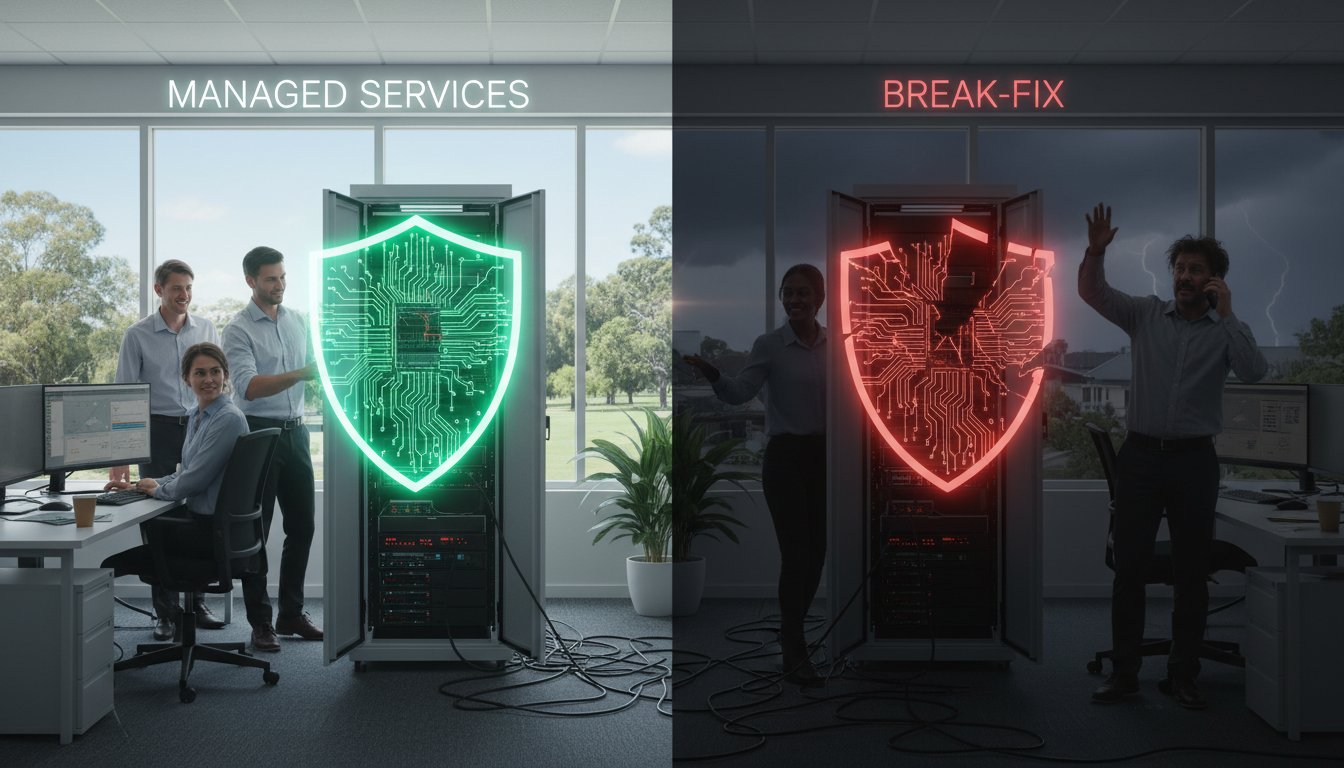
Server support is the proactive maintenance of what we call the “brain” of your business network. For small firms, this central hub manages everything from your emails to your secure client files. When you invest in professional small business server support Toowoomba, you aren’t just paying for someone to fix things when they break. You’re ensuring that the heart of your digital operation stays healthy, secure, and efficient. It’s about moving away from reactive “break-fix” habits and toward a stable environment where your technology just works.

To better understand how this technology supports your growth, watch this helpful video:

Many local owners start with a simple setup, but as your team grows to three, five, or ten people, a standard desktop computer isn’t enough to handle the workload. This is where “Right-Sized IT” comes in. Instead of expensive enterprise contracts designed for hundreds of users, you need support that fits your specific employee count and budget. This approach ensures you have the power you need without paying for features your small business will never use.

The Role of a Server in a Small Business Environment

In a local office, a server acts as the anchor for team collaboration. It provides centralised file storage, which means your staff don’t have to email documents back and forth; they simply access the latest version from a shared drive. Historically, many businesses relied on Windows Small Business Server to manage these tasks. Today, whether your server is a physical box in the corner or a hybrid cloud setup, it hosts essential software like your accounting packages, CRMs, or medical databases. It also manages user permissions across the Darling Downs, ensuring only the right people can see sensitive financial or customer data. It’s the primary tool for keeping your local network secure from the inside out.

Why “DIY” IT is a Risk for Your Business Continuity

Attempting to manage your own server might seem like a way to save money, but it often leads to significant hidden costs. When a server goes offline, your entire team stops working. Professional small business server support Toowoomba prevents the common mistakes home-office owners make, such as misconfigured firewalls or failing to verify that backups actually work. Business continuity is simply the ability of your firm to keep operating without interruption during a technical failure. Without a local expert to monitor your system, a small hardware glitch can turn into days of lost revenue. Relying on a “tech-savvy” staff member might work for a printer jam, but server health requires a dedicated, experienced eye to ensure your data remains protected and accessible.

Common Server Problems Facing Local Businesses in 2026

In 2026, the technical demands on local firms have increased significantly. Many owners notice their systems slowing down, often mistaking it for a poor internet connection. However, slow file access is frequently a primary symptom of server congestion. As your business grows, a server running on a standard consumer operating system like Windows 10 or 11 simply can’t keep up with multiple simultaneous requests. Moving to a dedicated server operating system is a critical step for stability. Getting the right small business server support Toowoomba helps you identify these bottlenecks before they cause a total system freeze.

Toowoomba’s unique environment plays a larger role in IT health than many realise. The combination of seasonal heat and local dust can be devastating for hardware tucked away in a cupboard. When cooling fans clog, internal temperatures soar, leading to component failure. Following Server maintenance best practices is essential to prevent these environmental shutdowns and keep your hardware running efficiently for years.

Hardware Failure and Environmental Factors

Physical hardware remains the most vulnerable part of your network. Hard drive crashes are a constant threat, and when they happen, you need reliable data recovery services to retrieve critical business information. Beyond just wear and tear, the Darling Downs is known for unpredictable weather. Power surges during summer storms can fry sensitive server components instantly. A high-quality Uninterruptible Power Supply (UPS) isn’t just an accessory; it’s a shield for your business continuity. We often see servers squeezed into non-ventilated spaces, which significantly shortens the life of the machine. If your server sounds like a jet engine, it’s likely struggling with heat and needs immediate attention.

Software Corruption and Security Vulnerabilities

Software issues are just as disruptive as hardware failures. Outdated server software acts as an open door for virus and malware attacks. Cyber security is now a top priority for Toowoomba businesses because local firms are increasingly targeted by automated ransomware. Configuration errors are another common culprit. These mistakes lead to the dreaded “Blue Screen” crashes or intermittent network dropouts that frustrate your staff. Professional small business server support Toowoomba ensures your software environment is clean, updated, and correctly configured. If you’re worried about your current setup, a quick security check-up can reveal hidden vulnerabilities before they’re exploited.

Remote vs. On-Site Support: Which is Best for Toowoomba Businesses?

Choosing between remote and on-site assistance shouldn’t be a difficult decision. For most local firms, the most effective strategy is a hybrid approach. This model combines the immediate response of digital tools with the physical expertise required for hardware maintenance. When you look for small business server support Toowoomba, you need a partner who can jump onto a screen share within minutes but is also ready to drive to your office in Newtown or Wilsonton when things get serious. This balance ensures your business stays operational without unnecessary delays or travel costs.

Security is a common concern for owners when allowing remote access to their “business brain.” We use encrypted, professional-grade session protocols that require your explicit permission before any connection is made. You can see exactly what is happening on your screen in real time. This transparency builds trust and ensures that your sensitive data remains protected while we apply critical security patches or software updates. It’s a professional way to handle routine maintenance without disrupting your office layout or staff schedules.

When Remote Support Wins

Remote support is the gold standard for speed and efficiency. It’s perfect for tasks that don’t involve physical parts, such as password resets, software updates, or minor network troubleshooting. If your office is located in the more remote parts of the Darling Downs, remote access provides an immediate response that saves you from waiting for a technician to travel. This method also helps keep your IT budget predictable. By resolving software-related server tweaks digitally, you avoid call-out fees for simple fixes. It’s the most practical way to maintain a fast, stable server performance on a daily basis.

The Necessity of On-Site Technician Visits

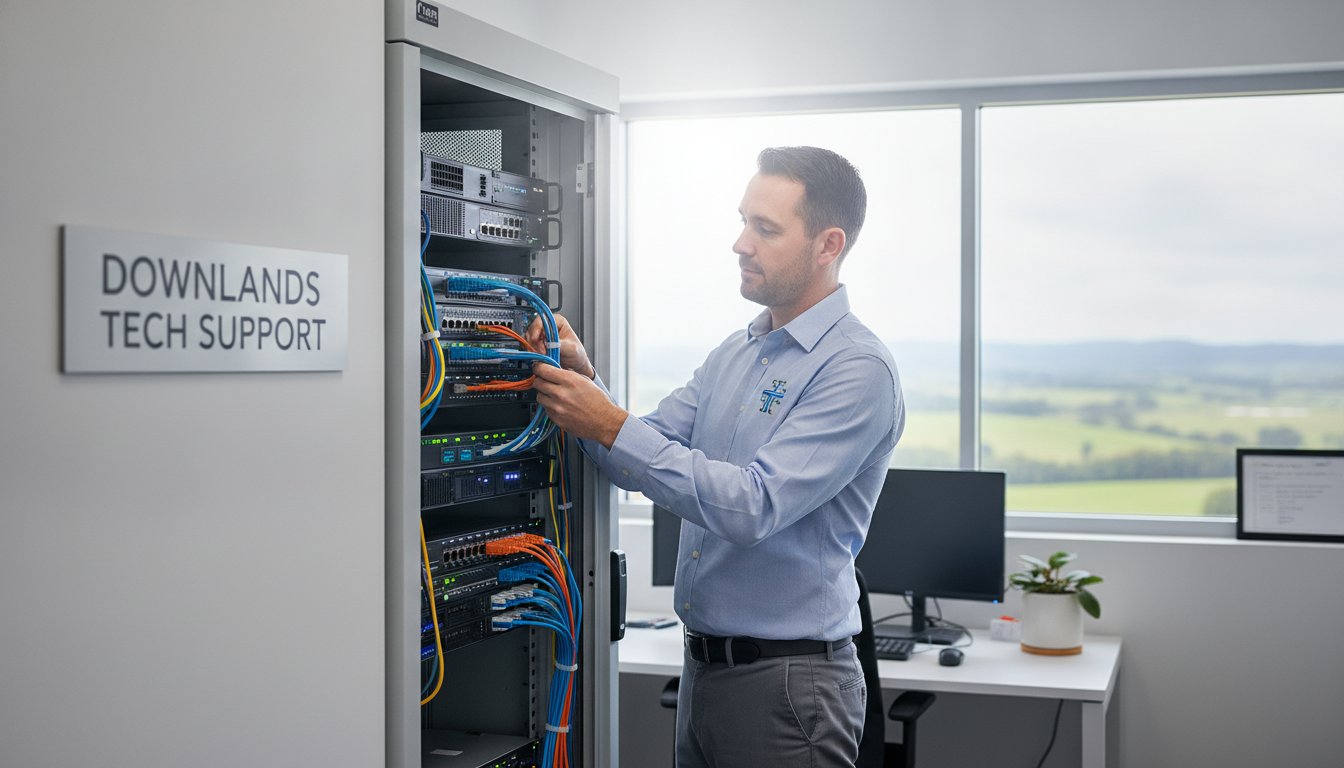
There are times when a physical presence is the only way to solve a problem. If your server hardware fails or you’re planning a full server migration, a technician must be on the ground. We provide on-site visits across Toowoomba and the Lockyer Valley for initial setups and complex Hardware Upgrades. Physical visits are also essential when your internet connectivity drops out, preventing any remote access from working. Having a local expert who knows your physical office layout means we can quickly locate cables, check ventilation in your server cupboard, and ensure your UPS systems are plugged in correctly. This local knowledge prevents the “anonymous corporate” feel and ensures we know your business by name, not just by a ticket number.

A 5-Step Maintenance Checklist to Extend Your Server’s Life

Many IT providers suggest replacing your server at the first sign of trouble. However, with the right small business server support Toowoomba, you can significantly extend the life of your current equipment. Proactive care is always more affordable than emergency replacements. By following a structured maintenance routine, you keep your system stable and avoid the stress of sudden hardware failure. It’s about getting the most out of your investment while maintaining peak performance.

  • Step 1: Daily backup verification. Don’t just assume your software is working. Check your logs every morning to ensure your “Data Backup” plan successfully completed without errors.
  • Step 2: Physical inspection. As we discussed earlier, dust and heat are silent killers. Monthly checks for unusual fan noise or blocked vents can prevent a total meltdown.
  • Step 3: Security patch management. Keeping Windows Server updated protects you against the latest vulnerabilities. We handle these updates after hours to ensure no disruption to your workflow.
  • Step 4: Storage monitoring. When hard drives reach 80% capacity, performance drops. Regularly clearing logs or expanding storage prevents your network from slowing to a crawl.
  • Step 5: Regular hardware upgrades. Adding more RAM or replacing aging power supplies prevents obsolescence and keeps your machine running like new.

Prioritising Data Protection and Backups

We recommend the 3-2-1 backup rule for every local office. This means keeping three copies of your data, stored on two different types of media, with at least one copy kept off-site. Off-site storage is your ultimate safety net for local disaster recovery if your physical office is compromised. While a backup is simply a copy of your files, “Business Continuity” is the comprehensive plan that ensures your entire operation can resume within hours of a failure. It’s the difference between merely having your files and having a working office.

Performance Tuning for Faster Office Networks

If your team complains about “lag,” the issue might be a bottleneck in your server’s RAM or CPU usage. Upgrading to Solid State Drives (SSDs) is often the most cost-effective way to breathe new life into older hardware. We also look at your network switches to ensure the server can “talk” to every PC at maximum speed. If your infrastructure is outdated, even a fast server will feel slow. If you want to ensure your system is running at its peak, contact us for a professional server performance audit today.

Aspire Computing: Your Local Partner for Toowoomba Server Support

Since 1999, Aspire Computing has provided small business server support Toowoomba firms can rely on for consistent, stable performance. Our mission centers on a dual focus of security and functional utility. We don’t believe in the distant, corporate approach where your business is just another ticket in a queue. Instead, we offer a personal touch where you deal directly with an experienced expert who knows your history and your office layout. Whether your business is in Toowoomba, Newtown, the wider Darling Downs, or the Lockyer Valley, we’re here to ensure your technology remains a tool for success rather than a source of stress.

Our long-standing history in the region has built a foundation of trustworthiness and personal accountability. We’ve seen how technology has evolved over the decades, and we’ve helped local owners navigate every change. From simple file sharing to complex hybrid cloud setups, our goal is to provide dependable, experienced assistance that is both competent and convenient. We take pride in being a local, community-focused business that understands the specific needs of our neighbors.

Why Choose a Local Toowoomba Expert Over a National Firm?

Choosing a local partner means you get significantly faster response times when a physical hardware emergency strikes. If your server goes offline on a busy Monday morning, you can’t afford to wait for a technician to travel from a capital city. There are no corporate gatekeepers at Aspire Computing. You speak directly to the person responsible for your system’s health. We have deep knowledge of the local Toowoomba business community and the environmental factors, such as our local climate, that affect your hardware. This local context allows us to provide more practical and effective solutions than a generic national provider ever could.

Getting Started: Your IT Health Check

If you’re unsure about the current state of your network, we encourage a no-obligation consultation to assess your server’s health. We’ll look at your specific small business server support Toowoomba requirements, checking your data backup reliability and hardware stability. Our engagement process is simple and methodical. Whether you need an on-site visit to your office or a quick remote session to resolve a software glitch, we guide you through a structured, step-by-step process. We focus on a rapid turnaround so your operations stay smooth and uninterrupted. Contact Aspire Computing for expert server support in Toowoomba today.

Take Control of Your Business Technology Today

Your server is the heart of your operation. Keeping it healthy requires more than just reactive fixes. By implementing a consistent maintenance checklist and understanding the balance between remote and on-site assistance, you can prevent the downtime that stalls growth. Protecting your hardware from local environmental factors and staying ahead of cyber threats ensures your team stays productive and your data remains safe.

Aspire Computing has been serving the Toowoomba community since 1999. We provide specialised small business server support Toowoomba that focuses on the unique needs of home offices and local firms. Whether you need expert on-site help or rapid remote assistance, we’re here to help you maintain a secure and functional network. Don’t wait for a technical failure to disrupt your day. Book Your Local Server Support Consultation Now and get the peace of mind you deserve.

Your business success depends on reliable technology, and we’re ready to partner with you to make that a reality.

Frequently Asked Questions

How much does small business server support cost in Toowoomba?

Industry rates for ad-hoc IT support in Australia typically range from $150 to $250 per hour, with on-site callout fees in the Toowoomba area often starting around $132. Your total investment depends on whether you require a one-off hardware repair or an ongoing maintenance plan. We focus on providing right-sized support that fits your specific employee count without the burden of expensive enterprise contracts.

Can you fix my server remotely if the internet is down?

No, a remote session requires an active internet connection to establish a link between our system and your server. If your internet is completely down, we’ll need to perform an on-site visit to your Toowoomba or Lockyer Valley location. This allows us to physically troubleshoot your modem, router, or the server’s network interface card to restore your connectivity.

Do I need to buy a new server or can my old one be upgraded?

Many servers can be revitalised with strategic hardware upgrades like additional RAM or fast Solid State Drives. If your hardware is less than five years old, an upgrade is often a cost-effective way to boost performance. We’ll assess your current machine’s health to see if it can safely support modern software or if a replacement is better for long-term reliability.

How often should a small business server be serviced?

A professional health check should occur at least every quarter to manage security patches and physical cleaning. However, your data backup systems should be verified daily through automated logs. Consistent small business server support Toowoomba ensures that minor issues, like a failing cooling fan or a nearly full hard drive, are caught before they cause a total system crash.

What is the difference between a server and a high-end PC?

Servers are engineered for 24/7 operation and use specialised components like redundant power supplies and error-correcting memory. While a high-end PC is built for a single user, a server manages the workload for your entire team simultaneously. It also runs a dedicated server operating system designed for centralised security, user permissions, and complex data management.

Do you support servers for home-based businesses in the Darling Downs?

Yes, we provide the same level of professional care for home-based businesses as we do for traditional offices. Many local owners in the Darling Downs run their operations from home and need secure file sharing and reliable backups. We offer flexible on-site and remote assistance to ensure your home office technology is just as stable and secure as a corporate network.

What happens if my server hard drive fails and I have no backup?

If your drive fails without a backup, you’ll need specialised data recovery services to attempt to retrieve your lost files. This is a technical process that involves searching for readable data on the damaged hardware. To avoid this high-stress scenario, we recommend implementing a 3-2-1 backup strategy immediately to ensure your business continuity is never at risk.

Is Windows Server support included in your computer repair services?

Yes, managing Windows Server environments is a key part of our service offering. We handle everything from the initial network configuration to ongoing security updates and performance tuning. Our experience since 1999 means we understand the technical nuances of server software, ensuring it integrates perfectly with your other PC and laptop repair needs.

Imagine arriving at your Toowoomba office only to find your server’s RAID array has gone dark and your business operations have ground to a halt. It’s a moment of pure panic that any business owner dreads. You’re likely worried about the mounting cost of downtime and the terrifying possibility that years of critical files are gone for good. With publicly reported data breaches in Australia increasing by 48% in 2025, the pressure to keep your data secure and accessible has never been higher.

You shouldn’t have to deal with the added anxiety of shipping sensitive drives to a distant lab in another city. I understand that you need a local expert you can trust to handle your hardware with care. This guide explains how professional RAID data recovery services in Toowoomba can help you achieve a full restoration of your business files. We will look at why local expertise matters, how we tackle complex failures, and the specific steps taken to ensure a fast turnaround so you can resume operations with confidence.

Key Takeaways

  • Learn the critical difference between a single drive failure and a total RAID array collapse to understand your recovery options.
  • Discover how professional RAID data recovery services use safe drive imaging techniques to restore your files without risking original hardware.
  • Understand why RAID levels like 1, 5, and 10 offer better redundancy compared to the high-risk nature of RAID 0 configurations.
  • Identify the immediate steps you must take when a server fails, including why you should never attempt a “rebuild” on clicking drives.
  • Find out how local expertise in Toowoomba and the Darling Downs offers a faster, more secure way to resume business operations after a crash.

Understanding RAID Failure: Why Servers and NAS Systems Stop Working

RAID technology is the backbone of most business servers and Network Attached Storage (NAS) units in Toowoomba. By using RAID (Redundant Array of Independent Disks), your business can store data across several drives. This setup is designed to provide safety. If one drive fails, the system keeps running. However, RAID isn’t a substitute for a backup. A total array collapse happens when the system’s fault tolerance is exceeded, such as two drives failing at once in a RAID 5 setup. When this occurs, your files become inaccessible and your business operations stop.

You’ll often see warning signs before a total shutdown. A “Degraded” status in your server management software is a clear red flag. You might also notice orange or red flashing lights on the front of your server chassis. If you hear clicking or grinding noises, or if the controller card reports a “RAID Failure” message, you need to act quickly. Professional RAID data recovery services are often the only way to retrieve data once the array has stopped mounting and standard troubleshooting fails.

Common Causes of RAID and Server Crashes

Many factors can bring down a server. Power surges are a frequent culprit in the Darling Downs region. A sudden outage can damage the RAID controller card, which is the “brain” that tells the drives how to work together. If the controller fails, the drives can’t communicate, and the data looks like a scrambled mess. Simultaneous drive failure is another common issue. Drives from the same manufacturing batch often have similar lifespans, so they might fail within days or even hours of each other. Finally, human error plays a large role. Accidental reformatting or pulling the wrong drive during a rebuild can turn a minor problem into a major disaster.

Logical vs. Physical RAID Damage

Understanding the type of damage is vital for a successful recovery. Physical damage occurs when the internal parts of a drive fail, such as a head crash or motor seizure. These cases require a clean-room environment to open the drive safely. Logical damage is different. The hardware might be fine, but the data structure is corrupted. This can happen due to software bugs or improper shutdowns. Parity is a mathematical method used by RAID controllers to reconstruct missing data when a drive fails by using checksums from the remaining disks. At Aspire Computing, we provide specialized RAID data recovery services to address both logical and physical issues. We focus on recovering your business data safely and efficiently to minimize your downtime.

RAID Data Recovery Services: Levels, Configurations, and Complexity

Small businesses across Toowoomba typically rely on a few specific RAID levels to keep their data safe. RAID 1, 5, and 10 are the most common configurations I see in local offices. These setups are popular because they offer a safety net. For instance, RAID 1 mirrors your data across two drives. If one fails, the other keeps your business running without any data loss. Understanding how RAID storage improves data redundancy helps business owners choose the right hardware for their needs. However, RAID 0 is the exception. It strips data across drives for speed but provides zero redundancy. If a single drive in a RAID 0 array fails, the entire volume is lost. This makes RAID data recovery services for RAID 0 much more complex and time-consuming.

Many local businesses also use Network Attached Storage (NAS) units from brands like Synology or QNAP. While these devices are user-friendly, they often use proprietary configurations. Synology Hybrid RAID (SHR) is a prime example. These systems add layers of complexity to the recovery process because the data isn’t distributed in a standard, predictable way. When these proprietary systems fail, standard off-the-shelf recovery software usually won’t work. It takes an experienced eye to manually reconstruct the array parameters.

Recovering Data from RAID 5 and RAID 6

RAID 5 and 6 are favorites for larger storage needs because they use “parity.” This is a mathematical calculation that allows the system to rebuild missing data if a drive dies. It sounds like a perfect safety feature, but it’s where many businesses run into trouble. When a drive fails, the array becomes “degraded.” Attempting to rebuild a degraded array puts immense stress on the remaining healthy drives. If a second drive has a hidden fault, the rebuild process often triggers a total crash. Professional RAID data recovery services avoid this risk by determining the exact drive order and stripe size before attempting any data reconstruction.

NAS Data Recovery: Synology, QNAP, and Beyond

NAS devices don’t use standard Windows file systems. Instead, they rely on Linux-based systems like EXT4 or the more modern BTRFS. Recovering files from these requires specialized knowledge of how Linux handles data blocks and inodes. I also frequently deal with encrypted volumes and complex folder permissions that can block access even after the hardware is stabilized. We provide Data Recovery Services for all major NAS hardware brands. If your office NAS has stopped responding, don’t keep restarting it. Reach out to Aspire Computing for a professional assessment to ensure your business files are recovered safely.

The Professional RAID Recovery Process: From Diagnosis to Data Restoration

When you bring a failed array to me, the first step is always a thorough diagnosis. I look at the physical health of every drive in the set. This initial assessment identifies the RAID level and the extent of any file system corruption. It’s a methodical stage where I determine if the failure is due to a single component or a complex chain reaction. By understanding the root cause, I can tailor the RAID data recovery services to your specific situation, ensuring the highest chance of success.

Once the diagnosis is complete, I move to virtual reconstruction. This involves rebuilding the array within a specialized virtual environment. By doing this, I can extract the original file structure and folder hierarchy. It allows me to test different configurations without risking your data. This stage is where technical expertise meets specialized tools to piece back together the digital puzzle of your business files. I focus on accuracy to ensure that the data we pull is exactly as it was before the crash.

Why Imaging is the Most Critical Step

I never work directly on your original hardware. Instead, I create “bit-for-bit” clones of every drive in the array. This process is called imaging. It’s the most vital part of the recovery because it protects your original disks from further mechanical degradation. If a drive is already failing, every second it spins could lead to permanent damage. I use specialized hardware imagers designed to handle drives with “bad sectors.” These tools can read data that standard computers simply can’t reach. By working from clones, I ensure your original data remains untouched and safe throughout the entire process.

Verifying Your Recovered Files

I believe in clear communication and transparency. Before finalizing the service, I provide you with a comprehensive file list for your approval. You’ll be able to see exactly which documents, databases, and photos have been retrieved. This gives you peace of mind knowing the recovery was successful before you commit. We take Cyber security seriously during this stage. Your data is handled with strict confidentiality and stored on secure, isolated systems. For the final delivery, you have options. I can transfer your files to a new encrypted external drive or provide a secure cloud transfer. My goal is to get your business back on its feet with a fast turnaround and clear results.

What to Do (and What to Avoid) When Your RAID Array Fails

The moment you realize your server is down, the clock starts ticking on your business operations. It’s easy to feel rushed. However, the actions you take in the first ten minutes determine whether your data is recoverable. My golden rule is simple: stop using the device immediately. Every second a failing RAID spins, it risks overwriting data or causing physical platter damage. If you hear clicking, grinding, or whirring, the internal components are likely failing. Forcing a “rebuild” in this state is a recipe for permanent loss. Rebuilding an array is a high-stress process for hard drives. If one disk has already failed and another is on the verge, the rebuild will likely push the second drive over the edge.

Don’t trust “free” or cheap DIY recovery tools. RAID structures are complex. These programs often try to write to the drives or misinterpret the parity data. This can permanently scramble the array beyond any hope of professional RAID data recovery services succeeding. Before you pull any drives from the chassis, grab a marker and some tape. Label every single drive with its original slot number, such as Slot 1 or Slot 2. The drive order is essential for reconstructing the data correctly. If you lose track of which drive goes where, the recovery becomes much more difficult and time-consuming.

Emergency Checklist for RAID Failure

  • Power down the server or NAS safely. Use the proper shutdown procedure rather than pulling the power cable to avoid file system corruption.
  • Document the failure. Note the exact error codes, the pattern of flashing lights, and any unusual sounds.
  • Keep drives in their place. Never swap the positions of the drives in the array, as the controller expects a specific sequence.

Safe Transport for Your Drives

Toowoomba’s weather can be harsh, and heat is a major enemy of hard drives. If you’re bringing your drives to me, keep them in a cool, climate-controlled part of your vehicle. Physical shock is another risk. Use anti-static bags for each drive to prevent electrical discharge. Wrap each bag in at least two inches of bubble wrap. A sturdy box is always better than a padded envelope. If you’re unsure how to remove the drives without damaging the delicate connectors, I can help. Contact me for Computer Repairs Toowoomba if you need professional assistance on-site to remove the hardware safely.

If your server has failed, don’t take risks with your business continuity. Reach out to Aspire Computing immediately for expert RAID data recovery services and get your critical data back safely.

Local RAID Recovery in Toowoomba: How Aspire Computing Protects Your Business

When your server fails, you don’t want to deal with an impersonal call centre or wait for a ticket number from a national lab. You need a local partner who understands the urgency of your situation. At Aspire Computing, I provide personalised RAID data recovery services right here in Toowoomba. With over 25 years of experience, I’ve seen almost every type of server crash imaginable. My focus goes beyond just retrieving a few lost documents. I prioritise your Business Continuity to ensure your entire operation can resume as quickly as possible. You’ll speak directly with me, the technician handling your drives, ensuring clear communication without the corporate distance.

I offer on-site assessments for businesses across the Darling Downs and Lockyer Valley. You don’t have to deal with the risks and delays of shipping sensitive hardware to a lab in Brisbane. Fast turnaround is critical for business servers. My local presence ensures we start the recovery process immediately. Beyond emergency repairs, I offer IT Support for Business to help you identify vulnerabilities before they lead to another array failure. This proactive approach helps keep your systems stable and your data secure.

Serving Toowoomba and the Darling Downs Since 1999

I’ve been helping local businesses recover from technical disasters for over two decades. My history in the region means I understand the unique needs of our local commercial community. Whether you’re a small office in the CBD or a larger operation in the Lockyer Valley, I provide the same level of dedicated, expert care. This long-standing history provides a sense of stability that national providers simply can’t match. When you call, you aren’t just a number. You’re a local business owner who needs their data back, and I’m committed to making that happen as efficiently as possible.

Beyond Recovery: Implementing Robust Backup Solutions

A successful recovery is only the first step. I work with my clients to ensure they never face the same panic again. This involves setting up a “3-2-1” backup rule: three copies of your data, on two different types of media, with one copy stored off-site. I supply and install high-quality hardware from trusted brands like Western Digital and Seagate to build more resilient arrays. Whether you need to recover lost files or want to harden your data infrastructure, I’m here to help. Contact Aspire Computing for an immediate RAID assessment and let’s get your business data back on track.

Restore Your Business Operations with Confidence

A server failure is a stressful event, but it doesn’t have to be the end of your business data. By acting quickly and powering down your system, you’ve already taken the most important step toward a successful restoration. Professional imaging and virtual reconstruction are the safest ways to handle complex array failures without risking further damage to your original hardware.

At Aspire Computing, I’ve been helping Toowoomba businesses navigate technical disasters since 1999. Whether you’re running a Synology NAS, a QNAP unit, or a complex Windows Server environment, I have the experience to piece your digital puzzle back together. You don’t need to risk shipping sensitive drives to another city when expert RAID data recovery services and local on-site support are available right here in the Darling Downs.

I’m ready to help you get back to work with a clear, methodical plan for your data restoration. Get a Professional RAID Assessment in Toowoomba Today and let’s secure your business continuity. Your critical files are too important to leave to chance.

Frequently Asked Questions

How much does RAID data recovery cost in Australia?

The cost of recovering data from a RAID array depends on the complexity of the failure and the number of drives involved. Simple logical issues are generally less expensive than mechanical failures that require specialized clean-room work. Every case is unique, so a professional assessment is the only way to get an accurate quote tailored to your specific server or NAS configuration.

Is it possible to recover data from a RAID 5 with two failed drives?

Yes, it is possible to recover data from a RAID 5 with two failed drives, but it requires professional intervention. RAID 5 can only survive a single drive failure using its parity data. When a second drive fails, the array collapses. Recovery involves creating bit-for-bit clones of all drives and manually reconstructing the data blocks, which is a core part of our RAID data recovery services.

Do I need to bring in the entire server or just the hard drives?

In most cases, you only need to provide the hard drives, but bringing the entire server or NAS unit can be very helpful. The RAID controller or the NAS chassis contains configuration metadata that can speed up the reconstruction process. If you aren’t comfortable removing the drives yourself, I can assist you on-site in Toowoomba to ensure the hardware is handled safely.

How long does the RAID recovery process usually take?

Most RAID recovery cases are completed within three to five business days. The exact timeline depends on the total volume of data and the physical health of the drives. If a drive has mechanical damage, the imaging process takes longer. I focus on providing a fast turnaround for local businesses because I know how much downtime costs your operations.

Can you recover data from a NAS that has been factory reset?

Data can often be recovered after a factory reset if the drives haven’t been heavily overwritten with new information. A reset typically wipes the configuration settings and file pointers rather than the actual data sectors. Using professional tools, I can scan the raw sectors of the drives to find and restore your original folder structures and critical business files.

What is the “No Data, No Charge” policy and do you offer it?

A “No Data, No Charge” policy generally means you only pay the recovery fee if your essential files are successfully retrieved. This is a common standard among reputable RAID data recovery services across Australia. You should always clarify the specific terms during your initial assessment, including whether there are any small upfront fees for parts or the initial evaluation process.

Is RAID a replacement for a regular backup system?

RAID is definitely not a replacement for a dedicated backup system. While RAID provides hardware redundancy, it doesn’t protect your business from accidental file deletion, software corruption, or ransomware attacks. I always help my clients implement a robust “3-2-1” backup strategy after a recovery to ensure their data is protected against more than just disk failure.

Can data be recovered from a RAID controller failure without the original hardware?

Data can absolutely be recovered even if your RAID controller card has physically failed. Specialized recovery software and hardware tools allow me to emulate the controller’s functions. By identifying the original stripe size, parity pattern, and drive order, I can virtually reconstruct the array. This process allows for a full data extraction without needing the original server hardware to be functional.

What if paying the ransom is actually the most dangerous thing you could do for your Toowoomba business’s future? When you see that terrifying message on your screen, it’s easy to feel like you’re out of options. You’ve worked hard to build your company, and the thought of losing every critical file is overwhelming. I know how stressful it is to face such a sudden threat to your livelihood. You’re likely wondering if recovering files after a ransomware attack is even possible without giving in to the hackers’ demands.

The answer is a resounding yes. I’ve helped many local businesses navigate these technical failures with a calm, methodical approach. This guide provides a professional roadmap to help you isolate your systems and assess your data recovery options. We’ll focus on sanitising your environment first to ensure that your restoration is permanent and secure. By following these steps, you’ll learn how to clean your network, restore your business operations, and establish a data backup plan that keeps you protected moving forward.

Key Takeaways

  • Learn the immediate actions you must take to isolate infected devices and protect your decryption keys from being lost during a reboot.
  • Discover how recovering files after a ransomware attack is possible using professional tools and “Sanitise and Restore” workflows that avoid paying hackers.
  • Find out how experts uncover hidden data remnants and shadow copies that cybercriminals often try to wipe during an intrusion.
  • Master the 3-2-1 backup rule and modern security strategies to build a business environment that’s resilient against future threats.
  • See why local expertise in virus removal and data recovery helps Toowoomba business owners restore their operations with confidence and speed.

Immediate Actions: What to Do the Second You Detect Ransomware

Discovering a ransom note on your desktop is a heart-stopping moment for any business owner. Your first instinct might be to panic or shut everything down, but your actions in these first few minutes are critical for recovering files after a ransomware attack. Before you do anything else, you need to understand the nature of the threat. A quick look at What is Ransomware? shows that these malicious programs are designed to lock you out of your own data until a fee is paid. To stop the damage, you must act with precision.

The very first step is to physically isolate the infected machine. Pull the Ethernet cable out of the wall and disable the Wi-Fi immediately. However, don’t turn the computer off. While it seems counterintuitive, some ransomware strains delete the encryption keys stored in the system’s temporary memory during a reboot. Keeping the power on might actually save your data. Next, disconnect any external hard drives, NAS devices, or USB sticks. If these remain connected, the virus will continue to encrypt every file it can reach. Speed is your best ally.

To better understand this concept, watch this helpful video:

Why Isolation is Your #1 Defence

Ransomware doesn’t just stay on one computer; it’s designed to spread laterally across your Toowoomba office network. It looks for “mapped drives” or shared folders that other staff members use. If one workstation is compromised, the infection can jump to your main server in minutes. It’s a race against the clock. Tools like Dropbox or OneDrive can also become accidental enemies during an attack. Their “automatic sync” feature will see the newly encrypted files and immediately upload them to the cloud, replacing your healthy versions with unreadable ones. Severing the internet connection stops this sync process in its tracks.

Evidence Gathering for Recovery Experts

Once the machine is isolated, you need to document the situation. Take a clear photo of the ransom note on the screen and any unusual file extensions you see, such as .lockbit or .crypted. This information is vital for identifying the specific strain of the attack. Don’t delete the ransom note or try to “clean” the files yourself yet. Professional Data Recovery Services begin with this digital evidence to determine if a public decryptor exists or if other restoration methods are viable. Having these details ready will significantly speed up the process of recovering files after a ransomware attack and getting your business back on its feet.

Can You Recover Files Without Paying? The Truth About Ransom

The short answer is yes, but it requires a strategic approach. Ransomware recovery is the technical process of using clean backups or specialised decryption tools to restore your data to its original state. Many people believe that paying the fee is the only way out, but this is a dangerous misconception. In fact, following official government guidelines, the first recommendation is always to avoid engaging with the attackers. There’s no guarantee they’ll hold up their end of the bargain, and your money only funds further criminal activity.

One of the most effective tools in recovering files after a ransomware attack is the “No More Ransom” project. This is a collaborative effort between law enforcement and IT security companies. They’ve developed free public decryptors for hundreds of ransomware strains. If the specific virus that hit your office has been “cracked” by researchers, we can often get your files back without you spending a cent on a ransom. It’s the first thing I check when a local business brings an infected machine to me.

However, the statistics for those who do pay are quite grim. Industry reports, such as the Sophos State of Ransomware 2023, suggest that a large majority of organisations that pay the ransom still fail to get all their data back. Some files remain corrupted, while others are simply lost forever. Beyond the data loss, paying the fee marks your Toowoomba business as a “soft target.” Once cybercriminals know you’re willing to pay, they may sell your details to other groups or target you again in a few months, knowing you’re a profitable victim.

The Risks of Negotiating with Cybercriminals

Negotiating with hackers is rarely a smooth process. Even if you receive a “decryptor” after paying, these tools are often poorly coded and buggy. They can crash halfway through the process or permanently damage your files during the decryption attempt. My approach at Aspire Computing is to conduct a thorough feasibility assessment first. We look at the encryption type to see if there’s a technical path forward that doesn’t involve trusting a criminal’s software.

When Decryption is Not Possible

Sometimes, what looks like ransomware is actually “Wiper” malware. These programs pretend to lock your files for a fee, but they actually just destroy the data immediately. In these cases, no key in the world will help. This is why professional Virus and Malware Removal is the absolute prerequisite for any recovery attempt. We have to ensure the “thief” is out of the house before we start putting the furniture back in place. If you’re unsure about the state of your network, it’s a good idea to contact a local expert to verify your system is clean.

Professional Recovery Methods: How We Get Your Data Back

Once your network is isolated and the threat is contained, the actual work of recovering files after a ransomware attack begins. This stage is about more than just clicking a restore button. It requires a careful, methodical workflow to ensure that the data you get back is clean and that the virus won’t simply trigger again. According to IBM’s guide to ransomware recovery, the restoration phase must be handled with extreme caution to avoid the cycle of reinfection that many businesses fall into.

One of the first things I look for is remnants of Volume Shadow Copies. These are automatic snapshots Windows takes of your files. While modern hackers use scripts to delete these first, they aren’t always successful. Sometimes the scripts fail or only target the primary drive, leaving snapshots on secondary disks. Finding these remnants can often save a business from total data loss without needing to touch a backup. If those are gone, we move to Backup Image Restoration. This is the fastest way for a Toowoomba small business to get back online because it restores the entire operating system, settings, and files to a point in time before the breach occurred.

Accounting and database software like MYOB or desktop versions of Xero require even more precision. We perform point-in-time recovery for these specific databases to ensure transaction integrity. It’s a delicate process, but it’s the only way to be certain your financial records aren’t corrupted or missing entries from the day of the attack.

Sanitising the Environment Before Restoration

You can’t just dump clean files back onto a system that hasn’t been properly scrubbed. If the “payload” is still hidden in your registry or temporary system folders, it’ll just re-encrypt your data the moment you finish the restore. I focus on deep-cleaning these hidden areas and verifying that any “backdoor” access points created by the attackers are permanently closed. This ensures that when we finally bring your systems back online, they stay clean and secure.

Testing and Verifying Recovered Data

Before you resume normal operations, we must verify the integrity of the files. We use “sandboxing” to open recovered documents in a safe, isolated environment. This check ensures no dormant malware is hiding inside a macro or a PDF. IT Support for Business is essential during this phase, as it provides the professional validation needed to confirm your spreadsheets and customer databases are fully functional. This final step gives you the confidence that recovering files after a ransomware attack has been a complete success.

Preventing the Next Attack: Building a Ransomware-Proof Business

Once you’ve finished the hard work of recovering files after a ransomware attack, your focus must shift to prevention. You don’t want to go through that stress again. Building a resilient network means you won’t have to face the stress of recovering files after a ransomware attack a second time. I always suggest starting with the 3-2-1 backup rule. This means keeping three copies of your data on two different types of media, with at least one copy stored off-site. It’s a simple but incredibly effective standard that ensures you always have a “clean” version of your business records ready to go.

Technology moves fast, and traditional antivirus programs are no longer enough to protect a Toowoomba business in 2026. Modern threats require endpoint protection that monitors suspicious behaviour in real-time rather than just scanning for known viruses. Your team is also a vital part of your defence. Phishing emails are the most common entry point for malware. Teaching your staff how to spot a fake login page or a suspicious attachment can stop an attack before it even starts. Finally, don’t overlook your physical equipment. Regular Hardware Upgrades ensure your computers can run the latest operating systems and security patches, which close the gaps hackers love to exploit.

The Power of Air-Gapped Backups

An air-gapped backup is a storage device that is physically disconnected from your computer and the internet. If a hacker can’t reach the drive, they can’t encrypt your files. For businesses using the cloud, I recommend “Immutable Storage.” This technology prevents files from being changed or deleted for a specific time, even if an attacker gains administrative access. At Aspire Computing, I help local business owners set up these automated, secure routines so your data remains safe regardless of what happens on your network.

Patch Management and Security Audits

Windows Update is often seen as a nuisance, but it’s actually your first line of defence. These updates fix “exploits” that hackers use to gain entry to your system. A high-quality firewall also helps by blocking the “Command and Control” servers that hackers use to send instructions to infected machines. I recommend scheduling a quarterly IT health check. These audits allow us to find and fix vulnerabilities in your network before they can be exploited by outsiders. If you want to ensure your business is truly protected, book a security audit with Aspire Computing today.

Local Ransomware Response: Why Toowoomba Trusts Aspire Computing

When a digital crisis hits, you don’t want to be just another ticket number in a global queue. You need someone who understands the local landscape and the unique pressures of running a business in our region. Aspire Computing has served the Toowoomba community for over 25 years. I’ve spent more than two decades building a reputation for reliability in data recovery and virus removal. This isn’t just about technical fixes; it’s about helping a neighbour protect their livelihood and regain peace of mind.

My approach to recovering files after a ransomware attack is built on personal accountability and trust. Whether your business is located in the CBD, Newtown, or across the wider Darling Downs, I provide a face-to-face service that large corporate IT firms simply can’t match. I take the time to listen to your concerns and understand your specific operational needs. This personalised focus ensures that the recovery process doesn’t just fix the immediate problem but also builds a foundation for long-term business continuity and technical stability.

On-Site vs. Remote Recovery Support

While remote support is helpful for minor software glitches, ransomware often requires a physical presence. It’s frequently safer for a technician to physically inspect your server and workstations on-site in Toowoomba. This allows for a deeper level of hardware analysis and ensures that every single infected device is correctly identified and isolated. You won’t have to deal with the frustration of waiting for “Tier 1” support from an overseas call centre. I work directly alongside your team to minimise downtime. We focus on getting your most critical systems back online first so you can keep serving your customers while we handle the complex restoration work in the background.

Starting Your Recovery Journey Today

I offer a “No Panic” consultation to help you clear the fog of a cyber attack. We’ll sit down, assess the current state of your network, and provide a clear, methodical roadmap for recovering files after a ransomware attack. You’ll receive honest advice on whether your data is truly recoverable and a transparent explanation of the steps we need to take. There are no hidden fees or false promises here. If you’re facing an IT emergency right now, contact Aspire Computing for immediate ransomware assistance. We’re ready to help you regain control of your digital world and secure your business’s future.

Take Control of Your Data and Your Business Future

Facing a cyber attack is one of the most stressful challenges a business owner can endure. By acting quickly to isolate your systems and seeking professional help, you can navigate this crisis without rewarding the hackers. Remember that recovering files after a ransomware attack is a technical process that requires a clean environment to be successful. From sanitising your network to implementing robust 3-2-1 backup strategies, you now have the roadmap to move from vulnerability to resilience.

I’ve been serving Toowoomba and the Darling Downs since 1999. My specialised data recovery expertise is designed to get your files back and your operations running smoothly. If you’re currently dealing with an infection or want to ensure your business is properly protected, I provide local on-site support to give you the personal attention you deserve. You don’t have to face this alone.

Get Expert Ransomware Recovery Help in Toowoomba Now

Your business is too important to leave to chance. Let’s work together to make your network secure and your data safe once again. You’ve got this, and I’m here to help.

Frequently Asked Questions

Should I pay the ransom if I have no backups?

No, you should avoid paying the ransom even if you don’t have backups. There’s no guarantee that the criminals will provide a working decryption key, and many businesses find that the provided software is buggy or incomplete. Paying also marks your company as a profitable target for future attacks. Instead, a professional assessment can determine if there are other ways of recovering files after a ransomware attack, such as using public decryption tools or finding remnants in your system snapshots.

How long does it take to recover files after a ransomware attack?

Most recovery processes take between 24 and 72 hours, though this depends on the volume of data and the severity of the infection. This timeline includes the essential step of sanitising your systems to ensure the malware is completely gone before we begin restoring your files. We prioritising your most critical business operations to get you back online as quickly as possible. A methodical approach ensures that the restoration is permanent and secure rather than a temporary fix.

Can ransomware infect my cloud storage like OneDrive or Google Drive?

Yes, ransomware can easily infect your cloud storage if you use automatic synchronisation tools. When the virus encrypts files on your local computer, the cloud software sees these as “updates” and syncs them immediately. This replaces your healthy cloud files with encrypted, unreadable versions. This is why disconnecting your internet and cloud sync tools is the first step in protecting your remaining data during an attack. We then work to roll back your cloud files to a clean version.

Is it possible for ransomware to hide in my backups?

It is possible for ransomware to be present in your backups, especially if the malware sat dormant on your network for a period before activating. Some attackers use a “dwell time” to ensure that even your older backups contain the malicious payload. This is why I never restore directly to a live environment without first scanning the backup files in a safe, isolated sandbox. We must verify they are clean to prevent the encryption process from starting all over again.

Will my insurance cover the costs of ransomware recovery?

Whether your insurance covers these costs depends entirely on your specific policy and its inclusions. Many standard business insurance packages don’t include cyber coverage by default. You should check your policy for “Cyber Liability” or “Data Breach” clauses to see if you’re protected. If you have coverage, it may assist with the costs of professional data recovery services and business continuity efforts. I recommend contacting your broker to verify your level of protection before an incident occurs.

What is the most common way ransomware enters a Toowoomba business network?

Phishing emails remain the most common entry point for ransomware in local business networks. These emails often contain malicious attachments or links that look like legitimate invoices, shipping notifications, or bank alerts. Once a staff member clicks, the payload is delivered to the system. Unpatched software and weak remote desktop passwords are also frequent vulnerabilities. Regular staff training and consistent security patches are your best defences against these common tactics used by cybercriminals.

Can a local computer repair shop really fix a ransomware infection?

Yes, a local expert with specialised experience in virus and malware removal can effectively handle a ransomware infection. At Aspire Computing, I use professional-grade tools and a “Sanitise and Restore” workflow that goes far beyond what a general repair shop might offer. This local approach ensures you get fast, on-site support from someone who is personally accountable for the success of recovering files after a ransomware attack on your business network.

Would you rather pay a predictable monthly fee or risk a bill for $8,000 every single hour your systems are down? Many Toowoomba business owners assume that calling a technician only when something breaks saves money. However, in 2026, the debate of managed IT services vs break-fix has shifted from a simple repair choice to a high-stakes gamble with your company’s survival. With the average cost of IT downtime for small businesses now reaching $8,000 per hour, a reactive “quick fix” can quickly become a financial disaster.

We understand the stress of unpredictable IT expenses and the fear that a single cyber attack could compromise your hard work. You want to feel supported by a local expert who knows your name, not like a ticket number in a distant corporate queue. This article will help you discover the hidden costs of reactive IT and learn how to choose the right support model to protect your business’s continuity. We’ll break down current 2026 pricing, explore the $10.5 trillion global cybercrime threat, and show you how a proactive approach ensures you stay connected and protected.

Key Takeaways

  • Contrast proactive maintenance with reactive repairs to understand how each approach affects your business continuity and daily operations.
  • Uncover the hidden financial risks of the “pay-as-you-go” model, including the heavy cost of lost productivity and potential reputation damage.
  • Evaluate the long-term budget impact of managed IT services vs break-fix support to find the most cost-effective path for your business growth.
  • Determine the specific security requirements for your industry to ensure you aren’t leaving sensitive data vulnerable to sophisticated cyber threats.
  • Learn how a dedicated local partner in Toowoomba provides the personalized accountability and “Active Protection” that a corporate ticketing system can’t match.

Defining the Models: Managed IT Services vs Break-Fix IT Support

Choosing how to handle your technology shouldn’t feel like a gamble. Since Chaim Lee established Aspire Computing in 1999, the way Toowoomba businesses use computers has changed completely. We’ve moved from simple word processing to total reliance on the cloud and digital security. When your system goes down, the first thing we tell you is “don’t panic.” We’re here to help. However, the decision between managed IT services vs break-fix is more than just a pricing choice. It’s about whether you want to be reactive or proactive in a year where cyber threats are at an all-time high.

To better understand the fundamental differences between these two models, watch this helpful video:

What is Break-Fix IT? (The Reactive Approach)

In the break-fix world, you only pay for the time a technician spends on your specific problem. While this sounds budget-friendly, it often leads to unpredictable IT expenses. You might go three months with zero costs, then suddenly face a massive bill because a server failed during your busiest season. Billing usually involves an hourly rate, which in 2026 averages between $125 and $350 according to industry reports. You also pay for travel fees and any hardware parts needed. There’s a subtle conflict of interest here. A break-fix provider only earns money when your technology fails. It’s a transactional relationship that’s best suited for very low-complexity setups, like a student’s laptop or a hobbyist’s home computer.

What are Managed IT Services? (The Proactive Approach)

Managed IT services turn that model on its head. We act as your outsourced IT department for a predictable monthly subscription. By 2026, roughly 89% of companies have adopted a digital-first strategy, making this proactive care essential. We use 24/7 monitoring to provide “Active Protection” for every device on your network. Our tagline, “Aspire to Protect and Connect,” means we’re constantly working in the background to install security patches and verify backups. If a problem starts to brew at 2 AM, we’re often fixing it before you open your doors at 8 AM. This partnership aligns our interests with yours. Managed services ensure that if your tech stays up, we’re doing our job correctly. It’s about continuity, not just repair.

  • Predictable Costs: You pay one flat fee every month.
  • Active Protection: We catch glitches before they cause downtime.
  • Expert Support: You get access to a team that knows your business history.

The Hidden Costs of the Break-Fix Model in 2026

On the surface, the break-fix model feels like a logical way to save money. You only pay for what you use, and you avoid a monthly commitment. However, this “quick fix” approach often ignores the root cause of technology failures. By 2026, the financial reality of managed IT services vs break-fix support has become clear. A single hour of downtime for a small business now costs an average of $8,000. For micro SMBs with fewer than 25 employees, that figure can reach $1,670 per minute. These aren’t just numbers on a page; they represent lost invoices, frustrated staff, and a damaged reputation in our Toowoomba community.

Downtime is More Than Just an Idle Computer

Imagine a 5-person office where the network suddenly fails on a Tuesday afternoon. Work stops immediately. Your team is still on the clock, but their productivity has vanished. This downtime ripples through your entire customer service pipeline. If your client can’t reach you or you can’t access their files, they may look elsewhere. Even a simple hardware failure can be devastating. For example, a delay in Printer Supply and Repair in Toowoomba could prevent a local law firm from meeting a critical filing deadline. When you rely on a reactive model, you’re always waiting for the next crisis to happen.

The Cyber Security Risk Factor

Waiting for something to break is an open invitation for modern cyber criminals. In 2026, the global cost of cybercrime is projected to reach $10.5 trillion. Unpatched software and outdated security settings are the primary targets for AI-powered attacks. Following cybersecurity fundamentals for small businesses is no longer a luxury; it’s a requirement for survival. Proactive data backup and monitoring are far more cost-effective than the alternative. The average cost of a data breach has risen to $4.88 million, a price most small businesses simply can’t pay. If you’re concerned about your current setup, our Virus and Malware Removal Guide explains just how difficult it is to clean a system after an infection takes hold.

The psychological toll of reactive IT is also significant. Operating in “panic mode” drains your focus and creates a stressful environment for your employees. Moving toward proactive business operations allows you to regain your peace of mind. Instead of worrying about what might break tomorrow, you can focus on growing your business while we handle the background protection. We believe technology should support your goals, not stand in the way of them.

Managed IT vs Break-Fix: A Practical Comparison

Understanding the day-to-day experience of managed IT services vs break-fix support helps you see beyond the initial price tag. Think of the break-fix model like calling a plumber for a burst pipe. You only pay when there is a mess to clean up. Managed IT, however, is like having a specialist monitor your plumbing 24/7 to ensure a leak never starts. In 2026, managed IT pricing for small businesses typically ranges from $95 to $295 per user per month. This provides a clear contrast to break-fix hourly rates, which often climb as high as $350 per hour for emergency or after-hours support. When you choose a partnership, you aren’t just buying a repair; you’re buying a Service Level Agreement (SLA) that guarantees a response when you need it most.

Strategic growth is another area where these models diverge. During a technology crisis, break-fix users often buy whatever hardware is available on the shelf at the nearest big-box retailer. This leads to a “Frankenstein” network of mismatched devices that are difficult to secure. With a managed approach, we help you plan your hardware lifecycles. This ensures your team always has the tools they need to stay productive. Most importantly, you get personal accountability. Instead of a random technician who doesn’t know your history, you have a local expert like Chaim Lee who has supported the Toowoomba region since 1999. This trust is the foundation of a reliable business operation.

Financial Breakdown: Budgeting for IT

Managed IT acts as a form of business insurance for your digital assets. It eliminates “bill shock,” which is the sudden, massive invoice that follows a server failure or a major security incident. While break-fix invoices are unpredictable and often arrive at the worst possible time, a subscription model offers total budget clarity. A fixed monthly IT invoice simplifies tax time for Queensland businesses by providing a single, predictable expense line for your accountant to track throughout the year.

Maintenance vs. Repair

Proactive maintenance extends the life of your laptops, desktops, and printers. Regular Windows tune-ups and hardware health checks prevent the slow performance that frustrates employees. If your current systems are feeling sluggish, our PC Hardware Upgrades Guide can help you determine if a simple component swap is better than a full replacement. By catching small glitches early, we improve your operational efficiency by 45% to 65%, ensuring your technology remains an asset rather than a liability.

Choosing the Right Model for Your Business Size and Needs

Deciding between managed IT services vs break-fix isn’t about which model is “better” in a vacuum. It’s about which one fits your current scale and your tolerance for risk. If you’re a solo freelancer working from a home office in Toowoomba with minimal data storage needs, the break-fix approach might be perfectly fine. In this scenario, a few hours of downtime is a nuisance rather than a business-ending event. However, for any business that employs staff or handles sensitive client information, the math changes quickly. As of 2026, approximately 22.8% of the workforce is remote, adding layers of security complexity that a reactive “call-when-it-breaks” technician simply isn’t equipped to manage.

The “growth trigger” usually happens when you realize that your time is too valuable to spend troubleshooting printer drivers or software updates. If 89% of companies have already adopted a digital-first business strategy, your technology is no longer a tool; it’s the engine of your business. When that engine stalls, your revenue stops. Assessing your risk tolerance is the best way to find your path forward. Ask yourself how much data you can afford to lose and how long your team can sit idle before the financial damage becomes permanent.

Industry-Specific Considerations

Certain sectors in the Darling Downs region have no room for error. Healthcare providers and medical clinics cannot rely on a break-fix model because patient care and strict privacy compliance are at stake. Similarly, for retailers in Toowoomba or Brisbane, a failed Point of Sale (POS) system during a Saturday rush can result in thousands of dollars in lost sales. If your industry requires high uptime or handles confidential records, you need a proactive partner. You can find more details on how to align technology with your specific goals in our IT Support for Business Guide.

The 3-Question Decision Matrix

If you’re still unsure which model suits you, answer these three questions honestly:

  • Can your business survive 24 hours without internet or computers? If the answer is no, the reactive model is too dangerous for you.
  • Do you handle sensitive client data? This includes health records, credit card numbers, or private legal emails that require constant security patches.
  • Is your current IT setup a source of constant stress? Technology should provide peace of mind, not a recurring headache.

If these questions make you realize your current setup is a gamble, it’s time to talk to the experts at Aspire Computing about a more stable solution.

How Aspire Computing Bridges the Gap for Toowoomba Businesses

Aspire Computing doesn’t force you into a rigid box. We understand that the choice between managed IT services vs break-fix is rarely all-or-nothing for a growing business. Since 1999, Chaim Lee has helped Toowoomba business owners navigate these decisions with a simple, reassuring philosophy: don’t panic. While large corporate providers might treat you like a ticket number in a distant queue, we offer the personal accountability of a local expert. We’ve spent over 25 years building a reputation for reliability across the Darling Downs. Our mission is to “Protect and Connect,” providing security-first IT support that fits your actual needs and your budget.

We bridge the gap by offering flexible solutions that grow with you. You might start with us for a one-off computer repair and later transition to full business continuity planning as your staff count increases. This hybrid approach allows you to scale your IT support alongside your revenue. You get the benefit of professional monitoring and “Active Protection” without the feeling of being locked into an impersonal contract. We believe that technology should be a quiet, dependable engine for your success, not a constant source of worry.

Local Support You Can Trust

Whether you need on-site help in Newtown, the Darling Downs, or the Lockyer Valley, we’re just a phone call away. There’s a distinct advantage to working with a local computer shop that understands the specific challenges of regional Queensland businesses. We know the local infrastructure and the community we serve. If you’re currently dealing with a slow laptop or a broken screen, our expertise in Computer Repairs Toowoomba provides the fast, local fixes you need to get back to work immediately.

Getting Started with a Free IT Health Check

Moving from a “broken” setup to an “optimised” one shouldn’t be stressful. We offer a free IT health check to assess your current technology without a high-pressure sales pitch. Our process is methodical and user-friendly. First, we identify your existing vulnerabilities and hardware bottlenecks. Second, we create a structured plan to improve your performance. Finally, we implement the protection needed to ensure your systems remain stable for the long term. This simple, three-step approach takes the guesswork out of your technology management.

You deserve an IT partner who is as committed to your business success as you are. If you’re ready to move away from the stress of unpredictable repairs and toward a more reliable future, talk to the experts at Aspire Computing today. We’ll help you find the perfect balance between protection, performance, and price.

Take Control of Your Business Technology

Technology should be the silent backbone of your business, not a constant source of anxiety. The choice between managed IT services vs break-fix ultimately determines whether you spend your time growing your company or chasing technical glitches. By moving toward a proactive model, you gain budget certainty and the “Active Protection” needed to survive a digital landscape where ransomware is predicted to strike every two seconds by 2031. It is about trading the stress of the unknown for the confidence of a stable, secure network.

You don’t have to navigate these complex decisions alone. Chaim Lee has provided expert IT support to the Toowoomba community since 1999, offering a level of personal accountability that large corporate firms cannot match. We focus on building long-term partnerships that keep your business running smoothly through any challenge. It is time to stop reacting to problems and start protecting your future. We look forward to helping you stay connected and protected.

Secure your business with a local IT partner—Contact Chaim at Aspire Computing

Frequently Asked Questions

Is managed IT support more expensive than break-fix in the long run?

The total cost of ownership is often lower with a proactive plan. While break-fix has no monthly fee, research from 2026 shows that managed services can reduce overall IT costs by 25% to 45%. You avoid the $8,000 per hour downtime costs that small businesses face during a major system failure. The debate of managed IT services vs break-fix usually comes down to whether you prefer a predictable budget or unpredictable emergency bills.

I only have three employees; am I too small for managed IT services?

No business is too small for professional protection. Even a micro-business with three employees handles sensitive data and relies on uptime to generate revenue. With the global cost of cybercrime reaching $10.5 trillion in 2026, small teams are frequent targets for automated attacks. Proactive care ensures your three-person office operates with the same security standards as a much larger corporation, giving you peace of mind.

What happens if I have an emergency and I’m not on a managed plan?

You can still call for help, but you will pay standard break-fix hourly rates. These rates in April 2026 typically range between $125 and $350 per hour. You also won’t have a guaranteed response time. During busy periods, managed clients receive priority. This means a reactive emergency could leave your business waiting while the costs of downtime continue to climb every minute.

Does managed IT include the cost of new hardware like laptops or printers?

Managed IT plans cover the labor and software required to maintain your network, not the physical hardware itself. You still own your laptops and printers. However, a managed service provider helps you plan your hardware lifecycle. This prevents you from being forced into an emergency purchase when a device fails unexpectedly. We help you choose quality equipment to ensure long-term continuity for your business.

Can I switch from break-fix to managed services if my business grows?

Yes, many businesses make this transition as their technology needs become more complex. You might start with occasional repairs and move to a managed plan when you reach a growth trigger, such as hiring more staff or handling sensitive legal or health records. We make this process methodical and user-friendly. We start with a health check to ensure your current systems are ready for proactive monitoring.

How does proactive monitoring actually prevent my computer from breaking?

Proactive monitoring uses software to track the health of your hardware and software in real time. We can see if a hard drive is starting to show mechanical errors or if a security patch failed to install. By catching these small glitches early, we prevent them from turning into a total system crash. This active protection is why managed services improve operational efficiency by up to 65% for most businesses.

What is the typical response time for a local Toowoomba IT provider?

Response times depend on your specific service agreement. Managed IT clients benefit from guaranteed Service Level Agreements (SLAs) that often promise a response within one to four hours for critical issues. For break-fix customers, the response depends on the current workload of the technician. Being local to Toowoomba means we can provide faster on-site help than a national provider with no staff in the Darling Downs.

Do you provide on-site support for home offices in the Lockyer Valley?

Yes, we provide on-site support for home offices across the Lockyer Valley and the wider Darling Downs region. Whether you are in Gatton or a smaller suburb, we can come to you to resolve hardware or network issues. We understand the unique challenges of regional business owners. Our goal is to ensure you stay connected and protected, regardless of whether you work in a corporate office or a home-based environment.

Last Tuesday, a local business owner in the Toowoomba CBD watched their screen flicker and die, realizing three years of tax records and irreplaceable family photos were suddenly inaccessible. It is a gut-wrenching moment that triggers immediate panic, especially when you realize that every failed reboot attempt could be making the damage worse. If you are currently staring at a blank screen or hearing a clicking hard drive, please don’t panic. Seeking urgent data recovery Toowoomba is the most critical step you can take right now to prevent permanent loss. Since Chaim Lee established our local service in 1999, we have helped thousands of residents navigate these high-stress failures with professional care.

We understand that your data represents more than just bits and bytes; it is your livelihood and your memories. You likely feel overwhelmed by the choice between risky DIY software and trusting a professional with your private information. This guide will show you how to stop further data loss immediately and connect with a local expert who can provide the fast turnaround you need to get back to work. We will walk through the recovery process for 2026, explain why local service beats mail-in labs, and help you get your critical files back safely. At Aspire Computing, we aim to protect and connect our community through every digital crisis.

Key Takeaways

  • Master the essential “don’t panic” protocol, including why powering down your device immediately is the most important step to prevent permanent data loss.
  • Discover why local urgent data recovery Toowoomba services offer a faster, more secure alternative to the shipping delays of national mail-in providers.
  • Understand the vital difference between simple software issues and physical hardware failures that require a specialized professional environment for safe retrieval.
  • Identify how local environmental factors, such as Queensland storm-related power surges, can trigger sudden hardware failure and how to safeguard your files.
  • Learn how 25+ years of local expertise and a dedicated “Protect and Connect” mission can help restore your digital continuity quickly and professionally.

What Qualifies as Urgent Data Recovery in Toowoomba?

Losing access to your business records or family photos feels like a crisis. Technically, urgent data recovery refers to the immediate process of retrieving inaccessible data from storage media when standard access methods fail. In our region, this need is often triggered by sudden hardware breakdowns, accidental deletions, or the volatile Queensland weather. Data from the 2024 storm season showed a 15% increase in hardware failures across the Darling Downs due to power surges, making urgent data recovery Toowoomba a vital service for local continuity.

Time is your biggest enemy when a drive begins to fail. A hard drive is a mechanical device with parts moving at thousands of revolutions per minute. If the internal components are damaged, every second the device stays powered on increases the risk of the “heads” scratching the data-carrying platters. We’ve seen cases where recovery success rates drop from 98% to below 40% simply because a user kept restarting a failing laptop. The good news is that most data is recoverable if you stop using the device immediately. At Aspire Computing, we’ve been helping locals “Protect and Connect” since 1999, and we know that a calm, professional approach is the first step toward a successful result.

To better understand how professional recovery works in Australia, watch this helpful video:

Signs You Need Immediate Professional Help

Recognising the warning signs can save your files. If you hear the “Click of Death,” which is a rhythmic ticking or grinding sound, shut down the computer immediately. This sound means the mechanical arm is failing and could be carving circles into your data. Other red flags include Blue Screen of Death (BSOD) loops during your busiest work hours or a “No Bootable Device” error. These aren’t just glitches; they are clear indicators that your hardware is no longer communicating with your system. Don’t panic, but do seek urgent data recovery Toowoomba experts before the damage becomes permanent.

The Risk of “Quick Fix” DIY Software

It’s tempting to download a free tool to fix the problem yourself, but this is often where permanent data loss happens. Running recovery software on a physically failing drive is like running a marathon on a broken leg; it forces the drive to work harder, leading to total platter destruction. Many “free” tools online are also bundled with malware or may inadvertently overwrite the very sectors you’re trying to save. If your computer doesn’t recognise the drive in the BIOS or if it’s making any unusual noises, DIY efforts become destructive. You can learn more about our professional approach at Aspire Computing to ensure your hardware is handled with the right equipment.

The Science of Retrieval: How Professional Recovery Beats DIY

Don’t panic if your screen goes dark or your external drive stops responding. While the instinct to download “free” recovery software is strong, these tools often cause more harm than good by overworking a failing drive. At Aspire Computing, our professional diagnostic process involves a methodical four-step triage. We’ve been helping locals since 1999, and we know that urgent data recovery Toowoomba requires a controlled approach rather than guesswork.

Our team uses hardware-level imaging tools that communicate directly with the drive controller. These tools bypass the operating system errors that cause standard computers to hang or crash. By creating a bit-for-bit clone of your media, we work on the copy rather than the original hardware. This preserves the integrity of your files and prevents further mechanical degradation.

Security is a cornerstone of our service. In 2024, the average cost of a data breach for Australian businesses rose to A$4.62 million. We follow strict privacy protocols to ensure your sensitive business files remain confidential during the retrieval process. This involves developing a solid recovery plan that aligns with high security standards, ensuring your private information never leaves our secure local environment.

Recovering from Physical Drive Failure

Physical damage is often audible. If you hear clicking, grinding, or whirring, your drive’s spindle motor may have seized or the read/write heads might be stuck. Opening a drive casing outside of a certified clean-room environment is a fatal mistake because even a single dust particle can destroy the magnetic platters. Our Data Recovery Services ensure that physical repairs happen in controlled settings. We specialize in handling delicate internal components to maximize the chance of a 100% file return for your urgent data recovery Toowoomba needs.

Logical Recovery: SSDs and Formatted Drives

Logical Failure is a corruption of the file system structure where the hardware remains functional but the data is inaccessible. Recovering files from a formatted SSD is significantly more complex than a traditional hard drive due to the TRIM command. TRIM tells the SSD to wipe data blocks immediately after a file is deleted to maintain write speeds. We use specialized forensic protocols to intercept these processes before the data is permanently purged. Whether you accidentally emptied the recycle bin or lost a partition, we act fast to lock the drive state. If you are unsure about the health of your storage, you can always talk to the experts at Aspire for a professional assessment.

Local Toowoomba Expertise vs. National Mail-In Services

Don’t panic when your hard drive clicks or your SSD suddenly goes dark. The first instinct for many is to search for the biggest lab in Australia, but bigger isn’t always better. Choosing a local specialist over a national mail-in service often determines whether you recover your files today or next week. When you opt for urgent data recovery Toowoomba, you’re choosing speed, accountability, and a personal touch that faceless corporations can’t provide.

The trust factor is the most significant advantage of staying local. Instead of handing your sensitive personal photos or confidential business records to a courier, you can hand them directly to a professional. Shipping a damaged drive to Brisbane or Sydney introduces risks, including physical shock during transit and a guaranteed 72 to 120 hour delay just for shipping. We’ve seen cases where the vibration of a delivery truck turned a minor mechanical issue into a permanent data loss event. By staying in the Garden City, you eliminate these variables entirely.

  • On-site Recovery: Ideal for minor software glitches or RAID issues where the hardware stays in your office.
  • Workshop Recovery: Necessary for physical repairs in a controlled environment to ensure the highest success rate.
  • Local Economy: Your investment supports Darling Downs IT infrastructure rather than a distant head office.

Why Proximity Matters in an Emergency

In a data crisis, every hour feels like a day. We offer immediate drop-off options in Newtown and surrounding suburbs, allowing us to begin the diagnostic process within minutes of your arrival. You’ll speak directly with Chaim Lee, the expert who will actually perform the work, rather than an anonymous ticketing system. This direct line of communication ensures you’re updated at every stage of the recovery. For broader technical issues beyond just files, our team also provides comprehensive Computer Repairs Toowoomba to get your entire system back online quickly.

Tailored Solutions for Small Businesses and Home Offices

Toowoomba’s small business community has unique uptime requirements. We understand that a local accounting firm or a family farm can’t afford the five-figure price tags often quoted by enterprise forensic labs in Sydney. Our pricing models are designed to be cost-effective for the Darling Downs market. Since 1999, we’ve focused on practical results that protect your continuity. Beyond just getting your files back, we provide personalized advice on “Active Protection” strategies. This ensures that once we complete your urgent data recovery Toowoomba, you have a robust backup system in place to prevent the next disaster from ever happening.

Immediate Steps to Take When You Suspect Data Loss

When your screen goes blank or your hard drive starts making a rhythmic clicking sound, your first instinct might be to try every software tool you can find. Stop. For urgent data recovery Toowoomba, the actions you take in the first 60 seconds often determine whether your files are gone forever or can be fully restored. At Aspire Computing, we’ve seen how DIY attempts can turn a simple software glitch into permanent hardware failure. Following a strict protocol protects your precious memories and business records.

  • Step 1: Power down immediately. If you hear grinding or clicking, the drive’s read/write heads might be touching the platters. Continuing to run the device causes physical degradation that no software can fix.
  • Step 2: Cut the power for liquid spills. If you’ve spilled coffee on your laptop, don’t just shut it down. Disconnect the power cable and remove the battery if possible to prevent short circuits on the motherboard.
  • Step 3: Document the symptoms. Write down exactly what happened. Did you see a “Blue Screen of Death”? Did the system hang at 15% during an update? These details help our technicians pinpoint the fault faster.
  • Step 4: Avoid internet myths. Never put your hard drive in the freezer. This 20-year-old myth causes condensation to form inside the drive, which destroys the magnetic media when it thaws.
  • Step 5: Call a specialist. Contact a local expert who has been serving the Darling Downs since 1999 for a professional assessment.

The “Don’t Panic” Checklist

It’s easy to feel overwhelmed, but staying calm saves data. Powering off is the single most important recovery step you can take. Do not run CHKDSK or system “repair” utilities, as these often overwrite the very data you’re trying to save. When you’re ready to bring the device to us, place the hard drive in an anti-static bag if you have one. If not, wrap it securely in bubble wrap and place it in a sturdy box to prevent vibration damage during transport. This ensures your urgent data recovery Toowoomba project starts with the best possible chance of success.

Preparing for Your Recovery Consultation

Before you arrive at our workshop, take a moment to identify your highest priority files. Whether it’s 50GB of family photos or a critical database for your business, knowing what matters most helps us focus our efforts. Check your secondary storage too. Sometimes a version of the file exists on a forgotten USB stick or an old OneDrive sync from three months ago. When you visit, please bring the host device and any specific power adapters or proprietary cables required for the unit. Having the original power supply is vital for testing laptop hardware safely.

If you’re facing a digital emergency, don’t wait for the situation to get worse. Talk to the experts at Aspire Computing for professional assistance today.

Aspire to Protect: Your Local Partner for Data Continuity

Data loss feels like a crisis because it is. At Aspire Computing, our “Protect and Connect” mission focuses on more than just the immediate fix; we want your systems to be resilient. Chaim Lee brings over 25 years of technical expertise to every case, having started this journey back in 1999. When you need urgent data recovery Toowoomba residents and businesses can rely on, Chaim’s experience often makes the difference between a total loss and a successful restoration. He understands the stress of a clicking hard drive or a non-responsive server, and he works to resolve those issues with professional precision.

Recovery is the first step, but “Active Protection” is the ultimate goal. For local businesses, a managed backup solution isn’t a luxury; it’s a requirement for continuity. We help you set up systems that monitor your data health in real-time. This proactive stance ensures that if a drive fails, your downtime is measured in minutes rather than days. It’s about moving from a reactive “fix it when it breaks” mindset to a controlled environment where your digital assets are always secure. We treat your data with the same care we would our own.

Our Commitment to Toowoomba and Darling Downs

We’ve been part of this community for decades, serving everyone from families in Newtown to agricultural businesses across the Lockyer Valley. We don’t believe in distant, corporate support. You’ll deal directly with experts who value your time and peace of mind. By providing a personal approach to IT support, we help alleviate the anxiety that comes with technical failures. Our local presence means we can offer on-site support when remote fixes aren’t enough. You can learn more about our history and services on the Aspire Computing Homepage.

Future-Proofing Your Data

We recommend a strict 3-2-1 backup strategy for every client. This involves keeping three copies of your data on two different types of media, with one copy stored securely offsite. We also look at hardware reliability. Replacing an aging mechanical drive with a modern SSD can reduce failure rates by up to 50% while significantly boosting speed. If you’re currently facing a crisis, don’t wait. Contact Aspire Computing right now for urgent data recovery Toowoomba services that get you back on track quickly and safely. Don’t panic; we are here to help.

Take Control of Your Data Recovery Now

Losing access to critical files feels like a disaster, but it doesn’t have to be a permanent loss. Professional intervention beats risky DIY software every time, especially when your business continuity is at stake. Choosing local expertise allows you to skip the long wait times of national mail-in services and get your hardware into expert hands immediately. Since 1999, Aspire Computing has supported the Toowoomba community with reliable, high-quality technical solutions. Owner Chaim Lee provides the personal accountability and deep experience you need during a digital crisis. We offer both on-site visits and remote support to ensure your recovery process is as convenient as possible. When you require urgent data recovery Toowoomba specialists can provide, acting within the first few hours is the best way to guarantee a successful retrieval. We’re dedicated to our mission to protect and connect your digital world. You don’t have to face technical failures alone.

Don’t Panic! Contact Aspire Computing for Urgent Data Help

Frequently Asked Questions

Is data recovery always successful for hard drives?

Success isn’t guaranteed, but professional recovery services see a 90% success rate for most mechanical and logical failures. The outcome depends heavily on the physical state of the platters and whether the data was overwritten. If you hear clicking or grinding sounds, turn the device off immediately. This prevents further physical scratching, which is the most common cause of permanent data loss.

How much does urgent data recovery cost in Toowoomba?

Costs for urgent data recovery Toowoomba residents require vary based on the drive’s damage and the total storage capacity. Emergency services typically involve a priority fee because we dedicate a technician and equipment to your case around the clock. Since we started in 1999, we’ve found that providing a firm quote after a physical diagnostic is the only way to ensure pricing accuracy for our clients.

Can you recover data from a water-damaged laptop?

Yes, we can often recover files from liquid-damaged devices if you act quickly. Corrosive minerals in water begin attacking the delicate circuitry within 24 hours of exposure. Don’t try to power the laptop on or dry it with a hair dryer, as this often causes short circuits. Bring the device to us immediately so we can professionally clean the components and stabilize the storage media.

How long does the data recovery process usually take?

Our urgent data recovery Toowoomba service aims for a 24 to 48-hour turnaround for time-sensitive situations. Standard recoveries usually take 3 to 5 business days depending on the drive’s health. We prioritize emergency cases to help local businesses and individuals maintain continuity. If we need to source specific donor parts for an older drive, we’ll notify you of any shipping delays immediately.

Is it safe to use data recovery software I found online?

Using DIY software is risky because it often writes new data to the drive while searching for lost files. This process can overwrite your deleted photos or documents, making them gone forever. If your drive has a physical hardware fault, running software puts intense stress on the failing components. It’s much safer to let an expert technician assess the drive’s health before attempting any software-based retrieval.

What happens if my data cannot be recovered?

If the storage media is physically destroyed or the data is completely overwritten, recovery might be impossible. We follow a professional “No Data, No Fee” policy for many of our recovery services to give you peace of mind. You won’t pay the full recovery price if we can’t get your essential files back. We’ll also provide advice on setting up a 3-2-1 backup system to protect your future data.

Can you recover files from a phone or tablet?

We recover data from both Android and iOS devices, including those with smashed screens or failed batteries. Our team handles complex logic board repairs and chip-off recoveries for mobile devices that won’t boot. Whether it’s precious family photos or critical work messages, we use specialized tools to bypass software locks and hardware failures. Most mobile recoveries are completed within 72 hours of receiving the device.

Do I need to bring my whole computer or just the hard drive?

You can bring the entire computer or just the drive, but bringing the whole unit is often better. Our technicians can safely extract the drive for you, which prevents static damage or physical mishaps during removal. We also check the rest of your hardware to ensure a failing power supply or motherboard didn’t cause the drive failure. This comprehensive approach helps us protect your data and connect you back to your digital life faster.

Did you know that the average cost of data breach for small business Australia has climbed to over $46,000 per incident according to the latest ACSC Annual Cyber Threat Report? For a local business in Toowoomba or the Darling Downs, that figure represents much more than a line item on a balance sheet. It is a direct threat to your livelihood that could lead to permanent closure. You likely feel that enterprise-level security is out of reach or that your current setup is “good enough” until something goes wrong. It’s completely normal to feel overwhelmed by the technical jargon and the rising tide of digital threats.

At Aspire Computing, our mission is to help you protect and connect without the confusion. Chaim Lee and our team have been supporting local businesses since 1999, so we know exactly where the vulnerabilities lie in a small office network. This 2026 survival guide reveals the hidden financial impacts of cyber attacks and offers practical, budget-friendly strategies to secure your data today. We will walk you through actionable steps to harden your PC security and show you how to find the right local support to keep your business running smoothly. Let’s ensure your hard work stays protected from digital threats.

Key Takeaways

  • Understand the financial reality where the average cost of data breach for small business Australia now exceeds $56,000 per incident.
  • Identify the hidden operational and reputational risks that cause 60% of small businesses to fail following a major cyber event.
  • Learn why local Toowoomba contractors are often targeted as entry points and how to secure your software against common vulnerabilities.
  • Discover practical, low-cost strategies like Multi-Factor Authentication and the ‘3-2-1’ backup method to keep your data safe.
  • Explore how a tailored “Protect and Connect” approach can ensure your technology stays functional and resilient against modern threats.

The Real Cost of a Data Breach for Australian Small Businesses in 2026

Cyber security isn’t just a technical problem for IT departments anymore. It’s a fundamental business survival issue. Current data from the Australian Signals Directorate (ASD) shows that the average cost of data breach for small business Australia now exceeds $56,000 per incident. For a local shop or a professional service firm, this isn’t pocket change. It’s a figure that can wipe out an entire year of profit in a single afternoon.

To understand the gravity of the situation, we first need to define what is a data breach in the modern context. It involves any incident where sensitive, protected, or confidential data is copied, transmitted, viewed, or stolen by an unauthorised individual. By 2026, the strategy used by cybercriminals has shifted significantly. They no longer spend months “big game hunting” for a single multi-million dollar payout from a corporation. Instead, they prefer volume attacks. They use automated scripts to target hundreds of small businesses simultaneously, knowing that many lack the robust defences of larger firms.

To better understand this concept, watch this helpful video:

The statistics are sobering. Recent industry reports indicate that 60% of Australian small businesses fail within six months of a major breach. This failure happens because the cost of data breach for small business Australia isn’t just a one-time invoice. It’s a long-tail disaster. While the direct financial loss hurts, the permanent damage to your reputation and the total halt of business continuity are often what finish a company off.

Direct Financial Impacts: The Immediate Hit

  • Ransom payments: While hackers demand them, the ASD strongly advises against paying, as it doesn’t guarantee data recovery and marks you as a “soft target” for future attacks.
  • Forensic costs: You’ll need emergency IT experts to find the hole in your security and patch it before you can safely go back online.
  • Legal and notification fees: Under the Australian Privacy Act, you’re legally required to notify affected parties, which often involves significant legal consultation.

2026 Reporting Requirements: The OAIC and You

For a business in the Darling Downs or Toowoomba region, a notifiable data breach occurs whenever Personal Identifiable Information (PII) is accessed by someone who shouldn’t have it. This includes customer names, addresses, or credit card details. If you’re a local health clinic or a bookkeeping firm, the sensitivity of this data increases your liability. The Notifiable Data Breaches (NDB) scheme in 2026 mandates that any organisation covered by the Privacy Act must notify the Office of the Australian Information Commissioner (OAIC) and affected individuals if a breach is likely to result in serious harm. Failing to secure this data can lead to fines reaching into the millions, depending on the severity of the negligence.

Beyond the Invoice: The Hidden Costs of Cyber Crime

Many owners look at the immediate ransom demand or a potential fine and think they’ve seen the full picture. They haven’t. The true cost of data breach for small business Australia often stems from the slow bleed of capital that follows the initial attack. Beyond the repair bills, you face a “cyber tax” in the form of skyrocketing insurance premiums. Industry reports show some premiums rose by 20 percent or more following major 2024 incidents. You also risk losing sensitive business strategy documents or intellectual property. This can hand your competitors years of your hard work in a single afternoon.

The Official Australian data breach statistics show that while health and finance sectors are top targets, no industry is immune. When a breach occurs, the impact on your daily operations is immediate and punishing. If your staff can’t access their files, your burn rate stays the same while your revenue hits zero. You’re still paying for wages, rent, and utilities, but you aren’t producing anything to cover those costs.

The ‘Downtime’ Trap: Why Speed of Recovery Matters

Every hour your systems are offline adds to your financial loss. For a small team of five, just four hours of downtime can cost thousands in lost productivity alone. This is why professional data recovery services are vital. They act as your first line of financial defence by retrieving what you thought was lost. When hardware failure is part of the attack, getting fast, local computer repairs in Toowoomba ensures you’re back online before the day’s profits evaporate. Speed isn’t just a convenience; it’s a survival strategy.

Customer Churn and Brand Damage

Trust is the hardest asset to build and the easiest to break. In a tight-knit community like Toowoomba, word-of-mouth travels fast. National corporations have massive marketing budgets to paper over their mistakes, but local businesses don’t have that luxury. It costs five times more to acquire a new customer than to keep an existing one. If a breach happens, you risk losing that loyalty forever.

A “Don’t Panic” communication plan can save your reputation. Being honest and proactive with your clients helps preserve the relationship you’ve spent years building. If you’re worried about your current security levels, you can always talk to the experts at Aspire Computing to review your current protections and keep your business moving forward.

Why Toowoomba Small Businesses are Prime Targets in 2026

Many local business owners in the Garden City believe they’re too small to be noticed by international hackers. This is a dangerous misconception. In 2026, cybercriminals heavily rely on the “Entry Point” theory. They don’t always want your data alone; they want your connections. By compromising a small contractor in the Darling Downs, a hacker can often leapfrog into the systems of much larger Queensland enterprises or government departments. You aren’t just a target; you’re a gateway.

Automated bot-scanners don’t care about your business name or your reputation. These bots roam the internet 24/7 looking for specific vulnerabilities like unpatched local software or outdated Windows versions. If your system is open, they’ll find it. The global cost of a data breach continues to rise, and for a local firm, the financial hit is often impossible to recover from. When you calculate the cost of data breach for small business Australia, you have to include the immediate loss of trust from your regional supply chain partners in the Lockyer Valley and beyond.

The Rise of Business Email Compromise (BEC)

Local real estate agents, legal firms, and trade businesses are currently the most targeted sectors for BEC in Toowoomba. These scams involve hackers intercepting your email threads and sending fake invoices with altered bank details. It’s a sophisticated “quick” trick that costs Australian businesses millions every year. Always watch for red flags like a supplier suddenly changing their banking details or an email that uses an unusually urgent tone. If an invoice looks “off,” pick up the phone and call the supplier to verify it before you hit send on that payment.

Outdated Hardware: A Welcome Mat for Hackers

If your office computer feels sluggish, it might be more than just old age. Slow performance is frequently a symptom of hidden malware or virus infections running in the background. In 2026, your home office router and printer are also high-risk areas that hackers exploit to bypass standard firewalls. We tell our clients that hardware upgrades are a security necessity, not a luxury. Newer equipment supports the latest encryption and security protocols that old machines simply can’t handle. Keeping your hardware current is one of the easiest ways to lower the cost of data breach for small business Australia by preventing the breach before it starts.

  • Entry Point Risk: Small firms are used as back doors into larger QLD corporations.
  • Automated Attacks: Bots scan for unpatched software regardless of business size.
  • Regional Impact: A breach in Toowoomba can ripple through the entire Darling Downs supply chain.
  • BEC Scams: Real estate and trades are prime targets for invoice redirection.

5 Practical Steps to Protect Your Business on a Budget

Protecting your livelihood does not require a massive IT department or a six-figure budget. By focusing on a few high-impact strategies, you can significantly reduce the cost of data breach for small business Australia. Cybersecurity is about building layers of defense that make your business a difficult target for opportunistic hackers. Here are five ways to start today.

  • Implement Multi-Factor Authentication (MFA): Enable MFA on every account, especially email, accounting software, and banking. Microsoft research shows that MFA blocks 99.9% of automated cyberattacks. It’s the single most effective tool you have to stop unauthorized access.
  • Establish a ‘3-2-1’ Backup Strategy: Keep three copies of your data, on two different media types (like a local drive and the cloud), with one copy stored offsite. If a fire or ransomware hits your office, your business stays alive because your data is safe elsewhere.
  • Regularly Patch and Update Software: Set your operating systems and apps to “auto-update.” Cybercriminals often exploit vulnerabilities that were fixed months ago; you simply need to let the software install the solution.
  • Staff Training: Your team is your “human firewall.” A quick 10 minute chat about how to spot suspicious links can prevent a disaster that costs thousands. Your employees are your best defense against phishing.
  • Annual IT Health Check: Schedule a yearly review with a local specialist. It is much better to find a weak spot during a routine check in January than to discover a breach in July.

The Power of Active Protection

Waiting for something to break before fixing it is a recipe for disaster. Moving to proactive monitoring means we catch issues before they turn into downtime. A comprehensive virus and malware removal audit can uncover dormant threats that are currently hiding in your system. We also recommend using a managed password manager. It ensures your team uses complex, unique passwords without the headache of forgetting them. It is the cheapest insurance policy your business will ever buy.

Securing the ‘Home Office’ Perimeter

Many Toowoomba professionals now work from home, which expands the digital footprint of your business. Your NBN connection and home Wi-Fi are often the weakest links in your security chain. Ensure your router has a strong, unique password and that your Wi-Fi uses WPA3 encryption where possible. While they offer basic protection for casual browsing, free antivirus programs lack the advanced behavioral analysis and real-time threat intelligence required to defend a business against modern ransomware. This oversight often increases the total cost of data breach for small business Australia because the recovery process takes much longer.

Don’t leave your security to chance. We have been helping Toowoomba businesses stay safe and connected since 1999. Talk to the experts at Aspire Computing to start your proactive protection plan today.

Aspire to Protect: Your Local Partner in Cyber Resilience

Chaim Lee has served the Toowoomba small business community since 1999. For over 25 years, Aspire Computing has focused on a single, vital mission: ensuring your technology works perfectly while staying shielded from threats. Our “Protect and Connect” philosophy means we don’t just fix what is broken; we build a digital fortress around your operations. Whether you are operating out of a home office or managing a busy storefront in the Darling Downs, our team provides the stability you need to grow without fear.

The cost of data breach for small business Australia continues to climb, with recent reports from the OAIC showing that small-to-medium enterprises are frequent targets for ransomware and credential theft. We bridge the gap between basic computer repair and complex enterprise-grade security. You don’t need a massive IT department to get high-level protection. We bring those same rigorous standards to your local business, ensuring your PCs, laptops, and network remain resilient against modern cyber threats.

Why Local IT Support Beats a Distant Call Centre

When your system crashes or you suspect a security breach, you can’t afford to wait in a phone queue for a technician who doesn’t know your name. Speed is your best defence. We provide fast on-site and remote support across Toowoomba and the surrounding regions. Every minute of downtime is a direct hit to your bottom line. Dealing with a real person like Chaim ensures accountability. You get tailored solutions for your specific hardware, from printers to servers, rather than a generic script from a distant call centre.

  • Rapid Response: We prioritise local businesses to minimise expensive downtime.
  • Personal Accountability: You talk directly to the experts who know your history and your setup.
  • Customised Security: We don’t use “one size fits all” software; we match protection to your specific risks.

Ready to Secure Your Business?

Don’t wait for a crisis to find out if your backups work or if your firewall is active. We offer a “no-panic” IT health assessment to identify vulnerabilities before hackers do. Our team has extensive experience in IT support for business, helping owners simplify their tech while boosting their security posture. We help you understand the cost of data breach for small business Australia by showing you exactly where your risks lie and how to mitigate them affordably.

Your business deserves the peace of mind that comes with professional, local oversight. We are ready to help you protect your data and connect your team more efficiently than ever before. Contact Aspire Computing today for a fast, local security review and take the first step toward true cyber resilience.

Secure Your Toowoomba Business for 2026 and Beyond

Protecting your livelihood requires more than just a strong password. You now understand that the total cost of data breach for small business Australia involves both immediate financial losses and long term damage to your professional reputation. Since 1999, Chaim Lee and our team have seen how rapid technology shifts can leave local firms vulnerable. Whether you operate from a shopfront in the CBD or manage a remote team across the Darling Downs, proactive security is your best defense against 2026’s evolving cyber threats. We specialize in small business IT support that keeps your systems running without the corporate jargon or distance.

You don’t have to navigate these digital risks alone. Our team provides both on-site and remote assistance to ensure your data stays where it belongs. It’s time to move from feeling uncertain to feeling resilient. Talk to Chaim and the experts at Aspire Computing for a local security health check today. We’re here to help you stay connected and protected so you can focus on growing your business. Your legacy deserves the peace of mind that comes from over twenty-five years of local expertise.

Frequently Asked Questions

How much does a cyber attack cost an Australian small business on average?

The average cost of a cyber attack for an Australian small business is $46,000 according to the ACSC 2023 Cyber Threat Report. This figure covers direct financial losses and the immediate technical work required to restore systems. As we look toward 2026, the total cost of data breach for small business Australia is expected to climb as recovery processes become more complex and time consuming.

Is my business too small to be targeted by hackers in 2026?

No business is too small for a cyber attack because modern hackers use automated scripts to scan the entire internet for vulnerabilities. The ACSC receives a cybercrime report every 6 minutes, and many of these victims are local mum-and-pop shops. Criminals often prefer smaller targets because they assume your security isn’t as robust as a large corporation’s defense system.

What are the mandatory reporting requirements for a data breach in Australia?

You must report a data breach to the OAIC and any affected individuals if the incident is likely to result in serious harm. This is a requirement under the Notifiable Data Breaches scheme for businesses with an annual turnover of $3 million or those that handle sensitive health information. Failing to notify the authorities within 30 days of discovering a breach can lead to substantial fines under the Privacy Act 1988.

Can data recovery services help after a ransomware attack?

Professional data recovery services can help restore your files if you have a clean, off-site backup that hasn’t been touched by the encryption. We focus on business continuity to ensure you can get back to work without paying a cent to criminals. It’s much safer to rely on a structured recovery plan than to hope a hacker provides a working decryption key after receiving payment.

How can I tell if my business computer has been compromised?

You might notice your computer running significantly slower or see unexpected pop-up windows appearing on your desktop. If your mouse moves on its own or you find new software that you didn’t install, it’s a clear sign of a compromise. Don’t panic, but you should disconnect from the internet immediately if you see strange outgoing emails in your sent folder that you didn’t write.

What is the most common type of cyber attack for Australian SMBs?

Business Email Compromise is the most common and financially damaging attack currently facing small businesses in Australia. During the 2023 financial year, these scams cost local businesses over $80 million in self-reported losses. These attacks usually involve a hacker intercepting an invoice and changing the bank details so your payment goes directly into their account instead of your supplier’s.

Does cyber insurance cover the full cost of a data breach?

Cyber insurance typically covers the cost of forensic investigations and legal advice, but it doesn’t always cover the full cost of a data breach. Many policies won’t pay out if you haven’t maintained your software updates or if the breach was caused by a known vulnerability you failed to fix. You’ll also find that insurance can’t repair the long-term damage to your brand’s reputation after customer data is leaked.

How often should I perform an IT security health check?

You should schedule a professional IT security health check at least every six months to ensure your protections are up to date. At Aspire Computing, we believe regular maintenance is the best way to protect and connect your business to your customers safely. If you add new hardware or move your files to the cloud, you should perform an additional check to ensure no new gaps have been created in your perimeter.

Last Tuesday at 9:15 AM, a local Toowoomba business owner sat staring at a frozen screen while a deadline for an A$14,500 contract ticked closer. It’s a gut-wrenching feeling that many of our neighbours face when relying on the outdated “break-fix” model. If you’ve ever dealt with a sudden system failure, you know the panic of wondering if your data is truly safe. This is where the benefits of proactive IT support change everything for your business. By monitoring your systems around the clock, we can identify and resolve 85% of potential technical issues before they ever disrupt your workday.

You deserve a technology partner who values continuity and helps you avoid those nasty, unpredictable repair bills. We believe your systems should simply work, allowing you to focus on your clients instead of your hardware. This article reveals how shifting your strategy can slash your IT costs by 20% and secure your digital assets heading into 2026. We will walk through the path to predictable budgeting, ironclad data backups, and a zero-stress environment where you can finally feel confident in your technology again.

Key Takeaways

  • Learn how the “Active Protection” philosophy eliminates the stress of the “Toowoomba Tech Panic” by resolving issues before they disrupt your workflow.
  • Discover how to safeguard your business against evolving malware and ransomware threats with a security-first approach.
  • Understand the long-term financial benefits of proactive IT support and why the traditional break-fix model often costs Toowoomba businesses three times more in hidden fees.
  • Use our practical checklist to determine if your current systems require hardware upgrades to maintain peak performance and reliability.
  • See how Chaim Lee’s local expertise and “Don’t Panic” support model have been protecting and connecting Toowoomba businesses since 1999.

What is Proactive IT Support and How Does It Work?

Proactive IT support is a management style that prioritises prevention over reaction. Instead of waiting for a server to fail or a workstation to freeze, we identify and resolve issues before they cause downtime. At Aspire Computing, we call this our Active Protection philosophy. It moves away from the old “if it ain’t broke, don’t fix it” mentality that often leaves small businesses vulnerable to sudden, expensive failures. You shouldn’t have to wait for a crisis to call for help.

By 2026, the complexity of NBN connections and the rising frequency of regional cyber threats mean a reactive approach is no longer sustainable. One of the main benefits of proactive IT support is the peace of mind it provides. You aren’t just reacting to a crisis; you’re preventing it. This involves three core components:

  • 24/7 Monitoring: Constant oversight of your network health to catch glitches early.
  • Automated Patching: Instant software updates to block security vulnerabilities without human intervention.
  • System Health Checks: Regular audits to ensure your hardware and software run at peak performance.

The Technology Behind the Scenes

We use Remote Monitoring and Management (RMM) tools to keep a constant eye on your systems. Think of it as a digital security guard that never sleeps. These tools allow us to push automated updates to your software, closing security gaps without you having to lift a finger. We also use predictive analytics. This technology analyses patterns in your hardware, such as a hard drive’s temperature or read speeds, to spot a crash before it happens. This foresight is one of the key benefits of proactive IT support for local firms.

Proactive vs. Managed Services: What is the Difference?

People often use these terms interchangeably, but there’s a distinction. Proactive support is the heart of what a Managed Service Provider (MSP) like Aspire Computing does. The traditional model involves paying an IT person for their hours when something breaks. This creates a conflict where the technician earns more when your tech fails. The proactive model shifts that focus. You’re paying for results and uptime. You aren’t just buying a quick fix; you’re investing in continuity. This model is particularly effective for home offices and small businesses across the Darling Downs who need their tech to work every time they turn it on.

The 5 Critical Benefits of Proactive IT Support

Moving from a “break-fix” model to a managed approach changes how your business operates. It shifts the focus from putting out fires to preventing them in the first place. When you invest in the benefits of proactive IT support, you’re choosing stability over chaos. This approach ensures your technology serves your business goals rather than dictating your daily schedule.

Benefit 1: Maximising Productivity and Uptime

A “quick fix” for a crashed server might seem simple, but if the resolution takes three days, the damage is already done. For a Toowoomba professional services firm, three days of downtime can result in over A$2,500 in lost billable hours and wages. Proactive maintenance uses background monitoring to install patches and updates while your team sleeps. This prevents the “Toowoomba Tech Panic” that usually happens right before a major deadline. Uptime is the lifeblood of modern business revenue.

Benefit 2: Robust Cybersecurity and Data Protection

Waiting until you see a ransom note on your screen means you’ve already lost the battle. Reactive virus removal is often too late to save sensitive client data or financial records. We prioritise “Active Protection,” which stops malware and phishing attempts before they penetrate your network. With cybercrime costing Australian small businesses an average of A$46,000 per attack according to 2023 reports, prevention is your best financial defence. You can explore our specific methods in our guide to Virus and Malware Removal.

Benefit 3: Predictable Budgeting

Surprise repair bills are a nightmare for cash flow. One month you pay nothing, and the next you’re hit with an A$800 bill for an emergency hardware replacement. Proactive IT support swaps these unpredictable spikes for a manageable, fixed monthly cost. This allows you to plan your 2025 and 2026 budgets with total confidence, knowing exactly what your tech overhead will be each month.

Benefit 4: Extended Hardware Life

Computers and printers are significant investments. Without regular “tune-ups,” components like cooling fans and hard drives fail prematurely due to dust or software bloat. By performing routine maintenance, we often extend the functional life of office hardware by 18 to 24 months. This delay in the replacement cycle keeps more capital in your business bank account.

Benefit 5: Strategic Growth

Your technology should be a ladder, not a ceiling. Proactive support involves regular reviews to align your current systems with your 2026 business goals. Whether you’re planning to add five new staff members or move to a hybrid work model, we ensure your infrastructure is ready to scale. For a broader perspective on how businesses use flexible IT solutions to achieve this, you can learn more. If you want to stop worrying about your server and start focusing on your customers, it might be time to talk to the experts about a tailored support plan.

This model of strategic partnership is becoming a global standard, with IT specialists like reisinformatica.com offering similar proactive frameworks to help businesses thrive internationally.

Reactive vs. Proactive IT: The True Cost Comparison

Many Toowoomba business owners view IT support as a “break-fix” expense, something you only pay for when a screen goes black or the internet cuts out. This reactive approach creates a cycle of unpredictable costs and high-stress emergencies. To understand the financial benefits of proactive IT support, we need to look at a common local scenario. Imagine a professional office in East Toowoomba with five staff members. If their central server fails at 9:00 AM on a Tuesday, the clock starts ticking on several hidden costs. If those five employees earn an average of A$40 per hour, the business loses A$200 every hour in wages alone while they sit idle. By the time a technician arrives and spends four hours on a complex repair, the business has lost A$800 in productivity, plus a potential A$450 emergency call-out fee.

These “cheaper” reactive models often end up costing 300% more over a fiscal year than a managed plan. Beyond the invoices, there is a significant psychological cost. Constant tech issues create an environment of “waiting for the next crash,” which drains staff morale and leads to missed deadlines. One of the key benefits of proactive IT support is the shift from panic to predictability. You stop paying for “fixes” and start investing in “uptime.”

The Financial Breakdown

Comparing the numbers side-by-side reveals a clear winner for the bottom line. Reactive computer repairs Toowoomba rates are often higher because they prioritize speed over long-term stability. In contrast, a subscription-based model covers regular maintenance that prevents major failures. Consider these factors:

  • Prevention vs. Recovery: Proactive maintenance significantly reduces the need for specialist data recovery services, which can cost between A$600 and A$2,500 depending on the severity of the drive failure.
  • Recovered Productivity: If proactive optimization saves each employee just 12 minutes of “lag time” per day, a 5-person team gains back 260 hours of billable work per year.
  • Predictable Budgeting: You trade A$2,000 “surprise” repair bills for a fixed monthly investment that covers updates, security, and support.

Business Continuity and Disaster Recovery

A backup is only proactive if it’s tested regularly. We often see businesses that believe they’re safe because they have a “copy” of their files on a portable drive. However, there’s a massive difference between having a copy and being back online in 30 minutes. If your hardware fails, simply having the data isn’t enough; you need a system that restores your workflow immediately. Aspire Computing focuses on this continuity. We don’t just store your data; we ensure your business stays connected to its clients, no matter what hardware hurdles arise. It’s about building a resilient foundation so a server glitch is a minor hiccup rather than a week-long catastrophe.

Is Your Business Ready for Proactive Support? A Checklist

Many Toowoomba business owners find themselves stuck in a cycle of reactive repairs. You call for help when a screen freezes or the printer stops. These “quick fixes” often mask deeper issues that eventually lead to expensive downtime. One of the primary benefits of proactive IT support is moving away from this fire-fighting mode. If your staff loses just 15 minutes a day to sluggish systems, that’s over 60 hours of lost productivity per year for every employee. It’s a hidden cost that drains your bottom line.

Start by evaluating the age of your equipment. If your workstations are more than four years old, they likely require hardware upgrades to handle modern software. Use this 5-question audit to determine your current risk level:

  • Backups: Have you successfully tested a full data restoration in the last 30 days?
  • Visibility: Do you have a documented list of every device and software license currently on your network?
  • Compliance: Are you still running Windows 10? Microsoft ends support in October 2025, making older systems a security risk.
  • Shadow IT: Does your team use personal accounts like Gmail or personal Dropbox folders for business files?
  • Recovery: Was your last major IT outage longer than three hours?

If you answered “no” or “I don’t know” to more than two of these, your business is operating in a high-risk reactive state. Transitioning to a proactive model doesn’t have to disrupt your daily operations. It starts with a methodical plan designed to protect and connect your team.

Step 1: The IT Health Check

A professional IT audit is the foundation of stability. At Aspire Computing, we’ve helped local businesses since 1999 by identifying invisible problems. We look at security protocols, performance bottlenecks, and backup reliability. We often find “Shadow IT” gaps where employees use unauthorised tools to bypass slow systems. These gaps are invisible to the average user but are open doors for cyber threats. An expert eye catches these vulnerabilities before they become disasters.

Step 2: Setting the Roadmap

Once we identify the gaps, we prioritise your critical systems. We don’t believe in technology for the sake of it; we focus on what keeps your business running. This includes budgeting for 2026 and beyond so you can avoid “sticker shock” when equipment needs replacing. A vCIO, or virtual Chief Information Officer, plays a vital role here, providing high-level technology planning. For businesses looking for this kind of strategic guidance, specialist firms like those found at businessanalysissolutions.com.au can ensure your technology grows at the same pace as your company.

Don’t wait for your systems to fail before you take action. Contact Aspire Computing today to book your professional IT health check and start your journey toward proactive stability.

Aspire to Protect and Connect: Proactive IT with a Personal Touch

Since 1999, Aspire Computing has served as a reliable partner for Toowoomba businesses. We aren’t a distant corporate entity or an anonymous help desk. Chaim Lee, our founder, built this business on the idea that local experts provide the best service. His personal commitment to “Don’t Panic” support is about more than just fixing a broken screen. It’s about providing a steady hand when technology feels overwhelming. One of the key benefits of proactive IT support is having a partner who understands your specific workflow. Whether you’re operating out of Newtown or across the wider Darling Downs, we know that your business relies on uptime to remain profitable. You deserve the security of having a local expert who knows your name and the history of your business.

Our Approach to Small Business IT

We focus on a strategy we call “Protect and Connect.” This means we don’t just wait for your phone to ring with a problem. We use powerful remote monitoring tools to watch your systems around the clock. If a hard drive shows signs of failure or a security patch is missing, we handle it quietly in the background. We also believe in the value of on-site visits. Sometimes, you just need a technician in the room to explain a new system or troubleshoot a physical connection. Local clients who moved away from the traditional break-fix model have reported that their staff feel more confident and less frustrated with their tools. When you weigh up the benefits of proactive IT support, the most significant gain is often the time you get back to focus on your actual job.

  • Personal accountability from a local Toowoomba team.
  • Hybrid support that combines remote speed with on-site convenience.
  • Custom plans designed for the specific needs of Darling Downs small businesses.
  • A focus on long-term stability rather than quick, temporary fixes.

Take the First Step Toward Stress-Free Tech

Taking the first step is easy. We offer a straightforward consultation to look at your current setup. There’s no jargon and no pressure. We simply show you how a tailored plan can prevent the 2 a.m. worries about data loss or cyber attacks. You’ll get the assurance of knowing exactly who is looking after your network. This is the peace of mind that comes from knowing your IT is handled by someone you can actually meet for a coffee on Ruthven Street. Ready to change how you view technology? Talk to the experts at Aspire Computing today to start your proactive IT journey.

Take Control of Your Technology Today

Transitioning from a reactive “break-fix” model to a managed approach is the smartest move for your bottom line. You’ve seen how the benefits of proactive IT support extend beyond just fixing errors; it’s about preventing the A$1,500+ hourly losses often associated with unexpected system downtime. By catching vulnerabilities before they become crises, you protect your data and keep your team productive.

Since 1999, Aspire Computing has served as a reliable partner for Toowoomba small businesses and home offices. Owner Chaim Lee provides a personal touch that corporate providers can’t match, ensuring your technology works for you rather than against you. Don’t wait for a system failure to realize your network needs attention. Our team focuses on active protection to keep your operations running smoothly every day.

This philosophy of proactive support extends beyond just technology. Having a reliable support system is crucial in all aspects of life, ensuring continuity and peace of mind for families as well. For those navigating the NDIS, for example, it can be beneficial to explore Support work to build a strong foundation of care.

Aspire to Protect and Connect—Get Your Proactive IT Health Check Today

Your business deserves the peace of mind that comes with expert, local support. We’re here to help you stay ahead of the curve.

Frequently Asked Questions

What is the main difference between proactive and reactive IT support?

The main difference is timing and prevention. Reactive support, often called break-fix, waits for a system to crash before a technician intervenes. Proactive support uses 24/7 monitoring to identify 95% of potential system failures before they cause any downtime. This approach saves Toowoomba businesses an average of 42% in annual IT costs by avoiding emergency repair fees and lost productivity.

Is proactive IT support worth the cost for a home office with only one computer?

It’s a smart investment because a single computer failure stops 100% of your work. A proactive plan ensures your one device remains secure and runs at peak performance. For a small monthly fee, you get enterprise-grade protection that prevents A$250 per hour emergency call-out charges. We keep your system updated so you can focus on your business without technical interruptions.

Does proactive support include cybersecurity and virus protection?

Proactive support includes robust cybersecurity and managed antivirus protection as a standard feature. We monitor your systems 1,440 minutes a day to block malware and ransomware threats. One of the key benefits of proactive IT support is that we patch security vulnerabilities the moment they’re discovered. We don’t wait for a breach to occur; we secure your data and protect your customer information around the clock.

Can proactive IT support help with my slow NBN connection in Toowoomba?

We can definitely help by monitoring your connection stability and identifying the root cause of the lag. Since we’ve served the local area since 1999, we understand the specific challenges of Toowoomba’s NBN infrastructure. We often find that a simple router configuration or firmware update can boost local network speeds by up to 30% without requiring a more expensive internet plan.

How does remote monitoring work without invading my privacy?

Our monitoring software focuses strictly on system health and performance metrics like CPU temperature and disk space. We don’t see your personal files or track your private browsing history. You’ll always receive a notification if we need to access your screen for a repair. Our goal is to protect your hardware and keep you connected, while maintaining the strict privacy standards our clients expect.

Will I still need to pay for hardware repairs if I have a proactive support plan?

Your support plan covers the labour for monitoring and software maintenance, but physical parts like a new A$160 SSD or a replacement power supply are separate costs. Because we monitor hardware health, we can often predict a hard drive failure 3 months in advance. This allows you to budget for replacements and avoid the panic of a sudden, total hardware breakdown.

How quickly can Aspire Computing respond to an issue if the proactive system flags a problem?

Aspire Computing typically responds to critical system alerts within 15 to 30 minutes of the notification. Because our system flags the problem automatically, we often start the fix before you even realize a glitch exists. Chaim Lee and our technical team prioritise these alerts to ensure your business continuity. We aim for same-day resolution on all non-critical issues to keep your workflow moving.

Does proactive IT support help with printer issues?

We certainly do. We manage your printer drivers and connectivity to ensure your equipment stays online and ready to work. Statistics show that printer errors account for roughly 10% of office IT frustrations. One of the practical benefits of proactive IT support is that we resolve these communication errors between your PC and printer remotely, so you don’t have to struggle with “printer offline” messages.

Small Business Cybersecurity: A Practical Guide for Toowoomba Businesses

As a small business owner in Toowoomba, you wear many hats. But when the topic of cybersecurity comes up, does it feel like one hat too many? It’s easy to feel overwhelmed by technical jargon, worried about scams, and convinced that proper protection is out of reach for a small budget. The fear of data loss or business downtime is real, but knowing where to even start can be the biggest challenge.

The good news is that effective small business cybersecurity doesn’t have to be complicated or break the bank. We believe every local business deserves to feel secure online, and our mission is to help you protect what you’ve built. This guide is designed specifically for you-the Toowoomba business owner who needs practical advice without the tech-speak.

Here, we’ll give you a clear, prioritised checklist of simple actions you can take today to defend against the most significant online threats. You’ll gain peace of mind knowing your business, your data, and your customers are protected with an affordable and manageable security plan.

Key Takeaways

  • Understand why Toowoomba small businesses are prime targets for cyberattacks and the real financial risks involved.
  • Discover the highest-impact, lowest-cost actions you can take immediately to build a strong foundation for your small business cybersecurity.
  • Learn how to create a simple, repeatable action plan that protects your business without becoming an overwhelming, technical document.
  • Recognise the limits of DIY security and know when partnering with a local expert is the smartest move for your business’s continuity.

Why Cybersecurity is Crucial for Your Small Business (Not Just Big Corporations)

One of the most dangerous myths in our industry is the idea that a business can be “too small to be a target.” In reality, cybercriminals actively seek out small businesses precisely because they often have fewer dedicated security resources than large corporations. This makes you an attractive and accessible target for financial theft, data extortion, or even as a gateway to attack your larger clients.

To better understand how modern threats are being tackled, this helpful video explains some of the key tools available:

The risks are very real. According to the Australian Cyber Security Centre (ACSC), a single cyber attack can cost a small business an average of A$39,000. This figure doesn’t just cover the immediate financial loss; it ripples outwards, causing operational downtime that halts your ability to serve customers and damaging the reputation you’ve worked so hard to build. A strong small business cybersecurity strategy isn’t just an IT issue; it’s a business continuity plan. It involves building the right foundational layers of protection to safeguard every aspect of your operations.

The Top 3 Risks Facing Toowoomba Businesses Today

For local businesses here in Toowoomba and the Darling Downs, we see three threats appear more frequently than any others. Being aware of them is the first step in protecting your livelihood.

  • Ransomware: Criminals encrypt your critical files-from client lists to financial records-and demand a hefty payment for their release, effectively holding your business hostage.
  • Phishing & Scams: Deceptive emails or messages cleverly designed to trick you or your staff into revealing passwords, bank details, or other sensitive data.
  • Data Breaches: The unauthorised access and theft of confidential information, such as customer data or internal financial records, leading to potential fines and a complete loss of trust.

Understanding the Cost of an Attack

The price of a cyber attack goes far beyond the initial ransom or theft. The total cost is a combination of direct and hidden expenses that can cripple a business long after the incident is over.

  • Direct Costs: The immediate financial hit from ransom payments, fees for professional data recovery services, and potential regulatory fines for data privacy violations.
  • Indirect Costs: Lost revenue from business downtime, the high cost of acquiring new customers after a data breach, and long-term damage to your brand’s reputation.

The key takeaway is simple: prevention is always more affordable than recovery. Investing in proactive small business cybersecurity isn’t an expense; it’s an investment that builds trust with your customers and gives you a powerful competitive advantage.

The Cybersecurity Starter Kit: 4 Foundational Layers of Protection

Thinking about cybersecurity can feel overwhelming, but it doesn’t have to be. The best approach to small business cybersecurity is a layered one, where each measure builds upon the last to create a strong defensive posture. Consider these foundational steps your business’s digital seatbelt-essential protection for navigating the online world. This approach, similar to the U.S. Small Business Administration’s Cybersecurity Starter Kit, focuses on the highest-impact actions you can take to protect your operations.

Layer 1: The Human Firewall (Your Team)

Your team is your first and most important line of defense. Cybercriminals often target employees because they know people can be tricked. Simple, regular training is key to building a strong “human firewall.” Teach your staff to spot common signs of phishing emails:

  • A sense of extreme urgency or threats.
  • Obvious spelling or grammar mistakes.
  • Suspicious links or unexpected attachments.

Furthermore, insist on strong, unique passwords for every service, managed easily and securely with a reputable password manager.

Layer 2: Securing Your Accounts (Access Control)

Multi-Factor Authentication (MFA) is one of the single most effective security measures available. In simple terms, it requires you to prove your identity in more than one way-typically with something you know (your password) and something you have (a code from your phone). Even if a criminal steals a password, MFA stops them from getting in. Enable it on all critical accounts, including email, banking, and cloud services like Microsoft 365 or Google Workspace.

Layer 3: Protecting Your Devices (Endpoints)

Your computers, laptops, and phones are primary targets. The simplest way to protect them is to keep all software updated. These updates aren’t just for new features; they often contain critical patches for security holes that hackers exploit. Always install updates promptly for your operating system (Windows, macOS) and browsers. A quality antivirus and anti-malware program provides another essential layer of automatic protection.

Layer 4: The Safety Net (Data Backups)

Even with the best defenses, things can go wrong. A reliable backup strategy is your ultimate safety net. We recommend the 3-2-1 rule for robust data protection: keep at least three copies of your data, on two different types of media, with one copy stored securely off-site (like in the cloud). Regular, tested backups make ransomware attacks survivable; instead of paying a ransom, you can restore your files and maintain business continuity.

Small Business Cybersecurity: A Practical Guide for Toowoomba Businesses

Developing a Simple Cybersecurity Action Plan

Moving beyond one-off security tasks is the key to long-term protection. A formal plan helps turn good intentions into a repeatable process. The good news? An effective plan isn’t a 100-page document collecting dust. It’s a straightforward guide that creates clarity for your entire team. The goal is simple: define what you need to protect and exactly what to do if something goes wrong. A clear plan for your small business cybersecurity empowers your staff to act correctly and confidently, reducing the risk of human error.

Step 1: Identify Your ‘Crown Jewels’

You can’t protect everything equally, so start by identifying what matters most. These are your business’s ‘crown jewels’-the data that would cause the most damage if lost, stolen, or compromised. Make a simple list of your most critical assets. This typically includes:

  • Customer information and contact lists
  • Financial records and banking details
  • Employee data
  • Unique intellectual property (IP) or trade secrets

Knowing what’s most valuable allows you to focus your security efforts where they’ll have the biggest impact.

Managing these financial records professionally is just as important as securing them. Services from accounting experts like ASAP Solutions can help ensure your financial data is organised and accurate, which simplifies the process of protecting it.

Step 2: Create Basic Security Policies

Policies are just simple, written rules that guide your team’s behaviour. They remove guesswork and establish a baseline for secure operations. Your policies don’t need to be complex. Start with a few essentials, such as a clear password policy (e.g., minimum length and complexity), a security checklist for onboarding new employees, and rules for using company devices and accessing sensitive data remotely.

Step 3: Know Who to Call When Things Go Wrong

When a security incident happens, the worst thing you can do is panic. The second worst is trying to fix it yourself without expertise, which can often make things worse. The most critical part of your response plan is knowing who to call for help. Have the contact number for a professional IT support partner readily available, because a fast response is invaluable. An experienced technician can help you safely assess the damage, contain the threat, and begin the recovery process. This expert guidance is a cornerstone of resilient small business cybersecurity. Learn about our IT support services and see how having a local expert on call provides true peace of mind.

Beyond DIY: When to Partner with a Local Cybersecurity Expert

As a small business owner, you’re used to wearing many hats. But when it comes to protecting your digital assets, the DIY approach can quickly become overwhelming. The threat landscape is always changing, and managing your small business cybersecurity effectively is a full-time job. Partnering with a professional gives you more than just technical support; it provides peace of mind and allows you to focus on what you do best-running your business.

Signs You’ve Outgrown DIY Security

It’s time to call in an expert when you find yourself in these situations:

  • Time is a luxury you don’t have. You’re struggling to keep up with essential software updates, security patches, and consistent data backups.
  • You handle sensitive data. If you store customer information, financial records, or patient details, you have a greater responsibility to protect it under Australian law, such as the Privacy Act.
  • Compliance is non-negotiable. Your industry may have specific data security regulations that require professional oversight to ensure you meet your obligations.
  • You need an expert watching your back. You want the assurance that a dedicated professional is actively monitoring your systems for threats, not just reacting after an incident occurs.

What to Look For in an IT Partner

Choosing the right partner is crucial. Look for a team that offers more than just a quick fix. A great IT partner should provide:

  • A local presence for fast, on-site assistance when you need it most.
  • A proven track record of supporting local businesses. We’ve been helping businesses in Toowoomba and the surrounding areas since 1999.
  • A proactive approach that focuses on preventing problems before they can disrupt your operations.
  • Clear communication that explains solutions in plain English, without confusing technical jargon.

How Aspire Computing Can Help

At Aspire Computing, we “Aspire to Protect and Connect.” We act as your dedicated IT department, handling all your security needs so you don’t have to. Our managed services include proactive monitoring, robust antivirus protection, and secure, automated backups to ensure your business continuity. We provide practical, honest advice tailored to your specific needs and budget. Let us give you the security and confidence to grow your business.

Ready to secure your peace of mind? Talk to our experts today for a free IT health check.

Your Partner in Protection: Securing Your Business’s Future

In today’s digital world, protecting your Toowoomba business from online threats is not a luxury-it is essential for survival and growth. As we’ve outlined, you can take powerful first steps by implementing foundational security layers and creating a simple action plan. This proactive approach is the first line of defence, but you don’t have to face the evolving challenges of small business cybersecurity on your own.

Having a trusted, local expert in your corner provides more than just technical solutions; it provides confidence. Aspire Computing has been dedicated to protecting businesses across Toowoomba, the Darling Downs, and the Lockyer Valley since 1999. Owner Chaim Lee is committed to delivering a personal, approachable service, ensuring you always know who to call when you need assurance.

Take the final and most important step towards securing your hard work. Protect your business. Contact Aspire Computing for expert local IT support. Your peace of mind is our priority.

Frequently Asked Questions About Small Business Cybersecurity

How much should a small business spend on cybersecurity?

There is no single magic number, as spending depends on your business’s size, industry, and the data you handle. A common guideline for Australian businesses is to allocate between 7% to 10% of your IT budget specifically to security. View this not as a cost, but as an essential investment in your business continuity and reputation. A professional risk assessment can help you identify your most critical needs and ensure you are investing your funds effectively to protect your assets.

Is free antivirus software good enough to protect my business?

While free antivirus is better than nothing for personal use, it is inadequate for a business environment. Paid, business-grade security suites offer critical features that free versions lack, such as centralised management, advanced ransomware protection, web filtering, and dedicated technical support. Investing in a professional solution provides a much higher level of assurance and is a foundational step in protecting your valuable business and client data from more sophisticated threats.

What is the single most important thing I can do to improve my security today?

The most effective action you can take right now is to enable Multi-Factor Authentication (MFA) on all critical accounts. This includes your email, cloud services, banking, and key software. MFA adds a vital second layer of security, requiring a code from your phone or another device in addition to your password. This simple step can block the vast majority of automated cyberattacks, even if a criminal manages to steal your password. It’s a quick, high-impact way to protect your business.

How can I train my employees about cybersecurity without a big budget?

Effective training doesn’t have to be expensive. You can start by using the high-quality, free resources available from the Australian Cyber Security Centre (ACSC). Regularly share practical tips in team meetings, focusing on topics like spotting phishing emails and using strong passwords. A strong culture of small business cybersecurity is built on consistent, simple reminders. Fostering an environment where staff feel safe reporting mistakes or suspicious activity is also crucial and costs nothing.

My business uses cloud services like Microsoft 365. Am I automatically secure?

Not completely. While services like Microsoft 365 have robust security for their own infrastructure, you are still responsible for securing your data and access *within* their platform. This is known as the ‘shared responsibility model’. It is your job to configure security settings correctly, enforce strong passwords and MFA, manage user access permissions, and ensure your data is backed up. Relying on default settings alone can leave your business vulnerable.

What do I do immediately if I think I’ve been hacked?

First, don’t panic. Immediately disconnect the affected device from the internet and your network to prevent the threat from spreading. Do not turn the device off, as this can destroy important evidence for analysis. From a separate, trusted computer, change the passwords for your most critical accounts, starting with your email. Your next step should be to contact a professional IT expert who can help you assess the damage, remove the threat, and restore your systems safely.