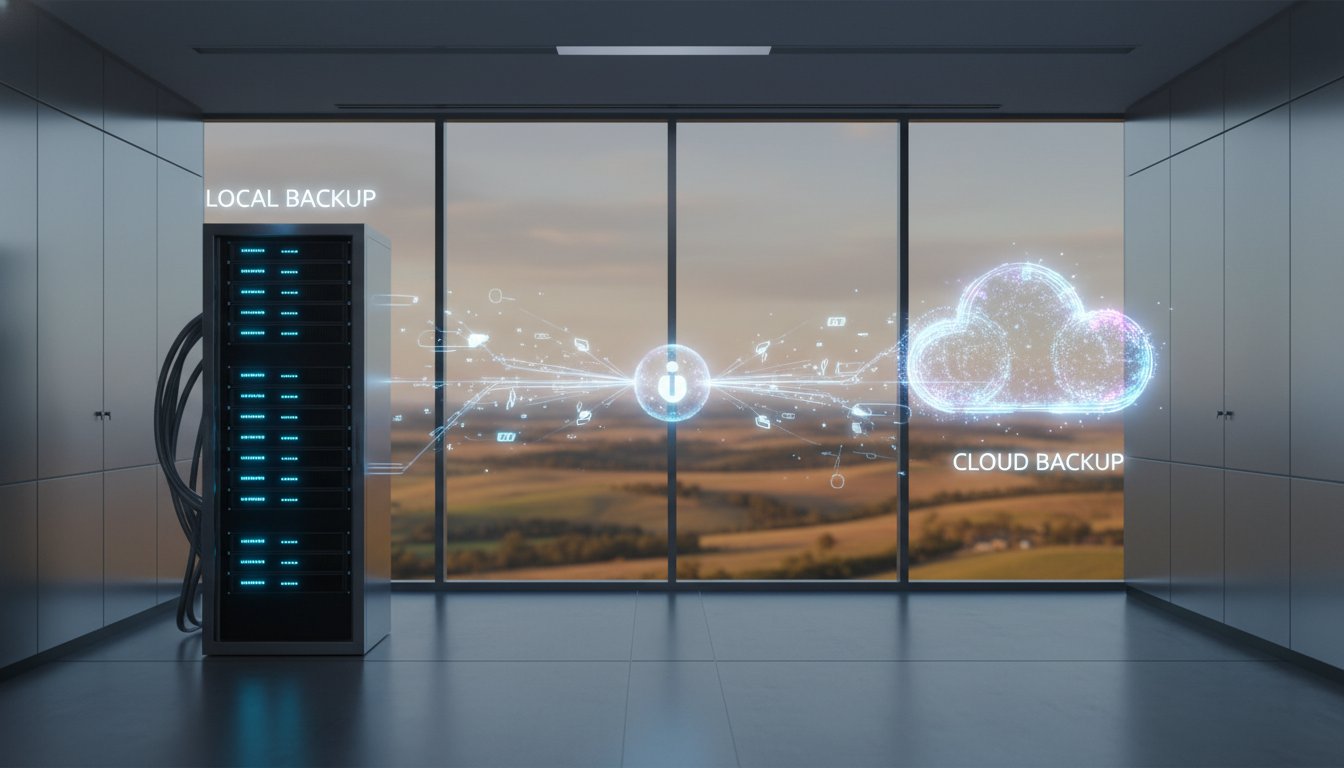

Last Tuesday, a local consultant realized their entire project history was gone after a single power surge during a Toowoomba storm. It is a heartbreaking scenario, but with ransomware accounting for 44% of Australian data breaches in 2025, the risk is higher than ever. You likely feel the constant pressure to protect your work, yet you might be held back by slow NBN upload speeds or the confusing sea of cloud storage options. Finding the best backup strategy for home office success shouldn’t feel like a second job.

I understand that you need a system that works silently in the background without requiring daily manual checks. This guide will show you how to implement the 3-2-1-0 backup rule. You’ll learn how to build a fail-safe system that protects your business from hardware failure and cyber threats. We will cover everything from local high-speed hardware to immutable cloud copies. This ensures your data is always recoverable and your peace of mind is restored with a strategy tailored for Australian conditions.

Key Takeaways

  • Learn the crucial difference between cloud syncing and a true backup to ensure your files aren’t lost to accidental deletion or ransomware.
  • Discover how the 3-2-1-0 rule creates the best backup strategy for home office security by removing the need for manual daily tasks.
  • Compare high speed SSDs and NAS devices to choose the most reliable hardware for your specific storage needs in 2026.
  • Identify the local environmental threats in Toowoomba, such as brownouts and surges, that can silently destroy your hard drives during storm season.
  • Follow a practical implementation guide to audit your mission critical data and build a fail-safe recovery system from scratch.

Why Your Current Home Office Backup Might Be a Ticking Time Bomb

Many home office professionals believe they have a solid safety net in place. They might drag files to a thumb drive once a week or trust a syncing service to do the heavy lifting. However, these habits often create a false sense of security. Without a professional approach, you are essentially waiting for a disaster to happen. Implementing the best backup strategy for home office data means moving away from manual tasks that fail when life gets busy. Relying on your memory to protect your livelihood is a risk you don’t need to take.

Manual backups are notoriously unreliable. Industry experts frequently observe that manual routines fail up to 90% of the time simply because humans forget to perform them or skip a day when they’re tired. Beyond human error, your data faces silent killers like bit rot, where files slowly corrupt over time on a hard drive without any warning. Then there is the 2025 reality: ransomware accounted for 44% of all Australian data breaches last year. If your only backup is a drive permanently plugged into your computer, a virus will likely encrypt those files too.

To better understand this concept, watch this helpful video:

Syncing vs. Backing Up: The Great Misconception

Services like Dropbox and OneDrive are excellent for productivity, but they aren’t true backups. If you accidentally delete a folder or a virus corrupts your files, that change syncs instantly across all your devices. A professional system follows the 3-2-1 backup rule, keeping separate versions of your history. This allows you to roll back to a time before the error occurred. Modern professional systems also offer immutable backups, which are locked copies that ransomware cannot modify or delete even if it gains access to your network.

The Real Cost of Data Recovery in Toowoomba

When a drive starts clicking or a file system vanishes, the panic sets in quickly. While I offer professional data recovery services to help you get lost files back, the process is complex and can be expensive. It is far more cost effective to be proactive with your security. Consider the downtime factor. If you lost access to your billing or project files today, how many days could your business survive? Since 60% of small businesses close within six months of a major hack, the stakes are incredibly high for local operators. Working with a local expert ensures your hardware stays in safe hands rather than being mailed to an anonymous lab interstate.

The 3-2-1-0 Rule: The Best Backup Strategy for Home Office in 2026

The 3-2-1 rule has been the industry standard for years. However, in 2026, we have added a crucial fourth digit to the formula. The best backup strategy for home office professionals is now the 3-2-1-0 rule. This framework ensures that your data is redundant, geographically dispersed, and, most importantly, managed without your daily intervention. Following this method eliminates the single point of failure that ruins most home businesses: human forgetfulness. It moves your security from a “to-do” list item to a background process that never sleeps.

Breaking Down the 3-2-1 Framework

To achieve total data redundancy, you must follow the core pillars of the framework. This isn’t just about making copies; it’s about where those copies live and how they are stored. Consider these three requirements:

  • Three Copies: You need your original production data plus two distinct backups. If one copy fails, you still have two others to rely on.
  • Two Media Types: Use different storage technologies. Don’t just use two external hard drives from the same brand. If a specific batch of drives has a manufacturing flaw, both could fail at the same time. A better approach combines local hardware with cloud-based storage.
  • One Offsite: At least one copy must live outside your home. Keeping all your backups in your Toowoomba office won’t help if a fire or a severe storm damages the entire building. Geographic separation is non-negotiable for true disaster recovery.

The Power of Zero: Why Automation is Your Best Friend

The “zero” in the 3-2-1-0 rule stands for zero manual steps. This is where most home office setups fall apart. You might start with good intentions, but work deadlines and family life eventually get in the way. Manual systems are prone to failure because they rely on you remembering to plug in a drive or click “upload” every evening. Automation removes the stress of wondering if your files are safe.

A professional data backup system should run on a schedule while you aren’t even at your desk. Modern software can also send you a simple email notification every morning. This lets you know at a glance if the process succeeded or if a glitch needs attention. This “set and forget” mentality allows you to focus on your clients while the system handles the heavy lifting. If you find the technical setup daunting, getting a local expert to configure these automated tasks can save you hours of frustration and ensure your system is truly fail-safe.

Choosing Your Hardware: NAS, External Drives, and Cloud

Selecting the right gear is the next step in building the best backup strategy for home office reliability. In 2026, you generally choose between Direct Attached Storage (DAS) and Network Attached Storage (NAS). A DAS is a simple external drive, like the Samsung T7 2TB SSD priced at $165, which plugs directly into your computer via USB. It’s fast and easy to use. A NAS, however, acts as a dedicated mini-server that connects to your router. This allows every device in your home to back up to one central location simultaneously. While DAS is great for speed, a NAS offers the robust, multi-layered protection required for a growing business.

Solid State Drives (SSDs) have become the standard for local backups due to their incredible speed and lack of moving parts. Modern options like the Lexar Armor 700 4TB for $449 provide the durability needed for a busy professional. However, for massive amounts of data, traditional mechanical hard drives still offer better value per gigabyte. The key is to use SSDs for your daily “hot” data and larger drives for long term “cold” storage. This hybrid approach balances performance with budget constraints.

Network Attached Storage (NAS) for the Professional Home Office

A NAS device provides more than just storage; it gives you a private cloud. Entry-level 2-bay models, such as the Synology DiskStation DS223 for $285, are perfect for home offices. They allow for a RAID setup, where data is mirrored across two drives. If one drive fails, your data remains safe on the other. For those running more intensive tasks, certain hardware upgrades like adding extra RAM to your NAS can significantly improve file transfer speeds and app performance. You don’t need a complex server rack to get enterprise-grade security at home.

Cloud Storage and the NBN Bottleneck

Cloud providers like Backblaze and IDrive offer excellent offsite protection. Backblaze is particularly popular for its unlimited storage at approximately $70 per computer annually. However, your experience will depend heavily on your NBN connection. Australian upload speeds are often much slower than download speeds. If you have a 1TB project library, it could take weeks to complete the first upload. It’s helpful to run an internet speed test to see exactly what your connection can handle before committing to a provider.

This “Initial Seed” problem is a major hurdle for many locals. If your upload speed is too slow for that first big backup, don’t struggle alone. A local IT professional can often help by performing a “seeded” backup, where your data is loaded onto a drive and sent directly to the data center. This bypasses the NBN bottleneck and gets your best backup strategy for home office safety up and running in hours instead of months.

Toowoomba-Specific Risks: Protecting Your Data Locally

While global cyber threats are a serious concern, home office workers in regional Queensland face a different set of physical challenges. The Darling Downs is famous for its dramatic weather, but these conditions are a nightmare for sensitive electronics. A best backup strategy for home office success in our region must account for more than just hackers. It needs to protect against the environmental and infrastructure realities of living in Toowoomba. From sudden power fluctuations to the physical risks of regional life, your data requires a localized shield.

Power surges and brownouts are the silent killers of hard drives and NAS devices. Even a momentary dip in voltage can cause a drive head to crash, leading to immediate data loss. Many people rely on standard power boards, but these rarely offer enough protection for a professional setup. If you’ve lived through a Toowoomba summer, you know how quickly a storm can roll over the range. Physical security matters too. While we enjoy a great community, the risk of theft or fire means that having a copy of your data stored away from your home office is a vital safety net.

Storm Season and Power Protection

Investing in an Uninterruptible Power Supply (UPS) is one of the smartest moves you can make. A UPS acts as a battery bridge, giving your equipment clean power and enough time to shut down safely during an outage. Never trust a cheap power board to protect your business livelihood. These basic strips often fail to catch the high-voltage spikes common during electrical storms. As a simple pro-tip, if you hear thunder, the safest option is to physically unplug your NAS and primary backup drives from the wall until the front passes.

The Benefit of a Local IT Partner

Working with a local expert provides a level of accountability that a distant call center cannot match. Aspire Computing offers on-site setup and support throughout Newtown and the surrounding suburbs. This local presence is especially helpful when dealing with the “Sneakernet” advantage. If you have a massive amount of data to back up and your NBN connection is struggling, I can physically move your data sets to get your system synchronized faster.

Having someone who knows your specific setup means you aren’t just a ticket number. If a drive fails or a backup report shows an error, you have a neighbor you can call for immediate assistance. This personal touch ensures your best backup strategy for home office data stays functional year-round. If you are worried about your current setup, I can help you build a resilient system. Contact me today for professional data backup services tailored to our local Toowoomba conditions.

Implementation Guide: Setting Up Your Fail-Safe Strategy

Moving from a high-level plan to a working system is where your data security becomes real. Building the best backup strategy for home office use requires a methodical approach to ensure no files are left behind. You don’t need to be a systems administrator to get this right, but you do need to be thorough. Following a structured checklist prevents the gaps that ransomware or hardware failure can exploit. By the end of this guide, you’ll have a system that protects your business livelihood while you focus on your work.

  • Step 1: Audit your data. Don’t waste storage space or bandwidth on “junk” files. Identify your mission critical data, such as client contracts, financial records, and active project files. Knowing what you can’t afford to lose helps you prioritize your backup window.
  • Step 2: Install your local hardware. Connect your primary local backup, whether it’s a high-speed external SSD or a 2-bay NAS. This device provides the rapid recovery speeds you need if your computer’s internal drive fails.
  • Step 3: Configure automation. Use professional backup software to schedule your tasks. Aim for a “set and forget” configuration where your local and cloud backups run every night. This fulfills the “Zero manual steps” requirement of the 3-2-1-0 rule.
  • Step 4: Perform a test restore. A backup is only a theory until you prove it works. Try to recover a random folder from both your local drive and your cloud provider to ensure the data is intact and accessible.
  • Step 5: Schedule a quarterly health check. Technology changes and software updates can sometimes break automated tasks. Mark your calendar every three months to review your backup logs and check the physical health of your drives.

Testing Your Backups: The Step Everyone Skips

A backup is only as good as its last successful restore. Many home office workers discover their backups are corrupted only when they actually need them. To avoid this, you should perform a “fire drill” for your data twice a year. Pick a non-essential folder and restore it to a different location on your computer. Compare the restored files to the originals to check for any signs of corruption. This simple habit ensures that when a real disaster strikes, your recovery process will be smooth and stress-free.

Getting Professional Help to Get It Right

While a DIY approach is better than nothing, it can lead to a sense of “false security” if settings are configured incorrectly. A misconfigured cloud sync or a failing local drive can go unnoticed for months without professional monitoring. If you want total peace of mind, I offer customized IT support for business and home office operators across Toowoomba. I can visit your office to perform a professional backup audit, ensuring your best backup strategy for home office data is truly fail-safe. Contact Aspire Computing today to secure your digital future with a system that never sleeps.

Protect Your Business Livelihood for the Long Term

Building a resilient data system is the most important investment you can make for your home office. By moving away from manual habits and embracing the 3-2-1-0 rule, you eliminate the risk of human error. You now understand that the best backup strategy for home office security combines high speed local hardware with automated cloud copies. This layered approach ensures that even a severe Toowoomba storm or a targeted ransomware attack won’t stop your business in its tracks. Testing your restores regularly keeps your safety net strong and your anxiety low.

If you feel overwhelmed by the technical setup, don’t leave your data to chance. I have been serving the Toowoomba community since 1999 as an expert in data recovery and security. I provide local, on-site assistance across the Darling Downs to help you build a fail-safe system. Secure your home office today with a professional backup audit from Aspire Computing. Taking this step now means you can work with total confidence, knowing your project history and client files are always safe.

Frequently Asked Questions

What is the 3-2-1 backup rule for home offices?

The 3-2-1 rule requires you to keep three copies of your data, stored on two different types of media, with one copy kept offsite. This ensures that a single event, like a fire or hardware failure, cannot destroy all your records at once. For the best backup strategy for home office professionals, adding a “0” for zero manual steps is also recommended to ensure the process never relies on your memory.

Is Google Drive or OneDrive a sufficient backup strategy?

No, syncing services like Google Drive are not true backups because they mirror every action, including accidental deletions and file corruption. If a virus encrypts your local files, those encrypted versions will instantly sync to the cloud, replacing your clean data. A dedicated backup system keeps historical versions of your files, allowing you to roll back to a specific point in time before the damage occurred.

How much does a professional home office backup system cost?

The total investment depends on your data volume, but basic hardware like a 2-bay NAS typically starts around $200 to $285 for the device itself. You also need to account for the cost of drives, such as a 2TB SSD for roughly $165, and annual cloud storage fees which can range from $70 to $120. These hardware and software costs are a small price to pay compared to the thousands of dollars often required for professional data recovery.

How often should I back up my home office computer?

You should back up your data at least once every 24 hours, ideally using an automated schedule that runs overnight. For highly active businesses, continuous data protection is even better as it saves changes as they happen. The best backup strategy for home office success is one that happens without you needing to click a button, ensuring you never lose more than a few hours of work if a crash occurs.

What happens to my cloud backup if my internet goes down?

If your internet connection drops, your cloud backup will simply pause and resume once the connection is restored. Most professional software is designed to handle NBN dropouts or unstable connections without corrupting the files already uploaded. While the offsite copy will be slightly behind until the sync finishes, your local backup drive will continue to provide immediate protection for your files in the meantime.

Do I need an external hard drive if I use cloud storage?

Yes, having a local external hard drive is essential for fast recovery and redundant protection. While cloud storage is great for disaster recovery, downloading several terabytes of data over an average NBN connection can take days or even weeks. A local drive allows you to restore your entire system in a matter of hours, keeping your business downtime to an absolute minimum while your cloud copy remains a secondary safety net.

Can a virus or ransomware infect my backups?

Ransomware can infect any drive that is physically connected to your computer or accessible over your local network. This is why immutable backups and offsite cloud copies are so important. Immutable storage prevents data from being changed or deleted for a set period, ensuring that even if a virus reaches your backup software, it cannot encrypt the protected archive files.

How do I know if my hard drive is starting to fail?

You should watch for warning signs like unusual clicking or grinding noises, frequent system crashes, and files that suddenly won’t open. If your computer becomes extremely slow when saving or opening documents, the drive might be struggling to read data. If you notice these symptoms, stop using the drive immediately and seek professional help to clone your data before the hardware fails completely.

Did you know the average cost of a single cyber incident for an Australian small business is now AU$46,000? For most owners, that isn’t just a statistic. It’s a constant source of anxiety that threatens everything you have built. You likely started your company to focus on your customers, not to spend your valuable billable hours troubleshooting printers or worrying about the latest malware. It’s frustrating when technology feels like a hurdle instead of a tool, especially when unpredictable repair bills start piling up.

The good news is that outsourcing IT support for small business has become a reliable way to reclaim your time and protect your livelihood. By choosing the right model, you can transform your tech into a predictable monthly cost while ensuring your systems just work. This 2026 strategy guide will show you how to manage new Privacy Act obligations and defend against AI-powered threats. We’ll also explore how a local expert can provide the data backup and business continuity you need to stay secure. Let’s get your technology back on track.

Key Takeaways

  • Discover how outsourcing IT support for small business helps you manage the 2026 cyber landscape while keeping your monthly tech costs predictable.
  • Compare the benefits of proactive managed services against on-demand support to find the most efficient model for your specific workflow.
  • Learn to identify the hidden opportunity costs of DIY troubleshooting and how they impact your bottom line.
  • Find out why local expertise is vital for handling physical hardware upgrades and printer issues that remote support simply cannot resolve.
  • Explore how a personal, “Direct to Expert” approach eliminates call centre delays and builds a foundation of long-term technical reliability.

Why Small Businesses in 2026 are Outsourcing IT Support

At its core, outsourcing IT support for small business means you stop wearing the “tech guy” hat and let a local professional manage your systems. It is a partnership where an external team like Aspire Computing handles the technical heavy lifting. This includes everything from virus and malware removal to data backup and printer repair. By offloading these tasks, you can stay focused on your customers while knowing your hardware and software are in safe hands.

In 2026, the stakes for small business owners are higher than ever. One in three Australian small businesses have experienced a cyber incident, and the average cost of AU$46,000 per event can be devastating. With the Australian government rolling out expanded Privacy Act obligations through 2027, “winging it” isn’t just risky; it’s a significant liability. Choosing to outsource provides a layer of professional protection that most small offices simply cannot maintain on their own.

To better understand why so many owners are making this switch, watch this helpful video:

Many owners are moving away from the old, reactive “break-fix” model. Instead of waiting for a laptop to fail or a printer to stop working, they choose proactive care. This shift toward Managed Services provides immense emotional relief. You no longer have to wake up wondering if your data is secure or if your morning will be wasted on frustrating tech support calls. It’s about having systems that just work.

The Evolution of Small Business Tech Needs

Technology used to be a secondary thought, but cloud-based work has made constant uptime essential. If your internet or software fails, your business stops. We have moved beyond simple PC repair into a world of complex digital security and business continuity. A professional partner ensures your systems are monitored and updated, so you don’t have to worry about the technical details. In 2026, a stable digital foundation is the only way to stay competitive.

Signs Your Business Has Outgrown DIY IT

If you spend more than two hours a week troubleshooting tech, you’ve outgrown the DIY approach. Research shows 20% of small businesses dedicate no time to prevention, which often leads to recurring issues with printers or slow Wi-Fi performance. If you feel a surge of anxiety every time you see a “system update” notification or worry about malware infections, it’s time to call in a local expert. Reclaiming those lost hours allows you to focus on high-value work that actually grows your business.

Understanding the Models: Managed Services vs. On-Demand Support

Choosing the right path for outsourcing IT support for small business is about matching your technology to your risk tolerance. Most providers offer two distinct approaches. You can opt for a proactive, subscription-style relationship or a reactive, pay-as-you-go service. Neither is inherently better; the right choice depends on how much downtime your operations can handle. When you consider these models, the goal is to eliminate technical anxiety and ensure your tools work when you do.

Many local businesses find that a “one size fits all” approach rarely works. A micro-office with two people has different needs than a growing firm with fifteen staff. Understanding these nuances helps you avoid overpaying for services you won’t use or being left stranded during a hardware failure. Your decision should always prioritize business continuity, ensuring that a single broken laptop or a failed server doesn’t halt your entire operation.

Managed IT: The “Insurance Policy” for Your Tech

Managed IT services provide a safety net through constant monitoring. This model focuses on prevention rather than just repair. Automated security updates and remote monitoring catch small glitches before they turn into full-blown system failures. For a small office, this provides immense peace of mind. You get predictable monthly costs that make budgeting simple and transparent. If you want to dive deeper into how these models work for your specific industry, our IT Support for Business Guide offers a full analysis.

On-Demand Support: Flexibility for Micro-Businesses

On-demand support, often called “break-fix,” is perfect for solopreneurs or home offices. You don’t pay a monthly fee. Instead, you pay for specific tasks like PC and laptop repair or virus removal when you need them. This flexibility is great for keeping overheads low while still having access to professional help. However, you need a local expert you can trust. Having a “local guy” in Toowoomba on speed dial is much better than waiting for a Brisbane-based call centre to answer. When hardware fails or your printer stops working, you need someone who can actually show up at your door.

A hybrid strategy is often the sweet spot for outsourcing IT support for small business. It uses remote IT support for quick software fixes while keeping on-site visits for hardware upgrades or printer supply issues. Consider these three factors when deciding:

  • Uptime Needs: How much money do you lose if your systems are down for four hours?
  • Budgeting Style: Do you prefer a flat monthly fee or paying for repairs as they happen?
  • Security Requirements: Do you handle sensitive client data that requires constant monitoring?

This ensures your business continuity remains high without paying for enterprise-level infrastructure you don’t need. If you are unsure which path fits your current setup, Aspire Computing can help you evaluate your specific tech requirements and find a balance that works for your budget.

The Real Cost of DIY IT for Toowoomba Business Owners

Many Toowoomba business owners believe they are saving money by handling their own technical issues. It seems logical to try and fix a slow laptop or a jammed printer yourself before calling for help. However, this DIY approach carries a heavy hidden price known as opportunity cost. Every hour you spend troubleshooting is an hour you aren’t billing clients, closing sales, or managing your team. When you calculate your own hourly rate, outsourcing IT support for small business often pays for itself in reclaimed time alone.

Professional maintenance also extends the life of your current equipment. Instead of buying a new fleet of computers every three years, strategic Hardware Upgrades can often make your existing machines run like new for a fraction of the cost. This deferment of capital expenditure keeps your cash flow healthy while ensuring your team has the speed they need to stay productive. It is about working smarter with the tools you already own.

Calculating Your “Tech Tax”

The “Tech Tax” is the revenue your business loses while you are busy playing IT technician. If your billable rate is $150 an hour and you spend four hours a week on software glitches, your “Tech Tax” is $600 weekly. A professional remote intervention can often solve those same issues in minutes, allowing you to get back to profit-generating work. A single day of total business downtime can cost thousands in lost productivity and missed deadlines. For a small office, these interruptions aren’t just annoying. They are expensive leaks in your profitability.

Security and Compliance: Avoiding the “Extinction Event”

The most dangerous hidden cost is the financial impact of a data breach. In 2026, the average cost of a single cyber incident for an Australian small business is AU$46,000. Basic antivirus software is no longer enough to satisfy modern insurance requirements or the expectations of your clients. While reactive Virus and Malware Removal is necessary after an infection, it is far more expensive than proactive prevention. One bad link clicked by an employee can lead to a ransomware attack that functions as an “extinction event” for a local company without a robust cyber security and data backup plan.

Key Factors to Evaluate When Outsourcing Your Tech

Finding the right partner for outsourcing IT support for small business is about more than just technical skill. You need someone who understands your specific workflow and local environment. While price is always a factor, the cheapest option often leads to long wait times and generic responses from a distant call centre. A high-quality partner should offer a blend of remote IT support and on-site expertise to handle every situation effectively. This balance ensures that your technology remains a tool for growth rather than a source of frustration.

Proximity is a critical but often overlooked factor. If your office printer stops working or a workstation requires physical hardware upgrades, a technician in a different city cannot help you quickly. Being based in Toowoomba means your partner can actually walk through your door when a problem arises. Stability also matters. A partner established in the local community since 1999 brings a level of experience that newer, fly-by-night operations simply cannot match. They have seen every technical trend and survived every major shift in the industry, providing a reliable foundation for your business.

Nobody likes being treated like a number in a giant helpdesk ticket system. For a small business, a personal touch is essential for building trust. You should be able to call your IT expert by name and receive a direct answer without navigating complex phone menus. This accountability ensures that your issues are resolved thoroughly rather than just being “closed” to meet a corporate quota. When your systems are down, you don’t need a ticket number; you need a solution from someone who knows your setup inside out.

Essential Questions for Your Potential IT Partner

Before signing any agreement, you need to ask specific questions to ensure the provider can meet your needs. Not all companies are equipped to handle the unique challenges of regional businesses. Use this checklist during your evaluation:

  • Do you provide on-site support in the Darling Downs and Lockyer Valley?
  • How do you handle data backups and Data Recovery if things go wrong?
  • Are your services tailored for small businesses or enterprise-level firms?

Choosing a partner who focuses on your size of business ensures you get the attention you deserve. If you need a team that understands these local requirements, you can speak with our local Toowoomba experts today.

The “Trust Factor” in Local IT

A personal introduction from the business owner builds a foundation of accountability that you won’t find at a national provider. When the person in charge is a local community member, they have a vested interest in your success. This local expertise also translates to better technical outcomes. They understand the specific NBN infrastructure and connectivity quirks of regional Queensland. Local reviews from other Toowoomba business owners are the best way to verify service quality. They reflect the actual experiences of people in your own backyard, providing a level of transparency that anonymous corporate testimonials cannot match.

How Aspire Computing Simplifies IT for Local Businesses

Since 1999, Aspire Computing has been a steady hand for the Toowoomba business community. We understand that technology should be a quiet partner in your success, not a loud source of stress. Our 25-year history in the region has taught us that local owners value accountability above all else. When you choose us for outsourcing IT support for small business, you aren’t just hiring a service provider. You’re gaining a local ally who knows your name and your office setup.

We use a “Direct to Expert” model. This means you skip the frustration of overseas call centres and generic ticket numbers. You speak directly with an experienced technician who can solve your problem. Our range of services is comprehensive, covering everything from Computer Repairs and hardware upgrades to advanced cyber security and business continuity planning. We make the complex simple. Our goal is to ensure your digital foundation is solid and secure so you can focus on your work.

Tailored Support for Home Offices and SMEs

Micro-businesses and home offices are often ignored by large IT firms. We believe you deserve the same level of protection as larger companies. We adapt our support to fit your specific budget and operational size. Whether you need a one-off laptop repair or ongoing data backup management, our approach remains professional and personal. We follow an “On-Site First” philosophy for physical issues like printer supply and repair. Some things just can’t be fixed through a screen. For software glitches and virus removal, our remote IT support capabilities allow for rapid intervention. This gets you back to work without unnecessary delay.

While we focus on your digital systems, don’t overlook the importance of your physical workspace. For a complete setup, you can explore Ergonomic Office Chairs at Mega Office Supplies to ensure your team remains comfortable and productive throughout the day.

Getting Started: Your IT Health Check

The first step toward a stress-free tech environment is understanding your current risks. We invite you to reach out for a tech assessment to see where your systems stand. Our team is approachable, professional, and ready to help you navigate the 2026 tech landscape with confidence. We don’t use high-pressure sales tactics. Instead, we provide practical solutions that protect your billable hours and your data. If you’re ready to stop worrying about your tech and start focusing on your growth, contact Aspire Computing for a local IT consultation today. We look forward to helping your business thrive.

Take Control of Your Business Technology

The right approach to technology is about more than just fixing what’s broken. It’s about building a foundation that allows you to work without fear of data loss or sudden downtime. By choosing a strategic model for outsourcing IT support for small business, you move from being a part-time troubleshooter back to being a full-time business leader. You have seen how local expertise and proactive care can eliminate the “Tech Tax” and protect your revenue from the rising cyber threats of 2026. It is about making sure your tools serve your goals rather than standing in your way.

Aspire Computing has been serving Toowoomba since 1999. We are specialists in small business and home office tech, providing a blend of expert on-site and remote assistance. Whether you need a hardware upgrade or a complete business continuity plan, we are here to make your technology simple and reliable. It’s time to reclaim your billable hours and enjoy the peace of mind that comes with professional, local support. You don’t have to handle these technical challenges alone.

Get Reliable, Local IT Support for Your Business Today. Your business deserves systems that just work. Let’s make that a reality together.

Frequently Asked Questions

What is the average cost of outsourcing IT support for a small business?

The cost varies based on whether you choose a fixed monthly plan or a pay-as-you-go hourly model. Monthly fees typically cover ongoing monitoring and security updates, while on-demand rates apply to specific tasks like hardware repairs. You should choose a model that fits your monthly budget and provides the specific level of assistance your team needs to stay productive.

Does my business need a managed service provider (MSP) if I only have 3 employees?

You don’t necessarily need a full managed service agreement for a very small team. However, you still need a reliable expert you can call when things go wrong. An “on-demand” support model often works best for micro-businesses. It provides access to professional help for laptop repairs or virus removal without the commitment of a large enterprise contract.

Can an outsourced IT company help with printer repairs and hardware supply?

Yes, a local IT partner can manage your physical equipment, including printer supply and repair. Unlike national firms that only offer remote help, a local provider can visit your office to fix paper jams or install new hardware. This ensures that your physical office tools are just as reliable and well-maintained as your digital software systems.

Is remote IT support secure for handling sensitive business data?

Professional remote IT support is highly secure and uses encrypted connections to protect your files. Technicians use specialized tools that require your explicit permission before they can view your screen or access your folders. It’s a safe, efficient way to solve software glitches and malware issues without the delay of waiting for a technician to travel to your office.

How quickly can a local Toowoomba IT provider respond to an on-site emergency?

A local provider can usually arrive at your office much faster than a firm based in a distant capital city. Because the technician is already working within the Toowoomba and Darling Downs region, travel time is minimal. This proximity is a major advantage when a hardware failure or network issue threatens to halt your entire business day.

What is the difference between computer repair and managed IT support?

Computer repair is a reactive service focused on fixing a specific broken device, such as a laptop with a failed hard drive. Managed IT support is a proactive approach that includes ongoing maintenance, data backup, and system monitoring. While repair fixes what is already broken, managed support works to prevent technical failures and security breaches before they happen.

Do I need to sign a long-term contract to get professional IT help?

You don’t always have to sign a long-term contract to get the help you need. Many local experts offer flexible, task-based services for things like hardware upgrades or data recovery. This allows you to access high-level technical expertise whenever an issue arises without being locked into a monthly subscription that might not suit your current business size.

How does outsourcing IT improve my business’s cyber security?

Outsourcing IT support for small business strengthens your defenses by implementing professional data backup and business continuity plans. An expert can deploy advanced malware removal tools and monitor your network for suspicious activity. This provides a much higher level of protection than basic antivirus software, ensuring your sensitive client information stays safe from modern digital threats.

What if paying the ransom is actually the most dangerous thing you could do for your Toowoomba business’s future? When you see that terrifying message on your screen, it’s easy to feel like you’re out of options. You’ve worked hard to build your company, and the thought of losing every critical file is overwhelming. I know how stressful it is to face such a sudden threat to your livelihood. You’re likely wondering if recovering files after a ransomware attack is even possible without giving in to the hackers’ demands.

The answer is a resounding yes. I’ve helped many local businesses navigate these technical failures with a calm, methodical approach. This guide provides a professional roadmap to help you isolate your systems and assess your data recovery options. We’ll focus on sanitising your environment first to ensure that your restoration is permanent and secure. By following these steps, you’ll learn how to clean your network, restore your business operations, and establish a data backup plan that keeps you protected moving forward.

Key Takeaways

  • Learn the immediate actions you must take to isolate infected devices and protect your decryption keys from being lost during a reboot.
  • Discover how recovering files after a ransomware attack is possible using professional tools and “Sanitise and Restore” workflows that avoid paying hackers.
  • Find out how experts uncover hidden data remnants and shadow copies that cybercriminals often try to wipe during an intrusion.
  • Master the 3-2-1 backup rule and modern security strategies to build a business environment that’s resilient against future threats.
  • See why local expertise in virus removal and data recovery helps Toowoomba business owners restore their operations with confidence and speed.

Immediate Actions: What to Do the Second You Detect Ransomware

Discovering a ransom note on your desktop is a heart-stopping moment for any business owner. Your first instinct might be to panic or shut everything down, but your actions in these first few minutes are critical for recovering files after a ransomware attack. Before you do anything else, you need to understand the nature of the threat. A quick look at What is Ransomware? shows that these malicious programs are designed to lock you out of your own data until a fee is paid. To stop the damage, you must act with precision.

The very first step is to physically isolate the infected machine. Pull the Ethernet cable out of the wall and disable the Wi-Fi immediately. However, don’t turn the computer off. While it seems counterintuitive, some ransomware strains delete the encryption keys stored in the system’s temporary memory during a reboot. Keeping the power on might actually save your data. Next, disconnect any external hard drives, NAS devices, or USB sticks. If these remain connected, the virus will continue to encrypt every file it can reach. Speed is your best ally.

To better understand this concept, watch this helpful video:

Why Isolation is Your #1 Defence

Ransomware doesn’t just stay on one computer; it’s designed to spread laterally across your Toowoomba office network. It looks for “mapped drives” or shared folders that other staff members use. If one workstation is compromised, the infection can jump to your main server in minutes. It’s a race against the clock. Tools like Dropbox or OneDrive can also become accidental enemies during an attack. Their “automatic sync” feature will see the newly encrypted files and immediately upload them to the cloud, replacing your healthy versions with unreadable ones. Severing the internet connection stops this sync process in its tracks.

Evidence Gathering for Recovery Experts

Once the machine is isolated, you need to document the situation. Take a clear photo of the ransom note on the screen and any unusual file extensions you see, such as .lockbit or .crypted. This information is vital for identifying the specific strain of the attack. Don’t delete the ransom note or try to “clean” the files yourself yet. Professional Data Recovery Services begin with this digital evidence to determine if a public decryptor exists or if other restoration methods are viable. Having these details ready will significantly speed up the process of recovering files after a ransomware attack and getting your business back on its feet.

Can You Recover Files Without Paying? The Truth About Ransom

The short answer is yes, but it requires a strategic approach. Ransomware recovery is the technical process of using clean backups or specialised decryption tools to restore your data to its original state. Many people believe that paying the fee is the only way out, but this is a dangerous misconception. In fact, following official government guidelines, the first recommendation is always to avoid engaging with the attackers. There’s no guarantee they’ll hold up their end of the bargain, and your money only funds further criminal activity.

One of the most effective tools in recovering files after a ransomware attack is the “No More Ransom” project. This is a collaborative effort between law enforcement and IT security companies. They’ve developed free public decryptors for hundreds of ransomware strains. If the specific virus that hit your office has been “cracked” by researchers, we can often get your files back without you spending a cent on a ransom. It’s the first thing I check when a local business brings an infected machine to me.

However, the statistics for those who do pay are quite grim. Industry reports, such as the Sophos State of Ransomware 2023, suggest that a large majority of organisations that pay the ransom still fail to get all their data back. Some files remain corrupted, while others are simply lost forever. Beyond the data loss, paying the fee marks your Toowoomba business as a “soft target.” Once cybercriminals know you’re willing to pay, they may sell your details to other groups or target you again in a few months, knowing you’re a profitable victim.

The Risks of Negotiating with Cybercriminals

Negotiating with hackers is rarely a smooth process. Even if you receive a “decryptor” after paying, these tools are often poorly coded and buggy. They can crash halfway through the process or permanently damage your files during the decryption attempt. My approach at Aspire Computing is to conduct a thorough feasibility assessment first. We look at the encryption type to see if there’s a technical path forward that doesn’t involve trusting a criminal’s software.

When Decryption is Not Possible

Sometimes, what looks like ransomware is actually “Wiper” malware. These programs pretend to lock your files for a fee, but they actually just destroy the data immediately. In these cases, no key in the world will help. This is why professional Virus and Malware Removal is the absolute prerequisite for any recovery attempt. We have to ensure the “thief” is out of the house before we start putting the furniture back in place. If you’re unsure about the state of your network, it’s a good idea to contact a local expert to verify your system is clean.

Professional Recovery Methods: How We Get Your Data Back

Once your network is isolated and the threat is contained, the actual work of recovering files after a ransomware attack begins. This stage is about more than just clicking a restore button. It requires a careful, methodical workflow to ensure that the data you get back is clean and that the virus won’t simply trigger again. According to IBM’s guide to ransomware recovery, the restoration phase must be handled with extreme caution to avoid the cycle of reinfection that many businesses fall into.

One of the first things I look for is remnants of Volume Shadow Copies. These are automatic snapshots Windows takes of your files. While modern hackers use scripts to delete these first, they aren’t always successful. Sometimes the scripts fail or only target the primary drive, leaving snapshots on secondary disks. Finding these remnants can often save a business from total data loss without needing to touch a backup. If those are gone, we move to Backup Image Restoration. This is the fastest way for a Toowoomba small business to get back online because it restores the entire operating system, settings, and files to a point in time before the breach occurred.

Accounting and database software like MYOB or desktop versions of Xero require even more precision. We perform point-in-time recovery for these specific databases to ensure transaction integrity. It’s a delicate process, but it’s the only way to be certain your financial records aren’t corrupted or missing entries from the day of the attack.

Sanitising the Environment Before Restoration

You can’t just dump clean files back onto a system that hasn’t been properly scrubbed. If the “payload” is still hidden in your registry or temporary system folders, it’ll just re-encrypt your data the moment you finish the restore. I focus on deep-cleaning these hidden areas and verifying that any “backdoor” access points created by the attackers are permanently closed. This ensures that when we finally bring your systems back online, they stay clean and secure.

Testing and Verifying Recovered Data

Before you resume normal operations, we must verify the integrity of the files. We use “sandboxing” to open recovered documents in a safe, isolated environment. This check ensures no dormant malware is hiding inside a macro or a PDF. IT Support for Business is essential during this phase, as it provides the professional validation needed to confirm your spreadsheets and customer databases are fully functional. This final step gives you the confidence that recovering files after a ransomware attack has been a complete success.

Preventing the Next Attack: Building a Ransomware-Proof Business

Once you’ve finished the hard work of recovering files after a ransomware attack, your focus must shift to prevention. You don’t want to go through that stress again. Building a resilient network means you won’t have to face the stress of recovering files after a ransomware attack a second time. I always suggest starting with the 3-2-1 backup rule. This means keeping three copies of your data on two different types of media, with at least one copy stored off-site. It’s a simple but incredibly effective standard that ensures you always have a “clean” version of your business records ready to go.

Technology moves fast, and traditional antivirus programs are no longer enough to protect a Toowoomba business in 2026. Modern threats require endpoint protection that monitors suspicious behaviour in real-time rather than just scanning for known viruses. Your team is also a vital part of your defence. Phishing emails are the most common entry point for malware. Teaching your staff how to spot a fake login page or a suspicious attachment can stop an attack before it even starts. Finally, don’t overlook your physical equipment. Regular Hardware Upgrades ensure your computers can run the latest operating systems and security patches, which close the gaps hackers love to exploit.

The Power of Air-Gapped Backups

An air-gapped backup is a storage device that is physically disconnected from your computer and the internet. If a hacker can’t reach the drive, they can’t encrypt your files. For businesses using the cloud, I recommend “Immutable Storage.” This technology prevents files from being changed or deleted for a specific time, even if an attacker gains administrative access. At Aspire Computing, I help local business owners set up these automated, secure routines so your data remains safe regardless of what happens on your network.

Patch Management and Security Audits

Windows Update is often seen as a nuisance, but it’s actually your first line of defence. These updates fix “exploits” that hackers use to gain entry to your system. A high-quality firewall also helps by blocking the “Command and Control” servers that hackers use to send instructions to infected machines. I recommend scheduling a quarterly IT health check. These audits allow us to find and fix vulnerabilities in your network before they can be exploited by outsiders. If you want to ensure your business is truly protected, book a security audit with Aspire Computing today.

Local Ransomware Response: Why Toowoomba Trusts Aspire Computing

When a digital crisis hits, you don’t want to be just another ticket number in a global queue. You need someone who understands the local landscape and the unique pressures of running a business in our region. Aspire Computing has served the Toowoomba community for over 25 years. I’ve spent more than two decades building a reputation for reliability in data recovery and virus removal. This isn’t just about technical fixes; it’s about helping a neighbour protect their livelihood and regain peace of mind.

My approach to recovering files after a ransomware attack is built on personal accountability and trust. Whether your business is located in the CBD, Newtown, or across the wider Darling Downs, I provide a face-to-face service that large corporate IT firms simply can’t match. I take the time to listen to your concerns and understand your specific operational needs. This personalised focus ensures that the recovery process doesn’t just fix the immediate problem but also builds a foundation for long-term business continuity and technical stability.

On-Site vs. Remote Recovery Support

While remote support is helpful for minor software glitches, ransomware often requires a physical presence. It’s frequently safer for a technician to physically inspect your server and workstations on-site in Toowoomba. This allows for a deeper level of hardware analysis and ensures that every single infected device is correctly identified and isolated. You won’t have to deal with the frustration of waiting for “Tier 1” support from an overseas call centre. I work directly alongside your team to minimise downtime. We focus on getting your most critical systems back online first so you can keep serving your customers while we handle the complex restoration work in the background.

Starting Your Recovery Journey Today

I offer a “No Panic” consultation to help you clear the fog of a cyber attack. We’ll sit down, assess the current state of your network, and provide a clear, methodical roadmap for recovering files after a ransomware attack. You’ll receive honest advice on whether your data is truly recoverable and a transparent explanation of the steps we need to take. There are no hidden fees or false promises here. If you’re facing an IT emergency right now, contact Aspire Computing for immediate ransomware assistance. We’re ready to help you regain control of your digital world and secure your business’s future.

Take Control of Your Data and Your Business Future

Facing a cyber attack is one of the most stressful challenges a business owner can endure. By acting quickly to isolate your systems and seeking professional help, you can navigate this crisis without rewarding the hackers. Remember that recovering files after a ransomware attack is a technical process that requires a clean environment to be successful. From sanitising your network to implementing robust 3-2-1 backup strategies, you now have the roadmap to move from vulnerability to resilience.

I’ve been serving Toowoomba and the Darling Downs since 1999. My specialised data recovery expertise is designed to get your files back and your operations running smoothly. If you’re currently dealing with an infection or want to ensure your business is properly protected, I provide local on-site support to give you the personal attention you deserve. You don’t have to face this alone.

Get Expert Ransomware Recovery Help in Toowoomba Now

Your business is too important to leave to chance. Let’s work together to make your network secure and your data safe once again. You’ve got this, and I’m here to help.

Frequently Asked Questions

Should I pay the ransom if I have no backups?

No, you should avoid paying the ransom even if you don’t have backups. There’s no guarantee that the criminals will provide a working decryption key, and many businesses find that the provided software is buggy or incomplete. Paying also marks your company as a profitable target for future attacks. Instead, a professional assessment can determine if there are other ways of recovering files after a ransomware attack, such as using public decryption tools or finding remnants in your system snapshots.

How long does it take to recover files after a ransomware attack?

Most recovery processes take between 24 and 72 hours, though this depends on the volume of data and the severity of the infection. This timeline includes the essential step of sanitising your systems to ensure the malware is completely gone before we begin restoring your files. We prioritising your most critical business operations to get you back online as quickly as possible. A methodical approach ensures that the restoration is permanent and secure rather than a temporary fix.

Can ransomware infect my cloud storage like OneDrive or Google Drive?

Yes, ransomware can easily infect your cloud storage if you use automatic synchronisation tools. When the virus encrypts files on your local computer, the cloud software sees these as “updates” and syncs them immediately. This replaces your healthy cloud files with encrypted, unreadable versions. This is why disconnecting your internet and cloud sync tools is the first step in protecting your remaining data during an attack. We then work to roll back your cloud files to a clean version.

Is it possible for ransomware to hide in my backups?

It is possible for ransomware to be present in your backups, especially if the malware sat dormant on your network for a period before activating. Some attackers use a “dwell time” to ensure that even your older backups contain the malicious payload. This is why I never restore directly to a live environment without first scanning the backup files in a safe, isolated sandbox. We must verify they are clean to prevent the encryption process from starting all over again.

Will my insurance cover the costs of ransomware recovery?

Whether your insurance covers these costs depends entirely on your specific policy and its inclusions. Many standard business insurance packages don’t include cyber coverage by default. You should check your policy for “Cyber Liability” or “Data Breach” clauses to see if you’re protected. If you have coverage, it may assist with the costs of professional data recovery services and business continuity efforts. I recommend contacting your broker to verify your level of protection before an incident occurs.

What is the most common way ransomware enters a Toowoomba business network?

Phishing emails remain the most common entry point for ransomware in local business networks. These emails often contain malicious attachments or links that look like legitimate invoices, shipping notifications, or bank alerts. Once a staff member clicks, the payload is delivered to the system. Unpatched software and weak remote desktop passwords are also frequent vulnerabilities. Regular staff training and consistent security patches are your best defences against these common tactics used by cybercriminals.

Can a local computer repair shop really fix a ransomware infection?

Yes, a local expert with specialised experience in virus and malware removal can effectively handle a ransomware infection. At Aspire Computing, I use professional-grade tools and a “Sanitise and Restore” workflow that goes far beyond what a general repair shop might offer. This local approach ensures you get fast, on-site support from someone who is personally accountable for the success of recovering files after a ransomware attack on your business network.

Imagine waking up to a silent PC that refuses to boot, knowing your only copies of ten years of family photos and business tax records are trapped inside. It is a terrifying reality for the 6% of computer users who experience data loss every year due to hardware failure. If you are searching for how to back up my entire computer to an external hard drive, you want more than just a few files saved; you want a complete digital twin of your system that preserves everything from your Windows settings to your software licenses.

We understand that technical jargon like “system image” or “file history” feels overwhelming, especially when you just want the peace of mind that your data is safe here in Toowoomba. You don’t need to call a technician to protect your digital life. This guide provides a clear, expert-led path to creating a complete safety net using a standard external drive, which currently costs as little as $50 for a 1TB HDD or $90 for a faster SSD. You will learn the exact steps to mirror your entire Windows 11 setup, ensuring that if your hardware fails, you can restore your entire computer exactly how it was.

Key Takeaways

  • Learn the difference between a simple file copy and a full “digital twin” to ensure your Windows settings and software licenses are fully protected.
  • Use the “2x Rule” to select an external drive with enough capacity and speed to prevent bottlenecks during the backup process.
  • Get step-by-step instructions on how to back up my entire computer to an external hard drive using the built-in system image tool for a complete recovery.
  • Apply the 3-2-1 rule by keeping multiple copies of your data on different media, including one offsite for maximum security.
  • Find out how Aspire Computing provides local, professional support in Toowoomba for those who want a guaranteed digital safety net without the technical stress.

Why Backing Up Your Entire Computer is Non-Negotiable in 2026

In 2026, the digital threats we face are more aggressive and sophisticated than ever before. Ransomware can now encrypt your cloud-synced files in seconds, often leaving you with nothing but a ransom note and a locked account. To truly understand the basics of data backup, you must realize that a simple copy of your “My Documents” folder is no longer a sufficient safety net. If your hard drive fails, you need a way to rebuild your entire digital life without spending days reinstalling Windows and hunting for software license keys.

A System Image is a complete snapshot of your entire drive, including the operating system, installed applications, and all your personal settings. Learning how to back up my entire computer to an external hard drive using this method creates a “digital twin” of your machine. If your PC fails, you simply plug in the drive and restore everything exactly as it was at the moment of the backup.

To better understand this concept, watch this helpful video:

The ‘Don’t Panic’ Approach to Data Loss

Every hard drive ever manufactured has a 100% failure rate given enough time. It is not a matter of if it will fail, but when. Since Chaim Lee founded Aspire Computing in 1999, we’ve helped thousands of people in Toowoomba recover from sudden hardware deaths. We always tell our clients: don’t panic. A full system backup turns a potential catastrophe into a minor afternoon inconvenience. Instead of losing decades of memories or vital tax records, you are just a few clicks away from a full recovery.

File Syncing vs. True System Backups

Many people believe that having their files in Dropbox or OneDrive means they are protected. This is a dangerous misconception. Cloud syncing is great for sharing photos, but it won’t help you if your Windows installation becomes corrupted or a hardware upgrade goes wrong. External hard drives offer a physical “air-gap” protection that the cloud cannot match. They are also significantly faster. Restoring 500GB of data from a local USB-C drive takes minutes, whereas downloading that same amount over a standard NBN connection could take days.

A true backup includes your profiles, browser bookmarks, and those specific system settings that make your computer feel like yours. If you are already facing a situation where your files seem gone, we offer expert Data Recovery Services to help you get back on track. For everyone else, creating a system image today is the best way to ensure you never need those emergency services. It is the ultimate insurance policy for your digital life.

Choosing the Right External Hard Drive for Your Backup

Before you head to the shops, you need to know exactly how much data you are protecting. Open your File Explorer, right-click on your C: drive, and select “Properties”. This number tells you your current usage, but it isn’t the final capacity you should look for when buying hardware. To successfully learn how to back up my entire computer to an external hard drive, you should follow the 2x Rule. This means your backup drive should be at least double the size of your internal storage. If you have a 500GB drive in your laptop, buy a 1TB external drive. This extra space allows for multiple versions of your system image, so you can go back to a “clean” version from a month ago if a virus strikes today.

The connection type is just as vital as the storage capacity. While USB 3.0 is standard, USB-C is significantly faster and more reliable for moving hundreds of gigabytes at once. You don’t want your backup to take twelve hours because of a slow cable bottleneck. Look for trusted brands like Western Digital (WD) or Seagate. These are widely available through Toowoomba computer retailers and have high reliability ratings for long-term data security.

SSD vs. HDD: Which is Best for Backups?

Solid State Drives (SSDs) are incredibly fast but more expensive per gigabyte. They are perfect if you want your weekly backups to finish in minutes rather than hours. However, traditional Hard Disk Drives (HDDs) are still excellent for “cold storage”. If you plan to create a backup and tuck the drive safely in a drawer, an HDD offers better value for large volumes of data. You can learn more about these drive types in our guide to PC Hardware Upgrades.

Desktop Drives vs. Portable Drives

Portable drives are small and convenient, but they are easier to drop. A single fall can destroy the mechanical parts inside an HDD. Desktop drives are larger and require their own power outlet, but they are “set-and-forget”. They stay on your desk, making it much more likely that you will actually plug them in and run your backups regularly. If you feel unsure about which drive fits your specific setup, you can always talk to the experts at Aspire Computing for a quick recommendation.

Step-by-Step: How to Create a Windows System Image

Most modern guides point you toward the “Windows Backup” app or OneDrive. While these are fine for syncing a few photos, they don’t create a bootable local copy of your system. To learn how to back up my entire computer to an external hard drive properly, we must use the classic tools that Microsoft still keeps in the Control Panel. This method ensures that if your internal drive dies, you can be back up and running in a few hours without calling for help.

Step 1: Connect your external drive. Before starting, open File Explorer, right-click your external drive, and select Format. Ensure the File System is set to NTFS. Windows cannot save large system image files to older formats like FAT32. Once formatted, your drive is ready for its new role as your digital safety net.

Step 2: Access the right tool. Type “Control Panel” into your Windows search bar. Once open, look for “Backup and Restore (Windows 7)”. Don’t let the name fool you; this remains the most reliable way to create a full system image on Windows 10 and 11 as of May 2026.

Step 3: In the left-hand sidebar, click “Create a system image”. Windows will scan your computer for available drives. Select your external hard drive from the list. The software will automatically include the partitions needed for Windows to run, such as the System Reserved and C: partitions.

Step 4: Confirm your settings and click “Start backup”. Your computer will now begin the process of mirroring your entire drive. This process creates a perfect copy of your environment, including all your software and settings.

Creating the Backup Boot Media

A system image is like a spare tyre, but you still need a jack to lift the car. That jack is your Recovery Drive. If Windows won’t boot, your backup drive is useless unless you have a way to start the recovery environment. Go to your search bar and type “Create a recovery drive”. You will need a small, separate USB stick, at least 16GB, for this. Follow the prompts to create the media. Once finished, use a permanent marker to label it “PC Recovery 2026”. Keep it in a safe place; perhaps tape it to your external hard drive so it doesn’t end up lost in a junk drawer.

Running Your First Full Backup

The initial backup is the most time-consuming part of the process. Depending on your data volume and drive speed, it can take anywhere from 45 minutes to 4 hours. Windows uses a technology called “shadow copy”, which allows you to keep working while it backs up. However, we recommend leaving the PC alone during this phase to prevent errors. Once the progress bar finishes, open your external drive in File Explorer. You should see a folder named “WindowsImageBackup”. Do not move, rename, or open this folder. Its presence is the proof that your digital twin is ready and waiting.

The 3-2-1 Rule: Making Your Backup Bulletproof

Having a single backup drive is a great start, but it isn’t a complete strategy. If a fire or flood hits your home, both your computer and your backup drive could be lost simultaneously. This is why experts recommend the 3-2-1 rule. It stands for having three copies of your data, using two different types of media, with one copy kept offsite. For most residents in Toowoomba, this doesn’t require expensive servers or complex cloud subscriptions. It is a practical way to ensure your digital life survives any disaster.

You can apply this rule easily. Keep your original data on your PC and your first system image on an external drive at home. For the offsite copy, buy a second drive and keep it at a friend’s house in Newtown or a relative’s place in Range. Swapping these drives once a month ensures you always have a recent version of your life safe in a different location. This is the gold standard for anyone learning how to back up my entire computer to an external hard drive with total confidence.

Modern threats are smart. If ransomware infects your PC while your backup drive is plugged in, it can encrypt those files too. This is why we focus on “Active Protection” at Aspire Computing. We help you set up a system where your backups are shielded from unauthorized changes. If you suspect your system is already compromised, check out our guide on Virus and Malware Removal to clean your machine before you start the backup process. Backing up an infected system only preserves the problem for the future.

Common Backup Mistakes to Avoid

Many users make the mistake of leaving their backup drive plugged in 24/7. While it is convenient, it leaves your data vulnerable to the same malware that hits your main drive. Another common error is never testing the restoration process. We’ve seen cases since 1999 where people thought they were protected, only to find the drive was faulty when they actually needed it. Finally, avoid backing up a “sick” computer. If your PC is running slow or behaving strangely, get it checked first so you don’t save a corrupted system image.

Automating the Process

Consistency is the biggest hurdle for most people. Set a recurring calendar reminder for “Backup Sunday” to keep your data fresh. If you are comfortable with more advanced tools, Windows Task Scheduler can automate the launch of your local file history. However, for a full system image, a manual check is usually safer. Always unplug the drive after a successful backup is complete. This small step provides a physical break that protects your files from power surges and cyberattacks. If you want a professional to handle the setup for you, talk to our experts about creating a custom business continuity plan.

When to Call a Professional: Aspire Computing’s Local Support

While we have walked through the technical steps of how to back up my entire computer to an external hard drive, it is perfectly normal to feel a bit hesitant. One wrong click in the Control Panel can feel daunting when your whole digital life is on the line. At Aspire Computing, Chaim Lee and our team of experts are here to take that weight off your shoulders. We don’t just give you a guide; we provide a complete safety net tailored to your specific needs. If you find the process of creating recovery media or formatting drives confusing, don’t panic. We specialize in making these complex tasks simple and stress-free.

Since 1999, we have been the trusted choice for on-site backup setup across Toowoomba, the Darling Downs, and the Lockyer Valley. Whether you are at home in Middle Ridge or running a business in Gatton, we come to you to ensure your digital twin is created correctly the first time. Our goal is to give you total peace of mind, knowing that a local expert has verified your data is safe and reachable if the worst happens.

Our ‘Protect and Connect’ Philosophy

Our mission is encapsulated in our tagline: “Aspire to Protect and Connect.” We believe that technology should work for you, not cause you extra stress. From our office in Newtown, we’ve spent over 25 years helping the local community secure their business continuity. We don’t just set up a drive and leave. We offer remote support to monitor your backup health, ensuring that your weekly images are actually successful. This personal touch is what distinguishes us from anonymous online support services; you know exactly who is looking after your data.

Small Business Backup Solutions

For home offices and small businesses in the region, even an hour of downtime can lead to lost revenue. We provide tailored advice for those who have outgrown simple external drives and need managed backup solutions. By integrating our “Active Protection” and Cyber Security services, we shield your backups from the growing threat of ransomware. We help you transition to a professional system that runs quietly in the background, so you can focus on your work without worrying about hardware failure. If you want to ensure your setup is bulletproof, contact us for a professional backup audit today.

Secure Your Digital Future Today

Creating a complete system image is the only way to ensure your computer can be restored exactly as it was before a major failure. By following the 3-2-1 rule and maintaining an offsite copy, you build a safety net that protects against everything from sudden hardware death to aggressive ransomware. Learning how to back up my entire computer to an external hard drive is a vital skill for any PC owner, but you don’t have to manage the technical setup alone. Since 1999, we’ve provided professional on-site support across Toowoomba and the Darling Downs to help our neighbors stay protected.

If the steps feel overwhelming or you want the assurance that your backup is configured correctly, our expert data recovery specialists are ready to assist. We take the stress out of technology so you can focus on your work and family. Aspire to Protect your data; Talk to Chaim and the experts at Aspire Computing today for a secure backup setup. You’ve worked hard to build your digital life; taking a few minutes to secure it today means you can sleep soundly tonight.

Frequently Asked Questions

How long does it take to back up an entire computer to an external drive?

A full system backup typically takes between 45 minutes and 4 hours. The exact time depends on your data volume and the speed of your connection. For example, moving 500GB of data to a standard HDD via USB 3.0 usually takes about 3 hours, while a modern SSD can complete the same task in under 60 minutes.

Can I still use my computer while the backup is running?

Yes, you can continue to work while Windows creates your system image. The software uses a technology called Volume Shadow Copy to capture files even while they are open. However, it’s best to avoid heavy tasks like gaming or video editing during this time. These activities can slow down the process or lead to minor errors if the system resources are stretched too thin.

Will an external hard drive backup save my installed programs like Microsoft Office?

Yes, a proper system image saves every bit of data on your drive, including your installed applications. This means your copies of Microsoft Office, accounting software, and specialized business tools are all protected. If your drive fails, you won’t need to hunt for old installation discs or license keys because the software will be restored exactly as it was.

What happens if my external hard drive runs out of space during a backup?

The backup process will stop and Windows will display an error message stating that there is not enough disk space. To prevent this, always follow the 2x Rule mentioned earlier in this guide. If your internal drive has 500GB of data, ensure your external drive has at least 1TB of free space to accommodate the image and future updates.

Do I need special software to back up my computer, or is Windows enough?

Windows includes all the necessary tools to create a complete digital twin of your machine. You don’t need to purchase expensive third-party software to learn how to back up my entire computer to an external hard drive. The legacy “Backup and Restore” tool found in the Control Panel remains the gold standard for creating local system images in 2026.

Is it better to use a portable SSD or a larger desktop HDD for system images?

It depends on whether you value speed or storage capacity. A portable SSD is much faster and more durable, making it ideal if you move your laptop frequently. However, a desktop HDD offers more gigabytes for a lower price. This makes the HDD a better choice for “cold storage” backups that stay safely in a desk drawer.

Can I back up multiple computers to the same external hard drive?

Yes, you can store backups from several different PCs on one large external drive. Windows automatically creates separate sub-folders for each computer based on its unique network name. Just ensure the drive is large enough to hold multiple system images. Keep in mind that if that one drive fails, you lose the backups for all those machines at once.

How often should I update my full system image backup?

We recommend creating a new system image at least once a month. This ensures that your “digital twin” is never too far out of date. For your daily documents and photos, you should use a separate tool like File History which runs in the background. This balanced approach protects your entire system without putting excessive wear on your external hard drive.

Imagine you’re at a job site in Glenvale, you’ve just finished a long day of work, and your laptop crashes right as you try to send a $4,500 invoice. For many local business owners, this isn’t just a hypothetical situation; it’s a stressful reality that leads to lost time and delayed payments. You shouldn’t have to spend your nights worrying about hardware failures or whether your bank account is safe from the latest cyber scams. We understand that your business doesn’t happen behind a desk, it happens on the road and on the tools.

Finding reliable IT support for tradesmen Toowoomba is about more than just fixing a broken screen. It’s about building a mobile office that actually works. You’ll discover how specialized tech support can streamline your business, from ensuring fast job-site invoicing to protecting your customer data with professional backup solutions. Since 1999, we’ve focused on keeping local businesses connected and secure. This guide explores how to set up a seamless mobile office, implement reliable data backups, and access fast local support whenever things go wrong, so you can get back to the job at hand.

Key Takeaways

  • Understand why a mobile-first approach to technology is vital for the road and how it differs from standard office setups.
  • Explore how professional IT support for tradesmen Toowoomba can revitalize your current gear with hardware upgrades to ensure your equipment stays site-ready.
  • Learn to use cloud solutions to access site plans and send professional invoices the moment a job is finished.
  • Discover practical steps to defend your reputation and bank account against sophisticated cyber scams that target trade invoices.
  • Find out how local, jargon-free technical assistance helps you stay focused on your trade rather than struggling with computer issues.

Why Local Trades Businesses Need More Than “Standard” IT Support

Most people think IT support is only for people in suits sitting at desks in high-rise offices. For a plumber, electrician, or builder in our region, your office is the front seat of a dual-cab ute. This is why specialized IT support for tradesmen Toowoomba focuses on high-availability systems and mobile computing. If your laptop won’t open a site plan or your invoicing software hangs while you’re standing in front of a client, you aren’t just inconvenienced; you’re losing money.

A retail shop has a fixed counter, stable power, and air conditioning. Your business requires hardware that can handle being moved constantly and software that syncs over 4G or 5G connections. When you miss a quote because your email won’t sync, that lead usually goes to the next person on the list. At Aspire Computing, our “Aspire to Protect and Connect” philosophy means we focus on keeping your tech running so you don’t miss those critical opportunities. We’ve been helping local small businesses stay online since 1999.

To see how the local trade industry operates in our region, watch this helpful video:

The Unique Challenges of the Toowoomba Trade Industry

Queensland job sites are notoriously hard on standard office gear. Fine dust from a renovation site in Highfields or the intense summer heat in the Lockyer Valley can easily cause hardware failure. You need rugged solutions that are built for the road. We often recommend specific hardware upgrades like Solid State Drives (SSDs) because they have no moving parts. This makes them far more durable for a laptop that spends its life in a toolbox or on a passenger seat. When things go wrong, you need a “quick fix” that gets you back to work without a long trip to a repair shop.

From Sole Traders to Small Teams

Your IT needs change as you grow. A sole trader might just need a reliable laptop and a backup drive, but a fleet of five vans needs centralized file access. This ensures every worker sees the same site photos and contracts in real-time. Local expertise from Aspire Computing beats a national call center every time. We know the local suburbs and the specific connectivity dead zones in the Darling Downs. You get a partner who understands our community, rather than a distant technician who doesn’t know the difference between Wilsonton and Middle Ridge.

Essential IT Services: From Rugged Hardware to Seamless Connectivity

Running a trade business in Toowoomba means your hardware faces conditions that would kill a standard office PC. Between the dust of a new build and the vibrations of a moving ute, your tech needs to be resilient. Professional IT support for tradesmen Toowoomba ensures that your gear is up to the task before you head out to the first job of the day. We focus on providing quality assurance for every piece of equipment we supply, ensuring it meets the specific demands of your workday.

We prioritize quality hardware from trusted brands like Canon and Epson. These brands produce printers known for handling high-detail site plans without constant paper jams or ink issues. If your current laptop feels sluggish, don’t assume you need a brand-new machine. Often, hardware upgrades like installing a Solid State Drive (SSD) can make an older laptop feel twice as fast and much more durable for site use. Regular Windows tune-ups also play a vital role. They clear out background junk that causes mid-job crashes, giving you the confidence that your computer will work when you need to send that urgent quote. For broader business safety, the Federal Trade Commission provides excellent resources on Cybersecurity for Small Businesses.

Hardware Selection for the Road

Choosing a laptop for a trade business isn’t just about the price. You need a durable chassis that can survive a few bumps and a battery life that lasts an entire day without needing a wall socket. We help you select and supply parts that come with a local warranty, so you aren’t left waiting weeks for a mail-in repair. Even your mobile printer needs to be robust enough to handle the dust and vibration of a mobile office setup. If your equipment is failing, a quick fix from a local expert can save your week.

Connectivity and NBN Troubleshooting

Your home office is the heart of your admin work. If your NBN connection is crawling, uploading large site photos or contracts becomes a nightmare. Reliable IT support for tradesmen Toowoomba includes optimizing your network for speed and range. You can use our Internet Speed Test to verify your current connection health. We also specialize in setting up reliable Wi-Fi that reaches beyond the house. Whether you work from a back shed or a home workshop, we ensure you have a strong signal everywhere you need it.

Cloud Solutions & Mobile Office Setup: Invoicing from the Job Site

You can’t wait until you’re home at 7 PM to start your paperwork if you want to stay ahead of the competition. Using cloud file sharing allows you to upload site photos and signed contracts directly from your phone or tablet while you are still on the job. This means your office records are updated before you even leave the driveway. This level of connectivity is a cornerstone of effective IT support for tradesmen Toowoomba. It ensures your main business PC and your mobile devices work as one unit, providing you with a seamless workflow that keeps your projects moving.

Professionalism matters when you’re competing for jobs in the Darling Downs. A custom email address like info@yourbusiness.com.au builds far more trust with homeowners than a generic free account that looks temporary or unprofessional. We help you set up these professional channels and ensure they sync across every device you own. For those looking to secure their digital presence further, the Australian Government provides excellent government cyber security resources to help small businesses stay safe online. Since 1999, we’ve helped hundreds of local tradies transition from paper diaries to efficient digital systems that save hours of admin every week.

Invoicing and Quoting on the Go

We specialize in configuring accounting software like Xero or MYOB for mobile use. It’s frustrating when you enter data on your phone and it doesn’t show up on your desktop when you sit down later. We ensure your data syncs correctly every time, preventing double-handling and frustrating manual errors. Cloud Continuity is the ability to work from any device without data loss. This setup means you can send a quote while the client is still standing in front of you. This speed often makes the difference between winning a contract and losing it to someone else who was faster on the draw.

Remote vs. On-Site Support for Tradies

Sometimes you just need a quick fix for a software glitch that’s stopping you from finishing an invoice. Remote IT support allows us to log into your system and solve the problem while you’re still on-site. This saves you a trip back to town and keeps your day on track. However, some issues require a physical presence. We provide fast on-site support to local suburbs like Newtown, Wilsonton, and Glenvale. Having a local expert who can drop by your home workshop or office makes a huge difference to your business continuity. You can read more about how we help local companies in our guide to IT Support for Business.

Cyber Security for Tradies: Protecting Your Reputation and Bank Account

The construction and trade industry in Australia has become a major target for a specific type of cyber crime known as a “Man-in-the-Middle” attack. In these cases, hackers intercept your outgoing emails and change the bank details on your invoices before they reach your customers. The homeowner thinks they are paying you, but the money goes straight into a scammer’s account. Specialized IT support for tradesmen Toowoomba helps you close these security gaps by securing your email accounts and implementing multi-factor authentication. It’s about protecting your hard-earned money and your professional reputation.

We also focus on thorough virus and malware removal to keep your customer contact lists safe. If a malicious program gets into your system, it can steal your database and use it to send scams to everyone you’ve ever worked for. This can destroy the trust you’ve built over years in the Toowoomba community. Automated data backup is your only real insurance against ransomware, which locks your files until you pay a fee. If you ever see a strange pop-up or your account feels compromised, don’t panic. Just call Chaim and we’ll get it sorted.

Active Protection and Data Backup

Our “Aspire Active Protection” system provides 24/7 security monitoring to catch threats before they cause damage. We don’t just rely on one backup; we set up redundant systems that include local hardware and secure cloud storage. This means if your laptop is stolen from your ute or your home office hard drive fails, your data is still safe. If you find yourself in a situation where files have already disappeared, check out our Data Recovery Services to see how we can help you get them back.

Scam Awareness for Australian Small Businesses

Scammers often send phishing emails that look exactly like official notices from the ATO or your main suppliers. We help you and your team learn how to spot these fakes by looking for small errors in the sender’s address or suspicious links. Using a password manager is another simple way to secure your business portals without having to remember dozens of complex codes. Good digital hygiene is just as important as keeping your physical tools in good order. It’s much easier to prevent a hack than it is to clean up after one. Protect your business bank account with a professional security audit today.

Partnering with Aspire Computing: Toowoomba’s Local IT Expert for Trades

Since 1999, Chaim Lee has focused on a single goal: making technology work for the people who build and maintain our community. With over 25 years of hands-on experience in the Toowoomba region, Chaim isn’t just a technician; he’s a local business owner who understands your pressure points. We know that as a tradesman, you value straightforward talk and practical solutions over corporate jargon. Our mission is to provide the IT support for tradesmen Toowoomba professionals can rely on without feeling overwhelmed by technical double-talk.

Our service area extends far beyond the Toowoomba CBD. We regularly support businesses in Highfields, Cambooya, the Lockyer Valley, and across the Darling Downs. This local presence ensures we’re never too far away when a quick fix is needed. We’ve built our reputation on being approachable and professional, ensuring that you always feel in control of your business technology. We don’t just fix computers; we build partnerships that help your trade business grow.

The Aspire Advantage for Local Tradies

We understand that your laptop or tablet is a vital tool, just like your drill or your saw. If it breaks, your admin stops. We prioritize a fast return on all repairs so you aren’t left without your equipment for weeks at a time. Having a personal relationship with your “IT guy” means you don’t have to explain your business setup every time you call. Chaim already knows how your invoicing is structured and how your backups are configured. If you’re dealing with a sudden hardware failure, our Computer Repairs Toowoomba service is designed to get you back to work as quickly as possible.

How to Get Started

Getting your technology road-ready doesn’t have to be complicated. We use a methodical process to deliver the specialized IT support for tradesmen Toowoomba businesses require. Our approach follows three simple steps:

  • Contact: Reach out to discuss your current technology frustrations.
  • Diagnose: We identify the root cause of slow speeds, connectivity gaps, or hardware glitches.
  • Protect and Connect: We implement solutions that ensure your business continuity and data security.

We offer convenient on-site visits to your home office or workshop, saving you the hassle of a trip into town. Don’t wait for a total system crash to think about your tech. Talk to the Experts at Aspire Computing today and book an IT health check to ensure your business stays productive and secure.

Keep Your Trade Business Moving with Reliable Tech

Your tools are your livelihood, and your technology shouldn’t be any different. We’ve explored how rugged hardware and seamless cloud syncing allow you to quote and invoice from the job site without the usual headaches. By prioritizing active protection and automated backups, you ensure that your customer data and bank account remain secure from local and global threats. Choosing specialized IT support for tradesmen Toowoomba means you get solutions designed for the ute, not just the office.

Since 1999, local expert Chaim Lee has helped businesses across the Darling Downs maintain continuity through both on-site and remote support. Whether you need a quick fix for a laptop or a complete mobile office setup, we provide the reassurance and technical specificity you need to stay on the tools. Don’t let a technical glitch slow down your growth or put your reputation at risk. Book Your Tradie IT Health Check with Aspire Computing today to ensure your business stays connected and protected. It’s time to trade the tech stress for a system that actually works as hard as you do.

Frequently Asked Questions

Do you offer on-site IT support for tradesmen in Toowoomba?

Yes, we provide mobile on-site support across the entire Toowoomba region. We can visit your home office or workshop to resolve hardware issues, set up secure Wi-Fi, or configure your backup systems. This on-site service is designed for your convenience, so you don’t have to waste time packing up your gear and driving to a repair shop during your work hours.

My laptop is slow; do I need a new one or just an upgrade?

You often don’t need a brand-new machine to get back up to speed. Many performance issues can be solved with hardware upgrades, such as replacing an old hard drive with a fast Solid State Drive (SSD). We can perform a quick assessment to determine if a simple tune-up or a component upgrade will make your laptop site-ready for a fraction of the cost of a replacement.

Can you help set up my invoicing software on my phone?

Yes, we specialize in configuring cloud-based invoicing software like Xero or MYOB for mobile use. We ensure your mobile devices are perfectly synced with your main business PC. This setup allows you to generate professional quotes and invoices while you’re still on the job site, which helps you get paid faster and reduces the amount of paperwork you have to do at night.

What happens if I lose my client data or quotes?

If you lose access to your files, we offer professional data recovery services to retrieve information from failing drives or accidental deletions. To prevent future loss, we implement automated data backup systems. These systems create redundant copies of your quotes and client records in secure cloud storage and local hardware, giving you total assurance that your business history is protected.

Is remote IT support secure for my business information?

Remote IT support is a highly secure and efficient way to handle software glitches and email issues. We use encrypted connections and only access your system with your direct permission. This is often the quickest way to provide IT support for tradesmen Toowoomba wide, as we can often fix the problem while you are still out in the field without needing a physical visit.

How much does small business IT support cost in Toowoomba?

While we provide personalized quotes based on your specific setup, industry data for May 2026 shows that IT support rates in Australia typically range from $95 to $250 per hour. Monthly managed support packages can range from $75 to $300 per user. We focus on providing transparent, jargon-free solutions that offer the best value for local sole traders and small teams.

Can you help with printer issues in my home office?

Yes, we provide expert printer repair and supply services for your home office or workshop. If your printer is failing to connect to your network or producing blurry site plans, we can find a quick fix. We also supply reliable hardware from brands like Canon and Epson that are built to handle the higher volume of a busy trade business.

Do you service areas outside of Toowoomba like Oakey or Wyreema?

Yes, our mobile service covers a wide area including Oakey, Wyreema, Highfields, Cambooya, and the Lockyer Valley. We understand that many local tradies are based in these surrounding suburbs and need the same reliable IT support for tradesmen Toowoomba businesses receive. We’ve been traveling to help clients across the Darling Downs since 1999, ensuring your tech works wherever your jobs take you.

Last October, a grain grower near Dalby watched his header sit idle for four hours because a hardware failure severed the link between his paddock sensors and the homestead office. In the Darling Downs, where the Queensland Government aims for a $30 billion primary production value by 2030, you can’t afford for a technical glitch to stall your momentum. Finding reliable IT support for farms Darling Downs wide is no longer just about fixing a slow PC. It’s about ensuring your agribusiness stays resilient against the 13.58% annual growth in cyber threats projected for 2026.

You likely feel that your homestead office is just as critical to a successful season as your tractor, yet the frustration of unreliable remote internet or the fear of losing years of financial data is a constant weight. We agree that when things break, you need a local expert who can come on-site rather than a voice on a distant helpdesk. This article explains how to bridge the gap between homestead connectivity and paddock productivity using specialized solutions like NBN Sky Muster Plus Premium, which currently offers promotional rates from $54 per month. You’ll discover how to build bulletproof data backups and maintain a seamless connection that protects your legacy from the front gate to the furthest fence line.

Key Takeaways

  • Learn how to bridge the gap between your homestead and the paddock with optimized Wi-Fi and networking solutions designed for the unique rural landscape of the Darling Downs.
  • Identify the essential hardware upgrades and ruggedized equipment needed to prevent technology failures during critical planting and harvest windows.
  • Understand how specialized IT support for farms Darling Downs agribusinesses trust can protect your financial and livestock records from sophisticated cyberattacks.
  • Determine when to utilize fast remote assistance and when to call for a local expert to provide on-site hardware repairs and network troubleshooting.
  • Gain peace of mind by implementing professional data backup and business continuity strategies that ensure your farm stays operational through any technology crisis.

Why Local IT Support is Critical for Darling Downs Agribusiness

In the Darling Downs, farming has evolved far beyond manual labor and intuition. Today, your digital infrastructure, or Ag-IT, is the engine room of your business. It manages everything from grain contracts and livestock tracking to complex financial compliance. Modern precision agriculture demands that your data flows smoothly from the paddock to the cloud. When that flow stops, your productivity stalls. Whether you are managing a property near Warwick or a massive acreage outside Dalby, your technology needs to be as reliable as your best header.

To better understand how these digital tools are changing local operations, watch this helpful video from a regional workshop:

Relying on a city-based call center for IT support for farms Darling Downs wide often leads to frustration. These providers don’t understand the unique challenges of rural life. Chaim Lee and the team at Aspire Computing have served the Toowoomba region since 1999. We understand that “Protect and Connect” isn’t just a slogan; it’s a commitment to keeping your business running when the pressure is on. We offer a level of personal accountability that large corporate providers simply can’t match.

The Logistical Advantage of Toowoomba-Based Support

Proximity is everything during a busy season. If your server goes down or a printer fails during harvest, you can’t wait days for a technician to drive up from Brisbane. Being based in Toowoomba allows us to provide rapid on-site assistance across the Downs. We understand regional connectivity issues, including the specific setup requirements for NBN Sky Muster and Starlink systems. We know the local terrain and the infrastructure gaps that can disrupt your connection between Pittsworth and Allora.

Bridging the Gap: Homestead Office vs. Paddock Tech

A standard home PC isn’t designed for the rigors of a working farm. Dust, heat, and power fluctuations can kill consumer-grade hardware in months. We help you select ruggedized laptops and high-capacity storage that can survive the environment. Our goal is to ensure your field-to-office data synchronisation is seamless. This ensures your mobile devices and paddock sensors talk to your homestead office without constant manual intervention, which helps you avoid mistakes and saves hours of data entry after a long day in the field. Effective IT support for farms Darling Downs depends on this rugged, reliable integration.

Essential IT Infrastructure for the Modern Farm Office

While much of the talk in the Darling Downs centers on GPS-guided machinery, the homestead office remains the true command center of your agribusiness. If the office hardware fails during a heavy harvest week, your logistics, payroll, and compliance reporting come to a standstill. Reliable IT support for farms Darling Downs focuses on building a foundation that survives the grit of rural life. You need a setup that handles more than just basic emails; you need a system capable of supporting advanced precision agriculture technology that tracks every hectare of your property.

Reliable Hardware for Rural Conditions

Standard consumer laptops often struggle with the dust and temperature swings common in regional Queensland sheds. We recommend investing in ruggedized PCs and laptops that offer better sealing against the elements. High-capacity storage is also a priority for 2026 as livestock and paddock data files grow in size. Your records are only as good as your ability to access them. This is why we prioritize quality Printer Supply and Repair for our clients. Whether you are using a Canon or a Samsung, having a reliable way to print invoices and livestock manifests is non-negotiable. Don’t wait for a mid-season software crash to realize your system is outdated. A regular Windows tune-up can identify failing components or bloatware before they cause a total system freeze during your busiest time of year.

Connectivity Solutions: NBN, Starlink, and Beyond

Connectivity remains a primary pain point for properties from Toowoomba to Warwick. If your connection feels sluggish, the first step is to run a professional internet speed test to identify where the bottleneck exists. Often, the issue isn’t the NBN or Starlink signal itself, but the internal Wi-Fi network that can’t penetrate thick homestead walls or reach the machinery shed. We specialize in troubleshooting these slow connections and extending your network using high-gain antennas or mesh systems. This ensures that your data synchronizes the moment your equipment returns to the yard. Building a robust internal network is a core part of the IT support for farms Darling Downs farmers rely on to maintain paddock productivity. If your current setup is causing more headaches than help, it might be time to talk to the experts about a hardware refresh that actually works for your specific location.

Cybersecurity and Data Recovery for Darling Downs Farmers

Many farmers across the Darling Downs believe their remote properties are invisible to cybercriminals. This is a common misconception. In reality, hackers often target agribusinesses because they assume the security measures are weaker than those in big cities. A 2021 survey of Australian rural industries indicated that only 16% of respondents had a cyber incident response plan in place. By 2026, with the Australian cybersecurity market projected to grow by 13.58% annually, the risk to your digital assets is higher than ever. Ransomware doesn’t care about your location; it only cares about the value of your data.

Losing access to your financial records or livestock history doesn’t just cause a headache; it can halt your entire operation. Professional virus and malware removal is a critical part of maintaining business continuity. We focus on “Active Protection,” ensuring your remote farm office has the same level of security as a corporate headquarters in Toowoomba. This proactive approach prevents threats from taking root, ensuring that a single malicious link doesn’t lock you out of your own files during a busy season.

Protecting Your Agribusiness Data

Your data is the backbone of your farm. Whether you use AgriWebb for livestock management or Phoenix for your financials, that information is irreplaceable. We help you set up bulletproof data backups that run automatically in the background. If a hard drive fails or a laptop gets damaged in the shed, our message is simple: don’t panic. Having a clear recovery plan means we can restore your files and get you back to work quickly. If the worst happens and you haven’t backed up, our specialized Data Recovery Services are available to help retrieve lost records from damaged or corrupted devices.

Preventing Scams and Cyber Attacks

Cyber threats often arrive in the form of a simple email. Phishing scams frequently disguise themselves as messages from agricultural suppliers or government agencies. These emails try to trick you into revealing login details for your grain trading or livestock accounts. We provide the IT support for farms Darling Downs businesses need to stay one step ahead of these criminals. Staying safe requires a combination of smart habits and the right tools:

  • Use Password Managers: Stop using the same password for every account. A manager keeps your sensitive grain trading data secure.
  • Spot the Fakes: We help you learn to identify suspicious links and sender addresses before you click.
  • Manage Updates: Regular software updates close the security loopholes that hackers exploit to gain entry to your PC.

Maintaining secure systems ensures that your paddock productivity isn’t derailed by a digital intruder. Comprehensive IT support for farms Darling Downs properties rely on must include both proactive defense and a reliable way to get back on your feet if things go wrong. Chaim Lee and the team at Aspire Computing are here to ensure your legacy is protected from modern digital threats.

On-Site vs. Remote Support: What Works Best for You?

When your technology fails, the first question is usually how quickly someone can fix it. For properties scattered across the region, the physical distance to a repair shop can be a major hurdle. Modern IT support for farms Darling Downs offers two distinct pathways: secure remote assistance for digital glitches and on-site visits for physical failures. Understanding which service you need saves time and reduces the panic that often accompanies a tech breakdown during a busy week.

The Convenience of Remote IT Assistance

Remote support is often the fastest way to resolve software-related issues. With a secure connection, a technician can access your PC to fix email sync errors, remove pesky pop-ups, or perform a system tune-up. This method works surprisingly well even on regional internet connections like NBN Sky Muster or Starlink. It’s highly cost-effective because you don’t pay for a technician’s travel time or mileage. Most software bugs can be squashed in under an hour without anyone ever stepping foot on your property. It’s a “quick fix” approach that keeps your office moving without the wait.

  • Software Errors: Fixing bugs in farm management programs or accounting software.
  • Email Troubleshooting: Resolving issues with sending or receiving critical grain contracts.
  • System Performance: Cleaning up background processes to speed up a sluggish computer.

When On-Site Support is Essential

Some problems require a physical presence. If your computer won’t power on or your printer is mangling invoices, remote access isn’t an option. On-site support is essential for complex network setups that span multiple farm buildings or for installing new hardware. It’s also the best way to handle hardware upgrades, such as installing faster drives or more memory to handle 2026-era data demands. Physical repairs ensure that components are seated correctly and that your ruggedized equipment is actually sealed against the dust of the Downs. On-site diagnostics are the only way to identify failing power supplies or broken internal fans before they lead to a total system meltdown.

Chaim Lee has been navigating the roads between Toowoomba, Warwick, and Dalby since 1999. We don’t just see you as a ticket number in a distant system. Whether we’re logging in remotely to help with a virus or driving out to your homestead to fix a server, our goal is to provide reliable, experienced help that is both competent and convenient. Comprehensive IT support for farms Darling Downs relies on requires this balance of digital speed and physical availability. If you’re facing a stubborn software issue right now, contact Chaim Lee for fast remote support to get your day back on track.

Partnering with Aspire Computing: Local Expertise Since 1999

Choosing a partner for IT support for farms Darling Downs wide is a decision that impacts your business continuity for years to come. Chaim Lee founded Aspire Computing in 1999 with a clear goal: to provide the local community with dependable, experienced help. We understand that behind every computer screen is a farmer trying to manage a legacy, a family, and a livelihood. Our “Aspire to Protect and Connect” mission ensures that your technology serves your goals rather than becoming another chore on your list. We don’t believe in corporate distance; we believe in personal accountability and a friendly, approachable service.

When your tech fails, you don’t want to hear technobabble or wait days for a response. We pride ourselves on clear, non-technical communication and fast returns on all repairs. Whether you are dealing with a printer that won’t connect or a server that has crashed, we explain the solution in plain English. Our focus is on getting you back to the paddock as quickly as possible. To ensure your systems are ready for the challenges of 2026, we recommend starting with a comprehensive IT health check. This review identifies aging hardware and security gaps before they cause a crisis during your busiest weeks.

Why 25+ Years of Experience Matters

Stability and reliability are the foundations of our business. Since 1999, we have seen every Windows version and hardware trend come and go. This deep history allows us to troubleshoot complex issues that newer technicians might miss. We have built long-term relationships with many Darling Downs agribusinesses, growing alongside them as their technology needs have evolved. Our reputation for being “incredibly helpful” and “thorough and professional” is something we work to maintain every day. We know the local suburbs and regions around Toowoomba, so we understand the specific infrastructure challenges you face on your property.

Contact Aspire Computing for Your Farm IT Needs

Booking a repair or a consultation is a straightforward process. We serve Toowoomba, the wider Darling Downs, and the Lockyer Valley with both on-site visits and secure remote assistance. You don’t have to struggle with slow performance or unreliable backups on your own. Our team is ready to help you protect your data and connect your homestead office to your field operations. If you want an expert who understands the local agricultural landscape and values your time, we are here to help. Talk to the experts at Aspire Computing today to secure your farm’s digital future.

Secure Your Farm’s Digital Future Today

Modern farming in the Darling Downs is no longer just about the weather and the soil; it’s about the data that drives your decisions. From optimizing your homestead Wi-Fi to implementing bulletproof data backups, the right technical foundation ensures your business remains resilient against the evolving threats of 2026. You’ve seen how specialized IT support for farms Darling Downs farmers trust can bridge the gap between complex paddock tech and reliable office management. By prioritizing rugged hardware and proactive cyber security, you protect your financial legacy from sudden hardware failures or digital intruders.

Established in 1999, Aspire Computing brings over 25 years of local experience to every property we service. Chaim Lee provides a combination of on-site and remote support tailored specifically for the unique needs of regional agribusiness. Whether you require emergency data recovery or an active protection plan to secure your livestock records, we offer the professional expertise you can rely on. Don’t let a technical glitch stall your momentum during the next harvest. We are here to help you stay connected and protected through every season.

Aspire to Protect and Connect your farm. Contact Chaim today

Frequently Asked Questions

Do you travel to farms outside of Toowoomba for IT support?

Yes, we provide on-site assistance across the entire region, including properties near Warwick, Dalby, and Pittsworth. Chaim Lee has been visiting regional agribusinesses since 1999 to resolve complex hardware and networking issues. We understand that some technical problems require a physical presence at your homestead or machinery shed to ensure a proper fix.

Can you help set up Starlink or improve my farm Wi-Fi?

We specialize in optimizing rural connectivity for both Starlink and NBN Sky Muster users. Our team can configure your router and install mesh systems to extend your Wi-Fi signal to external sheds and yards. This ensures your paddock data synchronizes the moment your equipment returns to the homestead, maintaining your productivity across the property.

What happens if my computer crashes during harvest or tax time?

Don’t panic; we prioritize urgent repairs for agribusinesses during these critical seasonal windows. We offer both secure remote assistance for software glitches and rapid on-site hardware repairs. This responsive IT support for farms Darling Downs wide ensures you don’t lose precious hours during harvest or fall behind on your financial compliance deadlines.

Are your IT support services suitable for a small home-based farm office?

Our services are specifically designed for small business and home office setups. We provide the same professional care to a single-desk homestead office as we do to larger local enterprises. We focus on reliable hardware, automated backups, and efficient printers that keep a small agribusiness running smoothly without the need for complex corporate infrastructure.

Do you provide security for my online banking and grain trading accounts?

We implement “Active Protection” strategies to secure the devices you use for sensitive financial transactions. By setting up password managers and robust virus removal tools, we help protect your banking and grain trading accounts from phishing. This is vital as the Australian cybersecurity market is projected to reach USD 10.04 billion in 2026.

Can you fix my farm office printer on-site?

We offer on-site printer supply and repair for major brands such as Canon and Samsung. If your printer is jamming or failing to connect to your network, we can visit your property to perform physical repairs and configuration. Having a working printer is essential for generating livestock manifests and invoices without having to drive into Toowoomba.

How much does data recovery cost if my hard drive fails?

Data recovery costs depend on the severity of the physical damage and the volume of data to be retrieved. While we provide specific quotes after an assessment, verified industry data for 2026 shows that professional “break-fix” IT support in Australia typically ranges from $125 to $350 per hour. We provide a clear assessment before starting any recovery work.

Do I need to bring my computer into Toowoomba for a repair?

You don’t necessarily need to travel; we offer flexible on-site visits and remote support for most technical issues. If a hardware repair is complex, we can arrange the logistics or perform the work at your property to save you time. This reliable IT support for farms Darling Downs properties depend on ensures your tech is fixed with minimal disruption.

Small businesses account for 43% of all reported cybercrime in Australia, and the average cost of an incident has reached AU$46,000. When your PC slows down or your internet drops out, it’s easy to feel overwhelmed by technical jargon and the fear of losing your important files. Finding reliable compute support in Toowoomba shouldn’t be a source of stress. You need a local partner who speaks your language and understands that your digital life is vital to your daily routine.

You deserve a fast, secure computer and the peace of mind that comes from knowing your data is safely backed up. It’s natural to feel a bit of panic when technology fails, but you don’t have to handle it alone. This guide will show you how expert guidance keeps your home office or small business running smoothly with proactive care. We’ll look at local repair rates, 2026 security standards, and how a local expert helps you protect and connect your world.

Key Takeaways

  • Learn why professional compute support is more than just a quick fix, offering ongoing maintenance and security to keep your digital life running smoothly.
  • Identify critical hardware and software red flags, such as unusual clicking noises or the “Blue Screen of Death,” before they lead to permanent data loss.
  • Understand when to choose convenient remote assistance for software issues versus on-site visits for physical hardware and networking repairs.
  • Discover why local experience and personal accountability are the most important factors when choosing a tech partner in the Toowoomba region.
  • Follow a simple, two-step process to get expert help without the technical jargon or the panic of dealing with a faceless corporation.

What is Compute Support and Why Does Your Tech Need It?

Understanding what compute support is helps you move past the stress of sudden tech failures. It isn’t just about fixing a broken screen or clearing a paper jam. It’s a holistic approach to maintenance, security, and troubleshooting for all your digital devices. Many people think of IT help as a one-off emergency call, but ongoing support is what actually prevents those emergencies from happening in the first place.

To better understand this concept, watch this helpful video:

Professional compute support acts as a shield for your digital life. While a single repair might get you back online today, proactive support extends your hardware’s lifespan and prevents costly downtime. In 2026, small businesses account for 43% of all reported cybercrime in Australia. This means your home office in Toowoomba needs the same level of protection as a large corporation. Without it, the average cost of a cyber incident for a small business can reach AU$46,000, a figure that can devastate a local family enterprise.

Investing in professional guidance saves money over time. When a technician monitors your system, they catch failing hard drives or bloated software before they cause a total crash. This proactive care often doubles the usable life of a laptop or PC. With the new Cyber Security Rules 2025 now in full effect as of March 4, 2026, staying compliant with smart device standards is no longer optional. Having a local expert ensures your devices meet these security requirements, protecting you from vulnerabilities that hackers exploit.

The Core Pillars of Effective Support

Effective tech help rests on three main foundations. First, regular system tune-ups keep Windows running fast by removing background clutter and optimizing performance. A well-tuned PC can start up significantly faster than one bogged down by old registry files. Second, active protection is vital. We use frameworks like the ACSC’s Essential Eight to defend against malware and evolving threats. Finally, connectivity support ensures your NBN, Wi-Fi, and printers actually talk to each other. There is nothing more frustrating than a “printer offline” message when you have a deadline in ten minutes; we make sure your network is stable and reliable.

Support for Home vs. Small Business

Home users usually worry about precious photo backups and personal security. You want to know your family memories are safe and your printer won’t fail during school assignments. Small businesses, however, focus on continuity and data recovery. They need a reliable hardware supply and a plan for when things go wrong. Since 1999, Aspire Computing has bridged this gap for Toowoomba residents. We provide the high-level expertise of a corporate IT department with the personal accountability of a local neighbor. Whether you’re working from a study in Middle Ridge or running a shop in the CBD, professional guidance ensures your tech stays a tool rather than a burden.

Warning Signs Your System Needs Professional Support

Don’t panic when your computer starts acting strangely. Most technology issues provide clear warning signs before a total failure occurs. Recognizing these signals early allows you to seek professional compute support before your data is at risk. One of the most common sights is the “Blue Screen of Death” (BSOD). While it looks intimidating, it’s actually your system’s way of protecting itself from further damage. It usually indicates a hardware conflict or a driver error that needs expert attention to prevent permanent file corruption or loss.

Unusual noises are another major red flag. If you hear clicking or grinding sounds coming from your desktop or laptop, it’s a “code red” for your hard drive. Mechanical parts inside traditional drives can fail; that clicking sound is often the read-write head hitting the internal platter. If this happens, turn the device off immediately and don’t try to restart it. Professional data recovery becomes much more difficult if you keep running a failing drive.

Slow performance doesn’t always mean you need to buy a new PC. Persistent software crashes and “Update Failed” messages are signs that your system foundation is shaky. Windows updates are critical for security. When they fail repeatedly, it often means your system files are corrupted or conflicting with old software. A professional Windows tune-up can often restore your machine to its original speed. This approach is more sustainable and far cheaper than a full replacement, ensuring you get the most out of your current hardware through methodical troubleshooting.

Hardware Health Checks You Can Do Today

You can perform simple health checks at home to catch issues early. Listen to your laptop fan. If it runs constantly or sounds unusually loud, your system is likely overheating. Dust buildup often blocks internal vents, which throttles your processor speed and damages components. You should also monitor your storage space. An SSD that’s more than 90% full will struggle to manage data, leading to significant slowdowns. Upgrading to a modern SSD remains the single most effective way to boost your system speed in 2026.

Security Red Flags to Never Ignore

Sudden pop-ups or browser redirects are clear signs of a malware infection. These aren’t just annoying; they’re often gateways for more serious cybersecurity threats that can compromise your private details. Even a sudden drop in internet speed can be a red flag. Sometimes, malicious software uses your bandwidth to send data to external servers without your knowledge. For a deeper look at staying safe, check out our Virus and Malware Removal: Your Complete Guide. If your tech is acting strangely, talking to a local expert can save you hours of frustration and protect your digital life.

On-Site vs. Remote Support: Choosing the Right Fix

Choosing between on-site and remote help depends entirely on the nature of your technical hurdle. While many national companies push for remote-only solutions because it’s cheaper for them, we know that physical hardware requires a physical presence. Comprehensive compute support should be flexible enough to meet you where you are, whether that’s through an encrypted screen-share session or a knock on your front door in Middle Ridge or Highfields. We don’t believe in a one-size-fits-all approach because every home office and small business has unique needs.

The convenience factor of local help cannot be overstated. When you call a national call centre, you’re often just a ticket number in a queue. You might wait days for a response, only to be told they can’t help with your specific printer brand or NBN setup. Since 1999, Aspire Computing has focused on personal accountability. Chaim Lee and the team provide a direct point of contact, ensuring you aren’t left in the dark. This local expertise is the nature of professional compute support; it’s about being there when things go wrong so you don’t have to panic.

When to Request a Mobile Technician

Some problems simply can’t be solved over the phone. If you’ve accidentally spilled liquid on your notebook or your screen has cracked, a mobile technician needs to handle the physical repair. Network dead zones also require an on-site visit. If your Wi-Fi signal drops out the moment you step into your back office, we need to be there in person to test signal strength and install the right access points. We also provide on-site printer supply and setup. This ensures your hardware is configured correctly from day one, preventing those frustrating “device not found” errors later on.

The Benefits of Remote Troubleshooting

For software glitches, email configuration, or virus removal, remote troubleshooting is often the most efficient path. It allows for almost immediate response times because there’s no travel involved. This translates to a lower cost for you, as we can often waive call-out fees for simple “how-to” guidance or quick software fixes. Security remains our top priority during these sessions. We use professional, encrypted software to ensure your privacy is protected while we work on your system. Maintaining Cyber security for your business starts with using secure tools for every support interaction. Aspire Computing combines these two methods to give you the fastest possible turnaround without sacrificing the quality of a face-to-face service.

What to Look for in a Toowoomba Tech Partner

Finding the right partner for compute support requires looking beyond a flashy website. You need someone who understands the specific digital landscape of the Darling Downs. Longevity is a key indicator of trust. When a business has operated in the same region for over 25 years, like Aspire Computing has since 1999, it shows a deep commitment to the community. You aren’t dealing with a faceless national franchise. You are dealing with local experts who value their reputation in every suburb from Newtown to Glenvale and out to Highfields.

Personal accountability is the biggest difference between a local specialist and a massive call centre. When you call for help, you should know exactly who is handling your data. Chaim Lee has built this business on the idea that customers deserve a direct, honest relationship with their technician. This removes the “jargon tax” where providers use complex terms to justify hidden fees. We believe in clear, upfront communication so you always know what you’re paying for and why it matters for your system’s health. Professional compute support should simplify your life, not make it more confusing with technical double-talk.

Verifying Qualifications and Experience

A proven track record is essential when you’re handing over a device that contains your tax records, family photos, or business accounts. Chaim Lee’s extensive qualifications provide the assurance that your tech is in expert hands. Before booking, check local reviews and testimonials. Other Toowoomba businesses often share their experiences, which can give you a clear picture of a provider’s reliability. For those needing urgent help, our Computer Repairs Toowoomba: Fast, Local Fixes page outlines how we tackle common local issues with speed and precision.

The ‘Protect and Connect’ Philosophy

Our mission is simple: we “Aspire to Protect and Connect.” This means we don’t just fix a broken part and leave. We prioritise your data backup and business continuity to ensure you stay online long after we’ve finished the job. We only supply quality parts from trusted brands like Canon, Samsung, and Epson. Using high-grade components means fewer failures and a much better return-on-investment for your hardware. Because we’re local, we offer a faster return-to-service than national providers who have to ship parts from interstate. If you’re ready for reliable tech help, talk to the experts at Aspire Computing today and experience the difference of local accountability.

Getting Started with Aspire Computing Support

Getting your technology back on track shouldn’t be a stressful ordeal. We have refined our process since 1999 to ensure that every interaction is transparent, efficient, and calm. When you need professional compute support, you shouldn’t have to wait in a long queue or talk to a robot. Our methodical approach ensures your devices are protected and connected without any hidden surprises. We focus on getting you back to work or play as quickly as possible.

  • Step 1: The No-Panic Chat. Contact us for a friendly, straightforward conversation about your computer issues. We listen to your concerns and explain the potential solutions in plain English.
  • Step 2: Choose Your Path. Depending on the technical issue, you can opt for a convenient on-site visit at your home or office, or a quick remote session for software-based fixes.
  • Step 3: Diagnostic and Quote. We perform a thorough assessment to find the root cause of the problem. You receive a transparent quote before any work begins, so you stay in control of the total cost.
  • Step 4: Expert Resolution. Our team completes the repair or upgrade using high-quality hardware and software, ensuring a fast return to your normal digital routine.

Our Service Areas in the Darling Downs

We believe every resident in our region deserves access to reliable tech help. Our mobile technicians service the entire Toowoomba CBD and surrounding suburbs, including Middle Ridge, Rangeville, Darling Heights, and Wilsonton. We also extend our compute support to the Lockyer Valley, Highfields, and Westbrook. Supporting home offices in these regional areas is a priority for us; we know that a stable internet connection and a fast PC are essential for modern work-from-home life. Our commitment is to keep the entire Toowoomba community secure and fully functional through every digital shift.

Book Your Tech Health Check Today

Don’t wait for a total system crash to think about your digital safety. A proactive tune-up is the most effective way to avoid the high costs and stress of emergency data recovery. By cleaning out software bloat and checking hardware health now, you can often extend your computer’s life by several years. Chaim Lee and the team are ready to help you maintain a fast, secure, and dependable system that works when you need it most. Talk to the experts at Aspire Computing today to schedule your health check and secure your peace of mind.

Take Control of Your Digital Security Today

Maintaining a fast and functional system doesn’t have to be a source of anxiety. By recognizing warning signs like unusual noises or persistent software crashes, you can address issues before they lead to permanent data loss. Choosing a local partner for compute support ensures you receive personalized care that national franchises simply can’t match. Whether you need a quick remote fix for an email glitch or an on-site visit to resolve complex networking problems, the right help is just a phone call away.

Since 1999, Aspire Computing has served the Toowoomba community with a focus on personal accountability. Chaim Lee and the team bring decades of experience to every job, specializing in professional data recovery and PC repairs. You don’t have to navigate technical hurdles alone or feel overwhelmed by jargon. With a proactive health check, you can keep your home or small business running smoothly and securely. Secure your tech with Toowoomba’s local experts at Aspire Computing. We look forward to helping you stay connected.

Frequently Asked Questions

What exactly does a compute support person do?

A compute support specialist manages the health and security of your digital devices to ensure they run efficiently. This includes performing hardware upgrades, removing malware, and setting up secure backup systems for your personal or business files. At Aspire Computing, we focus on the “Protect and Connect” mission, which means we don’t just fix a problem; we ensure your system is resilient against future issues.

Is remote compute support safe for my personal data?

Remote sessions are highly secure when conducted through professional, encrypted software that prevents unauthorized access. You remain in control of the session at all times and can see exactly what the technician is doing on your screen. This method complies with modern privacy standards, ensuring your sensitive data remains protected while we troubleshoot software glitches or email configuration issues from our local office.

How much should I expect to pay for local IT support in Toowoomba?

In Toowoomba, basic diagnostics typically start from $60, while common repairs generally range between $80 and $200. Hourly rates for a qualified computer technician in the region usually sit between $65 and $150. For small businesses, a monthly support agreement for a team of five often ranges from $150 to $300, depending on your specific security and backup requirements for 2026.

Can you provide compute support for both Mac and Windows PCs?

We provide comprehensive compute support for Windows PCs and laptops, as well as assistance with various peripheral devices like printers and scanners. Our expertise covers hardware repairs, software optimization, and system security across these platforms. Whether you use a desktop for gaming or a laptop for your home office, we ensure your specific operating system is tuned for peak performance and stability.

Do I need to bring my computer to your shop or do you come to me?

You have the flexibility to choose the most convenient option for your schedule. We offer mobile on-site visits where a technician comes directly to your home or office in suburbs like Middle Ridge or Highfields. Alternatively, many software related issues can be resolved quickly through a remote session. This dual approach ensures you get the fastest possible fix without the hassle of unhooking cables and transporting equipment.

What happens if my data cannot be recovered during a support session?

While we specialize in data recovery, some physical drive failures are so severe that files cannot be retrieved through standard methods. If an initial session indicates a “code red” hardware failure, we will provide an honest assessment of your options. We prioritize your data’s safety and will never perform a task that could further jeopardize your files without your explicit consent and understanding of the risks involved.

How long does a typical computer tune-up take?

A standard computer tune-up usually takes between 60 and 90 minutes to complete thoroughly. During this time, we remove background software bloat, install critical security updates, and optimize your system settings. If your machine hasn’t been serviced in over 12 months, it might take slightly longer to clear out accumulated registry errors and ensure your hardware is operating at its maximum intended speed.

Can you help set up a new printer or scanner remotely?

Many printer and scanner setups can be handled remotely if your internet connection is stable. We can install the necessary drivers and configure your wireless settings so your devices communicate correctly. However, if there is a physical connection issue or a complex network dead zone, an on-site visit is often more effective. This ensures your hardware is physically connected and tested for long term reliability.

On a busy Tuesday morning in Toowoomba, a local business owner sat down to finish a critical project only to hear a rhythmic, metallic ticking coming from under the desk. By the next afternoon, the screen was black, and that computer making a clicking noise had signaled the end of a three year old hard drive. It is a stressful situation that triggers immediate fears of lost data and unexpected repair bills, but please, don’t panic.

We understand how unsettling it is when your technology fails. You rely on your PC for work and daily life; any interruption feels like a major setback. The good news is that a clicking sound does not always mean your data is gone forever. Our team has been helping the Toowoomba community since 1999, and we know how to handle these hardware issues with a calm, professional approach that puts your mind at ease.

In this guide, we will help you identify the source of the noise and provide clear steps to protect your files from the “click of death.” You will learn how to troubleshoot components like fans and drives to get your system back to reliable performance. We will also explain exactly when it is time to call a professional to ensure your business continuity remains intact.

Key Takeaways

  • Understand why mechanical parts fail and how to stay calm when you hear unexpected sounds coming from your PC.
  • Learn the “Ear Test” to safely determine if your computer making a clicking noise is caused by a simple fan obstruction or a more serious hardware issue.
  • Discover why a clicking hard drive is a race against time and how to protect your precious files before the “click of death” becomes permanent.
  • Follow a safe, step-by-step guide for performing an emergency data backup and checking for visible physical blocks inside your case.
  • Find out when to stop DIY repairs and seek professional help in Toowoomba to ensure your data is recovered and your system is restored quickly.

Why is My Computer Making a Clicking Noise? (The ‘Don’t Panic’ Guide)

Hearing your computer making a clicking noise is enough to make anyone feel anxious. You might imagine your family photos or important work documents vanishing in an instant. At Aspire Computing, we’ve helped clients since 1999, and we can tell you that a click isn’t always a death sentence for your machine. Most computers contain mechanical parts that move constantly. A standard hard drive platter spins at 7,200 revolutions per minute, while cooling fans can rotate 3,000 times every sixty seconds. Over time, these components experience physical wear that leads to audible changes.

To better understand this concept, watch this helpful video:

Once you notice a new sound, your first priority is protecting your data. Save any open documents immediately. After your work is secure, perform a safe shutdown through the operating system menu. Don’t just pull the power cord. This prevents further mechanical stress on the components while you investigate. Common culprits for these sounds usually include the hard drive, cooling fans, or an old optical disc drive. Our goal is to ensure your business continuity by identifying the source before a total failure occurs.

Mechanical vs. Electronic Sounds

Identifying the specific type of noise is a vital first step. A rhythmic, repetitive click usually points to a mechanical issue with a spindle or a fan blade. If the sound is a sharp electronic “pop” or a crackle, it might indicate a failing capacitor or a short circuit. Pay close attention to the frequency. A click that happens every single second is often a fan hitting a loose cable. A more irregular, grinding computer making a clicking noise often signals a hard drive head struggling to read data from the platter.

When to Worry and When to Relax

Minor issues often sound worse than they are. You can usually relax if the noise comes from a fan, as a replacement part is an affordable and quick fix. However, you should worry if the clicking accompanies slow performance or frequent system crashes. Industry data shows that hard drive failure rates increase by 12 percent after the 36-month mark of regular use. If your hardware is more than 3 years old, a new noise is a critical warning. Ignoring these signs can lead to expensive data recovery later. It’s always safer to talk to the experts to protect your digital life.

Identifying the Source: Is it a Fan, a Hard Drive, or Something Else?

Hearing a computer making a clicking noise is often the first sign that a component needs attention. Don’t panic; most clicking sounds are manageable if you catch them early. To find the source, you should perform a safe “ear test.” Open your desktop case or lean toward your laptop vents while the machine is running. Use a cardboard tube, like an empty paper towel roll, to focus the sound. Keep your face at least 10 centimeters away from any moving parts to stay safe. By moving the tube around the internal components, you can pinpoint whether the sound originates from the front, the back, or the center of the chassis.

The Cooling Fan Diagnostic

Cooling fans are the most common source of noise, accounting for roughly 75% of all clicking complaints we’ve seen since 1999. Dust buildup can weigh down blades or cause them to hit the fan housing. Sometimes, a small plastic power cable shifts and begins tapping against the spinning blades. You can safely test this by gently pressing your finger against the center hub of the fan to slow it down. If the clicking stops, you’ve found the issue. While annoying, fan clicks are the least dangerous source of noise and usually only require a quick cleaning or a cheap replacement part.

The Hard Drive ‘Click of Death’ Symptoms

If your computer making a clicking noise sounds like a rhythmic metronome, it might be the “Click of Death.” This happens when the read/write head of a traditional Hard Disk Drive (HDD) fails to find its tracking information and hits a physical stop. This is a clear sign of physical hardware failure. You might notice your system freezing for 3 or 4 seconds at a time or even see the Blue Screen of Death (BSOD) as the drive fails to load system files. If you hear this specific pattern, stop what you’re doing and back up your files immediately. For those who need help with a fast return to a working system, Aspire Computing offers expert hardware upgrades to replace failing drives with modern, silent SSDs.

Power Supply (PSU) and Optical Drive Clicks

Other components can also be the culprit. A Power Supply Unit (PSU) contains capacitors and relays that may click if they’re failing to regulate voltage properly. This is more common in units that have been in service for 5 years or more. Additionally, check your CD or DVD drive. If a disc is poorly seated or the laser is “hunting” for a signal, the drive will make a mechanical ticking sound. In some cases, the noise isn’t mechanical at all. Electrical interference in your external speakers can create a repetitive clicking that sounds like it’s coming from inside the case. Always unplug your speakers briefly to see if the sound persists.

The Hard Drive Click of Death: Why Your Data is at Risk

Hearing your computer making a clicking noise is one of the most stressful experiences for any PC owner. This sound is rarely a minor glitch; it’s usually the final warning from a failing Hard Disk Drive (HDD). These drives are mechanical marvels that rely on components moving at incredible speeds. When those components fail, your data isn’t just inaccessible; it’s physically at risk of being erased forever.

How Mechanical Drives Fail

Standard hard drives contain magnetic platters that spin at speeds between 5,400 and 7,200 RPM. An actuator arm moves a tiny read/write head across these platters to access your files. This head doesn’t actually touch the platter; it floats on a cushion of air thinner than a human hair. When the drive starts clicking, it’s often because the actuator arm can’t find the data it’s looking for or the ‘parking’ mechanism has failed. Several factors contribute to this mechanical breakdown:

  • Physical Impact: A small bump or drop while the drive is spinning can cause the head to bounce.
  • Thermal Stress: Operating in environments over 45 degrees Celsius can cause components to expand and lose alignment.
  • Component Age: Most mechanical drives have a reliable lifespan of 3 to 5 years before the motor or arm begins to degrade.
  • Head Crashes: This happens when the read/write head physically touches the platter, scraping away the magnetic coating.

Why You Must Stop Using the PC Immediately

The biggest mistake you can make when your computer making a clicking noise is to keep restarting it. Every time you power on a clicking drive, the damaged actuator arm continues to sweep across the platters. If a head crash has occurred, every second of power-on time allows the head to grind further into the disk, turning your data into fine dust. The Click of Death is a physical mechanical failure that software cannot fix.

Avoid the temptation to use software “recovery” tools found online. These programs are designed for deleted files on healthy drives, not physical hardware failures. Running them on a clicking drive forces it to work at maximum capacity, which often leads to a total and permanent data loss. This “reboot and hope” cycle is a race against time that most users lose without professional help.

Since 1999, Aspire Computing has provided expert support to the Toowoomba community. We understand how vital your photos and business documents are to your daily life. Chaim Lee and our team offer professional Data Recovery Services to help you get your lost files back safely. We focus on protecting your digital assets and ensuring continuity for your home or business. Don’t risk a DIY fix when your hardware is failing; let a local expert handle the delicate process of recovery.

Troubleshooting and Safe DIY Steps for 2026

Hearing your computer making a clicking noise can feel like a countdown to a crash, but don’t panic. Since Chaim Lee founded Aspire Computing in 1999, we’ve helped thousands of users identify these sounds before they lead to permanent data loss. Most clicking sounds are mechanical, meaning you can often find the source with a few methodical steps. Follow this checklist to safely diagnose the issue at home.

  • Step 1: Perform a full data backup. Before you touch a single screw, ensure your files are safe. Use a high-speed external SSD or a cloud service like OneDrive. If a mechanical hard drive is failing, it may only have a few minutes of life left.
  • Step 2: Open the case. Power down the machine and unplug it from the wall. If you’re using a desktop, remove the side panel. For laptops, this might require specialized tools, so only proceed if you’re comfortable.
  • Step 3: Clear the dust. Use a can of compressed air to blow out fan housings and heat sinks. Dust accumulation causes 25 percent of premature fan failures by forcing the motor to work harder.
  • Step 4: Manage your cables. Look for any loose wires near the CPU or GPU fans. Sometimes a small plastic tie or a stray power cable can sag and hit the spinning blades.
  • Step 5: Listen closely. Plug the computer back in and turn it on with the side panel off. Keep your fingers away from moving parts. Listen to see if the sound comes from the front (intake fans), the back (exhaust/power supply), or the middle (CPU/Hard drive).

Clearing Fan Obstructions

If you find a wire hitting a fan, use the “cable tie trick” to secure it to the internal chassis. This keeps the airflow path clear and stops the noise instantly. However, if the clicking persists and sounds like a grinding rattle, the bearing has likely failed. In 2026, we don’t recommend trying to oil a fan bearing. Modern fans are sealed units; trying to peel back the sticker to add lubricant is a temporary fix that often results in oil leaking onto your motherboard. Replacing a fan is a low-cost way to ensure your system stays cool and quiet.

What NOT to Do with a Clicking Computer

Avoid the “Freezer Myth” at all costs. An old internet legend suggests putting a clicking hard drive in the fridge to shrink the metal components and recover data. This is a disaster. Condensation will form inside the drive the moment you take it out, causing a short circuit or sticking the read heads to the platter. Similarly, never hit or tap the side of your case to stop a noise. If your computer making a clicking noise is due to a failing hard drive, a physical shock can cause a “head crash,” where the needle gouges the data surface. Finally, never open the silver casing of a hard drive yourself. Even a single speck of dust is massive compared to the microscopic gap between the drive head and the platter, and it will destroy your data instantly.

If these steps don’t silence the sound, it’s time to let a professional take a look. We provide expert hardware repair services to keep your technology running smoothly.

Professional Repairs and Data Recovery in Toowoomba

Hearing your computer making a clicking noise is often the first sign of a hardware emergency, but you don’t have to face it alone. Since 1999, Aspire Computing has provided reliable technical support to the local community. Chaim Lee leads our team with more than 25 years of hands-on experience, offering a level of personal accountability you won’t find at big-box retailers. We understand that your data is priceless, which is why we prioritize rapid diagnostics to identify the source of the sound before a total drive failure occurs.

Our approach is built on the philosophy to “Protect and Connect.” We don’t just fix the noise; we ensure your entire system is stable and secure. When a mechanical hard drive begins to fail, the clock is ticking. Our team uses professional-grade recovery tools to extract your files safely. By choosing a local expert, you get the benefit of immediate, on-site assistance that minimizes your downtime and prevents permanent data loss.

Upgrading to a Faster, Quieter Computer

The most effective cure for a mechanical drive failure is a modern hardware transition. Traditional hard drives rely on spinning platters and moving read heads, which are the components responsible for that dreaded clicking sound. We recommend upgrading to a Solid State Drive (SSD). Because SSDs have no moving parts, they’re completely silent and significantly more durable. An SSD upgrade can make an older machine feel new again, often increasing boot speeds by 300 percent or more.

We handle the entire transition for you. Our technicians use sector-by-sector cloning technology to move your operating system and files to the new drive. This process ensures you don’t lose your custom settings or software licenses. For more tips on improving your system’s efficiency, you can explore our Hardware Upgrades guide for professional advice on keeping your PC at peak performance.

Local IT Support You Can Trust

Aspire Computing is proud to be a staple of the Darling Downs region. We’ve spent 25 years helping residents in Toowoomba, Newtown, and surrounding suburbs maintain their technology. Our mobile computer repair service is designed for your convenience. We come to your home or place of business, saving you the hassle of transporting heavy equipment. This on-site presence allows us to see exactly how your setup functions in its natural environment.

If you notice your computer making a clicking noise, reach out immediately. Most storage issues are manageable if they’re addressed at the first sign of trouble. We provide the expert guidance and quality assurance you need to get back to work without the fear of a system crash. Trust a local professional who values your time and your data as much as you do.

Protect Your Files and Restore Your Peace of Mind

Dealing with a computer making a clicking noise is stressful, but you don’t have to face it alone. Identifying whether the sound comes from a dusty cooling fan or a failing hard drive is the vital first step. If you hear rhythmic clicking, it’s often a sign of mechanical failure. Powering down your device immediately is the best way to prevent permanent data loss. Hardware issues don’t fix themselves; addressing the noise now saves you from a total system crash later.

Aspire Computing has served the Toowoomba region since 1999, providing expert data recovery and professional hardware support. Chaim Lee and his team offer both on-site repairs and remote IT assistance to ensure your technology remains reliable. With over two decades of local experience, we focus on quick turnarounds and quality results for every client. Hear a clicking noise? Contact Aspire Computing today for a fast diagnosis and professional repair in Toowoomba. We’re ready to help you protect your data and get back to work with confidence.

Frequently Asked Questions

Is a clicking noise always a sign of a failing hard drive?

No, a clicking noise isn’t always a failing hard drive, though it’s the most common cause. Sometimes a loose power cable or a cooling fan hitting a wire creates a similar rhythm. According to 2023 industry data, about 20 percent of mechanical noises actually stem from obstructed cooling fans. If your computer making a clicking noise is accompanied by “Disk Boot Failure” errors, the drive is likely the culprit. We recommend checking your fans first to rule out simple mechanical obstructions.

How much does it cost to fix a clicking computer in Toowoomba?

The cost depends entirely on which component is failing and the specific model of your machine. A simple fan replacement is significantly cheaper than a full data recovery service or a motherboard repair. At Aspire Computing, we provide a clear assessment before starting any work. This ensures you understand the repair path for your Toowoomba home or business without any hidden surprises. We focus on providing a quick fix that returns your system to peak performance.

Can I still use my computer if it only clicks occasionally?

You should stop using your computer immediately if you hear clicking, even if it’s intermittent. Occasional clicks often signal the “click of death,” where the drive head struggles to find data. Continuing to use the machine increases the risk of permanent data loss. Back up your files to a cloud service or external drive right away while the system is still functional. Don’t wait for a total collapse, as it’s harder to protect your data once the drive fails completely.

What is the difference between a clicking sound and a grinding sound?

A clicking sound usually indicates a physical failure of the hard drive read/write head, while a grinding sound typically points to a worn-out fan bearing. Fans rotate at speeds up to 3,000 RPM, and when the bearings dry out, they produce a harsh, metallic drone. Hard drives produce a more rhythmic, ticking sound as the actuator arm resets repeatedly. Both require prompt attention to prevent overheating or data loss. Identifying the sound correctly helps us provide a faster return on your repair.

How do I know if the noise is coming from my power supply (PSU)?

You can identify PSU noise by listening closely to the rear of your computer case where the power cable connects. If the clicking coincides with power surges or the smell of ozone, the PSU internal capacitors or fan might be failing. Since the PSU handles high voltage, don’t attempt to open it yourself. Bring it to our Toowoomba workshop for a professional diagnostic to keep your system safe. We have been testing and replacing power units for local clients since 1999.

Will an SSD upgrade stop my computer from making clicking noises?

Yes, upgrading to a Solid State Drive (SSD) will eliminate clicking noises caused by your storage device. SSDs have zero moving parts, unlike traditional Hard Disk Drives (HDDs) that spin at 7,200 RPM. This upgrade not only silences your machine but also provides a speed boost of up to 10 times your current performance. It’s a reliable way to ensure your computer making a clicking noise becomes a thing of the past. We can usually clone your old data directly to the new drive.

What should I do if my laptop starts clicking while I’m travelling?

Shut the laptop down immediately and avoid turning it back on until you can have it inspected. Physical movement during travel can worsen a mechanical drive failure, especially if the laptop is bumped while the platters are spinning. If you have critical work to finish, try to copy only the most essential files to a USB stick. Keep the device powered off and stored securely in a padded bag. This precaution helps us ensure the continuity of your data when you return.

Can Aspire Computing recover data from a hard drive that is already clicking?

Yes, we can often recover data from clicking drives using specialized software and hardware tools. Chaim Lee has been helping Toowoomba residents with data recovery since 1999, bringing decades of experience to every case. The success rate depends on the extent of the physical damage to the internal platters. Please don’t try “freezer hacks” or DIY repairs, as these often make professional recovery impossible. Trust the experts to protect your precious photos and business documents.

Last Tuesday, a Toowoomba business owner opened their backup software to see a reassuring green tick, yet when they tried to recover a deleted spreadsheet, the folder was completely empty. It’s a sobering reality that 60% of data backups fail during the actual restoration process according to industry research. You’ve likely wondered how to test my business data backup without getting lost in confusing technical jargon from IT providers.

We understand that silent backup failures are a major source of anxiety for local business owners who just want to keep their doors open. It’s one thing to have a backup running, but it’s another thing entirely to know exactly how long it takes to get back online. In this guide, we provide a clear checklist for testing your systems to give you total peace of mind. You’ll learn the exact methods to verify your data is recoverable and understand why a successful backup is useless without a proven restore process.

Key Takeaways

  • Understand why a “Backup Successful” email is often a misleading metric and how to spot “silent failures” before they compromise your files.
  • Learn the three critical levels of testing required to keep your business data safe, from basic file verification to full disaster simulations.
  • Determine your Recovery Time Objective (RTO) to see how quickly your specific backup method—whether cloud, local, or hybrid—can get you back online.
  • Follow our step-by-step instructions on how to test my business data backup safely using a sandbox environment to avoid overwriting your live data.
  • Discover how Aspire Computing’s local experts provide the assurance you need through professional on-site audits designed for Toowoomba business continuity.

The False Security of ‘Success’ Notifications: Why Testing is Non-Negotiable

Many Toowoomba business owners start their morning by glancing at a “Backup Successful” email. It feels like a win. But this notification only means the software finished its scheduled task. It doesn’t guarantee your files are actually there, complete, or readable. Relying on these automated emails without checking the contents is a dangerous gamble that often leads to total data loss. This is where Recovery testing becomes vital. It’s the only way to prove your safety net will actually catch you when a server fails or ransomware strikes.

You might wonder how to test my business data backup without spending hours on it every week. The secret is distinguishing between the “backup” and “disaster recovery.” A backup is just data sitting on a drive or in the cloud. Disaster recovery is the documented process that ensures you can resume operations within minutes. Without a regular testing schedule, you don’t have a plan; you just have hope. We’ve seen too many local businesses lose days of progress because they trusted a green checkmark that was lying to them.

To better understand why simple notifications aren’t enough, watch this helpful video:

Common Reasons Backups Fail Silently

Silent failures are the tech equivalent of an empty safe. You think your valuables are protected until you try to open the door. Encryption key mismatches can lock you out of your own data if the keys weren’t managed correctly during the last update. Configuration errors are also common. We often find that a critical folder, like a new 2026 accounting database, was accidentally excluded from the sync list. Even local drives suffer from hardware degradation. Small sectors of a drive can fail, causing file corruption that software alerts often miss entirely until you try to open the file.

The Cost of a Failed Restore

The financial impact of a restore failure is steep. In 2026, the average hourly cost of downtime for an Australian small business can exceed A$500 per hour. This includes idle wages, lost sales, and the cost of emergency IT support. Beyond the money, there are legal and compliance implications. If you handle sensitive client data, the Australian Privacy Act requires you to have reliable data protections. If a failure occurs and you can’t recover that data, the reputational damage in a tight-knit community like Toowoomba is hard to fix. If you find yourself in a situation where your backups have already failed, professional Data Recovery Services are your last line of defence. However, learning how to test my business data backup today is much cheaper than a recovery mission tomorrow.

Three Critical Levels of Backup Testing for Small Businesses

Understanding how to test my business data backup starts with realizing that a simple “success” notification on your software isn’t enough. In 2026, cyber threats are more sophisticated than ever. You need a layered strategy to ensure your files aren’t just stored, but are actually usable when a crisis hits. This hierarchy moves from simple file checks to full environment simulations, providing a safety net that protects your Australian business from data corruption or ransomware.

A multi-layered approach is necessary because different errors occur at different levels of the stack. A solid IT Disaster Recovery Plan requires regular intervals for these tests to be effective. While automated tools can handle daily checks, manual “fire drills” every quarter provide the human assurance that your systems are truly recoverable. The frequency of these tests depends on how often your data changes; a retail shop with hundreds of daily transactions needs more frequent Level 3 testing than a consultant who updates files once a week.

Level 1: File-Level Verification (The Sanity Check)

This is your first line of defence against sync errors and should happen every 24 hours. File-level verification involves checking that the most recent files are actually present in your backup repository. You don’t just look for the file name; you verify that file sizes and timestamps match the original production data exactly. If a 50MB database file suddenly appears as a 10KB file in your backup, you’ve identified a sync failure before it becomes a catastrophe. It’s a quick, automated way to ensure the pipes are working.

Level 2: The ‘Drill’ (Restoration Testing)

Once a month, you should perform a manual restoration drill. Pick a random folder from your backup and restore it to a secondary, isolated location. Don’t stop there. Open the files, edit a few lines, and save them. This process helps you check for permission issues or broken links within the restored environment that automated checks might miss. It’s the only way to know if your team can actually get back to work within your target recovery time.

Level 3: Full System Virtualisation (The Ultimate Test)

This is the gold standard of backup verification. It involves booting your entire backup as a virtual machine (VM) to ensure the entire operating system functions correctly. You can then test application-specific data, such as your accounting software or customer databases, to ensure they still communicate. Since this is technically demanding, IT Support for Business can automate these complex tests for you, providing a screenshot of the booted login screen as proof of a successful backup. If you’re worried about your current setup, you can always talk to the experts at Aspire Computing for a quick audit of your recovery systems.

Calculating Your Recovery Time: How Fast Can You Bounce Back?

When you learn how to test my business data backup, the most critical metric isn’t just whether the files exist. You need to know exactly how long your team will be sitting idle while those files transfer. We measure this through two industry terms: Recovery Point Objective (RPO) and Recovery Time Objective (RTO). RPO identifies how much data you can afford to lose, such as four hours of emails or a full day of invoices. RTO is the maximum tolerable length of time that a business can be down.

In Toowoomba, your NBN connection speed is often the biggest factor for cloud-based restores. While cloud storage is excellent for off-site protection, it can be slow when you need to pull back massive amounts of data in a hurry. If your local network isn’t optimized, even a successful backup can lead to days of downtime. Identifying these hardware and speed bottlenecks during a scheduled test is the only way to ensure your business continuity plan actually works when a real disaster strikes.

Cloud vs. Local Recovery Speeds

Restoring 1TB of data from a cloud provider over a standard Australian 100 Mbps NBN connection typically takes about 22 hours, assuming no network congestion. This timeframe is often unacceptable for a retail or professional services firm. This is where the ‘Sneaker-net’ advantage becomes vital. By maintaining a local physical backup on a high-speed drive, we can often restore that same 1TB in under 3 hours.

You must weigh the costs of downtime against the cost of faster recovery hardware. A local Network Attached Storage (NAS) device might cost A$800, but if it saves your business two days of lost wages and missed sales, it pays for itself during the very first outage. If you’re unsure about your current hardware capabilities, the experts at Aspire Computing can audit your local network to find hidden speed traps.

Setting Realistic Expectations for Your Team

Communicating recovery timelines to your staff and stakeholders is essential for maintaining calm during a crisis. If a server fails at 9:00 AM, your team needs to know if they will be back online by lunch or if they should head home for the day. Testing your backup allows you to provide these concrete answers based on real data rather than guesses.

  • Define acceptable loss: Decide if your business can survive losing 4 hours of data or if you need mirrors that update every 15 minutes.
  • Identify bottlenecks: Check if your office switches are limited to 100 Mbps or if your server’s CPU struggles with decryption tasks.
  • Draft a communication plan: Create a simple template to notify clients and staff about expected uptimes based on your test results.

Knowing how to test my business data backup gives you the confidence to lead your team through a technical failure. When you have verified your RTO through a practical drill, you replace panic with a professional, methodical response.

A Step-by-Step Guide to Performing a Manual Backup Restore Test

Testing your backup shouldn’t be a source of stress. If you find yourself wondering how to test my business data backup, the manual restore is the gold standard. It’s the only way to be 100% sure your files are actually there when you need them. Before you start, set up a “sandbox” environment. This is simply a separate folder or a dedicated test computer. You must avoid restoring files directly over your live data, as an accidental overwrite could cause the very data loss you’re trying to prevent.

Step 1: Select Your Test Data

Don’t just pick one small text file. Choose a diverse range of file types from various dates. Include complex PDFs, active databases, and high-resolution images. A 2025 industry report suggested that 15% of backup failures occur because specific large file types weren’t indexed correctly. Picking files from different months helps verify that your historical archives are just as healthy as yesterday’s save.

Step 2: Run the Recovery Wizard

Open your backup software and use the built-in recovery wizard. This mimics the exact steps you or a staff member would take during a real emergency. Follow the prompts and direct the restored files to your sandbox folder.

Step 3: Document the Process

Time the entire operation. If a 10GB folder takes four hours to restore in a test, it’ll take just as long during a crisis. Record any error codes or warnings. In 2026, speed is just as important as accuracy for business continuity.

Step 4: Validate the Results

Check the files manually. Don’t just look at the file names. Open them to ensure the data is readable. You can also perform a checksum to compare the original file with the restored version to ensure they’re bit-for-bit identical.

What to Look for During the Test

Keep a sharp eye out for “zero-byte” files. These look like your documents but contain no data. You should also check if the software asks for an encryption key. If that key is locked in a password manager you can’t access without the server being live, you’ve found a major flaw in your plan. Finally, ask yourself if the process was simple. If it’s too technical for a staff member to handle while you’re away, your system needs a rethink.

Post-Test Documentation

Create a simple log that lists the test date, the person who performed it, and the outcome. This log is vital for compliance and insurance purposes in Australia. If the test revealed slow speeds, update your disaster recovery plan to reflect these new timelines. Sometimes, a failed test isn’t a software issue but a hardware one. If your external drive is making clicking sounds or won’t mount, it’s time to call for Computer Repairs Toowoomba to fix the physical components before they fail completely.

Don’t leave your business continuity to chance. If you’re unsure about your current setup, talk to the experts at Aspire Computing for a professional backup audit.

Professional Business Continuity: How Aspire Computing Secures Toowoomba

Since 1999, Aspire Computing has operated with a singular mission: to protect and connect. We don’t just install a backup drive and walk away. Chaim Lee and our technical team understand that for a Toowoomba business, data represents years of hard work and client trust. We apply our “Aspire to Protect and Connect” philosophy by providing local, on-site backup audits that go far beyond automated emails. If you’re asking how to test my business data backup effectively, the answer lies in local accountability and physical verification.

The biggest advantage of working with a Toowoomba-based expert is the “boots on the ground” response. If your server fails or a file is lost, you don’t have to wait for a slow download from a congested data centre in Sydney or Melbourne. We can often hand-deliver recovered data directly to your office on the same business day. This physical proximity is a critical component of a robust Cyber security strategy. We ensure your backups are “air-gapped” and isolated, so even if a ransomware attack hits your network, your secondary data remains untouched and ready for restoration.

Personalised IT Support for Darling Downs Businesses

Generic cloud solutions often fall short when local internet speeds fluctuate or large volumes of data need urgent recovery. We build tailored hybrid backup systems that combine the lightning speed of on-site storage with the redundancy of the cloud. Our team performs regular maintenance and “tune-ups” that include comprehensive backup health checks. You get the peace of mind that comes from 25+ years of local technical experience. We know the specific challenges facing Darling Downs businesses, from regional connectivity issues to the need for 24/7 uptime. We treat your data with the same care we use for our own systems.

Next Steps: Get Your Backup Audited Today

Don’t wait for a hardware failure or a “disk error” notification to find out if your recovery plan works. You can book a remote or on-site consultation today to see exactly how to test my business data backup for your specific infrastructure. During an Aspire Computing backup health check, we provide:

  • A full verification of your current backup integrity and encryption levels.
  • A test restoration of critical files to measure actual recovery time.
  • Identification of “data gaps” where important files might be missed by current scripts.
  • A clear, jargon-free report on your business continuity readiness.

It’s time to move from “hoping it works” to “knowing it’s safe.” Contact Aspire Computing today to ensure your business data is truly protected by a local expert who cares about your success.

Secure Your Future with a Proactive Recovery Plan

A “success” notification on your dashboard doesn’t mean your data is safe. Real security comes from regular, manual verification and understanding exactly how long it takes to get back online. By 2026, cyber threats will be more sophisticated, making it vital to master how to test my business data backup through tiered recovery checks and data integrity audits. Don’t wait for a hardware failure or a ransomware attack to find out your files are corrupted.

Since 1999, Aspire Computing has helped local businesses across Toowoomba and the Darling Downs stay connected and protected. Owner Chaim Lee brings decades of hands-on expertise in both proactive protection and emergency data recovery. We provide the personal service and technical assurance you need to focus on your business while we handle the technical heavy lifting. You deserve the peace of mind that comes from a verified, reliable backup system.

Secure your business data with a professional backup audit from Aspire Computing.

Take the first step today to ensure your business stays resilient no matter what happens tomorrow.

Frequently Asked Questions

How often should a small business test its data backups?

You should perform a basic file restoration test once a week and a full system recovery test at least once every quarter. The Australian Cyber Security Centre (ACSC) recommends regular testing to ensure your business continuity plan actually works when a disaster strikes. Most Toowoomba small businesses we support find that a monthly schedule provides the best balance between security and staff time. This consistency builds trust in your systems.

Can testing my backup accidentally delete my original files?

Testing your backup won’t delete your original files if you restore the data to a separate, isolated folder or a sandbox environment. You’re simply copying data from the storage device back to your computer. To stay safe, always ensure your restoration target is different from your live data location. We recommend using a dedicated test machine to prevent any risk of overwriting current work files or accidentally creating duplicates.

What is the difference between an incremental and a full backup test?

A full backup test verifies your entire data set from scratch, while an incremental test only checks the specific files changed since your last backup. To know how to test my business data backup effectively, you need to verify both types. Incremental tests are faster, often taking just minutes, but a full test ensures the entire chain of data is healthy and ready for a complete system recovery if your hardware fails.

Is a cloud backup enough, or do I need a local copy too?

You need both a cloud backup and a local copy to follow the 3-2-1 backup rule, which remains the gold standard for Australian businesses in 2026. This strategy requires three copies of your data, on two different media types, with one copy offsite. Local copies allow for near-instant recovery of small files, while the cloud protects you from physical disasters like fires or floods that could destroy on-site hardware.

What should I do if my backup restore test fails?

You must immediately identify the point of failure and create a fresh backup on a different storage medium if your test fails. Check your software logs for specific error codes. In 2025, hardware failure caused 45 percent of restore errors, so try using a new external drive. Don’t leave your business vulnerable; if the second attempt fails, contact a professional to investigate your data integrity and your storage hardware.

Do I need special software to test my business backups?

You don’t necessarily need special software because most professional tools include built-in verification features. However, a manual check is the most reliable way to learn how to test my business data backup properly. Open a few restored spreadsheets or PDFs to ensure they aren’t corrupted. This simple step provides a level of assurance that automated success messages often miss, especially when dealing with older file versions or complex databases.

How long does a typical backup restoration test take?

A file-level restoration test typically takes 10 to 15 minutes, while a full server recovery can take 4 to 8 hours depending on your data volume. Recovery speeds in Australia vary based on your NBN connection. A standard 50Mbps upload speed allows for roughly 20GB of data transfer per hour. We suggest scheduling full tests after hours to avoid slowing down your office network or interrupting your team during the busy workday.

Imagine it’s 8:15 AM on a Tuesday morning here in Toowoomba. You sit down to pull up a client’s 2025 project files, but instead of your data, you’re met with a silent screen and a rhythmic clicking from your hard drive. It’s a hardware failure that could cost you weeks of work. Choosing between cloud backup vs local backup for business shouldn’t feel like a gamble with your livelihood. We understand the worry that comes with inconsistent NBN speeds or the rising cost of monthly subscriptions for your storage.

You probably agree that your digital records are the backbone of your company, and losing them isn’t an option. At Aspire Computing, we’ve been helping locals protect their data since 1999, so we know exactly what it takes to stay secure. This guide will show you how to build a bulletproof strategy using the 3-2-1 backup rule. We’ll compare the one-off costs of local hardware against the reliability of the cloud to help you make a confident decision for 2026. You’ll finish this article with a clear path forward and the peace of mind that your business is fully protected.

Key Takeaways

  • Understand the critical trade-offs between speed and off-site security when deciding on cloud backup vs local backup for business.
  • Learn how to leverage local hardware for lightning-fast data recovery and physical control without the need for an internet connection.
  • Discover how automated cloud storage creates a vital “air-gap” to protect your Toowoomba office from physical site disasters.
  • Evaluate the cost-benefit of one-time hardware purchases versus predictable monthly subscriptions to find the most efficient fit for your budget.
  • See how implementing the industry-standard 3-2-1 Rule creates a bulletproof hybrid strategy for total business continuity.

What is the Difference Between Cloud and Local Backup for Business?

Local backup involves saving your files onto physical hardware located right in your office. This usually means using high-capacity external hard drives or a Network Attached Storage (NAS) unit connected to your internal network. Cloud backup works differently. It involves encrypting your data and sending it to a secure, off-site data centre via your internet connection. Understanding cloud backup vs local backup for business is the first step toward securing your company’s future.

The core purpose of any backup strategy is business continuity. Whether a server motherboard fails or a staff member accidentally deletes a critical folder, you need a way to get back to work fast. For Toowoomba small businesses in 2026, the biggest risk isn’t the technology itself. It’s the “set and forget” mentality. A 2025 industry report found that 20% of small business data restores fail because the backup system wasn’t monitored or tested. At Aspire Computing, we’ve seen that a backup is only useful if it actually works when the pressure is on.

The Role of Local Storage in 2026

Local storage has evolved significantly. By 2026, 20TB SSDs have become a standard tool for handling massive data loads in small offices. Local drives offer immediate accessibility. If you need to recover a 50GB database, pulling it from a drive on your desk is much faster than downloading it over the NBN. This makes local backup your best first line of defence for quick fixes and accidental file deletions. It provides a tangible sense of control because your data stays within your four walls.

Understanding the Modern Cloud Environment

Modern cloud solutions have moved far beyond being just a “drive in the sky.” In 2026, the focus is on automation and “Immutable Backups.” This technology ensures that once your data is written to the cloud, it cannot be changed or encrypted by ransomware. Cloud providers now manage data redundancy by mirroring your files across multiple global locations. This means even if a data centre faces a disaster, your business information remains safe and accessible from any internet connection. It’s a hands-off approach that provides professional-grade security without requiring on-site hardware maintenance.

Deciding on cloud backup vs local backup for business shouldn’t be about picking one over the other. Most resilient businesses now use a combination of both to ensure they stay connected and protected regardless of the situation.

Local Backup: Speed and Control with Physical Risks

Local backup remains a cornerstone of data strategy because it offers lightning-fast recovery speeds that the internet simply can’t match. When you’re comparing cloud backup vs local backup for business, the physical connection is the clear winner for performance. Restoring a 500GB database via a local USB 3.2 connection takes about 15 minutes, whereas the same task over a standard 50Mbps NBN connection could drag on for over 22 hours. This speed ensures your staff stays productive instead of waiting for progress bars to move.

The financial side is also attractive. You pay a one-time cost for hardware, such as a $450 high-capacity drive, rather than a monthly subscription that grows as your data expands. However, this control brings the “Toowoomba Factor” into play. Our region is prone to sudden power surges and severe summer storms. In early 2024, local businesses reported a 15% increase in hardware failures following heavy electrical activity. Without high-quality surge protection, your backup drive is just as vulnerable as the computer it’s protecting.

Physical proximity is a double-edged sword. While it’s convenient to have your data within arm’s reach, it means your primary data and your backup are in the same “blast zone.” If a fire, flood, or theft occurs at your office, you lose both copies at once. This makes local storage a risky solo strategy for total business continuity.

Hardware Options for Local Backups

  • External Hard Drives: These are simple and portable, but they’re prone to mechanical failure if dropped. They’re best used for temporary snapshots rather than long-term archives.
  • Network Attached Storage (NAS): A NAS acts like a private cloud within your office. It uses multiple disks to ensure that if one drive fails, your data remains safe.
  • Drive Rotation: We recommend a 3-2-1 strategy. This involves taking a physical drive home or to a bank vault every Friday to ensure at least one copy is off-site.

The Hidden Maintenance Burden

The biggest threat to local storage isn’t technology; it’s people. Statistics show that 60% of data loss incidents in small businesses happen because someone forgot to plug in the drive or check if the software was actually running. Bit rot is a silent killer where the magnetic polarity of bits on a hard drive spontaneously flips over 3 to 5 years, resulting in corrupted files that won’t open.

Maintaining these systems requires a disciplined routine. If your hardware starts making strange clicking noises or your backups suddenly stop, don’t wait for a total crash. You’ll need a local expert for PC and laptop repair to diagnose the fault before the data becomes unrecoverable. It’s often safer to have a professional look at your setup to ensure your cloud backup vs local backup for business balance is configured correctly for your specific needs.

Cloud Backup: Off-site Security and Connectivity Challenges

When you weigh up cloud backup vs local backup for business, the biggest advantage is the physical “air-gap” between your office and your data. If a fire or flood hits your Toowoomba storefront, a local drive sitting on the desk is lost forever. Cloud storage keeps your files in a Tier 4 data center with 99.9% uptime. It’s the only way to ensure your business survives a total site disaster. We’ve seen too many cases where a local backup was plugged in during a power surge, frying both the computer and the backup simultaneously. Cloud storage eliminates that risk entirely.

Automation is the second big win. Humans are forgetful. In our experience since 1999, the number one reason backups fail is because someone forgot to plug in the drive or click “start.” Cloud systems run on a schedule you don’t have to think about. They also scale instantly. If your business grows and you suddenly need 5TB of extra space, you don’t need to go to the shops for a new hard drive. You just update your subscription and keep working.

Encryption and Cybersecurity

Your data is scrambled using AES-256 encryption before it even leaves your building. This means even if a hacker intercepted the transmission, they’d see nothing but gibberish. This level of protection is a vital part of a modern Cyber security strategy. Another benefit is cloud versioning. If ransomware hits your network at 10:00 AM, you don’t have to pay the ransom. You simply roll back your entire file system to the 9:55 AM version and get back to work.

Managing the Connectivity Hurdle

The main challenge for regional Queensland businesses is the NBN bottleneck. If you have a standard 50/20 Mbps connection, your upload speed is capped at 20Mbps. A massive 1TB initial backup could take days to finish. We manage this using three specific methods:

  • Incremental Backups: After the first upload, the system only sends the tiny fragments of files that changed, which usually takes seconds.
  • Off-Peak Scheduling: We set your largest uploads to happen at 2:00 AM so they don’t slow down your office phones or emails during the day.
  • Local Caching: If your internet drops out for a day, the software stores the changes locally and pushes them to the cloud the moment you’re back online.

It’s about finding the right balance for your specific location. While the cloud backup vs local backup for business debate often focuses on speed, the security of having your data off-site usually outweighs the initial setup time. Don’t let a slow connection stop you from protecting your livelihood.

Direct Comparison: Cost, Recovery, and Reliability

Choosing between cloud backup vs local backup for business requires a clear look at your daily operations and your budget. A local backup system usually demands a high initial investment. You might spend $2,100 or more on a professional Network Attached Storage (NAS) unit and high-capacity enterprise drives. Cloud services flip this model. They offer a low entry cost with monthly subscriptions that scale as your data grows. While local ongoing costs are mostly limited to electricity and maintenance, cloud fees are consistent and predictable.

Reliability is where the two models diverge significantly. Leading cloud providers guarantee 99.9% uptime and store your data across multiple physical locations. Local hardware is vulnerable to the environment. Power surges, floods, or simple mechanical wear can stop a local drive. Most hard drives see a 2.5% failure rate within the first year, and that risk increases after year four. We’ve seen many businesses lose their primary data and their local backup simultaneously due to a single hardware fault.

The Speed of Recovery (The RTO Factor)

Recovery Time Objective, or RTO, measures how fast you can get back to work after a crash. Speed matters. If you need to recover a 50GB database from a local server, a 1Gbps office network can finish the job in roughly 8 minutes. Downloading that same 50GB file over a standard NBN 50 connection takes at least 2.5 hours. For a team of 10 employees, those two hours of downtime can cost over $950 in lost productivity. Aspire Computing helps local businesses evaluate their internet speed to ensure their recovery plan doesn’t leave them stranded for days.

Total Cost of Ownership (TCO)

The sticker price of a hard drive isn’t the total cost. You must account for drive replacements every 3 or 4 years to avoid hardware fatigue. Managing local backups also requires manual checks to ensure the data is actually there. Cloud pricing includes automated monitoring and “peace of mind” that your files are safe from local disasters like fire or theft. When you calculate the cost of a data crisis, the cheapest storage option often proves to be the most expensive mistake. We focus on building systems that offer continuity, not just storage.

Don’t wait for a hardware failure to test your recovery speed. Talk to the experts at Aspire Computing to design a backup strategy that protects your business continuity.

The Hybrid Solution: Implementing the 3-2-1 Rule

Choosing between cloud backup vs local backup for business does not have to be an “either/or” decision. In fact, relying on just one method is a gamble that rarely pays off when a real crisis hits. Since Chaim Lee established Aspire Computing in 1999, we have seen that the most resilient Toowoomba businesses use a hybrid approach. This strategy follows the 3-2-1 Rule: keep three copies of your data, store them on two different types of media, and keep at least one copy off-site.

A hybrid setup gives you the best of both worlds. You get the lightning-fast recovery speeds of a local backup for minor accidents, like a deleted folder. You also gain the absolute security of the cloud if your physical office faces a fire, flood, or theft. It is about building layers of protection. We call this our “Active Protection” model. It ensures your business continuity remains intact no matter what happens on the Darling Downs.

To get started, we recommend a simple data audit for your business:

  • Inventory: List every location where your data lives, including desktop PCs, servers, and mobile devices.
  • Volume: Calculate how many gigabytes of “mission-critical” data you generate daily.
  • Retention: Decide how far back you need to be able to go (e.g., 30 days vs. 7 years for tax compliance).
  • Accessibility: Identify who needs access to these backups during an emergency.

Managed Backup Services vs. DIY

The biggest danger with “DIY” backups is the lack of verification. Statistics show that 20% of small business data restorations fail because the backup drive was full or the software crashed months ago without anyone noticing. Chaim Lee and the Aspire team eliminate this risk through active monitoring. We provide the personal touch of a local expert you can actually call. If you ever find yourself in a bind and need Data Recovery Services, you won’t be talking to a bot. You will be talking to a professional who knows your system inside and out.

Step-by-Step Implementation

Step 1: Identify your mission-critical data. Focus on the core 15% of files that your business cannot function without for more than four hours.

Step 2: Set up a local Network Attached Storage (NAS) device. This allows for fast, daily snapshots of your work that can be restored in minutes over your local network.

Step 3: Sync that NAS to a secure, encrypted cloud provider. This creates your ultimate off-site safety net, fulfilling the final requirement of the 3-2-1 Rule.

Choosing the right cloud partner is a critical part of this step. For those wanting to understand what business-grade cloud infrastructure entails, you can find out more to see what leading providers offer.

At Aspire Computing, we “Aspire to Protect and Connect” your business. Don’t wait for a hard drive failure to realize your backup plan is incomplete. Talk to the experts at Aspire Computing today for a free backup health check and ensure your local and cloud strategy is 2026-ready.

Secure Your Business Continuity Strategy Today

Your data is the lifeblood of your daily operations. Deciding on cloud backup vs local backup for business doesn’t have to be a binary choice. Local backups provide the 1,000 Mbps recovery speeds needed for immediate uptime; cloud solutions offer the essential off-site protection against physical disasters. The most resilient 2026 strategies rely on the 3-2-1 rule to ensure your files remain accessible under any circumstances.

Since 1999, Aspire Computing has helped Toowoomba small businesses navigate these complex technical shifts. Chaim Lee provides the personal expert support you need to build a business continuity plan that actually works. We’ve spent over 25 years ensuring local companies don’t lose a single minute of productivity to hardware failure or cyber threats. You deserve an IT setup that’s both fast and bulletproof.

Aspire to Protect and Connect: Get Your Business Backup Audit Today

Let’s get your systems secured so you can focus on growing your business with total peace of mind.

Frequently Asked Questions

Is cloud backup safer than local backup for my business?

Cloud backup is generally safer because it keeps your data off-site and protected from physical threats like fire, theft, or floods. While a local drive offers fast access, it’s vulnerable to the same office disasters that might destroy your computers. By 2026, most professional cloud providers use AES-256 encryption and immutable storage, which prevents ransomware from deleting your backups. This ensures your business stays resilient regardless of what happens at your physical Toowoomba location.

How much does business cloud backup cost in Australia in 2026?

In 2026, Australian businesses typically pay between $10 and $50 per month for each terabyte of managed cloud storage. If you choose a fully managed service with active monitoring, the price often sits around $15 per month for 500GB of data. These costs have remained stable since 2024 because storage technology has become more efficient. Investing in a professional cloud backup vs local backup for business setup ensures you only pay for the capacity you actually use.

Will cloud backup slow down my office internet speed?

You won’t notice a slowdown if we configure your backups to run during off-peak hours or use bandwidth throttling. We typically set backup software to use only 20% of your total upload speed during business hours, which leaves plenty of room for Zoom calls and emails. With NBN speeds reaching 1,000 Mbps for many businesses in 2026, most offices can sync data in the background without any impact on daily operations or staff productivity.

Can I use a simple external hard drive for my business backup?

You can use an external drive for quick local copies, but it shouldn’t be your only protection. Statistics show that 20% of external hard drives fail within their first four years of use due to mechanical wear or accidental drops. Relying on a single $120 drive puts your entire company at risk if it fails at the same time as your main server. At Aspire Computing, we recommend using these drives only as a secondary layer in a broader strategy.

What is the 3-2-1 backup rule and why does it matter?

The 3-2-1 rule is the industry standard for data safety, requiring three copies of your data, stored on two different types of media, with one copy kept off-site. This strategy ensures that even if a hardware failure and a local fire happen simultaneously, your business remains operational. We’ve used this framework since 1999 to achieve a 100% recovery rate for our clients. It’s the most reliable way to evaluate your cloud backup vs local backup for business needs.

How long does it take to recover data from the cloud?

Recovery time depends on your internet speed and the volume of data, but a typical 100GB folder takes about 2 hours to download on a 100Mbps connection. For larger recoveries involving multiple terabytes, we often use “Instant Recovery” features that let you run virtual machines directly from the cloud while the data downloads. This 2026 technology reduces your downtime from days to minutes, keeping your team productive while the full restoration completes.

Do I need cloud backup if I already use Microsoft 365 or Google Drive?

You definitely need a separate backup because Microsoft and Google only guarantee the platform’s uptime, not your specific data. Their standard terms of service include a “Shared Responsibility Model,” which means you’re responsible if an employee accidentally deletes a file or a hacker wipes your inbox. Most default recycle bins only hold data for 30 days. A dedicated backup service ensures you can recover files from six months or six years ago without any hassle.

What happens to my local backup if there is a power surge or storm?

A severe power surge can physically destroy a local backup drive, even if it’s plugged into a standard surge protector. Lightning strikes can deliver over 20,000 volts through your building’s wiring, which often bypasses basic fuses and fries internal circuit boards. If your only backup is physically connected to your network during a storm, you could lose everything. This is why we always recommend a cloud component to ensure your data stays safe from local electrical events.

For a more holistic approach to business continuity, protecting your hardware from grid instability is just as important as your backup strategy. To see how commercial solar and battery systems can safeguard your operations against power-related disruptions, you can visit G-Solar & Electrical.