
Data Backup Solutions Toowoomba: The Ultimate 2026 Beginner’s Guide

Imagine waking up to find your laptop screen completely blank and realizing twenty years of family photos are gone in an instant. It’s a heartbreaking reality for many, especially since hardware failure causes 40% of all data loss incidents in Australia. When searching for reliable data backup solutions Toowoomba residents often feel overwhelmed by technical jargon or the fear of choosing the wrong hardware. You want to know your memories are safe without it costing a fortune or taking up all your free time.

We understand that the gap between simply syncing to the cloud and having a true, recoverable backup is confusing. This guide will show you the simplest, most reliable ways to protect your files using professional strategies tailored for our local community. You’ll learn how to distinguish between local and cloud options, understand the modern 3-2-1-1 rule, and finally set up a system that gives you total peace of mind. We’ll walk you through the exact steps to create a set-and-forget system that keeps your digital life secure against hardware crashes and cyber threats.

Key Takeaways

  • Understand why a simple copy isn’t enough and how the 2026 cyber landscape makes redundancy a non-negotiable part of digital safety.
  • Learn how to choose between portable SSDs and desktop drives to ensure the fastest possible recovery if your computer fails.
  • Discover the best data backup solutions Toowoomba residents can use to bridge the gap between basic cloud storage and true offsite protection.
  • Master the professional 3-2-1-1 rule to ensure your data is immutable and safe from physical disasters like fire or theft.
  • Identify when it’s time to move beyond DIY methods and leverage professional business continuity plans for total peace of mind.

Understanding Why Data Backup Solutions Are Essential in 2026

What exactly is a backup? At its core, What is a data backup? It’s a redundant copy of your digital information stored in a completely separate physical or digital location. In 2026, relying on a single device is a gamble that most Toowoomba families and small businesses can’t afford to lose. Whether it’s precious wedding photos or critical tax documents, losing data carries a heavy emotional and financial burden. Having a second copy isn’t just a “nice to have” anymore; it’s a fundamental part of owning a computer.

To better understand how these systems work, watch this helpful video:

Effective data backup solutions Toowoomba residents trust must account for a landscape where a cybercrime is reported in Australia every six minutes. Beyond hackers, hardware failure still accounts for 40% of data loss. We distinguish between system backups, which save your operating system and apps, and data backups, which protect your irreplaceable files. Losing these files isn’t just a technical glitch. It’s a financial blow that can cost Australian organisations millions. For a local family, the emotional loss of twenty years of photos is often unquantifiable.

The Difference Between Syncing and Backing Up

Many people assume that using services like OneDrive or Dropbox means they’re protected. This is a common misconception. Syncing tools are designed for convenience and accessibility, not long-term security. If you accidentally delete a file on your laptop, the “deletion chain” immediately removes it from the cloud too. A true backup creates a static copy that remains safe even if the original is gone. High-quality systems use Version History, which allows you to roll back to a version of a file from yesterday or last week before a mistake was made.

Common Causes of Data Loss in Toowoomba

Hardware failure remains the leading cause of data loss. While modern SSDs are faster than old-fashioned hard drives, they have a finite lifespan and often fail without warning. Here in the Darling Downs, we also face environmental risks. Severe summer storms often bring power surges that can fry internal components in seconds. However, the most frequent reason for recovery calls at Aspire Computing is actually human error. Whether it’s a spilled coffee or an accidental “Shift+Delete,” mistakes happen to everyone. Having a professional backup system ensures those mistakes don’t become permanent disasters.

Local Backup: Step-by-Step Guide to External Drives

While cloud storage is convenient, a physical local backup is often the fastest way to get your digital life back on track. If your system crashes, downloading hundreds of gigabytes from the internet can take days. Plugging in an external drive allows you to restore files in minutes. Many residents looking for data backup solutions Toowoomba wide start with a simple external drive because it’s tangible and easy to understand. It provides a sense of security you can actually hold in your hand.

Choosing between a Portable SSD and a Desktop External Drive involves balancing speed and capacity. SSDs (Solid State Drives) are the modern standard because they have no moving parts. This makes them much more resistant to physical damage if you drop them. Desktop drives, while bulkier, offer massive storage capacities that are perfect for users with large photo libraries or video collections. Following data management best practices means selecting a drive that can hold at least twice the amount of data currently on your computer. This ensures you have room for future growth without needing a new drive in six months.

One critical tip: disconnect your drive once the backup is finished. Modern ransomware can encrypt every drive connected to your PC. If your backup drive stays plugged in 24/7, it’s just as vulnerable as your main computer. This is especially important for data backup solutions Toowoomba small businesses use, as a single infection can wipe out both your live data and your only local copy. Think of it as a digital “air gap” that keeps your safety net separate from your daily workspace.

How to Set Up Windows File History

Windows includes a built-in tool called File History that automates the process for you. It’s a reliable way to keep your documents safe without having to remember to copy files manually every day. Follow these simple steps to get started:

  • Step 1: Connect your external hard drive to a USB port on your PC or laptop.
  • Step 2: Navigate to Settings > System > Storage > Advanced Storage Settings.
  • Step 3: Select your drive and toggle “Automatically back up my files” to On.

Maintenance Tips for Physical Drives

Physical drives don’t last forever. Most have a reliable lifespan of three to five years before the risk of failure increases. Keeping track of your hardware’s age is just as important as the data it holds. If you’re unsure which drive is right for your computer, our team at Aspire Computing can provide guidance on hardware upgrades to ensure your backup system is fast and reliable.

  • Label your drives with the date of purchase to track their age easily.
  • Store your backup drive in a different room or a fireproof safe to protect it from local disasters like fire or flooding.
  • Check your drive health every six months using built-in Windows diagnostic tools to catch potential failures before they happen.

Cloud Storage vs. Online Backup: Choosing Your Digital Vault

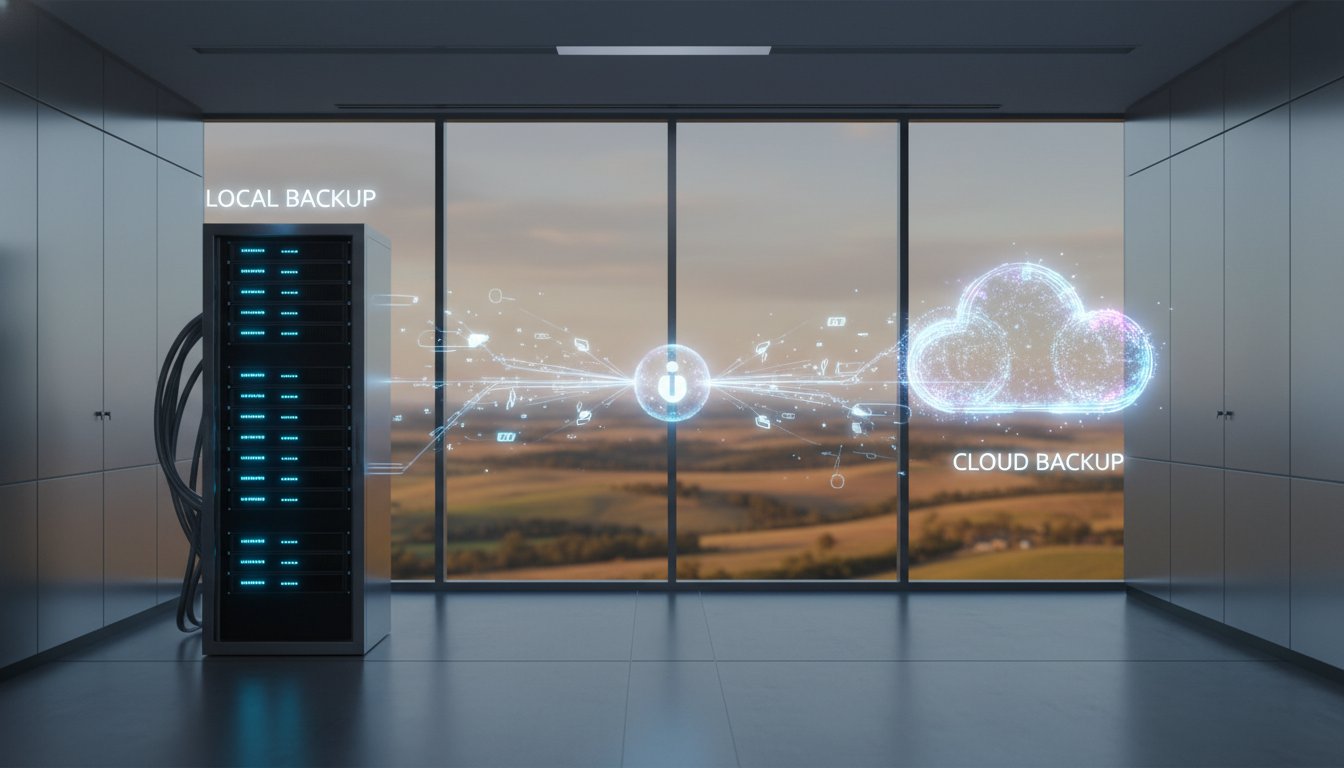
While an external drive is your first line of defence, it can’t protect you from every disaster. If a fire or theft occurs at your home or office, a local drive sitting on your desk won’t help. This is where cloud-based data backup solutions Toowoomba residents rely on provide the ultimate safety net. By keeping a copy of your files in a secure, offsite data centre, you ensure that your memories and business records survive even if your physical hardware is lost.

It’s vital to understand that cloud storage and online backup are not the same thing. Services like Google Drive or Dropbox are storage tools designed for easy access and collaboration. Online backup services are different. They act as a digital vault, automatically scanning your entire computer and creating a mirror image of your data. This “set and forget” approach is much more reliable for long-term protection because it doesn’t rely on you manually moving files into a specific folder.

Living in regional Queensland means we have to be smart about our internet usage. Australian NBN connections typically have much slower upload speeds than download speeds. When you first set up a comprehensive backup, it might involve hundreds of gigabytes. We recommend running these initial backups overnight or over a weekend. This prevents your internet from slowing down during the day when you need it for work or streaming. Once that first big upload is finished, the system only needs to back up new or changed files, which happens much faster.

Comparing Popular Cloud Options

OneDrive is a fantastic choice for many because it integrates perfectly with Windows and Microsoft 365. It’s excellent for syncing documents you use every day across multiple devices. However, true backup services often provide better value for full-drive protection and historical versioning. While a monthly subscription might seem like an extra cost compared to a one-time hardware purchase, the peace of mind knowing your data is stored in a professional facility is well worth the investment. You’re paying for the infrastructure that keeps your files safe from local disasters.

Security and Privacy in the Cloud

Security is a major concern when moving data to the cloud. You should look for services that offer “Zero-Knowledge” encryption. This means only you have the key to unlock your files; even the service provider can’t see what you’ve stored. Always enable Two-Factor Authentication (2FA) to ensure that even if someone guesses your password, they still can’t access your vault. Secure backups are a critical part of a broader strategy that includes Virus and Malware Removal to keep your entire system clean and protected from modern threats.

Data Backup Solutions Toowoomba: The Ultimate 2026 Beginner’s Guide

The 3-2-1 Rule: How Professionals Secure Data

Having a single backup is better than none, but it still leaves you vulnerable. If your external drive fails at the same time as your computer, your data is gone. Professionals use a specific standard to eliminate this risk. It’s called the 3-2-1 rule. When looking for data backup solutions Toowoomba residents should aim for this level of redundancy. It ensures that no single event, like a power surge or a break-in, can destroy every copy of your information.

The 3-2-1 strategy is straightforward. You keep three copies of your data. Two of these copies should be on different types of media, such as your computer’s internal drive and an external SSD. The final copy must be stored offsite, usually in the cloud. This setup protects you against hardware failure, accidental deletion, and physical disasters. By spreading your data across different locations and technologies, you create a safety net that is almost impossible to break.

The best part about modern systems is that they don’t require daily effort. You can automate the entire workflow. Once configured, your computer will handle the local and cloud uploads in the background. This “set and forget” approach removes human error from the equation. You don’t have to remember to plug in a drive or click “upload” every evening. If you aren’t sure how to configure these layers, Aspire Computing can audit your backup strategy to ensure everything is working correctly.

Implementing 3-2-1 at Home or in a Small Office

Setting up this framework doesn’t have to be complicated. Most modern operating systems and cloud services are designed to work together to create these layers automatically. Here is how it looks in practice:

  • Copy 1: The original files that live on your computer or laptop hard drive.
  • Copy 2: An automated local backup sent to an external SSD or a Network Attached Storage (NAS) device.
  • Copy 3: An automated, encrypted backup stored with a professional cloud provider.

Verifying Your Backup Integrity

A backup is only useful if it actually works. Many people discover their backups are corrupted only when they try to use them during an emergency. To avoid this, you should perform a “test restore” of a single folder every few months to ensure the files are readable and the process is smooth. You should also check your backup software logs once a week for any error messages or failed upload notifications. If you find the technical side of verification daunting, we can help. Our team provides professional data backup setup and monitoring to give you total peace of mind that your files are recoverable when you need them most.

When to Call a Professional: Setting Up Your Safety Net

While many people can manage a basic file copy, professional data backup solutions Toowoomba residents rely on offer a level of security that DIY methods often miss. The “human element” is the biggest risk in any safety strategy. It’s easy to forget to check a log file or miss a notification that your cloud sync failed because of an NBN dropout. A professional system moves beyond just having a copy of your files; it focuses on business continuity. This means having a plan to get you back to work within hours, not days, after a major hardware failure.

If you find yourself in a situation where data is already missing, stop what you’re doing immediately. Continuing to use a failing drive can overwrite the very files you’re trying to save. This is the moment to call in experts for professional Data Recovery Services. We use specialised hardware and software to retrieve information from drives that Windows can no longer see. It’s a delicate process that requires a steady hand and years of experience to ensure the best possible outcome for your irreplaceable memories.

Professional Backup Setup vs. DIY

Setting up your own system can lead to technical anxiety. You might wonder if your encryption is strong enough or if you’ve partitioned your external drive correctly to handle both system images and personal files. We eliminate that worry by handling the technical heavy lifting for you. A professional setup ensures your data is encrypted from day one and that your 3-2-1-1 layers are working in harmony. You get the chance to sit down with a local expert who can explain the system in plain English, ensuring you feel confident in your digital safety net.

Your Local Toowoomba Tech Partner

Aspire Computing has provided computer repairs and data security in Toowoomba since 1999. Based in Newtown and serving the wider Darling Downs for over two decades, we’ve built our reputation on being a trusted, local face in a complex industry. We don’t just set up your hardware and leave. Our remote IT support allows us to monitor the health of your backups and catch errors before they turn into disasters. We believe in personal accountability and transparent service. Contact us today for a personalised backup health check to ensure your files are safe, secure, and ready for whatever 2026 brings.

Secure Your Digital Future Today

Protecting your files doesn’t have to be a source of constant worry. By moving beyond simple syncing and embracing a structured approach to redundancy, you ensure your data survives hardware failure or modern cyber threats. Setting up the data backup solutions Toowoomba residents need is about creating a system that works reliably in the background without requiring your daily attention.

Since 1999, our team has helped the local community navigate technical challenges with on-site and remote support. We are specialists in system security and professional data recovery, ensuring that your business records and family memories remain intact regardless of the situation. You don’t have to manage these complex technical details alone. Don’t wait for a system crash to find out if your safety net is actually working.

Get a Professional Backup Audit from Aspire Computing to verify your strategy today. You deserve the peace of mind that comes with knowing your digital life is truly protected.

Frequently Asked Questions

How often should I back up my computer?

You should ideally back up your data daily or even continuously. Most modern software allows for real-time backups that save changes as they happen, which is the safest option. If you use your computer for business in Toowoomba, losing even a single day of work can be a major setback. Setting up an automated schedule ensures your files stay current without you needing to remember a manual task every evening.

Is it better to use an external hard drive or the cloud?

The most effective strategy is to use both. An external hard drive provides the fastest way to restore large amounts of data locally, while the cloud offers essential offsite protection against physical threats like fire or theft. Using both ensures you follow the professional 3-2-1 rule for redundancy. This hybrid approach is the gold standard for data backup solutions Toowoomba residents use to protect their most important files.

Does Windows 11 have a built-in backup programme?

Yes, Windows 11 includes built-in tools like File History and the Windows Backup app. File History is designed to save versions of your personal documents to an external drive, while the Windows Backup app focuses on syncing your settings and folders to OneDrive. While these tools are helpful, they often require specific configuration to ensure they are covering all your critical data and not just a few default folders.

What is the best external hard drive for backups in 2026?

A portable Solid State Drive (SSD) is generally the best choice for most users in 2026 because of its speed and durability. Unlike older mechanical hard drives, SSDs have no moving parts, which makes them much more resistant to physical damage if they are bumped or dropped. For very high-capacity needs, such as large video collections, a desktop-class external drive might offer more storage per dollar, but the reliability of an SSD is usually the safer bet.

Can a virus delete my computer backups?

Yes, modern ransomware is specifically designed to find and encrypt or delete any backup drives currently connected to your computer. This is why it’s vital to disconnect your local backup drive when it isn’t in use or use a cloud service with version history. Professional data backup solutions Toowoomba businesses implement often include immutable or “air-gapped” copies that viruses cannot modify or erase, providing an extra layer of safety.

How much storage space do I need for a full backup?

You should aim for a backup drive that is at least two to three times the size of your computer’s internal storage capacity. This extra space allows the system to keep multiple versions of your files over time rather than just the most recent copy. If your laptop has a 512GB drive, a 1TB or 2TB external drive provides plenty of room for future growth and historical versioning without running out of space quickly.

What happens if my backup drive fails?

If your backup drive fails, you should replace it immediately and create a new copy from your original data. This situation is exactly why having only one backup is risky; if your computer and your backup drive fail at the same time, your data is gone. Regularly checking the health of your drives and maintaining a secondary cloud backup ensures you are never left without a recovery option if a piece of hardware dies.

Can Aspire Computing help me set up a backup remotely?

Yes, we provide remote IT support to help you configure and monitor your backup systems from anywhere. While we often visit our clients on-site in Toowoomba, remote assistance is a fast and efficient way to troubleshoot errors or verify that your cloud uploads are running correctly. We can guide you through the entire setup process to ensure your data is secure without you needing to leave your home or office.

Data Backup Solutions for Small Business: The 2026 Toowoomba Guide

Did you know that 47% of Australian organizations hit by ransomware in 2026 take up to a full week to recover? For a local shop in Toowoomba, seven days of lost files and frozen operations can be devastating. You probably already know that finding the right data backup solutions for small business is essential, but the technical jargon around cloud storage and physical drives often makes the process feel overwhelming. It’s stressful to feel like you’re one accidental click away from losing years of client records or financial data.

We believe you should spend your time growing your business, not worrying about manual file transfers or complex server settings. This guide will show you how to build a “set and forget” system that meets the latest Essential Eight standards while keeping your data secure and accessible. We’ll explore the best 2026 hardware options, explain how to combine local speed with cloud security, and ensure you have the confidence to recover your entire business in minutes if the worst happens. By following these reliable, local strategies, you can stop fearing technical failures and start focusing on what you do best.

Key Takeaways

  • Understand the critical difference between simple file syncing and a true backup to prevent permanent data loss from accidental deletions.
  • Learn how to apply the 3-2-1 strategy to create a redundant system that keeps your business running even if a drive fails.
  • Compare cloud, local, and hybrid data backup solutions for small business to find the right balance of speed and security for our local NBN speeds.
  • Use our practical checklist to test your current setup and ensure your vital records are recoverable in minutes rather than days.
  • Discover the benefits of working with a local Toowoomba professional who offers personalized support instead of a distant corporate call centre.

What are Data Backup Solutions for Small Business?

At its core, a data backup is a secure copy of your business information stored in a separate location. It acts as your safety net. If your original files are deleted, corrupted, or locked by a virus, you can use these copies to restore your operations. While many owners think they’re protected because they use a basic cloud folder, effective data backup solutions for small business involve much more than just saving a file twice. It’s about ensuring that your records are available exactly when you need them.

It’s vital to understand that “syncing” services like basic Dropbox or personal OneDrive accounts aren’t the same as a true backup. If you accidentally delete a folder or a ransomware virus encrypts your files, those changes often sync instantly to the cloud, destroying your “backup” too. Professional data backup concepts focus on point-in-time recovery. This means you can roll back your data to exactly how it looked yesterday, last week, or even last month, providing a clean version of your work before the trouble started.

To help visualize how these systems protect your professional assets, watch this helpful video:

In 2026, the risks have evolved significantly. We’re no longer just worried about a spilled coffee on a laptop or a hard drive making a clicking sound. Modern threats include sophisticated ransomware that specifically targets local businesses and simple human error. This is where the concept of Business Continuity comes in. It isn’t just about having the data; it’s about how quickly you can get back to work. A proper system ensures your business keeps moving even when technology fails.

The Real Cost of Data Loss in 2026

For a Toowoomba business, the price of data loss isn’t just the cost of a new hard drive. It’s the thousands of dollars lost in billable hours while your team sits idle. There’s also the permanent damage to your reputation if you have to tell a client you’ve lost their sensitive records. Home-grade solutions often lack the encryption and automated reporting that business-grade needs require. When a system fails, you need to know immediately; you can’t afford to wait until you actually need a file to realize the backup stopped working months ago.

Backup vs. Disaster Recovery: Knowing the Difference

Many people use these terms interchangeably, but they serve different purposes. A backup is the copy of the file itself, like an invoice or a client list. Disaster recovery is the broader plan to restore your entire IT environment. If your server fails, having a backup of your files is great, but you still need a way to run your software and access those files. Small businesses need both to survive. A backup keeps your data safe, while a disaster recovery plan ensures you can actually use that data to serve your customers without missing a beat.

Many business owners in Toowoomba feel a false sense of security because they’ve copied their files onto a single USB drive. While having any copy is better than none, relying on one external device is a high-risk gamble. If that drive fails, gets lost, or is plugged in during a ransomware attack, your safety net vanishes instantly. Professional data backup solutions for small business rely on a proven framework known as the 3-2-1 backup rule. This strategy is the industry benchmark for safety because it eliminates single points of failure.

You shouldn’t need to spend your Friday afternoons manually dragging folders to a drive. Human error is one of the leading causes of backup failure. We prefer automated systems that run quietly in the background without needing your constant attention. These systems also use heavy encryption. This means your data is scrambled and unreadable to anyone without the key, keeping your client records safe from hackers even if they manage to access your storage.

Step 1: Maintain 3 Copies of Your Data

This step ensures you always have a fallback. You should have the original data on your primary PC or server, plus two additional backup copies. Having three versions of your information means that even if one backup is corrupted, you still have another spare. The 3-2-1 rule is the most effective protection against total data loss because it creates layers of redundancy that are nearly impossible to break all at once.

Step 2: Use 2 Different Media Types

Don’t put all your eggs in one basket. If you use two identical external drives, a single power surge could fry them both. This is called a “common mode failure.” Instead, use different technologies for your data backup solutions for small business. For example, keep one copy on a fast local SSD for quick file recovery and another in a secure cloud repository. Using a mix of internal storage and external hardware ensures that a technical flaw in one type of media doesn’t leave you stranded.

Step 3: Keep 1 Copy Offsite

Physical disasters like fire or local flooding in Toowoomba can destroy everything inside your office in minutes. That’s why one copy must live elsewhere. Cloud storage makes this easy by automatically sending your data to a secure data center. For the ultimate protection, we also recommend air-gapped backups. This is a copy that is physically disconnected from your network. If a virus hits your office, it can’t spread to a drive that isn’t plugged in. If you aren’t sure if your current strategy meets these standards, we can review your data backup setup to ensure your business is truly protected.

Cloud vs. Local vs. Hybrid: Which Solution Fits Your Business?

Choosing the right architecture for your business depends on your specific daily operations and the volume of data you handle. In Toowoomba, we have to account for the local NBN factor. While internet speeds have improved, large initial uploads to the cloud can still take days rather than hours. This is why we often recommend a strategy that balances immediate access with long-term safety. When evaluating data backup solutions for small business, you must consider how quickly you need to be back online after a failure.

Another critical factor for Australian businesses is data sovereignty. Under the Australian Privacy Principles, you’re often required to take reasonable steps to secure personal information, which includes knowing exactly where it lives. We prioritize solutions that store your files within Australian borders to ensure compliance and faster retrieval. Keeping your data local to Australia isn’t just about law; it’s about the speed of recovery when every minute of downtime costs you money.

Local Backup: Speed and Control

Local backups involve storing your data on hardware physically located in your office, such as an external drive or a dedicated server. The main advantage is speed. If you work with large files like high-resolution video or complex architectural CAD drawings, you can restore a lost folder almost instantly over your office network. You also have complete control over your privacy since your data never leaves the building. However, local-only systems have a major weakness. A single fire, local flood, or office theft could destroy both your original files and your backups simultaneously, leaving you with nothing.

Cloud Backup: Flexibility and Offsite Safety

Cloud-based data backup solutions for small business send your encrypted files to a secure remote data center. This provides an essential layer of offsite protection that local drives can’t match. These systems are highly scalable, meaning you only pay for the storage your business actually uses as it grows. One of the best features of modern cloud storage is versioning. This protects you against ransomware by keeping older, clean copies of your files that haven’t been encrypted by the virus. While consumer apps are fine for personal photos, Aspire Computing recommends business-grade tools that offer better encryption. Following an official SBA cybersecurity guide can help you understand why these professional standards are necessary for your protection.

The Hybrid Advantage

For most regional Queensland businesses, a hybrid approach is the superior choice. This involves using a local Network Attached Storage (NAS) device for your primary backup and then mirroring that data to a secure cloud provider. You get the best of both worlds. If a staff member accidentally deletes a file, you can pull it back from the local NAS in seconds. If a major disaster strikes your office, your data remains safe and recoverable from the cloud. This setup is ideal for Toowoomba businesses with inconsistent internet speeds because the local backup happens at lightning speed, while the cloud sync happens quietly in the background without slowing down your workday.

Data Backup Solutions for Small Business: The 2026 Toowoomba Guide

Essential Checklist for Implementing Your Backup Solution

Having a strategy is the first step, but the actual implementation is where most businesses face challenges. Many owners mistakenly believe that using cloud-based software like Microsoft 365 or Google Workspace means their data is automatically backed up. In reality, these platforms operate on a shared responsibility model; they keep the service running, but you are responsible for the data inside it. A robust approach to data backup solutions for small business must include your emails, cloud documents, and local files in one unified plan.

Before you consider your setup complete, use this checklist to evaluate your current protection level:

  • Are backups running automatically without any manual intervention?
  • Is there a copy stored completely offline or in an immutable cloud repository?
  • Are your cloud-based emails and shared drives included in the backup schedule?
  • Do you receive a notification or alert if a backup fails to complete?

Security and Encryption Protocols

Your backups contain your most sensitive business secrets and client information. Because of this, they must be encrypted using AES-256 standards, which is the same level of security used by banks. You also need to be wary of “hot backups,” which are drives that stay permanently connected to your computer. If ransomware hits your network, it can easily travel through the connection and encrypt your backups too. A backup without a password is just a gift for a data thief.

The Recovery Test: Your Most Important Task

A backup is only as good as its ability to restore. We recommend performing a “mock restore” at least once a month to verify that your files haven’t become corrupted. During this test, you should determine your Recovery Time Objective (RTO). This is the specific amount of time your business can afford to be offline before the financial impact becomes critical. If it takes three days to download your data over a slow connection, your RTO might be too long for your business to survive.

Automating the Process

Manual backups are the primary cause of data loss because they rely on busy people remembering to plug in a drive. We help businesses set up automated schedules that run during low-traffic hours, ensuring your internet speed isn’t affected during the workday. These systems should also include active monitoring. If a backup fails at 2:00 AM, you should know about it by the time you open your office at 8:00 AM. If you want to ensure your system is truly hands-off and secure, our team can provide expert Data Backup services to give you total peace of mind.

Expert Business Backup and IT Support in Toowoomba

Implementing the technical steps we have discussed is much easier when you have a local partner who understands your specific business environment. Aspire Computing serves as a dedicated technical expert for businesses across Toowoomba and the Darling Downs. We don’t believe in generic, one-size-fits-all packages. Instead, we focus on data backup solutions for small business that actually work for our regional infrastructure. When you call us, you aren’t reaching a distant call centre or a generic help desk. You’re talking to a local professional who takes personal accountability for your data’s safety.

Effective protection is a multi-layered process that goes beyond just copying files. Our backup strategies are built into a broader Cyber security framework designed to stop threats before they reach your network. We also provide specialized Data Recovery Services for those moments when you’ve already lost access to critical files due to hardware failure or accidental deletion. Having a local professional on-site can significantly speed up the disaster recovery process. If a server fails, we can be there physically to swap hardware or restore systems, which is much faster than trying to fix complex issues over a grainy phone line.

Why a Local IT Partner Matters

We provide fast on-site response for businesses in Newtown, the Darling Downs, and the Lockyer Valley. Being local means we understand the specific infrastructure challenges in Toowoomba, from NBN variations to local power stability issues. There is a level of personal accountability you only get with a local partner. You know exactly who is responsible for your data, and we take that trust seriously. We have built our reputation on being a reliable, approachable face in the community who can explain complex technical issues in straightforward language.

How Aspire Computing Secures Your Business

We design custom-tailored backup strategies that fit small business budgets without compromising on safety. This often involves checking your physical equipment to prevent failures before they happen. We integrate our services with Hardware Upgrades to ensure your drives and servers are modern and reliable. A fast backup system is useless if it is running on a failing ten-year-old drive. Our ongoing monitoring ensures your protection never lapses, so you can focus on your customers while we watch the technical details. Contact Aspire Computing today for a professional audit of your data backup solutions for small business and ensure your vital records are truly protected.

Protect Your Business Assets for the Years Ahead

Securing your digital records doesn’t have to be a source of constant stress. By implementing the 3-2-1 strategy and choosing a hybrid architecture that works with our local internet speeds, you’ve already taken the most important steps toward long-term stability. Remember that even the best system only stays reliable if it is monitored and tested regularly. Finding the right data backup solutions for small business is about more than just storage; it’s about ensuring your business can survive any technical failure without losing a single day of progress.

Since 1999, we have helped Toowoomba businesses stay operational through every digital challenge. Whether you need expert on-site assistance or remote IT support, we are here to help. As specialists in data recovery and cyber security, we ensure your safety net is always ready and your data remains within your control. Secure your business data with Aspire Computing and get back to focusing on your customers with total confidence. Your peace of mind is our priority, and we’re ready to help you build a more resilient future.

Frequently Asked Questions

Is cloud backup safe for sensitive small business data?

Yes, cloud backup is safe if you use business-grade providers that encrypt data with AES-256 standards before it leaves your office. We always recommend choosing services that store data in Australian data centres to comply with local privacy laws. This ensures your sensitive client records are protected by both high-level technology and Australian legal standards, making it much safer than an unencrypted drive in a desk drawer.

How often should a small business back up its data?

You should back up your data at least once a day, though many modern systems perform continuous backups every few minutes. The frequency depends on your Recovery Point Objective, which is essentially how many hours of work you’re willing to lose. For a busy Toowoomba office, an hourly schedule ensures that even a major system crash only results in a small amount of re-keying or lost progress.

Can I just use an external hard drive for my business backup?

Using only an external hard drive is risky because it creates a single point of failure. While a drive is a great secondary tool, it’s vulnerable to theft, fire, or simple mechanical failure. If you rely solely on one device, you don’t have a safety net if that specific piece of hardware fails. We suggest using a drive only as one part of a wider 3-2-1 strategy.

What happens if my backup fails without me knowing?

If your backup fails silently, you won’t realize you’re unprotected until you actually try to recover a lost file. This often leads to permanent data loss and extended business downtime. Professional data backup solutions for small business include automated monitoring that sends an alert to your email or your IT partner the moment a scheduled task fails, so the issue can be fixed immediately.

Does Microsoft 365 automatically back up my business emails and files?

No, Microsoft 365 doesn’t provide a comprehensive backup of your data. While it has a Recycle Bin for temporary recovery, it doesn’t protect against permanent deletion or ransomware attacks that sync to the cloud. You’re responsible for your own data under Microsoft’s terms of service. This is why we implement third-party backup tools specifically designed to archive your emails, Teams chats, and SharePoint files.

How much data storage does a typical small business need in 2026?

In 2026, a typical small business usually requires between 2TB and 10TB of storage, though this varies by industry. For example, a professional services firm might fit everything into a 2TB plan, while a local creative agency might need 12TB for video assets. Effective data backup solutions for small business allow you to scale your storage as your file sizes grow, ensuring you only pay for what you actually use.

What is the difference between data backup and data recovery?

Data backup is the act of making a copy of your files, while data recovery is the technical process of restoring those files to your system after a loss. Think of the backup as the spare tyre in your boot and recovery as the tools and knowledge needed to actually change the tyre and get back on the road. You need a fast recovery process to minimize expensive downtime.

How do I protect my backups from being encrypted by ransomware?

The best way to protect backups from ransomware is to use immutable storage or air-gapped copies. Immutable storage prevents any file from being changed or deleted for a set period, even by an administrator. Air-gapping involves disconnecting your backup drive from the network when it isn’t in use. This ensures that even if a virus spreads through your office, it cannot reach your clean, disconnected data.

Imagine it’s 8:15 AM on a Tuesday morning here in Toowoomba. You sit down to pull up a client’s 2025 project files, but instead of your data, you’re met with a silent screen and a rhythmic clicking from your hard drive. It’s a hardware failure that could cost you weeks of work. Choosing between cloud backup vs local backup for business shouldn’t feel like a gamble with your livelihood. We understand the worry that comes with inconsistent NBN speeds or the rising cost of monthly subscriptions for your storage.

You probably agree that your digital records are the backbone of your company, and losing them isn’t an option. At Aspire Computing, we’ve been helping locals protect their data since 1999, so we know exactly what it takes to stay secure. This guide will show you how to build a bulletproof strategy using the 3-2-1 backup rule. We’ll compare the one-off costs of local hardware against the reliability of the cloud to help you make a confident decision for 2026. You’ll finish this article with a clear path forward and the peace of mind that your business is fully protected.

Key Takeaways

  • Understand the critical trade-offs between speed and off-site security when deciding on cloud backup vs local backup for business.
  • Learn how to leverage local hardware for lightning-fast data recovery and physical control without the need for an internet connection.
  • Discover how automated cloud storage creates a vital “air-gap” to protect your Toowoomba office from physical site disasters.
  • Evaluate the cost-benefit of one-time hardware purchases versus predictable monthly subscriptions to find the most efficient fit for your budget.
  • See how implementing the industry-standard 3-2-1 Rule creates a bulletproof hybrid strategy for total business continuity.

What is the Difference Between Cloud and Local Backup for Business?

Local backup involves saving your files onto physical hardware located right in your office. This usually means using high-capacity external hard drives or a Network Attached Storage (NAS) unit connected to your internal network. Cloud backup works differently. It involves encrypting your data and sending it to a secure, off-site data centre via your internet connection. Understanding cloud backup vs local backup for business is the first step toward securing your company’s future.

The core purpose of any backup strategy is business continuity. Whether a server motherboard fails or a staff member accidentally deletes a critical folder, you need a way to get back to work fast. For Toowoomba small businesses in 2026, the biggest risk isn’t the technology itself. It’s the “set and forget” mentality. A 2025 industry report found that 20% of small business data restores fail because the backup system wasn’t monitored or tested. At Aspire Computing, we’ve seen that a backup is only useful if it actually works when the pressure is on.

The Role of Local Storage in 2026

Local storage has evolved significantly. By 2026, 20TB SSDs have become a standard tool for handling massive data loads in small offices. Local drives offer immediate accessibility. If you need to recover a 50GB database, pulling it from a drive on your desk is much faster than downloading it over the NBN. This makes local backup your best first line of defence for quick fixes and accidental file deletions. It provides a tangible sense of control because your data stays within your four walls.

Understanding the Modern Cloud Environment

Modern cloud solutions have moved far beyond being just a “drive in the sky.” In 2026, the focus is on automation and “Immutable Backups.” This technology ensures that once your data is written to the cloud, it cannot be changed or encrypted by ransomware. Cloud providers now manage data redundancy by mirroring your files across multiple global locations. This means even if a data centre faces a disaster, your business information remains safe and accessible from any internet connection. It’s a hands-off approach that provides professional-grade security without requiring on-site hardware maintenance.

Deciding on cloud backup vs local backup for business shouldn’t be about picking one over the other. Most resilient businesses now use a combination of both to ensure they stay connected and protected regardless of the situation.

Local Backup: Speed and Control with Physical Risks

Local backup remains a cornerstone of data strategy because it offers lightning-fast recovery speeds that the internet simply can’t match. When you’re comparing cloud backup vs local backup for business, the physical connection is the clear winner for performance. Restoring a 500GB database via a local USB 3.2 connection takes about 15 minutes, whereas the same task over a standard 50Mbps NBN connection could drag on for over 22 hours. This speed ensures your staff stays productive instead of waiting for progress bars to move.

The financial side is also attractive. You pay a one-time cost for hardware, such as a $450 high-capacity drive, rather than a monthly subscription that grows as your data expands. However, this control brings the “Toowoomba Factor” into play. Our region is prone to sudden power surges and severe summer storms. In early 2024, local businesses reported a 15% increase in hardware failures following heavy electrical activity. Without high-quality surge protection, your backup drive is just as vulnerable as the computer it’s protecting.

Physical proximity is a double-edged sword. While it’s convenient to have your data within arm’s reach, it means your primary data and your backup are in the same “blast zone.” If a fire, flood, or theft occurs at your office, you lose both copies at once. This makes local storage a risky solo strategy for total business continuity.

Hardware Options for Local Backups

  • External Hard Drives: These are simple and portable, but they’re prone to mechanical failure if dropped. They’re best used for temporary snapshots rather than long-term archives.
  • Network Attached Storage (NAS): A NAS acts like a private cloud within your office. It uses multiple disks to ensure that if one drive fails, your data remains safe.
  • Drive Rotation: We recommend a 3-2-1 strategy. This involves taking a physical drive home or to a bank vault every Friday to ensure at least one copy is off-site.

The Hidden Maintenance Burden

The biggest threat to local storage isn’t technology; it’s people. Statistics show that 60% of data loss incidents in small businesses happen because someone forgot to plug in the drive or check if the software was actually running. Bit rot is a silent killer where the magnetic polarity of bits on a hard drive spontaneously flips over 3 to 5 years, resulting in corrupted files that won’t open.

Maintaining these systems requires a disciplined routine. If your hardware starts making strange clicking noises or your backups suddenly stop, don’t wait for a total crash. You’ll need a local expert for PC and laptop repair to diagnose the fault before the data becomes unrecoverable. It’s often safer to have a professional look at your setup to ensure your cloud backup vs local backup for business balance is configured correctly for your specific needs.

Cloud Backup: Off-site Security and Connectivity Challenges

When you weigh up cloud backup vs local backup for business, the biggest advantage is the physical “air-gap” between your office and your data. If a fire or flood hits your Toowoomba storefront, a local drive sitting on the desk is lost forever. Cloud storage keeps your files in a Tier 4 data center with 99.9% uptime. It’s the only way to ensure your business survives a total site disaster. We’ve seen too many cases where a local backup was plugged in during a power surge, frying both the computer and the backup simultaneously. Cloud storage eliminates that risk entirely.

Automation is the second big win. Humans are forgetful. In our experience since 1999, the number one reason backups fail is because someone forgot to plug in the drive or click “start.” Cloud systems run on a schedule you don’t have to think about. They also scale instantly. If your business grows and you suddenly need 5TB of extra space, you don’t need to go to the shops for a new hard drive. You just update your subscription and keep working.

Encryption and Cybersecurity

Your data is scrambled using AES-256 encryption before it even leaves your building. This means even if a hacker intercepted the transmission, they’d see nothing but gibberish. This level of protection is a vital part of a modern Cyber security strategy. Another benefit is cloud versioning. If ransomware hits your network at 10:00 AM, you don’t have to pay the ransom. You simply roll back your entire file system to the 9:55 AM version and get back to work.

Managing the Connectivity Hurdle

The main challenge for regional Queensland businesses is the NBN bottleneck. If you have a standard 50/20 Mbps connection, your upload speed is capped at 20Mbps. A massive 1TB initial backup could take days to finish. We manage this using three specific methods:

  • Incremental Backups: After the first upload, the system only sends the tiny fragments of files that changed, which usually takes seconds.
  • Off-Peak Scheduling: We set your largest uploads to happen at 2:00 AM so they don’t slow down your office phones or emails during the day.
  • Local Caching: If your internet drops out for a day, the software stores the changes locally and pushes them to the cloud the moment you’re back online.

It’s about finding the right balance for your specific location. While the cloud backup vs local backup for business debate often focuses on speed, the security of having your data off-site usually outweighs the initial setup time. Don’t let a slow connection stop you from protecting your livelihood.

Direct Comparison: Cost, Recovery, and Reliability

Choosing between cloud backup vs local backup for business requires a clear look at your daily operations and your budget. A local backup system usually demands a high initial investment. You might spend $2,100 or more on a professional Network Attached Storage (NAS) unit and high-capacity enterprise drives. Cloud services flip this model. They offer a low entry cost with monthly subscriptions that scale as your data grows. While local ongoing costs are mostly limited to electricity and maintenance, cloud fees are consistent and predictable.

Reliability is where the two models diverge significantly. Leading cloud providers guarantee 99.9% uptime and store your data across multiple physical locations. Local hardware is vulnerable to the environment. Power surges, floods, or simple mechanical wear can stop a local drive. Most hard drives see a 2.5% failure rate within the first year, and that risk increases after year four. We’ve seen many businesses lose their primary data and their local backup simultaneously due to a single hardware fault.

The Speed of Recovery (The RTO Factor)

Recovery Time Objective, or RTO, measures how fast you can get back to work after a crash. Speed matters. If you need to recover a 50GB database from a local server, a 1Gbps office network can finish the job in roughly 8 minutes. Downloading that same 50GB file over a standard NBN 50 connection takes at least 2.5 hours. For a team of 10 employees, those two hours of downtime can cost over $950 in lost productivity. Aspire Computing helps local businesses evaluate their internet speed to ensure their recovery plan doesn’t leave them stranded for days.

Total Cost of Ownership (TCO)

The sticker price of a hard drive isn’t the total cost. You must account for drive replacements every 3 or 4 years to avoid hardware fatigue. Managing local backups also requires manual checks to ensure the data is actually there. Cloud pricing includes automated monitoring and “peace of mind” that your files are safe from local disasters like fire or theft. When you calculate the cost of a data crisis, the cheapest storage option often proves to be the most expensive mistake. We focus on building systems that offer continuity, not just storage.

Don’t wait for a hardware failure to test your recovery speed. Talk to the experts at Aspire Computing to design a backup strategy that protects your business continuity.

The Hybrid Solution: Implementing the 3-2-1 Rule

Choosing between cloud backup vs local backup for business does not have to be an “either/or” decision. In fact, relying on just one method is a gamble that rarely pays off when a real crisis hits. Since Chaim Lee established Aspire Computing in 1999, we have seen that the most resilient Toowoomba businesses use a hybrid approach. This strategy follows the 3-2-1 Rule: keep three copies of your data, store them on two different types of media, and keep at least one copy off-site.

A hybrid setup gives you the best of both worlds. You get the lightning-fast recovery speeds of a local backup for minor accidents, like a deleted folder. You also gain the absolute security of the cloud if your physical office faces a fire, flood, or theft. It is about building layers of protection. We call this our “Active Protection” model. It ensures your business continuity remains intact no matter what happens on the Darling Downs.

To get started, we recommend a simple data audit for your business:

  • Inventory: List every location where your data lives, including desktop PCs, servers, and mobile devices.
  • Volume: Calculate how many gigabytes of “mission-critical” data you generate daily.
  • Retention: Decide how far back you need to be able to go (e.g., 30 days vs. 7 years for tax compliance).
  • Accessibility: Identify who needs access to these backups during an emergency.

Managed Backup Services vs. DIY

The biggest danger with “DIY” backups is the lack of verification. Statistics show that 20% of small business data restorations fail because the backup drive was full or the software crashed months ago without anyone noticing. Chaim Lee and the Aspire team eliminate this risk through active monitoring. We provide the personal touch of a local expert you can actually call. If you ever find yourself in a bind and need Data Recovery Services, you won’t be talking to a bot. You will be talking to a professional who knows your system inside and out.

Step-by-Step Implementation

Step 1: Identify your mission-critical data. Focus on the core 15% of files that your business cannot function without for more than four hours.

Step 2: Set up a local Network Attached Storage (NAS) device. This allows for fast, daily snapshots of your work that can be restored in minutes over your local network.

Step 3: Sync that NAS to a secure, encrypted cloud provider. This creates your ultimate off-site safety net, fulfilling the final requirement of the 3-2-1 Rule.

Choosing the right cloud partner is a critical part of this step. For those wanting to understand what business-grade cloud infrastructure entails, you can find out more to see what leading providers offer.

At Aspire Computing, we “Aspire to Protect and Connect” your business. Don’t wait for a hard drive failure to realize your backup plan is incomplete. Talk to the experts at Aspire Computing today for a free backup health check and ensure your local and cloud strategy is 2026-ready.

Secure Your Business Continuity Strategy Today

Your data is the lifeblood of your daily operations. Deciding on cloud backup vs local backup for business doesn’t have to be a binary choice. Local backups provide the 1,000 Mbps recovery speeds needed for immediate uptime; cloud solutions offer the essential off-site protection against physical disasters. The most resilient 2026 strategies rely on the 3-2-1 rule to ensure your files remain accessible under any circumstances.

Since 1999, Aspire Computing has helped Toowoomba small businesses navigate these complex technical shifts. Chaim Lee provides the personal expert support you need to build a business continuity plan that actually works. We’ve spent over 25 years ensuring local companies don’t lose a single minute of productivity to hardware failure or cyber threats. You deserve an IT setup that’s both fast and bulletproof.

Aspire to Protect and Connect: Get Your Business Backup Audit Today

Let’s get your systems secured so you can focus on growing your business with total peace of mind.

Frequently Asked Questions

Is cloud backup safer than local backup for my business?

Cloud backup is generally safer because it keeps your data off-site and protected from physical threats like fire, theft, or floods. While a local drive offers fast access, it’s vulnerable to the same office disasters that might destroy your computers. By 2026, most professional cloud providers use AES-256 encryption and immutable storage, which prevents ransomware from deleting your backups. This ensures your business stays resilient regardless of what happens at your physical Toowoomba location.

How much does business cloud backup cost in Australia in 2026?

In 2026, Australian businesses typically pay between $10 and $50 per month for each terabyte of managed cloud storage. If you choose a fully managed service with active monitoring, the price often sits around $15 per month for 500GB of data. These costs have remained stable since 2024 because storage technology has become more efficient. Investing in a professional cloud backup vs local backup for business setup ensures you only pay for the capacity you actually use.

Will cloud backup slow down my office internet speed?

You won’t notice a slowdown if we configure your backups to run during off-peak hours or use bandwidth throttling. We typically set backup software to use only 20% of your total upload speed during business hours, which leaves plenty of room for Zoom calls and emails. With NBN speeds reaching 1,000 Mbps for many businesses in 2026, most offices can sync data in the background without any impact on daily operations or staff productivity.

Can I use a simple external hard drive for my business backup?

You can use an external drive for quick local copies, but it shouldn’t be your only protection. Statistics show that 20% of external hard drives fail within their first four years of use due to mechanical wear or accidental drops. Relying on a single $120 drive puts your entire company at risk if it fails at the same time as your main server. At Aspire Computing, we recommend using these drives only as a secondary layer in a broader strategy.

What is the 3-2-1 backup rule and why does it matter?

The 3-2-1 rule is the industry standard for data safety, requiring three copies of your data, stored on two different types of media, with one copy kept off-site. This strategy ensures that even if a hardware failure and a local fire happen simultaneously, your business remains operational. We’ve used this framework since 1999 to achieve a 100% recovery rate for our clients. It’s the most reliable way to evaluate your cloud backup vs local backup for business needs.

How long does it take to recover data from the cloud?

Recovery time depends on your internet speed and the volume of data, but a typical 100GB folder takes about 2 hours to download on a 100Mbps connection. For larger recoveries involving multiple terabytes, we often use “Instant Recovery” features that let you run virtual machines directly from the cloud while the data downloads. This 2026 technology reduces your downtime from days to minutes, keeping your team productive while the full restoration completes.

Do I need cloud backup if I already use Microsoft 365 or Google Drive?

You definitely need a separate backup because Microsoft and Google only guarantee the platform’s uptime, not your specific data. Their standard terms of service include a “Shared Responsibility Model,” which means you’re responsible if an employee accidentally deletes a file or a hacker wipes your inbox. Most default recycle bins only hold data for 30 days. A dedicated backup service ensures you can recover files from six months or six years ago without any hassle.

What happens to my local backup if there is a power surge or storm?

A severe power surge can physically destroy a local backup drive, even if it’s plugged into a standard surge protector. Lightning strikes can deliver over 20,000 volts through your building’s wiring, which often bypasses basic fuses and fries internal circuit boards. If your only backup is physically connected to your network during a storm, you could lose everything. This is why we always recommend a cloud component to ensure your data stays safe from local electrical events.

For a more holistic approach to business continuity, protecting your hardware from grid instability is just as important as your backup strategy. To see how commercial solar and battery systems can safeguard your operations against power-related disruptions, you can visit G-Solar & Electrical.