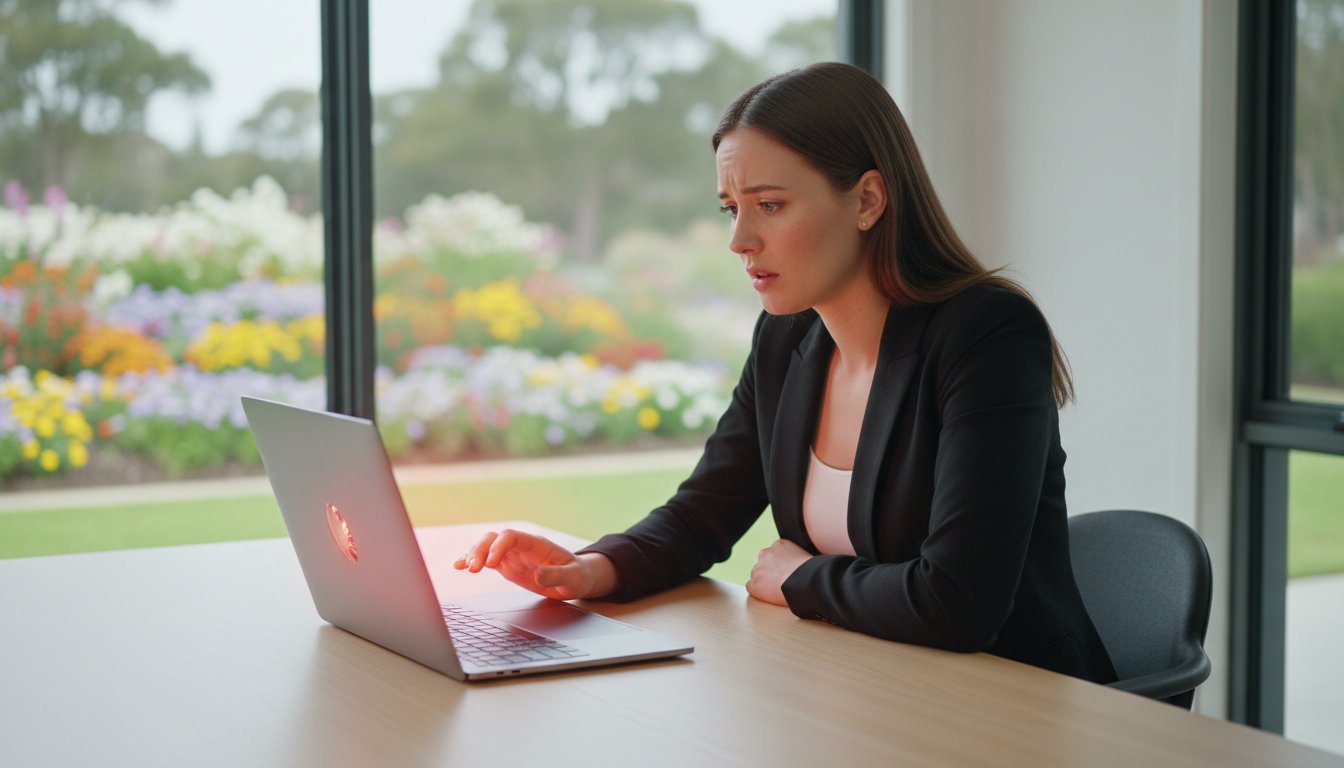

On a busy Tuesday morning in Toowoomba, a local business owner sat down to finish a critical project only to hear a rhythmic, metallic ticking coming from under the desk. By the next afternoon, the screen was black, and that computer making a clicking noise had signaled the end of a three year old hard drive. It is a stressful situation that triggers immediate fears of lost data and unexpected repair bills, but please, don’t panic.
We understand how unsettling it is when your technology fails. You rely on your PC for work and daily life; any interruption feels like a major setback. The good news is that a clicking sound does not always mean your data is gone forever. Our team has been helping the Toowoomba community since 1999, and we know how to handle these hardware issues with a calm, professional approach that puts your mind at ease.
In this guide, we will help you identify the source of the noise and provide clear steps to protect your files from the “click of death.” You will learn how to troubleshoot components like fans and drives to get your system back to reliable performance. We will also explain exactly when it is time to call a professional to ensure your business continuity remains intact.
Key Takeaways
- Understand why mechanical parts fail and how to stay calm when you hear unexpected sounds coming from your PC.
- Learn the “Ear Test” to safely determine if your computer making a clicking noise is caused by a simple fan obstruction or a more serious hardware issue.
- Discover why a clicking hard drive is a race against time and how to protect your precious files before the “click of death” becomes permanent.
- Follow a safe, step-by-step guide for performing an emergency data backup and checking for visible physical blocks inside your case.
- Find out when to stop DIY repairs and seek professional help in Toowoomba to ensure your data is recovered and your system is restored quickly.
Why is My Computer Making a Clicking Noise? (The ‘Don’t Panic’ Guide)
Hearing your computer making a clicking noise is enough to make anyone feel anxious. You might imagine your family photos or important work documents vanishing in an instant. At Aspire Computing, we’ve helped clients since 1999, and we can tell you that a click isn’t always a death sentence for your machine. Most computers contain mechanical parts that move constantly. A standard hard drive platter spins at 7,200 revolutions per minute, while cooling fans can rotate 3,000 times every sixty seconds. Over time, these components experience physical wear that leads to audible changes.
To better understand this concept, watch this helpful video:
Once you notice a new sound, your first priority is protecting your data. Save any open documents immediately. After your work is secure, perform a safe shutdown through the operating system menu. Don’t just pull the power cord. This prevents further mechanical stress on the components while you investigate. Common culprits for these sounds usually include the hard drive, cooling fans, or an old optical disc drive. Our goal is to ensure your business continuity by identifying the source before a total failure occurs.
Mechanical vs. Electronic Sounds
Identifying the specific type of noise is a vital first step. A rhythmic, repetitive click usually points to a mechanical issue with a spindle or a fan blade. If the sound is a sharp electronic “pop” or a crackle, it might indicate a failing capacitor or a short circuit. Pay close attention to the frequency. A click that happens every single second is often a fan hitting a loose cable. A more irregular, grinding computer making a clicking noise often signals a hard drive head struggling to read data from the platter.
When to Worry and When to Relax
Minor issues often sound worse than they are. You can usually relax if the noise comes from a fan, as a replacement part is an affordable and quick fix. However, you should worry if the clicking accompanies slow performance or frequent system crashes. Industry data shows that hard drive failure rates increase by 12 percent after the 36-month mark of regular use. If your hardware is more than 3 years old, a new noise is a critical warning. Ignoring these signs can lead to expensive data recovery later. It’s always safer to talk to the experts to protect your digital life.
Identifying the Source: Is it a Fan, a Hard Drive, or Something Else?
Hearing a computer making a clicking noise is often the first sign that a component needs attention. Don’t panic; most clicking sounds are manageable if you catch them early. To find the source, you should perform a safe “ear test.” Open your desktop case or lean toward your laptop vents while the machine is running. Use a cardboard tube, like an empty paper towel roll, to focus the sound. Keep your face at least 10 centimeters away from any moving parts to stay safe. By moving the tube around the internal components, you can pinpoint whether the sound originates from the front, the back, or the center of the chassis.
The Cooling Fan Diagnostic
Cooling fans are the most common source of noise, accounting for roughly 75% of all clicking complaints we’ve seen since 1999. Dust buildup can weigh down blades or cause them to hit the fan housing. Sometimes, a small plastic power cable shifts and begins tapping against the spinning blades. You can safely test this by gently pressing your finger against the center hub of the fan to slow it down. If the clicking stops, you’ve found the issue. While annoying, fan clicks are the least dangerous source of noise and usually only require a quick cleaning or a cheap replacement part.
The Hard Drive ‘Click of Death’ Symptoms
If your computer making a clicking noise sounds like a rhythmic metronome, it might be the “Click of Death.” This happens when the read/write head of a traditional Hard Disk Drive (HDD) fails to find its tracking information and hits a physical stop. This is a clear sign of physical hardware failure. You might notice your system freezing for 3 or 4 seconds at a time or even see the Blue Screen of Death (BSOD) as the drive fails to load system files. If you hear this specific pattern, stop what you’re doing and back up your files immediately. For those who need help with a fast return to a working system, Aspire Computing offers expert hardware upgrades to replace failing drives with modern, silent SSDs.
Power Supply (PSU) and Optical Drive Clicks
Other components can also be the culprit. A Power Supply Unit (PSU) contains capacitors and relays that may click if they’re failing to regulate voltage properly. This is more common in units that have been in service for 5 years or more. Additionally, check your CD or DVD drive. If a disc is poorly seated or the laser is “hunting” for a signal, the drive will make a mechanical ticking sound. In some cases, the noise isn’t mechanical at all. Electrical interference in your external speakers can create a repetitive clicking that sounds like it’s coming from inside the case. Always unplug your speakers briefly to see if the sound persists.
The Hard Drive Click of Death: Why Your Data is at Risk
Hearing your computer making a clicking noise is one of the most stressful experiences for any PC owner. This sound is rarely a minor glitch; it’s usually the final warning from a failing Hard Disk Drive (HDD). These drives are mechanical marvels that rely on components moving at incredible speeds. When those components fail, your data isn’t just inaccessible; it’s physically at risk of being erased forever.
How Mechanical Drives Fail
Standard hard drives contain magnetic platters that spin at speeds between 5,400 and 7,200 RPM. An actuator arm moves a tiny read/write head across these platters to access your files. This head doesn’t actually touch the platter; it floats on a cushion of air thinner than a human hair. When the drive starts clicking, it’s often because the actuator arm can’t find the data it’s looking for or the ‘parking’ mechanism has failed. Several factors contribute to this mechanical breakdown:
- Physical Impact: A small bump or drop while the drive is spinning can cause the head to bounce.
- Thermal Stress: Operating in environments over 45 degrees Celsius can cause components to expand and lose alignment.
- Component Age: Most mechanical drives have a reliable lifespan of 3 to 5 years before the motor or arm begins to degrade.
- Head Crashes: This happens when the read/write head physically touches the platter, scraping away the magnetic coating.
Why You Must Stop Using the PC Immediately
The biggest mistake you can make when your computer making a clicking noise is to keep restarting it. Every time you power on a clicking drive, the damaged actuator arm continues to sweep across the platters. If a head crash has occurred, every second of power-on time allows the head to grind further into the disk, turning your data into fine dust. The Click of Death is a physical mechanical failure that software cannot fix.
Avoid the temptation to use software “recovery” tools found online. These programs are designed for deleted files on healthy drives, not physical hardware failures. Running them on a clicking drive forces it to work at maximum capacity, which often leads to a total and permanent data loss. This “reboot and hope” cycle is a race against time that most users lose without professional help.
Since 1999, Aspire Computing has provided expert support to the Toowoomba community. We understand how vital your photos and business documents are to your daily life. Chaim Lee and our team offer professional Data Recovery Services to help you get your lost files back safely. We focus on protecting your digital assets and ensuring continuity for your home or business. Don’t risk a DIY fix when your hardware is failing; let a local expert handle the delicate process of recovery.
Troubleshooting and Safe DIY Steps for 2026
Hearing your computer making a clicking noise can feel like a countdown to a crash, but don’t panic. Since Chaim Lee founded Aspire Computing in 1999, we’ve helped thousands of users identify these sounds before they lead to permanent data loss. Most clicking sounds are mechanical, meaning you can often find the source with a few methodical steps. Follow this checklist to safely diagnose the issue at home.
- Step 1: Perform a full data backup. Before you touch a single screw, ensure your files are safe. Use a high-speed external SSD or a cloud service like OneDrive. If a mechanical hard drive is failing, it may only have a few minutes of life left.
- Step 2: Open the case. Power down the machine and unplug it from the wall. If you’re using a desktop, remove the side panel. For laptops, this might require specialized tools, so only proceed if you’re comfortable.
- Step 3: Clear the dust. Use a can of compressed air to blow out fan housings and heat sinks. Dust accumulation causes 25 percent of premature fan failures by forcing the motor to work harder.
- Step 4: Manage your cables. Look for any loose wires near the CPU or GPU fans. Sometimes a small plastic tie or a stray power cable can sag and hit the spinning blades.
- Step 5: Listen closely. Plug the computer back in and turn it on with the side panel off. Keep your fingers away from moving parts. Listen to see if the sound comes from the front (intake fans), the back (exhaust/power supply), or the middle (CPU/Hard drive).
Clearing Fan Obstructions
If you find a wire hitting a fan, use the “cable tie trick” to secure it to the internal chassis. This keeps the airflow path clear and stops the noise instantly. However, if the clicking persists and sounds like a grinding rattle, the bearing has likely failed. In 2026, we don’t recommend trying to oil a fan bearing. Modern fans are sealed units; trying to peel back the sticker to add lubricant is a temporary fix that often results in oil leaking onto your motherboard. Replacing a fan is a low-cost way to ensure your system stays cool and quiet.
What NOT to Do with a Clicking Computer
Avoid the “Freezer Myth” at all costs. An old internet legend suggests putting a clicking hard drive in the fridge to shrink the metal components and recover data. This is a disaster. Condensation will form inside the drive the moment you take it out, causing a short circuit or sticking the read heads to the platter. Similarly, never hit or tap the side of your case to stop a noise. If your computer making a clicking noise is due to a failing hard drive, a physical shock can cause a “head crash,” where the needle gouges the data surface. Finally, never open the silver casing of a hard drive yourself. Even a single speck of dust is massive compared to the microscopic gap between the drive head and the platter, and it will destroy your data instantly.
If these steps don’t silence the sound, it’s time to let a professional take a look. We provide expert hardware repair services to keep your technology running smoothly.
Professional Repairs and Data Recovery in Toowoomba
Hearing your computer making a clicking noise is often the first sign of a hardware emergency, but you don’t have to face it alone. Since 1999, Aspire Computing has provided reliable technical support to the local community. Chaim Lee leads our team with more than 25 years of hands-on experience, offering a level of personal accountability you won’t find at big-box retailers. We understand that your data is priceless, which is why we prioritize rapid diagnostics to identify the source of the sound before a total drive failure occurs.
Our approach is built on the philosophy to “Protect and Connect.” We don’t just fix the noise; we ensure your entire system is stable and secure. When a mechanical hard drive begins to fail, the clock is ticking. Our team uses professional-grade recovery tools to extract your files safely. By choosing a local expert, you get the benefit of immediate, on-site assistance that minimizes your downtime and prevents permanent data loss.
Upgrading to a Faster, Quieter Computer
The most effective cure for a mechanical drive failure is a modern hardware transition. Traditional hard drives rely on spinning platters and moving read heads, which are the components responsible for that dreaded clicking sound. We recommend upgrading to a Solid State Drive (SSD). Because SSDs have no moving parts, they’re completely silent and significantly more durable. An SSD upgrade can make an older machine feel new again, often increasing boot speeds by 300 percent or more.
We handle the entire transition for you. Our technicians use sector-by-sector cloning technology to move your operating system and files to the new drive. This process ensures you don’t lose your custom settings or software licenses. For more tips on improving your system’s efficiency, you can explore our Hardware Upgrades guide for professional advice on keeping your PC at peak performance.
Local IT Support You Can Trust
Aspire Computing is proud to be a staple of the Darling Downs region. We’ve spent 25 years helping residents in Toowoomba, Newtown, and surrounding suburbs maintain their technology. Our mobile computer repair service is designed for your convenience. We come to your home or place of business, saving you the hassle of transporting heavy equipment. This on-site presence allows us to see exactly how your setup functions in its natural environment.
If you notice your computer making a clicking noise, reach out immediately. Most storage issues are manageable if they’re addressed at the first sign of trouble. We provide the expert guidance and quality assurance you need to get back to work without the fear of a system crash. Trust a local professional who values your time and your data as much as you do.
Protect Your Files and Restore Your Peace of Mind
Dealing with a computer making a clicking noise is stressful, but you don’t have to face it alone. Identifying whether the sound comes from a dusty cooling fan or a failing hard drive is the vital first step. If you hear rhythmic clicking, it’s often a sign of mechanical failure. Powering down your device immediately is the best way to prevent permanent data loss. Hardware issues don’t fix themselves; addressing the noise now saves you from a total system crash later.
Aspire Computing has served the Toowoomba region since 1999, providing expert data recovery and professional hardware support. Chaim Lee and his team offer both on-site repairs and remote IT assistance to ensure your technology remains reliable. With over two decades of local experience, we focus on quick turnarounds and quality results for every client. Hear a clicking noise? Contact Aspire Computing today for a fast diagnosis and professional repair in Toowoomba. We’re ready to help you protect your data and get back to work with confidence.
Frequently Asked Questions
Is a clicking noise always a sign of a failing hard drive?
No, a clicking noise isn’t always a failing hard drive, though it’s the most common cause. Sometimes a loose power cable or a cooling fan hitting a wire creates a similar rhythm. According to 2023 industry data, about 20 percent of mechanical noises actually stem from obstructed cooling fans. If your computer making a clicking noise is accompanied by “Disk Boot Failure” errors, the drive is likely the culprit. We recommend checking your fans first to rule out simple mechanical obstructions.
How much does it cost to fix a clicking computer in Toowoomba?
The cost depends entirely on which component is failing and the specific model of your machine. A simple fan replacement is significantly cheaper than a full data recovery service or a motherboard repair. At Aspire Computing, we provide a clear assessment before starting any work. This ensures you understand the repair path for your Toowoomba home or business without any hidden surprises. We focus on providing a quick fix that returns your system to peak performance.
Can I still use my computer if it only clicks occasionally?
You should stop using your computer immediately if you hear clicking, even if it’s intermittent. Occasional clicks often signal the “click of death,” where the drive head struggles to find data. Continuing to use the machine increases the risk of permanent data loss. Back up your files to a cloud service or external drive right away while the system is still functional. Don’t wait for a total collapse, as it’s harder to protect your data once the drive fails completely.
What is the difference between a clicking sound and a grinding sound?
A clicking sound usually indicates a physical failure of the hard drive read/write head, while a grinding sound typically points to a worn-out fan bearing. Fans rotate at speeds up to 3,000 RPM, and when the bearings dry out, they produce a harsh, metallic drone. Hard drives produce a more rhythmic, ticking sound as the actuator arm resets repeatedly. Both require prompt attention to prevent overheating or data loss. Identifying the sound correctly helps us provide a faster return on your repair.
How do I know if the noise is coming from my power supply (PSU)?
You can identify PSU noise by listening closely to the rear of your computer case where the power cable connects. If the clicking coincides with power surges or the smell of ozone, the PSU internal capacitors or fan might be failing. Since the PSU handles high voltage, don’t attempt to open it yourself. Bring it to our Toowoomba workshop for a professional diagnostic to keep your system safe. We have been testing and replacing power units for local clients since 1999.
Will an SSD upgrade stop my computer from making clicking noises?
Yes, upgrading to a Solid State Drive (SSD) will eliminate clicking noises caused by your storage device. SSDs have zero moving parts, unlike traditional Hard Disk Drives (HDDs) that spin at 7,200 RPM. This upgrade not only silences your machine but also provides a speed boost of up to 10 times your current performance. It’s a reliable way to ensure your computer making a clicking noise becomes a thing of the past. We can usually clone your old data directly to the new drive.
What should I do if my laptop starts clicking while I’m travelling?
Shut the laptop down immediately and avoid turning it back on until you can have it inspected. Physical movement during travel can worsen a mechanical drive failure, especially if the laptop is bumped while the platters are spinning. If you have critical work to finish, try to copy only the most essential files to a USB stick. Keep the device powered off and stored securely in a padded bag. This precaution helps us ensure the continuity of your data when you return.
Can Aspire Computing recover data from a hard drive that is already clicking?
Yes, we can often recover data from clicking drives using specialized software and hardware tools. Chaim Lee has been helping Toowoomba residents with data recovery since 1999, bringing decades of experience to every case. The success rate depends on the extent of the physical damage to the internal platters. Please don’t try “freezer hacks” or DIY repairs, as these often make professional recovery impossible. Trust the experts to protect your precious photos and business documents.

B.App.Sc., Cert. Computer Engineering PC Service and Repair
As the owner of Aspire Computing founded in 1999, Chaim Lee has been working for over 20 years as the Leading Computer Technician.
He has a life long interest in electronics, computing, science and technology. He has completed studies and gained qualifications in Applied Science, Computer Repair and Service, Microsoft Installation and Maintenance, Technical Writing, Workplace Training, and Technical Sales Training.