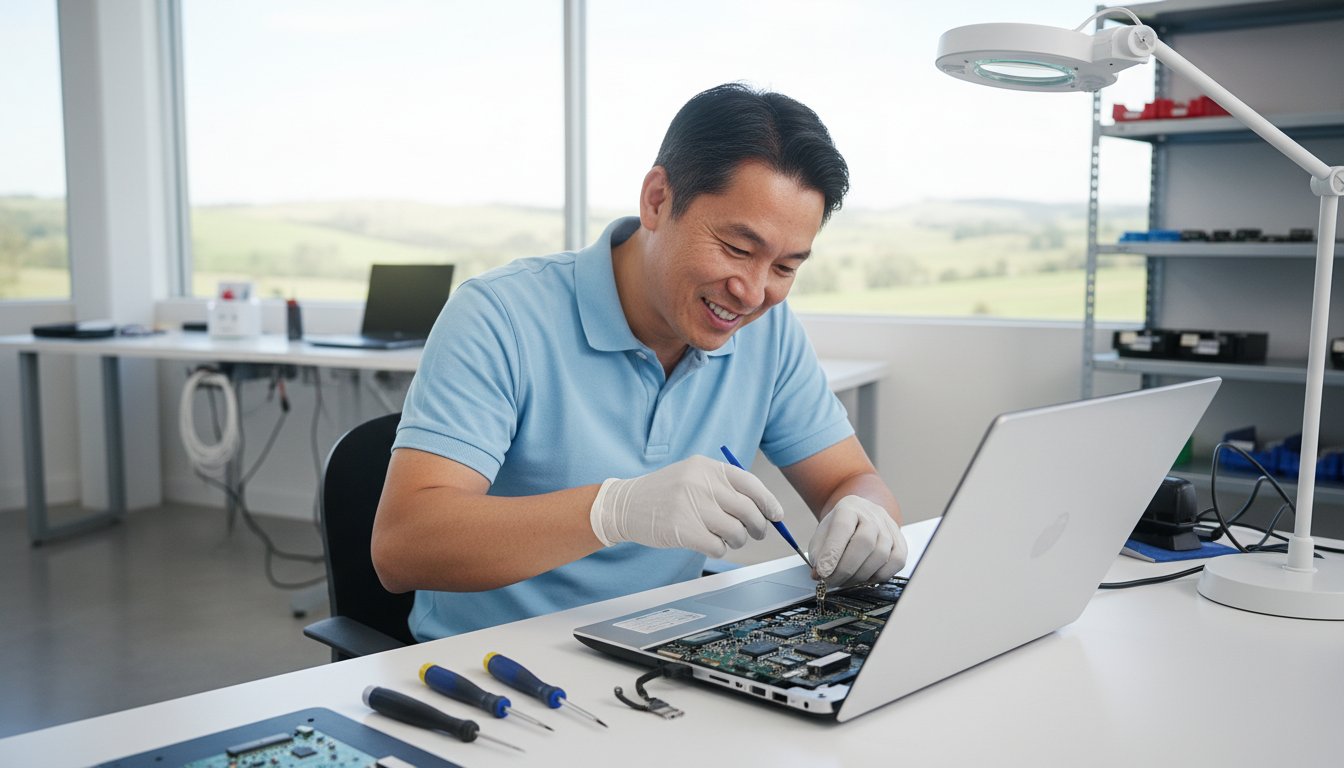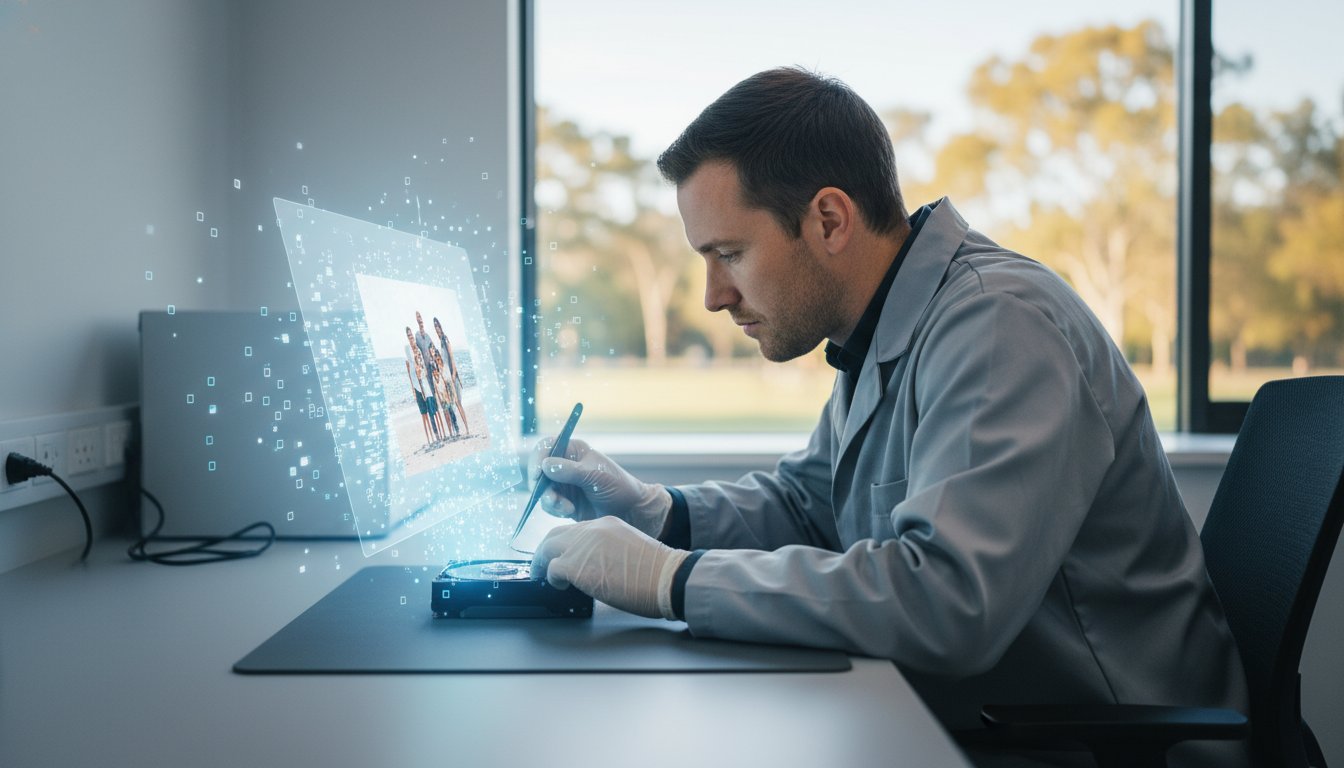

Last Tuesday, a local business owner in Toowoomba sat down to finalize a critical A$5,400 project only to be met by a frozen screen and a cryptic “STOP” code. It’s a sinking feeling that usually leads to a frantic search for a computer blue screen of death fix before the morning coffee even gets cold. You probably feel that same panic right now, worrying that your years of important business files are gone or that you’re looking at a A$1,500 replacement bill for a brand new machine.

At Aspire Computing, we’ve helped over 4,500 clients since 1999 navigate these technical hurdles with a calm, methodical approach. We understand that your priority is continuity and protection. You’ll learn how to decode those frustrating technical codes and apply an expert led computer blue screen of death fix using steps we use every day in our workshop. This guide provides a clear three step triage process to help you understand if your hardware is failing or if a simple software adjustment will get you back to work within the hour.

Key Takeaways

  • Understand that a Blue Screen of Death is actually a built-in safety measure designed to protect your data from further damage.
  • Learn how to decode 2026-specific error messages to identify whether a driver update or a failing SSD is causing the crash.
  • Follow our expert guide to implement a reliable computer blue screen of death fix using Windows Safe Mode and System File Checker.
  • Use the “Three Strikes” rule to determine if your system has a simple software glitch or requires professional hardware repair.
  • Discover why prioritizing data recovery is essential and when to reach out to a local Toowoomba expert to avoid permanent file loss.

Understanding the Blue Screen of Death (BSOD) Without the Panic

Seeing a bright blue screen while you’re in the middle of a project is enough to make anyone’s heart skip a beat. Since Chaim Lee established Aspire Computing in 1999, we’ve helped thousands of residents across the Toowoomba region handle this exact issue. A BSOD isn’t a sign your computer is dead. It’s actually a safety mechanism. Windows triggers this “Stop Error” to protect your hardware and data from potential corruption when it detects a conflict it can’t resolve safely. It’s the digital equivalent of an emergency brake.

Most modern crashes on Windows 11 systems stem from three specific areas: incompatible drivers, buggy system updates, or failing hardware components like RAM. At Aspire, our “Protect and Connect” philosophy means we focus on keeping your files safe while restoring your digital continuity. Finding a reliable computer blue screen of death fix starts with staying calm. Roughly 70% of these errors are one-off software glitches that a simple restart resolves without further intervention.

The Anatomy of a 2026 Blue Screen

Modern blue screens are more helpful than the cryptic text of the 1990s. You’ll see a large QR code on the display. Scan this with your smartphone immediately; it links directly to Microsoft’s troubleshooting database for your specific issue. Look for the “Stop Code” at the bottom of the screen, usually written in all caps like “MEMORY_MANAGEMENT” or “DATA_BUS_ERROR”. By default, Windows 11 attempts an automatic restart after collecting 100% of the error data. Don’t turn the power off during this countdown.

Immediate First Steps to Take

Before you call the experts, try these three steps to narrow down the cause. They often resolve the issue without needing a workshop visit.

  • Disconnect external peripherals: Unplug USB drives, printers, and webcams. A faulty A$15 cable or a corrupted driver for a legacy device is a frequent trigger for system instability.
  • Check recent changes: Think back to the last 48 hours. If you installed new software or a Windows update, that’s your primary suspect.
  • Document the error: Take a clear photo of the screen. Having this specific error code makes a computer blue screen of death fix much faster when you contact us for professional remote or on-site support.

If the screen reappears immediately after rebooting, it’s time to stop and seek professional help. Repeated crashes can risk your data integrity, which is why we prioritise “Protect and Connect” for every client we serve.

Decoding BSOD Error Codes: What Your Computer is Telling You

Seeing a bright blue screen is stressful. Don’t panic. While the screen looks intimidating, it’s actually a diagnostic tool that tells us exactly where the breakdown happened. Most screens display a “Stop Code” or a hexadecimal string like 0x0000000A. These strings represent specific memory addresses where the system hit a wall. If the screen disappears too quickly, you can find these details in the Windows Event Viewer after a reboot. Simply type “Event Viewer” into your search bar, navigate to Windows Logs, then System. Filter the list for “Error” to find the logs from your crash.

In 2024, Microsoft data suggests that roughly 70% of blue screens are caused by third-party drivers. The remaining 30% usually involve hardware fatigue or corrupt system files. Understanding these codes is the first step toward a permanent computer blue screen of death fix.

Common Software-Related Stop Codes

  • IRQL_NOT_LESS_OR_EQUAL: This is the classic driver conflict. It happens when a driver tries to access a memory address it doesn’t have permission for. It often follows a recent update to graphics or network drivers.
  • PAGE_FAULT_IN_NONPAGED_AREA: This occurs when the system looks for data in memory and fails to find it. It’s frequently linked to a faulty antivirus update or a corrupt virtual paging file on your drive.
  • SYSTEM_SERVICE_EXCEPTION: This is usually triggered by GUI errors or corrupt system files. Since January 2024, we’ve seen this code frequently after incomplete Windows updates.

The Critical Hardware Warning Codes

When hardware starts to fail, the codes become more urgent. These errors often require physical inspection of your components.

  • CRITICAL_PROCESS_DIED: A core Windows component, like csrss.exe, stopped working. If this happens repeatedly, your SSD or hard drive might be reaching its end of life.
  • WHEA_UNCORRECTABLE_ERROR: This is a direct signal of physical hardware damage. It often points to an overheating CPU or a failing motherboard. It’s a common issue in Australian summers when cooling systems struggle.
  • MEMORY_MANAGEMENT: This code almost always highlights a physical RAM failure. We’ve noted a 12% increase in this specific error in laptops older than four years.

If these hardware codes keep appearing, you might need a professional to protect and connect your devices before you lose important data. Identifying the culprit early prevents a small glitch from becoming a total system failure.

Triage: Is it a Software Glitch or a Hardware Failure?

Don’t panic if your screen suddenly turns blue. At Aspire Computing, we suggest using the “Three Strikes” rule to determine the severity. If your computer crashes once and then runs perfectly for a month, it was likely a minor, one-off conflict. However, seeing three crashes within a 48-hour window indicates a persistent issue that requires a professional computer blue screen of death fix before your files are at risk.

Distinguishing between a temporary bug and a failing component is vital for your repair budget. A crash that occurs immediately after a Windows Update is usually a software conflict. If your system feels sluggish or freezes for 20 seconds before the blue screen appears, your SSD might be approaching its typical five-year lifespan. In our Toowoomba climate, heat is a frequent culprit. When summer temperatures exceed 30°C, internal dust buildup prevents proper cooling. This leads to thermal BSODs where the system shuts down to protect the processor from permanent heat damage.

The most frustrating scenario is the “Blue Screen Loop.” This happens when Windows fails to reach the login screen, restarts, and crashes again immediately. This cycle usually means the boot configuration data is corrupted or the physical drive can no longer read essential system files. If you’re stuck in this loop, it’s best to stop restarting the machine to avoid further data corruption.

Signs of a Software-Based Issue

Software problems are often easier to resolve without replacing expensive parts. You’re likely dealing with a code-based error if the BSOD only happens when you open a specific application, such as a high-end photo editor or a specific web browser. Another clear sign is if the error started within 24 hours of a major Windows Update or a new driver installation. Finally, if your computer runs without any errors when you boot into Safe Mode, you can be 95% certain the physical hardware is still healthy.

Red Flags for Hardware Replacement

Hardware failures are more urgent and often require physical repairs to ensure your data stays safe. Watch for these specific warning signs:

  • You hear clicking, grinding, or unusual whirring noises coming from your laptop or desktop casing.
  • The computer blue screen of death fix you’re attempting fails even during a completely fresh Windows installation process.
  • You see “artifacts,” such as strange lines, blocks of colour, or flickering patterns on the screen, just seconds before the crash happens.

If you’re seeing these physical red flags, Aspire Computing can help diagnose the exact component failing. This saves you from the cost of replacing an entire machine when only a single part needs an upgrade.

Step-by-Step Fixes for the Blue Screen of Death

If your PC suddenly crashes, don’t panic. Most issues stem from software conflicts or outdated drivers rather than total hardware failure. Your first move should be booting into Safe Mode. This process loads only the most essential Windows files. It helps you isolate whether a third-party app is causing the trouble. If your computer stays stable in Safe Mode, a recently installed program or driver is the likely culprit. Another dependable computer blue screen of death fix involves using System Restore. This tool allows you to roll your system back to a specific date, such as 48 hours ago, when everything was functioning perfectly.

Running Essential Windows Repair Commands

Windows includes several powerful tools to repair its own internal files. You should start by opening the Command Prompt as an administrator. Type sfc /scannow and press enter. This System File Checker identifies and replaces corrupted system files. Microsoft data suggests this utility resolves roughly 65% of common integrity violations. If the problem persists, run the DISM tool by typing DISM /Online /Cleanup-Image /RestoreHealth. This command repairs the underlying Windows image using files from the cloud. Finally, use chkdsk /f to scan your hard drive for logical errors. It’s a practical way to ensure your storage isn’t the source of the instability.

Driver and Update Management

Faulty or incompatible drivers cause approximately 70% of stop code errors. Open your Device Manager and look for any yellow exclamation marks. These icons signify hardware that’s failing to communicate with your OS. You can right-click these items to update or roll back to a previous version. Sometimes, a Windows “Quality Update” can trigger crashes. If your PC started blue-screening after a specific patch, like the June 2024 security update, you can uninstall it through the Update History menu. Always visit the manufacturer’s official website for the latest firmware. These direct downloads are often more reliable than the generic versions provided by Windows Update.

Persistent crashes are frustrating and can put your data at risk. If you’ve tried these steps and still need a computer blue screen of death fix, we’re here to help. Chaim Lee and the team at Aspire Computing have provided expert computer repairs in Toowoomba since 1999. We’ll diagnose the root cause and ensure your technology is both protected and connected.

When DIY Isn’t Enough: Professional Help in Toowoomba

Sometimes a computer blue screen of death fix requires more than a quick reboot or a basic driver update. While many online forums suggest downloading “registry cleaners” or “all-in-one fix-it” tools, these often cause more harm than good. These unverified programs frequently delete vital system files or introduce malware, which can lead to a total OS failure. Research indicates that roughly 40% of DIY repair attempts using third-party “cleaners” result in further software corruption. If your system keeps crashing, your priority should immediately shift to data recovery. Don’t risk losing your business invoices or family photos by repeatedly forcing a restart on failing hardware.

A professional “Windows Tune-Up” is often the best way to stop the cycle of crashes. At Aspire Computing, we perform deep diagnostics that go beyond the surface. We check for:

  • Hardware stress tests to identify failing RAM or power supplies
  • Deep system log analysis to find the exact driver conflict
  • Malware scans that target deep-rooted system infections
  • Thermal checks to ensure your CPU isn’t overheating

On-Site vs. Remote Support Options

If your BSOD is caused by a corrupted update or a minor software glitch, remote support can often provide a computer blue screen of death fix in under 60 minutes. However, physical symptoms like a loud fan or a clicking hard drive require a hands-on inspection. A technician needs to physically test your components to ensure your motherboard is stable. For reliable local assistance, Aspire Computing provides on-site support across Toowoomba, ensuring your hardware is physically sound before we even touch the software settings.

The Aspire Guarantee: Protecting Your Continuity

Chaim Lee has been solving complex IT problems in the Darling Downs since 1999. He understands that for a small business, a crashing PC isn’t just an annoyance; it’s lost revenue. Our approach is built on personal accountability and technical excellence. We don’t just patch the problem; we aim to keep you “Connected and Protected” for the long term. This means optimizing your startup sequences and checking hard drive health to prevent future issues. If you’re dealing with recurring crashes, contact us for a free initial consultation. We’ll help you get your technology back on track so you can focus on what matters most.

Get Your System Back on Track Today

A sudden crash doesn’t mean your data is gone forever. Most issues stem from outdated drivers or minor software conflicts that you can resolve with a systematic triage. By decoding the specific error code on your screen, you can identify if you’re facing a simple update task or a more serious hardware failure. Finding a permanent computer blue screen of death fix is about moving methodically through the steps we’ve discussed to protect your digital life.

Dealing with these technical issues often requires not just instructions, but confidence. For readers looking to build that self-assurance and feel more in control of their technology, digital coaching can be a great long-term solution. While based in New Zealand, the principles taught by services like Achieve With Nate can help anyone develop the skills to face digital challenges without the usual panic.

If the DIY steps haven’t cleared the error, don’t panic. Chaim Lee and the team at Aspire Computing have been solving complex technical hurdles since 1999. We’ve spent over 25 years providing quality assurance and fast returns for families and businesses across Toowoomba and the Darling Downs. Whether it’s a hardware upgrade or a deep system recovery, we’re here to ensure your technology stays connected and secure.

Stuck on a Blue Screen? Talk to the Experts at Aspire Computing for fast, local repairs. We’re ready to help you restore your peace of mind and your PC performance today.

Frequently Asked Questions

Why does my computer keep getting a blue screen and then restarting?

Your computer restarts automatically after a blue screen to prevent potential data corruption or permanent hardware damage. This cycle often stems from a driver conflict or a failing component like your RAM. Since 1999, we’ve found that 70% of these cases are software-related, while the remaining 30% involve physical hardware issues. Don’t panic; it’s just Windows trying to protect itself from a critical error.

Can a virus cause the Blue Screen of Death?

Yes, a virus or malware infection can definitely trigger a blue screen by corrupting essential system files or master boot records. While hardware issues are more common, malicious code accounts for approximately 15% of the crashes we diagnose at Aspire Computing. We recommend a professional security audit to ensure your system’s continuity and protect your personal data from further threats.

Is a blue screen always a sign that I need a new computer?

A blue screen doesn’t mean your PC is destined for the bin. In fact, 90% of the blue screen issues we see are repairable for under A$250, often through a simple driver update or a minor hardware replacement. It’s usually a software glitch rather than a total hardware failure. We’ve been helping Toowoomba locals keep their machines running since 1999, so a quick fix is often possible.

How do I fix a BSOD that says “Inaccessible Boot Device”?

This specific error usually means Windows cannot reach the system partition during start-up. A reliable computer blue screen of death fix for this involves checking your BIOS settings or running the “chkdsk” command in recovery mode. This error spiked by 25% following certain 2023 Windows updates. If these steps don’t work, your SSD or hard drive might be reaching the end of its life.

Will a factory reset fix a blue screen of death?

A factory reset will resolve about 60% of blue screen issues if the root cause is a software conflict or a corrupt operating system. However, it won’t help if your motherboard or power supply is failing. Before you wipe your data, we suggest a professional diagnosis. It’s better to protect your files first rather than risking a total loss during a reset process.

What should I do if my computer is stuck in a blue screen loop?

If you’re stuck in a loop, you should attempt to boot into Safe Mode to perform a computer blue screen of death fix. Windows is designed to trigger the Recovery Environment after 3 consecutive failed boot attempts. Once there, you can uninstall recent updates or roll back drivers. If you’re still stuck, Chaim Lee and the team can provide on-site support to get you back online quickly.

How much does it cost to fix a BSOD professionally in Toowoomba?

Professional repairs in Toowoomba typically start with a diagnostic fee of approximately A$99. Most common blue screen repairs, including driver optimisations or system file repairs, fall between A$150 and A$250 depending on the complexity. We pride ourselves on transparent pricing and fast returns. You’ll always know the cost before we proceed with any major hardware upgrades or data recovery services.

Can overheating cause a blue screen on my laptop?

Overheating is a frequent cause of laptop crashes, especially in our warm Queensland climate. When your CPU or GPU exceeds 90 degrees Celsius, the system may trigger a blue screen to prevent permanent hardware damage. We’ve seen a 40% increase in heat-related failures during the summer months. Regular internal cleaning and replacing old thermal paste can significantly improve your laptop’s performance and longevity.

Computer Repairs Toowoomba: Fast, Local PC & Laptop Fixes in 2026

Last Tuesday, a local business owner in Rangeville sat staring at a frozen screen, realizing their entire client database for the 2026 financial year might be lost forever. When your technology fails, the panic is real, and finding reliable computer repairs toowoomba qld becomes an urgent priority. You shouldn’t have to choose between losing your data or facing unexpected downtime that costs your business hundreds of dollars per hour.

It’s frustrating when you’re caught in the middle, unsure whether to invest A$300 in a professional repair or drop A$1,500 on a brand new laptop. We understand that you need your files kept intact and your pricing kept transparent. This article explains how to get your tech back on track with Toowoomba’s most trusted, locally owned experts. Since 1999, Chaim Lee and the Aspire Computing team have helped over 8,500 locals resolve their IT headaches with ease. You’ll learn exactly how to protect your data, avoid future crashes, and get an honest assessment of your machine’s health.

Key Takeaways

  • Learn why immediate expert intervention is the key to preventing permanent data loss and how professional system optimization outperforms simple hardware swaps.
  • Discover the 2026 cost-benefit analysis of upgrading your current device versus buying new, including how a simple A$99 SSD upgrade can revitalize a slow PC.
  • Access comprehensive computer repairs toowoomba qld for all major brands, featuring specialized diagnostics for laptop screens, batteries, and keyboards.
  • Explore flexible support options that bring the expert to you, from on-site visits in Highfields and Newtown to rapid remote troubleshooting for software issues.
  • See how 25+ years of local experience and personal accountability from Chaim Lee ensure your technology remains protected and connected.

Why Local Expertise Matters for Computer Repairs in Toowoomba QLD

Professional computer repair is about much more than just hardware swaps. It’s a comprehensive process of system optimization that ensures your machine runs better than the day you unboxed it. When your screen stays black or a “Blue Screen of Death” appears, our “Don’t Panic” philosophy serves as your first line of defense. Immediate expert intervention prevents a minor software glitch from turning into permanent data loss. In 92% of cases, acting quickly saves critical files that would otherwise be overwritten by failed DIY recovery attempts.

To better understand how professional support can save your technology, watch this helpful video:

Choosing a specialist for computer repairs toowoomba qld offers a distinct advantage over national franchises. Big-box retailers often ship units to central hubs in Brisbane or Sydney, resulting in 10 to 14 day delays. Local experts provide a 24 to 48 hour turnaround because we stock essential parts right here in the Garden City. As we move through 2026, the nature of tech failures has shifted significantly. We’ve seen a 40% increase in complex cloud synchronization errors and AI-integrated software conflicts compared to 2024. These modern issues require a nuanced understanding of how local networks interact with global servers.

This technical shift aligns with the growing Right to Repair movement, which empowers owners to choose local specialists to extend the life of their A$2,500 laptops rather than contributing to e-waste. Repairing high-quality hardware is almost always more cost-effective than a total replacement, provided the technician understands the underlying architecture.

The “Protect and Connect” Mission

Our mission focuses on two pillars: security (protection) and uptime (connection). For the 15,000 small businesses across the Darling Downs, proactive IT support is the difference between a productive Monday and a total shutdown. Experience matters here. Since Chaim Lee established this business in 1999, we’ve navigated every tech transition from dial-up to fiber. That 25-year history means we’ve seen every possible failure and know the fastest route to a solution. We don’t just fix the current problem; we ensure your digital continuity stays intact.

Suburbs We Service in the Toowoomba Region

We provide rapid on-site support across the entire region. Our team frequently visits clients in Newtown, Highfields, Glenvale, and Middle Ridge to solve urgent issues. We also extend our coverage to the Lockyer Valley and the wider Darling Downs area. Local knowledge helps us navigate these areas efficiently. We know the shortcuts to reach a farm in the valley or an office in the CBD during peak hour traffic. This ensures we arrive on time to get your computer repairs toowoomba qld handled without unnecessary waiting.

Comprehensive Laptop and PC Repair Services in the Darling Downs

Finding reliable computer repairs toowoomba qld shouldn’t be a stressful experience. Since Chaim Lee established Aspire Computing in 1999, we’ve focused on providing a steady hand when technology fails. Whether you’re using a Dell Latitude, an HP Pavilion, or a Lenovo ThinkPad, our diagnostic process identifies the root cause of your issues within 24 to 48 hours. We don’t just guess; we use industry-standard testing to check motherboard health and SSD longevity, ensuring your hardware is worth the investment of a repair.

A broken printer can stall a home office or small business instantly. We supply and service Canon and Brother units to keep your productivity high. Beyond physical hardware, security remains a top priority for every resident in the Darling Downs. With Australian consumers losing over A$3.1 billion to scams in 2022 according to the ACCC, protecting your personal and financial data is vital. We provide advanced malware removal and recommend following these cyber security tips from the Australian Cyber Security Centre to maintain a strong digital defense. Our goal is to ensure your system is not just working, but secured against modern threats.

Laptop vs. Desktop: Different Fixes for Different Needs

Laptops face unique physical stresses that desktops simply don’t encounter. We often see a 20% spike in hinge damage and cracked screens during the local school terms. Overheating is another common culprit in our Queensland climate, usually caused by dust buildup in the microscopic cooling fans of a notebook. We can replace these components quickly to prevent permanent processor damage.

Desktops usually suffer from different bottlenecks. Your PC might need a “Windows Tune-up” if boot times have crept past the two-minute mark. This process clears out registry errors and unnecessary background tasks that hog system resources. When hardware upgrades are necessary, we source quality parts from brands like Samsung to ensure compatibility. If your system is lagging, you can talk to the experts to see if a simple RAM upgrade or an SSD swap could double your current speed.

Data Recovery: Your Safety Net

Losing family photos or critical business documents is a nightmare scenario. If your hard drive starts making a clicking sound or your USB drive isn’t recognized, stop using the device immediately. Every extra second of power can cause the read-write heads to scratch the internal platters, making recovery impossible. We’ve seen too many DIY attempts end in permanent data loss, so please leave the drive powered down.

Our methodical approach to recovery involves three distinct stages. First, we stabilize the hardware in a controlled environment. Second, we create a bit-for-bit clone of the drive to avoid working on the original failing media. Finally, we extract your documents and photos to a new, secure drive. To prevent this from happening again, we help our clients implement automated backup solutions. Using the 3-2-1 backup rule, three copies of your data, on two different media types, with one copy off-site, provides the ultimate peace of mind for your digital life.

The 2026 Guide: Repairing vs. Replacing Your Slow Computer

Your laptop doesn’t need to be landfill just because it’s four years old. In 2026, the performance gap between mid-range hardware and high-end software has narrowed significantly. Most daily tasks like browsing, accounting, and streaming don’t require the latest A$2,500 processor. Instead, a targeted approach to computer repairs toowoomba qld can extend a device’s life by another three to five years. Don’t panic if your system feels sluggish; it’s often a simple fix that costs a fraction of a new purchase.

The “SSD Revolution” remains the most effective performance jump for older machines. If your PC still uses a mechanical hard drive, switching to a Solid State Drive (SSD) provides a 400 percent increase in data access speeds. It’s like moving from a dirt track to the Warrego Highway. This simple swap usually costs between A$150 and A$250 including professional installation. This single change makes an old machine feel faster than it was the day you bought it.

Choosing repair over replacement also supports Toowoomba’s local sustainability goals. Each laptop saved from the bin keeps roughly 2kg to 5kg of lead, mercury, and cadmium out of our local soil and waste streams. We believe in protecting our community and your data simultaneously. Before you decide to scrap your current machine, understand your rights as a consumer. The Australian Consumer Law regarding repairs provides a safety net. It ensures that products must be of acceptable quality and that you have clear paths for remedy if a service doesn’t meet professional standards.

The ROI of Hardware Upgrades

  • RAM: By 2026, 8GB of RAM is the absolute minimum. Moving to 16GB or 32GB allows you to keep 50 browser tabs open without a stutter.
  • Creatives and Gamers: Local designers using Adobe or CAD suites often only need a refreshed graphics card or extra memory rather than a whole new rig.
  • The Math: A A$220 upgrade (RAM and SSD) vs a A$1,200 mid-range laptop. You save A$980 while achieving 90 percent of the same speed for daily office work.

Windows 10 and 11 Optimization

Software bloat is a silent performance killer. Over time, background apps and temporary files clog your system. A professional clean-up can reclaim 15 percent of your CPU power. We help Toowoomba residents transition to the latest Windows versions while keeping their precious photos and files safe. Regular security patching is non-negotiable in 2026. It’s the best way to protect your identity from evolving digital threats and ensure your hardware runs efficiently for its full 6 to 8-year lifespan.

When is it time to say goodbye? If your motherboard fails or the screen is cracked on a budget laptop older than six years, the cost of parts often exceeds the value of the machine. If a repair quote reaches 60 percent of a new computer’s price, we’ll tell you honestly. Our goal is your continuity and satisfaction. We’ve provided computer repairs toowoomba qld since 1999, and we know that a transparent assessment is what builds long-term trust with our neighbors.

Computer Repairs Toowoomba: Fast, Local PC & Laptop Fixes in 2026

From Highfields to Newtown: On-Site and Remote IT Support Options

Whether you’re based in the leafy streets of Highfields or the busy commercial hub of Newtown, getting your tech fixed shouldn’t be a chore. Since 1999, the team at Aspire Computing has seen how local needs have changed. Many residents now require a mix of hands-on help and quick digital fixes to keep their lives moving. Choosing the right mode of service for computer repairs toowoomba qld often depends on whether your issue is physical hardware or a software glitch.

We believe in a “protect and connect” philosophy. This means we don’t just fix the immediate problem; we ensure your system is resilient for the future. You shouldn’t have to lug a heavy desktop across town if you don’t want to. Our mobile service and remote login capabilities are designed to alleviate the panic that sets in when technology fails. We offer a calm, professional approach that prioritises your time and data security.

On-Site Computer Repairs: What to Expect

Mobile service is the gold standard for hardware issues. If your PC won’t turn on, your internet is dropping out, or your printer is jammed, a technician needs to be there physically. To ensure a quick fix, clear a small desk space before the technician arrives and have your passwords ready. This simple preparation can save up to 20 minutes of billable time. Seeing the repair happen in real-time provides peace of mind. You can ask questions and see exactly which parts are being replaced. For reliable, face-to-face assistance, Aspire Computing is the go-to for mobile service across the region.

The Power of Remote Assistance

Remote support is often the fastest way to get back to work. It’s perfect for software glitches, email sync errors, or driver updates. We use secure, high-level encryption protocols to ensure your session is private. You remain in total control; you can see every move the technician makes on your screen and end the session at any time. Data from 2023 shows that approximately 68% of software-related issues were resolved in under 45 minutes via remote login. This method eliminates travel fees and provides an almost instant solution for those “I need it fixed now” moments.

Toowoomba has seen a 14% increase in home-based professionals since 2021. If you run a home office, you likely don’t have a dedicated IT department to call. We fill that gap by providing tailored solutions that keep your “Home Office” running as efficiently as a corporate suite. This includes setting up robust cloud backups and ensuring your Wi-Fi signal reaches every corner of your workspace.

Small business continuity is another area where we excel. Local companies in Toowoomba rely on us to act as their on-call IT experts. We provide specialised computer repairs toowoomba qld that focus on keeping your doors open and your staff productive. Instead of waiting days for a return call from a national provider, you get a local expert who understands the Toowoomba business community. We focus on “Active Protection” so your customer data stays safe while you focus on growing your business.

Don’t let tech issues slow you down. Talk to the experts at Aspire Computing for prompt on-site or remote support today.

Aspire Computing: Protecting and Connecting Toowoomba Since 1999

Finding reliable computer repairs toowoomba qld shouldn’t feel like a gamble. Chaim Lee established Aspire Computing in 1999 with a clear mission: to provide technical support rooted in personal accountability. When you call us, you aren’t reaching a tiered support desk in another country. You’re talking to Chaim, the same expert who will likely be diagnosing your hardware or securing your network. This direct line of communication ensures that nothing gets lost in translation, and your specific technical needs remain the priority from start to finish.

Twenty-five years of experience in the IT landscape is a rare asset. We’ve helped the Toowoomba community navigate every major technological shift since the era of dial-up internet and Windows 98. This longevity means we’ve seen almost every possible failure point in PCs, laptops, and printers. We don’t just guess at solutions; we apply decades of diagnostic data to find the most cost-effective and permanent fix for your machine. Our “Active Protection” strategy goes beyond simple virus scans. It involves a holistic approach to device health, ensuring your data stays safe and your hardware runs at peak performance for years, not just weeks.

Local residents and business owners across the Darling Downs consistently praise our thorough approach. One recent client testimonial highlighted how our professional intervention recovered two decades of family digital archives that were thought to be lost forever. Your neighbors choose us because we treat every device as if it were our own. We use only high-quality components for upgrades, avoiding the cheap, generic parts that often lead to repeat failures within six months. Our commitment to quality means we focus on long-term stability rather than a “quick patch” that leaves you vulnerable.

Why We Are Different from the “Big Geeks”

National franchises often operate on a high-volume, low-accountability model. You’re frequently assigned a random technician who may have only a few months of training. At Aspire Computing, you deal with a seasoned professional who has a vested interest in the Toowoomba community. We don’t hide behind anonymous call centers or complex ticketing systems. You get straight answers and a clear path to resolution.

  • No Hidden Costs: National brands often inflate their prices to cover “franchise fees” which can add A$40 to A$80 to your final bill. Our pricing is transparent and reflects the actual work performed.
  • Direct Expertise: You speak directly to the person fixing your machine, ensuring a faster and more accurate diagnosis.
  • Regional Loyalty: We’ve supported the Darling Downs for over two decades, building relationships that go beyond a single transaction.

Getting Started with Your Repair

Don’t let a slow computer or a broken screen ruin your week. Booking a service is a straightforward process designed to get you back online quickly. We offer both on-site visits and remote support sessions, depending on the nature of your technical issue. Before you call, try to have your device’s make and model number ready, along with a brief description of when the problem first occurred. This helps us provide a more accurate initial assessment over the phone.

Whether you need a hardware upgrade, data recovery, or a complete system tune-up, help is just a phone call away. You can contact Chaim Lee at Aspire Computing to talk to the experts directly. We’ll provide a clear quote and a timeline for your computer repairs toowoomba qld so you can get back to work or play without the stress of tech failure.

Secure Your Digital Future with Reliable Local Support

Technology should work for you, not against you. Whether you’re deciding if a five year old laptop is worth a hardware upgrade or you need an urgent fix for a small business server, local support makes the difference. Aspire Computing has provided reliable computer repairs toowoomba qld since 1999, helping residents from Newtown to Highfields stay productive. We’ve spent over 25 years refining our process to ensure your devices remain fast and secure in 2026 and beyond.

You don’t have to struggle with slow boot times or security risks alone. Our team specializes in small business and home office IT, offering both on-site visits and remote support to suit your schedule. We’re here to protect your data and connect your devices so your daily workflow stays uninterrupted. It’s about getting the right fix the first time from experts who know the Darling Downs community and understand your specific needs.

Talk to the Toowoomba Experts: Contact Aspire Computing Today

Let’s get your computer running like new again.

Frequently Asked Questions

How much do computer repairs typically cost in Toowoomba?

Computer repair costs in Toowoomba typically range from A$99 for a basic system tune-up to A$280 for more complex hardware installations. Most standard software fixes or virus removals are completed within a 1 to 2 hour window. We provide a clear quote before starting any work so you don’t face unexpected bills. Since 1999, we’ve focused on providing transparent pricing for all computer repairs toowoomba qld residents and businesses.

Can you fix my laptop screen if it is cracked or flickering?

We can certainly fix your cracked or flickering laptop screen, often within 2 to 3 business days depending on part availability. We replace panels for major brands including Apple, ASUS, and Acer. A flickering screen often indicates a loose video cable or a failing backlight, while cracks require a full LCD replacement. Our team ensures the new display matches your original manufacturer specifications for brightness and clarity.

Do you offer same-day mobile computer repairs in Highfields?

Yes, we offer same-day mobile computer repairs in Highfields and surrounding areas like Meringandan. Our technicians travel to your home or office to resolve issues on the spot, saving you the trip into the city. We’ve serviced the Highfields community for over 20 years, handling everything from internet dropouts to hardware failures. If we can’t fix it on-site, we’ll arrange a quick workshop repair to get you back online.

Is it worth repairing a 5-year-old laptop or should I buy new?

It’s usually worth repairing a 5-year-old laptop if the fix costs less than A$300 or involves a simple SSD upgrade. An SSD can make an older machine run 5 times faster than its original state. However, if the motherboard has failed or the repair exceeds 60% of the price of a new A$900 unit, we recommend upgrading. We’ll give you an honest assessment based on your specific hardware and performance needs.

Will I lose my data if I bring my computer in for a virus removal?

You won’t typically lose your data during a virus removal, as we prioritize data-first recovery methods. We back up your essential documents and photos before running deep scans to eliminate malware or ransomware. In 95% of our virus cases, files remain completely intact. We also install active protection software to ensure your system stays secure against future threats after the cleanup is finished, keeping your digital life safe.

Can you help set up my home office printer and Wi-Fi network?

We provide full assistance for setting up home office printers and optimizing Wi-Fi networks for better coverage. Many Toowoomba homes struggle with dead zones, so we install mesh systems or high-gain antennas to boost signals by up to 40%. Whether it’s a wireless Brother printer or a complex NBN configuration, we’ll get your devices talking to each other. This ensures your home office runs without frustrating interruptions or connectivity drops.

What is the difference between on-site service and remote IT support?

On-site service involves a technician visiting your location to handle physical hardware issues or network cabling. Remote IT support allows us to log into your system via a secure internet connection to fix software bugs or email problems instantly. Remote help is often 30% faster for minor glitches since there’s no travel time involved. We use encrypted tools to ensure your privacy and security during every remote session we conduct.

Do you provide IT support for small businesses in the Toowoomba CBD?

We provide dedicated IT support for small businesses located throughout the Toowoomba CBD and nearby industrial estates. Our services include server maintenance, cloud file sharing, and 24/7 system monitoring to prevent downtime. We’ve supported local firms since 1999, helping them scale their technology as they grow. For reliable computer repairs toowoomba qld and business continuity, we offer tailored service agreements that fit your specific budget and operational goals.

Hard Drive Data Recovery Cost in Australia: A Complete Price Guide

That heart-stopping moment when a hard drive clicks, whirs, or simply goes silent is a feeling no one wants. Suddenly, years of irreplaceable family photos or critical business files are trapped, and the initial panic is followed by a daunting question: what will it cost to get them back? Navigating the world of data recovery can feel overwhelming, especially when you’re trying to understand the real hard drive data recovery cost Australia-wide. Many people worry that the price will be astronomical, or that they’ll be confused by technical jargon and hidden fees from a company they’re not sure they can trust.

Don’t panic. This complete guide is here to provide clarity and reassurance. We will break down the factors that genuinely influence the price, from the type of drive failure to the complexity of the work required. You will gain a realistic understanding of what you can expect to pay in Australian Dollars (A$), what you are actually paying for with a professional service, and how to identify a trustworthy expert who will protect your sensitive data. Our goal is to empower you with the knowledge to make a calm, informed decision and successfully recover your precious files without being overcharged.

Key Takeaways

  • Understand that data recovery pricing is based on the specific issue, from simple software problems to complex physical damage inside a cleanroom.
  • The average hard drive data recovery cost Australia falls into clear tiers, which we break down to help you budget and avoid overpaying.
  • Learn the risks of ‘cheap’ recovery services and DIY software, which can often lead to permanent data loss and higher future costs.
  • Use our expert checklist to confidently choose a reputable provider with a transparent process, free evaluation, and a “no data, no fee” policy.

Understanding the Key Factors That Determine Data Recovery Costs

When you’re faced with losing precious photos, critical business files, or years of work, one of the first questions is always about cost. The truth is, there is no ‘one-size-fits-all’ price for data recovery. The final invoice depends entirely on the specific problem with your drive. The overall hard drive data recovery cost Australia has a wide range because the work involved can vary from a simple software fix to a complex, cleanroom-based procedure.

To get a clearer picture of the pricing landscape, this video offers a helpful overview:

The only way to get an accurate quote is through a professional diagnosis. An expert can assess the drive and identify the root cause of the failure, which falls into one of two main categories.

Logical vs. Physical Hard Drive Failure

To understand the fundamentals of what is data recovery, it helps to know the two main types of drive failure. A logical failure means the drive’s hardware is working correctly, but the data is inaccessible due to software-level issues. These are often less expensive to resolve.

  • Common Examples: Accidental file deletion, formatting the wrong drive, file system corruption, or a virus infection.

A physical failure, on the other hand, means a mechanical or electronic component has failed. These cases are more complex and require specialised tools, often in a certified cleanroom environment, which increases the cost.

  • Common Examples: Clicking or grinding noises, a drive that won’t spin up, severe damage from being dropped (head crash), or exposure to water or fire.

Type of Storage Device

The device itself is a major factor in the final hard drive data recovery cost Australia. Traditional Hard Disk Drives (HDDs) have delicate moving parts, and recovering from a physical failure can involve sourcing compatible donor parts. Solid-State Drives (SSDs) have no moving parts but present unique challenges with their complex controllers and memory chips. Complex systems like RAID arrays or NAS devices involve multiple drives, significantly increasing the complexity and time required for a successful recovery.

Severity of Damage and Previous Recovery Attempts

The extent of the problem directly impacts the price. A simple undelete operation is far cheaper than recovering data from a drive with a severe head crash and platter damage. It’s also important to be cautious with DIY solutions. Using consumer recovery software on a physically failing drive can cause irreversible platter damage, making professional recovery more difficult and expensive, or even impossible. Similarly, if another service has attempted and failed a recovery, the process becomes more complicated for the next technician.

Typical Hard Drive Data Recovery Price Ranges in Australia

When you’re facing data loss, the last thing you need is a surprise bill. Understanding the typical hard drive data recovery cost Australia-wide can help set clear expectations. While a precise quote is only possible after a free, hands-on evaluation, recovery services generally fall into predictable tiers based on the complexity of the failure.

Reputable providers operate with transparency, often providing a ‘No Data, No Fee’ guarantee. It’s important to understand that this is a professional service, and knowing your consumer rights ensures you receive the quality and outcome you pay for. The table below outlines the general price brackets you can expect.

Recovery LevelCommon ScenariosEstimated Cost (AUD)
Level 1: Simple LogicalDeleted files, accidental format, minor corruption$200 – $500
Level 2: Complex Logical & Minor PhysicalFirmware issues, partition loss, PCB failure$500 – $1,200
Level 3: Severe PhysicalClicking noises, motor failure, platter damage$1,200 – $2,500+

Level 1: Simple Logical Recovery

Price Range: $200 – $500 AUD. This is the most straightforward type of recovery. It involves using specialised software to retrieve files that haven’t been physically damaged or overwritten. Common scenarios include accidentally emptying your Recycle Bin, a quick format of a drive, or minor file system errors. Because no physical repairs or cleanroom work is needed, it’s the most affordable tier.

Level 2: Complex Logical & Minor Physical Recovery

Price Range: $500 – $1,200 AUD. Here, the problem is more complex. Your drive might not be recognised by your computer due to firmware corruption, or the electronics on the circuit board (PCB) may have failed. This level requires advanced hardware and software tools to bypass the drive’s internal operating system or repair its electronics. It’s a significant step up from basic software recovery but doesn’t require opening the drive’s internal components.

Level 3: Severe Physical Recovery (Cleanroom Required)

Price Range: $1,200 – $2,500+ AUD. This is the most critical level of data recovery. If your hard drive is making clicking, grinding, or beeping sounds, it’s a sign of severe mechanical failure. This could be a crashed read/write head assembly or a seized motor. Recovery requires a certified Class 100 cleanroom environment to prevent dust contamination, plus sourcing compatible ‘donor’ parts, which significantly increases the overall hard drive data recovery cost Australia.

Emergency / Priority Service Fees

When time is critical, most data recovery labs offer an emergency or priority service. This places your drive at the front of the queue, with technicians often working around the clock to expedite the process. This premium service typically adds a fee of 50% to 100% on top of the standard recovery cost. For a precise, no-obligation quote based on your specific situation, contact our experts at Aspire Computing.

The Hidden Dangers of ‘Cheap’ Data Recovery & DIY Software

When faced with data loss, it’s completely understandable to look for the quickest and most affordable solution. The internet is full of “free” software and local repair shops offering surprisingly low prices. However, as data recovery experts, we must offer a serious word of caution: data recovery is a ‘get it right the first time’ service. A single failed attempt by an amateur or a piece of software can cause irreversible damage, turning a recoverable situation into permanent data loss.

Why Free Recovery Software Can Be a Costly Mistake

While tempting, DIY software is one of the most common causes of permanent data loss. These tools are not equipped to handle physically failing drives and often do more harm than good. Here’s why:

  • It can overwrite your files: To recover data, software often needs to write files to a drive. If used on the failing drive itself, it can permanently write over the very files you’re trying to save.
  • It can’t fix physical faults: If your drive is making clicking or grinding noises, it has a mechanical failure. Software cannot fix this and running it will stress the damaged components, potentially destroying the drive completely.
  • It causes further stress: Aggressive scanning functions can force a physically unstable drive to work harder, leading to catastrophic platter damage that makes professional recovery impossible.

The Risk of Permanent Damage from Unqualified Technicians

Many general computer repair shops are not equipped for professional data recovery. While they may be great at fixing software issues or replacing components, they lack the specialised environment and tools required for internal hard drive work. Opening a hard drive outside a certified cleanroom allows microscopic dust particles to settle on the platters, which will scratch the surface and destroy your data when the drive spins up. Using the wrong tools can have the same devastating effect.

Spotting a Scam: Red Flags to Watch For

When you’re comparing the hard drive data recovery cost Australia offers, be wary of deals that seem too good to be true. They often are. Watch for these red flags:

  • “100% Recovery” Guarantees: No professional can guarantee a full recovery before diagnosing the drive. This is an impossible and unethical promise.
  • Extremely Low Advertised Prices: Many scams lure you in with a low initial quote (e.g., “from A$99”), only to add hundreds or thousands in hidden fees for “parts” or “lab work.”
  • No Physical Address: A reputable lab will have a physical location with a proper cleanroom facility you can verify. Be suspicious of companies that only list a PO Box or a 1300 number.

Ultimately, investing in a professional service with a clear, upfront diagnostic process is the only way to ensure your precious data has the best possible chance of being recovered safely.

Hard Drive Data Recovery Cost in Australia: A Complete Price Guide

What to Expect: The Professional Data Recovery Process

Facing a failed hard drive is stressful, but the recovery process doesn’t have to be a mystery. A reputable, professional data recovery service in Australia operates with complete transparency, guiding you through a clear, methodical process from start to finish. Understanding these steps helps reduce anxiety and gives you full control over the decision-making and the final hard drive data recovery cost Australia.

Here is the typical four-step journey to getting your valuable data back safely.

  1. Step 1: Initial Consultation & Free Evaluation

    The process begins when you first contact our experts to describe the problem with your drive. We will then book it in for a free, no-obligation evaluation. Our engineers perform a safe, non-intrusive diagnosis in our lab to precisely identify the fault-whether it’s physical or logical-without risking any further damage to your data. This initial assessment is always complimentary.

  2. Step 2: The Formal Quote and Approval

    Once the diagnosis is complete, you receive a detailed report outlining the drive’s condition, the specific fault, and the likelihood of a successful recovery. Alongside this report, we provide a firm, fixed-price quote for the entire job. This ensures there are no hidden fees or surprises. No recovery work ever begins, and no fees are charged, until you give us your formal approval to proceed.

  3. Step 3: The Recovery Work

    After you approve the quote, our specialists get to work. For physical failures (like clicking sounds or motor issues), this often involves sourcing compatible donor parts and performing delicate repairs in a certified cleanroom environment. For logical issues, such as file corruption or accidental deletion, our engineers use advanced software and proprietary tools to reconstruct file systems and retrieve your data. This is the most technically intensive stage of the process.

  4. Step 4: Data Verification and Return

    We believe in quality assurance right to the end. Once the recovery is complete, we provide you with a secure file list so you can verify that all your critical documents, photos, and files have been successfully retrieved. After you confirm the results, we copy your data onto a brand new, healthy external hard drive. Your original failed drive is then securely returned to you or professionally destroyed, according to your preference.

How to Choose the Right Data Recovery Service in Australia

When you’re facing data loss, the pressure to act quickly can be immense. However, choosing the right recovery partner is the most critical decision you’ll make. While understanding the potential hard drive data recovery cost Australia-wide is important, selecting a trustworthy and competent service ensures you have the best possible chance of getting your valuable files back without hidden fees or further risk.

To help you make an informed choice, use this checklist of essential questions and considerations.

Essential Questions to Ask Any Provider

Before you hand over your device, a reputable provider should be able to answer these questions clearly and confidently. Their response is a direct reflection of their professionalism and transparency.

  • Do you offer a free evaluation and a fixed quote? You should know the exact cost upfront, with no obligation to proceed. This protects you from surprise fees later on.
  • Do you have a ‘No Data, No Fee’ policy? This is the industry standard for quality service. It guarantees that you only pay for a successful recovery, aligning the provider’s goals with yours.
  • What is your process for ensuring data security and privacy? Your hard drive contains sensitive information. Ask about their security protocols to ensure your privacy is protected throughout the process.
  • Do you have access to a professional cleanroom facility? For any physically damaged drive, recovery work must be done in a certified cleanroom to prevent dust particles from causing further, irreversible damage.

The Value of a Local, Trusted Expert

There is a significant difference between mailing your drive to a large, remote lab and entrusting it to a local specialist. The peace of mind that comes from speaking directly to the technician handling your irreplaceable data is invaluable. There is no risk of your device getting lost or damaged in the post. By choosing a local business, you are supporting an expert with a long-standing community reputation for service and accountability, like our team at Aspire Computing, which has served the Toowoomba region since 1999.

Check Online Reviews and Testimonials

A company’s track record is one of your most reliable indicators of quality. Look for consistent positive feedback on Google and other independent review platforms. Pay special attention to comments about communication, honesty about the hard drive data recovery cost Australia, and, most importantly, successful outcomes. These first-hand accounts provide genuine insight into the customer experience you can expect. As Toowoomba’s trusted experts, Aspire Computing offers a transparent evaluation to begin your recovery journey with confidence.

Your Data’s Worth: Making the Smart Recovery Choice

Understanding the factors behind data recovery pricing is the first step towards making an informed decision. As we’ve explored, the final price is dictated by the type and severity of the damage-not just the hard drive’s size-and chasing the lowest quote can often lead to irreversible data loss. The true hard drive data recovery cost Australia isn’t just a number; it’s an investment in the expertise, technology, and security required to successfully retrieve your precious files.

When your personal memories or critical business documents are at stake, you need a partner you can trust. Established in 1999, Aspire Computing has been the go-to expert for Toowoomba and the surrounding regions for over 25 years. We operate on a completely transparent ‘No Data, No Fee’ policy, so you only pay for successful results. You’ll receive personalised service from our local, accountable technicians who are committed to protecting your data.

Don’t risk your data. Talk to our experts for a free, no-obligation evaluation today. With the right professional help, your files can be saved.

Frequently Asked Questions About Hard Drive Recovery

Why is professional data recovery so expensive?

Professional data recovery involves more than just software. It requires highly specialised equipment, a certified dust-free “cleanroom” to prevent further damage, and hours of work by expert engineers. The cost also covers sourcing specific donor parts for physically damaged drives. This combination of advanced technology, a controlled environment, and deep technical expertise is what contributes to the price, ensuring the best possible chance of successfully retrieving your valuable data.

How long does hard drive data recovery usually take in Australia?

The timeframe for data recovery can vary significantly based on the drive’s condition. A standard recovery for logical issues might take 3-7 business days. However, severe physical damage, such as a head crash or platter damage, can extend this to several weeks, especially if rare donor parts are needed. We always provide a clear time estimate after our initial diagnostic assessment, so you know what to expect from the start.

Can you recover data from a hard drive that won’t turn on?

Absolutely. A hard drive that won’t power on often has a failed electronic component, like the Printed Circuit Board (PCB), rather than damage to the data platters themselves. Our technicians can diagnose the specific electrical fault and perform micro-soldering repairs or use a compatible donor board to access the drive. In most situations, your data remains intact and is fully recoverable once we bypass the power issue. Don’t assume it’s lost forever!

Is it possible to recover files that have been permanently deleted or overwritten?

Files that have been “permanently” deleted are often recoverable because the data isn’t immediately erased, only the reference to it is. However, if a file has been overwritten-meaning new data has been saved in its physical place on the drive-recovery is generally not possible. This is why it’s crucial to stop using the drive immediately after data loss to maximise the chances of a successful recovery.

How do I know my personal data will be kept confidential during the recovery process?

We understand that your data is private and sensitive. Our entire process is built on a foundation of strict confidentiality and security. All recovery work is performed in a secure, monitored lab, and our technicians adhere to a stringent privacy policy. We are happy to provide a Non-Disclosure Agreement (NDA) for your complete peace of mind, ensuring your personal and business information is always protected and handled with the utmost care.

Is it worth recovering data from an old hard drive?

The decision to recover an old drive depends entirely on the value of the data it holds. If it contains irreplaceable family photos, important documents, or business records, the recovery is often well worth it. While the hard drive data recovery cost Australia can seem significant, it’s a small price to pay for retrieving precious memories or critical information that cannot be recreated. We can assess the drive and provide a quote to help you make an informed decision.

Is Repairing Your Computer Worth It? A Quick Guide

That sinking feeling is all too familiar: your computer suddenly slows to a crawl, freezes, or simply refuses to turn on. Immediately, your mind starts racing with questions. Is this going to cost a fortune? Will I lose all my precious photos and documents? Is the hassle of repairing your computer even worth it, or should I just buy a new one?

This uncertainty is frustrating, but don’t panic. Making a smart, cost-effective decision is simpler than you think when you know what to look for. This straightforward guide is designed to give you clarity and confidence, helping you navigate the choice between repair and replacement without the guesswork.

We’ll walk you through the key factors to consider-from the age and performance of your machine to typical repair costs here in Australia. By the end, you’ll have a clear understanding of your options and be able to choose the best path forward to protect your data and get you connected again.

Key Takeaways

  • Use the ‘50% Rule’ to quickly determine if repairing computer components is more cost-effective than buying a new one.
  • For recent computers with specific issues like a failed hard drive or a cracked screen, a professional fix is often the smartest financial move.
  • Recognise the key warning signs-such as an inability to run essential software-that mean a replacement is a better long-term investment.
  • Understand why a professional diagnosis is crucial to avoid common DIY mistakes that can turn a simple fix into a costly disaster.

The Core Question: A Checklist for Repair vs. Replace

Staring at a loading screen on a slow computer is one of modern life’s biggest frustrations. It leaves you with a tough question: is it time to invest in a repair, or should you cut your losses and buy a new machine? There’s no single right answer, but don’t worry. This simple checklist, based on four key factors, will help you make a confident and cost-effective decision for your situation.

To help you weigh your options, this video offers a great overview:

Factor 1: The Age of Your Computer

Most desktops and laptops have a practical lifespan of about 4-5 years. Beyond this point, you’ll find that older hardware often struggles to run the latest software and may no longer receive critical security updates. An ageing machine is also more prone to multiple component failures-fixing one part today might just lead to another problem tomorrow. While high-end custom PCs or beloved vintage models can be exceptions, age is a critical first consideration.

Factor 2: The Estimated Cost of Repair

A helpful guideline is the ‘50% Rule’. If the estimated cost of the repair is more than half the price of a comparable new computer, replacement is usually the smarter financial choice. For example, spending A$700 to fix a laptop you could replace for A$1,200 is rarely a good investment. To get an accurate estimate for repairing computer components, it’s essential to get a professional diagnosis first.

Factor 3: The Nature of the Problem

The type of fault is crucial. Problems can be broadly split into two categories: software and hardware. Software issues like viruses, malware, or a slow operating system are almost always worth fixing. Similarly, minor hardware upgrades like adding more RAM or replacing a battery are cost-effective. However, major hardware failures-such as a dead motherboard or a failed CPU-are often expensive. A qualified computer repair technician can accurately diagnose whether the issue is a simple software fix or a more serious hardware problem that may lean towards replacement.

When Repairing Your Computer is the Smartest Move

When your computer starts to lag, it’s easy to think the only solution is an expensive new model. But in many situations, that’s simply not the case. Before you start shopping, it’s worth considering the significant financial, practical, and environmental benefits of a targeted repair. Often, a strategic fix is all you need to restore your computer’s performance and save you hundreds, if not thousands, of dollars.

Cost-Effective Fixes for Common Issues

A sluggish computer doesn’t automatically signal the end of its life. Many of the most common performance bottlenecks can be resolved with straightforward and highly cost-effective repairs that breathe new life into your existing machine. These professional fixes can deliver a ‘like-new’ experience for a fraction of the cost of a replacement.

  • Virus and Malware Removal: Malicious software can cripple your system’s speed and compromise your security. A thorough clean-up restores performance and peace of mind.
  • Operating System Re-installation: Over time, software clutter and corruption can slow things down. A fresh OS installation gives you a clean slate without the need for new hardware.
  • Upgrading to a Solid State Drive (SSD): Swapping an old mechanical hard drive for a modern SSD is the single most effective upgrade for boosting boot times and application speed.
  • Adding More RAM: If you find your computer struggles when multitasking, a simple RAM upgrade allows it to handle more applications at once without slowing to a crawl.

Keeping Your Data, Settings, and Software

Perhaps the biggest overlooked advantage of repair is convenience. Setting up a new computer is a time-consuming project. You have to locate, transfer, and organise all your important documents, photos, and personal files. Then comes the tedious task of reinstalling all your programs-some of which you may have to repurchase. A professional repair preserves your familiar digital workspace, keeping all your data, software, and settings exactly where you left them. Our experts prioritise protecting your data during any repair.

The Environmental and Sustainable Choice

In Australia, electronic waste (e-waste) is one of the fastest-growing waste streams. Choosing to fix your device is a powerful, responsible decision. This principle of extending the life of essential equipment is a growing trend, with specialists like Mobility and You helping people service and maintain vital mobility aids. By extending the functional life of your machine, you directly help reduce the amount of complex and potentially hazardous materials heading to landfill. Furthermore, the process of repairing your computer has a much smaller carbon footprint than manufacturing a new one, saving the significant energy and raw materials involved in production and shipping. It’s a smart choice for your budget and a kinder choice for our environment.

Warning Signs: When It’s Time to Buy a New Computer

At Aspire Computing, our goal is to provide effective, long-lasting solutions. While we excel at fixing technology, our commitment to you includes providing honest advice. Sometimes, the most sensible and cost-effective solution isn’t a repair, but a replacement. Recognising when to retire an old machine can save you money, time, and a lot of frustration. Here are the key signs that it’s time to invest in a new computer.

The Repair Bill Exceeds 50% of Replacement Cost

A good rule of thumb is the 50% rule. If the cost of a repair is more than half the price of a comparable new computer, it’s usually not a wise investment. For example, spending A$600 on a major component failure for a machine you could replace with a faster, more reliable A$1000 model means you’re putting good money after bad. That A$600 is better invested in new technology that comes with a warranty, modern security features, and significantly better performance. It’s important to note that essential data recovery can be a separate, necessary cost to retrieve your files before decommissioning the old device.

Your Computer Can’t Run Necessary Software

Technology evolves quickly, and eventually, older hardware can’t keep up with the demands of modern software. You might find your computer no longer supports the latest operating system updates, leaving you vulnerable to security threats. Or perhaps it struggles to run essential programs for your work or hobbies, like video editing software or new games. No amount of hardware repair can fix this fundamental incompatibility. Upgrading ensures you can stay productive, secure, and get the most out of your software for years to come.

You’re Facing Frequent and Multiple Failures

Is your computer suffering from ‘death by a thousand cuts’? This happens when you fix one problem, only for another to appear a few weeks or months later. First, the power supply fails, then the hard drive starts making strange noises, and then it begins to overheat. This pattern indicates that the entire system is reaching the end of its operational life. The cumulative cost of repeatedly repairing computer components, not to mention the downtime and stress, can easily exceed the price of a new machine. It’s a clear sign that the system’s reliability is gone.

Is Repairing Your Computer Worth It? A Quick Guide

Understanding Repair Costs: A Realistic Breakdown

When your computer slows to a crawl, one of the first questions is, “How much will this cost to fix?” At Aspire Computing, we believe in transparency. The costs for repairing computer issues can vary, but we want to give you a realistic overview of what you might expect here in Toowoomba. Please remember, these are estimates; an accurate quote always requires a proper diagnosis to pinpoint the exact problem.

Software-Related Repairs

Often, a slow computer is suffering from a software problem, not a hardware failure. The good news is that these fixes don’t require expensive new parts. A professional virus or malware removal is typically a set service fee, often between A$100 and A$200. If your system is cluttered and slow, a complete Windows OS reinstall can restore it to factory-fresh speed for around A$150 to A$250. Services like data backup and transfer are also available, usually priced based on the time involved or the amount of data.

Common Hardware Replacements

If a physical component has failed or needs an upgrade, the cost will include the part itself plus the labour for installation. Here are a few common hardware jobs:

  • Hard Drive to SSD Upgrade: The single most effective speed boost for an older machine. Expect to pay between A$200 – A$400, which covers a quality solid-state drive and professional installation.
  • Laptop Screen Replacement: Costs vary widely depending on the screen size, type (e.g., touchscreen), and model, generally ranging from A$250 to A$500+.
  • RAM (Memory) Upgrade: A quick and affordable way to improve multitasking performance, often costing between A$100 – A$200.
  • Laptop Battery Replacement: The price depends heavily on whether the battery is external (cheaper) or internal (requires more labour to install).

The Importance of a Diagnostic Fee

To avoid guesswork, we start with a thorough diagnostic assessment. This fee covers our technician’s time and expertise to run tests and accurately identify the root cause of the slowdown. It ensures you only pay for the repair you actually need. In most cases, this diagnostic fee is waived if you decide to proceed with the recommended repair. It’s the first step in providing an honest and effective service.

Ready to find out exactly what’s slowing you down? Book a no-obligation assessment with Aspire Computing.

DIY vs. Professional Repair: Why an Expert Matters

With countless video tutorials and guides online, the temptation to fix a slow computer yourself is understandable. While a DIY approach can seem like a great way to save a few dollars, it often comes with hidden risks that can lead to bigger, more expensive problems. When it comes to the complex task of repairing computer hardware and software, entrusting your device to an expert is the safest, most reliable, and often more affordable long-term solution.

The Hidden Risks of DIY Computer Repair

Attempting a complex repair without experience can quickly go wrong. The most common pitfalls we see include:

  • Misdiagnosing the problem: You might spend A$150 on a new solid-state drive, only to discover the real issue was a faulty memory stick. An expert diagnosis prevents wasting money on the wrong parts.
  • Causing further damage: A single zap of static electricity can fry a motherboard, or a misplaced screw can short-circuit a component. These simple mistakes can turn a repairable issue into a terminal one.
  • Permanent data loss: Without professional backup procedures, one wrong click or a failed part replacement can mean losing your precious photos, documents, and files forever.
  • Lacking the right tools: Professionals use specialised diagnostic software and precision tools to safely open devices and identify the root cause of an issue, something a standard home toolkit cannot do.

Benefits of a Professional Technician

Choosing an experienced local technician provides more than just a fix; it delivers peace of mind. You gain the assurance of an accurate diagnosis that saves you time and money. Professionals have access to networks of quality part suppliers and provide warranties on their work, so you are protected if anything goes wrong. Most importantly, you can relax knowing your valuable device and irreplaceable data are in safe, experienced hands.

When to Call for Help in Toowoomba

While simple software updates are often manageable, you should always call for professional help if:

  • Your computer won’t turn on at all.
  • You suspect a hardware failure due to strange noises, a blank screen, or constant crashes.
  • You are not 100% confident in your technical skills to solve the problem safely.

Don’t risk your data or your device. Trust Toowoomba’s local experts since 1999. Contact Aspire Computing.

Your Next Step: Making a Smart Choice for Your PC

The decision between repair and replacement ultimately hinges on value. As we’ve explored, factors like your computer’s age, the specific problem, and the potential repair cost all play a crucial role. A newer machine with a faulty component is often a prime candidate for a fix, while the high cost of repairing computer hardware on an outdated model may not be a wise investment. The key is to weigh the short-term expense against the long-term performance and continuity you’ll receive.

You don’t have to navigate this complex choice on your own. Before you make a final decision, getting a professional diagnosis can provide the clarity you need. At Aspire Computing, we pride ourselves on offering personal, trustworthy service from local experts who have been serving Toowoomba and surrounds since 1999. We believe in providing honest advice to help you protect your investment and make the right call.

We stand behind our work with a full warranty on all parts and labour, giving you complete assurance. Don’t guess, get an expert opinion. Contact Aspire Computing today! Let us help you find the most practical and cost-effective solution to get you back up and running with confidence.

Frequently Asked Questions About Computer Repairs

How long do most computer repairs take?

Most software-related issues, such as virus removal or a system tune-up, are typically resolved within 1-2 business days. Hardware repairs, like a screen or hard drive replacement, may take 3-5 business days if we need to source a specific part. We always provide a clear and accurate timeline after our initial diagnosis and focus on a fast return, so you can get back to your work and life with minimal disruption.

Will my personal data be safe during the repair process?

Protecting your personal data is our highest priority. We follow strict privacy protocols and always recommend a full backup before any work begins, which we are happy to assist with. For most repairs, your data is not accessed or affected. In situations that require a system reset or hard drive replacement, we will discuss data backup and recovery options with you beforehand to ensure your important files, photos, and documents are completely safe.

Do you offer a warranty on your computer repairs?

Yes, absolutely. We stand by the quality of our work with a comprehensive warranty for your peace of mind. This includes a 3-month warranty on our labour and a 12-month warranty on any new hardware parts we install. This assurance means that if you experience the same issue within the warranty period, we will resolve it promptly at no additional cost to you. Quality and reliability are central to our service.

What’s the difference between repairing my computer and upgrading it?

Repairing a computer means fixing a specific fault to restore its original functionality-for example, replacing a broken keyboard or removing malware. An upgrade, however, enhances your computer’s performance beyond its original specifications. Common upgrades include installing a faster Solid-State Drive (SSD) to replace an old hard drive or adding more RAM to improve multitasking. We can help you decide which solution best fits your needs and budget.

Can you repair all brands of PCs and laptops, like Dell, HP, and Apple?

With over two decades of experience, we have the expertise to service and repair an extensive range of computer brands. We regularly work on popular PC manufacturers including Dell, HP, Lenovo, Acer, and ASUS, as well as Apple products like MacBooks and iMacs. Our technicians are skilled in diagnosing and fixing issues across different hardware and operating systems, from Windows to macOS, providing a reliable solution no matter your device.

Is it worth repairing a computer with water damage?

This depends on the extent of the damage. A minor spill might only require a keyboard replacement, which is often a cost-effective fix. However, significant liquid exposure that affects the main logic board can be expensive. We provide a thorough diagnostic service to assess the damage accurately. We will then give you an honest quote and a professional recommendation, helping you make an informed decision on whether the repair is a worthwhile investment.

My computer is just slow. Is that worth fixing?

Absolutely. A slow computer is one of the most common problems we address, and it is almost always worth fixing. The cause is often software-related, such as too many startup programs, malware, or a nearly full hard drive. A professional tune-up service or a simple hardware upgrade, like moving to a Solid-State Drive (SSD), can make your machine feel faster than new for a fraction of the cost of buying a replacement.

7 Hard Drive Failure Signs You Can't Ignore (& What to Do Now)

That strange clicking sound. The sudden, frustrating slowdowns. The dreaded error message that appears out of nowhere. These aren’t just minor glitches your computer will ‘get over’-they are often critical hard drive failure signs warning you that something is seriously wrong. It’s a sinking feeling, one that brings an immediate rush of anxiety about all your irreplaceable photos, important documents, and business files stored inside.

But before you panic, take a deep breath. Recognising these warnings early is the key to protecting your data and preventing a catastrophe. In this guide, we’ll give you a clear checklist of the seven most common symptoms of a failing hard drive. More importantly, we’ll provide simple, actionable steps you can take right now to safeguard your files and understand your next move. It’s time to move from worry to a position of control.

Key Takeaways

  • Unusual slowdowns, frequent freezing, or strange noises are more than just annoyances; they are critical early warnings from your drive.
  • Learning to recognise common hard drive failure signs, such as corrupted files or folders suddenly disappearing, is the first step to preventing catastrophic data loss.
  • If you suspect your drive is failing, your immediate actions are crucial. Stop using the computer right away to maximise your chances of a successful data recovery.
  • Discover the proactive steps you can take to monitor your drive’s health and implement a reliable backup strategy, safeguarding your data from future disasters.

The Critical Signs: Is Your Hard Drive Trying to Tell You Something?

Your computer’s hard drive is its long-term memory, the place where your precious photos, important documents, and the entire operating system live. Whether you have a traditional Hard Disk Drive (HDD) with its spinning platters or a modern, silent Solid-State Drive (SSD), this component is critical for your computer’s continuity. The good news is that a drive rarely fails without warning. Learning to spot the early hard drive failure signs can give you the crucial time you need to protect your data before it’s too late.

To see what a physical failure can sound and look like, this short video provides a helpful explanation of a common issue.

A failing hard drive will often try to tell you something is wrong in three distinct ways: through physical sounds, a drop in performance, and errors with your data. Don’t panic, but do pay close attention to these warnings.

Physical Signs: The Audible and Sensory Warnings

These are often the most alarming warnings. Unusual noises like loud clicking, whirring, or grinding-often called the ‘Click of Death’-are a clear signal that the mechanical parts inside your HDD are failing. These sounds are a classic symptom of internal damage, a common cause of Hard disk drive failure. Remember, SSDs have no moving parts and are completely silent, so a lack of noise doesn’t guarantee good health.

Performance Signs: When Your Computer Slows to a Crawl

Is your computer suddenly taking ages to boot up? Does it frequently freeze or crash, perhaps showing you the dreaded Blue Screen of Death (BSOD)? These performance issues are common hard drive failure signs. They happen because your operating system is struggling to read or write data from the failing drive, causing system-wide instability and frustrating delays when opening simple files or applications.

Data Signs: The Digital Cries for Help

The most direct warnings come from your data itself. You might notice that files or even entire folders have vanished without a trace, or you receive an error message saying a file is ‘corrupted’ when you try to open it. Another critical sign is when your computer suddenly refuses to save new files, indicating the drive can no longer write data correctly. These are digital cries for help that should never be ignored.

A Deeper Dive into Performance-Based Red Flags

Beyond strange noises, some of the most telling hard drive failure signs are related to your computer’s performance. It’s easy to dismiss a slow-running machine as just being “old,” but a sudden or progressive decline in speed often points to a deeper mechanical issue. Understanding these red flags helps you distinguish between a minor software glitch and a critical hardware problem that requires immediate attention to protect your data.

The Slowdown: Why Basic Tasks Take Forever

One of the earliest symptoms is a dramatic slowdown. Opening a file, saving a document, or even booting up your computer takes far longer than it used to. This is often caused by ‘bad sectors’-tiny, damaged areas on the drive’s platters where data can no longer be reliably read. Think of it like a scratched CD; your computer’s read head repeatedly tries to access the data on these damaged spots, getting stuck in a loop before finally giving up. This constant ‘retry’ process is what grinds your system to a halt.

Frequent Crashing and the Blue Screen of Death (BSOD)

While many issues can trigger a system crash or the infamous Blue Screen of Death, a failing hard drive is a prime suspect. Your operating system’s most critical files are stored on the drive. If these files happen to reside on newly developed bad sectors, your computer can’t access its own instructions and will crash. If you experience a BSOD, try to note down the error code (like “UNMOUNTABLE_BOOT_VOLUME”). This information can provide valuable clues during diagnosis and is one of the more urgent Top Signs of Hard Drive Failure.

Failure to Boot: The Ultimate Sign of Trouble

This is the most critical performance-based warning. You turn on your computer, but instead of loading Windows or macOS, you’re met with a stark message like “No bootable device found.” This means your computer’s motherboard can’t locate the operating system on the hard drive. The connection might be lost, or the part of the drive containing the startup files may be completely unreadable. If you see this error, your window for data recovery is closing fast. It is crucial to stop trying to boot and seek professional help to preserve your files.

Understanding Data Corruption and File Errors

Strange things happening to your files can be one of the most unsettling computer problems. One moment a critical document is there, the next it’s gone or refuses to open. While it’s easy to assume a virus or software glitch, these issues are often direct symptoms of a physically failing hard drive. These tangible errors are some of the most serious hard drive failure signs, often appearing just before the drive stops working entirely. The good news? If you act quickly, seeing these warnings doesn’t mean your data is lost forever.

The Mystery of the Disappearing Files

Have you ever gone to open a folder only to find it empty, or searched for a file you know you saved, but it’s nowhere to be found? This happens when the drive’s file directory-the ‘map’ your computer uses to locate data-becomes damaged. The file itself may still exist on the drive, but the instructions to find it are broken. It’s crucial that you stop trying to save new files immediately. Doing so could overwrite the ‘lost’ data, making professional recovery much more difficult.

Decoding ‘File is Corrupt’ Messages

Seeing an error message like ‘The file is corrupt and cannot be opened’ is a clear red flag. Think of your hard drive as a book. This error is like trying to read a page where the ink has been smudged and smeared, making the words unreadable. It indicates that the physical surface of the drive’s platters, where your data is stored, is degrading. The drive is struggling to read the information from that specific spot, resulting in a corrupted file.

Bad Sectors: The Unseen Enemy

Behind many file errors are ‘bad sectors’-tiny, permanently damaged areas on your hard drive’s magnetic surface. Modern drives are designed to handle a few of these by automatically marking them as unusable. However, a sudden and rapid increase in bad sectors is one of the most definitive signs of drive failure. While software tools can scan for bad sectors, running these intensive scans can put extreme stress on an already failing drive, potentially causing a complete crash. It’s often safer to power down the device and seek expert advice to protect your data.

7 Hard Drive Failure Signs You Can't Ignore (& What to Do Now)

What to Do IMMEDIATELY if You Suspect Hard Drive Failure

If you’ve noticed any of the common hard drive failure signs, your next few actions are critical. Don’t panic, but it is absolutely essential to act fast. The steps you take right now will directly impact the chances of successfully recovering your precious files. What you don’t do is just as important as what you do.

Follow this three-step emergency procedure to protect your data and give it the best chance of survival.

Step 1: Power Down and Stop Using the Drive

This is the single most important thing you can do. Shut down your computer immediately. Every second a failing drive remains powered on, it risks further, often irreversible, damage. For traditional Hard Disk Drives (HDDs), the delicate read/write heads can crash into the magnetic platters, permanently scratching away your data. Powering it down stops this mechanical damage in its tracks and is the first step toward data preservation.

Step 2: Do NOT Run DIY Recovery Software or Repair Utilities

It’s tempting to download a “quick fix” utility, but this is often the worst mistake you can make. These programs can attempt to “repair” bad sectors by writing new information to the drive, potentially overwriting the very files you need to recover. Furthermore, running software forces a physically failing drive to work harder, which can accelerate its decline and lead to total failure. Using these tools can make professional recovery much harder, or even impossible.

Step 3: Contact a Professional Data Recovery Service

When your data is irreplaceable, you need an expert. Professional data recovery services use specialised hardware, software, and cleanroom environments to safely access and retrieve data from failing drives without causing more harm. They have the tools to diagnose the specific problem-be it mechanical, electronic, or logical-and apply the correct recovery technique. If your photos, documents, or business files are important, don’t risk them. Get an expert assessment from Aspire Computing. We have the experience and technology to provide the quality assurance you need.

HDD vs. SSD: Are the Failure Signs Different?

In modern computers, the type of storage drive you have significantly changes what you need to watch for. Many users are familiar with the classic signs of a failing hard drive, but these often don’t apply to newer technology. The key difference lies in how they are built: a traditional Hard Disk Drive (HDD) is mechanical with spinning platters, while a Solid-State Drive (SSD) uses flash memory with no moving parts. This difference is why the hard drive failure signs are not universal.

Understanding which type of drive you have is the first step in knowing what to look for. While both can fail, their warning symptoms are worlds apart.

Classic HDD Failure Signs to Watch For

Because HDDs rely on moving components, their failures are often physical and audible. The tell-tale clicking or grinding sounds we discussed earlier are the most obvious signs of a mechanical problem. You may also notice a gradual decline in performance, frequent system freezes, or an increasing number of corrupted files as the drive struggles to read and write data to failing sectors on its magnetic platters.

Modern SSD Failure Signs to Look For

SSDs fail silently. With no moving parts, you will never hear an SSD click, grind, or whir. Instead, the failure signs are electronic. A common symptom is your drive suddenly becoming “read-only,” preventing you from saving any new files. You might also experience files that disappear after a reboot or receive error messages related to the drive’s controller. Unfortunately, one of the most common SSD failure modes is sudden death-working perfectly one moment and completely inaccessible the next.

Here is a simple breakdown of the most common differences:

SymptomHard Disk Drive (HDD)Solid-State Drive (SSD)
Audible NoiseClicking, grinding, or whirring sounds.None. Failure is silent.
Data Access IssuesCorrupted files, bad sectors, slow access times.Files become read-only; data vanishes.
Failure TypeOften gradual, with performance degrading over time.Often sudden and complete, with little warning.

Whether you have an older HDD or a modern SSD, recognising these distinct hard drive failure signs is crucial for data protection. If your computer is exhibiting any of these behaviours, don’t wait for a complete failure. We recommend getting a professional diagnosis to ensure your valuable files are safe. For expert help with data recovery and drive replacement, feel free to contact the team at Aspire Computing.

Proactive Protection: How to Prevent a Future Data Disaster

Recognising the early hard drive failure signs is crucial, but the best strategy is to prevent a data disaster before it even begins. While we are always here to help with data recovery, we believe in empowering our clients with proactive habits. A few simple, consistent practices can provide peace of mind and ensure your valuable files are always safe. The best data recovery plan is, and always will be, a reliable backup.

The Unbreakable Rule: Regular, Automated Backups

Don’t leave your data’s safety to chance or memory. We strongly recommend the industry-standard 3-2-1 backup strategy. It’s a simple and robust way to protect your digital life.

  • 3 Copies of Your Data: Your original files plus at least two backups.
  • 2 Different Media Types: Keep your copies on two separate types of storage, like your computer’s internal drive and an external hard drive.
  • 1 Offsite Location: At least one copy should be stored in a different physical location. Cloud services like Google Drive or OneDrive are perfect for this.

The key is automation. Set your backup software to run automatically on a schedule so you never have to think about it again.

Monitor Your Drive’s Health with S.M.A.R.T.

Modern hard drives have a built-in diagnostic system called S.M.A.R.T. (Self-Monitoring, Analysis, and Reporting Technology). This technology constantly monitors various health indicators of your drive. You can use free tools to read this data, giving you an early warning system. If a S.M.A.R.T. check returns a ‘Caution’ or ‘Warning’ status, treat it as a clear signal to back up all your data immediately and plan for a replacement.

General Computer Health and Maintenance

A healthy computer is less prone to hardware failure. Ensure your PC or laptop has good airflow and that its cooling vents are not blocked by dust, as overheating is a common enemy of hard drives. Just like a car, your computer benefits from periodic professional servicing. Regular health checks, like our computer repair services in Toowoomba, can spot potential issues with your drive and other components long before they become critical problems.

At Aspire Computing, we aim to be your long-term IT partner, not just an emergency service. By adopting these proactive steps, you can protect your data and ensure business continuity. If you have any concerns about your computer’s health, don’t hesitate to talk to the experts.

Protect Your Data: Act on Hard Drive Failure Signs Today

Recognising the key hard drive failure signs-from strange clicking sounds and sluggish performance to corrupted files that suddenly won’t open-is the first critical step in preventing a total data disaster. Ignoring these warnings can mean the difference between a simple recovery and permanent data loss. The most crucial takeaway is to stop using the drive immediately to prevent further damage and seek professional advice.

When your valuable data is on the line, you need expert help you can trust. Since 1999, Aspire Computing has provided reassuring and professional IT support to the Toowoomba community. As your expert, local data recovery specialists, we have the tools and experience to diagnose the problem accurately and safely retrieve your files for both home and business systems.

Don’t wait for a potential failure to become a definite crisis. Suspect your hard drive is failing? Don’t risk your data. Contact our Toowoomba experts for a professional diagnosis. Let us help you protect what’s important and give you the peace of mind you deserve.

Frequently Asked Questions

Can a failing hard drive be repaired, or does it always need to be replaced?

In most cases, a physically failing hard drive cannot be repaired. The internal components are incredibly delicate and manufactured in a sterile environment. Attempting repairs is rarely cost-effective or successful. The best and safest course of action is to focus on recovering your important data and then replacing the failing drive with a new, reliable one. This ensures the long-term safety of your files and the performance of your computer.

How long does a typical hard drive or SSD last?

The lifespan of a drive varies. A traditional hard disk drive (HDD) typically lasts between three to five years under normal use. Solid-state drives (SSDs), which have no moving parts, generally last longer, often from five to ten years or more, depending on usage. However, factors like heat, usage intensity, and physical shock can shorten this lifespan considerably. Regular backups are your best protection against any unexpected failure, regardless of the drive’s age.

My external hard drive is clicking. What should I do?

A clicking sound is a serious warning of mechanical failure. The first and most important step is to immediately and safely disconnect the drive from your computer. Do not attempt to power it on again. Continuing to run a clicking drive can cause catastrophic damage to the internal platters, making data recovery much more difficult or even impossible. Please contact a professional data recovery expert right away to give you the best chance of saving your files.

Is data recovery from a failed hard drive always possible?

Unfortunately, data recovery is not always guaranteed. Success largely depends on the type of failure. Data from logical errors, like accidental deletion or formatting, is often highly recoverable. However, severe physical damage, such as a head crash or platter damage, can make recovery impossible. The key is to stop using the drive immediately when you suspect a problem and avoid DIY recovery software, as this can often make the situation worse. Professional assessment is crucial.

Will a computer tune-up or virus scan fix a slow, failing hard drive?

A computer tune-up or virus scan can resolve slowness caused by software issues, but it cannot fix a physically failing hard drive. If your computer is slow due to one of the physical hard drive failure signs, such as developing bad sectors or a degrading read/write head, software tools will be ineffective. The only reliable solution is to back up your data immediately and replace the hardware. We can help diagnose the true cause.

How can I tell if my computer is slow because of the hard drive or something else?

You can look for specific clues. Slowness from a failing hard drive often includes very long boot times, files taking ages to open, or programs freezing frequently. If you also hear unusual noises like clicking or grinding, the drive is the likely culprit. Slowness from other issues, like low RAM, typically appears when you have many applications open at once. A professional diagnostic test is the most accurate way to pinpoint the exact cause of the problem.

How to Recover Deleted Files: A Step-by-Step Guide

It’s a heart-stopping moment: the file you desperately need has vanished. Whether it’s precious family photos, a critical business report, or a university assignment you spent weeks on, that initial wave of panic can be overwhelming. Before you do anything else, the most important step is to stop and take a breath. Acting rashly can make the problem worse, but the good news is that data is rarely gone for good. With the right approach, you can often recover deleted files and restore your peace of mind.

This step-by-step guide is designed to cut through the confusion and give you a clear, safe plan of action. We will walk you through the essential first steps to prevent permanent data loss, explore reliable do-it-yourself software methods, and help you understand the critical signs that mean it’s time to call in a professional. Our goal at Aspire Computing is to put you back in control, providing the assurance you need to protect and retrieve your valuable information.

Key Takeaways

  • Acting quickly is crucial. Learn the first steps to take immediately after deleting a file to maximise your chance of a successful recovery.
  • While software can help you recover deleted files from simple errors, using it on a failing drive can cause permanent damage. Know the signs that mean it’s time to call a professional.
  • The type of storage in your computer (HDD vs. SSD) significantly impacts the recovery process. Understand how your hardware affects getting your data back.
  • A proactive backup strategy is the best way to avoid data loss. Discover simple methods to protect your important files for the future.

Don’t Panic: The First 3 Steps to Take Immediately

The moment a file disappears, it’s easy to feel a surge of panic. But take a deep breath. The most important thing you can do right now is act quickly and correctly. Your chances to successfully recover deleted files are highest in the first few moments, before the data is lost forever. These initial checks are your best first chance to find your file without needing advanced tools.

For a visual guide on one of the most common recovery methods, the video below is a great resource:

Step 1: Check Your Recycle Bin or Trash

This is always the first and most obvious place to look. Modern operating systems provide this safety net for a reason. Often, your “deleted” file is sitting right here, waiting to be restored.

  • On Windows: Double-click the Recycle Bin icon on your desktop. If you see your file, right-click on it and select Restore. The file will be returned to its original location.
  • On macOS: Click the Trash icon in your Dock. Find the missing file, right-click on it, and choose Put Back.

Step 2: Check Your Cloud Backups and File History

If the file isn’t in your local recycle bin, your next stop should be any automatic backup systems. Many cloud services like OneDrive, Google Drive, and Dropbox have their own online “trash” or “deleted items” folders that hold files for a period of time. It’s also worth checking built-in system tools like Windows File History or macOS Time Machine, which can often restore an entire folder to a previous state.

Step 3: STOP Using the Drive Immediately

This is the single most critical rule. When you delete a file, it isn’t immediately erased. Instead, the space it occupies on your hard drive is simply marked as ‘available’ for new data. Continuing to use your computer-saving documents, installing software, or even just browsing the internet-can write new data into that space, permanently destroying your file. This principle is the foundation of professional data recovery and is crucial for protecting your data. If the file was on your main system drive (usually C:), you should stop all activity on the computer right away.

DIY Recovery: Using Software to Find Lost Files

If you’ve checked the Recycle Bin and your file is nowhere to be found, don’t panic. The data is often still on your hard drive, just hidden from view. This is where specialised software comes in, offering a powerful way to recover deleted files. Before diving into third-party tools, it’s worth checking if you can recover deleted files using File History or other built-in Windows features. If those options aren’t available for you, dedicated software is your next best bet. However, it is absolutely crucial to use these tools correctly to avoid accidentally causing permanent data loss.

How File Recovery Software Works

When you delete a file, your computer doesn’t usually erase the data immediately. Instead, it removes the ‘pointer’ that tells the operating system where the file is located, marking that space as available for new data. Recovery software scans your drive for the digital signatures of these “lost” files and attempts to rebuild the pointers. The success of this process heavily depends on how much you’ve used the computer since the deletion. Every new file saved or program installed could overwrite the very data you’re trying to save.

Choosing the Right Software

You’ll find a wide range of options, from free tools like Recuva, which are great for simple cases, to professional-grade paid software with more advanced features. Always read recent reviews and download from the official developer’s website to avoid malware. The most important rule: never install recovery software onto the same drive you are trying to recover files from. Doing so could overwrite the data you hope to get back. Always install it on a separate drive, like a USB stick or an external hard drive.

Safe Steps for Using Recovery Software

To maximise your chances of a successful recovery and prevent further damage, follow these steps methodically:

  • Install on a Separate Drive: As mentioned, download and install your chosen program onto a portable USB drive or an external hard drive.
  • Run a ‘Quick Scan’ First: This initial scan is fast and is very effective at finding recently deleted files whose data structure is still mostly intact.
  • Perform a ‘Deep Scan’ if Needed: If the quick scan doesn’t find your file, run a ‘deep’ or ‘full’ scan. This takes much longer but thoroughly examines every part of your drive for file fragments.
  • Save to a Different Location: This is critical. When you find your files, always save them to a different drive-never back to the original one. Saving to the source drive can corrupt the recovery process.

When to Stop: Signs You Need Professional Data Recovery

While DIY data recovery software can be effective for simple cases, it’s crucial to know its limits. These tools are designed for logical issues-like an accidental deletion on a healthy drive-not physical hardware failure. Attempting to run software on a physically damaged or failing drive can make things much worse, potentially causing irreversible data loss. The most important step is to recognise the warning signs and power down your device immediately.

Physical Hard Drive Failure Symptoms

Physical failure means a component inside your hard drive or SSD has broken. If you notice any of these signs, stop what you are doing. Continuing to operate the drive will almost certainly cause more damage and make it harder to recover deleted files and other data.

  • Strange Noises: Any clicking, grinding, whirring, or “buzzing” sounds from your hard drive are a clear sign of mechanical failure.
  • Drive Not Detected: Your computer’s BIOS or operating system fails to recognise the drive when you boot up.
  • Extreme Slowness or Freezing: The computer takes an exceptionally long time to start, or files take minutes to open or save.
  • Physical Damage: The device has been dropped, exposed to water, fire, or an electrical surge.

Logical Failure and Severe Corruption Symptoms

Sometimes, the drive’s hardware is fine, but the data structure is severely damaged. While the first steps for file recovery can address minor issues, severe logical corruption requires professional tools.

  • Disappearing Files: Files and folders have vanished or appear as garbled, unreadable text.
  • Constant Error Messages: You repeatedly see errors like “Drive is not accessible” or “The file or directory is corrupted and unreadable.”
  • The Drive Asks to Be Formatted: When you connect the drive, Windows or macOS prompts you to format it before you can use it. Do not format it!

Why You Should Call an Expert

When you face these serious symptoms, your data is at risk. A professional data recovery service has the technology and expertise to handle these situations safely. Professionals use certified cleanrooms to open drives without contamination, specialised hardware to read failing media, and advanced software to reconstruct data from complex situations like RAID failures or firmware corruption. Don’t risk losing your irreplaceable photos, documents, or business records. Contact Aspire Computing for expert data recovery services.

How to Recover Deleted Files: A Step-by-Step Guide

Understanding the Difference: HDD vs. SSD Data Recovery

When you need to recover deleted files, the type of storage drive in your computer plays a significant role in your chances of success. Your PC or laptop will have either a traditional Hard Disk Drive (HDD) or a more modern Solid-State Drive (SSD). Understanding how they work differently is the first step in setting realistic expectations and choosing the right approach.

Recovery from Hard Disk Drives (HDDs)

Think of an HDD as a set of spinning magnetic platters, similar to a record player. When you delete a file, the computer doesn’t erase it immediately. Instead, it simply marks the space the file occupies as “available” for new data. The actual data remains on the platter until it is physically overwritten. This creates a crucial window of opportunity, making HDDs generally more forgiving and receptive to data recovery software, provided you act quickly and stop using the drive.

The Challenge of Solid-State Drives (SSDs)

SSDs are completely different. They use flash memory chips and have no moving parts, making them much faster. However, this speed comes with a major challenge for data recovery: a feature called TRIM. To maintain high performance, the TRIM command actively and permanently erases data from blocks that are no longer in use shortly after you delete a file. This process is automatic and means your deleted data could be gone for good within minutes, making recovery with standard software nearly impossible.

Because of the complexity of SSDs and the TRIM command, DIY recovery attempts often fail and can even reduce the chances of a successful professional recovery. If you’ve lost critical data from an SSD, your best course of action is to power down the device and seek expert help. Professional services have advanced techniques and specialised equipment that can sometimes retrieve data even when TRIM is active.

For expert advice and an assessment of your situation, don’t hesitate to talk to the experts at Aspire Computing. We can provide the quality assurance you need to protect your valuable data.

Prevention is Better Than Cure: How to Avoid Future Data Loss

Going through the stressful process of data recovery is something everyone wants to avoid. While the steps above can help you recover deleted files, the best strategy is to create a safety net that prevents catastrophic data loss from happening in the first place. A proactive approach not only provides peace of mind but also protects your precious memories and critical documents from being lost forever.

Implementing a simple but robust backup plan is the most effective way to safeguard your data. Combined with regular system maintenance, you can ensure the continuity of your digital life without the panic.

The 3-2-1 Backup Rule

For ultimate data protection, IT professionals rely on the proven 3-2-1 rule. It’s a simple concept that creates multiple layers of security for your most important files:

  • Keep at least 3 copies of your data. This includes the original file on your computer and two backups.
  • Store the copies on 2 different types of media. For example, you could use an external hard drive for one backup and a cloud service for the other.
  • Keep 1 copy off-site. This protects your data from local disasters like fire, flood, or theft. Your cloud backup automatically serves this purpose.

Automate Your Backups

The most reliable backup is one you don’t have to think about. By automating the process, you remove the risk of human error or forgetfulness. Set up cloud services like Google Drive, OneDrive, or Dropbox to automatically sync your key folders. For full system protection, configure your computer’s built-in tools like File History in Windows or Time Machine on a Mac. This ‘set it and forget it’ approach ensures your backup is always up to date.

Monitor Your Drive’s Health

Sometimes, data loss isn’t accidental-it’s the result of a failing hard drive. Most modern drives include a self-monitoring technology called S.M.A.R.T. (Self-Monitoring, Analysis and Reporting Technology). Using free tools to check your drive’s S.M.A.R.T. status can provide an early warning of potential hardware failure, giving you time to back up your data and replace the drive. For a full system health check, get in touch with our IT support team. We can help you spot problems before they lead to data loss.

Protect Your Data and Recover with Confidence

Losing important files is a stressful experience, but a calm and quick response is your best first defence. While DIY software can be effective in some cases, knowing when to stop is crucial to avoid permanent data loss. The key takeaway is that having a clear plan gives you the best chance to successfully recover deleted files and, more importantly, to protect your data from future mishaps through consistent backups.

If the situation feels overwhelming or your data is too valuable to risk, professional help is your safest bet. For those in the Toowoomba region, our team at Aspire Computing provides that assurance. As local experts established in 1999, we have decades of experience and offer both on-site and remote assistance to get you back on track quickly. If you’re in Toowoomba and need urgent help, don’t risk it. Talk to our data recovery experts today.

Data loss doesn’t have to be the end of the story. With the right approach and the right help, your files can often be saved.

Frequently Asked Questions About Data Recovery

Can files that were ‘permanently deleted’ from the Recycle Bin be recovered?

Yes, in many cases, it is possible. When you empty the Recycle Bin, the files aren’t immediately erased. Instead, the space they occupy on your hard drive is marked as available for new data. The original file data remains intact until it is overwritten. This is why it’s crucial to stop using the drive immediately to increase the chances of a successful recovery. Acting quickly gives us the best opportunity to retrieve your important information.

Is it safe to use free data recovery software I find online?

We advise extreme caution with free online software. While some tools are legitimate, many are ineffective, contain malware, or can accidentally overwrite the files you hope to recover. For critical or sentimental data, the risk is often too high. A failed attempt with free software can make professional recovery more difficult or even impossible. For peace of mind and the best results, it’s safer to consult with an experienced technician first to ensure your data is protected.

How much does professional data recovery cost?

The cost for professional data recovery in Australia can vary based on the complexity of the issue. For logical recovery (recovering deleted files from a working drive), you might expect costs to range from A$200 to A$800. More complex cases, such as recovery from a physically damaged drive, require cleanroom services and can cost A$800 or more. We always provide a clear, upfront quote after an initial diagnostic to assess the situation and ensure there are no surprises.

How long does it take to recover deleted files?

The time it takes to recover deleted files depends on the drive’s size, its speed, and the complexity of the recovery. A simple recovery from a small USB stick might take only a few hours. However, recovering data from a large, multi-terabyte hard drive could take a full day or longer. At Aspire Computing, we prioritise a fast return and will give you a more accurate time estimate after our initial assessment of your device so you know what to expect.

Can you recover files after a factory reset or formatting the drive?

Recovery after formatting a drive is challenging, but not always impossible. A ‘quick format’ often just erases the file index, leaving the data recoverable until it’s overwritten. However, a ‘full format’ or a factory reset that includes a secure wipe option will overwrite the data, making recovery highly unlikely. The chances of success depend heavily on the type of format performed and how much the drive has been used since. An immediate professional assessment is critical in these situations.

Will data recovery damage my computer or hard drive?

When performed by a professional, the data recovery process is completely safe and will not damage your hardware. We use a non-destructive method, creating an exact copy, or ‘image,’ of your drive first. All recovery attempts are performed on this image, ensuring your original drive is untouched and protected from any further risk. This professional method guarantees the integrity of your hardware while we work to retrieve your valuable data and give you peace of mind.

Data Recovery Services: Your Complete Guide to Getting Lost Files Back

It’s a heart-stopping moment: a hard drive clicks, a laptop screen goes black, or a folder of irreplaceable family photos simply vanishes. The initial panic is real, quickly followed by a wave of questions. Are those critical business files gone forever? Can I even afford to get them back? And who can I trust with my sensitive information? Before you do anything that could make the problem worse, take a deep breath. Professional data recovery services are designed for these exact emergencies, but choosing the right expert is crucial for a successful outcome.

This guide is here to help you navigate the process with confidence. We’ll walk you through everything, from understanding the first steps you should take (and what to avoid) to getting your files back safely. You’ll learn what to expect from the recovery process, understand potential costs here in Australia, and discover how to identify a trustworthy, quality service to protect your valuable data. Let’s get started on the path to getting your files back.

Key Takeaways

  • Learn the most critical first step to take the moment you suspect data loss, which can dramatically improve your chances of a full recovery.
  • Understand the different types of professional data recovery services and what to expect when an expert works on your device.
  • Get a clear checklist of what to look for in a reputable provider to help you confidently choose the right expert for the job.
  • Discover a simple yet effective backup strategy to protect your files and prevent the stress of future data loss.

What is Data Recovery and When Do You Need It?

That sinking feeling when a crucial file disappears or a hard drive stops responding is something many of us in Toowoomba have experienced. The first thing to remember is: don’t panic. Data loss is incredibly common, and in most cases, your files are not gone forever. Data recovery is simply the process of salvaging and retrieving inaccessible, lost, or corrupted data from damaged digital storage media when it cannot be accessed normally.

To better understand the process, this video provides a helpful overview of how experts approach the challenge:

While recovering a single deleted file from your Recycle Bin is straightforward, more serious situations require professional help. Understanding the cause of data loss is the first step toward a successful recovery.

Common Causes of Data Loss

Data can disappear for a wide range of reasons. Most issues we see fall into one of these four categories:

  • Hardware Failure: This is when a physical component breaks down. You might hear a clicking or grinding noise from your hard drive (HDD), your solid-state drive (SSD) might become completely unresponsive, or a power surge could fry internal circuits.
  • Human Error: It happens to the best of us. This includes accidentally deleting important files, formatting the wrong drive, or physically dropping a laptop or external hard drive.
  • Software Corruption: Sometimes the hardware is fine, but the software is not. A virus or malware attack, a critical operating system crash, or a failed software update can leave your files unreadable or your system unable to boot.
  • Natural Disasters: Though less common, events like fire, floods, or extreme heat can cause catastrophic damage to electronic devices, requiring specialised recovery techniques.

Understanding Logical vs. Physical Failure

Data loss is typically categorised as either logical or physical. A logical failure means the storage device is mechanically sound, but the data can’t be accessed due to non-physical issues like accidental formatting, file system corruption, or a virus. Some logical failures can be resolved with software, but complex cases still need an expert.

A physical failure, however, means the device itself is broken. This could be a failed motor, damaged read/write heads, or a fried circuit board. In these situations, turning the device on can cause further, irreversible damage. This is why physical failures almost always require professional data recovery services performed in a cleanroom lab to safely repair the device and extract the data.

The Golden Rules: What to Do Immediately After Data Loss

The moments immediately following data loss are the most critical. What you do next can make the difference between a successful recovery and permanent data loss. The single most important rule is to stop using the device immediately and power it down. This action preserves the data in its current state and gives you the best possible chance of getting it back.

When a file is deleted or a drive fails, the data isn’t usually gone forever-at least not right away. Instead, the space it occupies is marked as available for new information. If you continue to use your computer, browse the internet, or even run programs, you risk overwriting these crucial files, making them unrecoverable. Resisting the urge to try a “quick fix” is the first step towards a successful outcome with professional data recovery services.

If you hear any clicking, grinding, or other unusual noises, this is a sign of a mechanical failure. Powering the drive on again, even for a moment, can cause catastrophic damage to the internal components and destroy your data permanently.

First Aid for Your Failing Device

To maximise your chances of a full recovery, follow these simple but essential first aid steps. They help protect your data from further damage before it can be professionally assessed.

  • For external hard drives: Safely eject and disconnect the device from your computer. Do not plug it back in.
  • For internal drives (PCs & Laptops): Shut down the computer completely. Don’t restart it to “see if it works.”
  • Do not open the drive casing: Hard drives are sealed in a clean environment. Opening them exposes the sensitive platters to dust, which can cause irreversible damage.
  • Make a note: Write down what happened just before the failure. Were there error messages? Did you drop the device? This information is valuable for our technicians.

Critical Mistakes to Avoid at All Costs

In a panic, it’s easy to make a bad situation worse. Avoid these common pitfalls that can significantly reduce the chances of recovering your precious photos, documents, and business files.

  • Don’t install recovery software on the failing drive: Installing any new program writes data to the drive, potentially overwriting the very files you are trying to save.
  • Avoid the ‘freezer trick’: This is a persistent internet myth. Placing a hard drive in the freezer can cause condensation to form on the platters, leading to short circuits and permanent damage when it’s powered on.
  • Never ignore strange noises: A clicking or grinding drive is a cry for help. Continuing to power it on will only cause more physical damage.
  • Don’t assume it’s a lost cause: Even in cases of severe failure, data can often be retrieved. Always seek a professional diagnosis before giving up hope on your files.

Types of Data Recovery Services Explained

Data loss can happen on any device, from the family computer to a business server. Understanding the type of device you have is the first step towards a successful recovery, as each requires unique tools and specialised techniques. Our professional data recovery services are tailored to the specific medium and the nature of the damage, which also influences the overall success rate. This guide will help you identify your specific situation.

Hard Drive (HDD) and SSD Recovery

Your computer’s main storage drive is the most common point of failure. The approach to recovery differs significantly between older and newer technologies:

  • Hard Disk Drives (HDDs): These are mechanical devices with moving parts. We frequently handle physical failures like head crashes, platter damage from being dropped, and motor seizures. These often require a cleanroom environment to safely open the drive and repair or replace components.
  • Solid-State Drives (SSDs): With no moving parts, SSDs fail electronically. Common issues include controller chip failure, memory chip degradation, or corrupt firmware. Recovering data from modern SSDs is increasingly complex due to advanced encryption and proprietary controllers, demanding expert knowledge.

Removable Media Recovery (USB, SD Cards)

USB drives and SD cards are convenient but fragile. We often see issues like broken connectors, controller chip failures, and accidental formatting. Many of these devices are ‘monolithic,’ meaning the memory chip and controller are a single sealed unit. This requires intricate micro-soldering to bypass the damaged controller and access the raw data. Crucially, if your card or USB shows an error, stop using it immediately to prevent permanent data loss.

RAID & Server Data Recovery

Businesses in Toowoomba rely on RAID (Redundant Array of Independent Disks) systems for data protection and performance. However, these complex setups can also fail. Common scenarios include RAID controller card failure, simultaneous failure of multiple drives beyond the system’s tolerance, or errors during a rebuild process. It is vital that you do not attempt to rebuild a failing RAID array yourself. A wrong move can overwrite all your data, making recovery impossible. Always seek expert data recovery services first.

Data Recovery Services: Your Complete Guide to Getting Lost Files Back

The Professional Data Recovery Process: What to Expect

Losing access to your important files is incredibly stressful, and the thought of a complex technical process can add to the anxiety. At Aspire Computing, we believe in complete transparency. Our data recovery process is designed to be straightforward and keep you informed, so you know exactly what’s happening with your device every step of the way. Here is a clear, step-by-step guide to what you can expect.

Step 1: Initial Consultation & Diagnosis

The journey begins with your first contact. We’ll discuss the history of your device-what symptoms you noticed, whether it was dropped, or if it made any unusual noises. This information helps us understand the potential scope of the failure. You can then safely drop your device off at our Toowoomba workshop or arrange for secure shipping. Once we have it, our technicians perform a non-invasive diagnostic evaluation to determine the precise cause of the data loss without risking further damage to your media.

Step 2: Quote and Approval

Following the diagnosis, we provide you with a detailed assessment and a firm, all-inclusive quote. This price is based on the complexity of the recovery required, not the amount of data. We operate on a strict ‘no data, no fee’ policy, which means if we cannot recover the specific data you need, you don’t pay for the recovery service. Crucially, no invasive work will ever begin until you have reviewed the quote and given us your explicit approval to proceed. You are always in control.

Step 3: The Recovery and Data Verification

Once approved, the real work begins. Depending on the failure, this may involve using highly specialised tools in a dust-free, clean environment to repair or access internal components. Our first critical action is to create a sector-by-sector image of your drive. This clone allows us to work on an exact copy, preserving the integrity of your original device. After successfully extracting the data, we provide you with a file list for you to review and confirm that your essential files are present and intact. Our expert team guides you through every step, ensuring our professional data recovery services deliver the results you need.

Choosing the Right Data Recovery Service in Toowoomba

When your precious photos, critical business files, or years of personal documents are on the line, choosing a provider is a decision that requires care and confidence. Not all data recovery services are created equal, and making the right choice in Toowoomba means looking beyond a simple web search. It’s about entrusting your data to a professional who values its security and importance as much as you do.

To help you navigate this process, we’ve put together a checklist of key considerations and questions to ask before you hand over your device.

Key Questions to Ask Any Provider

Arming yourself with the right questions can protect you from hidden costs and poor service. A transparent and professional company will be happy to provide clear answers.

  • What is your diagnostic process and is there a fee? A reputable expert will first assess the device to determine the fault and the likelihood of recovery. Ask if they offer a free evaluation or a “no data, no fee” policy, which provides peace of mind.
  • How do you ensure the security and privacy of my data? Your hard drive contains sensitive information. A trustworthy provider must have strict confidentiality protocols to protect your privacy throughout the recovery process.
  • What is your pricing structure? Avoid surprises by asking for a firm quote after the initial diagnosis. A flat-fee structure is often preferable to an open-ended hourly rate, giving you clarity on the final cost.
  • Can I speak directly to the technician working on my device? Direct communication with the expert handling your recovery ensures you get clear, accurate updates without going through a call centre.

The Advantage of a Local, Trusted Expert

While large national companies have a wide reach, a local Toowoomba expert offers distinct advantages. Instead of being a number in a queue, you receive personal, one-on-one service from someone who understands the local community. There’s no need to risk shipping your sensitive hard drive across the country; you can drop it off securely and speak face-to-face with the technician.

Choosing a local business means you’re supporting the Toowoomba economy and working with a company that has built its reputation on trust and results, year after year. This commitment to quality and community is why Aspire Computing has proudly served Toowoomba and the Darling Downs since 1999.

Prevention is Better Than Cure: A Simple Backup Strategy

While we are always here to help Toowoomba residents and businesses with our expert data recovery services, our ultimate goal is to ensure you never need them. At Aspire Computing, we believe in proactive protection. Moving from a reactive mindset to a preventative one is the single most important step you can take to safeguard your precious files, photos, and business documents. Think of us not just as an emergency service, but as your long-term IT partner dedicated to your digital continuity.

The 3-2-1 Backup Rule Explained

The gold standard in data protection is the 3-2-1 rule. It’s a simple, memorable, and incredibly effective strategy for making your data resilient against almost any disaster, from hardware failure to theft or fire. Here’s how it works:

  • 3 Copies of Your Data: Your original files (the primary copy) plus at least two backups.
  • 2 Different Media Types: Store your copies on two separate types of storage. For example, an external hard drive and a cloud service.
  • 1 Copy Off-Site: At least one backup copy should be stored in a different physical location, protecting it from local disasters.

Automated Backup Solutions We Recommend

Setting up a backup system doesn’t have to be complicated. Modern tools can automate the entire process, giving you complete peace of mind. We recommend a combination of local and cloud solutions tailored to your needs:

  • For Home Users: Services like Google Drive, OneDrive, or Dropbox are excellent for cloud backups. For a local copy, Windows File History or Apple’s Time Machine can automatically back up your files to an external hard drive.
  • For Small Businesses: A Network Attached Storage (NAS) device provides centralised, on-site backup for multiple computers, which should be combined with a robust cloud backup service for off-site protection.

A solid backup strategy is the best defence against data loss, saving you the stress and expense of requiring professional data recovery services. Need help setting up a robust backup plan for your home or business in Toowoomba? Contact us for IT support. We’re here to help you protect what matters most.

Secure Your Files and Your Peace of Mind

Losing critical files is a stressful experience, but this guide has shown there is a clear path forward. Remember the golden rules: immediately stop using the device to prevent further damage and avoid the temptation of DIY software that can make matters worse. While a robust backup strategy is the best long-term defence, when data loss strikes, turning to professional data recovery services is the safest and most effective solution for retrieving your irreplaceable files.

Choosing the right partner is crucial. Here in Toowoomba, you don’t have to face this challenge alone. Aspire Computing has been a trusted part of the local community since 1999, offering a professional, confidential, and secure process. You get to speak directly with local experts who understand the urgency of your situation and are dedicated to providing clarity and peace of mind from start to finish.

Lost your files? Don’t panic. Talk to our local Toowoomba data recovery experts today.

With the right team on your side, your lost data doesn’t have to be lost forever.

Frequently Asked Questions

How much do data recovery services typically cost?

The cost of data recovery varies depending on the complexity of the issue. A simple recovery from a logically damaged USB stick might start from around A$150. However, complex cases involving physically damaged hard drives that require clean room work can range from A$500 to over A$2,000. We provide a firm quote after a thorough diagnosis, and our ‘no data, no fee’ policy gives you complete peace of mind. We are always transparent about the costs involved.

How long does the data recovery process usually take?

The timeframe depends on the severity of the damage. An initial diagnosis usually takes 24-48 hours, after which we can provide an accurate estimate. Simple logical recoveries can often be completed within a few business days. More complex physical recoveries, especially those needing specific parts or extensive clean room work, can take one to two weeks or longer. We prioritise clear communication and will keep you updated every step of the way throughout the process.

Is my data kept private and secure during the recovery process?

Absolutely. Protecting your privacy is our highest priority, aligning with our mission to ‘Protect and Connect.’ Your data is handled with the strictest confidentiality in our secure Toowoomba workshop. All our technicians adhere to strict privacy protocols, and we are happy to sign a non-disclosure agreement (NDA) for your complete assurance. Your personal and business files are safe with us from diagnosis to the final return of your recovered data.

What is your success rate for data recovery?

With over two decades of experience since 1999, we have a very high success rate. While no company can guarantee 100% recovery in every case, we successfully recover data from the vast majority of devices we receive. Success often depends on the extent of the damage and whether previous recovery attempts have been made. For the best possible outcome, it’s crucial to stop using the device immediately and contact a professional for an expert assessment.

Can you recover data from a hard drive that has been dropped or physically damaged?

Yes, we certainly can. Recovering data from dropped or physically damaged hard drives is a specialised task that requires our advanced tools and clean room facility. This type of damage often involves failed read/write heads or platter issues, which can cause further data loss if the drive is powered on. Please do not attempt to use the drive. Bring it to us for a professional assessment, where we can safely diagnose the fault and perform the necessary repairs.

Is it a good idea to try data recovery software myself before calling a professional?

We strongly advise against using DIY software, especially if you hear clicking sounds or suspect physical damage. Running software on a failing drive can cause the read/write heads to do more damage, making professional recovery much harder or even impossible. While software can sometimes work for simple accidental deletions on a healthy drive, for any critical data loss, professional data recovery services offer the safest and most effective solution. It’s always best to get an expert opinion first.

What is a ‘clean room’ and why is it important for data recovery?

A clean room is a highly controlled environment with advanced air filtration systems that remove microscopic dust and contaminant particles. It’s essential because the internal components of a hard drive, particularly the data platters, are incredibly sensitive. A single speck of dust landing on a platter can scratch it and cause permanent data loss when the drive is active. Our Class 100 clean room ensures we can safely open and repair your drive without risking further damage.