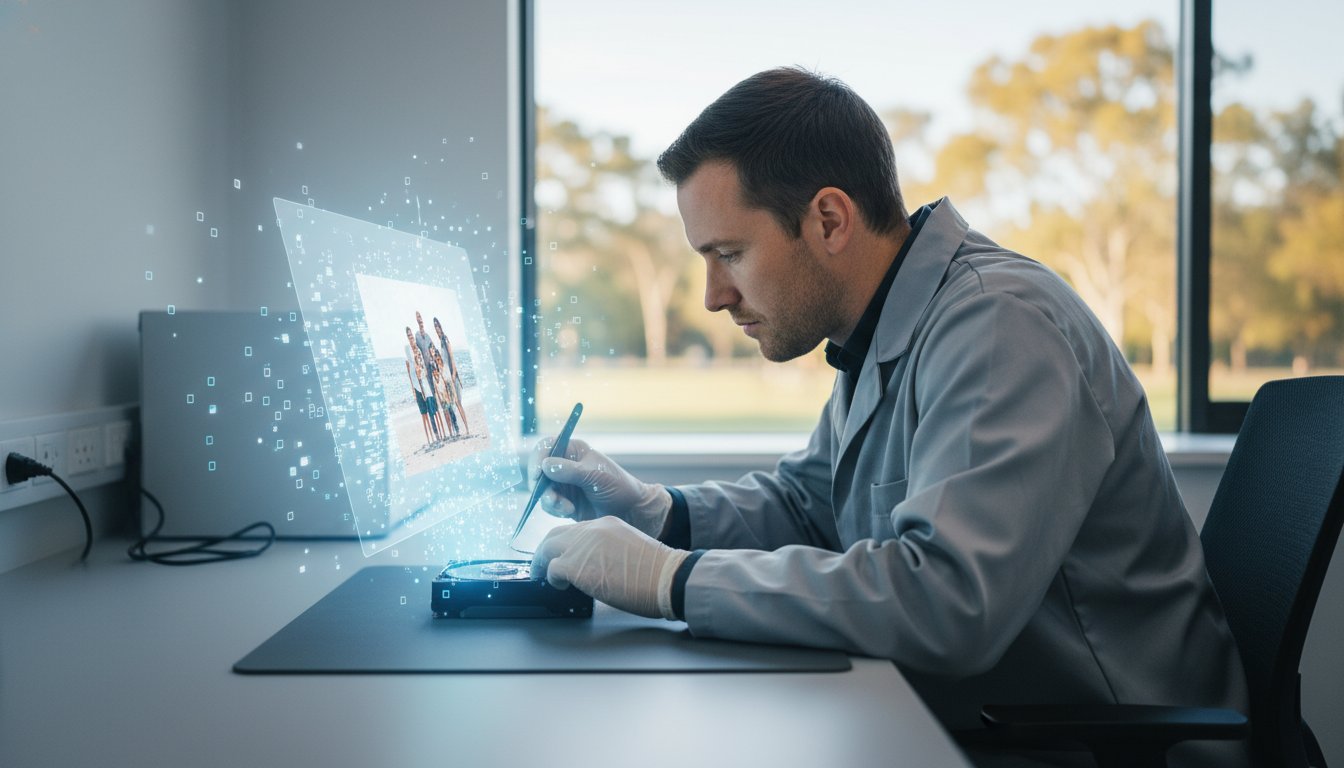

What if the clicking sound coming from your desk isn’t just a minor glitch, but the final countdown for your family photos or business records? It’s a terrifying moment when your computer suddenly stops recognizing your drive. You’re likely feeling a mix of anxiety over permanent loss and uncertainty about the hard drive data recovery cost you might face. I understand that fear of hidden fees and technical jargon can make a stressful situation even worse.
I’ve helped Toowoomba residents through these exact technical failures since 1999, and I’m here to show you that professional recovery doesn’t have to be a financial mystery. You’ll learn exactly how data recovery pricing works in 2026 and the emergency steps you need to take right now to save your files without overpaying. We’ll cover the different pricing tiers, the warning signs that indicate your drive is physically failing, and how to choose a trustworthy local expert in the Darling Downs to get your digital life back on track.
Key Takeaways
- Understand how hard drive data recovery cost is determined by the complexity of the damage, helping you plan your budget without the fear of hidden fees.
- Identify the critical warning signs of mechanical failure, such as the “Click of Death” or extreme system slowdowns, before they lead to permanent loss.
- Learn why using free recovery software on a physically failing drive can actually overwrite your files and make professional recovery impossible.
- Follow a simple four-step emergency protocol to protect your drive from further physical damage the moment you suspect a problem.
- Discover the benefits of working with a local Toowoomba expert who has provided reliable, hardware-level recovery for the community since 1999.
Understanding Hard Drive Data Recovery Cost in 2026
When you realize your files are gone, the first question is always about the bill. Calculating a hard drive data recovery cost isn’t like buying a standard computer part; it’s more like a surgical procedure where the price depends entirely on the severity of the “injury.” Since 1999, I’ve seen that no two recoveries are identical. A drive that has been accidentally formatted requires a completely different approach than one that has been dropped or submerged in water. Professional technicians evaluate the data recovery process based on the hours of labour, the specialized equipment used, and the cost of any replacement parts needed to make the drive temporarily operational.
To better understand how these costs are calculated, watch this helpful video:
Modern drives now reach capacities of 18TB or more. For a technician, this means the imaging process alone can take days of constant monitoring. High-capacity drives often have more “platters” and “heads” inside, which increases the complexity of the work. You might also see “No Data, No Fee” policies advertised. In 2026, this usually means you won’t pay the full recovery price if the files can’t be saved, though most local experts in Toowoomba will still require a small diagnostic fee to cover the initial lab time and assessment.
Tier 1: Logical Recovery Costs
This is the most affordable entry point for data retrieval. It applies when your hardware is still healthy, but the data is inaccessible due to accidental deletion, a failed update, or minor file system corruption. We use specialized software tools to scan the drive and rebuild the directory structure. However, I often find that a “simple” software issue is actually a symptom of a drive starting to develop bad sectors. If the hardware is failing, running consumer software can actually make the problem worse.
Tier 2 & 3: Physical and Mechanical Recovery
When a drive starts clicking, grinding, or fails to spin, the cost increases significantly. These symptoms point to head crashes or motor failures that must be addressed in a certified cleanroom environment to prevent dust from destroying the data. In 2026, finding “donor parts” for older or very specific drive models is becoming more difficult and expensive. These parts must match the failing drive’s firmware and revision exactly to work, which often requires sourcing drives from specialized suppliers across Australia.
SSD vs. HDD: Cost Differences Explained
Many people believe Solid State Drives (SSDs) are easier to fix because they have no moving parts. The opposite is often true. SSD recovery is incredibly complex because the data is scattered across flash chips using a process called “wear leveling.” If the controller chip fails, the data is often encrypted and scrambled. Recovering data from a failed SSD in 2026 requires advanced hardware emulators that can bypass the controller, making the labour involved often higher than a traditional mechanical hard drive recovery.
10 Critical Signs Your Hard Drive is Failing
Identifying a failing drive early is the most effective way to keep your hard drive data recovery cost as low as possible. When symptoms are caught in the “logical” stage, the recovery is much faster and less invasive. However, ignoring these warnings often pushes the situation into the more expensive “mechanical” tier. If your computer is acting strangely, it’s not just an inconvenience; it’s a warning from your hardware that you need to act before the platters stop spinning for good.
Here are the most common indicators that your storage is reaching its end of life:
- The rhythmic clicking known as the “Click of Death.”
- Extreme slowdowns where the PC takes 20 minutes to boot or open a folder.
- Disappearing files or folders that suddenly vanish without any user action.
- Frequent Blue Screen of Death (BSOD) errors, especially during large file transfers.
- Grinding or screeching noises that suggest physical friction inside the casing.
- Unreadable sectors or “File Not Found” errors when trying to open specific documents.
- Scrambled file names or folders filled with “gibberish” characters.
- System freezes that only occur when the drive is being accessed.
- S.M.A.R.T. status warnings appearing during the initial boot sequence.
- “No Boot Device Found” messages that appear intermittently.
While some of these issues might seem like software glitches, Enterprise data recovery standards suggest that any persistent system instability should be treated as a hardware risk first. If you notice these patterns, getting a professional assessment from a local Newtown technician can prevent a minor error from becoming a total loss.
Mechanical Red Flags: Noises to Listen For
Mechanical hard drives are incredible feats of engineering. Inside, read/write heads “fly” over spinning platters on a cushion of air thinner than a human hair. When you hear grinding, screeching, or high-pitched whirring, it means that air cushion has failed. This leads to a “head crash,” where the metal head physically touches the platter and scrapes away the magnetic coating where your data lives. Any unusual noise is an immediate emergency. You must power down the device instantly to prevent the head from turning your data into dust.
Logical Warning Signals: System Errors
Not all failures make noise. Many modern drives use S.M.A.R.T. technology to monitor their own health. If your BIOS shows a warning about “imminent failure,” don’t ignore it. Similarly, “No Boot Device Found” errors often indicate that the drive’s controller or connection is failing. While it’s tempting to hope it’s just a loose cable, it’s often the drive’s way of saying it can no longer communicate with the rest of your PC. Unreadable sectors and corrupted file names are the final warnings before the drive becomes completely inaccessible.
Why ‘Free’ Recovery Software Can Cost You Everything
When you lose access to important files, it’s tempting to download the first “free” recovery tool you find online. It feels like a quick fix to avoid a professional hard drive data recovery cost. However, for a drive that is physically failing, this is often the moment of no return. Most free software is designed for healthy drives where files were simply deleted. These tools work by relentlessly scanning every sector of the drive. If your hardware has a mechanical issue, this intense activity is like running a marathon on a broken leg.
Professional labs use specialized hardware like the PC-3000 to interact directly with the drive’s firmware. We don’t “scan” a dying drive the way consumer software does. Instead, we stabilize the hardware first to ensure the data is readable without further degradation. While saving on the initial hard drive data recovery cost is a common goal, the risk of permanent data destruction makes “free” software an expensive gamble.
The Mechanical Stress Factor
A failing read/write head is inherently unstable. During a software scan, this head moves back and forth rapidly across the platters to find file fragments. If the head makes contact with the spinning surface, it will physically scratch the magnetic coating. Once a platter is scratched, the data in that area is gone forever. Professional technicians use hardware imagers to “clone” the drive, skipping bad sectors and reducing stress on weak components. DIY recovery attempts on a clicking drive carry an extremely high risk of causing permanent, unrecoverable platter damage.
You might have also read about the “freezer myth” or other home remedies found on old internet forums. These hacks are dangerous relics. Putting a modern drive in a freezer creates condensation on the platters the moment you take it out. This moisture, combined with parts spinning at 7,200 RPM, leads to immediate and total failure. These tricks often turn a recoverable situation into a permanent catastrophe.
When to Stop: The Point of No Return
Identifying the moment your DIY attempt is making things worse is critical for saving your files. If your software scan freezes, or if the drive starts making new clicking or grinding noises, stop immediately. Every second the drive spins is a second closer to a head crash. A professional diagnostic provides a clear path forward without the “guess and check” risks that lead to permanent loss. You can explore our Data Recovery Services guide to understand the safer alternatives available to you. Choosing an expert assessment is always more cost-effective than losing your data forever due to a failed software attempt.

The Emergency Protocol: 4 Steps to Save Your Data
The moment you suspect your storage is failing, your priority shifts from “using the computer” to “preserving the hardware.” Panicked actions often lead to a much higher hard drive data recovery cost or, in the worst cases, permanent data destruction. I recommend following this specific sequence to give your files the best chance of survival. These steps are designed to prevent the mechanical and logical degradation we discussed in previous sections.
- Step 1: Immediate Power Down. If you hear clicking or grinding, don’t use the standard Windows shutdown menu. This process writes log files and update data to the drive, which can cause further damage. Pull the power cable or hold the power button until the system is dark.
- Step 2: Disconnect and Label. Once the power is off, remove the drive if you’re comfortable doing so. Place it in an anti-static bag and keep it away from extreme temperatures. Static electricity can fry the delicate controller board on modern drives.
- Step 3: Document the Symptoms. Note exactly what happened before the crash. Did the power flicker? Did you see a specific S.M.A.R.T. error? This information helps a technician provide a more accurate hard drive data recovery cost by narrowing down the failure type.
- Step 4: Seek Local Toowoomba Expertise. Avoid the temptation to ship your drive to a distant capital city. Couriers and automated sorting facilities can subject a fragile, failing drive to vibrations and G-forces that cause the heads to bounce against the platters. Bringing it directly to my Newtown office eliminates these transit risks.
Handling a Physical Drive Failure
Microscopic dust is the enemy of modern storage. In 2026, hard drive density is so high that a single speck of household dust is like a mountain on the platter surface. You should never, under any circumstances, open the metal casing of a hard drive outside of a certified cleanroom environment. Once the seal is broken in a standard room, the drive is likely ruined within seconds of spinning up. When you transport your drive to a repair centre, wrap it in bubble wrap and keep it level to prevent any internal components from shifting.
Preparing for a Professional Quote
When you contact a specialist, have your drive’s model number and capacity ready. We also need to know if you’ve already tried “free” recovery software, as this changes our approach to the initial imaging. While remote recovery is a convenient option for Tier 1 logical issues like accidental deletion, it is impossible for physical failures. A physical issue requires specialized hardware tools that can only be used in a local lab. If your computer is struggling to boot or acting strangely, you can contact us for Computer Repairs in Toowoomba to get an expert assessment before a minor glitch turns into a total hardware failure.
Local Data Recovery in Toowoomba: The Aspire Advantage
Choosing a local specialist means you’re not just a ticket number in a national database. Since 1999, Aspire Computing has provided a face-to-face service that large, anonymous labs in capital cities can’t replicate. When you deal with me directly at my Newtown office, you get clear answers about the technical state of your drive and a straightforward hard drive data recovery cost. There are no hidden “shipping and handling” fees or metropolitan surcharges. You pay for the expertise and the successful retrieval of your files, keeping the process honest and affordable for our Toowoomba community.
National providers often encourage you to ship your fragile hardware across the country. As we discussed in the emergency protocol, transit is a major risk for a failing drive. Vibrations and rough handling during shipping can turn a recoverable logical issue into a permanent mechanical failure. By staying local, you eliminate these risks. We also provide on-site support for small businesses across the Darling Downs, coming directly to your office to assess the situation and minimize your downtime. This level of personal accountability ensures your hard drive data recovery cost stays focused on the technical work rather than logistics.
25+ Years of Toowoomba IT Expertise
Trust is earned over decades of reliable service. Since 1999, I’ve supported local families and businesses through their most stressful technical failures. Whether you’re a resident in Middle Ridge who lost precious family photos or a firm in Highfields facing a critical server crash, we’ve seen and solved it all. Our long history in the region means we value our reputation for integrity. Most importantly, your hardware and your data never leave the region. This local focus provides a level of security and privacy that a distant, anonymous lab simply cannot match.
Getting Started with Aspire Computing
We’ve designed our process to be methodical and user-friendly. You can drop your drive off at our Newtown office at 46 Brigalow St, where we perform a professional diagnostic to identify the specific failure tier. For our local business partners, we prioritize urgent recovery tasks because we know that every hour of data loss impacts your bottom line. We guide you logically from the initial problem to the final solution, ensuring you understand the process every step of the way. Don’t panic-let Aspire Computing recover your data today.
Restore Your Files and Your Peace of Mind
Facing a sudden drive failure is incredibly stressful. However, you now have the tools to identify early warning signs and the emergency protocol needed to prevent total loss. Remember that the hard drive data recovery cost is ultimately an investment in professional precision; attempting a DIY fix on a clicking drive often leads to permanent destruction. By powering down early and avoiding “free” software traps, you’ve already given your data a much better chance of survival.
Since 1999, I’ve used specialised hardware-level recovery tools to help our Toowoomba community through these exact challenges. You don’t need to risk shipping your fragile hardware across the country when expert help is right here in Newtown. Our local office provides a secure, transparent environment where your data never leaves the region. Whether you’re a local business or a family protecting years of memories, we’re here to provide the dependable assistance you need.
Secure your data with Toowoomba’s local recovery experts-Contact Aspire Computing. It’s never too late to seek a professional assessment, and we look forward to helping you get your digital life back on track.
Frequently Asked Questions
How much does professional data recovery cost in Toowoomba?
Professional hard drive data recovery cost is determined by the specific tier of failure, ranging from simple software-based logical recoveries to complex mechanical repairs. While some local providers offer assessments starting at a flat rate, the total investment depends on the time required and any necessary donor parts. We recommend a professional diagnostic to get a firm quote tailored to your drive’s condition.
Is it possible to recover data from a clicking hard drive?
Yes, it’s possible to recover data from a clicking drive, but you must stop using it immediately. The clicking sound usually indicates a mechanical head failure. Professional technicians can often replace the failed heads in a controlled environment to temporarily stabilize the hardware. This allows them to image the data before the drive fails completely.
Can I recover files from a dead SSD in 2026?
You can recover files from a dead SSD, although the process is more technically demanding than traditional hard drive repair. In 2026, we use specialized equipment to bypass failed controller chips and read data directly from the NAND flash chips. This complexity means that SSD recovery requires high-level hardware expertise rather than simple software scanning.
How long does the data recovery process usually take?
Most recoveries are completed within two to seven business days. The timeline depends heavily on the drive’s capacity and its physical health. A severely damaged drive may read data very slowly, requiring constant monitoring. If donor parts need to be sourced from elsewhere in Australia, this can add a few extra days to the turnaround time.
Will my data be kept private during the recovery process?
Your privacy is a top priority. We follow strict data handling protocols to ensure your personal or business files remain confidential throughout the process. Because we are a local Toowoomba business, your data never leaves our secure facility. We only access the file structure to verify the success of the recovery, never the content of your files.
Is it worth paying for data recovery on an old laptop?
The decision depends on the value of the files rather than the age of the laptop. While an old laptop might be worth very little, the photos, documents, or financial records stored on it are often irreplaceable. We help you weigh the hard drive data recovery cost against the importance of your data so you can make an informed choice.
What is a ‘No Data, No Fee’ policy?
A ‘No Data, No Fee’ policy means you aren’t charged the full recovery price if the technician cannot successfully retrieve your files. It provides peace of mind during a stressful situation. Most professionals still charge a small, non-refundable diagnostic fee to cover the initial lab time and specialized assessment required to determine the failure type.
Can a virus cause me to lose all my files?
Yes, certain viruses and ransomware can make your entire file system inaccessible. Ransomware specifically encrypts your data and demands payment for the key. In these cases, we focus on removing the infection and using specialized tools to see if the data can be decrypted or restored from shadow copies without paying the attackers.

B.App.Sc., Cert. Computer Engineering PC Service and Repair
As the owner of Aspire Computing founded in 1999, Chaim Lee has been working for over 20 years as the Leading Computer Technician.
He has a life long interest in electronics, computing, science and technology. He has completed studies and gained qualifications in Applied Science, Computer Repair and Service, Microsoft Installation and Maintenance, Technical Writing, Workplace Training, and Technical Sales Training.