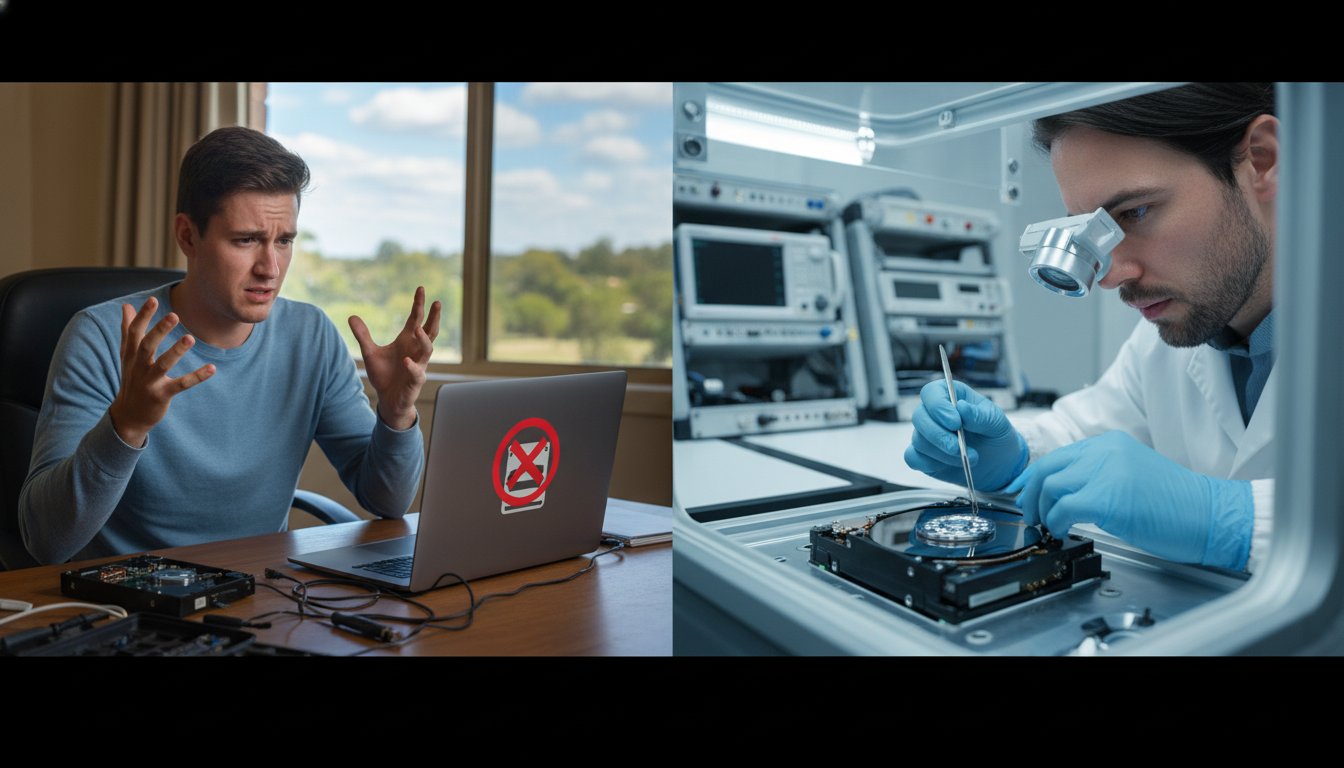
Imagine the sinking feeling when you realize your most important business documents or irreplaceable family photos have simply vanished. You search every folder, but the drive remains silent or displays a cryptic error message. It’s an incredibly stressful experience, and your first instinct is likely to wonder if your files are gone forever. You have probably seen various companies claiming a near-perfect data recovery success rate, but you’re right to be skeptical about whether those figures apply to your specific disaster.

We understand the anxiety that comes with technical failures. This guide will help you discover the truth about data recovery chances, the specific factors that impact your situation, and how to maximize your chances of getting your files back. We’ll provide a realistic assessment of whether your data is recoverable and help you decide if a DIY software attempt is safe or if it’s time to call a professional. We will break down the differences between logical and physical drive failures so you can choose the best path forward to minimize business downtime and protect your digital life.

Key Takeaways

  • Learn why a 100% data recovery success rate claim is a red flag and how to set realistic expectations for your unique situation.
  • Understand the differences between logical and mechanical failures and how the cause of loss dictates the best recovery strategy.
  • Identify the specific scenarios where DIY software is safe to use and when it poses a fatal risk to your irreplaceable files.
  • Discover the immediate steps you must take to isolate your device and prevent further damage during the critical first hour of data loss.
  • See how choosing a local Toowoomba expert with 25 years of experience provides a more secure and reliable path to getting your documents back.

Defining the Data Recovery Success Rate: Fact vs. Marketing

Many companies use a high data recovery success rate as a marketing tool, but these numbers can be misleading without context. Data recovery is the technical process of salvaging files from damaged or inaccessible media, and in the IT industry, a success rate typically refers to the percentage of cases where some data was retrieved. It is vital to distinguish between finding a file name and actually opening the file. A “successful” recovery in a marketing brochure might only mean a technician recovered 10% of a drive, which is cold comfort if your most important documents are in the other 90%.

If you see a 100% success rate claim, walk away. No honest technician can promise that because some physical damage is simply irreversible. If a drive platter is physically gouged or a memory chip is cracked, the data is gone forever. You need usable data, not just a list of corrupted file headers that won’t open. Real success means getting your specific, irreplaceable files back in a functional state.

To better understand this concept, watch this helpful video:

Why success rates vary by device type

Traditional Hard Disk Drives (HDDs) often allow for higher recovery chances in mechanical failure cases. This is because specialized equipment can sometimes read physical platters even if the drive’s motor or heads have failed. Modern Solid State Drives (SSDs) are different. When an SSD controller fails or the drive undergoes a “TRIM” command after a deletion, recovery becomes significantly harder. RAID arrays and NAS systems add another layer of complexity. While they offer redundancy, a controller failure or multiple drive crashes require rebuilding the entire logic of the array. Encryption also plays a role; if the encryption key is lost or the sector containing it is damaged, the data recovery success rate drops to near zero regardless of the hardware’s condition.

The “No Data, No Fee” guarantee explained

This business model is designed to give you peace of mind. It means you don’t pay the full recovery service fee if the technician can’t get your files back. It aligns our goals with yours. At Aspire Computing, we prioritize transparent assessments because we don’t want you paying for a failed attempt. When reviewing a service agreement, check if “success” is defined as recovering the specific files you actually need. A professional service should provide a file list for you to verify before you commit to the final cost. This keeps the process honest and ensures you only pay for tangible results that actually solve your problem.

Mechanical vs. Logical Failures: How the Cause Impacts Success

The reason your drive failed is the single most important factor in determining your chances of getting your files back. We categorize these failures into two distinct groups: logical and physical. While a logical error might take a few hours of scanning to resolve, a physical failure often requires surgical precision and donor parts. Understanding which one you are facing helps manage your expectations and prevents you from making a mistake that could lead to permanent loss.

Logical failures: High success with the right tools

Logical failures happen when the hardware is healthy, but the data is inaccessible due to software issues. This includes accidental deletions, virus attacks, or file system corruption. When you delete a file, your computer usually just marks that space as “available” rather than wiping the data. The information stays there until new files overwrite it. This is why the data recovery success rate for accidental deletion is often very high, provided you stop using the device immediately.

A “Quick Format” is also generally reversible because it only replaces the file directory. However, a “Deep Format” or “Full Format” overwrites sectors with zeros, making recovery almost impossible. If you have accidentally formatted a drive, our team at Aspire Computing can often reconstruct the file structure and save your data. Specialists use advanced tools to repair corrupted file systems that standard operating systems simply can’t read.

Physical failures: When the hardware gives up

Physical failures are far more serious. These involve broken components like a seized motor or a “head crash,” where the read/write head physically touches the spinning platter. If you hear clicking, grinding, or beeping, turn the power off immediately. Every second a damaged drive spins, the heads can physically scrape the magnetic coating off the platters. Once that coating is gone, your data literally turns into dust.

The data recovery success rate for physical issues depends heavily on the extent of the platter damage. To fix these, technicians must open the drive in a “Cleanroom.” This is a controlled environment that prevents microscopic dust from landing on the platters, which would cause further crashes. Swapping parts from a matching “donor” drive is a delicate process that requires specialized equipment. While professional data recovery success rates for hardware issues often range between 90% and 96.7% at top-tier labs, these figures depend on the drive being handled correctly from the moment it fails. Environmental factors like water or fire damage also lower the ceiling of what is possible, as extreme heat or corrosion can permanently destroy the storage medium.

DIY Software vs. Professional Recovery: Assessing the Risk

You might feel tempted to try a quick fix when you realize your files are missing. The allure of “free” or “cheap” data recovery software is strong, especially when you’re worried about costs. However, this is often where a simple problem turns into a permanent disaster. Think of your first recovery attempt as your best shot. In the industry, we call this the “One Shot” rule. Every time you run a scan on a failing drive, you’re putting it under immense stress. If the hardware is already weak, that DIY software could be the final blow that makes a professional data recovery success rate irrelevant because the drive has physically seized.

According to the 2024 State of the Backup report, only 42% of users manage to restore all their data following an incident. This statistic highlights that even with tools in place, recovery is never a guarantee. Consumer software is built for healthy drives with simple logical issues, like a file you accidentally sent to the bin. It doesn’t have the sophistication to handle failing firmware or mechanical instability. Using these tools on a drive that is clicking or beeping is like trying to tune an engine while it’s actively on fire.

The hidden costs of failed DIY attempts

One of the most dangerous mistakes is installing recovery software onto the same drive that lost the data. This action directly overwrites the sectors where your “deleted” files are sitting, destroying them forever. We also see many people following “YouTube fixes” like the freezer trick. Putting a hard drive in a freezer causes moisture to condense on the platters once it’s removed. When you power it back on, the heads hit those water droplets, causing a catastrophic head crash. These amateur methods don’t just fail; they actively lower your data recovery success rate by causing irreversible physical damage that no professional can fix.

What professional labs have that you don’t

Professional recovery is about more than just software. We use hardware-level imaging tools like DeepSpar or PC-3000. these systems allow us to interact with the drive’s firmware—the internal “operating system” of the hard drive itself. If the firmware is corrupted, your computer won’t even see the drive, making consumer software useless. We also maintain extensive donor libraries. If your drive needs a new head assembly or a motor swap, we likely have the exact matching parts in stock. This level of technical specificity, combined with micro-soldering skills for electronic repairs, is what separates a successful recovery from a permanent loss.

Critical Steps to Maximise Your Recovery Success Rate

The first five minutes after you notice a data loss event are the most critical. We call this the “Golden Hour” because the decisions you make right now will directly determine the ultimate data recovery success rate for your device. When a drive begins to fail, it enters a fragile state where every additional second of power can cause more damage. Your primary goal is stillness. By isolating the device and stopping all activity, you preserve the data in its current state and give a technician the best possible chance at a full recovery.

Step-by-step: Immediate response checklist

Follow these steps in order to prevent further corruption or mechanical degradation:

  • Perform a hard shutdown: If your computer hangs or makes strange noises, don’t use the standard “Shut Down” menu. This process often involves writing log files to the drive. Instead, hold the power button down until the machine turns off completely.
  • Disconnect all power: Unplug the computer from the wall. If you’re using an external hard drive or USB stick, remove it gently from the port.
  • Document the symptoms: Write down exactly what happened. Did you hear a clicking sound? Was there a “Blue Screen of Death”? Knowing the symptoms helps your technician diagnose the failure without having to power the drive on and off multiple times.
  • Identify priority files: Make a list of the most important folders or file types you need. This allows the recovery team to target those specific sectors first.

What NOT to do: Common success-killers

It’s tempting to try built-in repair tools, but these are often fatal for failing hardware. Never run “Chkdsk” on Windows or “First Aid” on a Mac if you suspect a physical failure. These utilities are designed to fix file system errors by moving data around. If the drive has bad sectors or a weak head, this intense activity will likely lead to a total crash. Likewise, never open the drive casing yourself. A single speck of dust is massive compared to the distance between a drive head and the platter. Opening a drive outside of a certified cleanroom will destroy your data recovery success rate instantly.

If your drive isn’t showing up, don’t try to “force mount” it or use software to “stress test” the connection. These actions only accelerate the wear on a dying component. Instead, trust a professional assessment to keep your files safe. If you’re in the middle of a data crisis right now, contact us for expert data recovery services to ensure your files are handled with the right equipment and care.

Local Expertise: Data Recovery in Toowoomba and the Darling Downs

Choosing a local expert is about more than just convenience. It is a vital step in protecting what remains of your hardware. When you ship a failing drive to a major city, you expose it to vibrations, temperature fluctuations, and rough handling during transit. For a drive that is already mechanically unstable, these physical shocks can lead to a catastrophic platter scratch. This risk can significantly lower your potential data recovery success rate before a technician even sees the device. By bringing your device to a local specialist, you eliminate the dangers of the postal system and keep your sensitive hardware in safe hands.

Aspire Computing has served the Toowoomba region for over 25 years. We understand the deep stress caused by data loss. Whether you are a small business owner in Newtown worried about lost documents or a resident in Highfields trying to save irreplaceable family photos, we provide a calm and professional environment. We handle every case with total confidentiality and personal accountability. You aren’t just another ticket number in a corporate queue. You are a member of our local community who needs a reliable, experienced hand to navigate a technical failure.

Personal service from a local expert

Our service area extends across Toowoomba, the Darling Downs, and the Lockyer Valley. This local focus allows us to provide on-site assessments for small businesses that need to minimize downtime. We know that every situation is unique, which is why we don’t rely on generic automated responses. We offer a personal touch that larger, anonymous providers simply cannot match. For more detailed information on our local capabilities, you can read our Data Recovery Toowoomba guide.

Your next steps to recovery

The path to getting your files back starts with an honest and transparent assessment. We don’t believe in inflated marketing claims. Instead, we examine your specific device to provide a realistic estimate of your data recovery success rate based on the actual condition of your media. Our diagnostic process is straightforward and methodical. We identify the failure type, explain the necessary recovery steps, and wait for your approval before we proceed with the work. This ensures you stay in control of the process from start to finish. If you’re ready to find out if your data can be saved, Contact Aspire Computing for a Data Recovery Assessment today. We are here to help you get your digital life back on track.

Take Control of Your Data Recovery Today

Data loss doesn’t have to be permanent. By understanding the difference between logical and physical failures, you can take the right steps to protect your files. Remember that your first attempt at retrieval is your best opportunity. Avoiding risky DIY software and turning off your device immediately are the most effective ways to maintain a high data recovery success rate. These simple actions prevent further mechanical wear and ensure that professional tools have the best possible environment to work in.

Since 1999, we’ve helped residents and businesses across Toowoomba and the Darling Downs recover their critical documents and cherished memories. Our local expertise means your hardware isn’t subjected to the risks of long-distance shipping. We stand by our work with a No Data, No Fee policy on most recovery jobs. This ensures you only pay for successful results that actually get your digital life back on track. We prioritize your privacy and handle every drive with total confidentiality.

Don’t let technical failure cause unnecessary stress. Reach out to a team that values your security and stability. Get a Professional Data Recovery Assessment in Toowoomba and let us help you find the best path forward. Your files are too important to leave to chance; we’re ready to help you recover what matters most.

Frequently Asked Questions

What is a realistic success rate for professional data recovery?

A realistic data recovery success rate for logical issues like accidental deletion often exceeds 90% when the drive is healthy. For physical hardware failures, the rate depends heavily on the condition of the internal platters or flash memory chips. While top-tier labs report high success, every case is unique. The most important factor is how quickly you stop using the device after the failure occurs.

Can data be recovered from a hard drive that is clicking?

Yes, data can often be recovered from a clicking drive, but it requires professional hardware repair. The clicking sound usually indicates that the read/write heads have failed and are struggling to find their position. You should never try to fix this with software. A technician must open the drive in a cleanroom to replace the damaged heads with matching parts from a donor drive before the data can be imaged.

Is the success rate for SSDs lower than for traditional hard drives?

Generally, the data recovery success rate for SSDs is lower than for traditional hard drives. SSDs use a process called TRIM that actively wipes deleted data to maintain speed. When an SSD controller fails, the data is often encrypted or scattered across multiple chips in a complex way. While recovery is still possible, it requires specialized equipment and deep knowledge of specific controller firmware to reconstruct the files.

How much does data recovery cost if it is successful?

The cost of a successful recovery depends on the failure type and the labor involved. Logical recoveries that only require specialized software are typically the most affordable. Physical recoveries that need cleanroom work, donor parts, and micro-soldering are more complex and carry a higher cost. We provide a clear assessment after our diagnostic process so you understand the requirements for your specific situation before any work begins.

Does formatting a drive permanently delete the data?

Formatting a drive doesn’t usually delete the data permanently, especially if you performed a “Quick Format.” This process only wipes the file directory, leaving the actual data on the sectors until it is overwritten by new files. However, a “Full Format” or “Secure Erase” is much more destructive because it overwrites the entire drive with zeros. If you’ve accidentally formatted a drive, stop using it immediately to prevent overwriting your files.

What happens if the data recovery attempt is unsuccessful?

If we can’t recover your data, our “No Data, No Fee” policy on most jobs ensures you don’t pay the full recovery service fee. We’ll explain why the recovery wasn’t possible, such as catastrophic platter damage or chip failure. At that point, you can choose to have your device returned to you or have us securely destroy the media to protect your privacy. Our goal is to ensure you never pay for a failed result.

Can I recover data from a water-damaged laptop or phone?

Data recovery from a water-damaged laptop is often successful if the storage drive hasn’t suffered a short circuit. We can remove the drive, clean any corrosion, and use specialized tools to extract the files. It is vital that you don’t try to power the device on while it is wet. While we specialize in laptop and PC recovery, you should consult a mobile specialist for phone-specific hardware repairs as we don’t offer mobile phone services.

How long does a typical data recovery process take?

Most data recovery jobs are completed within 3 to 10 business days. The initial diagnostic usually takes 24 to 48 hours to determine the failure type. Logical recoveries are often faster, while physical repairs can take longer if we need to source specific donor parts from our library. We always prioritize efficiency to minimize your downtime and keep you updated on the progress of your specific case throughout the process.

Imagine you just plugged in your external drive to find last year’s tax records, but instead of your files, you hear a rhythmic clicking sound. It is a gut-wrenching moment that 46% of computer users experience at least once a year according to 2023 industry reports. You might be tempted to download the first tool you find online, but the choice between data recovery software vs professional service isn’t always about price. We understand the panic that sets in when irreplaceable family photos or vital business documents seem to vanish. It’s natural to want a quick fix, but sometimes a cheap software download can turn a recoverable issue into a permanent data loss.

This article provides a clear “stop/go” framework to help you decide when to trust DIY methods and when calling a professional is the only way to save your files. We’ll explain the true cost of a failed recovery attempt and how to identify physical drive failure before you cause more damage. At Aspire Computing, we’ve supported the Toowoomba community since 1999, so we know exactly how to protect your digital life. We will walk you through the technical risks so you can make an informed decision and get back to work with confidence.

Key Takeaways

  • Understand the critical difference between logical errors and physical drive failure to avoid the “broken leg” mistake of running software on a damaged disk.
  • Learn to identify the specific scenarios where a budget-friendly DIY tool is a safe bet, helping you settle the debate of data recovery software vs professional service before risking your data.
  • Discover why the repeated “stress tests” performed by recovery software can cause permanent mechanical damage to a clicking or beeping hard drive.
  • Explore what happens inside a professional Class 100 Cleanroom and why specialised equipment is often the only way to retrieve data from a physically failed device.
  • Get peace of mind with a local expert diagnostic in Toowoomba to ensure you don’t risk your precious memories or business data with the wrong recovery method.

The Data Recovery Dilemma: Logical vs. Physical Failure

Losing years of family photos or critical business spreadsheets feels like a punch to the stomach. Your first instinct is likely to search for a quick fix online, but your next move determines if those files are gone forever. At Aspire Computing, we’ve helped Australians since 1999 recover from these exact moments. The most vital rule is simple: don’t panic. Panic leads to impulsive DIY attempts that often turn a recoverable situation into a permanent loss. Deciding between data recovery software vs professional service depends entirely on how your drive failed.

To choose the right path, you must understand the two main types of data recovery: logical and physical. Logical failure happens when the drive’s hardware is healthy, but the software or file structure is corrupted. Physical failure means the internal components, like the read/write heads or the motor, have actually broken down. Using software on a physically damaged drive is like running a marathon on a fractured leg. The more you “run” the drive by keeping it powered on, the more the internal parts grind against each other, destroying the data surfaces.

To better understand this concept, watch this helpful video:

Roughly 20% of data loss cases involve physical damage that requires a controlled cleanroom environment. If you suspect hardware damage, software won’t help; it will only make things worse. In Australia, professional lab recovery for mechanical failures can range from A$500 to over A$3,000 depending on the complexity. However, if the issue is purely logical, you might save money by using a data recovery software vs professional service approach. Use the checklists below to self-diagnose your device’s health before you take action.

Signs of Logical Data Loss (Software-Safe)

  • You accidentally deleted files or emptied the Recycle Bin on your PC.
  • A drive was formatted by mistake, but it still sounds smooth and quiet when plugged in.
  • The file system shows as “RAW” in Windows, yet the drive is still detected at its full correct capacity.
  • The drive is visible in Disk Management and doesn’t cause your computer to freeze or lag.

Warning Signs of Physical Drive Failure (Danger Zone)

  • The drive makes audible cues like clicking, rhythmic beeping, or a high-pitched grinding sound.
  • Your computer stops responding or slows down to a crawl the moment the drive is connected.
  • The device is not detected in the BIOS or Disk Management at all.
  • You see frequent “I/O Device Error” messages, which often indicate the hardware is struggling to read basic sectors.

When Data Recovery Software is a Safe and Effective Choice

If you’ve accidentally hit delete on a precious folder, don’t panic. For many logical errors, a DIY approach is quite effective. You can typically find reputable software for between A$75 and A$150. This is often the first crossroad in the data recovery software vs professional service debate. Tools like Recuva or the open-source PhotoRec work by scanning the drive for file headers that the operating system has marked as empty space.

The most vital rule is to never install software on the drive you’re trying to save. Doing so can overwrite the very data you want back. Instead, use a secondary drive or a “Live USB” to run the data recovery process safely. This keeps the original drive in a read-only state, which is the only way to ensure you don’t cause further damage. If you’re unsure about the health of your hardware, it’s always safer to talk to the experts at Aspire Computing before proceeding.

The Best Use Cases for DIY Software

Software is a great choice for healthy hardware. If you’ve accidentally formatted a 64GB SD card from your camera or deleted a Word doc from a functioning HDD, DIY tools usually succeed. These programs are designed to rebuild minor partition table corruption on secondary storage. Since 1999, we’ve seen these tools save thousands of family photos that seemed lost forever. It’s an excellent first step for non-mechanical issues on external media.

The SSD Exception: Understanding TRIM

Modern Solid State Drives (SSDs) are different. They use a command called TRIM, which was introduced around 2010 to maintain drive speed. When you delete a file on an SSD, TRIM tells the controller to immediately wipe those data blocks. This makes data recovery software vs professional service a simpler choice; software rarely works for deleted files on modern laptops. Professional intervention is usually the only way to bypass these hardware-level commands, though even then, the window of opportunity is small. If your SSD has failed or files were deleted, stop using the device immediately to prevent the TRIM command from completing its cycle.

The Fatal Mistake: Why Software Can Destroy a Failing Drive

When your computer stops booting or your external drive starts clicking, the temptation to download a quick fix is high. However, running DIY software on a physically failing hard drive is the most common reason for permanent data loss. Inside a traditional hard drive, platters spin at speeds up to 7,200 RPM while read/write heads hover nanometres above the surface. If a component is failing, the drive’s mechanical balance is compromised. Software works by scanning every single sector on the disk to find lost files. This acts as an unintended stress test, forcing a crippled drive to work at maximum capacity for hours on end.

This intense activity often leads to a “Head Crash,” where the read head makes physical contact with the spinning platter. This doesn’t just delete files; it physically scrapes the magnetic coating off the disk. When evaluating software vs. service, the biggest risk is that a simple A$300 recovery can quickly escalate into a A$3,000 clean-room disaster if the media is physically shredded. At Aspire Computing, we’ve seen many cases where “just trying it once” with a home utility turned a recoverable drive into a paperweight.

The Danger of Continued Power-On

Every second a failing drive spins, it edges closer to total failure. One of the biggest threats to your data is actually Windows “Automatic Repair.” This utility is designed to fix software errors by writing new data to the drive, which can overwrite your deleted files or cause a mechanical breakdown. Media damage is the permanent removal of the magnetic layer from a platter.

Why Free Software Often Lacks Safety Features

Most consumer-grade software is designed for healthy drives with simple file system errors. These tools are often aggressive and try to “repair” the directory structure. In contrast, professional tools are strictly “read-only” to ensure no data is altered. Using the wrong tool for data recovery software vs professional service decisions can lead to the software overwriting the very blocks of data you need to save. Professional technicians always follow a strict protocol:

  • Immediate power-down of the affected device to prevent further wear.
  • Creating a bit-by-bit “clone” of the drive using specialised hardware-level imagers.
  • Performing all recovery attempts on the clone, never the original failing hardware.

Since Chaim Lee founded Aspire Computing in 1999, we’ve prioritised these safety steps to protect our clients’ digital lives. Don’t risk a permanent crash by running unverified software on a drive that’s making unusual noises. It’s always safer to talk to the experts first.

Professional Data Recovery Services: What Happens Behind the Lab Door

If you’ve looked at the price of expert help, you might have felt a moment of sticker shock. It’s common to wonder why a specialist quote is higher than a software subscription. The reality is that professional labs operate more like surgical theatres than IT offices. When we weigh the choice of data recovery software vs professional service, we’re looking at the difference between a basic DIY fix and a high-tech intervention. Professional recovery involves expensive infrastructure and decades of engineering expertise that software simply cannot replicate.

The core of a professional lab is the Class 100 Cleanroom. These environments are strictly controlled to ensure fewer than 100 particles of dust per cubic foot of air. This is vital because a modern hard drive platter spins at 7,200 RPM, with the read/write head hovering just nanometres above the surface. A single microscopic speck of dust, which is about 0.5 microns in size, acts like a boulder on a highway. If dust enters a drive opened in a normal room, it will cause a “head crash,” destroying your data forever. Labs provide the only safe environment for these delicate physical repairs.

Firmware and Component Repair

Many “dead” drives don’t actually have broken parts; they have corrupted internal software called firmware. This is the drive’s own operating system that tells it how to function. When firmware fails, your PC won’t even recognise the device is plugged in. No retail software can reach this level of the hardware. Engineers use specialized hardware imagers to bypass these errors and communicate directly with the drive’s microcode.

If the failure is mechanical, engineers perform a “head swap.” This requires sourcing an identical “donor drive” from the same manufacturing batch to ensure the parts match perfectly. They then transplant the healthy heads into your damaged drive with extreme precision. These labs also use advanced imagers that can skip over bad sectors, saving the healthy data before the drive fails completely. It’s a methodical process designed to get your files back without causing further stress to the hardware.

Security and Confidentiality

For Australian businesses handling sensitive medical records or financial data, security is a non-negotiable factor. Sending a drive to a professional lab ensures a clear chain of custody and high-level encryption protocols. Most reputable specialists also offer a “No Data, No Fee” guarantee. This means you don’t pay the full recovery fee unless they successfully retrieve your critical files, which provides peace of mind during a stressful situation.

Deciding if the investment is worth it often comes down to the value of what’s lost. For a business, the cost of several days of downtime can far exceed the A$800 to A$2,000 typically spent on recovery. For families, the sentimental value of ten years of photos is often priceless. If your data is irreplaceable, skipping the DIY attempts and going straight to a lab is the safest path to success. You can learn more about the technical steps involved by visiting our Data Recovery Services page.

Don’t risk your precious memories or business files with trial and error. Talk to the experts at Aspire Computing for a professional assessment of your drive.

Choosing the Right Path in Toowoomba: How Aspire Computing Helps

When you realise your files are missing, your first instinct might be to download a random tool or ship your drive to a lab in Sydney or Brisbane. For residents across Toowoomba and the Darling Downs, there is a better way. Aspire Computing provides a local, honest first-look diagnostic that cuts through the confusion of data recovery software vs professional service. Chaim Lee brings technical expertise directly to your door, whether you are in Highfields, Westbrook, or the Toowoomba CBD. We come to you, so you don’t have to worry about your sensitive hardware getting lost in the mail.

Our approach is built on personal accountability. Since 1999, Chaim has helped locals recover from digital disasters with a calm, professional manner that takes the panic out of the situation. We don’t just look at the drive; we look at the whole picture. Sometimes the solution is a simple fix that doesn’t require expensive, invasive procedures. By choosing a local expert, you get a face-to-face explanation of what went wrong and a clear path to getting your data back safely.

Local Diagnostic vs. Expensive Mail-In Labs

Large national labs often charge hundreds of dollars just for an initial assessment, and that is before you pay for shipping. Often, the issue isn’t a catastrophic internal failure but a faulty power cable or a failed external enclosure. Our “Don’t Panic” assessment identifies these external hardware failures immediately. If your PC is acting up, a Computer Repairs Toowoomba check-up can often resolve the issue for a fraction of the cost of a lab recovery. We determine the exact failure type before you spend a single cent on software that might not even work for your specific problem.

  • Avoid high shipping costs and the risk of transit damage.
  • Identify simple hardware faults like faulty ports or cables.
  • Receive a transparent quote based on Australian market rates.
  • Get an honest opinion on whether data recovery software vs professional service is the right move for your budget.

Preventing Future Data Loss

Recovery is a last resort; active protection is the real goal. We help Toowoomba small businesses and home offices implement the 3-2-1 backup rule. This means keeping three copies of your data, on two different media types, with one copy stored securely off-site. Moving from aging mechanical hard drives to modern Hardware Upgrades like Solid State Drives (SSDs) also significantly reduces the risk of physical failure. Our “Protect and Connect” philosophy ensures your system is resilient, fast, and always backed up so this nightmare never happens again.

Don’t let a hardware failure ruin your week or your business continuity. Contact Chaim at Aspire Computing today for a professional data assessment and get your digital life back on track with a local expert you can trust.

Secure Your Files With a Toowoomba Expert

Losing your photos or business documents is stressful, but you don’t have to navigate the data recovery software vs professional service debate alone. If your hard drive is making clicking sounds or has suffered a physical drop, stop what you’re doing immediately. Running DIY software on a failing drive often causes permanent data loss by putting too much strain on damaged components. Since 1999, Aspire Computing has provided the reassurance and technical skill needed to rescue lost data for the local community.

Chaim Lee offers a personal touch that big corporate labs can’t match, providing on-site support throughout Toowoomba and surrounding suburbs. We’ve spent over 24 years refining our recovery processes to ensure your hardware receives the highest level of care. Choosing a professional path isn’t just about technical tools; it’s about the peace of mind that comes from experienced local hands. Don’t risk your digital life on a guess when expert help is right around the corner.

Talk to the experts at Aspire Computing for a professional data assessment

Your data is important, and we’re here to help you get it back safely.

Frequently Asked Questions

Is it safe to use free data recovery software?

Free data recovery software is safe only if your storage device is physically healthy and you’re recovering a few accidentally deleted files. If your drive makes unusual noises or freezes your computer, using software can cause permanent data loss by forcing the failing hardware to work harder. You should always install the software on a separate drive to avoid overwriting the very data you’re trying to save.

How much does professional data recovery cost in Australia?

Professional data recovery in Australia typically ranges from A$300 for basic logical fixes to over A$3,000 for complex mechanical repairs. These figures reflect 2023 industry price standards for laboratory work across Queensland and New South Wales. The final price depends on whether your drive needs a cleanroom environment or specific donor parts to function during the extraction process.

Can I recover files from a clicking hard drive using software?

You cannot recover files from a clicking hard drive using software because the sound indicates a physical mechanical failure. A clicking noise usually means the read/write heads are failing or making contact with the platters. Running software on a clicking drive often leads to a total “head crash,” which makes your data unrecoverable even for specialists with advanced equipment.

Why is my SSD not showing up after I deleted a file?

Your SSD might not show up because of the TRIM command, which is a feature found in roughly 95 percent of modern solid state drives. When you delete a file, TRIM tells the SSD to wipe those data blocks immediately to maintain high performance. This background process can sometimes cause the drive controller to stop responding or make the deleted partition appear invisible to your operating system.

What should I do immediately after I realise my data is missing?

Stop using the device immediately and power it down to prevent the system from overwriting your lost files. Every minute the computer stays on, it writes background logs and temporary files that can destroy your data forever. Understanding the risks of data recovery software vs professional service is vital here, as continuing to use the drive reduces your recovery success rate to below 15 percent.

How long does professional data recovery usually take?

Most professional data recovery cases take between 2 and 10 business days to complete from start to finish. Simple logical recoveries are often finished within 48 hours, while complex mechanical failures requiring donor parts from interstate can take longer. At Aspire Computing, we focus on a fast return to ensure your digital life or business continuity isn’t disrupted for more than a week.

Can data be recovered from a physically smashed laptop or external drive?

Yes, data can often be recovered from physically smashed devices using advanced cleanroom techniques or chip-off recovery. Even if the outer casing is destroyed, the internal platters or NAND flash memory chips usually remain intact. Experts can transplant these components into a donor chassis or use specialized readers to extract your files safely from the damaged hardware.

Does Aspire Computing offer a “No Data, No Fee” policy?

Aspire Computing provides a transparent assessment and we’ll discuss our “No Data, No Fee” policy options with you before we begin any recovery work. This approach ensures you don’t face unexpected laboratory costs if your files are determined to be completely unrecoverable. Chaim Lee has helped the Toowoomba community with honest tech support since 1999, so we prioritize your peace of mind throughout the process.

Last Tuesday, a local business owner in the Toowoomba CBD watched their screen flicker and die, realizing three years of tax records and irreplaceable family photos were suddenly inaccessible. It is a gut-wrenching moment that triggers immediate panic, especially when you realize that every failed reboot attempt could be making the damage worse. If you are currently staring at a blank screen or hearing a clicking hard drive, please don’t panic. Seeking urgent data recovery Toowoomba is the most critical step you can take right now to prevent permanent loss. Since Chaim Lee established our local service in 1999, we have helped thousands of residents navigate these high-stress failures with professional care.

We understand that your data represents more than just bits and bytes; it is your livelihood and your memories. You likely feel overwhelmed by the choice between risky DIY software and trusting a professional with your private information. This guide will show you how to stop further data loss immediately and connect with a local expert who can provide the fast turnaround you need to get back to work. We will walk through the recovery process for 2026, explain why local service beats mail-in labs, and help you get your critical files back safely. At Aspire Computing, we aim to protect and connect our community through every digital crisis.

Key Takeaways

  • Master the essential “don’t panic” protocol, including why powering down your device immediately is the most important step to prevent permanent data loss.
  • Discover why local urgent data recovery Toowoomba services offer a faster, more secure alternative to the shipping delays of national mail-in providers.
  • Understand the vital difference between simple software issues and physical hardware failures that require a specialized professional environment for safe retrieval.
  • Identify how local environmental factors, such as Queensland storm-related power surges, can trigger sudden hardware failure and how to safeguard your files.
  • Learn how 25+ years of local expertise and a dedicated “Protect and Connect” mission can help restore your digital continuity quickly and professionally.

What Qualifies as Urgent Data Recovery in Toowoomba?

Losing access to your business records or family photos feels like a crisis. Technically, urgent data recovery refers to the immediate process of retrieving inaccessible data from storage media when standard access methods fail. In our region, this need is often triggered by sudden hardware breakdowns, accidental deletions, or the volatile Queensland weather. Data from the 2024 storm season showed a 15% increase in hardware failures across the Darling Downs due to power surges, making urgent data recovery Toowoomba a vital service for local continuity.

Time is your biggest enemy when a drive begins to fail. A hard drive is a mechanical device with parts moving at thousands of revolutions per minute. If the internal components are damaged, every second the device stays powered on increases the risk of the “heads” scratching the data-carrying platters. We’ve seen cases where recovery success rates drop from 98% to below 40% simply because a user kept restarting a failing laptop. The good news is that most data is recoverable if you stop using the device immediately. At Aspire Computing, we’ve been helping locals “Protect and Connect” since 1999, and we know that a calm, professional approach is the first step toward a successful result.

To better understand how professional recovery works in Australia, watch this helpful video:

Signs You Need Immediate Professional Help

Recognising the warning signs can save your files. If you hear the “Click of Death,” which is a rhythmic ticking or grinding sound, shut down the computer immediately. This sound means the mechanical arm is failing and could be carving circles into your data. Other red flags include Blue Screen of Death (BSOD) loops during your busiest work hours or a “No Bootable Device” error. These aren’t just glitches; they are clear indicators that your hardware is no longer communicating with your system. Don’t panic, but do seek urgent data recovery Toowoomba experts before the damage becomes permanent.

The Risk of “Quick Fix” DIY Software

It’s tempting to download a free tool to fix the problem yourself, but this is often where permanent data loss happens. Running recovery software on a physically failing drive is like running a marathon on a broken leg; it forces the drive to work harder, leading to total platter destruction. Many “free” tools online are also bundled with malware or may inadvertently overwrite the very sectors you’re trying to save. If your computer doesn’t recognise the drive in the BIOS or if it’s making any unusual noises, DIY efforts become destructive. You can learn more about our professional approach at Aspire Computing to ensure your hardware is handled with the right equipment.

The Science of Retrieval: How Professional Recovery Beats DIY

Don’t panic if your screen goes dark or your external drive stops responding. While the instinct to download “free” recovery software is strong, these tools often cause more harm than good by overworking a failing drive. At Aspire Computing, our professional diagnostic process involves a methodical four-step triage. We’ve been helping locals since 1999, and we know that urgent data recovery Toowoomba requires a controlled approach rather than guesswork.

Our team uses hardware-level imaging tools that communicate directly with the drive controller. These tools bypass the operating system errors that cause standard computers to hang or crash. By creating a bit-for-bit clone of your media, we work on the copy rather than the original hardware. This preserves the integrity of your files and prevents further mechanical degradation.

Security is a cornerstone of our service. In 2024, the average cost of a data breach for Australian businesses rose to A$4.62 million. We follow strict privacy protocols to ensure your sensitive business files remain confidential during the retrieval process. This involves developing a solid recovery plan that aligns with high security standards, ensuring your private information never leaves our secure local environment.

Recovering from Physical Drive Failure

Physical damage is often audible. If you hear clicking, grinding, or whirring, your drive’s spindle motor may have seized or the read/write heads might be stuck. Opening a drive casing outside of a certified clean-room environment is a fatal mistake because even a single dust particle can destroy the magnetic platters. Our Data Recovery Services ensure that physical repairs happen in controlled settings. We specialize in handling delicate internal components to maximize the chance of a 100% file return for your urgent data recovery Toowoomba needs.

Logical Recovery: SSDs and Formatted Drives

Logical Failure is a corruption of the file system structure where the hardware remains functional but the data is inaccessible. Recovering files from a formatted SSD is significantly more complex than a traditional hard drive due to the TRIM command. TRIM tells the SSD to wipe data blocks immediately after a file is deleted to maintain write speeds. We use specialized forensic protocols to intercept these processes before the data is permanently purged. Whether you accidentally emptied the recycle bin or lost a partition, we act fast to lock the drive state. If you are unsure about the health of your storage, you can always talk to the experts at Aspire for a professional assessment.

Local Toowoomba Expertise vs. National Mail-In Services

Don’t panic when your hard drive clicks or your SSD suddenly goes dark. The first instinct for many is to search for the biggest lab in Australia, but bigger isn’t always better. Choosing a local specialist over a national mail-in service often determines whether you recover your files today or next week. When you opt for urgent data recovery Toowoomba, you’re choosing speed, accountability, and a personal touch that faceless corporations can’t provide.

The trust factor is the most significant advantage of staying local. Instead of handing your sensitive personal photos or confidential business records to a courier, you can hand them directly to a professional. Shipping a damaged drive to Brisbane or Sydney introduces risks, including physical shock during transit and a guaranteed 72 to 120 hour delay just for shipping. We’ve seen cases where the vibration of a delivery truck turned a minor mechanical issue into a permanent data loss event. By staying in the Garden City, you eliminate these variables entirely.

  • On-site Recovery: Ideal for minor software glitches or RAID issues where the hardware stays in your office.
  • Workshop Recovery: Necessary for physical repairs in a controlled environment to ensure the highest success rate.
  • Local Economy: Your investment supports Darling Downs IT infrastructure rather than a distant head office.

Why Proximity Matters in an Emergency

In a data crisis, every hour feels like a day. We offer immediate drop-off options in Newtown and surrounding suburbs, allowing us to begin the diagnostic process within minutes of your arrival. You’ll speak directly with Chaim Lee, the expert who will actually perform the work, rather than an anonymous ticketing system. This direct line of communication ensures you’re updated at every stage of the recovery. For broader technical issues beyond just files, our team also provides comprehensive Computer Repairs Toowoomba to get your entire system back online quickly.

Tailored Solutions for Small Businesses and Home Offices

Toowoomba’s small business community has unique uptime requirements. We understand that a local accounting firm or a family farm can’t afford the five-figure price tags often quoted by enterprise forensic labs in Sydney. Our pricing models are designed to be cost-effective for the Darling Downs market. Since 1999, we’ve focused on practical results that protect your continuity. Beyond just getting your files back, we provide personalized advice on “Active Protection” strategies. This ensures that once we complete your urgent data recovery Toowoomba, you have a robust backup system in place to prevent the next disaster from ever happening.

Immediate Steps to Take When You Suspect Data Loss

When your screen goes blank or your hard drive starts making a rhythmic clicking sound, your first instinct might be to try every software tool you can find. Stop. For urgent data recovery Toowoomba, the actions you take in the first 60 seconds often determine whether your files are gone forever or can be fully restored. At Aspire Computing, we’ve seen how DIY attempts can turn a simple software glitch into permanent hardware failure. Following a strict protocol protects your precious memories and business records.

  • Step 1: Power down immediately. If you hear grinding or clicking, the drive’s read/write heads might be touching the platters. Continuing to run the device causes physical degradation that no software can fix.
  • Step 2: Cut the power for liquid spills. If you’ve spilled coffee on your laptop, don’t just shut it down. Disconnect the power cable and remove the battery if possible to prevent short circuits on the motherboard.
  • Step 3: Document the symptoms. Write down exactly what happened. Did you see a “Blue Screen of Death”? Did the system hang at 15% during an update? These details help our technicians pinpoint the fault faster.
  • Step 4: Avoid internet myths. Never put your hard drive in the freezer. This 20-year-old myth causes condensation to form inside the drive, which destroys the magnetic media when it thaws.
  • Step 5: Call a specialist. Contact a local expert who has been serving the Darling Downs since 1999 for a professional assessment.

The “Don’t Panic” Checklist

It’s easy to feel overwhelmed, but staying calm saves data. Powering off is the single most important recovery step you can take. Do not run CHKDSK or system “repair” utilities, as these often overwrite the very data you’re trying to save. When you’re ready to bring the device to us, place the hard drive in an anti-static bag if you have one. If not, wrap it securely in bubble wrap and place it in a sturdy box to prevent vibration damage during transport. This ensures your urgent data recovery Toowoomba project starts with the best possible chance of success.

Preparing for Your Recovery Consultation

Before you arrive at our workshop, take a moment to identify your highest priority files. Whether it’s 50GB of family photos or a critical database for your business, knowing what matters most helps us focus our efforts. Check your secondary storage too. Sometimes a version of the file exists on a forgotten USB stick or an old OneDrive sync from three months ago. When you visit, please bring the host device and any specific power adapters or proprietary cables required for the unit. Having the original power supply is vital for testing laptop hardware safely.

If you’re facing a digital emergency, don’t wait for the situation to get worse. Talk to the experts at Aspire Computing for professional assistance today.

Aspire to Protect: Your Local Partner for Data Continuity

Data loss feels like a crisis because it is. At Aspire Computing, our “Protect and Connect” mission focuses on more than just the immediate fix; we want your systems to be resilient. Chaim Lee brings over 25 years of technical expertise to every case, having started this journey back in 1999. When you need urgent data recovery Toowoomba residents and businesses can rely on, Chaim’s experience often makes the difference between a total loss and a successful restoration. He understands the stress of a clicking hard drive or a non-responsive server, and he works to resolve those issues with professional precision.

Recovery is the first step, but “Active Protection” is the ultimate goal. For local businesses, a managed backup solution isn’t a luxury; it’s a requirement for continuity. We help you set up systems that monitor your data health in real-time. This proactive stance ensures that if a drive fails, your downtime is measured in minutes rather than days. It’s about moving from a reactive “fix it when it breaks” mindset to a controlled environment where your digital assets are always secure. We treat your data with the same care we would our own.

Our Commitment to Toowoomba and Darling Downs

We’ve been part of this community for decades, serving everyone from families in Newtown to agricultural businesses across the Lockyer Valley. We don’t believe in distant, corporate support. You’ll deal directly with experts who value your time and peace of mind. By providing a personal approach to IT support, we help alleviate the anxiety that comes with technical failures. Our local presence means we can offer on-site support when remote fixes aren’t enough. You can learn more about our history and services on the Aspire Computing Homepage.

Future-Proofing Your Data

We recommend a strict 3-2-1 backup strategy for every client. This involves keeping three copies of your data on two different types of media, with one copy stored securely offsite. We also look at hardware reliability. Replacing an aging mechanical drive with a modern SSD can reduce failure rates by up to 50% while significantly boosting speed. If you’re currently facing a crisis, don’t wait. Contact Aspire Computing right now for urgent data recovery Toowoomba services that get you back on track quickly and safely. Don’t panic; we are here to help.

Take Control of Your Data Recovery Now

Losing access to critical files feels like a disaster, but it doesn’t have to be a permanent loss. Professional intervention beats risky DIY software every time, especially when your business continuity is at stake. Choosing local expertise allows you to skip the long wait times of national mail-in services and get your hardware into expert hands immediately. Since 1999, Aspire Computing has supported the Toowoomba community with reliable, high-quality technical solutions. Owner Chaim Lee provides the personal accountability and deep experience you need during a digital crisis. We offer both on-site visits and remote support to ensure your recovery process is as convenient as possible. When you require urgent data recovery Toowoomba specialists can provide, acting within the first few hours is the best way to guarantee a successful retrieval. We’re dedicated to our mission to protect and connect your digital world. You don’t have to face technical failures alone.

Don’t Panic! Contact Aspire Computing for Urgent Data Help

Frequently Asked Questions

Is data recovery always successful for hard drives?

Success isn’t guaranteed, but professional recovery services see a 90% success rate for most mechanical and logical failures. The outcome depends heavily on the physical state of the platters and whether the data was overwritten. If you hear clicking or grinding sounds, turn the device off immediately. This prevents further physical scratching, which is the most common cause of permanent data loss.

How much does urgent data recovery cost in Toowoomba?

Costs for urgent data recovery Toowoomba residents require vary based on the drive’s damage and the total storage capacity. Emergency services typically involve a priority fee because we dedicate a technician and equipment to your case around the clock. Since we started in 1999, we’ve found that providing a firm quote after a physical diagnostic is the only way to ensure pricing accuracy for our clients.

Can you recover data from a water-damaged laptop?

Yes, we can often recover files from liquid-damaged devices if you act quickly. Corrosive minerals in water begin attacking the delicate circuitry within 24 hours of exposure. Don’t try to power the laptop on or dry it with a hair dryer, as this often causes short circuits. Bring the device to us immediately so we can professionally clean the components and stabilize the storage media.

How long does the data recovery process usually take?

Our urgent data recovery Toowoomba service aims for a 24 to 48-hour turnaround for time-sensitive situations. Standard recoveries usually take 3 to 5 business days depending on the drive’s health. We prioritize emergency cases to help local businesses and individuals maintain continuity. If we need to source specific donor parts for an older drive, we’ll notify you of any shipping delays immediately.

Is it safe to use data recovery software I found online?

Using DIY software is risky because it often writes new data to the drive while searching for lost files. This process can overwrite your deleted photos or documents, making them gone forever. If your drive has a physical hardware fault, running software puts intense stress on the failing components. It’s much safer to let an expert technician assess the drive’s health before attempting any software-based retrieval.

What happens if my data cannot be recovered?

If the storage media is physically destroyed or the data is completely overwritten, recovery might be impossible. We follow a professional “No Data, No Fee” policy for many of our recovery services to give you peace of mind. You won’t pay the full recovery price if we can’t get your essential files back. We’ll also provide advice on setting up a 3-2-1 backup system to protect your future data.

Can you recover files from a phone or tablet?

We recover data from both Android and iOS devices, including those with smashed screens or failed batteries. Our team handles complex logic board repairs and chip-off recoveries for mobile devices that won’t boot. Whether it’s precious family photos or critical work messages, we use specialized tools to bypass software locks and hardware failures. Most mobile recoveries are completed within 72 hours of receiving the device.

Do I need to bring my whole computer or just the hard drive?

You can bring the entire computer or just the drive, but bringing the whole unit is often better. Our technicians can safely extract the drive for you, which prevents static damage or physical mishaps during removal. We also check the rest of your hardware to ensure a failing power supply or motherboard didn’t cause the drive failure. This comprehensive approach helps us protect your data and connect you back to your digital life faster.

On a busy Tuesday morning in Toowoomba, a local business owner sat down to finish a critical project only to hear a rhythmic, metallic ticking coming from under the desk. By the next afternoon, the screen was black, and that computer making a clicking noise had signaled the end of a three year old hard drive. It is a stressful situation that triggers immediate fears of lost data and unexpected repair bills, but please, don’t panic.

We understand how unsettling it is when your technology fails. You rely on your PC for work and daily life; any interruption feels like a major setback. The good news is that a clicking sound does not always mean your data is gone forever. Our team has been helping the Toowoomba community since 1999, and we know how to handle these hardware issues with a calm, professional approach that puts your mind at ease.

In this guide, we will help you identify the source of the noise and provide clear steps to protect your files from the “click of death.” You will learn how to troubleshoot components like fans and drives to get your system back to reliable performance. We will also explain exactly when it is time to call a professional to ensure your business continuity remains intact.

Key Takeaways

  • Understand why mechanical parts fail and how to stay calm when you hear unexpected sounds coming from your PC.
  • Learn the “Ear Test” to safely determine if your computer making a clicking noise is caused by a simple fan obstruction or a more serious hardware issue.
  • Discover why a clicking hard drive is a race against time and how to protect your precious files before the “click of death” becomes permanent.
  • Follow a safe, step-by-step guide for performing an emergency data backup and checking for visible physical blocks inside your case.
  • Find out when to stop DIY repairs and seek professional help in Toowoomba to ensure your data is recovered and your system is restored quickly.

Why is My Computer Making a Clicking Noise? (The ‘Don’t Panic’ Guide)

Hearing your computer making a clicking noise is enough to make anyone feel anxious. You might imagine your family photos or important work documents vanishing in an instant. At Aspire Computing, we’ve helped clients since 1999, and we can tell you that a click isn’t always a death sentence for your machine. Most computers contain mechanical parts that move constantly. A standard hard drive platter spins at 7,200 revolutions per minute, while cooling fans can rotate 3,000 times every sixty seconds. Over time, these components experience physical wear that leads to audible changes.

To better understand this concept, watch this helpful video:

Once you notice a new sound, your first priority is protecting your data. Save any open documents immediately. After your work is secure, perform a safe shutdown through the operating system menu. Don’t just pull the power cord. This prevents further mechanical stress on the components while you investigate. Common culprits for these sounds usually include the hard drive, cooling fans, or an old optical disc drive. Our goal is to ensure your business continuity by identifying the source before a total failure occurs.

Mechanical vs. Electronic Sounds

Identifying the specific type of noise is a vital first step. A rhythmic, repetitive click usually points to a mechanical issue with a spindle or a fan blade. If the sound is a sharp electronic “pop” or a crackle, it might indicate a failing capacitor or a short circuit. Pay close attention to the frequency. A click that happens every single second is often a fan hitting a loose cable. A more irregular, grinding computer making a clicking noise often signals a hard drive head struggling to read data from the platter.

When to Worry and When to Relax

Minor issues often sound worse than they are. You can usually relax if the noise comes from a fan, as a replacement part is an affordable and quick fix. However, you should worry if the clicking accompanies slow performance or frequent system crashes. Industry data shows that hard drive failure rates increase by 12 percent after the 36-month mark of regular use. If your hardware is more than 3 years old, a new noise is a critical warning. Ignoring these signs can lead to expensive data recovery later. It’s always safer to talk to the experts to protect your digital life.

Identifying the Source: Is it a Fan, a Hard Drive, or Something Else?

Hearing a computer making a clicking noise is often the first sign that a component needs attention. Don’t panic; most clicking sounds are manageable if you catch them early. To find the source, you should perform a safe “ear test.” Open your desktop case or lean toward your laptop vents while the machine is running. Use a cardboard tube, like an empty paper towel roll, to focus the sound. Keep your face at least 10 centimeters away from any moving parts to stay safe. By moving the tube around the internal components, you can pinpoint whether the sound originates from the front, the back, or the center of the chassis.

The Cooling Fan Diagnostic

Cooling fans are the most common source of noise, accounting for roughly 75% of all clicking complaints we’ve seen since 1999. Dust buildup can weigh down blades or cause them to hit the fan housing. Sometimes, a small plastic power cable shifts and begins tapping against the spinning blades. You can safely test this by gently pressing your finger against the center hub of the fan to slow it down. If the clicking stops, you’ve found the issue. While annoying, fan clicks are the least dangerous source of noise and usually only require a quick cleaning or a cheap replacement part.

The Hard Drive ‘Click of Death’ Symptoms

If your computer making a clicking noise sounds like a rhythmic metronome, it might be the “Click of Death.” This happens when the read/write head of a traditional Hard Disk Drive (HDD) fails to find its tracking information and hits a physical stop. This is a clear sign of physical hardware failure. You might notice your system freezing for 3 or 4 seconds at a time or even see the Blue Screen of Death (BSOD) as the drive fails to load system files. If you hear this specific pattern, stop what you’re doing and back up your files immediately. For those who need help with a fast return to a working system, Aspire Computing offers expert hardware upgrades to replace failing drives with modern, silent SSDs.

Power Supply (PSU) and Optical Drive Clicks

Other components can also be the culprit. A Power Supply Unit (PSU) contains capacitors and relays that may click if they’re failing to regulate voltage properly. This is more common in units that have been in service for 5 years or more. Additionally, check your CD or DVD drive. If a disc is poorly seated or the laser is “hunting” for a signal, the drive will make a mechanical ticking sound. In some cases, the noise isn’t mechanical at all. Electrical interference in your external speakers can create a repetitive clicking that sounds like it’s coming from inside the case. Always unplug your speakers briefly to see if the sound persists.

The Hard Drive Click of Death: Why Your Data is at Risk

Hearing your computer making a clicking noise is one of the most stressful experiences for any PC owner. This sound is rarely a minor glitch; it’s usually the final warning from a failing Hard Disk Drive (HDD). These drives are mechanical marvels that rely on components moving at incredible speeds. When those components fail, your data isn’t just inaccessible; it’s physically at risk of being erased forever.

How Mechanical Drives Fail

Standard hard drives contain magnetic platters that spin at speeds between 5,400 and 7,200 RPM. An actuator arm moves a tiny read/write head across these platters to access your files. This head doesn’t actually touch the platter; it floats on a cushion of air thinner than a human hair. When the drive starts clicking, it’s often because the actuator arm can’t find the data it’s looking for or the ‘parking’ mechanism has failed. Several factors contribute to this mechanical breakdown:

  • Physical Impact: A small bump or drop while the drive is spinning can cause the head to bounce.
  • Thermal Stress: Operating in environments over 45 degrees Celsius can cause components to expand and lose alignment.
  • Component Age: Most mechanical drives have a reliable lifespan of 3 to 5 years before the motor or arm begins to degrade.
  • Head Crashes: This happens when the read/write head physically touches the platter, scraping away the magnetic coating.

Why You Must Stop Using the PC Immediately

The biggest mistake you can make when your computer making a clicking noise is to keep restarting it. Every time you power on a clicking drive, the damaged actuator arm continues to sweep across the platters. If a head crash has occurred, every second of power-on time allows the head to grind further into the disk, turning your data into fine dust. The Click of Death is a physical mechanical failure that software cannot fix.

Avoid the temptation to use software “recovery” tools found online. These programs are designed for deleted files on healthy drives, not physical hardware failures. Running them on a clicking drive forces it to work at maximum capacity, which often leads to a total and permanent data loss. This “reboot and hope” cycle is a race against time that most users lose without professional help.

Since 1999, Aspire Computing has provided expert support to the Toowoomba community. We understand how vital your photos and business documents are to your daily life. Chaim Lee and our team offer professional Data Recovery Services to help you get your lost files back safely. We focus on protecting your digital assets and ensuring continuity for your home or business. Don’t risk a DIY fix when your hardware is failing; let a local expert handle the delicate process of recovery.

Troubleshooting and Safe DIY Steps for 2026

Hearing your computer making a clicking noise can feel like a countdown to a crash, but don’t panic. Since Chaim Lee founded Aspire Computing in 1999, we’ve helped thousands of users identify these sounds before they lead to permanent data loss. Most clicking sounds are mechanical, meaning you can often find the source with a few methodical steps. Follow this checklist to safely diagnose the issue at home.

  • Step 1: Perform a full data backup. Before you touch a single screw, ensure your files are safe. Use a high-speed external SSD or a cloud service like OneDrive. If a mechanical hard drive is failing, it may only have a few minutes of life left.
  • Step 2: Open the case. Power down the machine and unplug it from the wall. If you’re using a desktop, remove the side panel. For laptops, this might require specialized tools, so only proceed if you’re comfortable.
  • Step 3: Clear the dust. Use a can of compressed air to blow out fan housings and heat sinks. Dust accumulation causes 25 percent of premature fan failures by forcing the motor to work harder.
  • Step 4: Manage your cables. Look for any loose wires near the CPU or GPU fans. Sometimes a small plastic tie or a stray power cable can sag and hit the spinning blades.
  • Step 5: Listen closely. Plug the computer back in and turn it on with the side panel off. Keep your fingers away from moving parts. Listen to see if the sound comes from the front (intake fans), the back (exhaust/power supply), or the middle (CPU/Hard drive).

Clearing Fan Obstructions

If you find a wire hitting a fan, use the “cable tie trick” to secure it to the internal chassis. This keeps the airflow path clear and stops the noise instantly. However, if the clicking persists and sounds like a grinding rattle, the bearing has likely failed. In 2026, we don’t recommend trying to oil a fan bearing. Modern fans are sealed units; trying to peel back the sticker to add lubricant is a temporary fix that often results in oil leaking onto your motherboard. Replacing a fan is a low-cost way to ensure your system stays cool and quiet.

What NOT to Do with a Clicking Computer

Avoid the “Freezer Myth” at all costs. An old internet legend suggests putting a clicking hard drive in the fridge to shrink the metal components and recover data. This is a disaster. Condensation will form inside the drive the moment you take it out, causing a short circuit or sticking the read heads to the platter. Similarly, never hit or tap the side of your case to stop a noise. If your computer making a clicking noise is due to a failing hard drive, a physical shock can cause a “head crash,” where the needle gouges the data surface. Finally, never open the silver casing of a hard drive yourself. Even a single speck of dust is massive compared to the microscopic gap between the drive head and the platter, and it will destroy your data instantly.

If these steps don’t silence the sound, it’s time to let a professional take a look. We provide expert hardware repair services to keep your technology running smoothly.

Professional Repairs and Data Recovery in Toowoomba

Hearing your computer making a clicking noise is often the first sign of a hardware emergency, but you don’t have to face it alone. Since 1999, Aspire Computing has provided reliable technical support to the local community. Chaim Lee leads our team with more than 25 years of hands-on experience, offering a level of personal accountability you won’t find at big-box retailers. We understand that your data is priceless, which is why we prioritize rapid diagnostics to identify the source of the sound before a total drive failure occurs.

Our approach is built on the philosophy to “Protect and Connect.” We don’t just fix the noise; we ensure your entire system is stable and secure. When a mechanical hard drive begins to fail, the clock is ticking. Our team uses professional-grade recovery tools to extract your files safely. By choosing a local expert, you get the benefit of immediate, on-site assistance that minimizes your downtime and prevents permanent data loss.

Upgrading to a Faster, Quieter Computer

The most effective cure for a mechanical drive failure is a modern hardware transition. Traditional hard drives rely on spinning platters and moving read heads, which are the components responsible for that dreaded clicking sound. We recommend upgrading to a Solid State Drive (SSD). Because SSDs have no moving parts, they’re completely silent and significantly more durable. An SSD upgrade can make an older machine feel new again, often increasing boot speeds by 300 percent or more.

We handle the entire transition for you. Our technicians use sector-by-sector cloning technology to move your operating system and files to the new drive. This process ensures you don’t lose your custom settings or software licenses. For more tips on improving your system’s efficiency, you can explore our Hardware Upgrades guide for professional advice on keeping your PC at peak performance.

Local IT Support You Can Trust

Aspire Computing is proud to be a staple of the Darling Downs region. We’ve spent 25 years helping residents in Toowoomba, Newtown, and surrounding suburbs maintain their technology. Our mobile computer repair service is designed for your convenience. We come to your home or place of business, saving you the hassle of transporting heavy equipment. This on-site presence allows us to see exactly how your setup functions in its natural environment.

If you notice your computer making a clicking noise, reach out immediately. Most storage issues are manageable if they’re addressed at the first sign of trouble. We provide the expert guidance and quality assurance you need to get back to work without the fear of a system crash. Trust a local professional who values your time and your data as much as you do.

Protect Your Files and Restore Your Peace of Mind

Dealing with a computer making a clicking noise is stressful, but you don’t have to face it alone. Identifying whether the sound comes from a dusty cooling fan or a failing hard drive is the vital first step. If you hear rhythmic clicking, it’s often a sign of mechanical failure. Powering down your device immediately is the best way to prevent permanent data loss. Hardware issues don’t fix themselves; addressing the noise now saves you from a total system crash later.

Aspire Computing has served the Toowoomba region since 1999, providing expert data recovery and professional hardware support. Chaim Lee and his team offer both on-site repairs and remote IT assistance to ensure your technology remains reliable. With over two decades of local experience, we focus on quick turnarounds and quality results for every client. Hear a clicking noise? Contact Aspire Computing today for a fast diagnosis and professional repair in Toowoomba. We’re ready to help you protect your data and get back to work with confidence.

Frequently Asked Questions

Is a clicking noise always a sign of a failing hard drive?

No, a clicking noise isn’t always a failing hard drive, though it’s the most common cause. Sometimes a loose power cable or a cooling fan hitting a wire creates a similar rhythm. According to 2023 industry data, about 20 percent of mechanical noises actually stem from obstructed cooling fans. If your computer making a clicking noise is accompanied by “Disk Boot Failure” errors, the drive is likely the culprit. We recommend checking your fans first to rule out simple mechanical obstructions.

How much does it cost to fix a clicking computer in Toowoomba?

The cost depends entirely on which component is failing and the specific model of your machine. A simple fan replacement is significantly cheaper than a full data recovery service or a motherboard repair. At Aspire Computing, we provide a clear assessment before starting any work. This ensures you understand the repair path for your Toowoomba home or business without any hidden surprises. We focus on providing a quick fix that returns your system to peak performance.

Can I still use my computer if it only clicks occasionally?

You should stop using your computer immediately if you hear clicking, even if it’s intermittent. Occasional clicks often signal the “click of death,” where the drive head struggles to find data. Continuing to use the machine increases the risk of permanent data loss. Back up your files to a cloud service or external drive right away while the system is still functional. Don’t wait for a total collapse, as it’s harder to protect your data once the drive fails completely.

What is the difference between a clicking sound and a grinding sound?

A clicking sound usually indicates a physical failure of the hard drive read/write head, while a grinding sound typically points to a worn-out fan bearing. Fans rotate at speeds up to 3,000 RPM, and when the bearings dry out, they produce a harsh, metallic drone. Hard drives produce a more rhythmic, ticking sound as the actuator arm resets repeatedly. Both require prompt attention to prevent overheating or data loss. Identifying the sound correctly helps us provide a faster return on your repair.

How do I know if the noise is coming from my power supply (PSU)?

You can identify PSU noise by listening closely to the rear of your computer case where the power cable connects. If the clicking coincides with power surges or the smell of ozone, the PSU internal capacitors or fan might be failing. Since the PSU handles high voltage, don’t attempt to open it yourself. Bring it to our Toowoomba workshop for a professional diagnostic to keep your system safe. We have been testing and replacing power units for local clients since 1999.

Will an SSD upgrade stop my computer from making clicking noises?

Yes, upgrading to a Solid State Drive (SSD) will eliminate clicking noises caused by your storage device. SSDs have zero moving parts, unlike traditional Hard Disk Drives (HDDs) that spin at 7,200 RPM. This upgrade not only silences your machine but also provides a speed boost of up to 10 times your current performance. It’s a reliable way to ensure your computer making a clicking noise becomes a thing of the past. We can usually clone your old data directly to the new drive.

What should I do if my laptop starts clicking while I’m travelling?

Shut the laptop down immediately and avoid turning it back on until you can have it inspected. Physical movement during travel can worsen a mechanical drive failure, especially if the laptop is bumped while the platters are spinning. If you have critical work to finish, try to copy only the most essential files to a USB stick. Keep the device powered off and stored securely in a padded bag. This precaution helps us ensure the continuity of your data when you return.

Can Aspire Computing recover data from a hard drive that is already clicking?

Yes, we can often recover data from clicking drives using specialized software and hardware tools. Chaim Lee has been helping Toowoomba residents with data recovery since 1999, bringing decades of experience to every case. The success rate depends on the extent of the physical damage to the internal platters. Please don’t try “freezer hacks” or DIY repairs, as these often make professional recovery impossible. Trust the experts to protect your precious photos and business documents.

7 Hard Drive Failure Signs You Can't Ignore (& What to Do Now)

That strange clicking sound. The sudden, frustrating slowdowns. The dreaded error message that appears out of nowhere. These aren’t just minor glitches your computer will ‘get over’-they are often critical hard drive failure signs warning you that something is seriously wrong. It’s a sinking feeling, one that brings an immediate rush of anxiety about all your irreplaceable photos, important documents, and business files stored inside.

But before you panic, take a deep breath. Recognising these warnings early is the key to protecting your data and preventing a catastrophe. In this guide, we’ll give you a clear checklist of the seven most common symptoms of a failing hard drive. More importantly, we’ll provide simple, actionable steps you can take right now to safeguard your files and understand your next move. It’s time to move from worry to a position of control.

Key Takeaways

  • Unusual slowdowns, frequent freezing, or strange noises are more than just annoyances; they are critical early warnings from your drive.
  • Learning to recognise common hard drive failure signs, such as corrupted files or folders suddenly disappearing, is the first step to preventing catastrophic data loss.
  • If you suspect your drive is failing, your immediate actions are crucial. Stop using the computer right away to maximise your chances of a successful data recovery.
  • Discover the proactive steps you can take to monitor your drive’s health and implement a reliable backup strategy, safeguarding your data from future disasters.

The Critical Signs: Is Your Hard Drive Trying to Tell You Something?

Your computer’s hard drive is its long-term memory, the place where your precious photos, important documents, and the entire operating system live. Whether you have a traditional Hard Disk Drive (HDD) with its spinning platters or a modern, silent Solid-State Drive (SSD), this component is critical for your computer’s continuity. The good news is that a drive rarely fails without warning. Learning to spot the early hard drive failure signs can give you the crucial time you need to protect your data before it’s too late.

To see what a physical failure can sound and look like, this short video provides a helpful explanation of a common issue.

A failing hard drive will often try to tell you something is wrong in three distinct ways: through physical sounds, a drop in performance, and errors with your data. Don’t panic, but do pay close attention to these warnings.

Physical Signs: The Audible and Sensory Warnings

These are often the most alarming warnings. Unusual noises like loud clicking, whirring, or grinding-often called the ‘Click of Death’-are a clear signal that the mechanical parts inside your HDD are failing. These sounds are a classic symptom of internal damage, a common cause of Hard disk drive failure. Remember, SSDs have no moving parts and are completely silent, so a lack of noise doesn’t guarantee good health.

Performance Signs: When Your Computer Slows to a Crawl

Is your computer suddenly taking ages to boot up? Does it frequently freeze or crash, perhaps showing you the dreaded Blue Screen of Death (BSOD)? These performance issues are common hard drive failure signs. They happen because your operating system is struggling to read or write data from the failing drive, causing system-wide instability and frustrating delays when opening simple files or applications.

Data Signs: The Digital Cries for Help

The most direct warnings come from your data itself. You might notice that files or even entire folders have vanished without a trace, or you receive an error message saying a file is ‘corrupted’ when you try to open it. Another critical sign is when your computer suddenly refuses to save new files, indicating the drive can no longer write data correctly. These are digital cries for help that should never be ignored.

A Deeper Dive into Performance-Based Red Flags

Beyond strange noises, some of the most telling hard drive failure signs are related to your computer’s performance. It’s easy to dismiss a slow-running machine as just being “old,” but a sudden or progressive decline in speed often points to a deeper mechanical issue. Understanding these red flags helps you distinguish between a minor software glitch and a critical hardware problem that requires immediate attention to protect your data.

The Slowdown: Why Basic Tasks Take Forever

One of the earliest symptoms is a dramatic slowdown. Opening a file, saving a document, or even booting up your computer takes far longer than it used to. This is often caused by ‘bad sectors’-tiny, damaged areas on the drive’s platters where data can no longer be reliably read. Think of it like a scratched CD; your computer’s read head repeatedly tries to access the data on these damaged spots, getting stuck in a loop before finally giving up. This constant ‘retry’ process is what grinds your system to a halt.

Frequent Crashing and the Blue Screen of Death (BSOD)

While many issues can trigger a system crash or the infamous Blue Screen of Death, a failing hard drive is a prime suspect. Your operating system’s most critical files are stored on the drive. If these files happen to reside on newly developed bad sectors, your computer can’t access its own instructions and will crash. If you experience a BSOD, try to note down the error code (like “UNMOUNTABLE_BOOT_VOLUME”). This information can provide valuable clues during diagnosis and is one of the more urgent Top Signs of Hard Drive Failure.

Failure to Boot: The Ultimate Sign of Trouble

This is the most critical performance-based warning. You turn on your computer, but instead of loading Windows or macOS, you’re met with a stark message like “No bootable device found.” This means your computer’s motherboard can’t locate the operating system on the hard drive. The connection might be lost, or the part of the drive containing the startup files may be completely unreadable. If you see this error, your window for data recovery is closing fast. It is crucial to stop trying to boot and seek professional help to preserve your files.

Understanding Data Corruption and File Errors

Strange things happening to your files can be one of the most unsettling computer problems. One moment a critical document is there, the next it’s gone or refuses to open. While it’s easy to assume a virus or software glitch, these issues are often direct symptoms of a physically failing hard drive. These tangible errors are some of the most serious hard drive failure signs, often appearing just before the drive stops working entirely. The good news? If you act quickly, seeing these warnings doesn’t mean your data is lost forever.

The Mystery of the Disappearing Files

Have you ever gone to open a folder only to find it empty, or searched for a file you know you saved, but it’s nowhere to be found? This happens when the drive’s file directory-the ‘map’ your computer uses to locate data-becomes damaged. The file itself may still exist on the drive, but the instructions to find it are broken. It’s crucial that you stop trying to save new files immediately. Doing so could overwrite the ‘lost’ data, making professional recovery much more difficult.

Decoding ‘File is Corrupt’ Messages

Seeing an error message like ‘The file is corrupt and cannot be opened’ is a clear red flag. Think of your hard drive as a book. This error is like trying to read a page where the ink has been smudged and smeared, making the words unreadable. It indicates that the physical surface of the drive’s platters, where your data is stored, is degrading. The drive is struggling to read the information from that specific spot, resulting in a corrupted file.

Bad Sectors: The Unseen Enemy

Behind many file errors are ‘bad sectors’-tiny, permanently damaged areas on your hard drive’s magnetic surface. Modern drives are designed to handle a few of these by automatically marking them as unusable. However, a sudden and rapid increase in bad sectors is one of the most definitive signs of drive failure. While software tools can scan for bad sectors, running these intensive scans can put extreme stress on an already failing drive, potentially causing a complete crash. It’s often safer to power down the device and seek expert advice to protect your data.

7 Hard Drive Failure Signs You Can't Ignore (& What to Do Now)

What to Do IMMEDIATELY if You Suspect Hard Drive Failure

If you’ve noticed any of the common hard drive failure signs, your next few actions are critical. Don’t panic, but it is absolutely essential to act fast. The steps you take right now will directly impact the chances of successfully recovering your precious files. What you don’t do is just as important as what you do.

Follow this three-step emergency procedure to protect your data and give it the best chance of survival.

Step 1: Power Down and Stop Using the Drive

This is the single most important thing you can do. Shut down your computer immediately. Every second a failing drive remains powered on, it risks further, often irreversible, damage. For traditional Hard Disk Drives (HDDs), the delicate read/write heads can crash into the magnetic platters, permanently scratching away your data. Powering it down stops this mechanical damage in its tracks and is the first step toward data preservation.

Step 2: Do NOT Run DIY Recovery Software or Repair Utilities

It’s tempting to download a “quick fix” utility, but this is often the worst mistake you can make. These programs can attempt to “repair” bad sectors by writing new information to the drive, potentially overwriting the very files you need to recover. Furthermore, running software forces a physically failing drive to work harder, which can accelerate its decline and lead to total failure. Using these tools can make professional recovery much harder, or even impossible.

Step 3: Contact a Professional Data Recovery Service

When your data is irreplaceable, you need an expert. Professional data recovery services use specialised hardware, software, and cleanroom environments to safely access and retrieve data from failing drives without causing more harm. They have the tools to diagnose the specific problem-be it mechanical, electronic, or logical-and apply the correct recovery technique. If your photos, documents, or business files are important, don’t risk them. Get an expert assessment from Aspire Computing. We have the experience and technology to provide the quality assurance you need.

HDD vs. SSD: Are the Failure Signs Different?

In modern computers, the type of storage drive you have significantly changes what you need to watch for. Many users are familiar with the classic signs of a failing hard drive, but these often don’t apply to newer technology. The key difference lies in how they are built: a traditional Hard Disk Drive (HDD) is mechanical with spinning platters, while a Solid-State Drive (SSD) uses flash memory with no moving parts. This difference is why the hard drive failure signs are not universal.

Understanding which type of drive you have is the first step in knowing what to look for. While both can fail, their warning symptoms are worlds apart.

Classic HDD Failure Signs to Watch For

Because HDDs rely on moving components, their failures are often physical and audible. The tell-tale clicking or grinding sounds we discussed earlier are the most obvious signs of a mechanical problem. You may also notice a gradual decline in performance, frequent system freezes, or an increasing number of corrupted files as the drive struggles to read and write data to failing sectors on its magnetic platters.

Modern SSD Failure Signs to Look For

SSDs fail silently. With no moving parts, you will never hear an SSD click, grind, or whir. Instead, the failure signs are electronic. A common symptom is your drive suddenly becoming “read-only,” preventing you from saving any new files. You might also experience files that disappear after a reboot or receive error messages related to the drive’s controller. Unfortunately, one of the most common SSD failure modes is sudden death-working perfectly one moment and completely inaccessible the next.

Here is a simple breakdown of the most common differences:

SymptomHard Disk Drive (HDD)Solid-State Drive (SSD)
Audible NoiseClicking, grinding, or whirring sounds.None. Failure is silent.
Data Access IssuesCorrupted files, bad sectors, slow access times.Files become read-only; data vanishes.
Failure TypeOften gradual, with performance degrading over time.Often sudden and complete, with little warning.

Whether you have an older HDD or a modern SSD, recognising these distinct hard drive failure signs is crucial for data protection. If your computer is exhibiting any of these behaviours, don’t wait for a complete failure. We recommend getting a professional diagnosis to ensure your valuable files are safe. For expert help with data recovery and drive replacement, feel free to contact the team at Aspire Computing.

Proactive Protection: How to Prevent a Future Data Disaster

Recognising the early hard drive failure signs is crucial, but the best strategy is to prevent a data disaster before it even begins. While we are always here to help with data recovery, we believe in empowering our clients with proactive habits. A few simple, consistent practices can provide peace of mind and ensure your valuable files are always safe. The best data recovery plan is, and always will be, a reliable backup.

The Unbreakable Rule: Regular, Automated Backups

Don’t leave your data’s safety to chance or memory. We strongly recommend the industry-standard 3-2-1 backup strategy. It’s a simple and robust way to protect your digital life.

  • 3 Copies of Your Data: Your original files plus at least two backups.
  • 2 Different Media Types: Keep your copies on two separate types of storage, like your computer’s internal drive and an external hard drive.
  • 1 Offsite Location: At least one copy should be stored in a different physical location. Cloud services like Google Drive or OneDrive are perfect for this.

The key is automation. Set your backup software to run automatically on a schedule so you never have to think about it again.

Monitor Your Drive’s Health with S.M.A.R.T.

Modern hard drives have a built-in diagnostic system called S.M.A.R.T. (Self-Monitoring, Analysis, and Reporting Technology). This technology constantly monitors various health indicators of your drive. You can use free tools to read this data, giving you an early warning system. If a S.M.A.R.T. check returns a ‘Caution’ or ‘Warning’ status, treat it as a clear signal to back up all your data immediately and plan for a replacement.

General Computer Health and Maintenance

A healthy computer is less prone to hardware failure. Ensure your PC or laptop has good airflow and that its cooling vents are not blocked by dust, as overheating is a common enemy of hard drives. Just like a car, your computer benefits from periodic professional servicing. Regular health checks, like our computer repair services in Toowoomba, can spot potential issues with your drive and other components long before they become critical problems.

At Aspire Computing, we aim to be your long-term IT partner, not just an emergency service. By adopting these proactive steps, you can protect your data and ensure business continuity. If you have any concerns about your computer’s health, don’t hesitate to talk to the experts.

Protect Your Data: Act on Hard Drive Failure Signs Today

Recognising the key hard drive failure signs-from strange clicking sounds and sluggish performance to corrupted files that suddenly won’t open-is the first critical step in preventing a total data disaster. Ignoring these warnings can mean the difference between a simple recovery and permanent data loss. The most crucial takeaway is to stop using the drive immediately to prevent further damage and seek professional advice.

When your valuable data is on the line, you need expert help you can trust. Since 1999, Aspire Computing has provided reassuring and professional IT support to the Toowoomba community. As your expert, local data recovery specialists, we have the tools and experience to diagnose the problem accurately and safely retrieve your files for both home and business systems.

Don’t wait for a potential failure to become a definite crisis. Suspect your hard drive is failing? Don’t risk your data. Contact our Toowoomba experts for a professional diagnosis. Let us help you protect what’s important and give you the peace of mind you deserve.

Frequently Asked Questions

Can a failing hard drive be repaired, or does it always need to be replaced?

In most cases, a physically failing hard drive cannot be repaired. The internal components are incredibly delicate and manufactured in a sterile environment. Attempting repairs is rarely cost-effective or successful. The best and safest course of action is to focus on recovering your important data and then replacing the failing drive with a new, reliable one. This ensures the long-term safety of your files and the performance of your computer.

How long does a typical hard drive or SSD last?

The lifespan of a drive varies. A traditional hard disk drive (HDD) typically lasts between three to five years under normal use. Solid-state drives (SSDs), which have no moving parts, generally last longer, often from five to ten years or more, depending on usage. However, factors like heat, usage intensity, and physical shock can shorten this lifespan considerably. Regular backups are your best protection against any unexpected failure, regardless of the drive’s age.

My external hard drive is clicking. What should I do?

A clicking sound is a serious warning of mechanical failure. The first and most important step is to immediately and safely disconnect the drive from your computer. Do not attempt to power it on again. Continuing to run a clicking drive can cause catastrophic damage to the internal platters, making data recovery much more difficult or even impossible. Please contact a professional data recovery expert right away to give you the best chance of saving your files.

Is data recovery from a failed hard drive always possible?

Unfortunately, data recovery is not always guaranteed. Success largely depends on the type of failure. Data from logical errors, like accidental deletion or formatting, is often highly recoverable. However, severe physical damage, such as a head crash or platter damage, can make recovery impossible. The key is to stop using the drive immediately when you suspect a problem and avoid DIY recovery software, as this can often make the situation worse. Professional assessment is crucial.

Will a computer tune-up or virus scan fix a slow, failing hard drive?

A computer tune-up or virus scan can resolve slowness caused by software issues, but it cannot fix a physically failing hard drive. If your computer is slow due to one of the physical hard drive failure signs, such as developing bad sectors or a degrading read/write head, software tools will be ineffective. The only reliable solution is to back up your data immediately and replace the hardware. We can help diagnose the true cause.

How can I tell if my computer is slow because of the hard drive or something else?

You can look for specific clues. Slowness from a failing hard drive often includes very long boot times, files taking ages to open, or programs freezing frequently. If you also hear unusual noises like clicking or grinding, the drive is the likely culprit. Slowness from other issues, like low RAM, typically appears when you have many applications open at once. A professional diagnostic test is the most accurate way to pinpoint the exact cause of the problem.

Data Recovery Services: Your Complete Guide to Getting Lost Files Back

It’s a heart-stopping moment: a hard drive clicks, a laptop screen goes black, or a folder of irreplaceable family photos simply vanishes. The initial panic is real, quickly followed by a wave of questions. Are those critical business files gone forever? Can I even afford to get them back? And who can I trust with my sensitive information? Before you do anything that could make the problem worse, take a deep breath. Professional data recovery services are designed for these exact emergencies, but choosing the right expert is crucial for a successful outcome.

This guide is here to help you navigate the process with confidence. We’ll walk you through everything, from understanding the first steps you should take (and what to avoid) to getting your files back safely. You’ll learn what to expect from the recovery process, understand potential costs here in Australia, and discover how to identify a trustworthy, quality service to protect your valuable data. Let’s get started on the path to getting your files back.

Key Takeaways

  • Learn the most critical first step to take the moment you suspect data loss, which can dramatically improve your chances of a full recovery.
  • Understand the different types of professional data recovery services and what to expect when an expert works on your device.
  • Get a clear checklist of what to look for in a reputable provider to help you confidently choose the right expert for the job.
  • Discover a simple yet effective backup strategy to protect your files and prevent the stress of future data loss.

What is Data Recovery and When Do You Need It?

That sinking feeling when a crucial file disappears or a hard drive stops responding is something many of us in Toowoomba have experienced. The first thing to remember is: don’t panic. Data loss is incredibly common, and in most cases, your files are not gone forever. Data recovery is simply the process of salvaging and retrieving inaccessible, lost, or corrupted data from damaged digital storage media when it cannot be accessed normally.

To better understand the process, this video provides a helpful overview of how experts approach the challenge:

While recovering a single deleted file from your Recycle Bin is straightforward, more serious situations require professional help. Understanding the cause of data loss is the first step toward a successful recovery.

Common Causes of Data Loss

Data can disappear for a wide range of reasons. Most issues we see fall into one of these four categories:

  • Hardware Failure: This is when a physical component breaks down. You might hear a clicking or grinding noise from your hard drive (HDD), your solid-state drive (SSD) might become completely unresponsive, or a power surge could fry internal circuits.
  • Human Error: It happens to the best of us. This includes accidentally deleting important files, formatting the wrong drive, or physically dropping a laptop or external hard drive.
  • Software Corruption: Sometimes the hardware is fine, but the software is not. A virus or malware attack, a critical operating system crash, or a failed software update can leave your files unreadable or your system unable to boot.
  • Natural Disasters: Though less common, events like fire, floods, or extreme heat can cause catastrophic damage to electronic devices, requiring specialised recovery techniques.

Understanding Logical vs. Physical Failure

Data loss is typically categorised as either logical or physical. A logical failure means the storage device is mechanically sound, but the data can’t be accessed due to non-physical issues like accidental formatting, file system corruption, or a virus. Some logical failures can be resolved with software, but complex cases still need an expert.

A physical failure, however, means the device itself is broken. This could be a failed motor, damaged read/write heads, or a fried circuit board. In these situations, turning the device on can cause further, irreversible damage. This is why physical failures almost always require professional data recovery services performed in a cleanroom lab to safely repair the device and extract the data.

The Golden Rules: What to Do Immediately After Data Loss

The moments immediately following data loss are the most critical. What you do next can make the difference between a successful recovery and permanent data loss. The single most important rule is to stop using the device immediately and power it down. This action preserves the data in its current state and gives you the best possible chance of getting it back.

When a file is deleted or a drive fails, the data isn’t usually gone forever-at least not right away. Instead, the space it occupies is marked as available for new information. If you continue to use your computer, browse the internet, or even run programs, you risk overwriting these crucial files, making them unrecoverable. Resisting the urge to try a “quick fix” is the first step towards a successful outcome with professional data recovery services.

If you hear any clicking, grinding, or other unusual noises, this is a sign of a mechanical failure. Powering the drive on again, even for a moment, can cause catastrophic damage to the internal components and destroy your data permanently.

First Aid for Your Failing Device

To maximise your chances of a full recovery, follow these simple but essential first aid steps. They help protect your data from further damage before it can be professionally assessed.

  • For external hard drives: Safely eject and disconnect the device from your computer. Do not plug it back in.
  • For internal drives (PCs & Laptops): Shut down the computer completely. Don’t restart it to “see if it works.”
  • Do not open the drive casing: Hard drives are sealed in a clean environment. Opening them exposes the sensitive platters to dust, which can cause irreversible damage.
  • Make a note: Write down what happened just before the failure. Were there error messages? Did you drop the device? This information is valuable for our technicians.

Critical Mistakes to Avoid at All Costs

In a panic, it’s easy to make a bad situation worse. Avoid these common pitfalls that can significantly reduce the chances of recovering your precious photos, documents, and business files.

  • Don’t install recovery software on the failing drive: Installing any new program writes data to the drive, potentially overwriting the very files you are trying to save.
  • Avoid the ‘freezer trick’: This is a persistent internet myth. Placing a hard drive in the freezer can cause condensation to form on the platters, leading to short circuits and permanent damage when it’s powered on.
  • Never ignore strange noises: A clicking or grinding drive is a cry for help. Continuing to power it on will only cause more physical damage.
  • Don’t assume it’s a lost cause: Even in cases of severe failure, data can often be retrieved. Always seek a professional diagnosis before giving up hope on your files.

Types of Data Recovery Services Explained

Data loss can happen on any device, from the family computer to a business server. Understanding the type of device you have is the first step towards a successful recovery, as each requires unique tools and specialised techniques. Our professional data recovery services are tailored to the specific medium and the nature of the damage, which also influences the overall success rate. This guide will help you identify your specific situation.

Hard Drive (HDD) and SSD Recovery

Your computer’s main storage drive is the most common point of failure. The approach to recovery differs significantly between older and newer technologies:

  • Hard Disk Drives (HDDs): These are mechanical devices with moving parts. We frequently handle physical failures like head crashes, platter damage from being dropped, and motor seizures. These often require a cleanroom environment to safely open the drive and repair or replace components.
  • Solid-State Drives (SSDs): With no moving parts, SSDs fail electronically. Common issues include controller chip failure, memory chip degradation, or corrupt firmware. Recovering data from modern SSDs is increasingly complex due to advanced encryption and proprietary controllers, demanding expert knowledge.

Removable Media Recovery (USB, SD Cards)

USB drives and SD cards are convenient but fragile. We often see issues like broken connectors, controller chip failures, and accidental formatting. Many of these devices are ‘monolithic,’ meaning the memory chip and controller are a single sealed unit. This requires intricate micro-soldering to bypass the damaged controller and access the raw data. Crucially, if your card or USB shows an error, stop using it immediately to prevent permanent data loss.

RAID & Server Data Recovery

Businesses in Toowoomba rely on RAID (Redundant Array of Independent Disks) systems for data protection and performance. However, these complex setups can also fail. Common scenarios include RAID controller card failure, simultaneous failure of multiple drives beyond the system’s tolerance, or errors during a rebuild process. It is vital that you do not attempt to rebuild a failing RAID array yourself. A wrong move can overwrite all your data, making recovery impossible. Always seek expert data recovery services first.

Data Recovery Services: Your Complete Guide to Getting Lost Files Back

The Professional Data Recovery Process: What to Expect

Losing access to your important files is incredibly stressful, and the thought of a complex technical process can add to the anxiety. At Aspire Computing, we believe in complete transparency. Our data recovery process is designed to be straightforward and keep you informed, so you know exactly what’s happening with your device every step of the way. Here is a clear, step-by-step guide to what you can expect.

Step 1: Initial Consultation & Diagnosis

The journey begins with your first contact. We’ll discuss the history of your device-what symptoms you noticed, whether it was dropped, or if it made any unusual noises. This information helps us understand the potential scope of the failure. You can then safely drop your device off at our Toowoomba workshop or arrange for secure shipping. Once we have it, our technicians perform a non-invasive diagnostic evaluation to determine the precise cause of the data loss without risking further damage to your media.

Step 2: Quote and Approval

Following the diagnosis, we provide you with a detailed assessment and a firm, all-inclusive quote. This price is based on the complexity of the recovery required, not the amount of data. We operate on a strict ‘no data, no fee’ policy, which means if we cannot recover the specific data you need, you don’t pay for the recovery service. Crucially, no invasive work will ever begin until you have reviewed the quote and given us your explicit approval to proceed. You are always in control.

Step 3: The Recovery and Data Verification

Once approved, the real work begins. Depending on the failure, this may involve using highly specialised tools in a dust-free, clean environment to repair or access internal components. Our first critical action is to create a sector-by-sector image of your drive. This clone allows us to work on an exact copy, preserving the integrity of your original device. After successfully extracting the data, we provide you with a file list for you to review and confirm that your essential files are present and intact. Our expert team guides you through every step, ensuring our professional data recovery services deliver the results you need.

Choosing the Right Data Recovery Service in Toowoomba

When your precious photos, critical business files, or years of personal documents are on the line, choosing a provider is a decision that requires care and confidence. Not all data recovery services are created equal, and making the right choice in Toowoomba means looking beyond a simple web search. It’s about entrusting your data to a professional who values its security and importance as much as you do.

To help you navigate this process, we’ve put together a checklist of key considerations and questions to ask before you hand over your device.

Key Questions to Ask Any Provider

Arming yourself with the right questions can protect you from hidden costs and poor service. A transparent and professional company will be happy to provide clear answers.

  • What is your diagnostic process and is there a fee? A reputable expert will first assess the device to determine the fault and the likelihood of recovery. Ask if they offer a free evaluation or a “no data, no fee” policy, which provides peace of mind.
  • How do you ensure the security and privacy of my data? Your hard drive contains sensitive information. A trustworthy provider must have strict confidentiality protocols to protect your privacy throughout the recovery process.
  • What is your pricing structure? Avoid surprises by asking for a firm quote after the initial diagnosis. A flat-fee structure is often preferable to an open-ended hourly rate, giving you clarity on the final cost.
  • Can I speak directly to the technician working on my device? Direct communication with the expert handling your recovery ensures you get clear, accurate updates without going through a call centre.

The Advantage of a Local, Trusted Expert

While large national companies have a wide reach, a local Toowoomba expert offers distinct advantages. Instead of being a number in a queue, you receive personal, one-on-one service from someone who understands the local community. There’s no need to risk shipping your sensitive hard drive across the country; you can drop it off securely and speak face-to-face with the technician.

Choosing a local business means you’re supporting the Toowoomba economy and working with a company that has built its reputation on trust and results, year after year. This commitment to quality and community is why Aspire Computing has proudly served Toowoomba and the Darling Downs since 1999.

Prevention is Better Than Cure: A Simple Backup Strategy

While we are always here to help Toowoomba residents and businesses with our expert data recovery services, our ultimate goal is to ensure you never need them. At Aspire Computing, we believe in proactive protection. Moving from a reactive mindset to a preventative one is the single most important step you can take to safeguard your precious files, photos, and business documents. Think of us not just as an emergency service, but as your long-term IT partner dedicated to your digital continuity.

The 3-2-1 Backup Rule Explained

The gold standard in data protection is the 3-2-1 rule. It’s a simple, memorable, and incredibly effective strategy for making your data resilient against almost any disaster, from hardware failure to theft or fire. Here’s how it works:

  • 3 Copies of Your Data: Your original files (the primary copy) plus at least two backups.
  • 2 Different Media Types: Store your copies on two separate types of storage. For example, an external hard drive and a cloud service.
  • 1 Copy Off-Site: At least one backup copy should be stored in a different physical location, protecting it from local disasters.

Automated Backup Solutions We Recommend

Setting up a backup system doesn’t have to be complicated. Modern tools can automate the entire process, giving you complete peace of mind. We recommend a combination of local and cloud solutions tailored to your needs:

  • For Home Users: Services like Google Drive, OneDrive, or Dropbox are excellent for cloud backups. For a local copy, Windows File History or Apple’s Time Machine can automatically back up your files to an external hard drive.
  • For Small Businesses: A Network Attached Storage (NAS) device provides centralised, on-site backup for multiple computers, which should be combined with a robust cloud backup service for off-site protection.

A solid backup strategy is the best defence against data loss, saving you the stress and expense of requiring professional data recovery services. Need help setting up a robust backup plan for your home or business in Toowoomba? Contact us for IT support. We’re here to help you protect what matters most.

Secure Your Files and Your Peace of Mind

Losing critical files is a stressful experience, but this guide has shown there is a clear path forward. Remember the golden rules: immediately stop using the device to prevent further damage and avoid the temptation of DIY software that can make matters worse. While a robust backup strategy is the best long-term defence, when data loss strikes, turning to professional data recovery services is the safest and most effective solution for retrieving your irreplaceable files.

Choosing the right partner is crucial. Here in Toowoomba, you don’t have to face this challenge alone. Aspire Computing has been a trusted part of the local community since 1999, offering a professional, confidential, and secure process. You get to speak directly with local experts who understand the urgency of your situation and are dedicated to providing clarity and peace of mind from start to finish.

Lost your files? Don’t panic. Talk to our local Toowoomba data recovery experts today.

With the right team on your side, your lost data doesn’t have to be lost forever.

Frequently Asked Questions

How much do data recovery services typically cost?

The cost of data recovery varies depending on the complexity of the issue. A simple recovery from a logically damaged USB stick might start from around A$150. However, complex cases involving physically damaged hard drives that require clean room work can range from A$500 to over A$2,000. We provide a firm quote after a thorough diagnosis, and our ‘no data, no fee’ policy gives you complete peace of mind. We are always transparent about the costs involved.

How long does the data recovery process usually take?

The timeframe depends on the severity of the damage. An initial diagnosis usually takes 24-48 hours, after which we can provide an accurate estimate. Simple logical recoveries can often be completed within a few business days. More complex physical recoveries, especially those needing specific parts or extensive clean room work, can take one to two weeks or longer. We prioritise clear communication and will keep you updated every step of the way throughout the process.

Is my data kept private and secure during the recovery process?

Absolutely. Protecting your privacy is our highest priority, aligning with our mission to ‘Protect and Connect.’ Your data is handled with the strictest confidentiality in our secure Toowoomba workshop. All our technicians adhere to strict privacy protocols, and we are happy to sign a non-disclosure agreement (NDA) for your complete assurance. Your personal and business files are safe with us from diagnosis to the final return of your recovered data.

What is your success rate for data recovery?

With over two decades of experience since 1999, we have a very high success rate. While no company can guarantee 100% recovery in every case, we successfully recover data from the vast majority of devices we receive. Success often depends on the extent of the damage and whether previous recovery attempts have been made. For the best possible outcome, it’s crucial to stop using the device immediately and contact a professional for an expert assessment.

Can you recover data from a hard drive that has been dropped or physically damaged?

Yes, we certainly can. Recovering data from dropped or physically damaged hard drives is a specialised task that requires our advanced tools and clean room facility. This type of damage often involves failed read/write heads or platter issues, which can cause further data loss if the drive is powered on. Please do not attempt to use the drive. Bring it to us for a professional assessment, where we can safely diagnose the fault and perform the necessary repairs.

Is it a good idea to try data recovery software myself before calling a professional?

We strongly advise against using DIY software, especially if you hear clicking sounds or suspect physical damage. Running software on a failing drive can cause the read/write heads to do more damage, making professional recovery much harder or even impossible. While software can sometimes work for simple accidental deletions on a healthy drive, for any critical data loss, professional data recovery services offer the safest and most effective solution. It’s always best to get an expert opinion first.

What is a ‘clean room’ and why is it important for data recovery?

A clean room is a highly controlled environment with advanced air filtration systems that remove microscopic dust and contaminant particles. It’s essential because the internal components of a hard drive, particularly the data platters, are incredibly sensitive. A single speck of dust landing on a platter can scratch it and cause permanent data loss when the drive is active. Our Class 100 clean room ensures we can safely open and repair your drive without risking further damage.