
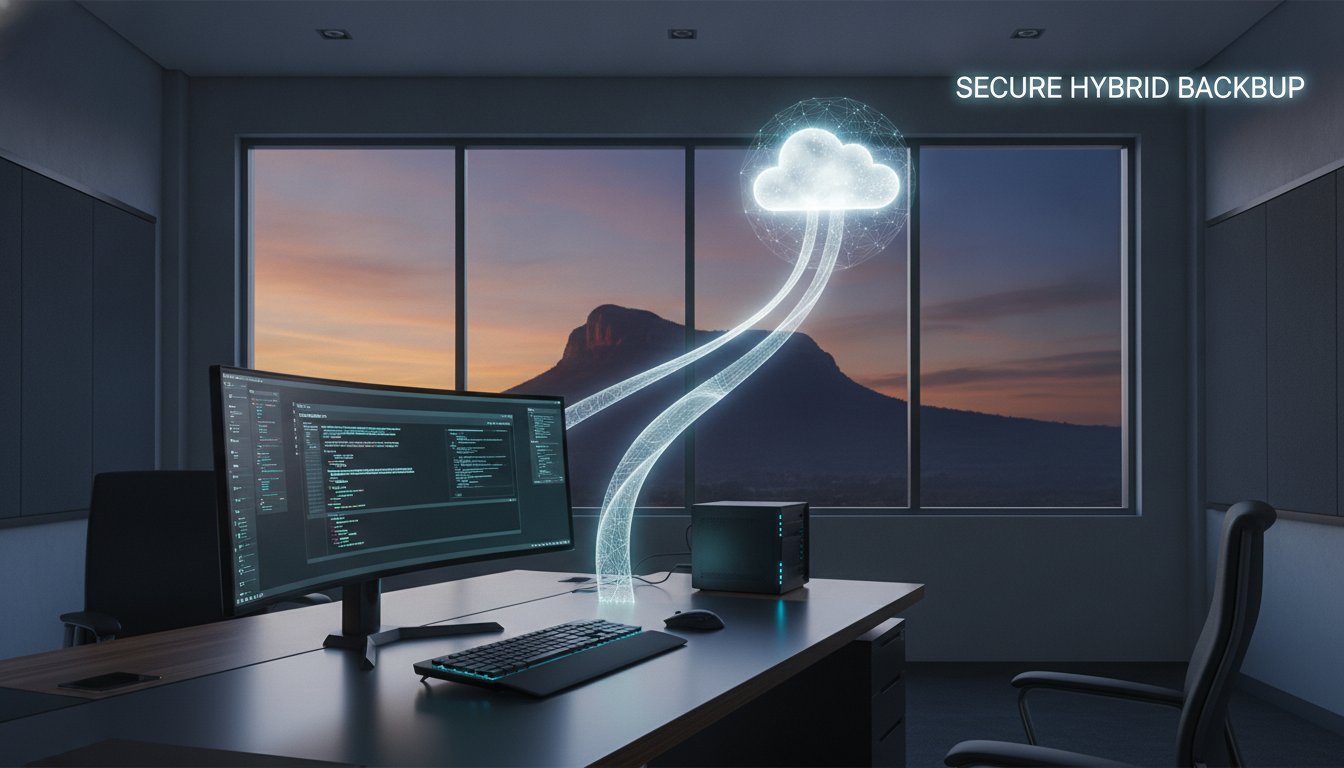
Small Business Data Backup Solutions: A 2026 Guide to Protecting Your Local Business

Did you know that 75% of small business owners now rank cyberattacks as their top concern, even ahead of inflation? It is a startling shift for 2026, but it makes sense when you consider that 60% of small companies that suffer a major data loss close their doors within six months. You have likely felt that same knot in your stomach when thinking about ransomware or a sudden server failure. Finding the right small business data backup solutions shouldn’t be a source of constant stress, yet the process is often complicated by slow NBN upload speeds and confusing software options.

I understand that you want your technology to just work. You deserve a set and forget system that offers quick recovery after a crash and the peace of mind that comes from having a local expert watching over your files. This guide explores how to secure your business data with a strategy that actually works. We will cover how to protect against AI-powered threats, the evolution of the 3-2-1-1 backup rule, and how to build a recovery plan that ensures you never lose a single client file to hardware failure or cybercrime.

Key Takeaways

  • Understand why modern threats like AI-driven ransomware make reliable data protection a survival requirement for small businesses in 2026.
  • Learn how to apply the 3-2-1 backup rule to create multiple layers of security that protect against both physical disasters and digital theft.
  • Compare the pros and cons of cloud, local, and hybrid small business data backup solutions to find the perfect fit for your office’s internet speed and data volume.
  • Follow a step-by-step process to audit your mission-critical files and set up a recovery system that you can actually trust when things go wrong.
  • Discover the benefits of working with a local Toowoomba expert to ensure your systems are monitored and managed with personal accountability.

Why Small Business Data Backup is Non-Negotiable in 2026

Losing your business data feels like a punch to the gut. In 2026, the stakes are higher than ever. Research shows that 75% of small business owners now rank cyberattacks as their primary threat, even above inflation. While the technical definition of a data backup is simply a copy of data used to restore the original after a loss, the reality for a local shop or office is far more personal. If you lose your client records or financial history, you aren’t just losing files. You’re losing the reputation you spent years building in the Toowoomba community.

Implementing reliable small business data backup solutions is no longer a luxury for the tech-savvy. It’s a survival requirement. Many owners assume “the cloud” is a magic bullet that handles everything automatically. However, without a clear strategy, cloud storage can become a disorganized mess that fails when you need it most. Professional backup systems are designed to be proactive. It’s always more affordable to invest in a solid defense than to face the staggering costs and uncertain outcomes of reactive data recovery after a total system collapse.

To better understand how these systems work together to protect your hardware, watch this helpful video:

The Hidden Risks of “DIY” Backup Methods

Relying on a single USB drive tucked in a desk drawer is a recipe for disaster. These drives are fragile and easy to lose. If a summer storm rolls across the Darling Downs and causes a major power surge, that plugged-in drive could die right along with your computer. Manual backups also rely on you remembering to do them. In a busy office, it’s easy to skip a day, then a week, and suddenly you realize your last save was months ago. This “hope for the best” approach leaves you vulnerable to hardware failure and simple human error.

Ransomware: A Growing Threat for Toowoomba Businesses

Modern malware has become incredibly sophisticated, often using AI to find the weakest entry points in small business networks. Ransomware is a type of cyberattack where criminals lock your digital files and demand a fee for the key, often causing a total halt to your business operations. To fight this, we now use “immutable” backups. These are copies of your data that cannot be changed or deleted by anyone, including a hacker. At Aspire Computing, we focus on these robust small business data backup solutions to ensure that even if a breach occurs, your files remain safe and recoverable.

The 3-2-1 Backup Rule: Your Gold Standard for Data Safety

You might wonder why a strategy from the year 2000 still matters in 2026. The 3-2-1 rule is a simple but powerful framework that has protected businesses for decades. It stands for having three copies of your data, stored on two different types of media, with one of those copies kept off-site. While technology changes fast, this logic remains the gold standard because it addresses every major risk factor. It is the foundation of effective small business data backup solutions. If your main computer fails, you have a local copy. If your office is damaged by a fire or flood, you have a remote copy.

Applying this to a modern home office or a retail shop in Toowoomba is easier than it sounds. You don’t need a massive server room to achieve professional-grade safety. By combining a physical drive on your desk with an automated remote service, you create a safety net that works even when you are busy running your business. Even in the age of remote work, “off-site” is critical. It ensures that your data exists in a completely different physical location, protecting you from local disasters that could affect your entire building or suburb.

Local Backups: For Speed and Immediate Access

Local backups involve saving your data to hardware physically located in your office, such as an External Hard Drive or Network Attached Storage (NAS). The biggest advantage here is speed. If you need to recover a massive file, pulling it from a local drive is almost instant. This is particularly important for Toowoomba businesses handling high-volume data like video production or CAD drawings. However, local hardware is vulnerable to the same physical risks as your main computer. If a power surge hits or a theft occurs, both your computer and your local backup could be lost at once. That is why local storage is only one part of the puzzle.

Cloud Backups: Your Safety Net Against Local Disasters

Cloud backup is your “off-site” insurance policy. It is important to distinguish this from “sync” services like Dropbox or OneDrive. While sync services are great for collaboration, they often mirror mistakes. If you accidentally delete a file or a virus encrypts your data, that change is often synced immediately to the cloud. A true backup service keeps historical versions of your files, allowing you to roll back to a time before the error occurred.

These small business data backup solutions use end-to-end encryption to keep your data private and secure. Most importantly, they are automated. You don’t have to remember to click save or swap out tapes. The software works quietly in the background. If you are unsure which software fits your specific needs, you can always ask a local expert for a recommendation to ensure your setup is truly robust.

Comparing Backup Solutions: Cloud, Local, or Hybrid?

Every business in Toowoomba has a unique digital footprint. A retail shop managing daily transaction logs has different needs than a tradesperson storing thousands of high-resolution project photos. When you look at small business data backup solutions, you generally choose between three models. Cloud-only setups are great for small teams that don’t generate massive files and have reliable internet. Local-only systems offer the fastest recovery speeds for high-volume data, but they carry a high physical risk. If your office is damaged, your data goes with it.

For most local businesses, we recommend a hybrid approach. This model gives you the “best of both worlds” by keeping a fast copy on-site and a secure copy in the cloud. It is particularly effective for industries like medical or legal services where data compliance and quick access are equally important. By using a hybrid strategy, you ensure that a simple hardware failure doesn’t stop your workday, while a larger disaster doesn’t end your business.

NBN Considerations for Toowoomba Businesses

Your NBN connection is the engine room of your cloud strategy. While many people focus on download speeds, your upload speed is what actually determines your backup success. If your upload speed is slow, a large backup might not finish overnight. This can lead to your systems slowing down during the day as the backup competes with your emails and video calls. We also see businesses run into unexpected data caps on certain plans. It’s vital to have a local IT expert audit your connection before you commit to a cloud-heavy strategy. This ensures your internet plan can actually support your data volume without causing frustration.

Choosing Between Managed and Unmanaged Solutions

An unmanaged solution is essentially a DIY approach. You buy the software, set it up, and hope it works every night. The risk here is that these systems can fail silently. You might not realize there is a problem until the day you actually need to recover a file. A managed solution provides a much higher level of security. With a managed service, an expert monitors your backup dashboard daily. If a session fails, we step in to fix it immediately. For a business without a dedicated IT staff, the peace of mind that comes from professional monitoring is often far more valuable than the software itself. It’s about having personal accountability and knowing a local expert is watching over your systems.

Small Business Data Backup Solutions: A 2026 Guide to Protecting Your Local Business

How to Implement and Test Your Backup Strategy

This model of dedicated oversight is common in many essential services; for example, in the disability sector, providers like WithCare Support Services help families explore Supported Independent Living (SIL) to ensure their loved ones have the same level of professional, round-the-clock support in their daily environments.

A great backup plan is more than just a piece of software. It is a methodical approach to protecting what matters most. Before you install any small business data backup solutions, you must start with a data audit. Not every file on your computer is equally important. Separate your mission-critical data, such as accounting records, client databases, and current project files, from “nice to have” items like old marketing drafts or archived emails. This allows you to prioritize your most vital assets and ensure they are protected with the highest frequency.

Setting your backup frequency depends on how much data you can afford to lose. For a busy office, we often recommend hourly or even real-time backups for critical databases. For static files, a daily sweep is usually sufficient. However, the most important part of implementation is the recovery test. A backup is essentially useless if you cannot restore it when a crisis hits. You need to prove the system works before you actually need it.

Step-by-Step Setup for a Small Office

The setup process begins by installing agent software on every device, including laptops that often leave the office. These mobile devices are frequently at the highest risk for theft or physical damage. During installation, you will configure your encryption keys. These keys ensure that only you can read your data, but you must store them in a secure, physical location. If these keys are lost, the data is unrecoverable. Finally, set up automated email alerts. You shouldn’t have to log in every day to check the status; the system should proactively tell you if a job has failed.

The Monthly Recovery Drill

We recommend performing a “test restore” at least once a month. This simple drill involves picking a random folder and restoring it to a temporary location. Once restored, open the files to verify their integrity and ensure they haven’t been corrupted. This process only takes a few minutes but provides immense peace of mind. Document these steps in a simple guide kept in your office. If an emergency occurs while you are away, your staff should be able to follow the instructions to recover files quickly. If you want a professional to handle this monitoring and testing for you, contact Aspire Computing for managed data backup services today.

Protect Your Business with Aspire Computing Toowoomba

Since 1999, Aspire Computing has been the trusted face of IT support across Toowoomba and the Darling Downs. We believe that technology should serve your business, not complicate it. When you choose us, you aren’t just buying a software license. You’re partnering with a local expert who understands the unique challenges of running a business in our region. This personal accountability is what sets us apart from anonymous providers. We offer managed IT support that takes the technical burden off your shoulders, allowing you to focus on your clients while we monitor your small business data backup solutions in the background.

Even the best backup strategy can face extreme challenges. If a drive is physically crushed or a system is severely compromised, you need more than just a download link. We provide specialized data recovery services as the ultimate safety net for your most critical information. While we always aim for proactive protection, our extensive experience in reactive recovery means we know exactly how to get your files back if the unthinkable happens. This dual expertise ensures your business continuity is always our top priority, giving you the confidence to operate without fear of data loss.

Why a Local Partner Beats a Global Call Centre

When your server goes down or your files disappear, the last thing you want is to wait on hold for an overseas call centre. Global providers often rely on generic scripts that don’t account for local variables like NBN limitations or Toowoomba’s specific infrastructure. We offer on-site assistance when you need it most, arriving at your place of business to solve problems directly. We can look at your hardware and provide a solution that fits your specific workflow. Our help is professional and reassuring. We speak your language, not technical jargon, so you always know exactly what is happening with your systems.

Get a Professional IT Health Check

Prevention is always better than a cure. We offer a comprehensive IT health check to audit your current systems for hidden vulnerabilities before they become expensive problems. This audit looks at your hardware age, your current backup success rates, and your overall security posture. Part of this strategy includes a robust virus and malware removal plan to keep your network clean. By securing your endpoints, we prevent data loss before it even starts. Contact us today to set up a tailored strategy for your small business data backup solutions and gain the peace of mind that comes from professional, local care.

Take Control of Your Digital Security

Protecting your livelihood shouldn’t feel like a constant battle against technology. By implementing the 3-2-1 backup rule and choosing a hybrid model that fits your local NBN speeds, you build a resilient foundation for your company. These small business data backup solutions ensure that whether you face a hardware crash or a cyberattack, your data remains safe and your doors stay open. Regular testing and professional monitoring turn a complex technical task into a reliable safety net that works quietly in the background.

Aspire Computing has been part of the Toowoomba community since 1999. As local experts in both proactive protection and reactive data recovery, we understand the accountability that comes with helping a neighbor. You don’t have to manage these risks alone. Contact Aspire Computing for a local IT health check and backup audit to ensure your systems are ready for whatever 2026 brings. It’s time to replace your technical anxiety with the peace of mind that comes from professional, on-site support. Your business is too valuable to leave to chance.

Frequently Asked Questions

What is the best backup solution for a very small business?

A hybrid model is the most effective choice for a small office. This setup combines a local external drive for near-instant file recovery with an automated cloud service for off-site protection. By using both methods, you cover your business against common hardware failures and physical disasters like fire or theft. For micro-businesses in Toowoomba, this provides high-level security without the need for complex server infrastructure or expensive maintenance.

How often should a small business back up its data?

You should back up your business data at least once every 24 hours. For shops or offices with high transaction volumes, hourly or even real-time backups are a much safer choice. The right frequency depends on how much data you can afford to lose. Setting up automated small business data backup solutions ensures these saves happen consistently every day without relying on your memory or manual effort. Once your automated systems are handling the heavy lifting for your records, you can learn more about Tax Falcon to see how they provide a similarly streamlined approach for Australians lodging their tax returns.

Yes, professional cloud backup is highly secure when configured with end-to-end encryption. This process scrambles your files before they leave your computer, meaning they can only be unlocked with your private key. In 2026, reputable providers use AES-256 bit encryption, which is the same standard used by banks and government agencies. It is significantly safer than leaving unencrypted client data on a portable USB drive that could be lost or stolen.

What is the difference between data backup and data recovery?

Data backup is the proactive process of making copies of your files to prevent loss. Data recovery is the reactive process of retrieving those files after a system failure, accidental deletion, or cyberattack. Think of the backup as your insurance policy and recovery as the claim process. You need both to ensure business continuity. If your backups fail, you may need specialist data recovery services to reconstruct lost information from damaged hardware.

How much does a professional backup solution cost for a small business?

The cost of small business data backup solutions depends on your total data volume and the number of devices you need to protect. While industry software subscriptions often start with modest annual fees for basic storage, managed services provide additional monitoring and support. The investment is almost always much lower than the thousands of dollars lost during even a single day of total business downtime or the high cost of emergency recovery.

Can I use a free cloud service like Google Drive for my business backup?

Free services like Google Drive or OneDrive are synchronization tools rather than true backup solutions. If a file is deleted or infected by ransomware on your computer, the change is instantly synced to the cloud, which could destroy your only copy. Professional backup software keeps multiple point-in-time versions of your files. This allows you to roll back to a clean version from yesterday or last week if something goes wrong today.

What happens if my backup fails and I lose my data?

If your backup fails and you lose data, you should immediately stop using the affected computer to prevent overwriting any remaining file fragments. This is when you need to contact professional data recovery specialists. We use advanced tools to scan damaged drives and extract files that are no longer accessible through your operating system. Acting quickly and seeking expert help gives you the best chance of getting your important business documents back.

Do I need an IT department to manage my backups?

You don’t need a dedicated in-house IT department to manage your backups effectively. Many small businesses in the Darling Downs partner with a local managed service provider like Aspire Computing. We act as your external IT team, monitoring your backup status every day and fixing errors before you even notice them. This gives you professional-grade protection and personal accountability without the overhead cost of hiring full-time technical staff for your office.

Choosing a Reliable IT Partner: The Small Business Guide for 2026

Imagine it is 9:00 AM on a Monday in Toowoomba, and your main server suddenly goes dark. You call for help, only to be placed in a long queue for a remote helpdesk that doesn’t know your name or how your business actually operates. Choosing a reliable IT partner shouldn’t feel like a gamble, yet many local owners still struggle with slow response times and confusing technical jargon. With research showing that organizations take an average of 241 days to identify a data breach, the stakes for your security and stability have never been higher.

You likely agree that technology should simply work without costing you hours of billable time or lost sleep. We promise to show you how to identify a trustworthy technology ally who protects your data, eliminates downtime, and understands the specific needs of our Toowoomba community. This guide provides a clear look at how to build a personal relationship with a local expert, ensuring you get predictable costs and robust cybersecurity that keeps your business running smoothly throughout 2026.

Key Takeaways

  • Understand the shift from reactive “fix-it” services to proactive partnerships that minimize the high costs of business downtime.
  • Identify the five essential traits for choosing a reliable IT partner, focusing on pricing transparency and a security-first mindset.
  • Learn why local, on-site support in Toowoomba offers a superior “personal touch” compared to the anonymous ticket systems of large enterprise firms.
  • Use our expert checklist to vet potential providers on their experience in the Darling Downs and their specific data recovery protocols.
  • Discover how a dedicated technology ally can provide robust cybersecurity and business continuity that protects your data without the technical jargon.

Why Choosing a Reliable IT Partner is Critical for Your Business

Technology isn’t just a tool anymore; it’s the foundation of your daily operations. In 2026, choosing a reliable IT partner means moving away from the old “break-fix” model where you only call for help when a computer fails. Instead, you need a proactive ally who prevents problems before they disrupt your workflow. This shift from simple repairs to comprehensive digital stability is essential for any modern business. Working with a dedicated Managed Service Provider (MSP) ensures that your systems are monitored constantly, allowing you to focus on your work rather than your hardware.

To better understand the importance of finding the right alliance for your business, watch this helpful video:

The true cost of downtime is higher than many owners realize. Research from 2025 indicates that it takes organizations an average of 241 days to identify and contain a data breach. For a small business in Toowoomba, a delay like that can be devastating. When your systems go dark, you lose productivity, revenue, and customer trust. A local expert provides a faster safety net than an offshore helpdesk. If a server fails at your office in Newtown or Wilsonton, a technician from Aspire Computing can often be on-site quickly, whereas a remote provider might leave you waiting in a digital queue for hours.

The Difference Between a Vendor and a Partner

A vendor simply sells you a product, like a laptop or a printer, and their responsibility ends at the checkout. An IT partner is different. They invest in your long-term operational success. They take the time to understand your specific office setup and history. Personal accountability is the hallmark of a true partner. When your network goes down, you don’t want a generic ticket number. You want an expert who knows your name and exactly how your business continuity plan works. This relationship builds a level of trust that a distant corporate entity cannot match.

Protecting Your Reputation Through Tech Stability

Your professional image is closely tied to your technical stability. If a client calls and you can’t access their files because your system is unresponsive, their confidence in your service drops immediately. Reliable technology also supports employee morale. Staff members are more productive and less stressed when their tools work correctly. By choosing a reliable IT partner, you create a robust first line of defence against cyber threats. This keeps your data safe and ensures your business maintains a reputation for being professional, efficient, and dependable.

The 5 Non-Negotiable Traits of a Dependable IT Partner

Not all technology providers are created equal. When choosing a reliable IT partner, you need more than just a person who can fix a broken screen or reset a password. You need a team with deep roots in the Queensland business community and a track record of longevity. A dependable partner handles everything from your high-end server to your office printers, ensuring every piece of hardware and software works in harmony. They don’t wait for things to break. They use proactive monitoring to catch a failing hard drive or a security vulnerability before it leads to a total system crash.

Transparency and Plain-English Communication

Complex jargon often hides a lack of clarity or, worse, hidden fees. Your partner should speak your language, explaining technical issues in a way that makes sense for your business operations. Avoiding “technobabble” isn’t just about being polite; it’s about ensuring you can make informed decisions about your company’s future. Detailed reporting is essential so you know exactly what was fixed and why it matters for your productivity. IT transparency is the absence of hidden costs and complex jargon. This clarity builds the trust necessary for a long-term relationship where you never feel left in the dark about your own systems.

A Foundation of Robust Cybersecurity

Many firms treat security as an optional extra, but a dependable ally makes it the core of their service. It’s vital that your partner is an expert in cybersecurity. They should implement integrated backup solutions and business continuity plans so that even if the worst happens, your data recovery is swift and certain. Evaluating their approach to malware and virus removal is a great starting point, but you should go deeper. Reviewing these 5 questions to ask a potential IT partner can help you verify their actual security capabilities and resilience.

A true partner understands that a virus isn’t just a technical glitch; it’s a threat to your livelihood. They prioritize your safety as much as your speed, ensuring that every hardware upgrade or software patch strengthens your digital perimeter. If you’re tired of confusing invoices and recurring glitches, it might be time to talk to a local expert who values transparency and security as much as you do.

Local vs. Enterprise IT: Finding the Right Fit for Small Businesses

Many small business owners feel like a small fish in a big pond when dealing with enterprise-level IT firms. These large corporations often prioritize high-revenue clients, leaving smaller teams stuck with a “ticket number” approach. When you’re choosing a reliable IT partner, it’s vital to consider whether a provider actually understands the scale of your operations. A local expert offers a personal touch that big firms simply cannot match. Instead of explaining your history to a new technician every time you call, you work with someone who already knows your systems, your staff, and your specific business goals.

Local partners are also far more responsive to regional issues. For instance, NBN connectivity in the Darling Downs can have its own unique set of challenges. An IT expert based in Toowoomba understands these local infrastructure quirks and can provide practical solutions quickly. This regional knowledge is often more valuable than a bloated enterprise package filled with services your small team will never use. Tailored support ensures you only pay for what you need, making it a much more cost-effective choice for businesses in Newtown, Wilsonton, or the CBD.

The Personal Branding Advantage

Knowing the name and face of your IT expert significantly reduces tech-related stress. When a critical system fails, the last thing you want is a generic automated response. A partner with a 25-plus year history in the local area provides a sense of stability and personal accountability. At Aspire Computing, we believe in a service style that is both reassuring and approachable. You aren’t just another client on a spreadsheet; you’re a member of the local business community. This relationship-first approach ensures that your technology remains an asset rather than a source of anxiety.

On-Site vs. Remote Support: Why You Need Both

A balanced IT strategy utilizes both remote and on-site assistance. Remote support is incredibly efficient for quick tasks. It’s the perfect solution for software tune-ups, virus scans, or minor configuration changes. However, some problems require a physical presence. You cannot fix hardware failures, set up complex printer networks, or install new network cabling through a screen. On-site support is essential for these tangible tasks. For home-based businesses or small offices, the convenience of mobile computer repair means you don’t have to pack up your equipment and drive across town. Your partner comes to you, minimizing disruption and getting you back to work faster.

Choosing a Reliable IT Partner: The Small Business Guide for 2026

The IT Partner Selection Checklist: Questions to Ask

Choosing a reliable IT partner requires a methodical approach to vetting. You aren’t just hiring a repair person; you’re selecting a guardian for your business data and your daily productivity. Start with the basics. Ask how long they’ve been serving the Toowoomba and Darling Downs region. A provider who has survived the local market for decades likely understands the unique needs of regional businesses. You should also inquire about their specific process for data recovery services. Knowing exactly how they retrieve lost files from a crashed drive can save your business from a permanent disaster.

In 2026, cybersecurity is a moving target. Ask your potential partner how they stay current with the latest threats and the constant stream of Windows updates. Their answer should include proactive monitoring and regular training. You also need to know if they provide on-site assistance for hardware and printer issues. While remote support is convenient, it won’t help if your printer has a physical jam or your motherboard fails. Don’t be afraid to ask for local references. Speaking with other small business owners in the area provides a clearer picture of a partner’s reliability than any marketing brochure.

Evaluating Technical Versatility

Your IT partner should be a one-stop shop for your technology needs. Check if they handle both PC and laptop repairs across multiple brands like Dell, HP, or Lenovo. It’s also wise to ask about their experience with hardware upgrades and performance tuning. A partner who can breathe new life into an aging machine is often more valuable than one who only suggests buying new gear. Finally, confirm they can supply and repair essential office equipment like Canon or Epson printers. Having one contact for your computers and your printers simplifies your workflow and reduces administrative stress.

Assessing Support Response Times

Response time is often the difference between a minor hiccup and a major crisis. Inquire about their typical turnaround for urgent scenarios where a computer won’t start. While remote support is perfect for minor glitches, you need to know how fast they can get to your office when things go wrong. A reliable response time is one that prevents a single day of lost revenue. If a provider can’t commit to a clear resolution process, they might not be the right fit for a growing business. When choosing a reliable IT partner, you’re looking for a team that treats your downtime with the same urgency you do.

If you’re ready to secure your business’s future with a team that values personal accountability, contact our local experts today for a straightforward discussion about your IT needs.

Aspire Computing: Your Local Toowoomba IT Partner

Aspire Computing has been a staple of the Toowoomba business community since our founding in 1999. When you’re choosing a reliable IT partner, you want someone who has seen the technology industry evolve and knows how to protect your interests through every change. Our team is led directly by the owner. This ensures that every interaction carries a high level of personal accountability that you won’t find at a larger, more anonymous firm. We pride ourselves on being a local face you can trust, providing dependable assistance that keeps your operations stable and secure.

We understand that small business owners often wear many hats. You don’t have time to decipher complex technical jargon or wait for a remote helpdesk to understand your office setup. Our approach is entirely jargon-free. We explain your options in plain English, whether we’re discussing hardware upgrades, virus removal, or setting up a robust data backup system. From home offices to growing small businesses, our service range is designed to cover every technical need you might encounter. We focus on practical, benefit-driven solutions that offer tangible improvements to your daily workflow.

A Proven History of Local Excellence

Our deep roots in the region mean we understand the specific challenges faced by businesses in the Darling Downs. We serve a wide geographic area, including Newtown, the Lockyer Valley, and the surrounding Toowoomba suburbs. With more than 25 years of experience in it support for business, we’ve developed a methodical process for identifying and solving technical issues quickly. Our commitment to the local community is unwavering. We act as your reliable expert, ensuring that your technology remains a tool for success rather than a source of anxiety. This long-standing history provides a sense of stability that is essential when choosing a reliable IT partner.

Get Started with a Technical Health Check

The best way to handle a technical failure is to prevent it from happening in the first place. We encourage a proactive approach to your digital stability. By identifying aging hardware or security vulnerabilities early, we can implement solutions that save you from costly downtime later. Our technical health checks are designed to give you a clear overview of your system’s performance and safety. You can book an on-site consultation or a remote session depending on your needs. We’ll guide you through a simple, step-by-step process to ensure your business continuity is protected. Technology doesn’t have to be stressful when you have the right partner by your side. Contact us today to see how we can support your Toowoomba business.

Secure Your Business Future with Local Expertise

Technology shouldn’t be a source of constant stress or unpredictable bills. By prioritizing transparency, local accountability, and a security-first mindset, you can transform your IT from a liability into a competitive advantage. Choosing a reliable IT partner is about finding an ally who understands the Toowoomba business landscape and stands by their work when things get difficult. A proactive approach to your network and hardware ensures that you stay focused on growth rather than technical failures.

Aspire Computing has been a trusted part of the Darling Downs community since 1999. Our owner-led team provides the personal touch that large firms can’t match, with specialized expertise in PC, laptop, and printer repairs. We’re here to ensure your systems are stable, your data is protected, and your downtime is a thing of the past. It’s time to experience tech support that’s as dependable as it is professional. Book your local IT consultation with Aspire Computing today and let’s build a more resilient future for your business together.

Frequently Asked Questions

What is the most important factor when choosing an IT partner?

Trustworthiness and personal accountability are the most important factors. When choosing a reliable IT partner, you need to know exactly who is responsible for your data. A partner who takes ownership of your system stability prevents the finger-pointing that often happens with larger, anonymous firms. This personal connection ensures your specific business needs aren’t lost in a corporate ticket system.

Should I choose a local Toowoomba IT company or a larger Brisbane firm?

A local Toowoomba company is usually the better choice for small businesses. They provide faster on-site support for hardware issues and understand regional challenges like Darling Downs connectivity. A larger Brisbane firm might offer more staff, but they often lack the personal relationship and rapid physical response required during a local office crisis in Newtown or Wilsonton.

How much does small business IT support typically cost?

IT support costs vary based on the number of users and the level of protection you require. Most providers offer either an all-inclusive monthly rate per user or an hourly fee for specific repairs. While industry averages exist, the best way to determine your cost is through a direct consultation that audits your specific hardware, printer, and security needs.

Can a reliable IT partner help with both hardware repairs and cybersecurity?

Yes, a versatile partner should manage both physical hardware repairs and digital cybersecurity. This includes fixing laptop screens or printers while simultaneously monitoring your network for malware. Having one point of contact for everything from a paper jam to a virus removal ensures your technology works as a single, cohesive system without conflicting service providers.

What happens if my IT partner is unavailable during a crisis?

You should verify a provider’s Service Level Agreement (SLA) to understand their guaranteed response times. A dependable partner has clear protocols for handling emergencies and often provides remote support to begin troubleshooting immediately. If a provider cannot offer a specific resolution timeframe for your business, you risk extended periods of lost productivity and revenue.

Is it better to have a fixed monthly contract or a “pay-as-you-go” repair service?

Fixed monthly contracts offer predictable costs and proactive maintenance, while pay-as-you-go models are often used by very small teams with minimal technical needs. Choosing a reliable IT partner involves finding a balance that fits your budget. Proactive contracts help prevent crashes through constant monitoring, whereas reactive services only address problems after they have already disrupted your work.

How do I know if my current IT provider is doing a good job?

A high-quality provider is doing a good job if you experience minimal downtime and receive clear, non-technical reports. If you’re constantly calling about the same recurring issues or feel ignored by a remote helpdesk, it’s a sign of a failing service. Your partner should identify vulnerabilities and suggest hardware upgrades before a failure occurs, not just after a crash.

Do I need an IT partner if I only have a few laptops and a printer?

You definitely need an IT partner even with a small setup because data loss and cyber threats don’t discriminate by business size. A single laptop containing sensitive client information is a major liability if it isn’t backed up or secured properly. A partner ensures your printer stays connected and your devices are shielded from the sophisticated malware threats emerging in 2026.

What if your business didn’t have to wait three days and pay a massive travel fee just because a Brisbane technician couldn’t find your town on a map? You’re likely tired of struggling with patchy connectivity or feeling like a nameless ticket in a massive corporate helpdesk. It’s frustrating when your systems fail and you can’t find responsive IT support for regional businesses QLD that understands our unique local challenges. We agree that you deserve better than long wait times and impersonal service that ignores the realities of life outside the South East corner.

This guide shows you how to secure reliable, local support tailored for your specific needs. With Australian IT spending hitting A$172.3 billion in 2026, the tools to grow are available, but you need a partner who knows your business by name. We’ll preview how to achieve zero downtime, secure your customer data against modern threats, and leverage the “Our Thriving Digital Future” initiatives to keep your operations running smoothly. You’ll learn how to move from technical anxiety to operational stability with a local expert you can trust.

Key Takeaways

  • Identify the specific connectivity and supply chain hurdles that impact regional Queensland operations.
  • Learn why a proactive managed IT model prevents downtime more effectively than waiting until it’s too late.
  • Discover when to use remote assistance for speed and when on-site support’s essential for hardware or network failures.
  • Evaluate potential partners using five essential criteria to find the right IT support for regional businesses QLD.
  • Understand how personal accountability and local expertise create a more reliable safety net than anonymous city-based call centers.

Regional IT support is more than a helpdesk ticket; it’s technical assistance specifically designed for the logistical and infrastructure realities of life outside the metro hubs. For many owners, finding reliable IT support for regional businesses QLD is the difference between a productive week and a complete standstill. While city businesses enjoy redundant fiber connections and same-day hardware deliveries, regional operators in the Darling Downs deal with unique hurdles. Limited bandwidth, hardware supply chain delays, and the physical impact of extreme weather events create a landscape that requires specialized local knowledge.

To better understand the economics behind these technical decisions, watch this helpful video:

A “one-size-fits-all” Brisbane approach often fails regional Queenslanders because it ignores these environmental factors. If your provider suggests a solution that relies entirely on a perfect internet connection, they don’t understand your daily reality. Local agriculture, medical practices, and trade sectors rely on business continuity to stay operational. If the network drops during a harvest or a critical patient consultation, the cost is both financial and reputational. This is why partnering with a local Managed Service Provider (MSP) is an essential strategy rather than a luxury.

The Regional Connectivity Gap

Operating on NBN Fixed Wireless or Satellite presents challenges that city-based technicians rarely encounter. Congestion during peak times or signal degradation during heavy rain can cripple cloud-based workflows. We understand the specific quirks of the Toowoomba exchange and how local infrastructure affects your speed. To maintain uptime, we implement practical strategies like dual-WAN setups or robust local data backups. These ensure your team stays productive even when the regional network fluctuates or the Queensland Government’s “Our Thriving Digital Future” infrastructure upgrades are still in progress.

Why Proximity Matters for Small Business IT

The hidden costs of travel time from Brisbane-based providers can quickly inflate your budget. If a server fails or a printer stops, you can’t afford to wait four hours for a technician to drive up the range. Building trust through face-to-face support in the Darling Downs ensures personal accountability. You aren’t just a number in a queue; you’re a neighbor. Regional businesses need an IT partner who understands the local landscape and community. At Aspire Computing, we’ve spent over 25 years proving that local presence beats remote-only helpdesks every time.

Proactive Managed IT vs. Reactive Repairs: What Works for Regional SMBs?

Many regional business owners operate on a “if it isn’t broken, don’t fix it” mentality. This is known as the break-fix model. While it feels cheaper initially, it’s a high-risk strategy for those relying on IT support for regional businesses QLD. When a critical system fails in a remote location, the cost of downtime and emergency call-out fees often exceeds the price of a year’s worth of maintenance. Waiting for a failure before acting is like driving a car until the engine seizes rather than booking a regular service.

Implementing a structured IT support for business framework shifts your focus from emergency response to operational stability. Proactive management identifies failing hardware or security gaps before they disrupt your workflow. This approach is vital in 2026, as Australian IT spending is expected to reach A$172.3 billion. Staying competitive requires systems that work every day, not just most days. By monitoring your systems remotely, we can often fix a problem before you even realize it exists.

Small businesses actually save money with managed support because it eliminates the financial “rollercoaster” of unexpected repairs. Monthly fees are predictable. This allows for better cash flow management, which is essential for family-run enterprises in the Darling Downs. Managed support provides a comprehensive safety net that includes:

  • 24/7 system health monitoring to catch hardware issues early
  • Automated security patches and software updates
  • Regular data backup verification to ensure recovery is possible
  • Priority response times for critical technical issues

The Hidden Risks of the Break-Fix Mentality

Reactive repairs create unpredictable expenses that can cripple a small business’s monthly budget. You might pay for a quick fix today, only to find that the underlying hardware failure returns with more severity next month. Ad-hoc repairs often ignore underlying security vulnerabilities that leave your data exposed to modern threats. This “patchwork” approach rarely addresses the root cause of technical failures.

Managed IT Tailored for Small Budgets

Support shouldn’t be an all-or-nothing enterprise solution. We customize support levels to fit your specific needs, whether you run a single home office or a storefront. Essential packages focus on backups, updates, and virus protection. A vCIO helps you plan for future growth and ensures you meet the latest standards for cyber security for small business. If you’re concerned about your current setup, exploring business continuity options can provide a clear roadmap for your digital safety.

Remote vs. On-Site Support: Solving the Regional Dilemma

Regional business owners often face a tough choice between the speed of digital helpdesks and the reliability of a local technician. Finding the right balance is the key to effective IT support for regional businesses QLD. While many issues can be fixed with a quick remote login, some technical failures require physical intervention. A hybrid approach combines the best of both worlds. It ensures your software stays updated via the cloud while providing a safety net for when your hardware physically fails. This model is particularly effective for businesses dealing with the inconsistent NBN Fixed Wireless or Satellite connections common in rural areas.

When Remote Support Is Enough

Remote assistance is incredibly efficient for software-based issues. Tasks like password resets, email troubleshooting, and software updates happen in minutes rather than hours. We use encrypted remote access tools to ensure your connection remains secure during every session. This reduces the downtime that used to be caused by waiting for a technician to drive to your location. In a 2026 digital environment, quick response times are the standard. Most minor glitches don’t need a physical visit. This keeps your costs lower and your staff productive. It’s the perfect solution for businesses that need to resolve “how-to” questions or minor software bugs without delay.

The Necessity of a Local “Boots on the Ground” Tech

Some problems simply cannot be solved over a phone call or a screen share. If your server won’t boot, your network cabling is damaged, or your printer has a mechanical failure, you need someone on-site. This is where computer repairs in Toowoomba become a critical lifeline for local operations. A remote helpdesk in Brisbane can’t swap out a failed power supply or physically reconfigure a router during a localized network outage. You need a person who can see the blinking lights on your hardware.

Having a technician who can visit your Newtown or Darling Downs office the same day is a massive advantage. We provide hardware diagnostics that identify the root cause of physical failures that remote tools simply can’t see. This is especially important for businesses using hybrid work models. Setting up secure home office networks requires a local expert who understands the regional infrastructure and signal challenges. When the hardware stops, the “cloud” doesn’t matter. You need a local partner with the tools and parts to get you back online immediately. This personal accountability is what distinguishes a community-focused provider from a distant corporate service. We take pride in knowing our clients by name, ensuring that when you call, you’re talking to someone who has actually been to your office.

5 Essential Criteria for Choosing a Regional IT Support Partner

Selecting a partner for IT support for regional businesses QLD is a decision that impacts your daily peace of mind. You need more than just a technician; you need a reliable contact who understands your specific operating environment. While many providers claim to offer support, regional businesses require a specific set of criteria to ensure their technology remains an asset rather than a liability. Transparency and local reputation should be at the top of your checklist. Use these five criteria to evaluate your options:

  • Local Reputation: Look for a history of supporting businesses within the Darling Downs and surrounding regions. A provider with deep roots understands the local infrastructure better than any city-based firm.
  • Personal Accountability: Ensure you can call a specific expert who knows your business by name. You shouldn’t be treated as just another ticket in an anonymous corporate queue.
  • Cyber Security Focus: Your partner must prioritize data protection and proactive virus removal to keep your systems clean and operational.
  • Service Breadth: A versatile provider handles everything from printer repair and hardware upgrades to complex data recovery and business continuity planning.
  • Transparency: Demand clear, jargon-free advice. You deserve predictable pricing structures that don’t hide extra costs or “travel fees” for local visits.

Evaluating Technical Credentials and Experience

Industry experience is a non-negotiable factor in a rapidly changing tech landscape. With over 25 years of history in the industry, we’ve seen how technology evolves and how to maintain systems so they actually serve your business goals. Always check for certifications and local business references before signing a contract. Choosing the cheapest option for IT support often leads to incredibly expensive data recovery later when unmonitored systems inevitably fail. Reliable expertise is an investment in your company’s stability.

Assessing Security and Disaster Recovery Plans

Ask direct questions about data backup protocols for regional sites. Your partner should ensure full compliance with Australian privacy laws to protect your customer data and minimize your legal risk. Having a local partner during a cyber security incident is vital. They can provide immediate assistance to isolate threats and restore your operations without waiting for a technician to travel from the coast. If you want to ensure your business is fully protected, consider booking a local IT security audit to identify any hidden vulnerabilities.

Aspire Computing: Personalised IT Support for Toowoomba and Beyond

Aspire Computing represents a 25-year legacy of technical excellence in regional Queensland. We’ve built our reputation on being a local face in a world of anonymous Brisbane-based call centres. When you call us, you aren’t reaching a nameless ticket queue in a city skyscraper. You’re talking to a professional who understands the specific challenges of running a business in the Darling Downs. Our mission balances technical security with functional utility. We provide a comprehensive range of services, including PC and laptop repair, data recovery, and advanced cyber security. Whether you need a hardware upgrade or a complete business continuity plan, we’re here to help. We believe that personal accountability is the only way to build lasting trust in our community.

Our commitment extends across Toowoomba, the Darling Downs, and the Lockyer Valley. We know that regional businesses face hurdles that city firms often ignore. This is why we’ve tailored our offerings to include everything from printer supply and repair to robust data backup solutions. We don’t just fix computers; we support the people who keep our regional economy moving. Our approach is designed to be calm and professional, reducing the stress that often accompanies a technical failure. You can count on us for dependable assistance that’s both competent and convenient. Finding reliable IT support for regional businesses QLD shouldn’t be a struggle, and we’re here to ensure it isn’t.

Expertise You Can Trust in the Darling Downs

Our mobile on-site service brings technical expertise directly to your office or home. We also provide remote assistance for faster software resolutions when a physical visit isn’t required. This hybrid model ensures your home office or small business remains efficient regardless of your location. We cover a broad range of areas, from the central streets of Newtown to the surrounding rural properties. Our focus on small business efficiency means we prioritise rapid turnarounds and streamlined processes. We specialise in virus removal, hardware upgrades, and laptop repairs, ensuring your daily operations remain stable. We take pride in being a local, reliable expert you can call by name.

Getting Started with a Local IT Partner

Taking the first step toward better technology shouldn’t feel like a chore. We offer a comprehensive IT health check to identify vulnerabilities and performance bottlenecks in your current setup. Our promise to every owner is simple: we provide jargon-free advice and predictable outcomes. We explain technical processes in straightforward language so you can make informed decisions about your infrastructure. Reliability and personal accountability are the foundations of everything we do at Aspire Computing. If you’re ready to secure your data and streamline your systems, we’re ready to partner with you. Contact Aspire Computing today for reliable IT support for regional businesses QLD.

Future-Proofing Your Business Technology

Regional Queensland businesses don’t have to settle for slow response times or impersonal city-based helpdesks. You’ve seen why proactive monitoring prevents costly downtime and why having local “boots on the ground” is critical when hardware fails. Choosing the right partner means finding someone who values personal accountability as much as technical expertise. Reliable IT support for regional businesses QLD ensures your data stays secure while your operations remain efficient. It’s about building a relationship with an expert who knows your office and your specific challenges.

Aspire Computing has been serving Toowoomba since 1999, providing the stability and local knowledge you need to grow. We specialize in small business and home office tech, offering expert on-site and remote assistance tailored to your environment. Whether you need a hardware upgrade or a complete security audit, we’re ready to help you thrive. Get Reliable Local IT Support for Your Business Today. Your technology should be a tool for success, not a source of stress. We look forward to helping your business stay connected and secure.

Frequently Asked Questions

What is included in business IT support for regional QLD companies?

Our comprehensive IT support for regional businesses QLD includes hardware repairs, printer supply, virus removal, and data backup. We also focus on business continuity to ensure your operations don’t stop during technical failures. Our approach covers everything from your primary server to individual laptops and desktop PCs.

Do you provide on-site computer repairs in Toowoomba and surrounding suburbs?

Yes, we offer mobile on-site computer repairs throughout Toowoomba and the surrounding suburbs. We visit businesses and home offices in areas like Newtown and across the Darling Downs. This local presence allows us to provide faster physical assistance than city-based providers who have to travel up the range.

How much does IT support for a small business typically cost in 2026?

Costs for IT support in 2026 depend on whether you choose a reactive break-fix model or a proactive managed service. Managed support offers predictable monthly fees that help with cash flow management for small businesses. While we don’t provide fixed industry-wide pricing, we focus on delivering a service that reduces the high cost of unexpected downtime.

Can you help with slow NBN or internet connectivity issues in regional areas?

We assist with regional connectivity issues by troubleshooting your internal hardware and identifying network bottlenecks. Slow NBN or satellite connections often stem from router configurations or signal interference that a local expert can resolve. We help you implement redundant systems to maintain uptime during regional network fluctuations.

Do you offer cyber security and virus removal for home offices?

Yes, we provide specialized cyber security and virus removal services designed for home offices and small storefronts. Protecting your customer data is a legal requirement under Australian privacy laws. We implement proactive security measures that prevent malware from disrupting your workflow and compromising your sensitive information.

What happens if my server or printer goes down in the middle of the work day?

If a critical piece of hardware fails during the work day, we prioritize your request to minimize operational impact. We often begin with a remote session to diagnose the problem immediately. If the issue requires physical repair, such as a hardware failure in a server or printer, we arrange a local on-site visit as quickly as possible.

How does remote IT support work for businesses in the Darling Downs?

Remote IT support works through a secure, encrypted connection that allows us to see your screen and fix software issues instantly. You simply download a small tool, and we handle the troubleshooting while you watch. This method is the fastest way to resolve email glitches, password resets, and software updates without waiting for a technician to arrive.

Why should I choose a local Toowoomba IT provider over a Brisbane firm?

Choosing a local provider ensures personal accountability and a deeper understanding of the regional infrastructure. A Toowoomba-based firm doesn’t charge the excessive travel fees that Brisbane companies often apply to regional calls. You get a partner who knows your business by name and can be at your door for urgent hardware failures.

Last Tuesday, a local business owner in Queensland watched their entire network freeze during a peak period, losing A$1,850 in revenue while waiting five hours for a “priority” callback that never arrived. It is a stressful, helpless feeling that no manager should have to endure, especially when you are trying to figure out how to choose a managed IT service provider who actually delivers. You likely feel that IT support should be a transparent, reliable partnership rather than a source of hidden fees and confusing technical jargon.

We believe you deserve a local expert who speaks your language and values your uptime as much as you do. This 2026 guide simplifies the selection process with a comprehensive vetting checklist, a clear Australian pricing guide for predictable A$ budgeting, and tips to avoid restrictive contracts. We will show you how to find a partner who ensures your technology stays secure and your team stays connected, so you can stop worrying and get back to work. Our goal is to provide the peace of mind that comes with professional, approachable support that keeps your business moving forward.

Key Takeaways

  • Discover how to transition from the stress of “break-fix” repairs to a proactive partnership that protects your business continuity.
  • Master the essential selection criteria and learn how to choose a managed IT service provider that aligns with your specific security and scalability needs.
  • Equip yourself with a professional vetting checklist to ensure complete transparency and accountability during the interview process.
  • Navigate complex SLAs and pricing models with confidence to secure the best value for your A$ investment in the Australian market.
  • Identify the unique benefits of choosing a local Toowoomba expert with 25+ years of experience over a distant national provider.

What is a Managed IT Service Provider and Why Does Your Business Need One?

A Managed IT Service Provider (MSP) is a proactive partner rather than a reactive repair technician. In the past, most businesses used a “break-fix” model, calling for help only when a computer stopped working or a server crashed. Today, that approach is too risky. An MSP provides continuous system monitoring to catch issues before they cause downtime. The primary goal is ensuring business continuity through “Active Protection” of your data and systems.

By 2026, even the smallest local shops face enterprise-level cyber threats. You need a partner who takes personal accountability for your uptime. Learning how to choose a managed IT service provider starts with moving away from ad-hoc repairs and embracing a model that keeps your technology running smoothly every single day.

The Difference Between Break-Fix and Managed Services

Waiting for a crash is the most expensive way to manage your technology. Emergency repairs in Australia often cost upwards of A$280 per hour, plus the hidden costs of lost productivity. When your team can’t work, you’re losing money every minute. Managed services replace these spikes with a predictable monthly investment. It’s about protecting and connecting your infrastructure so you never have to panic when a screen goes dark.

  • Predictable Costs: You pay one flat monthly rate instead of volatile emergency bills.
  • Proactive Maintenance: We fix “invisible” problems like outdated patches or failing drives before they disrupt your workflow.
  • Protect and Connect: We focus on securing your data while ensuring your team stays connected to the tools they need to succeed.

Why Small Businesses are Moving to Managed IT in 2026

The rise of hybrid work has changed the technology needs of the average office. Since 2024, approximately 37% of Australian employees work from home at least part of the time. This shift has created new security gaps that standard home routers can’t handle. You need professional IT support to secure these remote endpoints and maintain a competitive edge in a digital-first economy.

Australian businesses must also navigate stricter data recovery and compliance laws. Under recent updates to the Privacy Act, failing to protect customer data can result in significant penalties and loss of reputation. A local expert helps you meet these requirements while ensuring your systems are fast and reliable. When you evaluate how to choose a managed IT service provider, prioritise those who understand the specific needs of the Australian market and offer a personal, dependable touch.

Core Selection Criteria: What to Look for in a Great IT Partner

Choosing a partner isn’t just about fixing a broken screen. It’s about finding a foundation for your business. When you evaluate how to choose a managed IT service provider, three non-negotiables stand out: security, scalability, and consistent support. You need a team that grows with you. If you add five new staff members next month, your IT partner should handle the rollout without a hiccup. Reliability is the bedrock of any successful partnership.

Your partner must understand the physical tools you use every day. This includes specific expertise in PCs, Laptops, and Printers. Don’t settle for a provider that only works behind a screen. A great partner offers a hybrid model of both remote troubleshooting and on-site assistance. Sometimes a 10 minute face-to-face visit solves what a two hour phone call cannot. This flexibility ensures your team stays productive regardless of the technical hurdle.

It’s tempting to pick the cheapest quote available. However, quality assurance saves money in the long run. A 2023 study by IBM found that the average cost of a data breach in Australia reached A$4.03 million. Paying for expertise now prevents catastrophic costs later. High-quality service means your systems don’t just work; they thrive.

Cybersecurity and Data Protection Capabilities

Your provider should include virus and malware removal as a standard service, not an expensive add-on. Ask them about their data recovery protocols. They should be performing backups at least every 24 hours to ensure your files stay safe. Active Protection is a 24/7 monitoring standard that identifies and neutralises threats before they impact your workflow in 2026. This proactive approach ensures business continuity even when digital threats evolve rapidly.

Technical Expertise and Certifications

Experience matters. Look for a business that has been established since 1999. This longevity proves they’ve navigated every major tech shift from Windows 98 to modern Windows 11 hardware upgrades and tune-ups. They should also understand local infrastructure. In regional areas, knowing how to optimise NBN speeds in Toowoomba is vital for maintaining a stable connection. A provider who knows the local exchanges can often troubleshoot connectivity issues 30% faster than a national call centre. Choosing a local expert means you’re getting someone who understands the specific challenges of your community.

The Managed IT Services Checklist: Key Questions to Ask

Finding the right partner requires more than a quick Google search. You need a team that takes personal accountability for your uptime. Understanding how to choose a managed IT service provider starts with asking the hard questions during your first interview. This ensures transparency and helps you avoid providers that hide behind vague contracts or distant call centres. You want a local expert who treats your business like their own.

Operational Questions for the First Meeting

Focus on the day to day reality of your tech support. You need to know exactly who will answer the phone when a server goes down at 9:00 AM on a Monday. Accountability is everything when your productivity is on the line.

  • “What is your average response time for a critical system failure?” Look for a provider that guarantees a response within 60 minutes for high priority issues. Ask for their specific data from the last quarter to verify their claims.
  • “Do you provide on-site support in my specific suburb?” If you are located in Newtown or Darling Downs, you need a technician who can arrive quickly. You don’t want to wait for someone driving from a different city while your office sits idle.
  • “How do you handle data recovery if our primary drive fails?” A reliable provider will explain their 3-2-1 backup strategy. They should provide a clear, tested timeline for how long it takes to get your files back.
  • “Will I speak to an expert or a call centre?” At Aspire Computing, we believe in a personal touch. You should speak directly to an experienced technician like Chaim Lee who knows your history, not a scripted operator in a remote queue.

Strategic and Security Questions

Your IT provider must be proactive. They should protect your business from modern threats while planning for your future growth. This checklist simplifies how to choose a managed IT service provider that actually fits your business goals.

  • “How do you stay ahead of the latest malware and scam trends in Australia?” They should reference recent 2023 and 2024 ACSC threat reports. Ask how they patch vulnerabilities and train your staff to spot phishing attempts.
  • “What is your specific repair process for laptops and printers?” Ask if they handle hardware in-house. A provider that offers a “quick fix” and “fast return” on essential hardware keeps your staff productive without long shipping delays.
  • “Can you help us with hardware supply and software upgrades as we grow?” Your provider should act as a procurement partner. They need to source quality equipment that matches your specific performance needs.
  • “Do you offer a free IT health check before we sign a contract?” This demonstrates a commitment to quality. It allows you to see their technical range in action before you make a long-term commitment.

By focusing on local expertise and clear communication, you ensure your technology remains a tool for success. Don’t settle for a provider that treats you like a ticket number; look for a partner that aims to protect and connect your entire operation.

Just as the right IT partner protects your internal operations, your website serves as your digital front door. For expert guidance on building a secure and scalable online presence, you can visit PurpleCow Digital Marketing.

Understanding Pricing and Service Level Agreements (SLAs)

Deciphering IT quotes is often the hardest part of learning how to choose a managed IT service provider. You will encounter jargon that sounds complicated, but it usually boils down to three things. An SLA is your service contract. It defines the help you receive and how fast you get it. Downtime is the period when your systems are offline, which costs Australian small businesses an average of A$5,000 per hour in lost productivity. Remote monitoring is the “active protection” we use to spot a failing hard drive or a virus before it interrupts your morning coffee.

Most providers in Australia offer three main pricing structures. Per-user models are popular because they scale easily as you hire more staff. Per-device models charge based on the number of PCs and servers you own. Tiered packages offer different levels of support, from basic “break-fix” help to “all-you-can-eat” premium plans. Always ask about travel fees. Some providers charge A$90 or more just to drive to your office. We prefer a model that focuses on long-term stability. A “quick fix” culture might solve today’s glitch, but it doesn’t stop the same problem from returning next month.

What Should Be Included in Your SLA?

Your agreement must guarantee uptime. A standard 99.9% uptime guarantee means your business stays functional. It should clearly define response times. There is a big difference between “Remote Support,” where a technician fixes a glitch via the internet, and “On-site Emergency Response,” where someone physically arrives at your desk. Ensure your contract includes a schedule for hardware tune-ups and software updates. Regular maintenance can reduce emergency call-outs by up to 30%.

Red Flags to Watch Out For

Security is non-negotiable. If a provider cannot explain their security framework in simple, plain English, they likely don’t have a solid plan. Avoid “faceless” corporations where you never speak to the same person twice. You should be introduced to your lead technician early on. Finally, be cautious of three-year contracts with no exit clause. If the service is poor, you shouldn’t be trapped. A fair contract usually allows a 30-day “out” for non-performance.

If you want a partner who values transparency and local accountability, talk to the experts at Aspire Computing today for a straightforward quote.

The Local Advantage: Why Toowoomba Businesses Choose Aspire Computing

When you’re deciding how to choose a managed IT service provider, geography matters more than you might think. National MSPs often rely on remote call centres where you’re just another ticket number in a queue. Chaim Lee and the team at Aspire Computing offer a different experience. Since 1999, we’ve spent over 25 years supporting the local Queensland market. We understand the specific infrastructure and connectivity needs of businesses in our region. Our commitment to “Protect and Connect” means we aren’t just fixing a screen; we’re securing your livelihood and community ties. If you’re unsure about a full managed contract, start with a small repair or a security audit. This allows us to build trust through action before you commit to a long-term partnership.

Personalised Support for Home Offices and Small Teams

Many providers ignore smaller operations, but we specialise in them. Aspire Computing tailors help to fit your specific budget. You won’t pay for enterprise-scale features your five-person team doesn’t need. Whether you’re in Highfields, Gatton, or anywhere across the Lockyer Valley, we offer on-site availability to resolve issues where they happen. Our “No Panic” approach is central to our service. When a laptop fails or the printer stops at 9:00 AM, you need a calm expert to restore continuity. We focus on quality assurance and fast returns so your business doesn’t skip a beat.

Your Next Steps: Booking an IT Consultation

Knowing how to choose a managed IT service provider shouldn’t be a stressful process. We make it simple with a clear three-step method: Contact, Diagnostic, and Solution. You get to “Talk to the Experts” directly rather than navigating a complex phone tree. We provide straightforward answers about hardware upgrades, cloud file sharing, or data recovery without the technical jargon. Don’t let technology hurdles slow your growth or compromise your data security. Experience the difference that local accountability and 25 years of experience make for your team.

Contact Aspire Computing for a local IT health check today and ensure your technology is working as hard as you are.

Build a Resilient Tech Foundation for Your Business

Finding the right technology partner is about more than just fixing broken PCs. It’s about finding a team that understands your specific local needs. When you’re deciding how to choose a managed IT service provider, remember to prioritize proactive security and clear response times. You need a partner who offers “Active Protection” to ensure your business continuity remains uninterrupted. Since 1999, Aspire Computing has delivered this exact level of care to the Toowoomba community. Owner Chaim Lee provides a personal touch that big corporate firms can’t match, offering both expert on-site visits and fast remote support.

Technology should empower your growth, not hold you back with unexpected downtime or confusing costs. By focusing on transparent SLAs and proven local experience, you’ll protect your investment and your peace of mind. We’ve spent over 25 years helping small businesses stay connected and secure. It’s time to stop worrying about your IT and start focusing on your customers. Talk to the Toowoomba IT Experts at Aspire Computing today to see how we can help your business thrive. You’ve worked hard to build your business, and we’re here to help you protect it.

Frequently Asked Questions

How much does a managed IT service provider typically cost for a small business?

Managed IT services for Australian small businesses typically cost between A$100 and A$250 per user each month. For a small office with 10 employees, you’ll likely spend around A$1,500 to A$2,500 monthly for comprehensive support. These prices fluctuate based on your specific security needs, the number of servers managed, and the level of active protection required for your data.

Can a managed IT provider help with home office printer and laptop repairs?

Yes, we definitely assist with home office setups including printers and laptops. Since the 2020 shift toward remote work, 45% of our service calls now involve home-based hardware issues. We can visit your home office or log in remotely to fix software glitches and connection problems. This ensures your home setup remains as professional and reliable as a traditional office environment.

What is the difference between an MSP and a regular computer repair shop?

The main difference is that an MSP provides proactive monitoring while a repair shop handles one-off fixes. A repair shop waits for your technology to break before helping. An MSP uses continuous monitoring to stop issues before they cause downtime. This proactive approach reduces business tech failures by 35% compared to the traditional break-fix model used by retail shops.

Do I still need an MSP if I use cloud services like Microsoft 365 or Google Workspace?

You definitely still need an MSP even if you use Microsoft 365 or Google Workspace. These platforms host your data but don’t automatically manage your local network security or user permissions. Research shows that 58% of cloud-based data loss is caused by human error. An MSP ensures your cloud settings are configured correctly to protect against accidental deletions and external cyber threats.

How quickly should a managed IT provider respond to a support ticket?

You should expect a response to critical issues within 30 minutes and general queries within 4 hours. When you research how to choose a managed IT service provider, always ask for their written Service Level Agreement. Clear response times ensure your business stays productive. Don’t settle for providers who leave your staff waiting days for a fix that stops them from working.

Is it better to have a local IT provider or a large national company?

A local IT provider is usually better because they can arrive on-site within an hour for hardware emergencies. Large national companies often rely on remote call centres and anonymous ticket systems. Since 1999, we’ve found that building a personal relationship with a local expert leads to better long-term tech stability. You get a partner who actually understands your specific business location and needs.

Can an MSP help with data recovery if I haven’t been backing up my files?

We can often recover files from failing drives, but it’s much harder and more expensive without an existing backup. Our success rate for physical drive recovery sits at roughly 70% depending on the damage. If we can’t get the data back through software, we use specialist laboratory partners. We’ll then help you set up a proper backup system so you never face this panic again.

What happens if my managed IT provider goes out of business?

If your provider closes, you won’t lose your data as long as you hold the master administrative credentials for your systems. Professional MSPs provide a detailed network map and a secure password vault to their clients. This documentation allows a new technician to take over your system in less than 24 hours. We always ensure our clients have full ownership of their digital assets for total continuity.

The Australian Signals Directorate reported in late 2024 that cybercrime now costs the average Australian small business over A$46,000 per incident. When you’re managing a local team, seeing your software subscription costs creep up every month feels like a slow leak in your budget. It’s natural to feel overwhelmed by the constant “urgent” updates and the fear of a local ransomware attack locking your files. You’re likely asking yourself: how much should a small business spend on cybersecurity in 2026 to stay truly safe?

We agree that technology should be a tool for growth, not a source of constant financial stress or panic. This guide provides the exact benchmarks and ROI frameworks you need to set a realistic budget for the coming year. We’ll walk you through the essential “must-have” security features versus the “nice-to-have” options, giving you a clear percentage and dollar figure to aim for. By the end, you’ll have a practical roadmap to protect and connect your business with total peace of mind.

Key Takeaways

  • Understand the transition to “Active Protection” and why your 2026 budget should focus on ongoing security rather than one-off software purchases.
  • Discover exactly how much should a small business spend on cybersecurity by comparing realistic A$ benchmarks tailored for micro-teams and growing Australian businesses.
  • Identify the highest-ROI investments for your security dollars, including why staff training is your most effective defence against modern digital threats.
  • Calculate the true cost of a “zero budget” strategy by seeing the financial impact of just one day of downtime for a Toowoomba-based business.
  • Learn how partnering with a local IT expert can reduce your “IT tax” and provide tailored support that ensures long-term business continuity.

What is a Realistic Cybersecurity Budget for Small Businesses?

Determining how much should a small business spend on cybersecurity often feels like a guessing game. At Aspire Computing, we see it as a vital investment in your business’s continuity. Cybersecurity spending isn’t just about buying a single piece of software. It covers your total investment in hardware like secure routers, software subscriptions, and the expert services required to keep your digital assets safe. We’ve moved away from the old days of buying an antivirus disc once every two years. Today, we focus on an ‘Active Protection’ model. This means your security is always on, always updating, and always monitored by professionals who know your business.

The 2026 reality is more challenging than previous years. AI-enhanced threats now allow hackers to automate phishing and malware attacks at a scale we haven’t seen before. Recent data suggests that automated AI attacks could increase the frequency of breach attempts on small businesses by up to 300% compared to 2023 levels. This means your baseline security must be more robust. It’s no longer enough to just have a firewall. You need systems that can detect unusual patterns in real-time. This approach aligns with core cybersecurity principles that emphasize a layered, proactive defense rather than a reactive one.

We also encourage our clients to think about ‘Cyber Resilience.’ This concept shifts the focus from 100% prevention, which is nearly impossible, to quick recovery. If a breach occurs, how fast can you get back to work? Investing in resilience means having verified off-site backups and a clear incident response plan. It’s the difference between a minor hiccup and a business-ending disaster. When you ask how much should a small business spend on cybersecurity, you’re really asking what it’s worth to ensure your doors stay open after a digital storm.

The 7% to 12% Rule of Thumb

Most Australian experts recommend allocating roughly 10% of your total IT budget specifically to security. If your annual IT spend is A$20,000, you should aim for A$2,000 in dedicated security measures. This percentage scales based on your industry risks. A local retail shop might stay at the 7% mark, while a medical clinic handling sensitive patient records should push toward 12% or 15% to meet Australian privacy regulations. The security-to-IT ratio is the gold standard for 2026 budgeting.

This high-stakes environment in health data is also a major driver of innovation. For readers interested in the investment side of this specialized sector, you can learn more about Dreamoro Group, a venture capital firm that focuses on scaling healthtech companies.

Fixed Costs vs. Variable Security Expenses

Your budget needs to account for different types of spending to be effective. Most modern security tools use a Software-as-a-Service (SaaS) model. These are predictable, monthly subscription costs for things like endpoint protection or email filtering. You also need to budget for hardware lifecycle management. Routers and firewalls often need replacing every 3 to 5 years to handle newer, faster encryption standards. Finally, keep an emergency incident response fund. Having A$1,000 to A$3,000 set aside for professional help during a crisis ensures you don’t hesitate when every second counts.

  • SaaS Subscriptions: Predictable monthly fees for cloud-based protection.
  • Hardware Lifecycle: Upgrading physical devices every 36 to 60 months.
  • Emergency Fund: A ‘rainy day’ reserve for rapid incident response.
  • Expert Audits: Annual check-ups to find new vulnerabilities.

At Aspire Computing, we aim to protect and connect. We’ve been helping businesses in Toowoomba and surrounding areas since 1999, and we’ve seen how a well-planned budget prevents panic. Don’t wait for a crisis to find out your budget was too small. Start with these benchmarks to build a foundation that keeps your business running smoothly.

Benchmarking Your Spend: Micro vs. Small Business Tiers

Determining how much should a small business spend on cybersecurity depends heavily on your operational complexity and the sensitivity of the data you handle. In Australia, the Australian Cyber Security Centre (ACSC) recommends the Essential Eight framework as the gold standard for baseline protection. For many local firms, this means moving away from ad-hoc software purchases toward a structured monthly investment. Smaller teams often face a disproportionate risk because they lack redundant systems. If you have three staff members and one laptop gets encrypted by ransomware, 33% of your workforce is offline instantly. This high risk-to-spend ratio makes every dollar in your budget critical for survival.

Tier 1: The Solopreneur & Micro-Business (1-5 Employees)

For businesses with 1 to 5 staff members, expect a monthly spend between A$75 and A$250 per user. This range covers the absolute fundamentals required to stay operational. You need Multi-Factor Authentication (MFA), reputable endpoint protection, and automated cloud backups. Using “free” antivirus software is no longer a viable business strategy in 2026. These free versions lack the heuristic analysis needed to stop modern “zero-day” threats that target small Australian businesses. By investing in professional tools, you gain centralized management and faster recovery times. This level of protection aligns with Cybersecurity guidance for small businesses, which emphasizes that basic digital hygiene prevents the majority of common automated attacks.

Tier 2: The Growing Small Business (6-30 Employees)

As your team grows toward 30 employees, your digital footprint expands and becomes more attractive to hackers. When calculating how much should a small business spend on cybersecurity at this scale, your budget should likely increase to A$200 – A$450 per user each month. This tier requires more than just reactive software. You need Managed Detection and Response (MDR) to monitor for suspicious activity 24 hours a day. Staff training becomes a mandatory line item because roughly 82% of breaches involve a human element, such as clicking a sophisticated phishing link. At this stage, professional data recovery services must be a core budget line item. Knowing your data is recoverable within hours rather than days provides the continuity your clients expect and keeps your reputation intact.

Working with a Managed Service Provider (MSP) is often the most cost-efficient path for teams under 50 people. Hiring a full-time, in-house security expert in Australia can cost upwards of A$120,000 per year, excluding superannuation and overheads. An MSP gives you access to a whole team of experts and enterprise-grade tools for a fraction of that cost. This model allows you to scale your security spend as you hire new staff. It ensures you aren’t overpaying for software licenses you don’t actually use. It also provides a single point of accountability when things go wrong.

The Essential Eight framework guides these spending priorities by focusing on application control, patch management, and restricting administrative privileges. Implementing these steps doesn’t just protect your files; it often lowers your cyber insurance premiums. Many Australian insurers now require proof of these controls before they will even issue a policy. If you’re feeling overwhelmed by these figures or don’t know where to start, don’t panic. You can talk to the experts at Aspire Computing to find a plan that fits your specific needs and local context. We’ve helped Toowoomba businesses stay secure since 1999, ensuring your technology works for you, not against you.

Where Should Your Security Dollars Go in 2026?

Stop chasing the latest “AI-powered” security gadget if your basics are broken. Most small business owners feel overwhelmed by the options, but your 2026 budget should focus on fundamentals that provide the strongest shield. It’s about being smart, not just spending more. One of the most common questions we hear at Aspire Computing is how much should a small business spend on cybersecurity to stay safe without breaking the bank. The answer lies in layering your defences rather than buying one expensive “silver bullet” solution.

Your team is your first line of defence. Statistics from the Australian Cyber Security Centre (ACSC) show that phishing remains a top threat to local businesses. Investing in “human firewall” training offers a massive return. You can set up monthly simulated phishing tests and training modules for as little as A$5 to A$10 per user. This simple step reduces the risk of a staff member clicking a malicious link by up to 70 percent within the first twelve months. It is the highest ROI investment you can make because it turns a potential liability into an active guard.

Multi-Factor Authentication (MFA) is your best friend. It’s the cheapest way to block 99 percent of automated attacks. If you aren’t using an authenticator app or a physical security key, you’re leaving the digital door unlocked. Most modern business suites, like Microsoft 365 Business Premium, include these tools. You just need to configure them correctly. While the software might be included in your subscription, you should budget for a few hours of professional setup to ensure there are no loopholes in your login policies.

You can’t fix what you don’t see. Budgeting for a vulnerability scan at least once a year is vital. These scans identify holes in your network or outdated software before a hacker finds them. For a small office in Toowoomba or the surrounding regions, a professional audit typically costs between A$2,000 and A$4,500. This provides a clear roadmap for your IT spending for the rest of the year. Determining how much should a small business spend on cybersecurity becomes much easier once you have a report showing exactly where your weaknesses live.

The Essential Eight Investment

The ACSC Essential Eight is the gold standard for Australian cyber resilience. It’s a list of eight technical areas that every business must address to stay secure. You need to budget specifically for application patching and restricting administrative privileges. If a staff member doesn’t need “Admin” rights to do their daily job, they shouldn’t have them. This simple policy change stops malware from installing itself. Achieving 2026 compliance standards almost always requires professional IT oversight to manage the complex patching schedules and user permissions correctly.

Backup and Disaster Recovery (BDR)

Don’t assume your files in OneDrive or Dropbox are automatically backed up. Cloud providers protect the infrastructure, but they don’t always protect your specific data from accidental deletion or ransomware. We recommend the 3-2-1 rule: keep three copies of your data, on two different media types, with one copy kept offsite. Your budget must also account for “recovery time objectives.” This is the actual time it takes to get your business back online after a crash. If your backup takes three days to restore, the cost of lost productivity will far outweigh the A$100 a month you spent on the backup service itself.

The Hidden Costs of a ‘Zero Budget’ Strategy

I often hear business owners in Toowoomba say, “Chaim, we’ve never been hacked, so we’re doing fine.” This mindset is the biggest risk of all. Past safety doesn’t guarantee future security. When you ask how much should a small business spend on cybersecurity, you need to weigh that cost against the price of total business paralysis. A single day of downtime for a local firm with ten staff can easily evaporate A$3,000 in wages and lost opportunities. That’s before you call us to start the recovery process. Thinking you’re too small to be a target is a mistake; the Australian Signals Directorate reported that small businesses lost an average of A$46,000 per cybercrime report in the 2022-23 financial year.

The Australian Privacy Act is undergoing significant reforms. These changes mean smaller enterprises will likely face the same strict reporting requirements and penalties as large corporations. If you lose customer data, the legal fees and mandatory notification costs can spiral quickly. Beyond the money, your reputation in the Darling Downs community is at stake. Word travels fast in our region. A data breach can turn a decade of trust into a public relations crisis overnight. Investing in security now also helps your bottom line by lowering cyber insurance premiums. Most insurers in 2024 won’t even offer a policy unless you prove you have multi-factor authentication and regular backups in place.

Ransomware: The A$50,000+ Mistake

By 2025, the average cost for an Australian small business to recover from a ransomware attack is expected to hit A$52,000. This figure includes forensic IT costs, legal advice, and lost productivity. Paying the ransom is never a smart budget move. Statistics show that 20% of Australian businesses that pay the ransom never actually recover their files. Our goal at Aspire Computing is to give you peace of mind so you don’t have to face that impossible choice. We focus on active protection to ensure your business continuity.

Compliance and Client Trust

Proper security spend is a competitive advantage in the Darling Downs. Larger companies and government departments now require their suppliers to meet specific security standards like the Essential Eight. If you can’t prove your systems are secure, you’ll lose the bid before it even starts. Losing one major contract can cost your business A$100,000 or more in annual revenue. When you consider how much should a small business spend on cybersecurity, think of it as an investment in winning bigger, better deals. It shows your clients that you value their privacy as much as your own.

Don’t wait for a crisis to secure your future. Talk to the experts at Aspire Computing for a professional security assessment today.

Optimizing Your Budget with Aspire Computing

Small business owners often face a hidden “IT tax.” This isn’t a government levy; it’s the cumulative cost of wasted money spent on generic software subscriptions you never use or expensive emergency call-outs for preventable hardware failures. Since 1999, we’ve helped Toowoomba firms eliminate this waste. By understanding your specific business history and operational needs, we ensure your tech budget works as hard as you do. When deciding how much should a small business spend on cybersecurity, most local owners feel stuck between overpaying for enterprise-grade tools or risking everything with no protection. We find the “Goldilocks zone” that fits your actual risk level.

Our approach relies on a hybrid support model. Remote support handles 85% of daily glitches instantly, which keeps your hourly costs down. For complex hardware issues or network overhauls, we provide on-site visits. This flexibility is the most cost-effective way to maintain a professional environment without the overhead of a full-time IT department. We don’t just fix computers. We build a defense strategy that prevents the A$10,000 to A$50,000 recovery costs associated with a typical Australian small business data breach.

Local Expertise, Global Protection

Chaim Lee founded Aspire Computing with a clear mission: “Protect and Connect.” For a micro-business in Newtown or a larger firm across the Darling Downs, this means security that scales. You shouldn’t pay for a 50-person firewall if you only have three staff members. Chaim’s 25 years of experience allows him to hand-pick global security tools that fit a local budget. Because we’re local, we can be on-site quickly if a physical server fails, ensuring your business continuity doesn’t suffer from long travel delays or anonymous helpdesk queues.

Next Steps: Your 2026 Security Roadmap

Budgeting for the future requires a clear view of where you stand today. We recommend starting with a comprehensive Security Health Check. This audit often identifies redundant services that, when cancelled, pay for the upgraded security you actually need. It’s a way to reallocate existing spend rather than just adding new expenses. When you look at how much should a small business spend on cybersecurity for the 2026 financial year, aim for a proactive strategy rather than a reactive one. Reactive IT costs 30% more on average due to emergency fees and lost productivity.

Our philosophy is simple: don’t panic. Whether you’ve discovered a security gap or your main printer has stopped responding, there’s always a logical, cost-effective path forward. We provide a structured roadmap so you know exactly when hardware needs replacing and when software needs updating. This transparency removes the “bill shock” often associated with technology. You get a personal IT expert who knows your name and your network, providing the stability you need to grow your business with confidence.

Ready to stop guessing about your digital safety? Talk to the experts at Aspire Computing for a custom quote and a clear breakdown of your security needs. Let’s make sure your 2026 budget is optimized for growth, not just survival.

Take Control of Your Digital Resilience in 2026

Protecting your livelihood in 2026 requires more than a basic antivirus subscription. Industry benchmarks suggest that Australian firms should now allocate between 3% and 6% of their total revenue to IT security. This proactive investment helps you avoid the A$46,000 average cost associated with a single small business data breach in Australia. You don’t have to navigate these complex technical waters alone. Since 1999, Chaim Lee and the team at Aspire Computing have helped Toowoomba business owners stay ahead of evolving cyber threats. We focus on Active Protection and expert Data Recovery to ensure your operations remain uninterrupted. Deciding how much should a small business spend on cybersecurity is a balance of managing risk and enabling growth. We’re here to help you find that perfect sweet spot for your specific needs. Our mission is to ensure you can always Aspire to Protect and Connect without the constant stress of potential downtime. It’s time to move from uncertainty to total confidence in your technology.

Secure your business today with a tailored IT health check from Aspire Computing

Frequently Asked Questions

Is 10% of my IT budget enough for cybersecurity in 2026?

No, 10% is quickly becoming the bare minimum rather than a safe target for most firms. By 2026, Australian small businesses should aim to allocate 15% to 20% of their total IT budget to security to combat increasingly automated AI threats. While 10% was a common benchmark in 2022, the rising cost of data recovery means you need a larger investment in active protection to keep your business running safely.

What is the most expensive part of cybersecurity for a small business?

The most expensive part of cybersecurity is typically the cost of recovery after a successful breach, which averaged A$46,000 for Australian small businesses in 2023. In terms of your ongoing yearly budget, your largest expense is usually managed detection and response services. These services provide the constant monitoring required to stop ransomware before it can encrypt your files and halt your operations.

Can I handle my own cybersecurity to save money?

You can manage basic tasks like running Windows updates, but DIY security often leaves dangerous gaps in your network. Most owners don’t have the time to monitor security logs daily or the specialized training to configure complex firewalls. When you’re weighing up how much should a small business spend on cybersecurity, it’s vital to consider that a single misconfigured setting can lead to a total system shutdown. Aspire Computing provides the expert oversight you need so you can focus on your work.

Does business insurance cover the cost of a cyber attack?

Standard public liability or professional indemnity insurance rarely covers the costs associated with digital theft or data restoration. You generally need a specific cyber insurance policy to cover expenses like forensic investigations and legal fees. It’s also important to know that 80% of Australian insurers now require you to prove you have specific controls like Multi-Factor Authentication in place before they’ll approve a claim or renew your policy.

How often should I review my cybersecurity budget?

You should review your cybersecurity budget at least every quarter to ensure your protection keeps pace with new digital threats. Technology changes rapidly; a security plan created 12 months ago might not protect you against the latest scams appearing today. We also recommend a budget refresh whenever you hire new staff or move to a new cloud service. This ensures your strategy to protect and connect remains effective as your business grows. For professional support with overall business budgeting and tax planning, you can learn more about Cairns Quality Accounting.

What are the Essential Eight, and do I have to pay for all of them?

The Essential Eight is a framework of strategies recommended by the Australian Signals Directorate to mitigate cyber threats. While the framework itself is a free guide, implementing the technical controls involves costs for specific software and professional setup. You aren’t paying for eight separate products, but rather investing in tools like application whitelisting and automated backups that satisfy these Australian security standards.

Are managed IT services cheaper than hiring an in-house security person?

Yes, managed services are significantly more cost-effective than hiring a dedicated in-house specialist. A qualified cybersecurity professional in Australia currently commands an average salary of A$120,000, which is a major expense for any small firm. When calculating how much should a small business spend on cybersecurity, managed services allow you to access a whole team of experts for a predictable monthly fee. This provides professional-grade security without the overhead of a full-time executive salary.

Did you know that the average Australian small business now loses over A$46,000 to cybercrime incidents annually, often due to simple, overlooked software vulnerabilities? It’s exactly why having a consistent computer maintenance checklist for business is no longer optional for local companies in 2026. You probably already know the frustration of a PC that takes ten minutes to boot up or the sinking feeling when a server goes offline right in the middle of a busy Tuesday morning. It’s exhausting to constantly play catch-up with your technology when you should be focusing on your growth.

We want to help you move away from that “break-fix” cycle and into a state of total confidence. By following this professional-grade framework, you’ll actively protect your systems from costly downtime and significantly extend the life of your hardware. Our mission is to help you protect and connect, so we’ve built this guide to be easy to follow and repeatable. You’ll get a clear roadmap for the year ahead that ensures your data stays secure and your team remains productive without the constant fear of a digital disaster.

Key Takeaways

  • Shift from a costly “break-fix” culture to a proactive strategy that maximises your IT investment and prevents unexpected downtime.
  • Learn how to safeguard your physical hardware against the unique challenges of the Queensland climate, specifically managing dust and heat.
  • Implement our professional-grade computer maintenance checklist for business to stay on top of essential daily and weekly performance tasks.
  • Discover why “Active Protection” and consistent software updates are the foundation of modern cyber security and business continuity.
  • Identify the clear signs that your network requires an expert IT Health Check to ensure your systems remain secure and reliable as you grow.

Why Your Business Needs a Strategic Computer Maintenance Checklist

Many Toowoomba business owners wait for a “blue screen of death” before they think about their IT systems. This “break-fix” approach is a budget killer that creates unnecessary stress. A professional computer maintenance strategy is the systematic care of your hardware and software to prevent failures before they start. It moves your office from a state of constant tech anxiety to one of predictable performance. By following a structured computer maintenance checklist for business, you ensure that every laptop, server, and printer in your fleet operates at peak efficiency.

The financial numbers tell a clear story. A 2023 industry report found that proactive maintenance provides a 545% return on investment compared to reactive repairs. In the Toowoomba market, an emergency call-out might cost upwards of A$180 per hour plus parts. If a critical workstation fails and three staff members sit idle for half a day, the lost productivity costs your firm over A$1,200 in wages alone. Regular maintenance extends the life of your office fleet by an average of 2.5 years, meaning you don’t have to replace expensive hardware nearly as often. This keeps more capital in your business for growth rather than hardware refreshes.

To better understand how these routines work in a professional setting, watch this helpful video:

Tech panic is a silent productivity drain. When a computer lags or crashes, your staff’s heart rates spike and their focus shatters. Chaim Lee and the team at Aspire Computing focus on removing this psychological burden. When your team knows the systems are audited and updated, they work with more confidence. You stop worrying about “what if the server dies today” and start focusing on your clients. This peace of mind is the primary goal of a comprehensive computer maintenance checklist for business.

The ‘Protect and Connect’ Philosophy

Security and functionality aren’t separate issues. If a PC is sluggish, a frustrated employee might disable security scans just to speed things up. We focus on business continuity by ensuring your systems are both fast and shielded. Transitioning from reactive repairs to active protection means we find the failing hard drive or the outdated patch before a hacker does. It’s about keeping your Toowoomba team connected to their work without the threat of sudden disconnection.

Common Risks of Neglecting Maintenance

Neglect invites disaster into your digital workspace. By early 2026, malware will likely use automated AI to exploit unpatched software vulnerabilities in seconds. Without regular updates, your business is an easy target for ransomware. In our local climate, dust buildup inside cases often leads to hardware overheating, which causes permanent data loss. Software bloat and unmanaged background processes can drop employee productivity by 22%, costing your business hundreds of billable hours every single year.

Hardware Maintenance: Protecting Your Physical IT Assets

Queensland’s climate is notoriously tough on electronics. With summer temperatures regularly climbing above 35°C in regions like Toowoomba, your office hardware faces constant thermal stress. Dust acts as an insulator; it settles on motherboards and inside power supplies, trapping heat that leads to premature component failure. Every effective computer maintenance checklist for business starts with a physical audit to ensure airflow remains unobstructed. If your office is near a main road or in a high-traffic area, dust build-up can reduce a computer’s lifespan by 25% if left unmanaged.

Visual inspections are your first line of defence. Walk through your office once a month to check cables for fraying or tight bends that stress the internal copper. Look closely at monitor screens for flickering or “dead” pixels, which often signal an aging backlight or failing GPU. Physical security and hardware integrity form the foundation of your digital safety. While you focus on the hardware, you can also review FCC cybersecurity tips to see how physical assets link to broader data protection principles.

Power protection is a non-negotiable for Australian businesses. A standard power board offers minimal protection against the surges common during South East Queensland’s storm season. Every critical business PC needs an Uninterruptible Power Supply (UPS). A basic A$200 UPS provides enough battery runtime, usually about 5 to 10 minutes, to save your work and shut down safely during a blackout. This prevents the data corruption that occurs when a hard drive suddenly loses power mid-write.

Don’t overlook your peripherals. Printers and scanners often fail because of paper dust and roller wear. Clean your scanner glass with a lint-free cloth to prevent streaks on digital archives. If you’re unsure about the state of your internal components, our team can provide a professional hardware assessment to keep your workflow steady. We’ve been helping local businesses since 1999, so we know exactly what “wear and tear” looks like in a professional environment.

Internal and External Cleaning Protocols

Safe cleaning requires the right tools. Use compressed air canisters to blow dust out of laptop vents and PC towers; never use a standard vacuum cleaner as the static discharge can fry sensitive circuits. For shared spaces, sanitise keyboards and mice with 70% isopropyl alcohol wipes to stop the spread of germs. Never spray liquid cleaners directly onto professional monitors. The chemicals in glass cleaners can strip the anti-glare coating off a A$400 display in seconds.

Hardware Health Diagnostics

Modern computers are smart enough to tell you when they’re dying. Use S.M.A.R.T. (Self-Monitoring, Analysis, and Reporting Technology) tools to check hard drive health. If you see “reallocated sectors” in the report, back up your data immediately. Keep an ear out for grinding fan noises or “thermal throttling,” where the PC slows down to 50% speed to prevent melting. Including these checks in your computer maintenance checklist for business helps you decide if a A$150 RAM upgrade is enough or if it’s time for a new machine.

Software and Cyber Security: The Digital Maintenance Core

Software maintenance is the invisible shield for your office. It’s easy to overlook because you can’t see the dust on a hard drive partition, but it’s just as vital as cleaning a physical fan. Keeping your systems lean and updated is a central part of any computer maintenance checklist for business. When software lags, productivity drops. A 2023 study found that employees lose an average of 14 minutes daily due to slow computer performance. That adds up to over 60 hours per year for a single staff member. Don’t let your team struggle with tools that aren’t performing at their peak.

At Aspire Computing, we focus on Active Protection. This isn’t just a basic antivirus scan. It’s a proactive layer that monitors for suspicious behavior before a file even opens. You also need to audit your installed programs regularly. Resource hogs like old versions of trial software or duplicate PDF readers drain system memory. Removing these “bloatware” items can improve system responsiveness by 15% to 20% immediately. Your hardware shouldn’t have to struggle under the weight of apps you haven’t opened since 2021. Keeping a clean digital environment ensures your A$2,000 laptop performs like a premium machine for years.

Patch Management and Version Control

Updates are your first line of defense. Hackers often exploit known bugs that have already been fixed by developers. Automating Windows and macOS updates ensures your whole office stays protected without manual effort. You must also check third-party apps like Adobe Acrobat or Google Chrome. Clicking “remind me tomorrow” on a security prompt is a massive risk for any company. Following SBA cybersecurity best practices helps you understand that even one unpatched machine can compromise your entire network. We recommend setting a weekly window for forced restarts to apply these critical patches across all workstations.

Virus and Malware Removal Maintenance

A computer that “seems fine” might still be infected. Modern malware is designed to be quiet while it steals data or uses your bandwidth. Run deep scans monthly to catch hidden threats that quick scans might miss. Check for browser hijackers that redirect your search results or unwanted extensions that track keystrokes. In 2023, the average cost of a data breach for a small Australian firm exceeded A$46,000. Verifying that your antivirus definitions are current and active is a small task that prevents a huge financial hit. If your protection isn’t updating, your business is exposed. We make sure your security software is always talking to the cloud for the latest threat signatures.

Cloud and Local Backup Audits

A backup isn’t a backup until you’ve successfully restored a file from it. We follow the 3-2-1 rule: keep 3 copies of your data, on 2 different media types, with 1 copy off-site. Your computer maintenance checklist for business must include a monthly recovery test. Spend 5 minutes restoring a random spreadsheet to ensure the data is readable. Check your cloud sync status in OneDrive or Dropbox too. Permissions often drift over time. This means a new employee might not have access to the folders they need, or an ex-employee might still have a digital key to your files. Regular audits keep your data secure and your team connected.

The Ultimate Small Business IT Maintenance Schedule

Consistency is the best tool for preventing technology meltdowns. Since Chaim Lee founded Aspire Computing in 1999, we’ve seen that 30% of common office IT issues could be prevented with a basic routine. Establishing a reliable computer maintenance checklist for business ensures your team stays connected and your data remains protected. It’s not about complex technical wizardry; it’s about small, disciplined actions that keep hardware running for its full expected lifespan of four to five years.

Daily and Weekly Checklist Items

Your daily routine should start with a system restart. This simple act clears the system cache and ensures minor security patches are applied correctly. Many staff members leave PCs on for weeks, which leads to memory leaks and sluggish performance. A fresh boot every morning takes less than 60 seconds but saves hours of frustration later in the day.

On a weekly basis, your focus should shift to security and logistics. Don’t assume your automated systems are working perfectly. Spend ten minutes every Friday reviewing your backup logs. Data loss is a reality for 20% of small businesses every year, and a failed backup often goes unnoticed until it’s too late. While you’re checking the digital side, don’t forget the physical office needs. Check printer ink levels and clear paper paths. A quick check prevents a A$150 service call for a simple paper jam that could have been cleared with a bit of attention. Finally, run a full malware scan across all workstations to catch anything that your active protection might have flagged but not fully removed.

Monthly and Quarterly Strategic Reviews

Monthly maintenance is about the physical environment. Dust is a silent killer of Australian business hardware. In regions like Toowoomba, dust buildup in server racks and PC towers can increase internal operating temperatures by 10 degrees or more. This heat shortens the life of your motherboard and CPU. Use a can of compressed air to blow out vents and fans every 30 days. It’s a five-minute task that can save you from a A$1,500 premature hardware replacement.

Quarterly reviews are your chance to look at the bigger picture. Start with a user access audit. If an employee left the company in the last 90 days, ensure their accounts are fully deactivated and their remote access is revoked. Security is about closing doors before someone tries to walk through them. This is also the time to rotate passwords for shared administrative accounts.

Finally, assess the speed of your fleet. If a staff member reports that their computer takes more than three minutes to become usable after login, it’s a sign of deeper registry issues or bloated startup processes. Instead of ignoring the problem until the machine fails, assess if those slow PCs need a Windows tune-up to restore their efficiency. Regular software optimisations can extend a computer’s peak performance period by up to 18 months, delaying the need for capital expenditure on new gear. At Aspire Computing, we believe in making your current tech work harder for you.

Is your office tech starting to feel sluggish or unreliable? Talk to the experts at Aspire Computing to get your systems back up to speed.

Professional IT Support: When to Call the Experts

Following a consistent computer maintenance checklist for business is a great way to prevent minor glitches from becoming major headaches. However, even the most diligent DIY approach has its limits when dealing with complex server environments or integrated networks. Technical issues don’t always follow a predictable path. When basic troubleshooting fails, continuing to tinker with your systems can lead to unintended data loss or extended downtime. Since 1999, Chaim Lee and the Aspire Computing team have provided Toowoomba businesses with the high-level expertise needed to manage these edge cases that fall outside standard maintenance routines.

A professional IT Health Check provides a fresh perspective on your infrastructure. For new businesses established in the last 18 months, an audit ensures your foundation is scalable and secure. We look for hardware bottlenecks that slow down your team. Research shows that PCs older than 4 years are 2.7 times more likely to need repairs, costing Australian small businesses an average of A$4,200 per year in lost productivity. Professional intervention identifies these aging components before they fail. We also leverage remote support technology to solve 85% of software-related maintenance issues instantly. This means you get expert help without waiting for a technician to drive to your office; it keeps your operations seamless.

Signs You Need Professional Intervention

This principle of knowing when to call an expert applies to other complex systems too. Just as you wouldn’t attempt a DIY repair on a sophisticated European car engine, you shouldn’t risk your business data with complex IT issues. For specialized vehicle maintenance, a recommendation might be to visit Eurotech Automotive in Brisbane; for your IT infrastructure, there are similar signs that professional help is needed.

Some problems require specialized tools and diagnostic experience. If your staff frequently encounter the “Blue Screen of Death” or kernel panics, it often signals deep-seated hardware conflicts or failing memory modules. Don’t ignore persistent network slowness. While a reboot might help temporarily, consistent lag usually points to faulty cabling or outdated router firmware that requires a professional configuration. Most importantly, if you suspect a data breach or notice sophisticated phishing emails targeting your staff, shut down and call us immediately. Security threats evolve faster than standard antivirus software can sometimes track.

Partnering for Long-Term Continuity

Aspire Computing isn’t just a service provider; we’re your local partner in Toowoomba. Chaim Lee brings a personal touch to every interaction, ensuring you never feel like just another ticket number. We understand that a medical practice has different requirements than a retail shop. For our healthcare clients, we customize maintenance plans to meet strict Australian Privacy Act regulations and AHPRA standards. This ensures your patient data stays protected while your systems remain fast. We focus on “Active Protection” to keep you connected to your customers every day.

Ready to move beyond the basics? Ensure your business remains resilient against hardware failure and cyber threats with a comprehensive system review. Contact Aspire Computing for a professional maintenance audit to secure your digital future today. Using a professional computer maintenance checklist for business is the first step toward total peace of mind.

Secure Your Business Growth Through 2026

Consistent upkeep isn’t just about fixing things when they break; it’s about ensuring your business continuity remains uninterrupted. Since 1999, Aspire Computing has helped local firms realize that a proactive computer maintenance checklist for business saves Toowoomba companies thousands in emergency repair costs. By following a structured schedule for hardware cleaning and “Active Protection” software updates, you’re shielding your digital assets against evolving 2026 cyber threats. Chaim Lee provides personal expert support to ensure your systems aren’t just running, but performing at their peak. Our team focuses on these technical details so you can focus on your customers. Don’t wait for a system failure to disrupt your workflow. A small investment in routine checks today prevents a potential A$5,000 data recovery bill tomorrow. We’ve spent over 25 years perfecting our approach to local IT needs. We’re here to help you stay connected and secure every step of the way.

Book your Business IT Health Check with Aspire Computing today

We look forward to helping your Toowoomba business thrive with technology that simply works.

Frequently Asked Questions

How often should a business perform computer maintenance?

You should perform basic software updates weekly and a full computer maintenance checklist for business every 30 days. Statistics from 2023 show that regular monthly patching reduces security vulnerabilities by 80 percent. While daily tasks like data backups happen automatically, we recommend a physical internal cleaning every 90 days to prevent dust buildup. This schedule ensures your hardware lasts its full 5 year lifecycle without unexpected failures.

Can I do my own business IT maintenance or do I need a professional?

You can certainly manage basic tasks like running disk cleanups or wiping screens yourself. However, 74 percent of Australian small businesses hire professionals for complex server maintenance and cybersecurity audits. At Aspire Computing, we’ve helped Toowoomba businesses since 1999 to ensure their systems stay protected. Professional oversight prevents small errors from turning into A$5,000 emergency repair bills or permanent data loss.

What is the most important item on a computer maintenance checklist?

A verified, off-site data backup is the most critical item on any computer maintenance checklist for business. Research indicates that 60 percent of companies that lose their data shut down within 6 months of the disaster. It isn’t enough to just run the backup; you must test the restoration process every 30 days. This ensures your business continuity is guaranteed if a hard drive fails or ransomware strikes.

Does regular maintenance actually make my computer faster?

Regular maintenance typically improves system boot speeds by 25 to 40 percent. Over time, temporary files and background processes clog your RAM and processor. By clearing cache files and managing startup items every month, you free up resources for your essential business apps. We often find that a simple software tune-up can delay the need for a A$1,200 hardware replacement by at least 18 months.

What should I do if I find a virus during my weekly scan?

Disconnect your device from the Wi-Fi or Ethernet cable immediately to stop the spread. Don’t panic, but do notify your IT lead within 5 minutes of the discovery. Viruses can encrypt 10,000 files in under an hour, so isolation is your best defense. Once the machine is offline, we can perform a deep scan and data recovery to restore your system to its clean state.

How do I maintain my office printer to prevent paper jams?

Clean your printer’s pickup rollers with a lint-free cloth every 2,000 pages to prevent 90 percent of common jams. Dust and paper fibres accumulate quickly in busy offices, which causes the rollers to lose their grip. Always use 80gsm or higher paper and store it in a dry place. Humidity above 60 percent causes pages to stick together, leading to frustrating mechanical errors and downtime.

Is it worth upgrading old hardware or should I just buy new PCs?

You should consider an upgrade if your current PC is less than 4 years old and lacks an SSD or sufficient RAM. A A$250 memory and drive upgrade can often extend a laptop’s life by 2 years. If the machine was manufactured before 2020, the cost of labour and parts usually exceeds 50 percent of the price of a new A$1,100 unit. In those cases, buying new is the smarter investment for reliability.

What is the best way to back up my business data in 2026?

The 3-2-1-1 backup strategy is the gold standard for Australian businesses heading into 2026. This involves keeping 3 copies of your data, on 2 different media types, with 1 copy off-site and 1 copy stored offline or “immutable.” With cyber threats evolving, having an air-gapped backup ensures that even if your cloud is compromised, your 2026 financial records remain safe. It’s how we Aspire to Protect and Connect your vital information.