Did you know that 75% of small business owners now rank cyberattacks as their top concern, even ahead of inflation? It is a startling shift for 2026, but it makes sense when you consider that 60% of small companies that suffer a major data loss close their doors within six months. You have likely felt that same knot in your stomach when thinking about ransomware or a sudden server failure. Finding the right small business data backup solutions shouldn’t be a source of constant stress, yet the process is often complicated by slow NBN upload speeds and confusing software options.
I understand that you want your technology to just work. You deserve a set and forget system that offers quick recovery after a crash and the peace of mind that comes from having a local expert watching over your files. This guide explores how to secure your business data with a strategy that actually works. We will cover how to protect against AI-powered threats, the evolution of the 3-2-1-1 backup rule, and how to build a recovery plan that ensures you never lose a single client file to hardware failure or cybercrime.
Key Takeaways
- Understand why modern threats like AI-driven ransomware make reliable data protection a survival requirement for small businesses in 2026.
- Learn how to apply the 3-2-1 backup rule to create multiple layers of security that protect against both physical disasters and digital theft.
- Compare the pros and cons of cloud, local, and hybrid small business data backup solutions to find the perfect fit for your office’s internet speed and data volume.
- Follow a step-by-step process to audit your mission-critical files and set up a recovery system that you can actually trust when things go wrong.
- Discover the benefits of working with a local Toowoomba expert to ensure your systems are monitored and managed with personal accountability.
Why Small Business Data Backup is Non-Negotiable in 2026
Losing your business data feels like a punch to the gut. In 2026, the stakes are higher than ever. Research shows that 75% of small business owners now rank cyberattacks as their primary threat, even above inflation. While the technical definition of a data backup is simply a copy of data used to restore the original after a loss, the reality for a local shop or office is far more personal. If you lose your client records or financial history, you aren’t just losing files. You’re losing the reputation you spent years building in the Toowoomba community.
Implementing reliable small business data backup solutions is no longer a luxury for the tech-savvy. It’s a survival requirement. Many owners assume “the cloud” is a magic bullet that handles everything automatically. However, without a clear strategy, cloud storage can become a disorganized mess that fails when you need it most. Professional backup systems are designed to be proactive. It’s always more affordable to invest in a solid defense than to face the staggering costs and uncertain outcomes of reactive data recovery after a total system collapse.
To better understand how these systems work together to protect your hardware, watch this helpful video:
The Hidden Risks of “DIY” Backup Methods
Relying on a single USB drive tucked in a desk drawer is a recipe for disaster. These drives are fragile and easy to lose. If a summer storm rolls across the Darling Downs and causes a major power surge, that plugged-in drive could die right along with your computer. Manual backups also rely on you remembering to do them. In a busy office, it’s easy to skip a day, then a week, and suddenly you realize your last save was months ago. This “hope for the best” approach leaves you vulnerable to hardware failure and simple human error.
Ransomware: A Growing Threat for Toowoomba Businesses
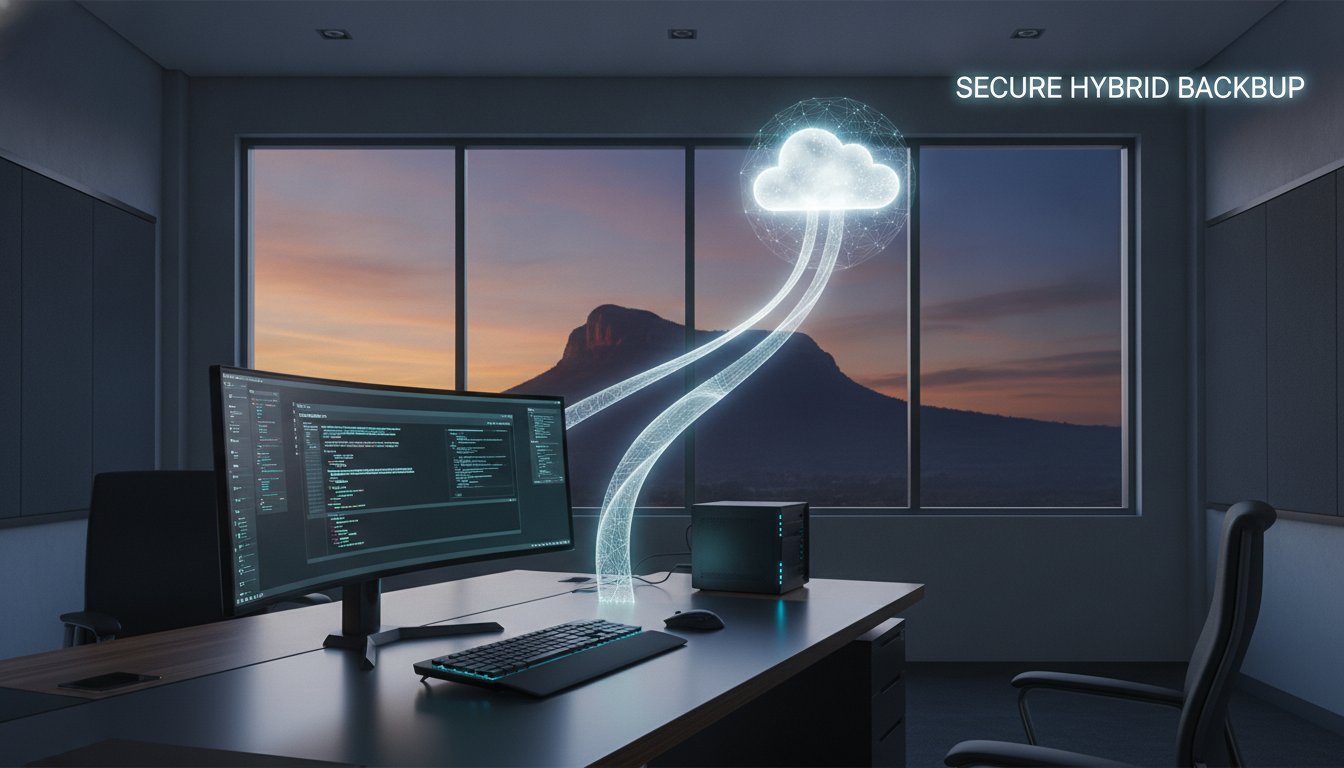
Modern malware has become incredibly sophisticated, often using AI to find the weakest entry points in small business networks. Ransomware is a type of cyberattack where criminals lock your digital files and demand a fee for the key, often causing a total halt to your business operations. To fight this, we now use “immutable” backups. These are copies of your data that cannot be changed or deleted by anyone, including a hacker. At Aspire Computing, we focus on these robust small business data backup solutions to ensure that even if a breach occurs, your files remain safe and recoverable.
The 3-2-1 Backup Rule: Your Gold Standard for Data Safety
You might wonder why a strategy from the year 2000 still matters in 2026. The 3-2-1 rule is a simple but powerful framework that has protected businesses for decades. It stands for having three copies of your data, stored on two different types of media, with one of those copies kept off-site. While technology changes fast, this logic remains the gold standard because it addresses every major risk factor. It is the foundation of effective small business data backup solutions. If your main computer fails, you have a local copy. If your office is damaged by a fire or flood, you have a remote copy.
Applying this to a modern home office or a retail shop in Toowoomba is easier than it sounds. You don’t need a massive server room to achieve professional-grade safety. By combining a physical drive on your desk with an automated remote service, you create a safety net that works even when you are busy running your business. Even in the age of remote work, “off-site” is critical. It ensures that your data exists in a completely different physical location, protecting you from local disasters that could affect your entire building or suburb.
Local Backups: For Speed and Immediate Access
Local backups involve saving your data to hardware physically located in your office, such as an External Hard Drive or Network Attached Storage (NAS). The biggest advantage here is speed. If you need to recover a massive file, pulling it from a local drive is almost instant. This is particularly important for Toowoomba businesses handling high-volume data like video production or CAD drawings. However, local hardware is vulnerable to the same physical risks as your main computer. If a power surge hits or a theft occurs, both your computer and your local backup could be lost at once. That is why local storage is only one part of the puzzle.
Cloud Backups: Your Safety Net Against Local Disasters
Cloud backup is your “off-site” insurance policy. It is important to distinguish this from “sync” services like Dropbox or OneDrive. While sync services are great for collaboration, they often mirror mistakes. If you accidentally delete a file or a virus encrypts your data, that change is often synced immediately to the cloud. A true backup service keeps historical versions of your files, allowing you to roll back to a time before the error occurred.
These small business data backup solutions use end-to-end encryption to keep your data private and secure. Most importantly, they are automated. You don’t have to remember to click save or swap out tapes. The software works quietly in the background. If you are unsure which software fits your specific needs, you can always ask a local expert for a recommendation to ensure your setup is truly robust.
Comparing Backup Solutions: Cloud, Local, or Hybrid?
Every business in Toowoomba has a unique digital footprint. A retail shop managing daily transaction logs has different needs than a tradesperson storing thousands of high-resolution project photos. When you look at small business data backup solutions, you generally choose between three models. Cloud-only setups are great for small teams that don’t generate massive files and have reliable internet. Local-only systems offer the fastest recovery speeds for high-volume data, but they carry a high physical risk. If your office is damaged, your data goes with it.
For most local businesses, we recommend a hybrid approach. This model gives you the “best of both worlds” by keeping a fast copy on-site and a secure copy in the cloud. It is particularly effective for industries like medical or legal services where data compliance and quick access are equally important. By using a hybrid strategy, you ensure that a simple hardware failure doesn’t stop your workday, while a larger disaster doesn’t end your business.
NBN Considerations for Toowoomba Businesses
Your NBN connection is the engine room of your cloud strategy. While many people focus on download speeds, your upload speed is what actually determines your backup success. If your upload speed is slow, a large backup might not finish overnight. This can lead to your systems slowing down during the day as the backup competes with your emails and video calls. We also see businesses run into unexpected data caps on certain plans. It’s vital to have a local IT expert audit your connection before you commit to a cloud-heavy strategy. This ensures your internet plan can actually support your data volume without causing frustration.
Choosing Between Managed and Unmanaged Solutions
An unmanaged solution is essentially a DIY approach. You buy the software, set it up, and hope it works every night. The risk here is that these systems can fail silently. You might not realize there is a problem until the day you actually need to recover a file. A managed solution provides a much higher level of security. With a managed service, an expert monitors your backup dashboard daily. If a session fails, we step in to fix it immediately. For a business without a dedicated IT staff, the peace of mind that comes from professional monitoring is often far more valuable than the software itself. It’s about having personal accountability and knowing a local expert is watching over your systems.

How to Implement and Test Your Backup Strategy
This model of dedicated oversight is common in many essential services; for example, in the disability sector, providers like WithCare Support Services help families explore Supported Independent Living (SIL) to ensure their loved ones have the same level of professional, round-the-clock support in their daily environments.
A great backup plan is more than just a piece of software. It is a methodical approach to protecting what matters most. Before you install any small business data backup solutions, you must start with a data audit. Not every file on your computer is equally important. Separate your mission-critical data, such as accounting records, client databases, and current project files, from “nice to have” items like old marketing drafts or archived emails. This allows you to prioritize your most vital assets and ensure they are protected with the highest frequency.
Setting your backup frequency depends on how much data you can afford to lose. For a busy office, we often recommend hourly or even real-time backups for critical databases. For static files, a daily sweep is usually sufficient. However, the most important part of implementation is the recovery test. A backup is essentially useless if you cannot restore it when a crisis hits. You need to prove the system works before you actually need it.
Step-by-Step Setup for a Small Office
The setup process begins by installing agent software on every device, including laptops that often leave the office. These mobile devices are frequently at the highest risk for theft or physical damage. During installation, you will configure your encryption keys. These keys ensure that only you can read your data, but you must store them in a secure, physical location. If these keys are lost, the data is unrecoverable. Finally, set up automated email alerts. You shouldn’t have to log in every day to check the status; the system should proactively tell you if a job has failed.
The Monthly Recovery Drill
We recommend performing a “test restore” at least once a month. This simple drill involves picking a random folder and restoring it to a temporary location. Once restored, open the files to verify their integrity and ensure they haven’t been corrupted. This process only takes a few minutes but provides immense peace of mind. Document these steps in a simple guide kept in your office. If an emergency occurs while you are away, your staff should be able to follow the instructions to recover files quickly. If you want a professional to handle this monitoring and testing for you, contact Aspire Computing for managed data backup services today.
Protect Your Business with Aspire Computing Toowoomba
Since 1999, Aspire Computing has been the trusted face of IT support across Toowoomba and the Darling Downs. We believe that technology should serve your business, not complicate it. When you choose us, you aren’t just buying a software license. You’re partnering with a local expert who understands the unique challenges of running a business in our region. This personal accountability is what sets us apart from anonymous providers. We offer managed IT support that takes the technical burden off your shoulders, allowing you to focus on your clients while we monitor your small business data backup solutions in the background.
Even the best backup strategy can face extreme challenges. If a drive is physically crushed or a system is severely compromised, you need more than just a download link. We provide specialized data recovery services as the ultimate safety net for your most critical information. While we always aim for proactive protection, our extensive experience in reactive recovery means we know exactly how to get your files back if the unthinkable happens. This dual expertise ensures your business continuity is always our top priority, giving you the confidence to operate without fear of data loss.
Why a Local Partner Beats a Global Call Centre
When your server goes down or your files disappear, the last thing you want is to wait on hold for an overseas call centre. Global providers often rely on generic scripts that don’t account for local variables like NBN limitations or Toowoomba’s specific infrastructure. We offer on-site assistance when you need it most, arriving at your place of business to solve problems directly. We can look at your hardware and provide a solution that fits your specific workflow. Our help is professional and reassuring. We speak your language, not technical jargon, so you always know exactly what is happening with your systems.
Get a Professional IT Health Check
Prevention is always better than a cure. We offer a comprehensive IT health check to audit your current systems for hidden vulnerabilities before they become expensive problems. This audit looks at your hardware age, your current backup success rates, and your overall security posture. Part of this strategy includes a robust virus and malware removal plan to keep your network clean. By securing your endpoints, we prevent data loss before it even starts. Contact us today to set up a tailored strategy for your small business data backup solutions and gain the peace of mind that comes from professional, local care.
Take Control of Your Digital Security
Protecting your livelihood shouldn’t feel like a constant battle against technology. By implementing the 3-2-1 backup rule and choosing a hybrid model that fits your local NBN speeds, you build a resilient foundation for your company. These small business data backup solutions ensure that whether you face a hardware crash or a cyberattack, your data remains safe and your doors stay open. Regular testing and professional monitoring turn a complex technical task into a reliable safety net that works quietly in the background.
Aspire Computing has been part of the Toowoomba community since 1999. As local experts in both proactive protection and reactive data recovery, we understand the accountability that comes with helping a neighbor. You don’t have to manage these risks alone. Contact Aspire Computing for a local IT health check and backup audit to ensure your systems are ready for whatever 2026 brings. It’s time to replace your technical anxiety with the peace of mind that comes from professional, on-site support. Your business is too valuable to leave to chance.
Frequently Asked Questions
What is the best backup solution for a very small business?
A hybrid model is the most effective choice for a small office. This setup combines a local external drive for near-instant file recovery with an automated cloud service for off-site protection. By using both methods, you cover your business against common hardware failures and physical disasters like fire or theft. For micro-businesses in Toowoomba, this provides high-level security without the need for complex server infrastructure or expensive maintenance.
How often should a small business back up its data?
You should back up your business data at least once every 24 hours. For shops or offices with high transaction volumes, hourly or even real-time backups are a much safer choice. The right frequency depends on how much data you can afford to lose. Setting up automated small business data backup solutions ensures these saves happen consistently every day without relying on your memory or manual effort. Once your automated systems are handling the heavy lifting for your records, you can learn more about Tax Falcon to see how they provide a similarly streamlined approach for Australians lodging their tax returns.
Yes, professional cloud backup is highly secure when configured with end-to-end encryption. This process scrambles your files before they leave your computer, meaning they can only be unlocked with your private key. In 2026, reputable providers use AES-256 bit encryption, which is the same standard used by banks and government agencies. It is significantly safer than leaving unencrypted client data on a portable USB drive that could be lost or stolen.
What is the difference between data backup and data recovery?
Data backup is the proactive process of making copies of your files to prevent loss. Data recovery is the reactive process of retrieving those files after a system failure, accidental deletion, or cyberattack. Think of the backup as your insurance policy and recovery as the claim process. You need both to ensure business continuity. If your backups fail, you may need specialist data recovery services to reconstruct lost information from damaged hardware.
How much does a professional backup solution cost for a small business?
The cost of small business data backup solutions depends on your total data volume and the number of devices you need to protect. While industry software subscriptions often start with modest annual fees for basic storage, managed services provide additional monitoring and support. The investment is almost always much lower than the thousands of dollars lost during even a single day of total business downtime or the high cost of emergency recovery.
Can I use a free cloud service like Google Drive for my business backup?
Free services like Google Drive or OneDrive are synchronization tools rather than true backup solutions. If a file is deleted or infected by ransomware on your computer, the change is instantly synced to the cloud, which could destroy your only copy. Professional backup software keeps multiple point-in-time versions of your files. This allows you to roll back to a clean version from yesterday or last week if something goes wrong today.
What happens if my backup fails and I lose my data?
If your backup fails and you lose data, you should immediately stop using the affected computer to prevent overwriting any remaining file fragments. This is when you need to contact professional data recovery specialists. We use advanced tools to scan damaged drives and extract files that are no longer accessible through your operating system. Acting quickly and seeking expert help gives you the best chance of getting your important business documents back.
Do I need an IT department to manage my backups?
You don’t need a dedicated in-house IT department to manage your backups effectively. Many small businesses in the Darling Downs partner with a local managed service provider like Aspire Computing. We act as your external IT team, monitoring your backup status every day and fixing errors before you even notice them. This gives you professional-grade protection and personal accountability without the overhead cost of hiring full-time technical staff for your office.

B.App.Sc., Cert. Computer Engineering PC Service and Repair
As the owner of Aspire Computing founded in 1999, Chaim Lee has been working for over 20 years as the Leading Computer Technician.
He has a life long interest in electronics, computing, science and technology. He has completed studies and gained qualifications in Applied Science, Computer Repair and Service, Microsoft Installation and Maintenance, Technical Writing, Workplace Training, and Technical Sales Training.