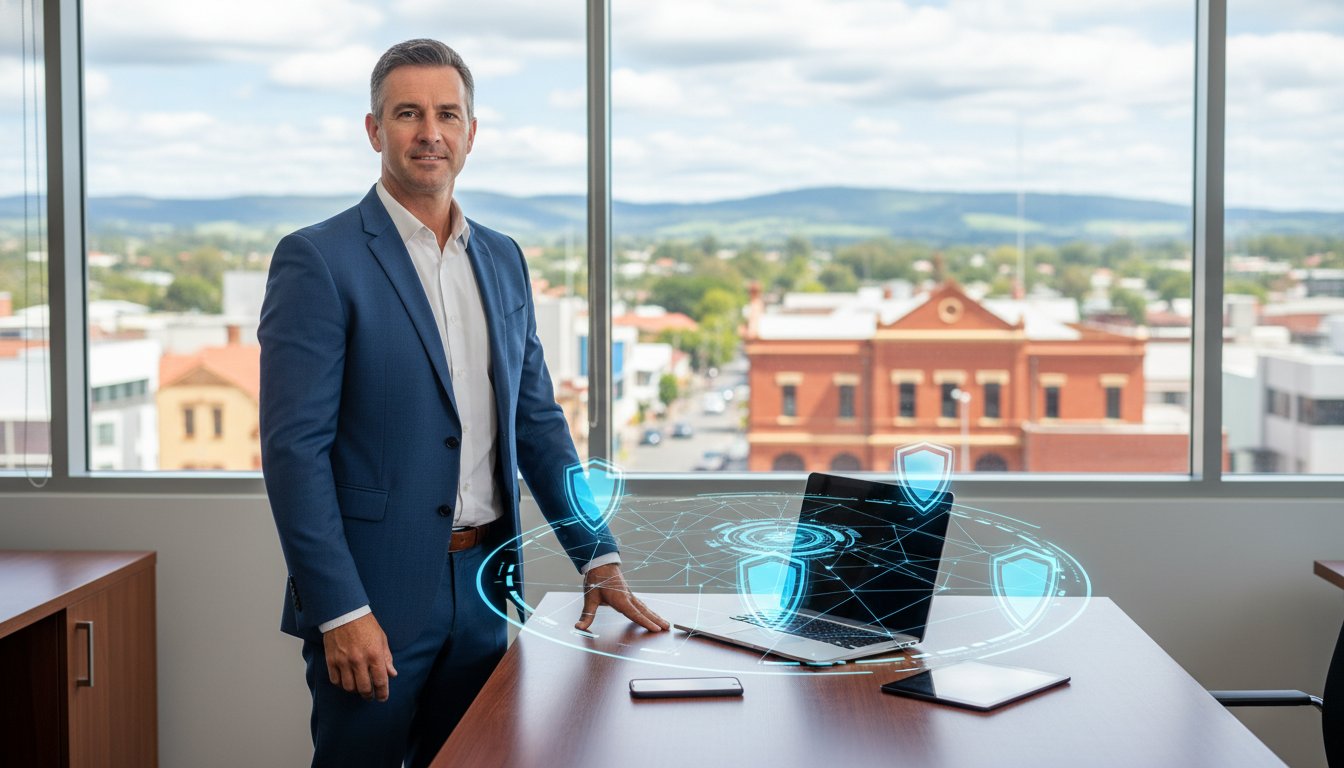
Right now, an Australian small business reports a cybercrime to the Australian Signals Directorate every six minutes. With the average cost of these incidents climbing to $56,600, it’s no longer a question of if you’ll be targeted, but when. You might feel overwhelmed by constant security alerts or the nagging fear of a ransomware attack that could lock your doors for good. It’s frustrating to pay for technical tools you don’t fully understand, especially when you lack a dedicated in-house IT team to make sense of the noise.

You deserve a secure environment where you know exactly what you’re paying for and who to call here in Toowoomba if things go wrong. This guide explains how modern endpoint security for small business combines global threat intelligence with local, hands-on expertise to keep your data safe. We’ll break down the 2026 regulatory landscape, including the new Cyber Security Rules for smart devices, and show you how to move beyond basic antivirus. You’ll learn how to build a professional defense that protects your livelihood while keeping a reliable local expert just a phone call away.

Key Takeaways

  • Understand why every connected device, including printers and remote laptops, requires protection in a modern hybrid work environment.
  • Discover the critical shift from traditional antivirus to Endpoint Detection and Response (EDR) and how it identifies suspicious behavior in real-time.
  • Learn how to audit your hardware and align your strategy with the Australian Cyber Security Centre’s Essential Eight framework.
  • Evaluate the best 2026 software options, from Microsoft Defender for Business to lightweight solutions like Bitdefender, tailored for your specific needs.
  • See why managed endpoint security for small business offers a local point of accountability that DIY software simply cannot match.

What is Endpoint Security and Why Does Your Small Business Need It?

When you think of your business network, you might picture the server in your office or the desktop computer on your desk. However, the boundaries of your workplace have changed. Endpoint security is the practice of protecting the various devices that connect to your network from malicious threats. In 2026, an ‘endpoint’ isn’t just a computer. It’s every laptop, smartphone, and even the office printer your team uses to get the job done. As more Darling Downs businesses move to remote or hybrid work models, these devices often operate outside the traditional office firewall, making them vulnerable to modern cyber threats.

Cybercriminals don’t just target big banks in Sydney. They use automated tools to scan the internet for any weak entry point, which means a small business in Toowoomba is just as visible as a global corporation. Traditional security used to be about building a wall to prevent attacks. Today, it’s about detection. Implementing robust endpoint security for small business isn’t just about stopping a virus; it’s about having a system that watches for suspicious behavior in real-time. If an attacker manages to bypass your initial defenses, you need a way to spot them before they can do any real damage.

To better understand how these defenses work in a real-world setting,

Antivirus vs. Endpoint Detection and Response (EDR): What is the Difference?

Traditional antivirus software used to be enough for most shops. It worked by checking files against a massive database of “known bad” signatures. If a file matched the list, it was blocked. If it didn’t, it was let through. This approach is now outdated. Hackers create unique malware that doesn’t appear on any list. Think of legacy AV like a simple locked door. It keeps out anyone without a key, but it doesn’t know if someone has already climbed through a side window. It’s a static defense in a world of moving targets.

Modern endpoint security for small business relies on Endpoint Detection and Response (EDR). If AV is the locked door, EDR is the motion-sensor alarm system and the high-definition security camera. It doesn’t just look for bad files. It watches for bad behavior. If a trusted application suddenly starts encrypting your files or trying to contact a server in a foreign country, EDR spots the anomaly and acts. This proactive stance aligns with the Cybersecurity for Small Business guidelines provided by the FTC, which emphasize the need for constant monitoring.

How EDR Identifies Hidden Threats

EDR uses behavioral analysis to find threats that haven’t been seen before. For example, if your PDF reader suddenly tries to modify system settings, the EDR system places that activity in a “sandbox.” This is a safe, isolated digital environment where the file can run without hurting your actual system. While the file runs, the EDR monitors every action it takes. It also tracks lateral movement to see if an attacker is trying to jump from one computer to another across your network. This visibility allows you to see exactly how a breach started and where it tried to go.

Why Response is the Most Important Letter in EDR

Many Toowoomba business owners struggle with alert fatigue. If your software pings your phone every five minutes with technical jargon, you’ll eventually start ignoring it. Managing endpoint security for small business effectively means having a plan for when things go wrong. EDR helps by using automated isolation. If a laptop is compromised, the system can automatically cut its connection to the rest of the office. This stops the infection from spreading while you’re asleep or busy with customers. Having a local expert to interpret this data is critical for a fast recovery. If you’re worried about your current protection, we offer professional virus and malware removal to clean up existing threats and get your security back on track.

Comparing the Best Endpoint Security Tools for SMBs in 2026

Selecting the right software for your office can feel overwhelming. There are hundreds of vendors promising total safety. For a local shop or professional office, the best endpoint security for small business isn’t always the most expensive one. It’s the tool that fits your current workflow without slowing down your computers. You need protection that works quietly in the background while you focus on your customers.

When you evaluate these tools, look for a balance between ease of use and depth of protection. Some software is “set and forget,” while other platforms require constant attention. If you don’t have a dedicated IT person, an unmanaged tool can quickly become a liability. Choosing a platform that your local IT partner can monitor ensures that alerts don’t go ignored.

Microsoft Defender for Business: The Integrated Choice

Many Toowoomba businesses already use Microsoft 365. If you have a Business Premium subscription, you likely already own Microsoft Defender for Business. This is often the most cost-effective choice because it’s built directly into your Windows laptops. It doesn’t require a separate installation that might clash with your other apps. It offers automated investigation and remediation, which means the software can often fix a security threat before you even know it existed. It’s a seamless way to strengthen your cybersecurity without adding new monthly bills.

Specialised Tools for High-Security Needs

If you work in a high-risk industry like healthcare or finance, you might need “Next-Gen” tools like SentinelOne, CrowdStrike, or Sophos. These platforms are incredibly powerful but can be complex to manage alone. They provide deep visibility into every file movement on your network. For smaller setups, lightweight options like Bitdefender are excellent because they provide strong protection with very little impact on system performance. This is perfect for older office PCs or specialised hardware like point-of-sale systems.

  • Managed Licenses: A professional monitors the dashboard for you and responds to threats.
  • Unmanaged Licenses: You are responsible for checking every alert and fixing every infection.
  • Automated Investigation: The software attempts to heal itself after a detected attack.

The best tool is the one that actually gets updated. Many business owners buy a subscription but forget to check if the software is still running correctly. Whether you choose a Microsoft-centric approach or a specialised third-party tool, the goal is consistent monitoring. It’s simple. Security only works if it stays active. If you’re unsure which license fits your specific hardware, we can help you choose the right path for your business.

Steps to Implement a Security Strategy in Your Toowoomba Business

Implementing endpoint security for small business starts with a clear inventory of your digital assets. You can’t protect what you don’t know exists. Many business owners are surprised to find forgotten laptops, old tablets, or even smart office printers still connected to their network. A hardware audit is your first practical step. By listing every device that accesses your data, you can ensure each one has the necessary updates and monitoring software installed. This visibility is the foundation of a reliable defense.

Setting up multi-factor authentication (MFA) is the next non-negotiable layer. It’s one of the most effective ways to stop unauthorized access, even if a password is stolen. Alongside MFA, you must establish a strict patch management schedule. Software developers release updates to fix security holes that hackers actively exploit. If you wait weeks to install these updates, you’re leaving a window open for an attack. Regular patching keeps your systems resilient and your hardware running efficiently.

Mapping to the ACSC Essential Eight

The Australian Cyber Security Centre (ACSC) recommends a framework called the Essential Eight. This is a prioritized list of strategies designed to make it much harder for attackers to compromise your systems. For a local business, two of the most critical areas are application control and restricting administrative privileges. Application control ensures that only pre-approved programs can run on your computers. Restricting admin rights means that staff accounts only have the permissions they need for daily tasks. This prevents a single compromised user account from being used to change system-wide settings or install malicious software. Modern endpoint security platforms help you meet several of these requirements automatically, providing a structured way to stay compliant with Australian standards.

Creating a Security First Culture

Security is as much about people as it is about software. Your staff are your front line. Simple training sessions can help them spot phishing emails before they click a dangerous link. Teach your team to verify suspicious requests and to be cautious with unexpected attachments. If you have employees working from home, establish a clear protocol for accessing the office network. They should know exactly how to reach out for help if they notice something strange on their screen. An incident response plan is your roadmap for what to do if a breach occurs, ensuring everyone knows their role in a crisis. If you’re ready to lock down your network, we provide expert cyber security services to help you build a defense that lasts.

Why Local Managed Security Beats a DIY Approach

Buying a subscription for endpoint security for small business is only half the battle. The real challenge begins when the software sends an alert you don’t understand. This is what we call the “Accountability Gap.” In a DIY setup, you’re the one responsible for deciding if a notification is a false alarm or a business-ending breach. If you make the wrong call, or if you’re too busy with customers to see the alert, the software can’t save you. Managed security closes this gap by putting a professional between you and the threat.

A local partner doesn’t just watch a digital dashboard. We understand the physical side of your IT too. If a hardware failure causes a security vulnerability in the Lockyer Valley, a global helpdesk in another timezone can’t drive to your office to swap out a compromised machine. We view security as a key part of your business continuity. It’s not just a line item on a spreadsheet. It’s the assurance that your doors stay open and your staff can work without interruption.

The Personal Touch in a Digital World

A local Toowoomba expert knows your business environment in a way a faceless corporation never could. At Aspire Computing’s, we bring over 25 years of local experience to every client we serve. We’ve seen how local businesses operate and the specific challenges they face. Our approach isn’t just about installing software. We combine reactive services like virus and malware removal with proactive defense strategies. This means we don’t just clean up the mess; we build the walls to prevent it from happening again. You get the power of global security tools backed by a local face you can trust.

Getting Started with a Free IT Health Check

It’s time to stop hoping your business is safe and start knowing it is protected. The transition is simpler than you might think. We begin with a professional security audit of your office. We look at your hardware, your software versions, and your current backup habits. This gives us a clear picture of where you stand today. From there, we create a plan that fits your budget and your specific risks. Taking this first step removes the anxiety of the unknown. Contact Aspire Computing today for a reassuring talk about your endpoint security for small business and how we can protect your livelihood.

Take Control of Your Business Security Today

Protecting your team in 2026 requires more than a standard software installation. You’ve seen how the threat landscape has changed and why a motion-sensor approach like EDR is now the standard for safety. By aligning with the Essential Eight framework and maintaining a strict hardware audit, you build a foundation that protects your data and your reputation. Managing endpoint security for small business shouldn’t be a source of constant stress or confusion. You deserve a partner who understands the local landscape and can provide on-site help when you need it most.

Since 1999, we’ve served Toowoomba and the Darling Downs with dependable IT support and specialist cyber security advice. We focus on business continuity so you can focus on your customers. Whether you need expert on-site assistance or remote troubleshooting, we’re here to ensure your technology works for you, not against you. Move your business from a state of uncertainty to a position of lasting strength today.

Secure your business with a local Toowoomba IT expert at Aspire Computing

Frequently Asked Questions

Is endpoint security different from a standard antivirus?

Yes, endpoint security is a more advanced evolution of standard antivirus. While traditional antivirus relies on a database of known threats to block specific files, modern endpoint security for small business monitors the behavior of every file and application. This allows it to spot “zero-day” attacks that haven’t been documented before. It acts more like a security guard watching for suspicious activity rather than just checking IDs at the door.

How much does endpoint security typically cost for a small business?

The cost of protection depends on the number of devices you need to secure and the level of management required. Most solutions are priced per device on a monthly or annual basis. You should evaluate whether you want a basic software license or a fully managed service where a local expert monitors the alerts for you. Choosing a managed approach often prevents expensive recovery costs by catching threats before they cause damage.

Do I need endpoint security if all my files are in the cloud?

You still need endpoint protection even if your files live in the cloud. Services like OneDrive or Dropbox secure the data while it sits on their servers, but they don’t protect the laptop or PC you use to access those files. If your local device is compromised by a keylogger or ransomware, the attacker can still steal or encrypt your cloud data by using your own active login credentials.

Can endpoint security slow down my older office computers?

Modern security tools are designed to be lightweight and shouldn’t noticeably slow down your hardware. In many cases, older office PCs actually run faster after installing professional security because the software identifies and removes hidden malware that was consuming system resources. If your computer is struggling, we often recommend a hardware upgrade, such as extra RAM or an SSD, alongside your security plan to ensure everything runs smoothly.

How does endpoint security protect my employees when they work from home?

Endpoint security protects your employees by living directly on their laptops or devices rather than just on the office network. This means the protection stays active whether they are working from a home office or a local cafe. A cloud-based management dashboard allows your IT partner to see threats and push updates to these remote devices in real-time, ensuring every team member stays secure regardless of their physical location.

What should I do if my business is currently experiencing a cyberattack?

If you suspect an active attack, immediately disconnect the affected device from the internet and your office network to stop the spread. Don’t attempt to pay any ransom or delete files yourself, as this can interfere with future data recovery efforts. Your next step should be to call a professional for virus and malware removal. We can help identify the entry point, secure your other devices, and begin the process of restoring your business operations.

Does endpoint security cover my office printers and networked devices?

Yes, office printers and other networked hardware are considered endpoints and are often the most overlooked vulnerabilities. Attackers can use an unsecured printer to gain a foothold on your network and move to more sensitive devices. A comprehensive strategy for endpoint security for small business includes auditing these devices and ensuring they are behind a secure firewall with updated firmware to prevent unauthorized access from global scanners.

Did you know that a cybercrime is now reported every six minutes in Australia? For a local shop or office, the average cost of a single incident has climbed to $56,600. That is a heavy burden for any small business to carry, especially when 60% of Australian small businesses still don’t have a formal response plan in place. You likely worry about ransomware shutting down your operations or an employee accidentally clicking a phishing link. It’s completely normal to feel anxious about technical jargon and the pressure of rules like the Cyber Security Act 2024.

I am here to help you simplify your security. You don’t need a massive IT department to protect your livelihood. This guide provides a clear, practical cybersecurity policy template for small business owners that aligns with the Australian Essential Eight framework. By following this structure, you’ll create a professional document for your staff handbook and close the basic gaps that hackers love to exploit. We will walk through the specific sections you need to stay compliant and keep your data safe, giving you the peace of mind to focus on running your business.

Key Takeaways

  • Understand why a clear set of rules for technology use is your best defence against hackers who target local enterprises.
  • Use a practical cybersecurity policy template for small business to set non-negotiable rules for passwords and multi-factor authentication.
  • Learn how to align your internal rules with the Australian “Essential Eight” to meet 2026 security maturity standards.
  • Follow a simple step-by-step process to audit your hardware and software assets before you begin drafting your document.
  • See why professional hardware setup and regular audits are necessary to turn a written policy into actual safety for your business.

What is a Cybersecurity Policy and Why Does Your Small Business Need One?

A cybersecurity policy is essentially the rulebook for your business’s digital life. Think of it as a Security policy that defines exactly how your team should handle sensitive data and use company hardware. It isn’t just a technical document for IT experts; it’s a practical guide that helps everyone from the front desk to the warehouse understand their role in keeping the business safe. Having these rules in writing removes the guesswork and ensures that security becomes a natural part of your daily routine.

Many business owners in Toowoomba believe they are “under the radar” for cybercriminals. This is a common misunderstanding. Modern hackers often use automated tools to scan thousands of small businesses at once, looking for easy targets with no formal rules in place. By implementing a cybersecurity policy template for small business, you show your local Darling Downs customers that you take their privacy seriously. This builds a level of trust that “fly-by-night” operators simply cannot match, while also ensuring you meet your legal obligations under the Australian Privacy Act.

To see how these documents look in practice, watch this helpful guide:

The Real Cost of “No Policy”

Operating without a clear policy is a gamble that usually ends in high costs. When systems fail or data is breached, the financial impact starts immediately. You have to consider the cost of downtime. Every hour your staff cannot access their files is money wasted on wages with zero productivity. In a tight-knit community like ours, reputational damage is even harder to fix. If a local client’s private information is leaked because of a simple mistake, they won’t just leave; they’ll tell their neighbours. There are also legal liabilities to consider. The Australian Privacy Act and the Cyber Security Act 2024 have strict requirements for data protection. Failing to meet these can result in significant fines and mandatory reporting to the Australian Signals Directorate if a ransomware payment is made.

Who Should be Covered by Your Policy?

Your security is only as strong as its weakest link, so your policy must cover everyone who touches your data. This includes:

  • Full-time and part-time staff: They need clear instructions on daily habits, like locking screens and identifying phishing emails.
  • Contractors and vendors: Any third party with access to your network must agree to your security standards before they start work.
  • Remote workers: For staff working from home in the Lockyer Valley, your policy should outline how they secure their home Wi-Fi and use company laptops safely.

Core Elements of a 2026 Cybersecurity Policy Template

Building a solid defence doesn’t have to be overwhelming. When you start drafting your cybersecurity policy template for small business, focus on the daily habits that actually prevent breaches. A well-structured policy serves as a roadmap for your team, clearly outlining what is expected of them when they log in each morning. You can find excellent foundational guidance through the FTC Cybersecurity for Small Business resources, which highlight the importance of risk assessment and data protection as the starting point for any professional document.

Your policy must include a non-negotiable requirement for Multi-Factor Authentication (MFA). In 2026, relying on a password alone is a massive risk. MFA adds a necessary layer of safety by requiring a second form of verification, such as a code sent to a trusted device. Alongside this, your template should define “Acceptable Use” rules. These rules explain what staff can and cannot do on business devices, such as avoiding personal social media on work PCs or refraining from downloading unapproved software. If you’re unsure how to set up these technical layers, our team at Aspire Computing can help with Cyber security audits to ensure your hardware configurations match your written policy.

Data handling and incident reporting are the final pillars of a strong template. You need clear rules for how sensitive client info is stored, shared, and eventually deleted. Just as importantly, your staff must know exactly what to do the second something feels wrong. Whether it’s a strange popup or a laptop that goes missing in a Toowoomba cafe, an immediate reporting process can be the difference between a minor blip and a total business shutdown.

Passphrases vs. Passwords

The Australian Cyber Security Centre (ACSC) now recommends using long passphrases instead of complex, short passwords. Passphrases are easier for your team to remember but much harder for hackers to guess. Every business platform should have a unique login to prevent a single leak from compromising your entire network. A long passphrase like “correct-horse-battery-staple” is significantly harder for a computer to crack than a complex but short password like “P@ssw0rd1!”.

Handling AI and Modern Phishing

By 2026, phishing has evolved far beyond poorly written emails. Scammers now use Generative AI to create perfect imitations of official documents and even “deepfake” voice calls that sound like colleagues. Your policy should include a “Verify First” rule for any financial transaction request, regardless of who it seems to come from. Establish clear guidelines on how staff can use AI tools, ensuring they never upload sensitive business data or client details into public AI platforms.

Aligning Your Policy with the Australian “Essential Eight”

A strong cybersecurity policy template for small business needs a solid technical foundation. In Australia, that foundation is the Australian ‘Essential Eight’. Developed by the Australian Signals Directorate, these eight strategies are now considered the baseline security standard for all industries as of 2026. Your policy shouldn’t just mention these concepts; it should build your entire digital defence around them. By following this framework, you move from a reactive “hope for the best” approach to a proactive stance that stops most common attacks before they even start.

One of the most effective pillars is application control. This simply means ensuring only approved software can run on your office PCs. It prevents staff from accidentally installing malicious programs that could compromise your network. Alongside this, your policy must address administrative privileges. Not every team member needs “Admin” access to their computer. By restricting these rights, you ensure that even if a user’s account is compromised, the damage a hacker can do is severely limited. These aren’t just technical hurdles; they’re sensible rules that keep your business running smoothly without unnecessary interruptions.

Daily backups and patching are your final lines of defence. Patching is the process of fixing software vulnerabilities before hackers find them. If your policy allows staff to click “Update Later” indefinitely, you’re leaving a door wide open for cybercriminals. Your policy should mandate that all software updates are installed within 48 hours of release. Finally, backups provide the ultimate safety net. If a ransomware attack does occur, having a clean, recent copy of your data ensures you can recover without paying a cent to criminals.

Why the Essential Eight Matters for QLD Businesses

Adopting this framework simplifies your security strategy into manageable chunks. Instead of worrying about every possible threat, you focus on the eight areas that provide the most protection. This approach is also becoming a requirement for many cyber-liability insurance policies in Australia. If you need help turning these rules into a reality for your office, our guide on IT Support for Business explains how to implement these technical controls effectively.

Implementing Backups and Patching

Security happens best when it’s automated. Your policy should require automated schedules for both backups and software updates so they occur while you sleep. We recommend the 3-2-1 backup rule: keep three copies of your data, on two different media types, with at least one copy stored off-site. This ensures that even if your office faces a physical disaster, your digital assets remain safe and accessible, maintaining your business continuity.

Step-by-Step: How to Customise and Launch Your Policy

Creating a policy is only half the battle. The real work begins with implementation. To move from a generic document to a functional shield, you must tailor the rules to fit the way your specific office operates. A cybersecurity policy template for small business provides the framework, but your unique business data and staff habits provide the substance. Taking a methodical approach ensures that your security measures are practical rather than just theoretical. It’s about building a culture where safety is a shared responsibility, not a burden.

Once you have your draft, don’t rush to publish it. Review the document with a professional to ensure your technical rules actually match your physical IT setup. There is no point in mandating complex encryption if your current laptops don’t support it. This is also the time to consider if your equipment is up to the task. If your systems are lagging, investing in hardware upgrades can provide the necessary performance to run modern security software without slowing down your team’s workflow.

Conducting a Simple Tech Audit

Before you fill out a single line of your template, you must know what you’re protecting. Walk through your office and list every laptop, tablet, and printer connected to your network. This process often reveals “Shadow IT,” which refers to apps or cloud services staff use without your knowledge. If an employee is using a personal Dropbox account to store client files, your policy needs to address this risk immediately. Knowing exactly what hardware and software you own allows you to close gaps that hackers often exploit in unmanaged devices.

The “Lunch and Learn” Rollout

A policy is useless if your team hasn’t read it or doesn’t understand why it exists. Instead of emailing a dry PDF, host a “Lunch and Learn” session. Present the policy as a tool for staff safety rather than just “boss rules.” Explain how these steps protect their own professional reputation as well as the business. During this session, you can run a simple phishing simulation to show how easily a dangerous link can be disguised. Finish the rollout by getting a signed acknowledgement from every team member to ensure everyone is on the same page. If you need help getting started with these technical protections, contact us for professional Cyber security support today.

Your digital environment will change as your Toowoomba business grows. New staff, new software, and evolving threats mean your policy cannot stay static. Schedule an annual review to update your rules and ensure they still meet the latest Australian standards. This regular checkup keeps your security tight and your business compliant with privacy expectations.

From Paper to Protection: How Aspire Computing Secures Toowoomba

Having a cybersecurity policy template for small business is a vital first step, but a document on its own won’t stop a hacker. To truly protect your livelihood, those written rules must be translated into technical settings on your computers, printers, and servers. A policy says you’ll use Multi-Factor Authentication, but it takes professional configuration to ensure MFA is active on every device without disrupting your team’s work. At Aspire Computing, we specialise in bridging this gap for Toowoomba business owners. We don’t just give you a list of rules; we ensure your hardware and software are actually doing what the policy says they should.

Our local approach is built on personal accountability. When you work with us, you aren’t calling a distant help desk in another time zone. You’re talking to an expert who knows the Darling Downs and understands the specific challenges local businesses face. We offer on-site security audits to see how your office actually functions. This allows us to spot physical risks, like unlocked server racks or unmanaged guest Wi-Fi, that a remote scan might miss. By combining a solid written policy with professional managed services, we take the burden of patching and backups off your plate entirely.

Turning Your Policy into Technical Reality

Setting up admin restrictions and MFA across a Windows network can be complex. We handle these technical layers for you, ensuring that only approved staff have access to sensitive areas of your system. Our process often begins with professional virus and malware removal to ensure your network is clean before we implement new security rules. We also take the guesswork out of business continuity. We test your systems to ensure your data recovery plan actually works, giving you the confidence that your files are safe regardless of what happens.

Get a Free Cybersecurity Health Check

Every industry has unique requirements, and your security should reflect that. A medical clinic in Toowoomba requires different data protections than a local retail shop. We help you identify the specific gaps in your current setup and customise a policy that fits your daily operations and industry expectations. If you’re feeling anxious about ransomware or data leaks, reach out to David at Aspire Computing. We provide a reassuring, no-jargon chat to help you understand your current risks. Let us help you turn your cybersecurity policy from a piece of paper into a functional shield for your business.

Secure Your Digital Future Today

We have explored how a cybersecurity policy template for small business provides the necessary structure to protect your team and your customers. By aligning your internal rules with the Australian Essential Eight and conducting regular tech audits, you move from a position of vulnerability to one of strength. It’s about more than just ticking a compliance box; it is about ensuring the long-term operational stability of your Toowoomba office.

I have been serving the Toowoomba community since 1999, and I understand that technical security can feel overwhelming for busy owners. You don’t have to navigate these 2026 regulations alone. My team and I provide personalised service and deep expertise in ACSC standards to help you close security gaps for good. We make sure your hardware actually supports the rules you have put on paper.

Contact Aspire Computing for a local IT security audit today. Taking this simple step ensures your business remains a trusted and secure part of our local community for many years to come.

Frequently Asked Questions

Do I really need a cybersecurity policy if I only have two employees?

Yes, you definitely need a policy because hackers use automated tools that don’t care about your staff count. Even with two employees, a single mistake can lead to a data breach that costs your business tens of thousands of dollars. Having a plan ensures that both team members follow the same safety rules for passwords and email handling, which significantly reduces your risk profile.

What is the “Essential Eight” and do I have to follow all of it?

The Essential Eight is a series of baseline security strategies recommended by the Australian Signals Directorate. While you don’t legally have to follow all of it, the 2023-2030 Australian Cyber Security Strategy now considers Maturity Level 2 the baseline for all industries. Implementing these eight pillars, such as application control and daily backups, provides the most effective protection against modern threats.

How often should I update my small business cybersecurity policy?

You should review and update your policy at least once every twelve months. It is also important to refresh the document whenever you introduce new hardware, hire new staff, or adopt new cloud software. Regular updates ensure your rules keep pace with evolving threats like AI-driven phishing and deepfake voice calls that have become more common in 2026.

Can I be held legally responsible if my business has a data breach?

Yes, Australian businesses have clear legal obligations to protect sensitive data. Under the Cyber Security Act 2024, if your turnover is $3 million or more, you must report ransomware payments within 72 hours or face civil penalties of up to $19,800. Even for smaller shops, failing to take reasonable steps to secure client information can lead to legal action and significant reputational damage in the Toowoomba community.

What should be the first step if an employee clicks a suspicious link?

The first step is to disconnect the affected computer from the internet and the office network to stop the spread of potential malware. Once the device is isolated, you should immediately contact a professional for virus and malware removal. Quick action helps contain the threat and prevents a single click from turning into a full-scale network breach that shuts down your entire operation.

Is a free online template enough to protect my business?

A free cybersecurity policy template for small business is an excellent starting point, but it isn’t a complete solution. Most generic templates aren’t aligned with specific Australian regulations like the Essential Eight. You must customise the template to reflect your actual IT setup, including your specific hardware, software, and backup processes, to ensure the rules are practical and effective for your office.

How do I explain the new security rules to my staff without sounding bossy?

Frame the new rules as a way to protect the whole team rather than just “boss rules.” Explain that these security measures safeguard their professional reputation and ensure the business remains stable so their jobs are secure. Using a collaborative approach, like a quick training session, helps staff understand that following the cybersecurity policy template for small business is a shared responsibility that benefits everyone.

Does a cybersecurity policy help with getting business insurance?

Yes, most cyber insurance providers now require businesses to demonstrate a baseline level of security before issuing or renewing a policy. Having a formal document that aligns with the Essential Eight shows insurers that you are a lower-risk client. In many cases, proving that you have active controls like MFA and regular backups can be the difference between getting covered or being denied insurance altogether.

Did you know that downtime costs the average Australian small business roughly A$5,600 per hour in lost productivity and missed opportunities? For many local firms, the real cost of IT support for small business Toowoomba isn’t just the invoice on your desk; it’s the hidden price of staff sitting idle during an NBN outage or a server failure. You might feel that paying for repairs only when things break is the most economical path, but those surprise IT bills often hide a much larger drain on your bottom line.

We understand the anxiety that comes with unpredictable tech expenses and the looming pressure of 2026 cyber security compliance. It’s exhausting to manage a business when you’re constantly looking over your shoulder for the next digital disaster. This guide will show you how to move beyond the break-fix cycle and calculate the true financial return of proactive, managed support. We’ll explore how shifting to a fixed monthly budget ensures zero downtime during your peak hours and keeps your data safe with a trusted local expert who understands the Toowoomba landscape.

Key Takeaways

  • Move beyond unpredictable repair bills by understanding how a proactive IT strategy eliminates the high cost of staff downtime.
  • Identify the “break-fix tax” and see why the true cost of IT support for small business Toowoomba involves more than just a technician’s hourly rate.
  • Calculate tangible gains from standardising your technology, which reduces the need for emergency hardware upgrades and streamlines daily operations.
  • Learn why local on-site expertise is essential for Toowoomba businesses to manage regional NBN challenges and ensure zero downtime during peak hours.
  • Discover how over 25 years of local experience can help you meet 2026 cyber security requirements with a predictable, fixed monthly budget.

Understanding the ROI of Managed IT Services for Small Business

Calculating the true cost of IT support for small business Toowoomba requires looking far beyond the monthly invoice. In the 2026 business landscape, Return on Investment (ROI) isn’t just about finding the cheapest hourly rate; it’s about how much revenue your technology helps you generate versus how much it costs when it fails. For a local office in the Darling Downs, a stable network is the backbone of every client interaction and sale. If your systems are slow or unreliable, you aren’t just paying for a repair; you’re losing the opportunity to grow.

Technology standards have shifted significantly this year. With the updated 2026 Privacy Act removing exemptions for many small businesses, professional data protection is no longer optional. Relying on occasional computer repairs is a gamble that can lead to expensive compliance failures. To better understand how these costs break down, watch this helpful video:

The ROI Formula Simplified for SMBs

You don’t need a finance degree to calculate your tech ROI. The basic formula is (Gains – Cost) divided by Cost. In a small team, “Gains” include the hundreds of staff hours saved by avoiding slow boot times and software glitches. It also covers the hardware longevity you get from regular maintenance and the massive savings from prevented data loss. When you contrast these gains against the cost of IT support for small business Toowoomba, the value of staying online becomes clear. According to industry research, downtime costs the average Australian small business roughly A$5,600 per hour in lost productivity. Preventing even one hour of outage can pay for months of support.

Managed IT vs. Break-Fix: A Financial Comparison

Many owners fall into the “Break-Fix” trap, believing they save money by only calling a technician when something stops working. This creates an illusion of savings, but it actually leads to higher, unpredictable costs through emergency call-out premiums and extended downtime. Transitioning to Managed IT Services allows for predictable monthly spending that actively prevents crises before they disrupt your day. Managed IT is a proactive partnership focused on maximum uptime. By choosing this path, you trade the anxiety of “surprise” invoices for a strategy that treats technology as a tool for profit rather than a recurring headache.

Setting realistic expectations is key for small teams. You shouldn’t expect technology to replace your staff, but you should expect it to make them 20% more efficient. When your PC, printer, and backup systems work perfectly every morning, your team can focus on serving Toowoomba customers instead of troubleshooting Windows updates.

The ‘Break-Fix Tax’: Identifying Hidden Costs in Your Current Setup

Many Toowoomba business owners believe they’re being frugal by only calling for help when a laptop won’t boot or the printer jams. This reactive approach creates what we call the “Break-Fix Tax.” It’s an invisible drain on your finances that goes well beyond the invoice from a technician. When you rely on as-needed support, you often pay a premium for urgency. While standard regional rates in the Darling Downs might sit between A$130 and A$160 per hour, emergency call-outs can quickly spike to A$280 per hour. You aren’t just paying for a fix; you’re paying a penalty for the lack of a plan.

The cost of IT support for small business Toowoomba also includes the “Opportunity Cost” of your own time. If you’re the business owner, your hourly value is significant. Every hour you spend troubleshooting a router or waiting on hold for an NBN provider is an hour you aren’t focused on strategy, sales, or client relationships. Unmanaged systems also lead to catastrophic hardware failure. A server that hasn’t been maintained will eventually fail, forcing an expensive, unplanned replacement that could have been avoided with simple, proactive updates.

Quantifying Employee Downtime

The math of downtime is simple but sobering. You take the number of affected employees, multiply it by their hourly wage, and then by the hours lost. However, “partial downtime” is often the silent profit killer in local offices. If your team struggles with a slow network or crashing applications, they might lose 15 minutes of productivity every day. For a team of five, that adds up to over an hour of lost labour daily. Research shows that businesses relying solely on break-fix support experience 30% more downtime than those on managed plans. This lost momentum is a direct hit to your weekly output that never appears on a standard repair bill.

The Security Risk of Reactive IT

A reactive setup means your security is only addressed after a breach occurs. In the last 12 months, 60% of regional Australian businesses reported targeted phishing or ransomware attempts. If a local firm’s data is compromised, the cost of data recovery services and the subsequent brand damage can be devastating. Following basic FTC cybersecurity guidelines is nearly impossible if your software updates are unmanaged and your antivirus is out of date. Beyond the financial loss, the long-term cost of losing the trust of your Toowoomba clients is often impossible to recover. If you’re worried about your current vulnerabilities, it might be time to review your business continuity plan before a minor glitch becomes a major disaster.

Calculating the Tangible Gains: Downtime, Security, and Efficiency

Evaluating the cost of IT support for small business Toowoomba requires a shift in perspective. Instead of viewing IT as a recurring bill, successful owners in the Darling Downs treat it as a tool for increasing output. When your technology is standardised and monitored, it stops being a hurdle and starts being a growth engine. For example, standardising software across your team ensures everyone uses the same platforms, which eliminates the friction of file incompatibilities and reduces training time for new staff. These small efficiency gains compound into significant weekly output increases that directly impact your bottom line.

One major benefit of managed support is the peace of mind that comes from 24/7 monitoring. Even if your office operates on a 9-to-5 schedule, cyber threats and system glitches don’t take the night off. Proactive monitoring identifies a failing hard drive or a suspicious login attempt at 2:00 AM, allowing it to be resolved before your team arrives at 8:30 AM. This prevents the “morning meltdown” where staff stand around waiting for a system reboot. Following FCC cybersecurity tips isn’t just about safety; it’s a financial strategy to keep your operations running without interruption.

The ROI of Proactive Cyber Security

The financial difference between prevention and a cure is staggering. While the cost of virus and malware removal is a necessary expense after an infection, proactive prevention is significantly cheaper when you factor in lost time. Automated backups provide a similar return. If a system fails, being able to recover data in minutes rather than days saves thousands in lost labour. It’s a critical safety net, especially since industry research from the National Cyber Security Alliance suggests that up to 60% of small businesses close within six months of a major cyber attack. Investing in security today protects the very existence of your business tomorrow.

Hardware Longevity and Performance

You don’t always need to buy new equipment to see a performance boost. Strategic hardware upgrades, such as adding RAM or switching to faster storage, can extend the life of your current fleet by several years. This approach avoids the “Big Bang” expense of replacing every office PC at once, which can devastate a small business’s cash flow. Regular “Windows Tune-ups” and remote performance monitoring ensure your laptops remain fast and reliable. By maintaining your equipment properly, you maximise the return on your initial hardware investment and keep your team productive on the devices they already know.

Why Local Toowoomba Context Matters for Your IT Investment

Toowoomba isn’t Sydney or Brisbane. Our local business landscape across the Darling Downs comes with unique infrastructure hurdles that generic, metro-based IT firms often overlook. When you evaluate the cost of IT support for small business Toowoomba, you have to consider the regional factors that impact your uptime. From the specific NBN rollouts in our local business parks to the power stability issues common in regional Queensland, having a partner who understands the local terrain is a financial safeguard. A provider based in a different state won’t know about the scheduled maintenance affecting your specific street or the local environmental factors that can stress your hardware.

Supporting the local economy also provides a tangible return. A local partner isn’t just a voice on a headset; they’re a member of your community who is personally accountable for your success. This relationship ensures that your data stays secure under Australian privacy laws and regional compliance standards. By keeping your IT investment local, you ensure that your support team can be at your office door when digital solutions aren’t enough.

On-Site vs. Remote: The Hybrid Advantage

While 82% of helpdesk tickets are now resolved through remote sessions, the remaining 18% often involve critical hardware failures that require a physical presence. If your internet connection drops out entirely, a remote-only helpdesk becomes useless. This is where computer repairs in Toowoomba provide the most value. A local technician can arrive on-site to bypass network issues and get your team back to work. Building trust through face-to-face strategic planning allows us to identify physical vulnerabilities in your office setup that a remote scan would simply miss. This hybrid approach ensures you have the speed of remote help with the reliability of local, on-site intervention.

Toowoomba Infrastructure and Your Tech

Regional Queensland is prone to power surges and weather events that can devastate unmanaged hardware. Proper protection and battery backups are essential components of the cost of IT support for small business Toowoomba. We also focus on optimising NBN connections specifically for the Darling Downs region, ensuring your home office or commercial suite isn’t throttled by poor configuration. Even in a digital world, physical documentation remains vital for many local firms. Having access to fast printer supply and repair ensures that a paper jam or toner shortage doesn’t halt your entire workflow. If you want to ensure your technology is built to withstand our local conditions, reach out to us for a local site assessment.

Maximising Your Returns with Aspire Computing’s Managed Support

Navigating the cost of IT support for small business Toowoomba doesn’t have to be a source of constant stress. At Aspire Computing, we’ve spent over 25 years helping local firms across the Darling Downs transform their technology from a recurring expense into a reliable asset. We understand that a five-person office has different needs than a large corporation. Our strategies are personalised for your specific workflow, whether you’re running a home office or a busy commercial suite. We focus on a dual mission: providing robust security to meet 2026 standards while ensuring your systems remain fast and functional for daily use.

We actively work to eliminate the “Break-Fix Tax” by shifting your business to a proactive model. Instead of waiting for a crash that could cost your firm thousands in lost productivity, we monitor your systems to catch issues before they interrupt your morning. You get direct access to expert help without navigating a faceless corporate helpdesk queue. This local accountability means we’re as invested in your uptime as you are. By stabilising your monthly budget, we help you plan for growth rather than just reacting to technical failures.

The Aspire Difference: Trust and Accountability

Choosing a partner for it support for business is a decision based on trust. As the owner of Aspire Computing, I introduce myself directly to every client because I believe in personal accountability. You aren’t just another ticket number in a database; you’re a local partner. This personal approach reduces the tech-related anxiety many owners feel when they don’t know who to call during a crisis. We use a methodical, calm process to resolve issues quickly, ensuring you feel supported every step of the way. Our long-standing history in the community is built on being helpful, thorough, and professional.

Getting Started: Your IT Health Check

The best way to stop “leaking” ROI is to identify exactly where your current setup is failing you. We begin with a comprehensive IT health check to audit your hardware, software, and security protocols. This isn’t just a technical scan; it’s a strategic review. We look for outdated equipment that’s slowing down your staff and security gaps that could lead to expensive data recovery. From there, we create a clear roadmap for improvements that fit your budget and growth goals. If you’re ready to secure your business and stabilise your tech spending, book your local IT consultation with Aspire Computing today. We’ll help you find the most efficient path to a reliable, secure, and profitable digital environment.

Securing Your Business Growth in the Darling Downs

Shifting your mindset from reactive repairs to proactive management is the most effective way to protect your bottom line. We’ve explored how the “Break-Fix Tax” and hidden downtime costs can quietly erode your profits. By choosing a local partner who understands the specific NBN and infrastructure challenges of regional Queensland, you ensure your technology remains a tool for growth rather than a source of anxiety. Understanding the true cost of IT support for small business Toowoomba allows you to budget with confidence while meeting the strict security standards of 2026.

Since 1999, I’ve been helping Toowoomba businesses stay online with expert PC, laptop, and printer repairs. You don’t have to navigate technical failures alone. When you work with Aspire Computing, you get direct support from a local expert who is personally accountable for your success. It’s time to trade unpredictable invoices for a strategy that prioritises your uptime and security.

Get a Predictable IT Budget and Professional Support Today

Your business deserves technology that works as hard as you do. Let’s build a more reliable future for your office together.

Frequently Asked Questions

How much does managed IT support typically cost for a small business in Toowoomba?

Industry data for 2026 shows managed IT services generally range between A$150 and A$250 per user, per month. This cost of IT support for small business Toowoomba covers proactive monitoring and security rather than just reactive fixes. Your final investment depends on your total staff count and the complexity of your network. For a typical five-person office, a predictable monthly budget is often more economical than paying for multiple emergency repairs and lost productivity hours.

Can I really save money by switching from break-fix to managed services?

You save money by preventing the catastrophic downtime that costs Australian small businesses roughly A$5,600 per hour in lost productivity. Managed services eliminate the “Break-Fix Tax” where you pay premium emergency rates for repairs. Research indicates that businesses on managed plans experience 30% less downtime. By keeping your team productive and your hardware maintained, you avoid the massive financial hit of a sudden system failure or data breach.

What is included in a typical managed IT service agreement for a local office?

A standard agreement usually covers 24/7 system monitoring, cyber security updates, and automated data backups. Local offices also benefit from specialised help with printer supply and repair and regular hardware maintenance. These agreements are designed to ensure business continuity, so your team doesn’t lose momentum. By bundling these services into one flat fee, you get a comprehensive safety net that handles everything from virus removal to remote technical assistance.

Do I still need managed services if my team works mostly from home?

Remote teams are often more vulnerable to cyber threats, making professional support essential. The 2026 Privacy Act requires strict data protection regardless of where your staff are sitting. Managed services provide secure remote access and ensure that home office laptops are just as protected as those in a central building. This approach keeps your client data safe and ensures your remote staff don’t lose hours to home network glitches.

How does managed IT improve my business’s cyber security posture in 2026?

Managed IT provides a proactive shield by implementing frameworks like the ACSC Essential Eight. In 2026, 60% of regional businesses have reported cyber attacks, making unmanaged systems a significant liability. Professional support includes constant monitoring for suspicious activity and ensuring all software is patched against the latest threats. This proactive stance moves you from hoping you aren’t a target to knowing your data is actively defended by a local expert.

What happens if I have a hardware emergency-is on-site support included?

Hardware emergencies often require a physical presence that remote-only firms can’t provide. As a local Toowoomba provider, we can attend your office to handle critical PC repairs or hardware upgrades when remote tools aren’t enough. Having an expert who can physically swap a failing drive or fix a printer ensures your business isn’t left stranded during an internet outage. It’s a key part of the hybrid support model that keeps regional firms running.

How long does it take to see a positive ROI after switching to managed IT?

Most businesses notice a positive return on investment within the first three to six months. The initial gains come from a sudden drop in staff frustration and the elimination of “micro-downtime” caused by slow computers. Over time, the ROI grows as you avoid expensive emergency call-outs and extend the lifespan of your hardware. Long-term stability and the prevention of a single data breach can pay for the cost of IT support for small business Toowoomba for years.

Is my business too small to benefit from managed IT services?

No business is too small to benefit from a secure and reliable setup. Even a solo operator loses revenue if their laptop fails or their data is encrypted by ransomware. Managed services for very small teams are scaled to fit your specific needs, providing the same high-level security and backup protection used by larger firms. It’s about ensuring your technology supports your growth instead of becoming a barrier to your daily work.

Small businesses account for 43% of all reported cybercrime in Australia, with the average incident costing AU$46,000 as of April 29, 2026. You shouldn’t have to spend your workday worrying about data breaches or losing revenue because a slow NBN connection is hindering your team’s productivity. It’s exhausting dealing with anonymous call centers when all you need is a quick fix to get back to work. Finding reliable small business IT support Toowoomba shouldn’t feel like an uphill battle against the very technology that is supposed to help you grow.

We understand that you want a secure, fast network and a local expert you can call by name rather than a ticket number. Discover how to secure your business technology and eliminate downtime with Toowoomba’s most trusted local IT partner. This article previews how Chaim Lee provides the personal accountability and technical expertise required to keep your local firm connected and protected against modern digital threats.

Key Takeaways

  • Understand how hybrid work trends and local Darling Downs infrastructure affect your technology reliability in 2026.
  • Learn to choose between reactive “Break-Fix” repairs and proactive managed services to minimize costly downtime.
  • Discover how hardware upgrades like SSDs and RAM can extend the life of your current fleet and improve productivity.
  • Protect your local firm from rising cyber threats and data loss with reliable small business IT support Toowoomba.
  • See why personal accountability from a local expert with 25 years of experience beats calling an anonymous help desk.

The State of Small Business IT in Toowoomba for 2026

Toowoomba is no longer just a regional hub; it’s a thriving digital economy. Since Chaim Lee established Aspire Computing in 1999, the way we work has shifted dramatically. By June 30, 2025, over 2.7 million businesses were trading across Australia, with 63.6% of them being sole traders or micro-firms. Many of these local firms have moved from traditional CBD offices to hybrid home-based setups. This shift brings a new set of demands for small business IT support Toowoomba, as home networks often lack the security and speed required for professional operations.

To better understand the local business environment, watch this helpful video:

Relying on a national help desk often leads to frustration. These anonymous call centres don’t understand the specific NBN connectivity issues in the Darling Downs or the frequent power fluctuations that can damage sensitive hardware. Local support means having an expert who knows your name and your office layout. It’s about the “Protect and Connect” mission, ensuring your data is safe while your workflow remains uninterrupted. Many firms are moving away from reactive repairs toward Managed IT services, which offer proactive monitoring to stop problems before they cause a shutdown.

Why Toowoomba Businesses Face Unique Tech Challenges

Regional connectivity remains a hurdle for many in the Lockyer Valley. While cloud-based software is the standard in 2026, it requires a stable connection that “off-the-shelf” consumer routers often can’t provide. As 84% of small businesses now use AI in their daily tasks, the demand for bandwidth has never been higher. Local professional services need tailored security protocols rather than generic antivirus software. A “one size fits all” approach fails to account for the expanded obligations under the Privacy Act 1988, which now covers more small businesses than ever before.

The Cost of Tech Downtime for Local Firms

Downtime is a silent profit killer. For a 1-5 person team, business continuity means the difference between a productive week and a complete loss of billable hours. Statistics from March 10, 2026, show that businesses relying solely on a break-fix model experience 30% more downtime than those with managed plans. When your system crashes, you lose more than just time; you lose client trust and missed opportunities. Proactive maintenance from Aspire Computing prevents the “panic-fix” cycle by identifying aging hardware and security vulnerabilities before they escalate into a crisis.

Managed IT vs. Break-Fix: Which Model Suits Your Business?

Every business owner in the Darling Downs eventually reaches a crossroads with their technology. You can either wait for a system to fail before calling for help, or you can invest in a service that prevents those failures from happening. Choosing the right model for small business IT support Toowoomba depends on your team size, your budget, and how much downtime your firm can actually afford to lose. While larger companies often demand complex enterprise setups, local firms with 1 to 5 employees need a more balanced approach that provides professional results without unnecessary overhead.

Understanding the Break-Fix Model

The traditional break-fix model is exactly what it sounds like. You only call an expert when something stops working. This approach is often the best starting point for micro-businesses or sole traders who primarily need one-off assistance. It’s the ideal choice for specific hardware issues like laptop screen repairs, printer malfunctions, or hardware upgrades. If you’re dealing with a sudden hardware failure, our computer repairs toowoomba service provides the quick, local fix you need to get back online.

However, the downside is predictability. Under this model, you only see your IT partner when you’re already in a state of panic. According to industry data from March 10, 2026, ad-hoc support rates in Australia range from A$120 to A$250 per hour. While this avoids a monthly fee, it leaves you vulnerable to unexpected repair bills and the risk that a major failure could sideline your business for days.

The Benefits of Proactive Managed Support

Managed IT services represent a shift toward active protection. Instead of waiting for a virus to lock your files, this model uses proactive monitoring to identify threats before they infect your network. For a fixed monthly fee, which typically ranges from A$150 to A$250 per user in 2026, you gain a partner who handles security updates, system tune-ups, and remote support. This ensures your business remains functional even when you aren’t looking at the screen.

A central part of this proactive approach is a robust strategy for data backup and recovery. Statistics show that businesses with managed plans experience 30% less downtime than those relying on reactive repairs. With remote IT support, most tech headaches are solved in minutes over the phone or via a secure remote connection, rather than waiting for an on-site visit. This continuity is vital for local professional services that can’t afford to miss client calls or lose billable hours.

At Aspire Computing, Chaim Lee blends these models to suit your specific needs. We don’t believe in forcing small firms into rigid contracts that don’t fit. Whether you need a quick hardware fix or a structured support plan to protect your growing team, we provide the accountability you expect from a local expert. If you aren’t sure which path is right for you, feel free to talk to our experts for a straightforward assessment of your current setup.

Essential IT Services for Modern Toowoomba Small Businesses

Small business IT support Toowoomba isn’t just about fixing what’s broken; it’s about providing the right tools for the job. Unlike big-box retailers or generic home-repair services, we focus on business-grade hardware that is built to last. A 1-5 person firm needs reliable PCs, laptops, and printers that can handle a 40-hour work week without overheating or slowing down. Whether you’re working from a professional suite on Brigalow St or a home office in Middle Ridge, your technology should be an asset, not a source of stress.

We provide a balanced approach to support. Remote IT assistance is often the quickest way to solve software glitches or email configuration issues. It’s efficient and keeps your costs down. However, some problems require a physical presence. If your network switch fails or your hardware needs a physical repair, we provide on-site support to ensure your office stays connected. This personal accountability is why local firms have trusted Chaim Lee since 1999.

Hardware Upgrades and Performance Tuning

With nearly 80% of SMEs expecting rising operational costs in 2026, many Toowoomba owners are looking for ways to save. You don’t always need to buy a brand-new fleet of laptops to see a performance boost. A professional Windows tune-up can often clear out the digital clutter that slows your team down. When software isn’t the issue, hardware upgrades provide a cost-effective alternative to replacement.

By installing more RAM or upgrading to a high-speed Solid State Drive (SSD), you can significantly extend the life of your current machines. We recommend durable brands known for their longevity in a business environment. This proactive approach ensures your team can run modern AI-integrated software without the frustration of constant lag or system freezes.

Reliable Printer and Scanner Support

Printers are notorious for failing at the worst possible moment. The “Printer Offline” error can bring a busy office to a standstill, especially when you have urgent contracts to sign or documents to mail. We specialize in printer supply and repair, helping you choose the right machines from trusted brands like Canon, Samsung, and Epson.

Beyond the initial setup, we help you source quality parts and ink to keep long-term costs low. Our goal is to ensure your physical documentation moves without a hitch. If your scanner won’t connect to the network or your printer is leaving streaks on every page, we provide the quick fix required to restore your office continuity.

Cybersecurity and Data Recovery: Protecting Your Business Assets

As of April 29, 2026, small businesses account for 43% of all reported cybercrime in Australia. For a firm in the Darling Downs, a single security breach isn’t just a technical headache; it’s a financial crisis that costs AU$46,000 on average. Cybercriminals often target regional firms because they assume local owners lack enterprise-level defenses. Protecting your financial records and client data requires a shift from reactive fixes to “Active Protection.” This approach ensures your network is monitored for threats before they can encrypt your files or steal your identity.

If you suspect your system has been compromised, the most important step is to follow a “Don’t Panic” protocol. Disconnect your device from the internet immediately to stop the spread of malware, but don’t shut it down, as this can sometimes destroy evidence needed for data retrieval. Chaim Lee provides the personal accountability you need during these high-stress moments. We guide you through the recovery process, ensuring your business continuity remains intact while we scrub your system of malicious code.

Preventing Data Loss with Robust Backups

Many owners confuse simple cloud storage with a true business backup solution. While services like OneDrive are excellent for daily collaboration, they often sync deletions and corruptions instantly. If ransomware hits one device, it can quickly spread to your cloud folders. A professional backup strategy involves keeping isolated copies of your data that hackers can’t reach. This is a core part of small business IT support Toowoomba. If your hardware fails or a file is accidentally deleted, our data recovery services provide the emergency help needed to get your files back without paying a ransom.

Virus Removal and Network Security

Compromised systems rarely announce themselves with a big red flashing light. Instead, you might notice your computer is running unusually hot, your internet speeds have dropped, or you’re seeing strange pop-ups during routine tasks. These are classic signs that your network has been compromised. Regular virus and malware removal scans are the best way to ensure your devices aren’t hosting hidden “backdoors” for attackers.

With the new Cyber Security Rules 2025 now in effect as of March 4, 2026, it’s also vital to secure every smart device in your office. This includes printers and scanners that often have universal default passwords. For hybrid workers, securing your home-office Wi-Fi is the first line of defense. We recommend using WPA3 encryption and setting up a guest network for non-work devices to keep your business traffic isolated. If you want to ensure your firm is fully protected, book a security audit with Aspire Computing to close any gaps in your digital defense.

Why Toowoomba Firms Trust Aspire Computing

Since Chaim Lee founded Aspire Computing in 1999, the technology landscape in the Darling Downs has transformed completely. Back then, we were fixing bulky CRT monitors and setting up basic dial-up connections. Today, we manage sophisticated cloud environments and defend against global ransomware syndicates. While the tools have changed over the last 25 years, our commitment to providing reliable small business IT support Toowoomba remains exactly the same. We believe that technology should work for you, not the other way around.

Most tech support companies are faceless entities. You call a 1800 number, wait on hold, and eventually speak to a technician who doesn’t know your business name or your office layout. At Aspire Computing, you deal directly with a qualified expert who takes personal accountability for your network. This hyper-local focus allows us to provide rapid on-site support to firms in Newtown, Middle Ridge, and across the Toowoomba region. We don’t just fix a computer; we build a partnership based on trust and stability. You get a local expert you can call by name, ensuring your tech headaches are resolved without the corporate jargon.

A Legacy of Local Service

Our journey since 1999 has taught us that every firm has a unique history. We take the time to understand your specific setup before suggesting any changes. Whether you’re transitioning a legacy system to the cloud or need to secure a home-office network for the 2026 regulatory environment, we provide the continuity you need. Our mission is simple: to “Protect and Connect” your business so you can focus on serving your clients. We’ve helped local firms survive every major tech shift of the last two decades, and we’re ready to help you thrive in the AI-integrated economy of today.

Booking Your Small Business IT Consultation

Getting started is straightforward. We begin with a professional IT audit to identify vulnerabilities in your current system. This isn’t a high-pressure sales pitch; it’s a technical assessment designed to give you clarity. During this first assessment, we look at your hardware health, backup reliability, and security protocols. From there, we provide a clear roadmap to eliminate downtime and secure your data.

We offer both on-site visits and remote support to fit your schedule. If you’re tired of slow Wi-Fi, aging hardware, or the fear of data loss, it’s time to talk to a local expert who cares about your success. Contact Chaim Lee at Aspire Computing today to secure your tech and ensure your firm stays connected.

Secure Your Business Future with Trusted Local IT

Technology shouldn’t be a source of constant stress or lost revenue. You’ve seen how shifting from a reactive break-fix mindset to proactive protection can stabilize your daily operations and prevent the panic of a system failure. By investing in business-grade hardware and maintaining a robust backup strategy, you ensure that your local firm is ready for the expanded regulatory requirements of 2026. Finding the right small business IT support Toowoomba means choosing a partner who values your uptime as much as you do.

Aspire Computing has served the Darling Downs and Lockyer Valley since 1999. As an owner-operated business led by Chaim Lee, we provide the personal accountability that anonymous national help desks simply can’t match. It’s time to stop worrying about your NBN connection or data security and start focusing on your clients. Talk to the Toowoomba IT Experts at Aspire Computing to schedule your technical assessment. We’re here to help you protect your assets and connect your workflow with confidence.

Frequently Asked Questions

What is the most common IT issue for small businesses in Toowoomba?

Connectivity hurdles and hardware failure are the most frequent tech problems local firms face. Many businesses struggle with slow NBN speeds or aging laptops that can’t keep up with modern software requirements. These issues often lead to significant downtime and lost revenue. We focus on stabilizing your network and tuning your hardware to ensure your daily workflow remains uninterrupted and efficient.

Do you offer on-site IT support for home offices in the Darling Downs?

Yes, we provide on-site technical assistance for home offices throughout the Darling Downs and Lockyer Valley. Whether you’re based in Middle Ridge, Newtown, or a surrounding regional area, Chaim Lee can visit your location to resolve hardware or networking issues. This personal approach ensures your home-based firm receives the same professional care and accountability as a traditional CBD office.

How much does small business IT support typically cost?

According to industry data from March 10, 2026, managed IT services in Australia generally cost between A$150 and A$250 per user, per month. If you prefer a break-fix model, hourly rates for ad-hoc support typically range from A$120 to A$250. These figures provide a helpful benchmark when budgeting for small business IT support Toowoomba, whether you need proactive maintenance or one-off repairs.

Can you help with slow NBN speeds or Wi-Fi dropouts?

We specialize in troubleshooting connectivity problems caused by sub-par hardware or incorrect network configurations. Often, replacing a standard ISP router with a business-grade mesh system can eliminate the dropouts that hinder your productivity. We analyze your specific office layout to ensure your signal is strong and stable, which is essential for running cloud-based business software without frustration.

Is it better to repair an old business laptop or buy a new one?

It depends on the age and specifications of your current device. If your laptop is less than four years old, a professional Windows tune-up or a hardware upgrade like an SSD can often double its performance for a fraction of the cost of a new machine. However, if a device is older or the repair cost is high, we recommend a replacement to ensure long-term reliability.

What should I do if I think my business has been hacked?

Disconnect your device from the internet immediately to stop any further data exfiltration or the spread of malware. Don’t shut the computer down, as keeping it powered on can preserve evidence needed for the recovery process. Contact a local expert at Aspire Computing to begin a security audit and malware removal. Acting quickly is the best way to protect your financial records and client data.

Do you provide IT support for Mac and Windows systems?

Yes, we provide comprehensive support for both Windows and Mac environments. While many local professional services rely on PCs, we understand the specific hardware and software needs of Apple users in a business setting. Whether you need a hardware upgrade for an iMac or a security patch for a Windows laptop, we ensure all your devices are secure and perform at their peak.

How quickly can you respond to an emergency IT outage?

We prioritize critical outages to get your business back online as fast as possible. Remote support allows us to begin troubleshooting many software or connectivity glitches within minutes of your call. For issues that require a physical fix, our hyper-local focus means we can typically provide on-site small business IT support Toowoomba on the same or next business day, depending on your location.

Did you know that 43% of all reported cybercrime incidents in Australia target small businesses? These threats don’t stick to a 9-to-5 schedule, yet many local owners find themselves stranded when technology fails after dark. If you’ve ever felt the panic of a server crash at 8:00 PM or a security breach on a Sunday morning, you know that waiting until Monday isn’t an option. Securing reliable after-hours IT support Darling Downs is no longer a luxury; it’s a critical safety net for your operations.

It’s frustrating to feel like your business is at the mercy of a help desk that’s already clocked off. You deserve the peace of mind that comes from knowing a qualified technician is ready to step in whenever you need help. This article shows you how to secure rapid, expert assistance to keep your business running smoothly. We’ll look at how local accountability and transparent pricing for emergency call-outs can protect your revenue and keep your data safe.

Key Takeaways

  • Understand the true cost of downtime for local businesses and why after-hours IT support Darling Downs is essential for maintaining continuity outside standard office hours.
  • Learn how to triage technical issues to determine if you are facing a critical emergency or a minor glitch that can wait until morning.
  • Discover the differences between instant remote troubleshooting and on-site hardware repairs to ensure you get the fastest possible resolution for your specific problem.
  • Follow a simple two-step response plan to protect your data and document errors before your technician arrives to speed up the repair process.
  • Find out how local expertise and decades of community-focused service provide a level of accountability that large corporate help desks can’t match.

Why Local After-Hours IT Support is Critical for Darling Downs Businesses

After-hours IT support provides vital technical assistance outside the standard 9 AM to 5 PM window. This includes weekends and public holidays when most corporate help desks are closed. For local business owners, having access to after-hours IT support Darling Downs means you aren’t left stranded when a server fails on a Saturday night or a critical backup fails during your late-night administration session. It’s about having a professional ready to step in when the rest of the world has clocked off.

The financial impact of downtime is severe. Since one in three Australian small businesses has already experienced a cyber incident, the risk is real and immediate. For a small retail shop in Toowoomba or an agricultural enterprise in the valley, every hour of inactivity leads to lost revenue and stalled productivity. Waiting until morning to address a digital crisis is a gamble. It allows threats like ransomware to encrypt more files or data corruption to become permanent. Effective Business continuity planning relies on rapid response to isolate problems before they spiral out of control.

To better understand how critical incident reporting and response can be, watch this helpful video:

The Reality of IT Failures Outside the 9-to-5

IT failures don’t care about your dinner plans. A server crash while you’re finishing end-of-month reports or a Point of Sale (POS) system failure during a busy weekend trade can be devastating. Beyond the immediate loss of sales, these glitches damage your reputation with clients who expect 24/7 reliability. Having a “panic button” in the form of a local expert provides massive psychological relief. At Aspire Computing, we aim to alleviate that panic so you can focus on your work while we handle the technology.

Supporting the Darling Downs’ Unique Business Landscape

Our region has unique challenges that national providers often overlook. A home office in Newtown faces different hurdles than a cattle station’s remote data link in the surrounding valley. We understand the specific NBN infrastructure and the regional connectivity drops that often strike during peak evening usage. Since 1999, we’ve helped locals navigate these specific geographic hurdles with tailored solutions. Business continuity in the context of Darling Downs operations is the ability to maintain essential functions and protect local livelihoods despite unexpected technical failures or regional connectivity outages.

Identifying IT Emergencies: When to Call for Immediate Support

Not every technical glitch requires an immediate phone call at midnight. Identifying a true emergency involves triaging your issue based on its impact on your safety and your bottom line. If a single workstation has a slow internet connection, it can likely wait until 9 AM. However, if your entire network is down or your data is inaccessible, you need after-hours IT support Darling Downs to prevent a minor setback from becoming a total business collapse. We recommend asking yourself: “Can I still serve my customers without this system?” If the answer is no, it’s time to act.

Security breaches are the most time-sensitive emergencies you’ll face. With the Australian Cyber Security Centre (ACSC) reporting that 43% of all cybercrime incidents target small businesses, a suspicious login at 2 AM is a major red flag. Phishing and email scams account for 38% of these incidents, often serving as the gateway for more serious attacks. Understanding Cybersecurity basics for businesses helps you recognize these early warning signs. When you spot unusual file movements or locked accounts, immediate isolation is the only way to stop the spread of malware.

Hardware failures and network outages also demand a quick response. You should check if your internet outage is a regional provider issue or a failure of your internal router or switch. A quick look at the NBN outage map can save you an emergency call-out fee. If the problem is internal hardware, like a server that won’t boot or a laptop with a blue screen, a “quick fix” often isn’t enough. These situations require an expert to diagnose whether you need a component replacement or a system-wide restore.

Priority 1: Security and Data Integrity

If you suspect a malware infection, disconnect the affected device from the network immediately. This prevents the virus from jumping to your backups or other computers. In cases where files have already been deleted or encrypted, our data recovery services can help retrieve lost information. Protecting your clients’ sensitive data is a legal and ethical priority that doesn’t stop when the sun goes down.

Priority 2: Operational Continuity

Total system failures halt your ability to generate revenue. This includes peripheral failures, such as a thermal printer that won’t print shipping labels for a morning courier pickup. For non-critical issues, you can refer to our printer supply and repair guide. If the failure stops your work entirely, it’s better to contact a local IT professional immediately rather than wasting hours on DIY fixes that might cause more damage.

Remote vs. On-Site Support: Solving Tech Issues Across the Downs

When technology fails after dark, the first question is often whether the problem can be fixed over the internet or if someone needs to physically show up. Modern remote support software allows us to jump into your system instantly to resolve software glitches, configuration errors, or email issues. However, physical hardware failures or network cabling problems require a hands-on approach. Effective after-hours IT support Darling Downs uses a hybrid model. We start with a remote diagnosis to save time and then transition to an on-site visit if the situation demands physical intervention.

Speed is the primary advantage of remote assistance. Research indicates that the average cost of IT downtime for small businesses can range from $137 to $427 per minute. Every second spent waiting for a technician to drive across the region is a second of lost revenue. By connecting to your PC or laptop via secure, encrypted channels, we can often identify the root cause within minutes. This rapid response is critical for maintaining business continuity when your 9-to-5 support desk has already gone home for the day.

The Speed of Remote Assistance

Remote tools are highly effective for software tune-ups and virus removal. If your system is sluggish or behaving strangely, we can run diagnostics and clean up malicious files without you having to unhook your machine. Security is our top priority during these sessions. Aspire Computing uses industry-standard protocols to ensure that only authorized technicians can access your data. The main benefit for you is the elimination of travel fees and near-instant response times, which are essential when deadlines are looming on a Sunday night.

When a Local Technician Needs to Visit

There are times when remote tools simply can’t reach the problem. If your power supply has failed, your hard drive is making clicking sounds, or your network switch has died, a technician must be there in person. We provide a mobile service that covers Toowoomba, Newtown, and the surrounding suburbs. This physical presence is a core part of our computer repairs Toowoomba service. Whether it’s a hardware upgrade to get a workstation back online or a physical printer fix, having a local expert who understands the local geography ensures that help arrives exactly where it’s needed, even after dark.

Logistics in the Darling Downs can be tricky late at night. While national call centers might struggle to find a technician willing to travel to a rural property or a quiet suburban street, our local focus means we know the area. We understand the specific infrastructure challenges in Toowoomba and the surrounding valley. This personal accountability ensures that you aren’t just another ticket in a queue; you’re a neighbor who needs help getting their business back on track. After-hours IT support Darling Downs is about more than just fixing a screen; it’s about providing a reliable presence in our community when things go wrong.

Minimising Downtime: Immediate Steps Before Your Technician Arrives

Don’t panic! When technology fails late at night, your first actions determine how quickly you’ll be back online. While you wait for after-hours IT support Darling Downs, focus on gathering information. Start by documenting the error. Use your phone to take clear photos of screen messages, error codes, or blue screen windows. These details act like a “black box” recording for your technician, allowing them to skip the guesswork and start the repair immediately. Next, if you suspect a malware infection or unauthorized access, disconnect the device from the internet to isolate the threat from the rest of your network.

Check the physical basics before the technician arrives. Ensure power cables are firmly seated and your NBN connection box shows the correct status lights. A simple restart often clears temporary software glitches, but you should avoid DIY “deep fixes.” Attempting to open hardware or running unverified “registry cleaners” can void manufacturer warranties and often complicates the recovery process. Your goal is to stabilise the situation, not to perform a complex repair yourself.

Basic Troubleshooting for NBN and Connectivity

Regional connectivity in the Darling Downs can be temperamental after dark. If your internet drops, perform a safe power cycle by turning off your modem and router at the wall for 60 seconds. Once the system reboots, use an internet speed test to check for stability and latency. If the test shows zero connection or extreme lag, the issue might be a provider outage. Stop your troubleshooting once you’ve checked the cables and performed one restart; if the system remains down, professional intervention is required to rule out internal hardware failure.

Preventing Data Loss During a Crisis

Mechanical sounds are a critical warning sign for any PC or laptop. If you hear clicking, grinding, or unusually loud whirring, shut the machine down immediately. These sounds indicate a physical hardware failure that can cause permanent data loss if the drive continues to spin. Always ensure you have a verified backup in place before attempting any hardware fix. A calm decision in the first five minutes of a crisis often saves years of digital files. If your system isn’t responding correctly, talk to the experts at Aspire Computing to ensure your business continuity is protected.

Choosing Aspire Computing for Reliable After-Hours Assistance

Finding a partner for after-hours IT support Darling Downs shouldn’t feel like calling a distant corporate call centre. At Aspire Computing, we’ve been part of the local community since 1999. That’s over 25 years of experience solving technical headaches for Toowoomba businesses and home offices. Our owner, Chaim Lee, is the face of the business. He brings personal accountability to every job, ensuring you aren’t just another ticket in a queue. When you call us, you’re talking to a local expert who stands by his work and understands that your livelihood depends on your technology.

Our mission is encapsulated in our signature tagline: “Aspire to Protect and Connect.” This means we don’t just fix what’s broken; we secure your data and ensure your systems work together seamlessly. Whether it’s a midnight server crash or a weekend printer failure, we provide the reassurance you need to stop panicking and get back to work. You can contact us immediately for emergency help or book a scheduled diagnostic session to identify weak points in your setup before they cause a crisis.

A Local Legacy of Trust

Our long history in Toowoomba matters because we’ve seen how local infrastructure has evolved. We don’t just provide generic fixes; we supply quality hardware and software from trusted brands like Epson and Canon. Locals across the Downs have shared stories of how we’ve saved their work day by being available when other support desks were closed. This community-focused approach is why small businesses trust us with their most sensitive security needs. We know the local suburbs and the specific connectivity challenges that come with operating in regional Queensland.

Get Started with an IT Health Check

Proactive maintenance is the best way to reduce the frequency of emergency calls. By identifying aging components early, we can perform hardware upgrades that prevent sudden failures during critical work hours. A regular health check keeps your PC or laptop running at peak performance and ensures your data backup systems are actually functioning as intended. Don’t wait for a system failure to find out your backups are out of date.

Securing reliable after-hours IT support Darling Downs is about building a relationship with a technician who cares about your success. We offer a methodical, user-friendly approach to repairs that removes the stress from technology. Whether you need a quick fix for a virus or a comprehensive business continuity plan, we’re here to help. Contact Aspire Computing today for peace of mind, day or night, and let us help you stay protected and connected.

Secure Your Business Continuity and Peace of Mind

Technology failures don’t have to be a disaster for your operations. By understanding how to triage your technical issues and knowing the immediate steps to take, you can protect your data and your revenue. Whether it’s a hardware failure in a home office or a network outage on a Sunday night, having a clear plan in place is the best way to maintain continuity. Reliable after-hours IT support Darling Downs ensures that expert help is always within reach even when standard support desks have clocked off for the weekend.

Chaim Lee has been serving the Toowoomba and Darling Downs communities since 1999. As specialists in PC, laptop, and printer repairs, we focus on providing quality solutions that keep you connected. We stand by our mission to protect and connect your business technology at every hour. If you’re facing a digital crisis or just want to prevent the next one, we’re ready to help. Talk to the experts at Aspire Computing for immediate IT help. Don’t let a technical glitch stop your progress. With local expertise on your side, you can face any digital challenge with complete confidence.

Frequently Asked Questions

What areas of the Darling Downs do you cover for after-hours support?

We provide mobile service to Toowoomba and surrounding suburbs including Newtown, Wilsonton, and Darling Heights, extending across the wider Darling Downs region. Our technicians reach local business hubs and rural properties to ensure no one is left without help. Since we established the business in 1999, we’ve developed a deep understanding of the local geography and infrastructure challenges that affect our regional clients.

Is after-hours IT support significantly more expensive than standard hours?

After-hours assistance usually involves different rates than standard hours because it requires immediate, emergency response outside of normal operations. While specific costs depend on the complexity of the issue, national industry standards for IT support in Australia generally range from $135 to $225 per hour. We maintain a focus on transparent pricing for all emergency call-outs so you don’t face unexpected financial surprises during a crisis.

Can you fix a laptop screen or hardware issue after-hours, or is it just for software?

Yes, we provide after-hours IT support Darling Downs for both physical hardware failures and complex software glitches. If your laptop screen is damaged or a power supply has failed, we can diagnose the issue and identify the necessary replacement parts immediately. While software can often be resolved through remote sessions, physical hardware repairs are handled through our mobile service to get your equipment functional as quickly as possible.

How quickly can a technician respond to an emergency call in Toowoomba?

We aim for an immediate response for emergency calls within Toowoomba, often providing initial remote diagnostics within minutes of your request. For on-site visits, our local presence allows us to reach most Toowoomba suburbs within an hour. Since 43% of cybercrime incidents target small businesses, we prioritize rapid intervention to minimize your window of vulnerability and reduce the risk of permanent data loss.

What should I do if I suspect my business has been hacked late at night?

Disconnect your affected devices from the internet immediately and power down your router to isolate the threat from your network. Once you’ve secured the perimeter, contact us for an emergency security assessment to identify the breach point. We’ll check for signs of phishing or malware, which account for 38% of small business incidents, and work to secure your sensitive client data and restore system integrity.

Do you provide after-hours support for home offices as well as small businesses?

We provide comprehensive technical support to both home-based professionals and established small businesses throughout the region. Whether you’re a sole trader in Newtown or manage a larger team, your business continuity is our primary concern. We understand that home offices often lack the robust security systems found in corporate environments, making professional after-hours IT support Darling Downs a vital safety net for local residents.

Can most IT issues be resolved remotely, or will you need to visit my location?

Many software-related issues, such as virus removal or configuration errors, are resolved near-instantly through our secure remote support software. However, physical problems like printer failures or hardware upgrades require an on-site visit to your premises. We always use a hybrid approach, starting with a remote session to identify the problem and then sending a technician to your location if physical intervention is mandatory for the repair.

What happens if my data cannot be recovered during an emergency session?

If data cannot be recovered during an initial emergency session, we provide a clear technical breakdown of the situation and discuss alternative recovery paths. We follow a methodical process to protect the integrity of your remaining files and prevent further corruption. Having served the community for over 25 years, we stand by our expertise in handling complex data recovery scenarios with professional care and complete transparency.

Imagine sitting down at your desk in Toowoomba, pressing the power button, and seeing nothing but a black screen while your heart sinks because you haven’t backed up your files in months. It’s a moment of pure panic that most of us have felt, especially when you’re worried that a repair might mean losing years of family photos or critical business data. You shouldn’t have to wait weeks for a national chain or decode confusing tech jargon just to get back online.

Finding reliable computer service & support shouldn’t feel like a gamble with your data or your wallet. We agree that you deserve a fast, working computer without the fear of losing what matters most. This guide will show you how professional IT support can speed up your devices, protect you from the 43% of cybercrimes targeting small businesses, and keep your home office running smoothly. You’ll discover current May 2026 pricing for local repairs, your rights under ACCC consumer guarantees, and how to find a local contact you can call whenever your technology fails.

Key Takeaways

  • Shift your strategy from stressful “break-fix” repairs to proactive IT management that prevents problems before they start.
  • Explore the most requested computer service & support options in the Darling Downs, from cloud file sharing to hardware upgrades.
  • Compare the convenience of instant remote help with the thoroughness of on-site support to choose the best fit for your situation.
  • Use our expert checklist to evaluate local providers based on their community history, technical qualifications, and personal accountability.
  • Learn how a dedicated local partner can help you “Protect and Connect” your digital life without the stress of corporate tech jargon.

What is Comprehensive Computer Service & Support?

Many people think of IT help only when their screen stays dark or a printer stops working. However, Comprehensive Computer Service & Support is about much more than just fixing what is broken. It’s a holistic approach that looks at your hardware, software, and security as one connected system. IT support acts as the bridge between complex technology and user productivity.

To better understand the common issues that professional support can address, watch this helpful video:

In the past, most people used a “break-fix” model. You would wait for something to fail and then call a technician. This approach often leads to high stress and long wait times while you’re already in a panic. Proactive IT management is different. It focuses on finding and fixing vulnerabilities before they cause a crash. For Toowoomba residents and home office workers, this means less time worrying about your PC and more time getting things done. Having a local expert who understands the Darling Downs region ensures you get help that’s both fast and relevant to your specific needs.

The Core Pillars of Modern IT Support

A complete computer service & support plan covers three main areas to keep your digital life running. First is hardware health. This includes physical diagnostics and repairs for laptops, PCs, and printers to ensure your equipment lasts longer. Second is software stability. We focus on Windows tune-ups, OS updates, and fixing application glitches that slow you down. Finally, there is connectivity. We ensure your NBN and internal networks remain stable so you stay connected to the world without constant dropouts.

Why Home Offices Need Professional Help

The shift to remote work in regional Queensland has changed how we use technology. When your “office” is your kitchen table, you don’t have a corporate IT department down the hall. Home networks are often less secure than corporate environments, making them easier targets for hackers. Small businesses and home offices accounted for 43% of reported cybercrime incidents in Australia according to data from April 2026. This makes professional security a necessity rather than a luxury.

The cost of downtime is also much higher for individuals. If your computer stops working, your entire workday stops with it. This is why Aspire Computing follows a mission to “Protect and Connect.” We’ve been helping the local community since 1999, providing the stability you need to work without fear of technical failure. We believe that professional support should be approachable and jargon-free, giving you the confidence to use your tech every day.

Essential IT Services for Small Businesses and Households

Residents across the Darling Downs often face a difficult choice when their technology fails. Do you spend money on a repair or buy a completely new machine? Our mission at Aspire Computing is to “Protect and Connect,” helping you get the most value from your current devices. Reliable computer service & support involves more than just a temporary patch. We use high-quality parts from brands like Canon, Samsung, and Epson to ensure your hardware stays reliable for years. Virus removal and targeted hardware upgrades are often the most cost-effective ways to extend the lifespan of your tech.

PC and Laptop Repair vs. Replacement

Determining if a machine is worth the investment starts with a thorough diagnostic. We look at the physical health of the components and the overall system speed. Many common fixes, such as screen replacements, keyboard repairs, or power supply issues, are straightforward and affordable. If you are looking for Computer Repairs in Toowoomba, you might find that a simple memory upgrade makes your old laptop feel like a 2026 model. We provide clear advice so you don’t waste money on a machine that’s past its prime.

Data Recovery and Active Protection

Data loss is a primary pain point for our clients. It’s vital to understand the difference between simple file deletion and a mechanical failure. If your hard drive makes a clicking sound, it’s a mechanical issue that needs expert attention. Our Data Recovery Services are designed to retrieve your precious photos and business documents when things go wrong. We also implement active protection strategies to ensure your data is backed up automatically, giving you peace of mind.

Small Business IT Support and Continuity

Toowoomba businesses have unique needs when it comes to digital continuity. Local firms often lack the massive IT budgets of national chains, yet they face the same risks. Implementing Cybersecurity best practices is the first step in protecting your customer information from rising threats like AI-powered phishing. Our tailored IT Support for Business builds a resilient environment that prevents data loss before it happens. If your business relies on tech to stay open, contacting a local partner for a security audit can save you from a future crisis.

On-Site vs. Remote Support: Which is Right for You?

When your technology fails, the first question is usually how quickly you can get back to work. Choosing between remote and on-site help depends entirely on the nature of your tech problem. Remote help is often the fastest way to stop the “panic” when a sudden software error pops up or your email stops syncing. On the other hand, some issues require a physical touch from a qualified expert. We service a wide area including Toowoomba, the Lockyer Valley, and all surrounding regions. Whether you prefer a mobile call-out to your home or a visit to our base in Newtown, we ensure your computer service & support is tailored to your specific situation.

When to Choose Remote IT Support

Remote support is excellent for non-physical issues that don’t involve hardware damage. If you need help with new software installations, complex email configurations, or a routine Windows tune-up, we can often log in securely and fix the issue while you watch. This is a highly cost-effective way to get immediate “how-to” guidance without the wait times associated with national repair chains. It’s particularly useful for troubleshooting NBN connectivity issues or updating stubborn printer drivers that refuse to communicate with your PC. By May 2026, most software-related glitches can be resolved in under 30 minutes through a remote session, saving you both time and travel costs.

The Necessity of On-Site Repairs

Some problems simply cannot be fixed over a digital connection. Physical hardware failures like cracked screens, grinding fans, or batteries that won’t hold a charge require hands-on technical work. If your home office network infrastructure needs a complete physical setup or your office printer requires internal cleaning, an on-site visit is the only way to ensure quality results. Our Printer Supply and Repair service ensures your essential office equipment stays in top shape through physical inspections and genuine part replacements.

When Evaluating tech support options, you should consider the complexity of your home or business setup. A 20% increase in ACCC consumer guarantee reports in 2025 highlights that Australian residents are moving away from anonymous support lines in favor of local accountability. Since 1999, Aspire Computing has provided a blend of remote and on-site solutions to the Toowoomba community. This local presence means we don’t just fix a screen; we understand the local NBN challenges and environmental factors that affect your hardware. We believe in providing a service that is both competent and convenient, ensuring you never feel stuck with a broken machine.

How to Evaluate a Local Tech Support Provider in Toowoomba

When your computer fails in the middle of a busy work week, the temptation to call the first number you see is strong. However, choosing the right provider for computer service & support requires a bit more care. If you live in Newtown, Rangeville, or Middle Ridge, you need someone who understands the local environment and offers genuine accountability. Unlike anonymous national call centres where you’re just a ticket number, a local expert provides a name and a face to the service. Use this checklist to ensure your tech is in safe hands:

  • Local Longevity: Has the business been established for more than a decade? Aspire Computing has served Toowoomba since 1999.
  • Service Range: Do they cover your specific suburb and the wider Darling Downs or Lockyer Valley?
  • Communication Style: Do they use jargon, or do they explain things in plain English?
  • Accountability: Is there a lead technician or owner who stands by the work?

Experience and Qualifications

Experience is the best defense against amateur mistakes that can lead to data loss. Chaim Lee brings over 25 years of technical expertise to every job. This deep history means we’ve seen every version of Windows and macOS since the late nineties. It’s also vital to check for brand-specific knowledge. Whether you use a Canon printer, an Epson scanner, or a Samsung tablet, your provider should have the parts and the know-how to fix them correctly the first time. We pride ourselves on using layman’s terms so you understand exactly what went wrong and how we’re fixing it. This transparency builds the trust necessary for a long-term partnership.

Service Area and Response Times

A local provider based right here in Toowoomba will always beat a Brisbane-based dispatch service for speed and reliability. When you’re dealing with a network crash in the Lockyer Valley, you don’t want to wait for a technician to drive up the range. We offer rapid response times because we’re already in your neighborhood. Beyond just fixing current breaks, ask your provider about Active Protection programmes. These proactive services monitor your system health to prevent future crashes. This shift from reactive repairs to managed continuity is what keeps modern home offices running without interruption. If you want to ensure your technology is handled by a trusted local expert, talk to the experts at Aspire Computing today.

Aspire to Protect and Connect: Your Local IT Partner

Choosing a partner for computer service & support is a decision that impacts your daily peace of mind and business continuity. While big-box retailers and national chains offer anonymous help desks, they often lack the personal accountability that a local expert provides. At Aspire Computing, we believe in a different approach. We are part of the Toowoomba community, and we treat every computer as if it were our own. Our philosophy is simple: don’t panic. Whether you are dealing with a laptop that won’t boot or a network that keeps dropping out, we are here to provide calm, professional solutions that get you back to work quickly.

The benefit of a local partner is the long-term relationship. Instead of a one-off “gig-economy” fix, we focus on keeping your systems running for years. This local focus is especially important as Australian IT spending is projected to exceed $172.3 billion in 2026. You need an expert who stays ahead of these trends and understands how they affect residents in the Darling Downs. A proactive IT Health Check can identify aging hardware or outdated software versions, such as moving your system to the latest Windows 11 26H1 release from early 2026, before they cause a major failure.

The Chaim Lee Difference

When you call Aspire Computing, you aren’t talking to a remote call centre; you’re connecting with Chaim Lee and his decades of expertise. Chaim has been a trusted face in the local tech scene since 1999, bringing over 25 years of qualifications to every repair. Our “Protect and Connect” mission is more than just a tagline. It represents our commitment to securing your personal data and ensuring your devices keep you connected to what matters. You can find us at 46 Brigalow St, Newtown, where we handle everything from complex data recovery to routine printer maintenance. This physical presence means we are accountable to you, our neighbors, in a way that corporate chains simply cannot match.

Next Steps: Securing Your Tech

The best time to address a computer issue is before it becomes a crisis. Regular tune-ups are the most effective way to ensure laptop longevity and prevent the frustration of slow performance. As we move into the second half of 2026, staying updated with the latest security patches and software versions, like the upcoming Microsoft 365 updates scheduled for July 1, 2026, is essential. We offer both on-site visits and remote diagnostics to fit your busy schedule. Booking a service is straightforward and jargon-free, ensuring you feel confident in every step of the repair process. If you’re ready to secure your digital life, Contact Aspire Computing Today to schedule your professional IT health check and experience the difference of local, expert support.

Take Control of Your Technology Today

Your computer should be a tool that empowers you, not a source of constant frustration or fear of data loss. We’ve explored how moving beyond simple “break-fix” repairs to a proactive model protects your home office and small business from the 43% of cybercrimes targeting local firms. Whether you need a quick remote fix for a software glitch or a physical hardware repair at our Newtown office, the right computer service & support ensures your digital life remains uninterrupted.

Since 1999, Chaim Lee has provided the Toowoomba community with a level of personal accountability that national chains can’t match. You don’t have to navigate technical jargon or wait weeks for a Brisbane-based dispatch. With both on-site and remote assistance available, expert help is always just a phone call away. Stop worrying about your next system crash and start enjoying a faster, more secure computer experience.

Ready to protect your data and speed up your devices? Talk to the Experts at Aspire Computing and let us handle the technical details for you. Don’t panic; we’re here to help you connect with confidence.

Frequently Asked Questions

How much does professional computer service & support cost in Toowoomba?

Pricing for computer service & support in the region depends on the provider and the specific technical issue. As of May 2026, basic diagnostics in Toowoomba start from $60, while common workshop repairs typically range between $80 and $200. Some local providers offer fixed rates for malware removal at $99, while specialized business support can reach hourly rates of $165. We always provide a clear estimate before starting work so you don’t face any surprises.

Can you fix my computer remotely or do you need to visit my home?

We offer both options based on the nature of your problem. Software issues like email setup, Windows updates, or minor glitches can usually be handled via a secure remote session. Physical problems like a broken screen, battery failure, or a noisy fan require an on-site visit or a trip to our Newtown workshop. We’ll always recommend the fastest and most cost-effective method to stop the panic and get you back online.

What is the difference between a PC tune-up and a repair?

A repair fixes a specific failure, while a tune-up optimizes your system to prevent future breakdowns. If your laptop won’t turn on or has a cracked screen, that’s a repair. A tune-up involves cleaning out temporary files, updating software to the latest 2026 versions, and checking hardware health. This proactive approach ensures continuity and helps you avoid the stress of a sudden system crash during a busy workday.

Is it worth repairing a 5-year-old laptop or should I buy a new one?

The answer depends on the diagnostic results and your specific needs. A laptop from 2021 might only need a memory upgrade or a new solid-state drive to run efficiently with the latest Windows 11 updates. However, if the motherboard has failed, the repair cost might approach the price of a new machine. We provide an honest assessment so you don’t waste money on a device that’s reaching the end of its useful life.

Do you provide IT support for Mac as well as Windows PCs?

Yes, we provide comprehensive support for both macOS and Windows environments. Whether you’re running the latest macOS Tahoe version 26.4.1 or a Windows 11 PC, we have the expertise to help. Many Toowoomba home offices use a mix of both systems. We ensure they connect seamlessly with your printers, NBN, and cloud storage so your workflow stays smooth and professional.

How long does a typical data recovery service take?

Most data recovery tasks are completed within 2 to 5 business days. Simple file retrieval from a working drive is often faster, while mechanical failures requiring specialized hardware work take longer. We prioritize these jobs because we know how stressful it is to lose family photos or business records. We’ll give you a specific timeline and a clear plan after the initial diagnostic to protect your data.

Can you help with printer setup and repairs for a home office?

We certainly help with printer issues for both households and small businesses. We supply and repair quality parts for major brands like Canon, Epson, and Samsung. Whether you’re struggling with a wireless setup on your home network or need physical maintenance for an office laser printer, we ensure your hardware stays reliable. This is a core part of our mission to keep your office connected.

What areas around Toowoomba do you provide on-site support for?

We provide on-site computer service & support across Toowoomba and the surrounding Darling Downs. This includes local suburbs like Newtown, Rangeville, and Middle Ridge, as well as the Lockyer Valley and Highfields. If you’re outside these areas, our remote support options allow us to help you regardless of your physical location, provided you have a working internet connection. We’re committed to serving our local community wherever they’re located.

Imagine it is 9:15 AM on a Monday morning, and your lead sales rep is locked out of their system while a crucial client waits on a call. Without a local expert on standby, that minor glitch turns into three hours of lost revenue and a frustrated team. According to the Australian Bureau of Statistics, 37% of Australians now work from home regularly, yet many small businesses still struggle to keep these connections secure. This is where professional remote desktop support for employees becomes the backbone of your business rather than just an optional extra.

You probably feel that keeping a remote team running is a constant battle against patchy home Wi-Fi and confusing software updates. It’s exhausting to play the “IT guy” when you should be growing your company. We promise to show you how to eliminate this downtime and protect your staff from cyber threats without the high costs of enterprise software. This guide covers the essential tools for 2026, security protocols for Australian home offices, and how a reliable partner can manage the technical details so you don’t have to panic. Our goal is to help you protect and connect your team with total confidence.

Key Takeaways

  • Learn why modern IT has shifted from “emergency fixes” to proactive tech wellness, ensuring your team stays productive without the stress of sudden downtime.
  • Understand the simple, human-led process behind professional remote desktop support for employees, where local technicians guide your staff through every step.
  • Discover the end-to-end encryption and privacy safeguards that keep your sensitive business data secure and your personal information private during every session.
  • Identify the hidden A$ costs of DIY software licenses and why a managed IT partnership provides better long-term value for Australian small businesses.
  • Find out how the “Protect and Connect” philosophy helps your hybrid workforce thrive with the reliability of an experienced, local IT partner.

The Evolution of Remote Desktop Support for Employees in 2026

Remote desktop support for employees has transformed from a simple help desk into a comprehensive managed service. It involves using Remote desktop software to access a worker’s device securely from a different location to resolve technical hurdles. In 2026, this isn’t just about fixing a frozen screen; it’s about maintaining the digital wellness of your entire hybrid team. At Aspire Computing, we believe IT support should be a reassuring presence that keeps your business moving without the stress of unexpected downtime.

Australia’s digital environment has matured significantly over the last few years. With the NBN now providing speeds of 1,000 Mbps to over 80 percent of households as of late 2025, the efficiency of remote assistance has peaked. We no longer struggle with pixelated screens or dropped connections. Modern business standards in 2026 demand a silent support model where updates and security patches happen in the background. If your current IT setup still relies on basic screen sharing without proactive monitoring, your team is likely losing productive hours to avoidable glitches. Don’t panic if your current systems feel outdated; the shift to proactive care is simpler than you might think.

To better understand how modern assistance differs from traditional methods, watch this helpful video:

Why Hybrid Work Demands Proactive IT Help

When employees work from home, they often encounter the trap of “shadow IT.” This occurs when a staff member tries to fix a software glitch themselves using unverified downloads or third-party tools. A 2025 industry report found that 42 percent of data breaches in small Australian businesses originated from these well-intentioned quick fixes. Tech frustration is also a major contributor to employee burnout. Constant interruptions from slow software or printer errors can turn a standard workday into a source of immense stress. By shifting from a reactive break-fix model to our “protect and connect” philosophy, we stop problems before they cause a headache. Our goal is to ensure your team stays focused on their core tasks, not their Windows updates.

The ROI of Professional Employee Tech Support

You can measure the value of remote desktop support for employees in clear financial terms. If an average Australian staff member earning A$95,000 per year stays offline for four hours, the business loses approximately A$194 in direct wages. This figure doesn’t even account for lost sales, missed deadlines, or the impact on client trust. Professional remote support also extends the lifecycle of your hardware. Regular system tuning and thermal monitoring can push the replacement cycle for a laptop from three years to five years, saving your business thousands in capital expenditure. Remote Support ROI is a balance of uptime and security. We focus on keeping your gear running faster for longer, ensuring you get the most out of every piece of technology in your office.

  • Reduced Downtime: Problems are often solved in minutes rather than hours.
  • Hardware Longevity: Proactive maintenance prevents overheating and system bloat.
  • Enhanced Security: Managed connections ensure that remote access doesn’t open doors for hackers.

How Professional Remote Assistance Works: A Step-by-Step Guide

Many business owners feel uneasy about letting a technician “take over” their computer. It’s a natural concern. At Aspire Computing, we demystify this process to show it’s a safe, transparent way to get back to work. You aren’t just watching a cursor move on a screen. You’re talking to a local expert who explains the steps as they happen. This human element is what sets professional help apart from a cold, automated chat bot. We want you to feel in control throughout the entire session. It’s about building trust while we solve the technical puzzle.

The Secure Connection Process

We follow a strict protocol to ensure your data stays private. Security is our priority, and the process is designed to be user-friendly for your team. Here is how it works:

  • Step 1: Initiation. The employee starts the request. This happens through a secure portal or a simple phone call to our office.
  • Step 2: Secure Access. A unique, one-time access code is generated specifically for that session. This code expires immediately after the work is finished.
  • Step 3: Explicit Permission. The technician cannot see anything until the employee clicks a button to grant permission. You remain the gatekeeper of your own device.

We offer two types of sessions. Attended support happens while the employee is at their desk. Unattended support is often done after hours. This allows us to perform deep system maintenance without interrupting your staff’s workday. If you’re unsure which you need, you can always talk to the experts at Aspire Computing to find the right fit for your business schedule.

Troubleshooting Common Employee Tech Issues Remotely

Professional remote desktop support for employees is about more than just clicking buttons. It starts with a thorough diagnostic phase. We check the health of your hardware and software to find the root cause of an issue. This proactive approach prevents small glitches from becoming expensive hardware failures later on. We look at CPU usage, memory health, and error logs to ensure your machine is actually fit for purpose.

We handle a wide range of daily frustrations through our remote tools. Slow performance is a top complaint for remote workers. We perform Windows tune-ups by clearing temporary files and optimising startup settings to boost speed. Printer connectivity is another frequent hurdle. We can fix “printer offline” errors and driver conflicts for home offices without a physical visit. We also manage vital security patches. A 2023 report from the Australian Cyber Security Centre (ACSC) highlighted that unpatched software remains a top risk for local businesses. By using remote desktop support for employees, we ensure every device in your fleet is updated and protected against the latest threats. This creates a seamless, secure environment for your entire team.

Security and Privacy: Is Remote Support Safe for Your Business?

One of the biggest hurdles for business owners is the fear of vulnerability. You might wonder if a technician can see your private bank details or sensitive payroll data while they work. The short answer is: not without your knowledge and consent. When setting up remote desktop support for employees, security is the foundation of the service, not an afterthought. We treat your data with the same level of care we’d use for our own systems.

Professional support tools use end-to-end encryption, typically AES 256-bit. This is the same standard used by Australian financial institutions to protect online transactions. We also enforce multi-factor authentication (MFA) for every remote session. This creates a secure tunnel that blocks outside hackers from intercepting the connection. While “free” remote desktop apps exist, they often lack these robust layers, which can leave your business network exposed to unnecessary risks.

Encryption and Permission-Based Access

Modern support tools ensure that all data moving between your office and our technician is unreadable to anyone else. You also maintain control over the level of access granted. We offer different permission tiers, such as “View Only” for guided training or “Full Control” for complex technical repairs. It’s a transparent process where you can see every mouse movement on your screen. Professional technicians never store employee passwords; we help you fix the problem without ever needing to know your private login credentials.

Avoiding Remote Support Scams

Cybercrime is a serious threat in Australia. In 2022, the ACCC reported that scam losses exceeded A$3 billion. It’s vital to distinguish between a legitimate local IT partner and a cold-call scammer. A real technician will never call you out of the blue claiming your computer has a “critical virus” or demanding immediate payment via gift cards. Legitimate remote desktop support for employees is a service you initiate with a partner you recognize.

Always verify the identity of the person on the other end of the line. At Aspire Computing, we pride ourselves on our local reputation in the Toowoomba region. You’ll know your technician by name, and we work within established service agreements. If you’re concerned that your system has already been targeted by a suspicious caller, you can find detailed steps on how to recover in our guide to Virus and Malware Removal. Don’t let a stranger access your files unless you’ve verified their credentials and local business standing.

Software Tools vs. Managed Services: Making the Right Choice

Choosing how to manage remote desktop support for employees often comes down to a choice between a DIY software subscription and a managed service partnership. Many small business owners start by purchasing a standalone TeamViewer or AnyDesk license. While this seems cost-effective at first, the actual investment involves more than just the monthly subscription fee. You have to account for the time spent installing, updating, and troubleshooting the software itself.

A managed service approach acts as a comprehensive safety net. Instead of just getting a tool for screen sharing, you gain access to a team that monitors your systems. At Aspire Computing, we’ve seen that businesses using managed services experience 45% less downtime compared to those managing their own tools. We focus on the “Aspire to Protect and Connect” philosophy, ensuring your team stays online without you having to play IT manager.

The Hidden Pitfalls of DIY Remote Desktop Software

Setting up your own software carries risks that aren’t always obvious until something goes wrong. Configuration errors are the most dangerous. According to the 2023 ACSC Annual Cyber Threat Report, misconfigured remote access remains a primary target for cybercriminals in Australia. If you don’t lock down the settings correctly, you could accidentally leave your entire business network open to external attacks.

There is also the “license trap” to consider. Software companies often bundle essential security features into expensive enterprise tiers. You might end up paying for high-level features your small business doesn’t need just to get the basic security you do need. Common DIY frustrations include:

  • Zero support: If the remote software crashes, you don’t have a help desk to call.
  • Technical debt: Spending hours of your own billable time fixing connection issues.
  • Update fatigue: Forgetting to patch the software, which leaves security holes.

The Benefits of a Local Toowoomba IT Partner

Working with a local expert provides a level of context that a global software company cannot match. We understand the specific regional NBN quirks and the Darling Downs wireless networks that often cause lag or dropouts. If a remote fix isn’t possible because of a hardware failure or a total internet outage, we can pivot to on-site support quickly. This local presence is a core part of our IT support for business, providing a holistic solution rather than just a digital band-aid.

Chaim Lee and the team have been supporting the Toowoomba community since 1999. We know that when your technology fails, you don’t want a generic chatbot; you want a person who knows your office setup. We manage the software, the security, and the local infrastructure hurdles so you can focus on your work.

Don’t let technical glitches slow your team down. Talk to the experts at Aspire Computing today for reliable support that keeps you connected.

Protecting and Connecting Your Team with Aspire Computing

Since 1999, Aspire Computing has served as a reliable partner for local businesses across the region. Chaim Lee founded the company to provide a level of personal accountability that massive corporations simply can’t match. We know that when your tech fails, it feels like your whole day stops. Our goal is to replace that panic with a sense of calm and professional assurance. We live by the mission to “Protect and Connect,” ensuring your digital infrastructure is both safe and functional every single day. You aren’t just a ticket number here; you’re a local business owner who deserves direct, expert support.

Tailored IT Support for Toowoomba and Beyond

Our expertise extends throughout Toowoomba, Newtown, and all surrounding suburbs in the Darling Downs. We specialise in supporting diverse environments, from high-stakes medical IT setups to quiet home offices. We understand the local market and the specific challenges regional businesses face. Beyond software, we supply and maintain premium hardware from industry leaders like Canon and Epson. If your remote desktop support for employees reveals that a machine is simply too old to keep up, we won’t leave you stranded. Aspire Computing manages comprehensive hardware upgrades to breathe new life into your existing fleet, often saving you the cost of full replacements.

Getting Started: Your First Remote Support Session

Starting your first session is a straightforward, stress-free process. You simply reach out to Chaim to discuss your current tech hurdles, and we’ll implement a ‘no-panic’ solution tailored to your specific team. We advocate for a proactive IT health check rather than waiting for a total system failure. With 2026 compliance requirements approaching for data security and remote access, now is the ideal time to audit your remote employee devices.

  • Identify security vulnerabilities in home office setups.
  • Check hardware compatibility for upcoming software requirements.
  • Optimise connection speeds for remote desktop support for employees.
  • Ensure all backup systems are functioning correctly before an incident occurs.

We check for performance bottlenecks before they become expensive problems. Ensuring your staff can work from anywhere with total confidence is our priority. To get started on your path to better stability, talk to the experts at Aspire Computing and secure your remote team for the future.

Secure Your Team’s Future with Smarter IT

Navigating the digital landscape of 2026 requires more than just a software subscription. You need a partner who understands how remote desktop support for employees integrates with your specific business goals while keeping your data safe under Australian privacy standards. Since 1999, Aspire Computing has helped local businesses stay ahead of technical hurdles. Whether you’re dealing with a sudden system crash or planning a long-term security upgrade, the focus should always be on continuity.

Chaim Lee provides the personalised, expert guidance that large, faceless corporations can’t match. We’ve spent over 25 years supporting the Toowoomba and Darling Downs community, ensuring that tech issues don’t slow down your growth. It’s time to move beyond simple software tools and embrace a managed approach that offers true peace of mind. Your team deserves a connection that’s both fast and secure. Reach out to a local expert who cares about your success as much as you do.

Aspire to Protect and Connect: Contact Chaim Lee for Local IT Support Today

Frequently Asked Questions

What is the difference between remote desktop and remote support?

Remote desktop allows you to use your office computer from another location, while remote support is a service where a technician fixes your technical issues remotely. Remote desktop support for employees often involves a technician logging into a staff member’s device to resolve software glitches or setup email. It’s a vital tool for maintaining productivity without waiting for a physical visit to your home or office.

Can a technician access my computer without me knowing?

No, a technician cannot access your device without your knowledge or a pre-established security protocol. Most sessions require you to provide a unique 9-digit code or click an “Accept” button to start the connection. You can see our mouse movements on your screen the entire time. You also have the power to end the session instantly at any time by closing the support window.

Does remote support work on slow NBN connections in Toowoomba?

Yes, remote support works effectively on most NBN connection speeds found in Toowoomba and surrounding suburbs. While higher speeds provide a smoother experience, we can successfully troubleshoot systems on connections with upload speeds as low as 1 Mbps. Our software automatically adjusts the video quality to ensure we can help clients even in regional areas with less reliable internet infrastructure.

Is remote desktop support cheaper than an on-site visit?

Remote support is generally more affordable because it removes the need for travel time and vehicle expenses. By choosing a remote session, you avoid the standard call-out fees associated with on-site technician visits in the Darling Downs region. This efficiency allows us to offer faster response times and lower costs for routine software fixes, email configurations, and general system maintenance.

What happens if my internet goes out during a remote session?

If your internet connection fails, the remote session will terminate instantly. We lose all access to your computer the moment the data stream is interrupted. You don’t need to worry about a “ghost” connection staying open. Once your internet service is restored, you can simply open the support app again to reconnect with our team and finish the repair where we left off.

Do I need to install special software for remote support to work?

You will need to download a small, secure application to enable the connection, but it doesn’t require a permanent installation. This lightweight tool is specifically designed to facilitate remote desktop support for employees safely. Once the session is over, you can delete the file. It leaves no permanent footprint on your system and doesn’t allow future access without your explicit permission.

Can you provide remote support for both PCs and Mac laptops?

We provide expert remote assistance for both Windows PCs and Apple Mac laptops. Our technicians are trained to handle the specific settings of macOS and Windows 10 or 11. Whether you have a MacBook Pro or a Dell desktop, we can help you with software updates, printer setups, and performance issues. We’ve supported diverse technology setups in Toowoomba since 1999.

How do I know if a remote support request is a scam?

You can identify a scam by the fact that legitimate IT companies like Aspire Computing will never call you unsolicited to request access. Scammers often use high-pressure tactics or fake security alerts to trick users. Always ensure you are the one who initiated the support request. If you receive an unexpected call or pop-up, hang up and contact your trusted local IT provider directly.

Imagine a Monday morning in Toowoomba where an employee realizes their phone is missing after a weekend at the local markets. That single device likely contains your client list, sensitive emails, and access to your business bank accounts. According to the Australian Cyber Security Centre, cybercrime reports increased by 13% in the 2022 to 2023 financial year, and small businesses are often the most vulnerable targets. You likely understand that securing employee mobile devices is vital, but the fear of a data breach shouldn’t lead to panic.

We agree that it’s a tough balance to strike. You want to protect your business data, yet you don’t want to overstep or deal with staff pushback regarding their personal privacy. You need a solution that keeps your files safe without making your team feel like you’re watching their every move. It’s about finding that sweet spot between robust security and daily productivity.

In this guide, you’ll learn how to protect your business data on staff smartphones and tablets without compromising their privacy. We will walk you through a clear plan for mobile security, explain which software tools are actually necessary for your specific needs, and provide a professional policy template. We’re here to help you protect and connect your business with confidence.

Key Takeaways

  • Understand why small businesses are prime targets for mobile-based phishing and how to define clear security boundaries for your data.
  • Compare the cost-effectiveness of BYOD versus company-issued devices to choose the most efficient model for your Toowoomba team.
  • Learn how to create a practical mobile policy that balances essential business security with staff privacy and productivity.
  • Discover the technical safeguards, including MFA and MDM, that are vital for securing employee mobile devices against modern cyber threats.
  • Find out how a professional Mobile Security Audit can help you identify vulnerabilities and strengthen your local workforce’s digital defences.

The Growing Risk of Unsecured Mobile Devices in Small Business

Mobile security is the essential practice of protecting sensitive business data accessed through smartphones and tablets. It’s no longer just about laptops or office desktops. Your team carries the keys to your business data in their pockets every day. For small businesses across Australia, the challenge of securing employee mobile devices has become a top priority as work becomes more mobile and flexible.

To better understand this concept, watch this helpful video:

Small businesses are often prime targets for mobile-based phishing and malware. Hackers assume that smaller firms have fewer protections than large corporations. In fact, 43% of all cyber attacks now target small businesses. These criminals use sophisticated tactics to bypass traditional firewalls by going straight for the employee’s phone. If a staff member clicks a malicious link in a text message, your entire network could be compromised in seconds.

We also see a rising problem with “Shadow IT.” This happens when staff use unapproved apps like personal messaging services or free cloud storage to share work files. While they usually do this to be more efficient, it creates massive security gaps. You can’t protect data you don’t know exists. When work files live on a personal app, your business loses control over who can see or share that information.

The financial impact of a breach is devastating. In Australia, the average cost of a data breach reached A$4.03 million in 2023. For a local business, this isn’t just a number on a spreadsheet. It represents lost revenue, potential legal fines under the Privacy Act, and a ruined reputation that took years to build. Trust is hard to win but very easy to lose when client data is leaked.

Common Mobile Security Threats in 2026

  • Smishing and Messaging Attacks: Phishing via SMS or apps like WhatsApp is now more common than email phishing. 80% of phishing attacks now target mobile users specifically.
  • Unsecured Public Wi-Fi: Remote workers using free Wi-Fi at cafes or airports risk having their data intercepted by “man-in-the-middle” attacks.
  • Physical Loss or Theft: A lost phone containing unencrypted client contact lists or login credentials is a direct gateway for identity thieves.

Why “Don’t Panic” is the First Step

At Aspire Computing, we always tell our clients: don’t panic! While these risks are real, they are completely manageable with a solid plan. Chaim Lee and our team focus on a mission to “Protect and Connect” our local business community. We don’t believe in a single “silver bullet” solution. Instead, we implement layered security. This means even if one defense fails, other safeguards are in place to keep your business running smoothly. Securing employee mobile devices is a process, and we are here to guide you through every step.

BYOD vs. Company-Issued Devices: Choosing the Right Model

Deciding how your team accesses work data is a critical step for any Toowoomba business owner. You generally have two paths: Bring Your Own Device (BYOD) or Corporate-Owned, Personally Enabled (COPE) hardware. For a small business with 10 employees, choosing COPE could mean an upfront investment of over A$12,000 for handsets. BYOD eliminates that cost immediately, but it introduces a different set of challenges for securing employee mobile devices effectively.

The main difference lies in ownership and oversight. With BYOD, the employee owns the hardware and simply uses it for work tasks. With COPE, the business provides the phone but allows the employee to use it for personal calls and apps. While COPE costs more initially, it offers a level of uniformity that makes technical support much simpler for our team when we perform remote troubleshooting. We’ve seen that standardisation often leads to fewer “panic” calls when software updates roll out.

The Pros and Cons of BYOD

The biggest draw for BYOD is the “single device” convenience factor. Most people don’t want to carry two phones in their pocket while visiting clients in suburbs like Rangeville or Middle Ridge. It feels more natural for them to use the hardware they already love. However, management complexity increases. You have to account for various operating systems and security levels. This makes securing employee mobile devices a moving target for your IT policy.

Privacy is another hurdle. Employees are often hesitant to install management software on a personal phone. They fear the business might see private photos or messages. To navigate these hurdles, you can refer to the National Cybersecurity Center of Excellence for guidance on Bring Your Own Device (BYOD). This helps establish clear boundaries between personal life and work data. Without these boundaries, you risk data staying on a device long after an employee has left your company.

  • Reduced upfront hardware costs for the business.
  • Higher risk of data leakage when an employee resigns.
  • Potential for outdated software on older personal handsets.

When to Provide Company-Owned Devices

For industries with strict compliance rules, such as healthcare or legal services, company-owned devices are the gold standard. This model gives you absolute authority over security patches and software updates. You don’t have to wait for an employee to decide to click “update” on their personal phone. You can enforce strict passcodes and remote-wipe policies without infringing on personal privacy. It’s the most reliable way to ensure your business data is protected by active security measures.

Standardising your hardware also simplifies your IT support. If everyone uses the same model, resolving a glitch takes minutes instead of hours. It ensures continuity and keeps your team productive. If you’re feeling overwhelmed by the technical choices, you can talk to the experts at Aspire Computing to find a solution that fits your specific workflow.

Creating an Effective Mobile Device Security Policy

A written policy isn’t just a piece of paperwork; it’s your most powerful tool for securing employee mobile devices. Without a formal document, your team is left guessing about what’s safe and what isn’t. In 2023, the Australian Cyber Security Centre (ACSC) reported that small businesses are increasingly targeted through mobile vulnerabilities, yet many still lack a clear set of rules. A solid policy removes the guesswork. It defines exactly where work ends and personal life begins on a smartphone or tablet.

Your policy should set clear expectations for acceptable use. This means specifying which apps are approved for business tasks. For example, using unencrypted messaging apps to share client details is a major security gap. You should clearly state that company data must only live within approved, secure environments. When employees know the boundaries, they’re less likely to make accidental mistakes that lead to a data breach.

One of the most sensitive topics is the legal right to wipe business data remotely. You don’t want to cause alarm here. Explain to your staff that a remote wipe is a protective measure used only if a device is lost or an employee leaves the company. Be transparent that the goal is to remove corporate emails and files, not to delete their personal family photos. Being upfront about this from the start prevents friction and builds a culture of trust.

To communicate these rules without causing stress, frame the policy as a benefit. It’s about “protecting and connecting” the team safely. When you explain that these steps keep the business stable and their own personal information separate, they’re much more likely to get on board.

Key Elements of a Mobile Policy

  • Password and Biometrics: Require a minimum 6-digit PIN or mandatory biometric locks like FaceID and TouchID. Simple “swipe to unlock” patterns are not enough for business security.
  • Mandatory Reporting Window: Establish a strict 4-hour window for reporting a lost or stolen device. Speed is essential to lock down accounts before a thief can access them.
  • Prohibited Behaviours: Ban the use of unofficial “app stores” and discourage high-risk browsing on public Wi-Fi without a VPN.

Enforcing the Policy Fairly

Training is the bridge between a document and actual security. Don’t just hand out a PDF; run a 15-minute session to show staff how to update their settings. For key team members responsible for your network, investing in professional development from providers like Insoft Services can build the advanced skills needed to manage modern threats. We recommend annual reviews of your policy to keep up with the 2024 threat landscape. This proactive approach is a vital part of comprehensive IT support for business. It ensures that your mobile security evolves as fast as the technology does, keeping your data safe and your team productive.

Essential Technical Safeguards for Employee Phones

Securing employee mobile devices doesn’t need to be a complicated or stressful process. It is about setting up the right technical foundations so your team can work safely from anywhere. Mobile Device Management (MDM) gives your business the ability to manage the entire handset, while Mobile Application Management (MAM) lets you control only the business-related apps. This distinction is helpful for Australian businesses with “Bring Your Own Device” policies, as it protects company data without overstepping into an employee’s personal life.

Multi-Factor Authentication (MFA) is perhaps the most critical safeguard you can implement. Data from Microsoft suggests that MFA blocks more than 99.9% of automated account attacks. It is a simple, effective layer that keeps your business accounts safe even if a password is stolen. Another “quick fix” is ensuring every device runs the latest operating system. Security patches are released to fix known vulnerabilities. Since 80% of successful breaches target unpatched systems, staying updated is non-negotiable.

We also suggest using encrypted containers. These act as secure vaults on the phone, keeping work emails and sensitive client files completely separate from personal apps like Facebook or TikTok. This separation ensures that even if a personal app is compromised, your business data stays locked away. This principle of creating a secure, isolated connection is vital in both the digital and physical worlds; for instance, anyone working with marine electronics would explore Heat Shrink Crimp Joiners to achieve a similarly robust, waterproof seal.

Top Security Tools for Small Teams

For many local teams, Microsoft 365 Business Premium provides an all-in-one solution. It includes Intune, which simplifies the process of securing employee mobile devices across different brands and models. Password managers are also essential for mobile productivity. They allow staff to use complex, unique passwords for every login without the risk of writing them down. While mobile threats are unique, virus and malware removal remains the baseline for all hardware. If a device feels slow or behaves strangely, it is a sign that something might be wrong.

Physical Protection Measures

Technical settings are only half the battle. Physical security matters too, especially when working in public spaces like Toowoomba cafes or transit hubs. Privacy screens are a low-tech but highly effective way to stop “shoulder surfing” where strangers might see sensitive data on a screen. If a device is actually lost or stolen, remote wipe capabilities are a lifesaver. This feature allows you to clear all company data from the phone instantly from your central office. Finally, regular data backups are vital for mobile users. With the average cost of a cybercrime report for small Australian businesses rising to over A$46,000 in 2023, having a secure backup ensures your business keeps running no matter what happens to the hardware.

Need help setting up these protections for your staff? Talk to the experts at Aspire Computing for a professional setup that keeps your team connected and protected.

How Aspire Computing Secures Your Mobile Workforce in Toowoomba

Chaim Lee understands that local businesses face unique digital threats. Since founding Aspire Computing in 1999, he’s focused on providing high-quality IT support that keeps the Darling Downs community running smoothly. When it involves securing employee mobile devices, Chaim brings decades of hands-on experience to the table. He knows that a security breach doesn’t just cost money; it damages the trust you’ve built with your local customers. Our approach isn’t about generic software. It’s about personal accountability and expert guidance.

We offer a comprehensive Mobile Security Audit designed specifically for Toowoomba’s business landscape. During this audit, we examine every handset and tablet in your fleet. We check for active encryption, verify that remote wipe capabilities are functional, and ensure that multi-factor authentication is active on all business apps. This process identifies weak points before they become entry points for hackers. We provide a clear roadmap to fix these gaps, ensuring your team stays protected whether they’re working from a cafe in Margaret Street or a site in the outer suburbs.

Efficiency is vital for any growing team. You don’t always have the time to drop devices off at a workshop. That’s why we prioritise remote support. We can resolve roughly 80% of mobile configuration issues through secure remote sessions. If a staff member can’t access their email or a security certificate expires, we jump in and fix it instantly. This keeps your staff productive and ensures that security protocols are never bypassed for the sake of convenience. We Aspire to Protect and Connect every business we partner with.

Personalised IT Support for Local Businesses

We don’t believe in one-size-fits-all solutions. Chaim provides on-site visits across Toowoomba, Newtown, Wilsonton, and all surrounding areas to see how your team operates in person. Whether you manage a small team of 4 or a larger workforce of 40, we build custom security setups that match your specific workflow. You won’t deal with an anonymous call centre. You’ll have direct access to a local expert who knows your business by name and understands your history.

Ready to Secure Your Team?

Don’t wait for a lost phone to turn into a data disaster. Our establishment in 1999 serves as a mark of stability and reliability in the ever-changing IT world. We’ve helped hundreds of local businesses navigate technology shifts over the last 24 years. If you’re ready to professionalise your mobile policy, reach out for a consultation today. We’ll help you build a resilient, secure, and connected workforce. Talk to the experts at Aspire Computing to get started.

Protect Your Toowoomba Business with Smarter Mobile Security

Your business data is only as safe as the weakest link in your digital network. For many small firms, that link is a smartphone sitting in an employee’s pocket. Establishing a clear usage policy and implementing technical safeguards like multi-factor authentication can stop a simple lost phone from becoming a costly data breach. It’s about creating a culture of awareness where every staff member understands their role in digital safety. Since 1999, Aspire Computing has helped local owners navigate these risks with practical, expert advice that keeps operations running smoothly.

You don’t have to manage these technical hurdles alone. Chaim Lee and the team provide the personal service you’d expect from a Toowoomba local with over 25 years of expertise in small business cyber security. We focus on securing employee mobile devices so you can focus on your daily goals without the constant worry of a digital intrusion. Our team is ready to help you implement robust protections that fit your specific budget and workflow.

Secure your business mobile devices with Aspire Computing

Take the first step toward a more resilient business today; we’re here to make sure your technology works for you, not against you.

Frequently Asked Questions

Can I legally wipe an employee’s personal phone if they leave the company?

You can only legally wipe the business data from a personal phone if you have a signed Bring Your Own Device (BYOD) policy in place. Under the Australian Privacy Act 1988, wiping an entire personal device could lead to legal claims for the loss of personal photos or private information. It’s better to use selective wipe features that only remove work emails and apps while leaving personal content untouched.

Do I need expensive software to secure five employee phones?

You don’t need enterprise-grade budgets to manage five devices effectively. Small businesses in Toowoomba can use Microsoft 365 Business Premium, which costs approximately A$30.20 per user each month and includes integrated mobile device management. This setup allows you to enforce security rules and wipe data remotely without buying separate, high-cost software suites that are designed for thousands of users.

Is a password enough to protect a work phone?

A password alone is insufficient for securing employee mobile devices in the current threat environment. The Australian Cyber Security Centre (ACSC) 2023 report highlights that Multi-Factor Authentication (MFA) can block over 99.9% of account compromise attacks. You should also ensure every device uses full-disk encryption and biometric locks to prevent data theft if the hardware is physically stolen or misplaced.

What happens if an employee loses their phone with work emails on it?

You should immediately trigger a remote wipe of the business data through your management software to prevent unauthorised access. If the phone contains sensitive personal information of clients, you might need to report the loss to the Office of the Australian Information Commissioner (OAIC) under the Notifiable Data Breaches scheme. Fast action helps ensure that a lost device doesn’t turn into a costly data leak.

How does BYOD security affect employee privacy?

BYOD security protects your business while respecting employee privacy through work profiles that separate personal and professional data. Your IT team can see if a device is secure, but they can’t access private photos, text messages, or personal apps. This balance is critical for maintaining trust and complying with Australian privacy standards while securing employee mobile devices for your mobile workforce.

Does my business insurance require a mobile device security policy?

Most Australian cyber liability insurance providers now require a formal mobile device security policy as a condition of coverage. If you don’t have these controls in place, your insurer might deny a claim following a data breach. Implementing these standards can also help reduce your annual premiums by 10% or more by demonstrating a lower risk profile to the insurance underwriting team.

Can Aspire Computing help set up remote work security for my Toowoomba office?

Aspire Computing has helped Toowoomba businesses stay safe since 1999. Our owner, Chaim Lee, and our expert team can visit your office or work remotely to set up secure mobile access and cloud file sharing. We’ll make sure your team stays productive and safe with our “Aspire to Protect and Connect” approach. Don’t panic if your setup feels complex; we’re here to make it simple.

The Australian Signals Directorate reported in late 2024 that cybercrime now costs the average Australian small business over A$46,000 per incident. When you’re managing a local team, seeing your software subscription costs creep up every month feels like a slow leak in your budget. It’s natural to feel overwhelmed by the constant “urgent” updates and the fear of a local ransomware attack locking your files. You’re likely asking yourself: how much should a small business spend on cybersecurity in 2026 to stay truly safe?

We agree that technology should be a tool for growth, not a source of constant financial stress or panic. This guide provides the exact benchmarks and ROI frameworks you need to set a realistic budget for the coming year. We’ll walk you through the essential “must-have” security features versus the “nice-to-have” options, giving you a clear percentage and dollar figure to aim for. By the end, you’ll have a practical roadmap to protect and connect your business with total peace of mind.

Key Takeaways

  • Understand the transition to “Active Protection” and why your 2026 budget should focus on ongoing security rather than one-off software purchases.
  • Discover exactly how much should a small business spend on cybersecurity by comparing realistic A$ benchmarks tailored for micro-teams and growing Australian businesses.
  • Identify the highest-ROI investments for your security dollars, including why staff training is your most effective defence against modern digital threats.
  • Calculate the true cost of a “zero budget” strategy by seeing the financial impact of just one day of downtime for a Toowoomba-based business.
  • Learn how partnering with a local IT expert can reduce your “IT tax” and provide tailored support that ensures long-term business continuity.

What is a Realistic Cybersecurity Budget for Small Businesses?

Determining how much should a small business spend on cybersecurity often feels like a guessing game. At Aspire Computing, we see it as a vital investment in your business’s continuity. Cybersecurity spending isn’t just about buying a single piece of software. It covers your total investment in hardware like secure routers, software subscriptions, and the expert services required to keep your digital assets safe. We’ve moved away from the old days of buying an antivirus disc once every two years. Today, we focus on an ‘Active Protection’ model. This means your security is always on, always updating, and always monitored by professionals who know your business.

The 2026 reality is more challenging than previous years. AI-enhanced threats now allow hackers to automate phishing and malware attacks at a scale we haven’t seen before. Recent data suggests that automated AI attacks could increase the frequency of breach attempts on small businesses by up to 300% compared to 2023 levels. This means your baseline security must be more robust. It’s no longer enough to just have a firewall. You need systems that can detect unusual patterns in real-time. This approach aligns with core cybersecurity principles that emphasize a layered, proactive defense rather than a reactive one.

We also encourage our clients to think about ‘Cyber Resilience.’ This concept shifts the focus from 100% prevention, which is nearly impossible, to quick recovery. If a breach occurs, how fast can you get back to work? Investing in resilience means having verified off-site backups and a clear incident response plan. It’s the difference between a minor hiccup and a business-ending disaster. When you ask how much should a small business spend on cybersecurity, you’re really asking what it’s worth to ensure your doors stay open after a digital storm.

The 7% to 12% Rule of Thumb

Most Australian experts recommend allocating roughly 10% of your total IT budget specifically to security. If your annual IT spend is A$20,000, you should aim for A$2,000 in dedicated security measures. This percentage scales based on your industry risks. A local retail shop might stay at the 7% mark, while a medical clinic handling sensitive patient records should push toward 12% or 15% to meet Australian privacy regulations. The security-to-IT ratio is the gold standard for 2026 budgeting.

This high-stakes environment in health data is also a major driver of innovation. For readers interested in the investment side of this specialized sector, you can learn more about Dreamoro Group, a venture capital firm that focuses on scaling healthtech companies.

Fixed Costs vs. Variable Security Expenses

Your budget needs to account for different types of spending to be effective. Most modern security tools use a Software-as-a-Service (SaaS) model. These are predictable, monthly subscription costs for things like endpoint protection or email filtering. You also need to budget for hardware lifecycle management. Routers and firewalls often need replacing every 3 to 5 years to handle newer, faster encryption standards. Finally, keep an emergency incident response fund. Having A$1,000 to A$3,000 set aside for professional help during a crisis ensures you don’t hesitate when every second counts.

  • SaaS Subscriptions: Predictable monthly fees for cloud-based protection.
  • Hardware Lifecycle: Upgrading physical devices every 36 to 60 months.
  • Emergency Fund: A ‘rainy day’ reserve for rapid incident response.
  • Expert Audits: Annual check-ups to find new vulnerabilities.

At Aspire Computing, we aim to protect and connect. We’ve been helping businesses in Toowoomba and surrounding areas since 1999, and we’ve seen how a well-planned budget prevents panic. Don’t wait for a crisis to find out your budget was too small. Start with these benchmarks to build a foundation that keeps your business running smoothly.

Benchmarking Your Spend: Micro vs. Small Business Tiers

Determining how much should a small business spend on cybersecurity depends heavily on your operational complexity and the sensitivity of the data you handle. In Australia, the Australian Cyber Security Centre (ACSC) recommends the Essential Eight framework as the gold standard for baseline protection. For many local firms, this means moving away from ad-hoc software purchases toward a structured monthly investment. Smaller teams often face a disproportionate risk because they lack redundant systems. If you have three staff members and one laptop gets encrypted by ransomware, 33% of your workforce is offline instantly. This high risk-to-spend ratio makes every dollar in your budget critical for survival.

Tier 1: The Solopreneur & Micro-Business (1-5 Employees)

For businesses with 1 to 5 staff members, expect a monthly spend between A$75 and A$250 per user. This range covers the absolute fundamentals required to stay operational. You need Multi-Factor Authentication (MFA), reputable endpoint protection, and automated cloud backups. Using “free” antivirus software is no longer a viable business strategy in 2026. These free versions lack the heuristic analysis needed to stop modern “zero-day” threats that target small Australian businesses. By investing in professional tools, you gain centralized management and faster recovery times. This level of protection aligns with Cybersecurity guidance for small businesses, which emphasizes that basic digital hygiene prevents the majority of common automated attacks.

Tier 2: The Growing Small Business (6-30 Employees)

As your team grows toward 30 employees, your digital footprint expands and becomes more attractive to hackers. When calculating how much should a small business spend on cybersecurity at this scale, your budget should likely increase to A$200 – A$450 per user each month. This tier requires more than just reactive software. You need Managed Detection and Response (MDR) to monitor for suspicious activity 24 hours a day. Staff training becomes a mandatory line item because roughly 82% of breaches involve a human element, such as clicking a sophisticated phishing link. At this stage, professional data recovery services must be a core budget line item. Knowing your data is recoverable within hours rather than days provides the continuity your clients expect and keeps your reputation intact.

Working with a Managed Service Provider (MSP) is often the most cost-efficient path for teams under 50 people. Hiring a full-time, in-house security expert in Australia can cost upwards of A$120,000 per year, excluding superannuation and overheads. An MSP gives you access to a whole team of experts and enterprise-grade tools for a fraction of that cost. This model allows you to scale your security spend as you hire new staff. It ensures you aren’t overpaying for software licenses you don’t actually use. It also provides a single point of accountability when things go wrong.

The Essential Eight framework guides these spending priorities by focusing on application control, patch management, and restricting administrative privileges. Implementing these steps doesn’t just protect your files; it often lowers your cyber insurance premiums. Many Australian insurers now require proof of these controls before they will even issue a policy. If you’re feeling overwhelmed by these figures or don’t know where to start, don’t panic. You can talk to the experts at Aspire Computing to find a plan that fits your specific needs and local context. We’ve helped Toowoomba businesses stay secure since 1999, ensuring your technology works for you, not against you.

Where Should Your Security Dollars Go in 2026?

Stop chasing the latest “AI-powered” security gadget if your basics are broken. Most small business owners feel overwhelmed by the options, but your 2026 budget should focus on fundamentals that provide the strongest shield. It’s about being smart, not just spending more. One of the most common questions we hear at Aspire Computing is how much should a small business spend on cybersecurity to stay safe without breaking the bank. The answer lies in layering your defences rather than buying one expensive “silver bullet” solution.

Your team is your first line of defence. Statistics from the Australian Cyber Security Centre (ACSC) show that phishing remains a top threat to local businesses. Investing in “human firewall” training offers a massive return. You can set up monthly simulated phishing tests and training modules for as little as A$5 to A$10 per user. This simple step reduces the risk of a staff member clicking a malicious link by up to 70 percent within the first twelve months. It is the highest ROI investment you can make because it turns a potential liability into an active guard.

Multi-Factor Authentication (MFA) is your best friend. It’s the cheapest way to block 99 percent of automated attacks. If you aren’t using an authenticator app or a physical security key, you’re leaving the digital door unlocked. Most modern business suites, like Microsoft 365 Business Premium, include these tools. You just need to configure them correctly. While the software might be included in your subscription, you should budget for a few hours of professional setup to ensure there are no loopholes in your login policies.

You can’t fix what you don’t see. Budgeting for a vulnerability scan at least once a year is vital. These scans identify holes in your network or outdated software before a hacker finds them. For a small office in Toowoomba or the surrounding regions, a professional audit typically costs between A$2,000 and A$4,500. This provides a clear roadmap for your IT spending for the rest of the year. Determining how much should a small business spend on cybersecurity becomes much easier once you have a report showing exactly where your weaknesses live.

The Essential Eight Investment

The ACSC Essential Eight is the gold standard for Australian cyber resilience. It’s a list of eight technical areas that every business must address to stay secure. You need to budget specifically for application patching and restricting administrative privileges. If a staff member doesn’t need “Admin” rights to do their daily job, they shouldn’t have them. This simple policy change stops malware from installing itself. Achieving 2026 compliance standards almost always requires professional IT oversight to manage the complex patching schedules and user permissions correctly.

Backup and Disaster Recovery (BDR)

Don’t assume your files in OneDrive or Dropbox are automatically backed up. Cloud providers protect the infrastructure, but they don’t always protect your specific data from accidental deletion or ransomware. We recommend the 3-2-1 rule: keep three copies of your data, on two different media types, with one copy kept offsite. Your budget must also account for “recovery time objectives.” This is the actual time it takes to get your business back online after a crash. If your backup takes three days to restore, the cost of lost productivity will far outweigh the A$100 a month you spent on the backup service itself.

The Hidden Costs of a ‘Zero Budget’ Strategy

I often hear business owners in Toowoomba say, “Chaim, we’ve never been hacked, so we’re doing fine.” This mindset is the biggest risk of all. Past safety doesn’t guarantee future security. When you ask how much should a small business spend on cybersecurity, you need to weigh that cost against the price of total business paralysis. A single day of downtime for a local firm with ten staff can easily evaporate A$3,000 in wages and lost opportunities. That’s before you call us to start the recovery process. Thinking you’re too small to be a target is a mistake; the Australian Signals Directorate reported that small businesses lost an average of A$46,000 per cybercrime report in the 2022-23 financial year.

The Australian Privacy Act is undergoing significant reforms. These changes mean smaller enterprises will likely face the same strict reporting requirements and penalties as large corporations. If you lose customer data, the legal fees and mandatory notification costs can spiral quickly. Beyond the money, your reputation in the Darling Downs community is at stake. Word travels fast in our region. A data breach can turn a decade of trust into a public relations crisis overnight. Investing in security now also helps your bottom line by lowering cyber insurance premiums. Most insurers in 2024 won’t even offer a policy unless you prove you have multi-factor authentication and regular backups in place.

Ransomware: The A$50,000+ Mistake

By 2025, the average cost for an Australian small business to recover from a ransomware attack is expected to hit A$52,000. This figure includes forensic IT costs, legal advice, and lost productivity. Paying the ransom is never a smart budget move. Statistics show that 20% of Australian businesses that pay the ransom never actually recover their files. Our goal at Aspire Computing is to give you peace of mind so you don’t have to face that impossible choice. We focus on active protection to ensure your business continuity.

Compliance and Client Trust

Proper security spend is a competitive advantage in the Darling Downs. Larger companies and government departments now require their suppliers to meet specific security standards like the Essential Eight. If you can’t prove your systems are secure, you’ll lose the bid before it even starts. Losing one major contract can cost your business A$100,000 or more in annual revenue. When you consider how much should a small business spend on cybersecurity, think of it as an investment in winning bigger, better deals. It shows your clients that you value their privacy as much as your own.

Don’t wait for a crisis to secure your future. Talk to the experts at Aspire Computing for a professional security assessment today.

Optimizing Your Budget with Aspire Computing

Small business owners often face a hidden “IT tax.” This isn’t a government levy; it’s the cumulative cost of wasted money spent on generic software subscriptions you never use or expensive emergency call-outs for preventable hardware failures. Since 1999, we’ve helped Toowoomba firms eliminate this waste. By understanding your specific business history and operational needs, we ensure your tech budget works as hard as you do. When deciding how much should a small business spend on cybersecurity, most local owners feel stuck between overpaying for enterprise-grade tools or risking everything with no protection. We find the “Goldilocks zone” that fits your actual risk level.

Our approach relies on a hybrid support model. Remote support handles 85% of daily glitches instantly, which keeps your hourly costs down. For complex hardware issues or network overhauls, we provide on-site visits. This flexibility is the most cost-effective way to maintain a professional environment without the overhead of a full-time IT department. We don’t just fix computers. We build a defense strategy that prevents the A$10,000 to A$50,000 recovery costs associated with a typical Australian small business data breach.

Local Expertise, Global Protection

Chaim Lee founded Aspire Computing with a clear mission: “Protect and Connect.” For a micro-business in Newtown or a larger firm across the Darling Downs, this means security that scales. You shouldn’t pay for a 50-person firewall if you only have three staff members. Chaim’s 25 years of experience allows him to hand-pick global security tools that fit a local budget. Because we’re local, we can be on-site quickly if a physical server fails, ensuring your business continuity doesn’t suffer from long travel delays or anonymous helpdesk queues.

Next Steps: Your 2026 Security Roadmap

Budgeting for the future requires a clear view of where you stand today. We recommend starting with a comprehensive Security Health Check. This audit often identifies redundant services that, when cancelled, pay for the upgraded security you actually need. It’s a way to reallocate existing spend rather than just adding new expenses. When you look at how much should a small business spend on cybersecurity for the 2026 financial year, aim for a proactive strategy rather than a reactive one. Reactive IT costs 30% more on average due to emergency fees and lost productivity.

Our philosophy is simple: don’t panic. Whether you’ve discovered a security gap or your main printer has stopped responding, there’s always a logical, cost-effective path forward. We provide a structured roadmap so you know exactly when hardware needs replacing and when software needs updating. This transparency removes the “bill shock” often associated with technology. You get a personal IT expert who knows your name and your network, providing the stability you need to grow your business with confidence.

Ready to stop guessing about your digital safety? Talk to the experts at Aspire Computing for a custom quote and a clear breakdown of your security needs. Let’s make sure your 2026 budget is optimized for growth, not just survival.

Take Control of Your Digital Resilience in 2026

Protecting your livelihood in 2026 requires more than a basic antivirus subscription. Industry benchmarks suggest that Australian firms should now allocate between 3% and 6% of their total revenue to IT security. This proactive investment helps you avoid the A$46,000 average cost associated with a single small business data breach in Australia. You don’t have to navigate these complex technical waters alone. Since 1999, Chaim Lee and the team at Aspire Computing have helped Toowoomba business owners stay ahead of evolving cyber threats. We focus on Active Protection and expert Data Recovery to ensure your operations remain uninterrupted. Deciding how much should a small business spend on cybersecurity is a balance of managing risk and enabling growth. We’re here to help you find that perfect sweet spot for your specific needs. Our mission is to ensure you can always Aspire to Protect and Connect without the constant stress of potential downtime. It’s time to move from uncertainty to total confidence in your technology.

Secure your business today with a tailored IT health check from Aspire Computing

Frequently Asked Questions

Is 10% of my IT budget enough for cybersecurity in 2026?

No, 10% is quickly becoming the bare minimum rather than a safe target for most firms. By 2026, Australian small businesses should aim to allocate 15% to 20% of their total IT budget to security to combat increasingly automated AI threats. While 10% was a common benchmark in 2022, the rising cost of data recovery means you need a larger investment in active protection to keep your business running safely.

What is the most expensive part of cybersecurity for a small business?

The most expensive part of cybersecurity is typically the cost of recovery after a successful breach, which averaged A$46,000 for Australian small businesses in 2023. In terms of your ongoing yearly budget, your largest expense is usually managed detection and response services. These services provide the constant monitoring required to stop ransomware before it can encrypt your files and halt your operations.

Can I handle my own cybersecurity to save money?

You can manage basic tasks like running Windows updates, but DIY security often leaves dangerous gaps in your network. Most owners don’t have the time to monitor security logs daily or the specialized training to configure complex firewalls. When you’re weighing up how much should a small business spend on cybersecurity, it’s vital to consider that a single misconfigured setting can lead to a total system shutdown. Aspire Computing provides the expert oversight you need so you can focus on your work.

Does business insurance cover the cost of a cyber attack?

Standard public liability or professional indemnity insurance rarely covers the costs associated with digital theft or data restoration. You generally need a specific cyber insurance policy to cover expenses like forensic investigations and legal fees. It’s also important to know that 80% of Australian insurers now require you to prove you have specific controls like Multi-Factor Authentication in place before they’ll approve a claim or renew your policy.

How often should I review my cybersecurity budget?

You should review your cybersecurity budget at least every quarter to ensure your protection keeps pace with new digital threats. Technology changes rapidly; a security plan created 12 months ago might not protect you against the latest scams appearing today. We also recommend a budget refresh whenever you hire new staff or move to a new cloud service. This ensures your strategy to protect and connect remains effective as your business grows. For professional support with overall business budgeting and tax planning, you can learn more about Cairns Quality Accounting.

What are the Essential Eight, and do I have to pay for all of them?

The Essential Eight is a framework of strategies recommended by the Australian Signals Directorate to mitigate cyber threats. While the framework itself is a free guide, implementing the technical controls involves costs for specific software and professional setup. You aren’t paying for eight separate products, but rather investing in tools like application whitelisting and automated backups that satisfy these Australian security standards.

Are managed IT services cheaper than hiring an in-house security person?

Yes, managed services are significantly more cost-effective than hiring a dedicated in-house specialist. A qualified cybersecurity professional in Australia currently commands an average salary of A$120,000, which is a major expense for any small firm. When calculating how much should a small business spend on cybersecurity, managed services allow you to access a whole team of experts for a predictable monthly fee. This provides professional-grade security without the overhead of a full-time executive salary.

Did you know that the average Australian small business now loses over A$46,000 to cybercrime incidents annually, often due to simple, overlooked software vulnerabilities? It’s exactly why having a consistent computer maintenance checklist for business is no longer optional for local companies in 2026. You probably already know the frustration of a PC that takes ten minutes to boot up or the sinking feeling when a server goes offline right in the middle of a busy Tuesday morning. It’s exhausting to constantly play catch-up with your technology when you should be focusing on your growth.

We want to help you move away from that “break-fix” cycle and into a state of total confidence. By following this professional-grade framework, you’ll actively protect your systems from costly downtime and significantly extend the life of your hardware. Our mission is to help you protect and connect, so we’ve built this guide to be easy to follow and repeatable. You’ll get a clear roadmap for the year ahead that ensures your data stays secure and your team remains productive without the constant fear of a digital disaster.

Key Takeaways

  • Shift from a costly “break-fix” culture to a proactive strategy that maximises your IT investment and prevents unexpected downtime.
  • Learn how to safeguard your physical hardware against the unique challenges of the Queensland climate, specifically managing dust and heat.
  • Implement our professional-grade computer maintenance checklist for business to stay on top of essential daily and weekly performance tasks.
  • Discover why “Active Protection” and consistent software updates are the foundation of modern cyber security and business continuity.
  • Identify the clear signs that your network requires an expert IT Health Check to ensure your systems remain secure and reliable as you grow.

Why Your Business Needs a Strategic Computer Maintenance Checklist

Many Toowoomba business owners wait for a “blue screen of death” before they think about their IT systems. This “break-fix” approach is a budget killer that creates unnecessary stress. A professional computer maintenance strategy is the systematic care of your hardware and software to prevent failures before they start. It moves your office from a state of constant tech anxiety to one of predictable performance. By following a structured computer maintenance checklist for business, you ensure that every laptop, server, and printer in your fleet operates at peak efficiency.

The financial numbers tell a clear story. A 2023 industry report found that proactive maintenance provides a 545% return on investment compared to reactive repairs. In the Toowoomba market, an emergency call-out might cost upwards of A$180 per hour plus parts. If a critical workstation fails and three staff members sit idle for half a day, the lost productivity costs your firm over A$1,200 in wages alone. Regular maintenance extends the life of your office fleet by an average of 2.5 years, meaning you don’t have to replace expensive hardware nearly as often. This keeps more capital in your business for growth rather than hardware refreshes.

To better understand how these routines work in a professional setting, watch this helpful video:

Tech panic is a silent productivity drain. When a computer lags or crashes, your staff’s heart rates spike and their focus shatters. Chaim Lee and the team at Aspire Computing focus on removing this psychological burden. When your team knows the systems are audited and updated, they work with more confidence. You stop worrying about “what if the server dies today” and start focusing on your clients. This peace of mind is the primary goal of a comprehensive computer maintenance checklist for business.

The ‘Protect and Connect’ Philosophy

Security and functionality aren’t separate issues. If a PC is sluggish, a frustrated employee might disable security scans just to speed things up. We focus on business continuity by ensuring your systems are both fast and shielded. Transitioning from reactive repairs to active protection means we find the failing hard drive or the outdated patch before a hacker does. It’s about keeping your Toowoomba team connected to their work without the threat of sudden disconnection.

Common Risks of Neglecting Maintenance

Neglect invites disaster into your digital workspace. By early 2026, malware will likely use automated AI to exploit unpatched software vulnerabilities in seconds. Without regular updates, your business is an easy target for ransomware. In our local climate, dust buildup inside cases often leads to hardware overheating, which causes permanent data loss. Software bloat and unmanaged background processes can drop employee productivity by 22%, costing your business hundreds of billable hours every single year.

Hardware Maintenance: Protecting Your Physical IT Assets

Queensland’s climate is notoriously tough on electronics. With summer temperatures regularly climbing above 35°C in regions like Toowoomba, your office hardware faces constant thermal stress. Dust acts as an insulator; it settles on motherboards and inside power supplies, trapping heat that leads to premature component failure. Every effective computer maintenance checklist for business starts with a physical audit to ensure airflow remains unobstructed. If your office is near a main road or in a high-traffic area, dust build-up can reduce a computer’s lifespan by 25% if left unmanaged.

Visual inspections are your first line of defence. Walk through your office once a month to check cables for fraying or tight bends that stress the internal copper. Look closely at monitor screens for flickering or “dead” pixels, which often signal an aging backlight or failing GPU. Physical security and hardware integrity form the foundation of your digital safety. While you focus on the hardware, you can also review FCC cybersecurity tips to see how physical assets link to broader data protection principles.

Power protection is a non-negotiable for Australian businesses. A standard power board offers minimal protection against the surges common during South East Queensland’s storm season. Every critical business PC needs an Uninterruptible Power Supply (UPS). A basic A$200 UPS provides enough battery runtime, usually about 5 to 10 minutes, to save your work and shut down safely during a blackout. This prevents the data corruption that occurs when a hard drive suddenly loses power mid-write.

Don’t overlook your peripherals. Printers and scanners often fail because of paper dust and roller wear. Clean your scanner glass with a lint-free cloth to prevent streaks on digital archives. If you’re unsure about the state of your internal components, our team can provide a professional hardware assessment to keep your workflow steady. We’ve been helping local businesses since 1999, so we know exactly what “wear and tear” looks like in a professional environment.

Internal and External Cleaning Protocols

Safe cleaning requires the right tools. Use compressed air canisters to blow dust out of laptop vents and PC towers; never use a standard vacuum cleaner as the static discharge can fry sensitive circuits. For shared spaces, sanitise keyboards and mice with 70% isopropyl alcohol wipes to stop the spread of germs. Never spray liquid cleaners directly onto professional monitors. The chemicals in glass cleaners can strip the anti-glare coating off a A$400 display in seconds.

Hardware Health Diagnostics

Modern computers are smart enough to tell you when they’re dying. Use S.M.A.R.T. (Self-Monitoring, Analysis, and Reporting Technology) tools to check hard drive health. If you see “reallocated sectors” in the report, back up your data immediately. Keep an ear out for grinding fan noises or “thermal throttling,” where the PC slows down to 50% speed to prevent melting. Including these checks in your computer maintenance checklist for business helps you decide if a A$150 RAM upgrade is enough or if it’s time for a new machine.

Software and Cyber Security: The Digital Maintenance Core

Software maintenance is the invisible shield for your office. It’s easy to overlook because you can’t see the dust on a hard drive partition, but it’s just as vital as cleaning a physical fan. Keeping your systems lean and updated is a central part of any computer maintenance checklist for business. When software lags, productivity drops. A 2023 study found that employees lose an average of 14 minutes daily due to slow computer performance. That adds up to over 60 hours per year for a single staff member. Don’t let your team struggle with tools that aren’t performing at their peak.

At Aspire Computing, we focus on Active Protection. This isn’t just a basic antivirus scan. It’s a proactive layer that monitors for suspicious behavior before a file even opens. You also need to audit your installed programs regularly. Resource hogs like old versions of trial software or duplicate PDF readers drain system memory. Removing these “bloatware” items can improve system responsiveness by 15% to 20% immediately. Your hardware shouldn’t have to struggle under the weight of apps you haven’t opened since 2021. Keeping a clean digital environment ensures your A$2,000 laptop performs like a premium machine for years.

Patch Management and Version Control

Updates are your first line of defense. Hackers often exploit known bugs that have already been fixed by developers. Automating Windows and macOS updates ensures your whole office stays protected without manual effort. You must also check third-party apps like Adobe Acrobat or Google Chrome. Clicking “remind me tomorrow” on a security prompt is a massive risk for any company. Following SBA cybersecurity best practices helps you understand that even one unpatched machine can compromise your entire network. We recommend setting a weekly window for forced restarts to apply these critical patches across all workstations.

Virus and Malware Removal Maintenance

A computer that “seems fine” might still be infected. Modern malware is designed to be quiet while it steals data or uses your bandwidth. Run deep scans monthly to catch hidden threats that quick scans might miss. Check for browser hijackers that redirect your search results or unwanted extensions that track keystrokes. In 2023, the average cost of a data breach for a small Australian firm exceeded A$46,000. Verifying that your antivirus definitions are current and active is a small task that prevents a huge financial hit. If your protection isn’t updating, your business is exposed. We make sure your security software is always talking to the cloud for the latest threat signatures.

Cloud and Local Backup Audits

A backup isn’t a backup until you’ve successfully restored a file from it. We follow the 3-2-1 rule: keep 3 copies of your data, on 2 different media types, with 1 copy off-site. Your computer maintenance checklist for business must include a monthly recovery test. Spend 5 minutes restoring a random spreadsheet to ensure the data is readable. Check your cloud sync status in OneDrive or Dropbox too. Permissions often drift over time. This means a new employee might not have access to the folders they need, or an ex-employee might still have a digital key to your files. Regular audits keep your data secure and your team connected.

The Ultimate Small Business IT Maintenance Schedule

Consistency is the best tool for preventing technology meltdowns. Since Chaim Lee founded Aspire Computing in 1999, we’ve seen that 30% of common office IT issues could be prevented with a basic routine. Establishing a reliable computer maintenance checklist for business ensures your team stays connected and your data remains protected. It’s not about complex technical wizardry; it’s about small, disciplined actions that keep hardware running for its full expected lifespan of four to five years.

Daily and Weekly Checklist Items

Your daily routine should start with a system restart. This simple act clears the system cache and ensures minor security patches are applied correctly. Many staff members leave PCs on for weeks, which leads to memory leaks and sluggish performance. A fresh boot every morning takes less than 60 seconds but saves hours of frustration later in the day.

On a weekly basis, your focus should shift to security and logistics. Don’t assume your automated systems are working perfectly. Spend ten minutes every Friday reviewing your backup logs. Data loss is a reality for 20% of small businesses every year, and a failed backup often goes unnoticed until it’s too late. While you’re checking the digital side, don’t forget the physical office needs. Check printer ink levels and clear paper paths. A quick check prevents a A$150 service call for a simple paper jam that could have been cleared with a bit of attention. Finally, run a full malware scan across all workstations to catch anything that your active protection might have flagged but not fully removed.

Monthly and Quarterly Strategic Reviews

Monthly maintenance is about the physical environment. Dust is a silent killer of Australian business hardware. In regions like Toowoomba, dust buildup in server racks and PC towers can increase internal operating temperatures by 10 degrees or more. This heat shortens the life of your motherboard and CPU. Use a can of compressed air to blow out vents and fans every 30 days. It’s a five-minute task that can save you from a A$1,500 premature hardware replacement.

Quarterly reviews are your chance to look at the bigger picture. Start with a user access audit. If an employee left the company in the last 90 days, ensure their accounts are fully deactivated and their remote access is revoked. Security is about closing doors before someone tries to walk through them. This is also the time to rotate passwords for shared administrative accounts.

Finally, assess the speed of your fleet. If a staff member reports that their computer takes more than three minutes to become usable after login, it’s a sign of deeper registry issues or bloated startup processes. Instead of ignoring the problem until the machine fails, assess if those slow PCs need a Windows tune-up to restore their efficiency. Regular software optimisations can extend a computer’s peak performance period by up to 18 months, delaying the need for capital expenditure on new gear. At Aspire Computing, we believe in making your current tech work harder for you.

Is your office tech starting to feel sluggish or unreliable? Talk to the experts at Aspire Computing to get your systems back up to speed.

Professional IT Support: When to Call the Experts

Following a consistent computer maintenance checklist for business is a great way to prevent minor glitches from becoming major headaches. However, even the most diligent DIY approach has its limits when dealing with complex server environments or integrated networks. Technical issues don’t always follow a predictable path. When basic troubleshooting fails, continuing to tinker with your systems can lead to unintended data loss or extended downtime. Since 1999, Chaim Lee and the Aspire Computing team have provided Toowoomba businesses with the high-level expertise needed to manage these edge cases that fall outside standard maintenance routines.

A professional IT Health Check provides a fresh perspective on your infrastructure. For new businesses established in the last 18 months, an audit ensures your foundation is scalable and secure. We look for hardware bottlenecks that slow down your team. Research shows that PCs older than 4 years are 2.7 times more likely to need repairs, costing Australian small businesses an average of A$4,200 per year in lost productivity. Professional intervention identifies these aging components before they fail. We also leverage remote support technology to solve 85% of software-related maintenance issues instantly. This means you get expert help without waiting for a technician to drive to your office; it keeps your operations seamless.

Signs You Need Professional Intervention

This principle of knowing when to call an expert applies to other complex systems too. Just as you wouldn’t attempt a DIY repair on a sophisticated European car engine, you shouldn’t risk your business data with complex IT issues. For specialized vehicle maintenance, a recommendation might be to visit Eurotech Automotive in Brisbane; for your IT infrastructure, there are similar signs that professional help is needed.

Some problems require specialized tools and diagnostic experience. If your staff frequently encounter the “Blue Screen of Death” or kernel panics, it often signals deep-seated hardware conflicts or failing memory modules. Don’t ignore persistent network slowness. While a reboot might help temporarily, consistent lag usually points to faulty cabling or outdated router firmware that requires a professional configuration. Most importantly, if you suspect a data breach or notice sophisticated phishing emails targeting your staff, shut down and call us immediately. Security threats evolve faster than standard antivirus software can sometimes track.

Partnering for Long-Term Continuity

Aspire Computing isn’t just a service provider; we’re your local partner in Toowoomba. Chaim Lee brings a personal touch to every interaction, ensuring you never feel like just another ticket number. We understand that a medical practice has different requirements than a retail shop. For our healthcare clients, we customize maintenance plans to meet strict Australian Privacy Act regulations and AHPRA standards. This ensures your patient data stays protected while your systems remain fast. We focus on “Active Protection” to keep you connected to your customers every day.

Ready to move beyond the basics? Ensure your business remains resilient against hardware failure and cyber threats with a comprehensive system review. Contact Aspire Computing for a professional maintenance audit to secure your digital future today. Using a professional computer maintenance checklist for business is the first step toward total peace of mind.

Secure Your Business Growth Through 2026

Consistent upkeep isn’t just about fixing things when they break; it’s about ensuring your business continuity remains uninterrupted. Since 1999, Aspire Computing has helped local firms realize that a proactive computer maintenance checklist for business saves Toowoomba companies thousands in emergency repair costs. By following a structured schedule for hardware cleaning and “Active Protection” software updates, you’re shielding your digital assets against evolving 2026 cyber threats. Chaim Lee provides personal expert support to ensure your systems aren’t just running, but performing at their peak. Our team focuses on these technical details so you can focus on your customers. Don’t wait for a system failure to disrupt your workflow. A small investment in routine checks today prevents a potential A$5,000 data recovery bill tomorrow. We’ve spent over 25 years perfecting our approach to local IT needs. We’re here to help you stay connected and secure every step of the way.

Book your Business IT Health Check with Aspire Computing today

We look forward to helping your Toowoomba business thrive with technology that simply works.

Frequently Asked Questions

How often should a business perform computer maintenance?

You should perform basic software updates weekly and a full computer maintenance checklist for business every 30 days. Statistics from 2023 show that regular monthly patching reduces security vulnerabilities by 80 percent. While daily tasks like data backups happen automatically, we recommend a physical internal cleaning every 90 days to prevent dust buildup. This schedule ensures your hardware lasts its full 5 year lifecycle without unexpected failures.

Can I do my own business IT maintenance or do I need a professional?

You can certainly manage basic tasks like running disk cleanups or wiping screens yourself. However, 74 percent of Australian small businesses hire professionals for complex server maintenance and cybersecurity audits. At Aspire Computing, we’ve helped Toowoomba businesses since 1999 to ensure their systems stay protected. Professional oversight prevents small errors from turning into A$5,000 emergency repair bills or permanent data loss.

What is the most important item on a computer maintenance checklist?

A verified, off-site data backup is the most critical item on any computer maintenance checklist for business. Research indicates that 60 percent of companies that lose their data shut down within 6 months of the disaster. It isn’t enough to just run the backup; you must test the restoration process every 30 days. This ensures your business continuity is guaranteed if a hard drive fails or ransomware strikes.

Does regular maintenance actually make my computer faster?

Regular maintenance typically improves system boot speeds by 25 to 40 percent. Over time, temporary files and background processes clog your RAM and processor. By clearing cache files and managing startup items every month, you free up resources for your essential business apps. We often find that a simple software tune-up can delay the need for a A$1,200 hardware replacement by at least 18 months.

What should I do if I find a virus during my weekly scan?

Disconnect your device from the Wi-Fi or Ethernet cable immediately to stop the spread. Don’t panic, but do notify your IT lead within 5 minutes of the discovery. Viruses can encrypt 10,000 files in under an hour, so isolation is your best defense. Once the machine is offline, we can perform a deep scan and data recovery to restore your system to its clean state.

How do I maintain my office printer to prevent paper jams?

Clean your printer’s pickup rollers with a lint-free cloth every 2,000 pages to prevent 90 percent of common jams. Dust and paper fibres accumulate quickly in busy offices, which causes the rollers to lose their grip. Always use 80gsm or higher paper and store it in a dry place. Humidity above 60 percent causes pages to stick together, leading to frustrating mechanical errors and downtime.

Is it worth upgrading old hardware or should I just buy new PCs?

You should consider an upgrade if your current PC is less than 4 years old and lacks an SSD or sufficient RAM. A A$250 memory and drive upgrade can often extend a laptop’s life by 2 years. If the machine was manufactured before 2020, the cost of labour and parts usually exceeds 50 percent of the price of a new A$1,100 unit. In those cases, buying new is the smarter investment for reliability.

What is the best way to back up my business data in 2026?

The 3-2-1-1 backup strategy is the gold standard for Australian businesses heading into 2026. This involves keeping 3 copies of your data, on 2 different media types, with 1 copy off-site and 1 copy stored offline or “immutable.” With cyber threats evolving, having an air-gapped backup ensures that even if your cloud is compromised, your 2026 financial records remain safe. It’s how we Aspire to Protect and Connect your vital information.