SSD Upgrade Toowoomba: The Ultimate 2026 Guide to a Faster Computer

Buying a brand new computer in 2026 might actually be the most expensive mistake you make this year. With hardware prices from major vendors climbing by 20% due to global component shortages, that sluggish laptop sitting on your desk is more valuable than you think. You’re likely tired of waiting minutes for Windows to load or feeling the anxiety of a system freeze right before a deadline. It’s a common frustration for many of my clients here in the Garden City, but a professional SSD upgrade Toowoomba service can solve these issues without the hefty price tag of a replacement.

I’ve helped locals since 1999, and I’ve seen how a simple hardware swap can make a 2020-era machine outperform many entry-level models sold today. By moving to the latest NVMe technology, you’ll enjoy instant boot times and smooth application performance while adding three to four years of life to your hardware. This guide explains the current 2026 market trends, how we protect your precious files during the transition, and why a professional upgrade is the highest-ROI investment you can make for your technology this year.

Key Takeaways

  • Learn how switching from a mechanical hard drive to an SSD can deliver speeds up to 50 times faster, making your computer feel brand new.
  • Understand the differences between SATA and NVMe drives to ensure you select the correct hardware for your specific laptop or desktop model.
  • Discover why a professional SSD upgrade Toowoomba service is a much more cost-effective choice than buying a new PC in today’s high-price market.
  • Find out how to protect your important files using professional cloning or clean install techniques that prevent data loss during the upgrade.
  • See how an expert hardware installation and Windows tune-up can add up to four years of extra life to your existing computer.

What is an SSD and Why is it Essential in 2026?

A Solid-state drive (SSD) is a modern storage device that uses integrated circuit assemblies to store data persistently. Unlike the traditional hard disk drives (HDDs) found in older computers, an SSD has no moving parts. This lack of mechanical components is exactly why an SSD upgrade Toowoomba service is the single most effective way to breathe life into a frustratingly slow machine. It’s a huge shift from the clicking, whirring drives of the past to the silent, instant technology we use today.

To better understand how this hardware change can transform your daily computing experience, watch this helpful video:

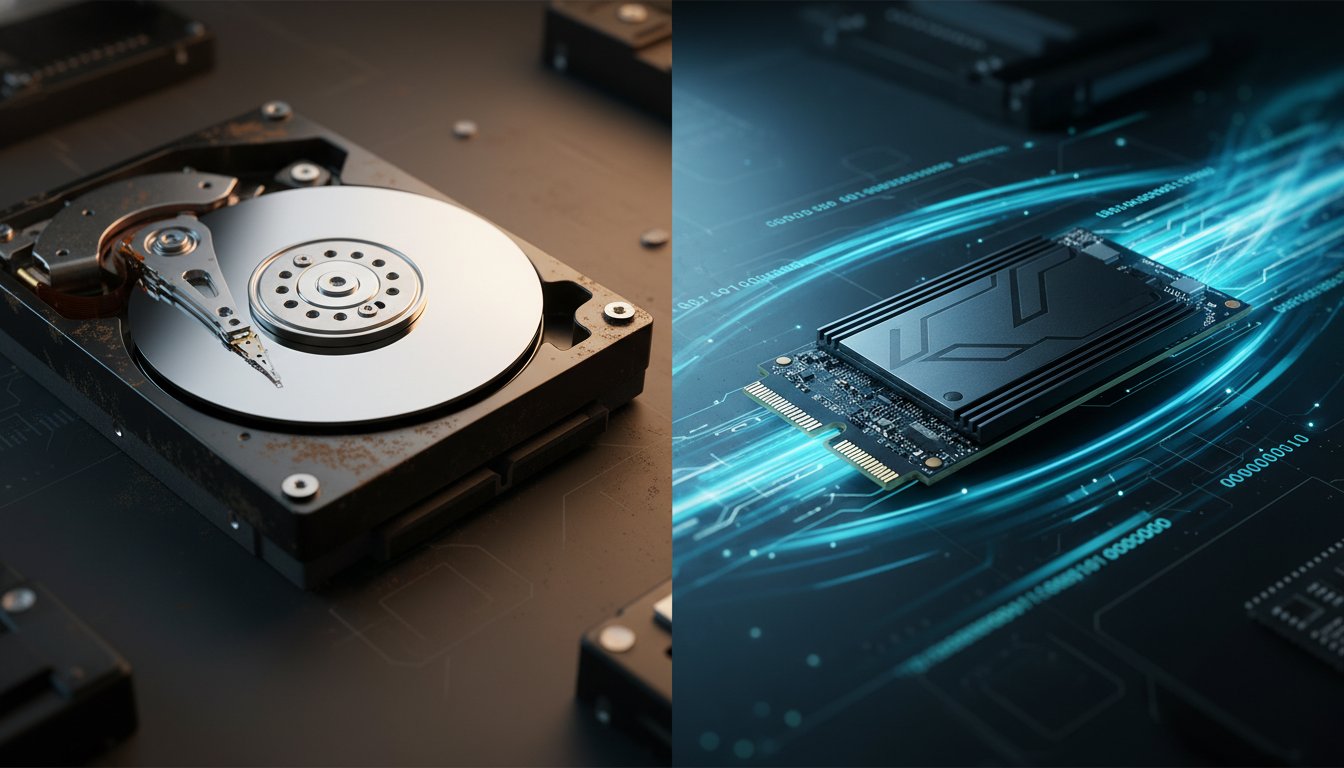
Traditional hard drives rely on a spinning magnetic platter and a read/write head that physically moves across the surface. It’s a bit like an old record player; if you bump it or if the motor wears out, the music stops. In a computer, this mechanical process creates a massive bottleneck. Every time you open a file or start Windows, you’re waiting for a physical arm to find data. In 2026, SSDs use advanced flash memory to access information at the speed of light. This means your boot times drop from minutes to mere seconds, and file searches become nearly instantaneous.

The Evolution of Computer Storage

Storage technology has evolved rapidly since I started helping Toowoomba residents with their tech in 1999. We’ve moved from bulky, clicking hard drives to sleek M.2 NVMe sticks that are smaller than a stick of chewing gum. By 2026, modern software and operating systems are designed with high-speed storage in mind, performing thousands of small “read” and “write” operations every minute. On an old mechanical drive, these tasks pile up, causing the “100% disk usage” error and those annoying freezes during multitasking. This makes a professional SSD upgrade Toowoomba a system requirement rather than a luxury.

How an SSD Works (Without the Tech Jargon)

Think of your computer’s storage like a library. Using an old HDD is like having a librarian who has to run through a giant building to find one book at a time. An SSD is like having a robot that can see every book on every shelf simultaneously and retrieve them instantly. Flash memory is a type of non-volatile storage medium that retains data even when the power is turned off. Because there are no spinning disks, SSDs offer several practical benefits for your home office:

  • Silent Operation: No more distracting clicking or whirring sounds while you work.
  • Heat Reduction: Less friction means a cooler system and a more comfortable laptop.
  • Better Battery Life: Your laptop doesn’t waste energy spinning a physical motor, extending your unplugged time.

SSD vs HDD: The Best Upgrade for a Slow Computer

When you look at the raw numbers, the difference between an old-fashioned hard drive and a modern solid-state drive is staggering. A standard mechanical hard drive (HDD) typically transfers data at around 100MB/s. In contrast, a basic SATA SSD reaches 500MB/s, while the latest NVMe drives can exceed 5000MB/s. This isn’t just a technical detail; it’s the difference between your computer feeling like a relic or a rocket ship. Many people assume they need a new PC when things get slow, but hardware upgrades are actually the most effective way to boost PC speed without the waste.

Choosing an SSD upgrade Toowoomba service offers a massive return on investment. In 2026, a high-quality drive installation and system optimization might cost you between A$200 and A$300. Compare that to the A$1,200 or more you’d spend on a comparable new machine. By “rescuing” your 2020-era laptop, you’re not just saving money; you’re choosing a sustainable path that keeps perfectly good hardware out of the landfill while gaining modern performance that rivals brand-new systems.

Performance in Daily Tasks

The real-world impact shows up in the small moments of your day. We’ve all experienced the frustration of opening Chrome, Outlook, or Microsoft Teams only to see the “Not Responding” message for thirty seconds. With an SSD, these resource-heavy applications open almost instantly. Windows Updates, which often cripple older machines for hours, become significantly faster and less painful because the drive can handle thousands of small file changes simultaneously. If you do any photo editing or gaming, you’ll notice that load screens which used to take minutes now disappear in a heartbeat, allowing you to stay focused on your work or play.

Reliability and Longevity

Mechanical drives are prone to the infamous “Click of Death,” where the physical arm fails and your data becomes inaccessible. SSDs avoid this physical wear entirely because they have no moving parts. This makes them incredibly durable and reduces the anxiety of sudden data loss. If you’re a mobile worker driving across the Darling Downs, an SSD is much more likely to survive the bumps and vibrations of travel than a traditional drive. While some worry about the lifespan of flash memory, modern 2026 drives have high TBW (Total Bytes Written) ratings. Most home users would need decades of heavy use to actually “wear out” a modern drive. If your current system is feeling sluggish, you might find that professional hardware support is the safest way to ensure your tech remains reliable for years to come.

Choosing the Right SSD: SATA, NVMe, and Capacities

Selecting the correct hardware is the most technical part of an SSD upgrade Toowoomba residents need to consider. Not every drive fits every computer. If you have an older laptop or a desktop from several years ago, you’ll likely need a 2.5-inch SATA SSD. These are designed to be a universal fit, sliding right into the same physical bay where your old mechanical drive used to sit. They are reliable, affordable, and provide a massive speed jump over any traditional hard drive.

For newer systems and ultrabooks, we typically use NVMe M.2 drives. These look more like a stick of chewing gum than a traditional drive. They plug directly into a dedicated slot on the motherboard, which allows for the lightning-fast data transfer speeds required by 2026 software. At Aspire Computing, I always recommend sticking to proven brands like Samsung, Crucial, and Kingston. These manufacturers offer the best reliability and warranty support in the Australian market, ensuring your data stays safe long after the installation is finished.

Understanding Form Factors

Before purchasing a drive, you must know exactly what your machine supports. Most desktop motherboards built in the last few years have at least one M.2 slot, but older laptops are often limited to the 2.5-inch SATA standard. Checking your motherboard specifications or running a system scan is essential to avoid buying incompatible parts. If your internal storage is already full and you don’t want to open your computer case, an external SSD connected via USB-C is a great alternative for high-speed portable storage.

How Much Storage Do You Really Need?

Capacity is about more than just how many photos you can save; it also affects the drive’s health and speed. I always suggest following the 80% Rule, which means you should never completely fill an SSD. When these drives reach their limit, they struggle to manage data efficiently, and you’ll notice a drop in performance. To calculate your needs, remember that a modern Windows installation and basic apps will take up at least 60GB of space before you even add your first personal file.

  • 500GB: This is perfect for basic office work, school assignments, and general web browsing.
  • 1TB: In 2026, 1TB is the “sweet spot” for value and longevity, offering plenty of room for family photos, videos, and software updates.
  • 2TB or more: This capacity is essential for content creators, serious gamers, or small businesses with large local databases.

Choosing a slightly larger drive than you think you need today is a smart way to future-proof your computer. It’s much easier to buy extra capacity now than to perform another upgrade in twelve months. If you’re unsure which path to take, I can assess your current usage and recommend the most cost-effective option for your specific machine.

SSD Upgrade Toowoomba: The Ultimate 2026 Guide to a Faster Computer

Practical Guide: How to Upgrade Safely

Safety is the most important part of any hardware change. While the physical swap is relatively quick, your preparation determines whether your files stay safe or disappear. Before you even touch a screwdriver, you must perform a full backup of your existing data to an external drive or a secure cloud service. A successful SSD upgrade Toowoomba project depends entirely on this “safety first” mindset. If your current drive has already failed or is making strange clicking noises, you should read our Data Recovery guide before attempting any hardware changes.

Cloning vs. Fresh Installation

You have two main paths for moving your data to the new drive. Cloning involves making an exact bit-for-bit copy of your current hard drive. This includes your operating system, programs, and all your personal settings. It’s the most convenient option because your desktop looks exactly the same when you finish. However, DIY cloning often leads to boot errors or partition misalignments. These technical glitches can actually slow down your new SSD and prevent it from reaching its full potential.

A fresh installation is what I call the “spring clean” approach. You install a clean version of Windows and then manually move your important files back. This ensures maximum speed and stability by removing years of digital clutter and hidden registry errors. While it takes longer to set up your apps again, it’s the best way to get that “brand new” feeling from your upgraded machine. It’s often the better choice if your current system feels buggy or unstable.

Physical Installation Tips

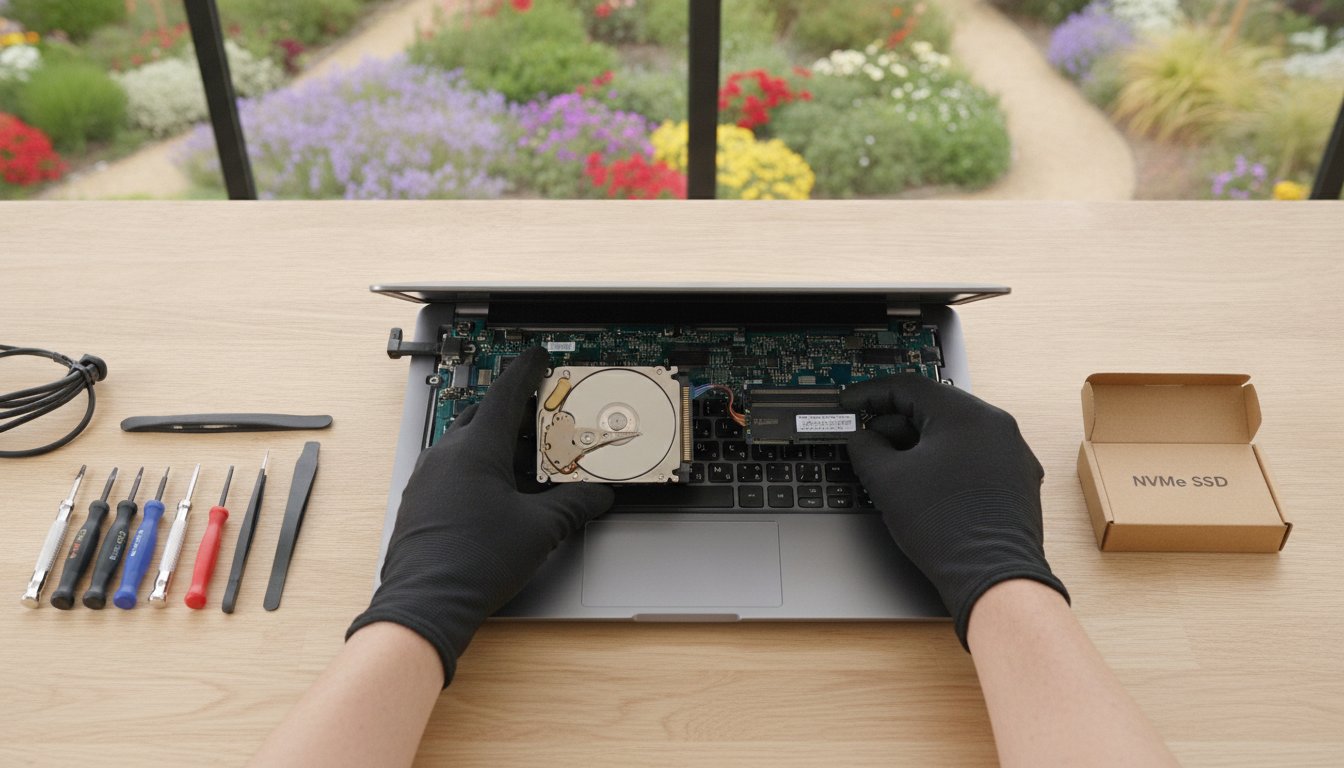
The physical process requires a few basic tools, usually just a small Phillips head screwdriver. However, static electricity is a silent killer for delicate computer parts. You must ground yourself by touching a metal part of the computer case or using an anti-static wrist strap. Laptops require extra care; you often need to disconnect the internal battery first to prevent short-circuits. Be extremely gentle with the fragile ribbon cables that connect the keyboard or trackpad to the motherboard.

Once the drive is physically installed, Windows needs a few specific tweaks to stay healthy. Modern versions of Windows usually handle this automatically, but you should verify that the TRIM command is active. TRIM helps the SSD manage its flash memory efficiently over time. You should also ensure that traditional “defragmentation” is disabled for the SSD, as this causes unnecessary wear on the drive. If you’d rather skip the stress and technical risks, you can book a professional upgrade with me to ensure every setting is optimized perfectly for your machine.

Professional SSD Upgrades in Toowoomba with Aspire Computing

Toowoomba locals choose Aspire Computing because I offer something big national retailers can’t: personal accountability. While shipping a drive from a warehouse is fast, it doesn’t help you with the technical migration or the BIOS settings required to make that drive actually work. My SSD upgrade Toowoomba service is designed to be completely stress-free. I handle the hardware supply, the physical installation, and the complex data migration so you don’t have to worry about losing a single photo or document.

Every installation includes the “Aspire Tune-Up.” I don’t just plug in the drive and leave. I optimize your entire Windows environment, checking for startup bottlenecks and ensuring your system is fully patched. This comprehensive approach means your computer doesn’t just feel faster; it stays stable and secure for the long term. With over 25 years of local experience, I’ve developed a methodical process that prioritizes your data safety above everything else. I provide on-site service across Newtown and the surrounding suburbs, bringing professional IT support directly to your front door or office.

Personalized Service from a Local Expert

I’m Chaim Lee, and I’ve been serving the Darling Downs and Lockyer Valley regions since 1999. When you call for tech help, you’re speaking directly to the person who will be working on your machine. This personal connection is why so many residents trust me with their most important devices. Whether you need a simple speed boost or comprehensive Computer Repairs Toowoomba, I provide reliable assistance that focuses on your specific needs. I understand that your computer is essential for your daily life, and I treat every hardware change with the expert care it deserves.

Ready for a Faster Computer?

Upgrading your technology shouldn’t be a source of anxiety. My goal is to provide a transparent, jargon-free process that gets you back to work as quickly as possible. Most professional hardware upgrades are completed with a rapid turnaround, ensuring you aren’t without your PC for longer than necessary. You’ll know exactly what to expect from the moment we first speak. If you’re tired of waiting for your computer to catch up with your workload, you can Contact Aspire Computing today for a speed assessment and a professional quote.

Ready to Experience a Faster, More Reliable Computer?

You don’t need to spend thousands on a new laptop to get modern performance. By choosing an SSD upgrade Toowoomba, you can bypass the rising costs of 2026 hardware while enjoying boot times and application speeds that feel brand new. We’ve explored how the right drive capacity and a professional tune-up can add years of life to your current system. Most importantly, you can avoid the risks of DIY errors by trusting a local expert with your data.

Aspire Computing has been a trusted local business since 1999. I provide expert data migration with every upgrade to ensure you don’t lose a single file. Whether you’re working from home or running a small business, my on-site service is available across Toowoomba and the Darling Downs to make the process completely stress-free. Your computer has plenty of life left in it. Let’s make it work for you again.

Book Your SSD Speed Upgrade in Toowoomba Today

Frequently Asked Questions

Will an SSD make my 5-year-old laptop faster?

An SSD is the single best way to rejuvenate a 5-year-old machine. Even if your laptop was top-of-the-line in 2021, its original storage is likely the biggest bottleneck today. By choosing a professional SSD upgrade Toowoomba, you’ll see a dramatic improvement in how quickly Windows loads and how fast your applications respond. It’s a practical way to extend your computer’s life by several years without the high cost of a total replacement.

How much does a professional SSD upgrade cost in Toowoomba?

The total cost for an SSD upgrade Toowoomba service depends on the drive’s capacity and the complexity of your data migration. Hardware prices for components like NAND flash have seen some increases in 2026, but the investment is still much lower than purchasing a new laptop. I offer a transparent process where I assess your hardware first. This ensures you get a solution that fits your budget while providing the best performance boost possible.

Do I lose my photos and programs if I switch to an SSD?

You won’t lose your files or programs when you choose a professional installation. I use specialized cloning software to create an exact copy of your current system, including your photos, documents, and settings. If your old drive is healthy, everything will be exactly where you left it, just much faster. For systems with software issues, I can perform a clean install and manually migrate your precious personal data to ensure a stable result.

How long does an SSD upgrade take to complete?

Most professional hardware upgrades in the Darling Downs region are completed within 24 to 48 hours. This timeframe allows for a full data backup, the physical installation, and a thorough Windows optimization. I understand that being without your computer is difficult, so I prioritize a rapid turnaround. Once the work is finished, your machine is ready for immediate use with all your files safely in place and the performance significantly boosted.

Is a 500GB SSD enough for home office use in 2026?

A 500GB drive is usually plenty for standard home office tasks like word processing, emails, and web browsing. Modern operating systems like Windows 11 or the newer 2026 standards require a fair amount of space, but 500GB still leaves room for thousands of documents and basic software. If you plan to store many high-resolution videos or large databases, you might consider stepping up to a 1TB model for better long-term value and flexibility.

Can I use an SSD and my old hard drive at the same time?

You can often use both drives simultaneously if you have a desktop computer or a laptop with multiple drive bays. I typically set up the new SSD as your primary drive for Windows and your programs to ensure maximum speed. Your old mechanical hard drive can then be repurposed as a secondary storage area for large files like movies or old archives. This hybrid setup gives you the best of both worlds: speed and high capacity.

What is the difference between NVMe and SATA SSDs?

The main difference lies in speed and how they connect to your motherboard. SATA SSDs are a universal fit for older machines and reach speeds of around 500MB/s. NVMe drives are much smaller, looking like a stick of gum, and can reach speeds over 5000MB/s in 2026. While NVMe is significantly faster, it requires a specific M.2 slot on your motherboard. I can check your hardware to see which standard your computer supports.

Does an SSD help with my NBN internet speed?

An SSD doesn’t increase your raw NBN connection speed, but it makes your internet experience feel much faster. When you download a file or load a complex webpage, your computer has to write that data to the disk. A slow mechanical drive creates a bottleneck that makes your fast NBN feel sluggish. With an SSD, your computer can process and display that data instantly, allowing you to actually utilize the full speed of your internet plan.

SSD Upgrade for Laptop: The Ultimate 2026 Performance Guide

Last Tuesday, one of our local clients spent over four minutes waiting for their laptop to reach the login screen just to check a single email. This frustration often leads people to believe they need to spend A$1,200 on a new machine, but a simple SSD upgrade for laptop is usually the better solution. You shouldn’t have to deal with a sluggish system or the “spinning wheel of death” every time you open a photo. It’s natural to feel protective of your files, and we understand that technical terms like NVMe or SATA can feel overwhelming.

We promise that this one hardware change can make your aging device feel faster than the day you bought it. By replacing an old mechanical drive, you can achieve boot times under 15 seconds and near-instant application loading for a fraction of the cost of a new computer. This guide breaks down the A$150 to A$350 investment required to revitalise your tech. We will explain your options in plain English and show you how a local expert can handle the technical parts while ensuring your data stays safe and secure.

Key Takeaways

  • Understand why mechanical hard drives act as a bottleneck for modern software and how solid-state technology eliminates frustrating lag.
  • Decode the technical jargon of SATA, NVMe, and M.2 to identify exactly which drive fits your laptop’s physical design and performance needs.
  • Use our “Rule of Three” framework to determine if an SSD upgrade for laptop is a smarter financial move than spending A$1,500 or more on a new machine.
  • Learn the essential steps to safeguard your personal data and photos when navigating the complexities of modern “thin and light” hardware.
  • Discover the “Don’t Panic” approach to hardware failures used by local Toowoomba experts to restore peak performance and reliability.

What is an SSD Upgrade for a Laptop and Why Does It Matter in 2026?

If your computer feels sluggish or takes several minutes to reach the desktop, don’t panic. You likely don’t need to buy a brand new machine to regain your productivity. An SSD is a flash-based storage device that replaces traditional spinning hard drives to eliminate lag. At Aspire Computing, we’ve helped local users improve their technology since 1999, and we’ve found that nothing transforms a user’s daily experience quite like a modern Solid-state drive (SSD) upgrade. Unlike the old mechanical hard disk drives (HDDs) that rely on a physical arm moving across a spinning platter, an SSD uses no moving parts. This lack of physical movement removes the mechanical bottleneck that keeps your 2026 software from performing at its peak.

An SSD upgrade for laptop users provides three immediate, tangible benefits that change how you work. First, boot times drop from a frustrating 120 seconds down to less than 15 seconds. Second, the drive operates in total silence; there’s no clicking or whirring while you work. Third, you’ll see a noticeable boost in battery life. Because there are no motors to spin, your laptop consumes less power, which typically adds 30 to 60 minutes of runtime during a standard Australian workday. This efficiency is essential for professionals who travel between meetings or work remotely without easy access to a power point.

The 2026 Performance Gap: Why Your Laptop Feels Slower

Modern operating systems like Windows 11 and the latest 2026 updates for Windows 12 are designed specifically for high-speed data retrieval. These systems constantly read and write small files in the background to manage security and updates. Cloud-syncing applications like OneDrive and Dropbox also put immense pressure on your storage. In our experience, these background tasks can cause disk usage to stay at 100 percent for over 45 minutes on an old HDD. Software tune-ups often fail in these scenarios because they can’t fix a physical hardware limitation. You simply can’t optimize a spinning disk to match the near-instant response times of flash memory.

SSD vs HDD: A Quick Reality Check

The technical data tells a very clear story about why the “old ways” of storage are fading. When you compare the two technologies, the differences are stark:

  • Speed comparison: Modern SSDs are up to 35x faster than traditional hard drives when measuring sequential read and write speeds. Opening a 2GB video file or a large spreadsheet happens almost instantly.
  • Durability: No moving parts means your data is significantly safer. If you bump your laptop while it’s running, a traditional HDD can suffer a “head crash” and lose all your data. An SSD is much more resilient because it’s essentially a set of memory chips soldered to a board.
  • Energy efficiency: Switching to an SSD reduces power draw by approximately 2 to 3 watts. This change can add 30-60 minutes to your daily battery life, which is a vital gain for anyone working on the go in Toowoomba or across the region.

By choosing an SSD upgrade for laptop hardware rather than replacing the entire unit, you’re making a sustainable and cost-effective choice. It’s a professional solution that ensures your current machine can handle the demanding software environment of 2026 without the high price tag of a new premium device.

Understanding SSD Types: SATA, NVMe, and M.2 Explained

Choosing the right hardware shouldn’t feel like a chore. Most people just want a computer that works without the spinning loading icon. When you plan an SSD upgrade for laptop systems, you’ll encounter three main terms: SATA, NVMe, and M.2. Think of M.2 as the physical shape, while SATA and NVMe are the languages the drive speaks to your computer. Understanding these differences ensures you don’t buy a part that physically won’t fit or fails to deliver the speed you expect.

Physical size is the first hurdle. Older laptops usually house a 2.5-inch drive bay, which looks like a small, flat brick. Modern, slim laptops have moved toward the M.2 format. These drives resemble a stick of gum and weigh less than 10 grams. Because they plug directly into a dedicated slot on the motherboard, they eliminate the need for bulky cables. This design shift has allowed manufacturers to make laptops thinner while significantly increasing data transfer rates.

SATA SSDs: The Universal Upgrade

If your laptop is more than 5 years old, it likely relies on the 2.5-inch SATA interface. These drives are the most cost-effective way to revive an aging machine on a budget. You can currently find high-quality 1TB SATA SSDs in Australia for approximately A$85 to A$110. While SATA technology has a performance ceiling of roughly 560MB/s, this is still 5 times faster than the 100MB/s average of an old mechanical hard drive. It’s a reliable choice for daily office work and web browsing.

NVMe M.2: The Modern Speed Demon

NVMe drives are the gold standard for performance. Unlike SATA, which was originally designed for slow spinning disks, NVMe uses the same high-speed PCIe lanes as your processor. This direct path allows for lightning-fast data access. For professionals handling 4K video editing or heavy multitasking, the benefits are immediate. A standard Gen4 NVMe drive can reach speeds of 7,500MB/s. By 2026, Gen5 drives will be the benchmark for high-end laptops, pushing speeds beyond 12,000MB/s. This means a 50GB project file that used to take minutes to load will open in under 5 seconds.

Checking compatibility is a vital step before you tap “buy” on an online store. You can identify your laptop’s requirements by checking the manufacturer’s website or looking at your specific model number under the “Storage” specifications. Most laptops built after 2021 support NVMe, but some budget-friendly models might still be restricted to SATA M.2 slots. If you find the technical manuals confusing, the experts at Aspire Computing can verify your hardware compatibility to ensure your new drive works perfectly the first time.

Looking ahead to 2026, the generation of your PCIe slot matters more than ever. Even if you buy a blazing-fast Gen5 drive, a laptop with a Gen3 slot will bottleneck that speed. To get the best value, match the drive generation to your laptop’s capabilities. Here is a quick guide to what you should look for:

  • Gen3: Best for general home use and students; speeds up to 3,500MB/s.
  • Gen4: Ideal for gaming and creative professionals; speeds up to 7,500MB/s.
  • Gen5: Necessary for cutting-edge workstations and future-proofing; speeds exceeding 12,000MB/s.

Reliability is just as important as speed. When selecting your SSD upgrade for laptop, stick to reputable brands that offer at least a 5-year warranty. This protection ensures that your data remains safe while you enjoy the massive performance boost that only a modern solid-state drive can provide.

DIY vs. Professional SSD Installation: Protecting Your Data

“Will I lose my photos and documents?” This is the first question most people ask when considering an SSD upgrade for laptop systems. For many of our clients in Toowoomba, these files represent a decade of family memories or critical business records. While the speed benefits of solid-state technology are incredible, the transition needs to be handled with precision to ensure your digital life remains intact. Don’t panic; losing data isn’t a requirement for gaining speed.

The physical reality of modern laptops has changed significantly since Aspire Computing opened in 1999. Older machines featured simple “trap doors” held by one or two Phillips head screws, making internal access easy. Today’s “thin and light” ultrabooks are held together by hidden clips, strong adhesives, and fragile internal connectors. Opening these devices without the right experience often leads to more harm than good.

The Risks of DIY Laptop Upgrades

Static electricity is a silent killer of electronics. A single discharge from your fingertip, often too small for you to feel, can fry a motherboard instantly. Professionals use grounded anti-static mats and wrist straps to eliminate this risk. Beyond electricity, the physical assembly of modern laptops is a minefield for the uninitiated. You will often encounter:

  • Delicate Ribbon Cables: These connectors are thinner than a credit card. If you pull the case apart too quickly, you can snap the keyboard or trackpad cables, leading to a repair bill of A$120 or more.
  • The Hidden Screw Problem: Manufacturers frequently hide one or two screws under glued-on rubber feet or decorative stickers. Prying the case before these are removed will crack the plastic chassis, which can cost upwards of A$150 to replace.
  • Proprietary Tools: Many brands now use Pentalobe or Torx T5 security screws. Using a standard screwdriver will strip the head, making the laptop nearly impossible to service in the future.

The Professional Advantage: Data Cloning

Most users prefer data cloning over a fresh installation. Cloning creates a bit-for-bit mirror of your existing hard drive onto the new SSD. This means when you turn your laptop back on, your desktop wallpaper, browser bookmarks, and all your installed programs are exactly where you left them. You won’t spend 4 to 6 hours reinstalling Windows, hunting for your A$189 Microsoft Office product keys, or re-configuring your printer drivers.

Choosing a professional Hardware Upgrade ensures your Windows license remains valid. If a fresh installation is done incorrectly, Microsoft’s activation servers may fail to recognise the device, leaving you with a restricted OS. We verify the health of your original drive before the migration begins. If we detect failing sectors, we use specialised recovery tools to pull your data safely before the old drive dies completely.

Finally, we focus on your privacy. Once the SSD upgrade for laptop is complete, we provide secure disposal of your old mechanical drive. We can physically destroy the platters or perform a multi-pass data wipe to ensure your bank statements and private photos never end up in a landfill where they could be recovered. At Aspire Computing, we live by our mission to protect and connect, giving you a faster machine without the stress of potential data loss.

SSD Upgrade for Laptop: The Ultimate 2026 Performance Guide

Is Your Laptop Worth the Upgrade? A Decision Framework

Buying a new computer is a significant expense that you might not need to incur just yet. A professional SSD upgrade for laptop hardware can often make a four-year-old machine feel faster than it was on the day you bought it. Before you commit, we use a simple framework called the “Rule of Three” to ensure your money is well spent. We look at the age of the device, the physical condition of the chassis, and the quality of the display. If your laptop is less than five years old and the screen is still vibrant, it’s usually a prime candidate for a refresh.

The financial logic is hard to ignore. A high-performance 500GB or 1TB SSD, including professional data migration, typically costs between A$180 and A$280. Compare this to the A$1,400 or A$1,750 you would spend on a new mid-range Windows ultrabook or MacBook. By choosing an upgrade, you save over A$1,100 while eliminating the frustration of slow boot times. We’ve helped hundreds of clients in the Darling Downs region realise that their “broken” computer was actually just hampered by an outdated mechanical hard drive.

Step-by-Step Evaluation Guide

Check your CPU first. If you have an Intel Core i3, i5, or an AMD Ryzen chip from the last four years, your processor still has plenty of life. If your RAM is at 4GB, we recommend upgrading that to 8GB or 16GB at the same time as your SSD for the best results. Finally, inspect the hinges and screen. If the plastic casing is cracking or the screen has permanent vertical lines, an SSD won’t fix those mechanical failures. Walk away if the physical repair costs exceed 50% of the laptop’s original value.

The Local Toowoomba Advantage

Ordering parts online often leads to shipping stress and long waits for international couriers. When you visit a Computer Repair shop in Toowoomba, you avoid these delays. We keep high-quality components in stock, meaning we don’t have to wait for a delivery from Sydney or overseas to start your project. This is vital for local small businesses that can’t afford a week of downtime.

We provide on-site support for home offices across the region, ensuring your SSD upgrade for laptop is handled with care and precision. Our team aims for a fast turnaround, often returning your refreshed machine within 24 to 48 hours. You get the benefit of local accountability and a face-to-face chat with Chaim Lee or our experienced technicians to ensure all your data is backed up safely before the transition.

Our team at Aspire Computing has been helping the local community since 1999. We believe in quality, continuity, and keeping your technology running smoothly without unnecessary costs. Talk to the experts at Aspire Computing today to see if your laptop is a candidate for a speed boost.

The Aspire Computing Approach to Laptop Speed

Chaim Lee brings over 25 years of hands-on experience to every technical challenge in Toowoomba. Since he established Aspire Computing in 1999, he’s built a reputation for calm, expert service that prioritises the customer. We know the sinking feeling of a spinning loading icon or a drive that refuses to boot. Our “Don’t Panic” philosophy is designed to give you peace of mind while we handle the technical heavy lifting. A professional SSD upgrade for laptop hardware is often the single most impactful change you can make to your digital life. It’s a cost-effective alternative to spending A$1,500 or more on a brand-new machine when your current one still has plenty of potential.

We don’t just swap out a part and hand the computer back. Every SSD upgrade for laptop clients includes our signature 3-point tune-up. First, we identify and disable unnecessary startup applications that drain your resources. Second, we update your system BIOS and critical drivers to ensure the new hardware communicates perfectly with your motherboard. Third, we verify your operating system’s file integrity. This comprehensive approach ensures your machine doesn’t just start fast, but stays stable under heavy workloads. Our core mission is to “Aspire to Protect and Connect,” meaning we treat your data with the same care we would our own.

Since 1999, we’ve maintained a 99% success rate in seamless data transitions. We understand that your laptop holds more than just files; it holds your family photos, tax records, and business history. By choosing a local expert, you’re ensuring that your data remains secure and your privacy is respected throughout the entire physical and digital transition.

Our Seamless Upgrade Process

Our process is designed for zero stress and maximum performance. We start with a full diagnostic to ensure an SSD is truly the best solution for your specific model. During the physical installation, we perform a thorough thermal cleaning to remove dust that builds up over years, which can improve cooling efficiency by up to 25%. Finally, we perform a bit-for-bit data migration and Windows optimization. This means your laptop feels exactly like it did before, only five times faster.

Ready for a Faster Laptop?

You can drop your device at our Newtown workshop or request our mobile service to come directly to your home or office across the Toowoomba region. We provide a full guarantee on all parts and labour to give you total confidence in your investment. Most upgrades are completed within 24 to 48 hours, ensuring you aren’t without your essential tools for long. Contact Chaim at Aspire Computing today to see if your laptop is upgrade-ready.

Give Your Laptop a New Lease on Life Today

An SSD upgrade for laptop is the single most effective way to add 3 or 4 years of peak performance to your current machine. Moving from an older drive to NVMe technology can increase boot speeds by over 200%, saving you hours of frustration every month. You don’t need to spend A$2,000 on a new computer when a professional hardware refresh provides the same snappy experience for a fraction of the cost. Since 1999, Chaim Lee and the team at Aspire Computing have focused on keeping Toowoomba’s technology reliable and fast. We include expert data migration and recovery with every install, so your software and files stay perfectly intact. Whether you’re in the heart of town or need on-site service across the Darling Downs, we come to you to make the process effortless. It’s time to stop waiting for loading screens and start enjoying a computer that keeps up with your pace. We’re ready to help you protect your data and connect you to better performance.

Talk to the Experts at Aspire Computing

Frequently Asked Questions

Will an SSD upgrade void my laptop warranty?

An SSD upgrade typically doesn’t void your warranty in Australia, provided the installation doesn’t cause physical damage to other components. Under Australian Consumer Law, manufacturers can’t legally cancel your entire warranty just because you’ve upgraded a part. If a technician finds that the new drive caused a specific failure, that particular repair won’t be covered. Most brands like Dell and HP design their laptops for easy access to storage slots.

How much does a professional SSD upgrade cost in Toowoomba?

A professional SSD upgrade for laptop in Toowoomba generally costs between A$150 and A$350 depending on the drive capacity you choose. This total includes the physical hardware and the expert labour to transfer your data. You can expect to pay around A$80 to A$120 for the professional installation service at a local workshop. A quality 500GB SSD currently retails for approximately A$75, while a 1TB model costs about A$130.

Can I keep my old files if I upgrade to an SSD?

You can definitely keep all your photos, documents, and settings during the upgrade process. We use specialized cloning software to create an exact 1:1 replica of your existing hard drive onto the new SSD. This ensures that 100% of your personal data remains intact and exactly where you left it. Once the process is finished, your laptop will look identical to how it did before, just significantly faster.

How long does the upgrade process take?

The entire upgrade process usually takes between 2 and 4 hours to complete. This timeframe includes the physical installation of the drive and the time required to clone your existing data. At Aspire Computing, we aim for a same-day turnaround for most Toowoomba clients who book their service before 10:00 AM. Larger data transfers involving more than 500GB of files might require a little extra time for verification.

Will an SSD make my internet faster?

An SSD won’t increase your actual NBN connection speed, but it will make your internet browsing feel much snappier. While your download speed stays the same, your web browser will launch in under 2 seconds rather than 10 or 15. Pages load faster because the computer can write temporary cache files to the drive almost instantly. It’s a great way to remove the local hardware bottlenecks that slow down your online experience.

Do I need to reinstall Windows after an SSD upgrade?

You don’t need to reinstall Windows if we perform a drive clone during your SSD upgrade for laptop. We migrate your existing operating system, licensed software, and local settings directly to the new hardware. About 95% of our clients choose this method to avoid the hassle of finding old software keys. If your current Windows installation is corrupted, we might suggest a fresh install to ensure peak performance.

What happens to my old hard drive after the upgrade?

We always return your old hard drive to you once the upgrade is finished. You can keep it as a secure physical backup or we can place it into a USB enclosure for A$25. This turns your old internal drive into a portable external storage device for extra files. It’s a practical way to ensure no hardware goes to waste while giving you an extra layer of data security for your important documents.

Is an SSD upgrade better than adding more RAM?

An SSD upgrade provides a more noticeable speed boost than adding RAM for most everyday users. While RAM helps with multitasking, an SSD reduces boot times from 60 seconds to under 15 seconds and makes every application open instantly. If your laptop has at least 8GB of RAM, replacing a mechanical hard drive with an SSD is the single most effective way to improve performance. It’s the best value-for-money improvement available.

What is an SSD? The Ultimate Guide to a Faster Computer

That familiar, frustrating wait. You press the power button, go make a coffee, and come back to find your computer is still thinking about starting up. If you’re tired of applications taking forever to load and constantly worry that your old, noisy hard drive might fail, we have good news. The solution is often simpler and more affordable than you think, and it comes in the form of a Solid-State Drive, or SSD.

Don’t panic if you’re not a tech expert. In this guide, we’ll walk you through everything you need to know in simple, clear language. We will explain what an SSD is, how it dramatically improves your computer’s speed, and why it’s the best investment you can make for a faster, more reliable machine. We’ll even demystify the jargon, helping you understand the difference between types like SATA and NVMe. Get ready to discover how to protect your data and make your computer feel brand new again.

Key Takeaways

  • Discover why an SSD is the single most effective upgrade for boosting your computer’s speed, from startup to opening applications.
  • Navigate the different types of SSDs with confidence and learn how to choose the right one for your specific computer and budget.
  • Understand the key steps in the upgrade process, helping you decide whether a DIY or professional installation is the best path for you.
  • Explore the benefits beyond just speed, including greater durability, quieter operation, and a significantly improved gaming experience.

What is an SSD and How is it Different from a Hard Drive (HDD)?

Think of your computer’s storage as a way of organising information. A traditional Hard Disk Drive (HDD) is like a large, mechanical filing cabinet. To find a file, a physical arm has to move and locate it on a spinning platter. It works, but it takes time. An SSD (Solid-State Drive), on the other hand, is like a modern digital bookshelf where every piece of information has a specific spot and can be accessed instantly, with no moving parts involved.

This core difference in technology is what makes upgrading to an SSD so transformative. To better understand this concept, watch this helpful video:

At its heart, a Solid-state drive uses flash-based memory to store data, similar to a high-performance USB stick. Because it has no moving components, it’s not just faster, but also more durable and efficient. This single technological shift delivers three core benefits that completely revitalise an older laptop.

The Speed Advantage: Instant Responsiveness

Because an SSD accesses data electronically, the delay associated with a mechanical HDD is eliminated. This results in a dramatic improvement in performance you can feel immediately. Your laptop’s operating system will boot up in seconds, not minutes. Applications and large files open almost instantly, and the entire system feels snappy and responsive, removing those frustrating lags and waiting times.

Built for Durability and Reliability

Laptops are designed to be portable, but this movement can be risky for a traditional HDD with its delicate moving parts. An SSD has no such vulnerability. With no spinning platters or read/write heads to damage, it is far more resistant to the shocks, bumps, and vibrations of daily use. This inherent durability provides greater peace of mind that your important files are safe and secure, wherever you go.

Energy Efficiency and Quiet Operation

The constant spinning of an HDD’s platters consumes a surprising amount of power. By operating without any moving parts, an SSD uses significantly less energy. For a laptop user, this translates directly into longer battery life, allowing you to work or browse for longer between charges. As a bonus, the absence of mechanical action means SSDs are completely silent, creating a cooler and quieter computing experience.

Key SSD Types Explained: Which One is Right for You?

Choosing a new Solid State Drive (SSD) can feel confusing with all the different acronyms, shapes, and connectors. Don’t worry – it’s simpler than it looks. The right choice depends on your computer’s age and motherboard, focusing on two things: the form factor (its physical shape) and the interface (how it connects). While there are various Key SSD Types Explained by manufacturers, for most users reviving an old laptop, the incredible speed boost over a traditional hard drive is the most important benefit, regardless of the specific type you choose.

SATA SSDs: The Universal Upgrade

This is the most common and versatile option, especially for older laptops and desktops. A SATA SSD looks like a small, 2.5-inch rectangular box and uses the same SATA connector as the traditional spinning hard disk drives (HDDs) it replaces. This makes it a straightforward, plug-and-play upgrade for the vast majority of computers, offering a massive and immediately noticeable improvement in boot times and overall system responsiveness.

NVMe M.2 SSDs: The Modern Speed Demon

Looking more like a small stick of RAM, an NVMe M.2 SSD represents the pinnacle of modern storage performance. It plugs directly into a dedicated M.2 slot on the motherboard, eliminating cables and allowing for breathtakingly fast data transfer speeds. However, this power comes with a crucial requirement: they are only compatible with newer computers that have the required M.2 slot. It’s an excellent choice for performance-heavy tasks, but you must confirm your motherboard supports it first.

How to Choose the Right Capacity (Storage Size)

Once you know which type of drive your computer needs, the next step is choosing the right amount of storage. Your decision should be based on how you use your computer. Here’s a simple guide:

  • 250GB – 500GB: Ideal for basic use. This is plenty of space for your operating system, essential programs like Microsoft Office, and web browsing.
  • 1TB: The sweet spot for most users. This capacity provides a great balance of price and space, comfortably holding your OS, programs, photos, and a good collection of documents and media.
  • 2TB and above: Recommended for power users. If you’re a serious gamer, video editor, or content creator with large project files and media libraries, the extra space is a worthwhile investment.

If you’re still unsure what you need, don’t guess. Our expert computer repair team can assess your usage and recommend the perfect ssd upgrade to protect your data and connect you faster.

What is an SSD? The Ultimate Guide to a Faster Computer

The Upgrade Process: DIY vs. Professional Installation

Upgrading your old laptop’s hard drive to a Solid-State Drive (SSD) is one of the single most impactful changes you can make to boost its performance. The process involves two key stages: migrating your operating system and personal data, and then physically installing the new drive. While it’s possible to tackle this as a DIY project, it comes with significant risks. Here, we’ll outline the steps and explain why a professional service is often the best choice for a seamless, frustration-free upgrade.

An Overview of the DIY Method

For the technically confident, a DIY upgrade involves a few critical steps. First, you must back up all your important data as a precaution. Next, you’ll need specialised software to “clone” your entire existing hard drive onto the new drive. Finally, you’ll open your laptop to physically swap the old drive for the new one.

However, this path has several potential pitfalls:

  • Incompatible Software: Cloning software can fail or create errors, leading to an unbootable system.
  • Physical Damage: Laptops contain delicate components that can be easily damaged by static electricity or improper handling.
  • Complete Data Loss: A mistake during the cloning process can corrupt both the old and new drives, risking your precious files.

Why Choose a Professional SSD Upgrade Service?

Opting for a professional service eliminates the guesswork and risk. At Aspire Computing, we ensure a perfect, stress-free transition for your computer, giving you total peace of mind.

  • Guaranteed Data Integrity: We use proven methods and commercial-grade tools to create a perfect clone of your system, ensuring all your files and programs are exactly where you left them.
  • The Right Tools and Expertise: We have the specialised equipment and anti-static environment to safely perform the installation without risking damage to sensitive internal parts.
  • Saves You Time and Stress: Avoid hours of troubleshooting complex software. We handle the entire process quickly and efficiently, getting your upgraded laptop back to you fast.
  • Expert Advice: Unsure which ssd is right for your machine? We can recommend the best model for your specific laptop and budget, ensuring optimal performance and reliability.

Ready for a Faster PC Without the Hassle?

A professional upgrade is the safest, most reliable way to revitalise your computer. We handle everything from selecting the right components to the final performance testing. Your laptop will feel brand new-booting in seconds and loading applications instantly-with all your important data securely in place.

Let us provide a fast, reliable upgrade that protects your data and gets you back to work without the worry. Talk to the experts at Aspire Computing today.

Beyond Speed: Other Reasons to Switch to an SSD

While the incredible speed boost is the most celebrated benefit of an SSD upgrade, the advantages don’t stop there. A solid-state drive improves your computer’s performance in ways that enhance nearly everything you do, making it a powerful investment in your productivity and overall user experience.

A Better Experience for Gamers

For gamers, the difference is night and day. An ssd drastically cuts down on loading screens and the time it takes to transition between levels. In-game assets and textures load almost instantly, which significantly reduces stuttering and pop-in. This results in a smoother, more responsive, and far more immersive gaming experience, letting you focus on the action instead of the waiting.

A Boost for Professionals and Creatives

Creatives and professionals who work with large files will notice a massive improvement. Whether you’re editing high-resolution photos in Adobe Photoshop, rendering video in Premiere Pro, or managing complex design projects, a solid-state drive allows you to open, save, and export files with remarkable speed. You’ll spend less time watching progress bars and more time focused on your creative work.

Breathe New Life into an Old Computer

Perhaps the most practical benefit is the ability to revitalise an ageing computer. An SSD upgrade is often the single most cost-effective way to modernise an older laptop or PC in Australia. In many cases, a five-year-old machine with a new drive can feel more responsive than a brand-new computer still using a traditional hard drive. It’s an affordable way to postpone a costly full system replacement.

From smoother gaming to faster creative workflows and extending the life of your hardware, the benefits are clear. If you’re ready to unlock your computer’s true potential, the experts at Aspire Computing can help you choose and install the right drive for your needs.

Ready for a Faster, More Responsive PC?

Upgrading to a Solid State Drive is the single most effective way to breathe new life into a slow computer. As we’ve explored, these modern drives deliver incredible speed, enhance overall system responsiveness, and offer superior durability compared to older hard drives. The difference isn’t just about faster boot times; it’s about a smoother, more enjoyable experience every time you use your machine.

While the benefits are clear, choosing the right ssd and ensuring your valuable data is transferred safely requires expertise. That’s where we can help. As Toowoomba’s trusted local experts since 1999, Aspire Computing provides professional hardware upgrades with a focus on complete data protection. We offer a friendly, reassuring service for both home and business users, taking all the stress out of the process.

Ready to make your computer fast again? Contact Aspire Computing for a professional SSD upgrade! Don’t put up with frustrating delays-unlock the true performance of your computer today.

Frequently Asked Questions About SSD Upgrades

Will an SSD work in my old desktop or laptop computer?

In almost all cases, yes. The vast majority of older laptops and desktops use a standard connection called SATA, which is fully compatible with modern 2.5-inch SSDs. This makes an SSD upgrade one of the most effective and widely compatible ways to dramatically improve the performance of an aging computer. It provides a quality, noticeable boost in speed for boot times and opening programs, giving your trusted machine a new lease on life.

How long do SSDs last compared to traditional hard drives?

Modern SSDs are incredibly reliable and durable. Because they have no moving parts, they are resistant to shocks and drops that could easily damage a traditional hard disk drive (HDD). An SSD’s lifespan is measured in the total amount of data that can be written to it, which for a typical user translates to many years of service. In most scenarios, the SSD will comfortably outlast the other components in your laptop or computer.

Will I lose all my files and programs if I upgrade to an SSD?

No, you won’t lose anything. A key part of our professional upgrade service is a process called “cloning.” We create an exact, bit-for-bit copy of your old hard drive, including the operating system, all your programs, documents, photos, and settings. This entire image is then transferred to the new SSD. When you get your computer back, it will look and feel exactly the same, just significantly faster.

What’s the real difference between a SATA and an NVMe SSD for an average user?

Think of SATA as a standard highway and NVMe as a Formula 1 racetrack. While NVMe drives are technically much faster, a SATA SSD already provides a massive speed increase over a traditional hard drive. For everyday tasks like browsing the web, sending emails, and using office software, a SATA SSD delivers the performance boost you’re looking for. NVMe is typically beneficial for professionals who handle very large files, like video editors.

How much does a professional SSD upgrade cost in Toowoomba?

The total cost depends on the size of the SSD you choose. Generally, a professional installation service in Toowoomba, which includes cloning your existing data and fitting the new drive, ranges from A$150 to A$220 for labour. The cost of the SSD itself is additional, with a quality 500GB drive typically costing around A$80 to A$120. We can provide a precise quote based on your computer’s needs and desired storage capacity.

Can you install an SSD and keep my old hard drive for extra storage?

Absolutely. This is a very popular and practical solution. In a desktop computer, we can easily install the new SSD as the primary drive for your operating system and programs, while keeping your old hard drive inside as a secondary drive for storing large files like photos and videos. For a laptop, we can place your old hard drive into an external USB enclosure, turning it into a portable drive perfect for backups.