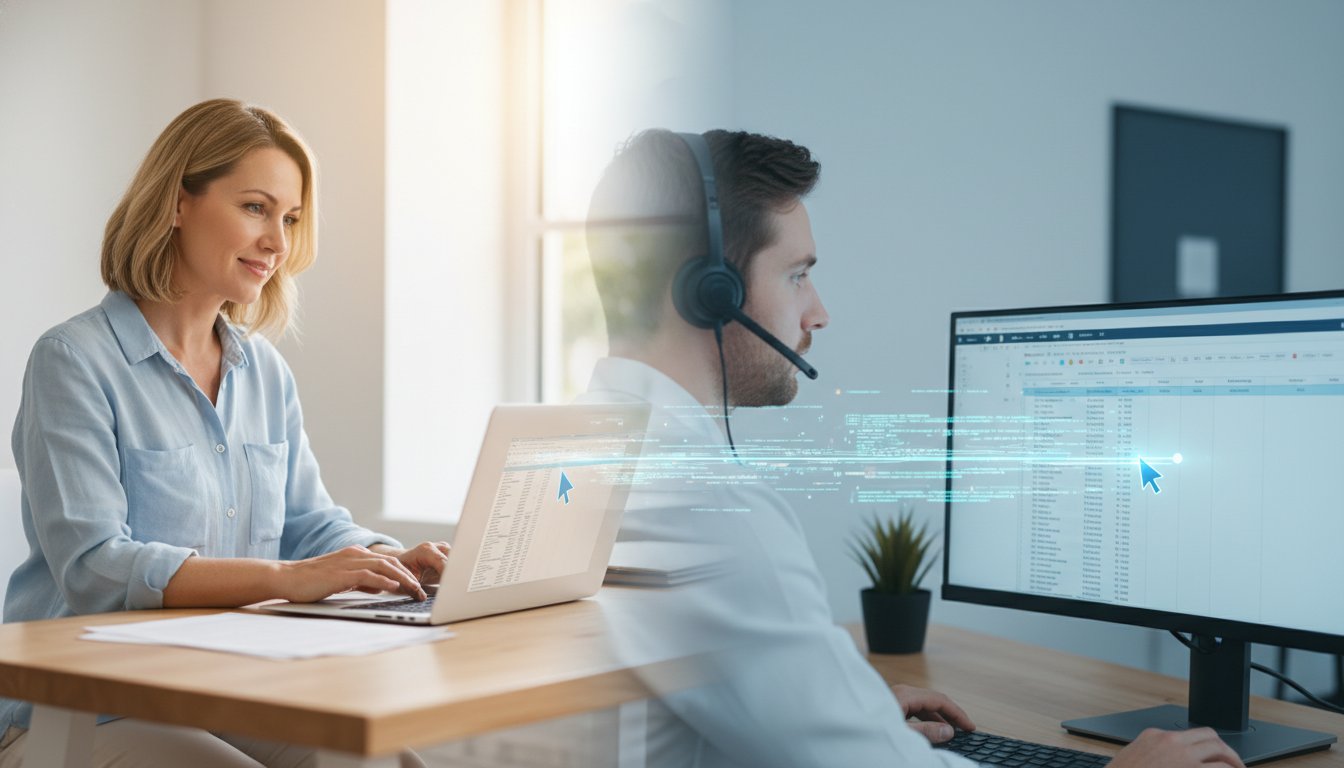

Accounting work can move beyond the office without placing sensitive files on every device. Secure remote access for accounting software connects an authorised user to a remote computer or workspace that holds the software and data, rather than requiring files to be downloaded to a personal device. For a remote desktop connection, the computer being accessed must be switched on and connected to the internet.
Flexible access is useful, but convenience alone does not make a setup secure. A suitable approach balances staff access with controls that protect financial information and support the way your team works.
This guide explains how remote access software works, how it can support flexible work and business continuity, and which privacy and security settings matter. It also outlines key controls to consider, including access permissions, encryption, session monitoring and logging, to help you make an informed choice for your accounting team.
Key Takeaways
- Understand how remote access connects accounting staff to software and financial data without relying on local copies.
- Compare cloud accounting, remote desktop and virtual desktop setups by where applications and data are hosted.
- Support flexible work by planning for access permissions, staff changes and continuity if a device or system becomes unavailable.
- Assess privacy and security controls such as multi-factor authentication, role-based access, encryption and activity logging.
- Use isolated, regularly tested backups as part of a considered recovery plan.
What is remote access software?
Remote access software connects an authorised user to accounting applications or a computer over the internet. Secure remote access for accounting software combines multi-factor authentication, role-based permissions and a controlled workspace, so staff can reach only the records their work requires. A suitable setup also limits unnecessary downloads and makes it easier to update access as responsibilities change.
Accessing Client Financials Remotely
Remote access lets an accountant use financial records and software, such as QuickBooks, from another computer. This matters when a team needs to review transactions, reconcile accounts or collaborate without saving working copies on every device. Access may be available 24 hours a day, 7 days a week, depending on the setup. The remote computer must be switched on and connected to the internet before a remote desktop connection can start.
Hosted Desktops and Direct Computer Access
A hosted desktop runs accounting applications and stores data in a controlled remote environment, while direct access connects to a particular office or client computer. The difference affects where information is handled. A hosted setup can keep client data within its controlled environment instead of storing it on a local computer. Direct access relies on the target computer being online, such as an office PC with the required accounting application installed.
Unattended access lets an authorised user connect without someone at the computer approving each session. It can help staff reach an office workstation when colleagues are elsewhere. For secure remote access for accounting software, give each person an individual login, enable multi-factor authentication and limit access to relevant computers and records. Shared credentials make it harder to link activity to a specific user, so keep accounts separate.
A client portal offers another way to exchange documents without opening a full desktop session. For example, a client can upload a bank statement to a designated folder for an accountant to retrieve during reconciliation. Set folder permissions for the people handling that engagement. Keep document sharing separate from application access, so someone who only provides a statement does not automatically gain access to the accounting system.
Review permissions when staff duties change. The Australian Bureau of Statistics says users can revoke accounting software access through its application controls. Remove access when someone no longer needs it, and adjust permissions when responsibilities shift. For example, a staff member moving from data entry to review work may need different access to client records and software functions.
If you are choosing between a computer connection, hosted workspace or client portal, start with the task and the data involved. A remote desktop can provide access to a particular installed application, while a portal suits document exchange. Match the access method to the work, then apply account controls before opening financial information.
Flexible work locations and business continuity
Cloud accounting lets authorised users access and edit accounting data from anywhere with an internet connection. For Australian accounting teams, this flexibility can support client work across home offices, branches and while travelling. Continuity planning can help staff keep essential work moving when their usual workplace is unavailable.
Flexible work and productivity
A cloud platform gives team members a shared place to work, rather than relying on one office computer for every task. For example, an accountant can review a client’s entries from home while a colleague updates records in the office. Both need a reliable internet connection, appropriate account access and clear responsibilities to avoid duplicate work.
Remote sessions can also reduce time spent travelling between locations and make it easier to coordinate review work. Teams can agree which tasks suit remote work, such as preparing reconciliations or checking reports, and which need a scheduled discussion. That structure turns flexibility into a practical workflow, rather than simply moving office tasks to another location.
Remote work and staff onboarding
New starters need a clear route to the systems and information required for their role. A manager can set up an individual account, assign suitable permissions and explain how to open a remote session before the employee handles live client records. A practice task, such as reviewing a sample report, helps staff learn the workflow without confusing it with active client work.
Access should change as responsibilities change. NSW Health advises managing user access on an ongoing basis as roles and personnel change. For an accounting team, that means reviewing permissions when someone joins, changes duties or leaves, rather than relying on an old access list.
Continuity when work locations change
Remote access can support continuity when staff cannot reach their usual office, but it depends on the systems and connection they need. A continuity plan can identify who handles urgent reconciliations, where current work is recorded and how staff communicate if a normal connection fails. For example, a team can document an alternative work location and assign someone to coordinate priorities.
Backups are another part of recovery planning. Keep backup copies isolated from production systems and test them regularly, so the team knows whether records can be restored. A tested backup and a working remote connection address different problems: one supports data recovery, while the other lets authorised staff reach available systems from another location.
There is also a staffing context. At the close of 2023, Ignition surveyed 136 accounting professionals about challenges in Australia’s accounting talent landscape. In that survey, 58% named staff recruitment as their top challenge heading into 2024, while 49% identified a lack of time to implement new technology as a challenge heading into 2024. A manageable onboarding process and defined remote workflows can help teams make access arrangements clearer as staff join or change roles. For practical help with business continuity support, consider how your current IT setup supports staff working from different locations.
Privacy and regulatory compliance settings
For remote accounting access, enable multi-factor authentication (MFA), encrypt data in transit and at rest, and restrict access by user identity and role. Session monitoring and activity logs can also show who accessed sensitive records and what actions followed.
Public Wi-Fi can expose a connection to interception, while personal devices may lack current security updates or be shared with others. Avoid opening financial records on an untrusted network. Use an approved, protected connection and a device with a password and screen lock.
Manage permissions through individual accounts, granting each person only the data their duties require. Review access when roles change, and remove accounts promptly when staff leave; the Australian Bureau of Statistics notes that application access controls can revoke software access.
If credentials or financial data may be compromised, revoke affected access, change passwords and secure active sessions. Preserve relevant logs, identify the records and accounts involved, and follow the organisation’s incident response and recovery process.
Authentication, encryption and device controls
MFA adds a separate verification step, making access less likely with a stolen password alone. Encryption protects information during transfer and while stored, but it works alongside sound access controls rather than replacing them. For example, an accountant signing in from a laptop should use a unique account, MFA and a screen lock.
Personal devices need clear safeguards because downloaded files can remain outside the accounting platform. Keep sensitive documents in approved systems where possible, and restrict local downloads and file transfers to authorised users. If a transfer is necessary, use a platform that enforces encryption and permissions.
Regulatory compliance and audit logs
For an Australian business, separate legal and regulatory obligations from provider assurance claims. ISO/IEC 27001, ISO/IEC 27701 and SOC 2 Type II are standards or assurance frameworks associated with security and privacy controls, not a substitute for understanding which obligations apply to a specific business.
Audit logs support oversight by recording access events, user activity and permission changes. Review them for unusual sign-ins, unexpected file transfers or access outside a person’s role. A log is more useful when it identifies the individual account, time, session and action, rather than only showing that someone connected.
Keep access reviews tied to real staff changes. NSW Health advises ongoing user-access management as roles and personnel change. For example, when an employee moves from bookkeeping to review work, adjust permissions and record the change. This creates a clearer link between responsibilities, system access and the evidence available during an internal review.

Remote desktop access for accountants and CPAs
To set up secure remote access, choose a remote desktop or virtual desktop arrangement, install its software on the employee’s device and the computer being accessed, then assign individual accounts and permissions. Require multi-factor authentication and test the connection before staff use live accounting records.
A remote desktop lets an accountant work in another computer’s environment over the internet. The applications and files remain on the remote computer, while the employee views and controls its desktop. This can suit accounting software already installed on an office PC. That computer must be switched on and connected to the internet whenever someone needs access.
Virtual desktop infrastructure
Virtual desktop infrastructure, or VDI, hosts desktop environments on centralised servers rather than individual computers. Each user’s session runs independently, so one person’s activity does not affect another user’s environment. For an accounting team, this can separate workspaces while keeping applications and data in a centrally managed setup.
In a cloud-based virtual desktop service, applications, workloads and data are hosted in the cloud. The remote device receives the graphical interface rather than a full copy of the working environment. When comparing a named option such as AUCloud Virtual Desktop as a Service, assess how it handles user access, session controls and data location. These details affect how it fits an accounting workflow.
Virtual apps and desktops on different devices
Depending on the solution, an authorised user may connect from a PC, Mac, Linux computer, Chromebook, iOS device or Android device. Each device needs an internet connection and compatible access software or an application. For example, an accountant can use a laptop to view a desktop session while travelling, then return to the same work environment from another supported device.
Device choice affects how staff use accounting applications. A larger screen and keyboard may suit entering transactions, while a phone can be useful for viewing information. The application still runs in the remote environment, but small screens can make detailed reconciliation harder. Set clear expectations about which tasks staff should perform on each device.
Installing and managing remote desktop software
Remote desktop software is installed on both the employee’s device and the computer being accessed. Configure each user separately, enable authentication controls and limit permissions to the required applications and client records. Then test a session using the devices staff will actually use. This can reveal compatibility, screen layout or connection stability issues before live work begins.
Review access as staff roles change, and remove accounts that no longer need entry. Keep software settings consistent across authorised devices, and avoid storing accounting files locally unless the workflow requires it. A planned setup makes it easier to identify which computer, account or session needs attention when access fails.
Comparing remote access software providers
Compare remote access solutions by the protection they provide, how they control user sessions and how well they fit your accounting workflow. A simple login is useful, but it should not come at the expense of clear permissions, encrypted transfers or useful activity records.
When comparing cloud accounting software and remote access tools, consider the subscription tier, number of users, hosting arrangement and included support. Compare the functions your team needs, such as file transfer controls and session logging, rather than choosing on subscription cost alone.
Cloud accounting platforms let authorised users work with accounting data online, while remote desktop tools connect to a computer or hosted workspace. QuickBooks is one example of accounting software that can be accessed remotely. Whether access is built into a cloud platform or provided through a separate tool depends on the setup.
Compare controls, not just convenience
Check how each option protects information during a session and when files move between devices. Useful controls include:
- Encryption for data in transit and at rest, protecting information as it moves and while stored.
- Identity-based access control, so each user signs in with an individual account and receives appropriate permissions.
- Session monitoring and logging, which record access and activity for later review.
- File transfer permissions, which limit who can send or download accounting documents.
For example, an accountant who only reviews reports may not need the same file transfer permissions as someone preparing client records. Match each account’s access to its actual tasks, then consider whether the provider makes those controls manageable.
Check how the setup works in practice
Test a typical workflow before adopting a tool across the team. Open a client file, run the accounting application and check whether the session remains usable on the devices staff rely on. Then test an authorised file transfer and confirm the activity appears in the logs. These checks can reveal practical issues that a feature list may not show.
Consider where the accounting application and data are held. A cloud platform hosts applications and data online, while a remote desktop may rely on a particular office computer or hosted environment. The right arrangement depends on whether your team needs shared access, a specific desktop application or a controlled location for client information.
Choose a setup that pairs encryption with individual accounts, appropriate permissions, session oversight and controlled transfers. For help with the computer access side of a remote workflow, discuss remote IT support and how it can fit your working setup.
An effective comparison considers encryption for data in transit and at rest alongside identity-based access control. These features address different parts of remote use: protection for information as it moves or is stored, and access tied to user identity. Check how each provider presents these controls for its remote desktop solution rather than relying on a general security label.
Session monitoring and logging are also useful points of comparison. Review whether the provider offers both, and consider how they fit the way your team manages user sessions. Looking at these features together gives you a clearer basis for weighing protection and oversight when choosing a remote access setup.
Aspire Computing: PC and Laptop Repair
Aspire Computing can help when a computer problem interrupts access to accounting work. If a laptop struggles to run business software, PC and Laptop Repair or a Hardware Upgrade can address the device issue. Virus and Malware Removal can help if suspicious activity affects the computer, while Data Recovery Services can help when important files are lost or inaccessible.
These services support the devices and data your team relies on, alongside the access controls and provider settings covered above. They are a practical next step when the problem is with a PC or laptop, rather than accounting permissions or the remote access platform itself.
Contact Aspire Computing to discuss a computer or data issue affecting your work.
Make your next step practical
A good access setup should fit the way your team works and remain manageable as devices, staff and tasks change. Treat secure remote access for accounting software as an ongoing part of your business systems, not a one-time configuration. Reviewing a troublesome computer or missing file can help distinguish a device issue from an account or platform problem.
Aspire Computing offers PC and Laptop Repair, Data Recovery Services and Hardware Upgrades for computer and data issues that affect day-to-day work. These services are relevant when the equipment used to reach accounting systems needs attention, or when important files are inaccessible.
Contact Aspire Computing to discuss your needs. A clear account of the computer or data problem is a useful place to start, and the next step can be considered calmly.
Frequently Asked Questions
How do cloud accounting software and remote desktop access compare for security?
Neither option is secure by default. Compare how each manages account recovery, access removal and responsibility for incidents. Cloud accounting involves the service provider’s platform, while remote desktop access also depends on the security and availability of the computer being reached. For example, a lost office PC can affect direct access even when an employee’s login remains protected. Review provider controls alongside your own devices and access procedures.
What Australian privacy and data security rules apply to remote access to financial records?
Applicable Australian privacy and data-security obligations depend on your organisation, the personal information in its records and any contractual commitments. Map which financial records contain personal information, who can access them, where copies are stored, and how access or suspected exposure is handled. Document those decisions and align remote-access permissions with them. A setup that works for one organisation may not address another’s obligations, so assess the rules relevant to your business and records.

B.App.Sc., Cert. Computer Engineering PC Service and Repair
As the owner of Aspire Computing founded in 1999, Chaim Lee has been working for over 20 years as the Leading Computer Technician.
He has a life long interest in electronics, computing, science and technology. He has completed studies and gained qualifications in Applied Science, Computer Repair and Service, Microsoft Installation and Maintenance, Technical Writing, Workplace Training, and Technical Sales Training.