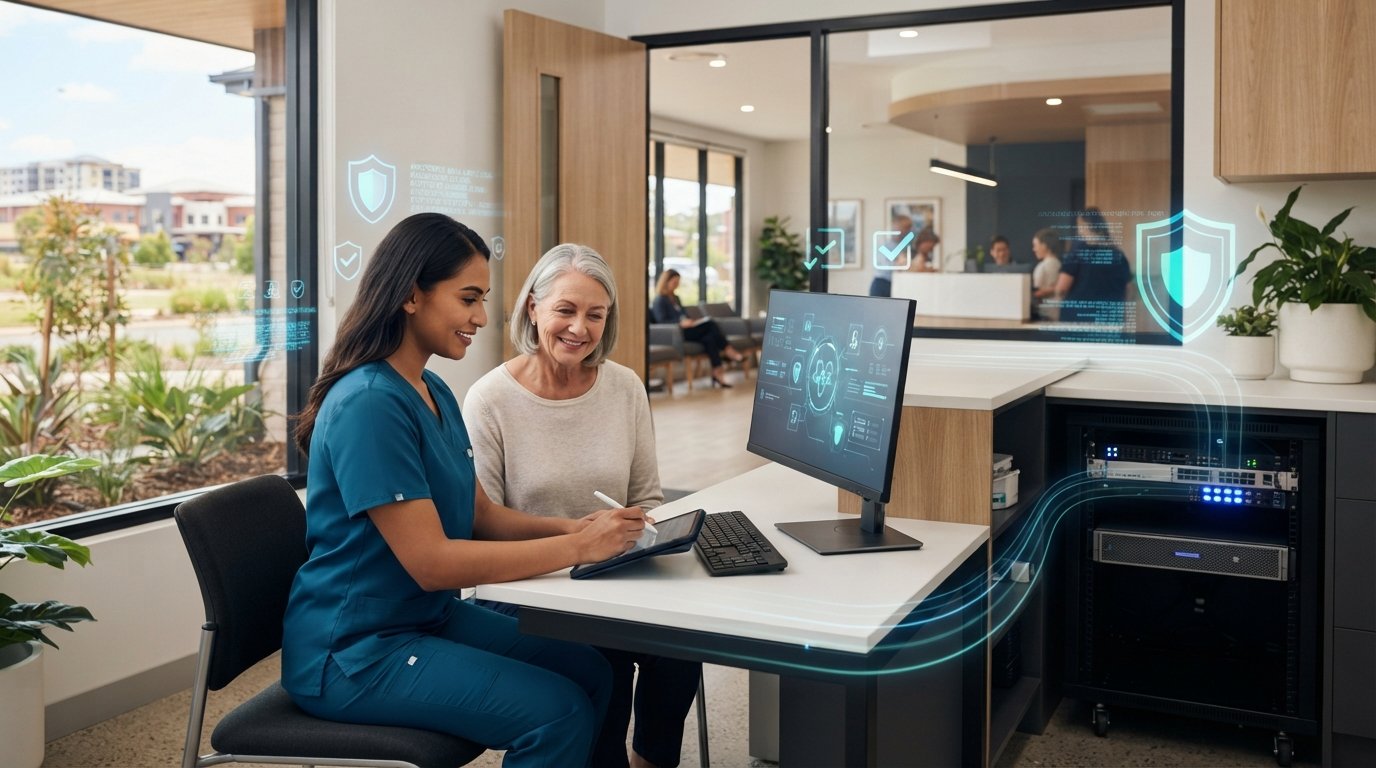
Medical Practice Data Backup Checklist: Secure Patient Records in Toowoomba (2026)

Did you know that healthcare is Australia’s most targeted sector for cyberattacks, representing 19% of all data breaches reported to the OAIC? For a clinic manager, this statistic isn’t just a number; it represents the constant threat of ransomware locking patient files or a hardware failure disrupting a busy morning of consultations. You likely feel the pressure of meeting the new RACGP 6th edition standards while trying to decipher technical terms like Essential Eight or immutable storage. It’s stressful to manage these risks when you just want to focus on patient outcomes.

I’m Chaim Lee, and I’ve spent over 25 years helping local clinics secure their digital assets. In this article, I’ll provide a comprehensive checklist to help you audit your current medical practice data backup Toowoomba setup. You will learn how to move beyond basic USB drives to a system that meets Australian Privacy Principles and ensures your records are recoverable in minutes. We will break down the exact steps to satisfy accreditation surveyors and protect your practice from the A$50 million penalties associated with serious data breaches. This guide simplifies your technical requirements into a clear, actionable plan for your Darling Downs clinic.

Key Takeaways

  • Understand the updated 2026 RACGP standards and how Essential 8 mitigation strategies protect your clinic from the rising threat of ransomware.
  • Evaluate the best backup model for your practice, balancing fast on-site recovery with secure cloud replication tailored to Toowoomba’s NBN capabilities.
  • Implement a clear daily and weekly verification routine to ensure your patient records are readable and recoverable without technical jargon or confusion.
  • Discover why a local medical practice data backup Toowoomba strategy is essential for meeting Australian Privacy Principles and maintaining data sovereignty.
  • Learn how 25 years of local expertise can help you move from fear of technical failure to total confidence in your practice’s operational stability.

Why Patient Data Backup is Critical for Toowoomba Clinics

Imagine a busy Monday morning at your clinic in Newtown. The waiting room is full, but your practice management software won’t load because of a server failure. This isn’t just a technical glitch; it’s a complete halt to your billings, scripts, and patient care. For local GPs, a robust medical practice data backup Toowoomba plan is the difference between a minor delay and a week of lost revenue. Beyond the immediate stress, you have a professional and ethical duty to protect sensitive health information from permanent loss. If your records aren’t recoverable, you risk losing the hard-earned trust of the Darling Downs community.

To better understand how to protect your clinic from these disruptions, watch this helpful video:

The Legal Landscape: Privacy Act and Health Records

Under the Privacy Act 1988, medical practices are not eligible for the small business turnover exemption. You’re legally bound by the Australian Privacy Principles (APPs) regardless of your annual revenue. If a data breach occurs and you haven’t taken reasonable steps to secure patient records, the consequences are significant. In 2026, the maximum civil penalty for serious privacy interferences can reach A$50 million or 30% of your adjusted turnover. Implementing modern data backup strategies and redundancy models ensures you can meet Notifiable Data Breaches (NDB) requirements while maintaining the integrity of the My Health Record system.

Ransomware: The Invisible Threat to Darling Downs Healthcare

Healthcare remains the number one target for cybercriminals in Australia. According to OAIC metrics, health service providers account for 19% of all reported data breaches. Many small practices believe they’re too small to be targeted, but most attacks are automated. A simple daily backup to a local drive isn’t enough anymore. Modern ransomware specifically looks for connected backups to encrypt them alongside your primary data. You need a business continuity strategy that includes “immutable” storage. This ensures your recovery files can’t be modified or deleted by hackers, even if they gain access to your local network via a phishing email or a staff member’s compromised credentials.

RACGP Standards and Essential 8 Compliance for 2026

Accreditation season in the Darling Downs often brings a wave of anxiety for practice managers. It’s not just about clinical quality anymore; it’s about proving your digital systems are resilient enough to survive a catastrophe. To meet the RACGP Information Security in General Practice standards, you must demonstrate a structured approach to data management. This is where a professional medical practice data backup Toowoomba strategy becomes your strongest asset during an audit. With the release of the RACGP 6th edition standards in August 2026, the focus on digital governance and cyber security has never been higher.

Breaking Down the RACGP CISS Requirements

The core of clinical compliance lies in Criterion C6.4, which mandates that your practice has a reliable system for backing up and restoring data. It’s not enough to simply have a drive plugged into your server. You must maintain a documented policy that includes:

  • Daily automated backups: Ensuring that no more than 24 hours of patient consultations are ever at risk.
  • Verified restoration tests: You need to prove the data is actually readable by performing regular “test restores” of individual files and full databases.
  • Off-site and Offline storage: Keeping a copy of your data away from your physical office to protect against fire or theft.

Surveyors now look for verification logs. If you can’t show a history of successful backup reports, you may struggle to meet accreditation. If you’re unsure if your current logs meet these criteria, a quick audit from a local IT support and security expert can provide the clarity you need before the surveyors arrive.

Implementing Essential 8 in a Small Practice

The Essential 8 is the baseline for Australian business security. For Toowoomba clinics handling sensitive health records, reaching Maturity Level 2 is the operational goal. This level requires that your medical practice data backup Toowoomba setup is protected by multi-factor authentication (MFA). MFA ensures that even if a hacker steals your password, they can’t delete your backup files without a second physical verification code.

Another critical step is restricting administrative privileges. Only designated backup administrators should have the power to modify or delete backup repositories. By using immutable storage, where files are “locked” for a set period, you create a safety net that ransomware cannot penetrate. This combination of MFA, restricted access, and regular patching forms a shield around your clinic’s most valuable asset: its history of patient care.

On-Site vs. Cloud vs. Hybrid: Choosing the Right Model

Choosing the right architecture for your medical practice data backup Toowoomba requires a balance between speed and security. In regional Queensland, we often face unique challenges with NBN upload speeds and local infrastructure stability. While a purely cloud-based system sounds modern, it can be a bottleneck during a crisis. If you need to restore 500GB of patient records and high-resolution X-rays over a standard connection, your clinic could be offline for 48 hours or more. This is why understanding the local landscape is just as important as the software you choose.

On-site backups offer the fastest recovery times because the data travels over your local office network rather than the internet. However, they’re vulnerable to physical threats like fire, theft, or even a simple power surge during a Darling Downs storm. Cloud backups solve the physical risk by storing data off-site, but they’re entirely dependent on your internet connection. If the NBN goes down, your off-site safety net becomes inaccessible exactly when you might need it most.

The Pros and Cons of Local Hardware

Many clinics still rely on external USB drives that staff take home each night. This is a high-risk strategy. USB drives are easily lost, frequently fail without warning, and often lack the encryption required for health data. A more professional approach involves using a Network Attached Storage (NAS) device with RAID redundancy. This setup mirrors your data across multiple disks so that if one drive fails, your practice keeps running. If you’re currently struggling with hardware that has already stopped responding, you may require professional Data Recovery Services to retrieve your critical patient files.

The Hybrid Advantage for Darling Downs Practices

The hybrid model is the gold standard for medical practices in 2026. It uses a local appliance to provide near-instant recovery for daily mishaps, while simultaneously replicating that data to a secure Australian data centre. This ensures you meet the strict requirements found in the OAIC Guide to health privacy. By keeping data on Australian soil, you avoid the legal complexities of cross-border data transfers. This model also allows you to manage the costs of cloud storage by keeping large, older diagnostic images on-site while prioritising active clinical databases for cloud replication. It provides the peace of mind that your records are safe, regardless of what happens to your physical building or your internet connection.

Medical Practice Data Backup Checklist: Secure Patient Records in Toowoomba (2026)

The Ultimate Medical Data Backup Checklist

A reliable medical practice data backup Toowoomba strategy isn’t a “set and forget” project. It requires a disciplined routine to ensure that when a server fails, your patient records remain intact and accessible. To achieve this, your clinic should follow the 3-2-1 Backup Rule, which involves keeping three copies of your data on two different media types, with one copy stored securely off-site. This checklist provides a clear roadmap for your practice manager to maintain digital resilience and meet RACGP standards.

  • Daily: Verify automated backup completion and check for error logs. Don’t ignore “partial success” notifications.
  • Weekly: Perform a file-level test restore to ensure data is readable and not corrupted.
  • Monthly: Review user access logs and update administrative passwords to prevent unauthorized access.
  • Quarterly: Conduct a full system restore test and review your disaster recovery plan for any outdated information.
  • Annually: Audit your server and NAS hardware health while updating all security software and firmware.

Daily and Weekly Verification Tasks

Automation is a wonderful tool, but it isn’t infallible. You should assign a dedicated staff member to oversee your medical practice data backup Toowoomba reports every morning. This person doesn’t need to be an IT expert; they just need to know what a “success” email looks like. Red flags to watch for include backups that took significantly less time than usual or reports that mention skipped files. These are often early warning signs of database locking issues that could lead to unrecoverable patient records. Consistency here prevents a small glitch from turning into a week-long clinical outage.

Strategic Quarterly and Annual Audits

As your practice grows, your storage needs will change. A quarterly review allows you to check if your backup drive is reaching capacity before it stops working. You should also take this time to update your disaster recovery contact list. Ensure you have current phone numbers for your IT support, practice management software vendor, and cyber insurance provider. For a thorough evaluation of your systems, you can book an IT Support for Business consultation to identify potential hardware bottlenecks or security gaps. Keeping your security software updated is your final line of defence against new ransomware variants emerging in 2026. If you want to ensure your clinic is fully protected, contact us for a local security audit today.

Securing Your Practice with Aspire Computing

Since 1999, I’ve worked closely with healthcare providers across the Darling Downs to ensure their technology works as hard as they do. At Aspire Computing, I don’t believe in the distant, corporate approach of national IT firms. Instead, I offer a personal commitment to your clinic’s operational stability. When you call for support, you speak directly with me, Chaim Lee. You won’t be redirected to a call centre or left waiting for a technician who doesn’t understand the local infrastructure challenges we face in regional Queensland.

Local Expertise You Can Trust

Being based right here in Toowoomba allows me to provide a level of responsiveness that anonymous helpdesks simply can’t match. Whether your practice is in Newtown, Harristown, or further out in the Darling Downs, I can provide on-site assistance when remote fixes aren’t enough. This physical presence is vital when dealing with hardware upgrades or Bare-Metal restores after a critical failure. My goal is to bridge the gap between complex technical standards and the practical reality of running a busy medical clinic. I focus on making your medical practice data backup Toowoomba as seamless and unobtrusive as possible. You can find my full contact details and service regions on the homepage.

Getting Started with a Security Health Check

Every medical practice has unique workflows and different software configurations. Whether you rely on Best Practice, MedicalDirector, or Genie, your backup solution must be application-aware to prevent data corruption. During an initial security health check, I perform a thorough assessment of your current data management protocols. We look at your local hardware health, cloud replication status, and encryption levels to ensure they align with the latest accreditation requirements. This ensures your medical practice data backup Toowoomba is not just a file copy, but a verified recovery protocol tailored to your specific clinical database.

We’ll identify any potential bottlenecks in your recovery time objectives and verify that your immutable storage is configured correctly. This proactive approach reduces the anxiety of technical failure and gives you the confidence that your records are recoverable. Don’t wait for a ransomware alert to find out if your systems are secure. Contact Aspire Computing today for a confidential discussion about your practice security and how we can simplify your compliance journey.

Protecting Your Clinic’s Future in the Darling Downs

Maintaining a reliable medical practice data backup Toowoomba strategy is about more than just satisfying an accreditation surveyor. It’s about ensuring your doors stay open and your patients remain cared for, even when technology fails. By adopting a hybrid backup model and following a strict verification checklist, you move from a reactive state of worry to a proactive state of security. You don’t have to navigate these complex RACGP standards alone or guess if your cloud provider is truly compliant with Australian privacy laws.

I’ve been supporting Toowoomba clinics since 1999, providing the on-site expertise needed to handle local hardware failures and network issues in Newtown and across the region. My focus is on giving you the operational stability you need to focus on medicine. If you’re ready to verify your systems and protect your patient records, I’m here to help. Secure Your Practice Records with a Local IT Audit and gain the peace of mind that comes from professional, local support. Your clinical data is your practice’s history; let’s make sure it’s protected for years to come.

Frequently Asked Questions

Is a cloud backup enough for RACGP accreditation?

Cloud backup is sufficient for RACGP accreditation if it meets specific security and sovereignty requirements. Your data must stay in Australian data centres to comply with privacy laws. While cloud storage is secure, it’s often slow to restore. I recommend a hybrid setup so you can recover files instantly from a local device while keeping the cloud copy as a secondary safety net for total disaster protection.

How often should we test our medical data restores?

You should perform file-level test restores every week and full system restoration tests at least every quarter. RACGP standards require you to prove that your backups actually work. Simply seeing a “success” email isn’t enough evidence for an auditor. Regular testing gives you the confidence that your patient records are readable and that your clinic can return to full operation within your target recovery time.

What is the best way to back up Best Practice or MedicalDirector data?

The best approach involves using application-aware software that handles SQL databases correctly. Programs like Best Practice or MedicalDirector shouldn’t be backed up by simply dragging and dropping files. This often leads to database corruption. You need a system that performs a proper “snapshot” or database dump. This ensures your patient notes and billing data are captured accurately without disrupting your staff during consultation hours.

Does my medical practice need an off-site backup if we have a server?

Yes, having an off-site copy is a core requirement for accreditation and clinical safety. A server in your Newtown office is vulnerable to physical risks like fire, theft, or local hardware failure. If you don’t have an off-site medical practice data backup Toowoomba, a single incident could result in permanent data loss. Off-site storage ensures your records are safe even if your physical building is inaccessible or damaged.

What happens if our internet goes down during a cloud backup?

Most professional backup tools will resume the upload once your connection is back online. However, if your internet is unreliable, large backups might never finish. This is why I suggest using a local backup target first. The data is saved instantly to your local network, and then it syncs to the cloud in the background. This prevents your clinic from being unprotected just because the NBN is having a bad day.

Are external hard drives safe for patient records?

External hard drives are generally not recommended for clinical environments. They lack the necessary encryption, are easily misplaced, and fail more frequently than professional storage. Relying on staff to manually swap drives introduces a high risk of human error. To meet Australian privacy standards, you need an automated, encrypted system that doesn’t depend on someone remembering to plug in a drive before they head home for the day.

How much data storage does a typical Toowoomba GP clinic need?

A typical medical practice data backup Toowoomba setup usually requires between 500GB and 2TB. This varies based on how many years of patient history you’re storing and whether you keep large imaging files on your local server. Since health records must be retained for at least seven years, your storage needs will grow over time. I suggest reviewing your capacity every twelve months to ensure your backup hardware can handle the increasing volume.

What is the difference between data backup and data recovery?

Data backup is the act of copying your information to a safe place. Data recovery is the actual process of restoring your clinic’s operations after a crash. You can have a perfect backup but still be offline for days if you don’t have a recovery plan. Recovery involves rebuilding your server environment and clinical software so that your doctors can actually access the data and resume patient consultations.

IT Support for Medical Clinics in Toowoomba: The Ultimate Compliance Checklist

A patient is sitting in your consult room, but as you try to pull up their history, Best Practice freezes. You’re left staring at a spinning icon while your waiting room fills up and your NBN connection struggles to stay active. It’s a frustrating situation that highlights why specialized IT support for medical clinics Toowoomba is a clinical necessity rather than just a back-office expense. You need systems that work as hard as you do, especially when patient safety is on the line.

You likely worry about the legal repercussions of a data breach, especially with Privacy Act penalties reaching up to A$50 million for serious violations. It’s challenging to stay on top of the RACGP 6th Edition Standards while managing daily consultations and staff needs. I understand that the transition to digital-only records and the recent end-of-life for Windows 10 have added a heavy layer of complexity to your practice management.

This guide provides a comprehensive compliance checklist to help you secure your clinic and streamline your operations. I’ll walk you through essential updates for SQL Server, NASH certificate renewals, and the implementation of the Essential Eight security framework. You’ll learn how to ensure 100% clinical software uptime so you can focus entirely on delivering exceptional patient care.

Key Takeaways

  • Understand why specialized IT support for medical clinics Toowoomba is essential for maintaining 100% uptime with clinical software like Best Practice and MedicalDirector.
  • Identify the critical hardware and connectivity requirements, including 4G/5G failover, to ensure your digital records remain accessible during NBN outages.
  • Learn how to align your practice with the RACGP 6th Edition Standards and Australian Privacy Principles to avoid significant legal and financial penalties.
  • Discover the multi-layered cyber security strategies needed to protect sensitive patient data from ransomware and unauthorized access.
  • Recognize the value of a local Darling Downs partner who can provide rapid, on-site assistance for hardware failures and printer issues that remote support cannot fix.

Why Specialist IT Support for Medical Clinics in Toowoomba is Critical

For a busy medical practice, an hour of offline time isn’t just a minor inconvenience; it’s a total breakdown in patient safety. When systems fail, consultations stop, scripts can’t be issued, and your waiting room quickly becomes a source of significant stress for both staff and patients. Investing in specialized IT support for medical clinics Toowoomba ensures that your technology remains a tool for healing rather than a barrier to care. Many general IT providers understand basic networking but lack the specific knowledge required to manage the sensitive databases and strict uptime requirements of a modern healthcare environment.

Medical software demands a level of precision that standard office setups don’t require. If your IT partner doesn’t understand how Best Practice or MedicalDirector interacts with your server, a simple update can lead to hours of clinical downtime. You need a team that recognizes the difference between a standard file server and the high-stakes environment of a primary care facility.

To understand the foundational security requirements for Australian clinics, watch this video on the Essential Eight framework:

Toowoomba’s unique geographic landscape, including varying NBN reliability across the Darling Downs and Lockyer Valley, requires a proactive approach to connectivity. The shift toward telehealth has placed unprecedented demand on clinic infrastructure. If your internet drops during a video consult, you don’t just lose time; you lose the ability to provide care to vulnerable patients who may not be able to travel to the surgery.

The Intersection of Patient Care and Technology

Practitioner burnout is often linked to “technology friction.” When a doctor spends five minutes of a fifteen-minute appointment fighting with a slow interface, the quality of the interaction suffers. Reliable health informatics systems are the backbone of real-time medical records, ensuring that every clinician has the data they need at the point of care. A local clinic recently found that remote-only support couldn’t solve a hardware conflict between their scanner and their clinical software, leading to days of manual data entry. They needed a local expert who could be on-site in Toowoomba to physically resolve the issue and restore their workflow.

Common IT Failures in Healthcare Practices

Medical offices are often “paperless-adjacent,” meaning scanners and printers remain mission-critical for referrals and pathology. A jammed printer or a scanner that won’t sync can halt an entire afternoon of appointments. Database corruption in clinical software is another major risk that can be catastrophic without a robust business continuity plan. During high-volume telehealth sessions, network bottlenecks often occur if the router isn’t configured for medical traffic priority. Since 1999, Aspire Computing has specialized in resolving these specific local hurdles, providing the reassurance that help is just a phone call or a short drive away.

The Essential Medical IT Infrastructure Checklist

A high-performing clinic requires more than just the right software. It needs a physical foundation designed to withstand the heavy processing demands of modern healthcare. When you invest in IT support for medical clinics Toowoomba, the first step is often auditing the hardware that keeps your practitioners productive. Without medical-grade workstations and a resilient network, even the best clinical software will feel sluggish and unreliable.

Reliable Hardware for Toowoomba Practices

Consumer-grade laptops from a big-box retailer aren’t enough for a busy Harristown clinic. These devices lack the durability and security features required for constant clinical use. Professional workstations are built with higher-quality components that offer better longevity and less heat-related throttling. I always recommend dual-monitor setups for every consultation room. This allows doctors to view patient history on one screen while managing scripts or referrals on the other, significantly reducing cognitive load. If your current systems are struggling to keep up, you might find my guide on PC Hardware Upgrades helpful for identifying performance bottlenecks.

Networking and Internet Stability

Internet connectivity is the lifeblood of the modern practice. Troubleshooting slow NBN speeds in Toowoomba’s CBD often reveals that the issue isn’t the line itself, but the internal hardware. Managed switches are essential for prioritizing medical data traffic, ensuring a telehealth call doesn’t drop because someone in the back office is downloading a large file. For mobile practitioners moving between rooms, we optimize Wi-Fi to ensure seamless roaming without signal drops. Every clinic should also have a business-grade NBN connection backed by a 4G or 5G failover. This ensures that if the main line goes down, your practice stays online and your e-prescribing remains active.

To maintain a secure and efficient environment, your infrastructure must also include:

  • High-Speed Peripherals: Scanners must be capable of handling high-volume batches, and printers need to be configured for secure, jam-free prescription printing.
  • Software Lifecycle Management: Clinical and billing platforms require regular patching to stay secure and compatible with the latest OAIC Guide to Health Privacy standards.
  • The 3-2-1 Backup Rule: Keep three copies of your data on two different media types, with at least one copy stored securely off-site. This is the gold standard for patient data safety.

Managing these moving parts can be overwhelming while you’re trying to focus on patient outcomes. If you’re unsure if your current setup meets these standards, a quick check of your clinic’s IT health can provide the peace of mind you need to move forward confidently.

Compliance in the healthcare sector is a legal obligation that carries significant weight. Under the Privacy Act 1988, medical practices are classified as APP entities regardless of their annual turnover. This means you’re legally required to protect patient health information according to strict standards. With the passage of the Privacy and Other Legislation Amendment Act 2024, corporate penalties for serious data breaches have increased to a maximum of A$50 million. Reliable IT support for medical clinics Toowoomba helps you avoid these catastrophic financial and reputational risks by ensuring your systems are configured correctly from the start.

The Notifiable Data Breaches (NDB) scheme requires you to inform the OAIC and affected individuals if a breach is likely to result in serious harm. Since healthcare remains Australia’s most targeted industry for cyberattacks, having a documented incident response plan is now a necessity rather than an option. Implementing the ACSC Essential Eight mitigation strategies provides a proven baseline to prevent approximately 94% of common healthcare data breaches. These strategies are particularly effective against ransomware, which currently represents 42% of malicious healthcare attacks in Australia.

Meeting Modern RACGP Standards

The RACGP officially released the 6th edition of the Standards for General Practices on 26 August 2026. A major change is the requirement for digital-only clinical information systems; paper-based records are no longer accepted for accreditation. We focus on strict access control to ensure only authorized staff can view sensitive records. This includes enforcing individual logins for every team member and implementing strong password policies. We also ensure your operating systems are supported, as running Windows 10 without extended updates now fails RACGP Criterion C6.4 following its 2025 end-of-life date. RACGP IT compliance is the benchmark for Australian medical data safety.

Patient Data Privacy and the Law

Transferring data between allied health providers and specialists requires more than just a standard email. Unencrypted email is a major compliance risk because it can be intercepted easily. Instead, we configure secure messaging services like Argus or Healthlink to ensure end-to-end encryption for referrals and results. These systems rely on NASH SHA-2 certificates, which require a mandatory two-year renewal cycle via PRODA. Using non-compliant storage solutions, such as consumer-grade cloud drives, exposes your clinic to serious legal liabilities. Since 1999, I’ve helped Toowoomba clinics maintain these complex connections, ensuring that patient data stays within the secure pipelines mandated by Australian law.

IT Support for Medical Clinics in Toowoomba: The Ultimate Compliance Checklist

Cyber Security & Disaster Recovery for Clinics

Healthcare data is incredibly valuable on the dark web, but the real threat in 2026 is operational paralysis. Ransomware attackers target local practices because they know you cannot provide care without access to patient histories. If your systems are locked, your clinic stops. Implementing multi-factor authentication (MFA) across all systems, including remote access and clinical software, is one of the most effective ways to block unauthorized entry. When combined with specialized IT support for medical clinics Toowoomba, these layers of security create a formidable barrier against modern cyber threats.

Phishing scams remain the most common entry point for malware. A single staff member clicking a malicious link in an email can compromise your entire network. This is why employee training is your first line of defence. Your team needs to recognize the signs of a sophisticated scam before they provide credentials or download an attachment. I’ve found that a well-informed team is just as important as the firewall protecting your server.

Proactive Malware and Virus Protection

Free antivirus software is designed for home users, not for protecting a medical database. Managed endpoint protection provides real-time monitoring and threat detection that home-grade software misses. I focus on regular system tune-ups to identify and patch vulnerabilities before they can be exploited. Keeping your workstations optimized reduces the risk of software conflicts that can leave backdoors open. For a deeper look at keeping your systems clean, read my guide on Virus and Malware Removal.

Disaster Recovery Planning

A backup is only as good as its last successful test. I’ve seen clinics discover their backups were failing only when they actually needed them during a crisis. We balance on-site storage for rapid local recovery with encrypted off-site storage for protection against physical disasters like fire or theft. For a clinic in Newtown or Harristown, the goal is always a 24-hour recovery objective for all patient files. This ensures that even after a total server failure, you aren’t offline for more than one business day. If you haven’t tested your recovery speed lately, it’s time to secure your practice today with a professional audit of your current backup strategy.

Why a Local Toowoomba IT Partner Beats a National Call Centre

When your clinic faces a technical failure, the last thing you need is a 45-minute wait on hold with a national call centre. A technician in a distant city might understand the theory of your problem, but they can’t physically walk into your practice to swap out a faulty network switch or troubleshoot a local server. Choosing local IT support for medical clinics Toowoomba means you’re partnering with someone who understands the local landscape. I’m familiar with the quirks of regional NBN connections and the specific operational needs of Darling Downs healthcare providers.

I’ve been serving the Toowoomba community since 1999, which gives Aspire Computing a unique perspective on the challenges small practices face. You won’t be treated as an anonymous ticket number in a massive corporate database. Instead, you’ll have a direct line to a local expert who takes personal accountability for your clinic’s uptime. This personal relationship builds trust and ensures that your IT strategy aligns perfectly with your clinical goals. Supporting the Toowoomba economy by choosing local specialists also helps keep essential technical expertise right here in our community.

Personalised Service for Small Clinics

Small clinics often find that national providers try to push “one-size-fits-all” solutions designed for large enterprises. My base in Newtown allows me to offer direct, hands-on expertise tailored to your specific budget and workflow. Whether you’re a solo practitioner or a multi-doctor surgery, you deserve technology that works for you without the corporate overhead. If you’re looking for broader insights into how technology can help your practice grow, my IT Support for Business guide offers practical advice for small business owners navigating the local market.

Rapid Response in the Darling Downs

Speed is critical when clinical software goes down. Remote support is excellent for software patches, but it’s useless when a printer won’t connect or a laptop screen is shattered. My service area is built for rapid response across the region, including:

  • Toowoomba CBD and surrounding suburbs like Harristown and Newtown
  • Highfields and the northern Darling Downs
  • The Lockyer Valley and surrounding rural communities

The advantage of an IT partner who can be at your door in 30 minutes cannot be overstated. It’s the difference between a minor delay and a cancelled afternoon of appointments. This level of reliable IT support for medical clinics Toowoomba ensures your practice remains resilient regardless of hardware failures. It’s time to stop settling for distant support and book an IT Health Check for your clinic today to ensure your systems are ready for the future.

Future-Proof Your Practice with Local Expertise

Your clinical software and patient data are the lifeblood of your surgery. Maintaining compliance with the RACGP 6th Edition Standards and the Australian Privacy Principles requires a dedicated strategy. By prioritizing medical-grade hardware and robust disaster recovery, you protect your patients and your professional reputation. Specialized IT support for medical clinics Toowoomba ensures that your technology remains a silent partner in delivering care rather than a source of frustration.

I’ve been serving the Toowoomba community since 1999, specializing in the unique IT needs of local small businesses and healthcare providers. Whether you face a hardware emergency or need to audit your cyber security, I provide the rapid on-site response that national call centres can’t match. You deserve a local partner who understands your software and values your practice’s stability. Secure your Toowoomba practice with a free IT audit from Aspire Computing today. Let’s make your clinic’s technology reliable, secure, and stress-free.

Frequently Asked Questions

What are the specific IT requirements for RACGP accreditation?

The RACGP 6th Edition standards require digital-only clinical systems and strict information security protocols. You must ensure all operating systems are currently supported; for example, Windows 10 workstations now fail accreditation unless you have paid for extended security updates. Other key requirements include having a documented cyber incident response plan, implementing multi-factor authentication for all remote access, and assigning a designated digital governance role to manage your clinic’s data risks.

How do I choose between Best Practice and MedicalDirector software?

The choice between Best Practice and MedicalDirector usually depends on your specific clinical workflow and interface preferences. Best Practice is highly regarded for its robust database management, while MedicalDirector offers flexible cloud-based solutions like Helix. Regardless of the platform you choose, ensure your IT support for medical clinics Toowoomba understands the specific SQL server requirements and background sync services each software needs to maintain 100% uptime for your practitioners.

Is my clinic’s internet fast enough for telehealth and cloud records?

Telehealth and cloud-based records generally require a stable connection with at least 5 to 10 Mbps upload speed per active video consultation. Standard residential NBN plans often lack the priority traffic handling and upload consistency needed for a busy medical practice. I recommend a business-grade NBN plan with 4G or 5G failover. This setup ensures your appointments and PBS e-prescribing remain active even if the primary fiber connection is interrupted.

What should I do if my medical clinic’s server crashes?

If your server crashes, immediately activate your business continuity plan and contact your local IT partner for an emergency on-site response. Avoid making repeated restart attempts, as this can worsen database corruption in clinical software like Best Practice. A local expert can physically inspect the hardware at your Newtown or Harristown practice and begin the data recovery process or restore your latest backup to meet your 24-hour recovery objective.

How often should I backup my patient data?

Patient data should be backed up daily at a minimum, though many modern clinics now utilize hourly or real-time incremental backups. Following the 3-2-1 rule is the safest approach: keep three copies of your data on two different media types, with one copy stored securely off-site. It is vital to regularly test these backups to ensure that your clinical files are actually recoverable in the event of a hardware failure or cyberattack.

Does Aspire Computing offer on-site support for clinics in Newtown and Harristown?

Yes, Aspire Computing provides rapid on-site IT support for medical clinics Toowoomba, including Newtown and Harristown. Being based at 46 Brigalow St, Newtown, I can often be at your door quickly to resolve hardware emergencies, printer failures, or network issues that remote support cannot fix. This local presence has been a core part of how I’ve supported Darling Downs healthcare providers and small businesses since 1999.

How can I protect my clinic from ransomware attacks?

Protecting your clinic requires a multi-layered approach centered on the ACSC Essential Eight mitigation strategies. Implementing multi-factor authentication (MFA) and managed endpoint protection is critical for blocking unauthorized entry. You should also conduct regular staff training to help your team identify phishing scams, as human error contributes to many data breaches. Regular system tune-ups also help identify and patch security vulnerabilities before attackers can exploit them to lock your files.

Do I need a special router for a medical practice?

A standard home router is not sufficient for a professional medical environment. You need a business-grade router that supports Quality of Service (QoS) to prioritize clinical data and telehealth traffic over general office internet use. These devices offer significantly better security features, such as advanced firewalls and secure VPN capabilities for remote staff. This ensures your clinic remains compliant with Australian Privacy Principles while providing a stable connection for patient care.