
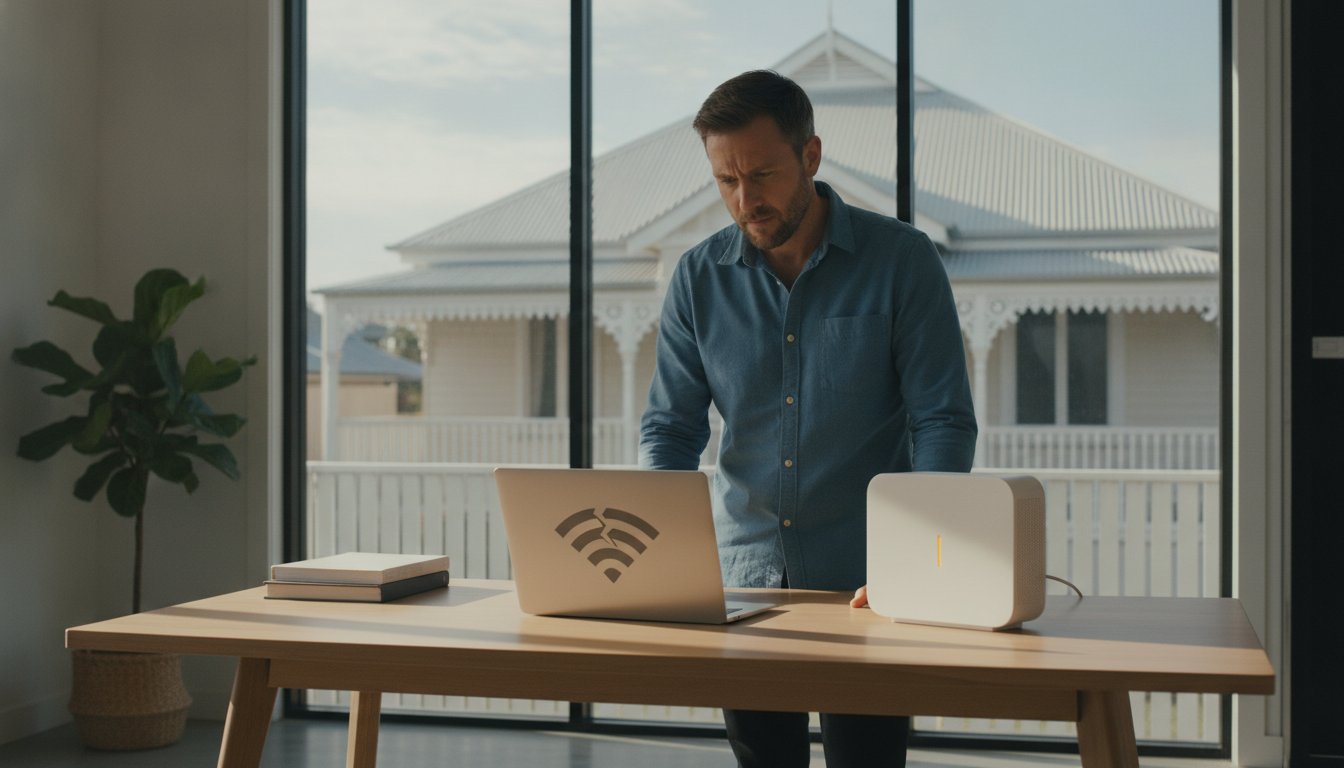
Imagine you’re settled into your home office in East Toowoomba, ready for a productive morning, when you suddenly realize your computer won’t connect to Wi-Fi. With over half of Australian small businesses unable to operate without the internet in 2026, a dropped connection is more than a minor annoyance; it’s a major disruption to your livelihood and peace of mind.
I understand how stressful this is, especially when you’re faced with confusing technical terms or the fear of a massive repair bill. You shouldn’t have to be a networking expert just to get your work done or stay connected with family. I’ve designed this guide to help you troubleshoot the problem step by step, ensuring you feel confident and supported throughout the process without the headache of jargon.
We will start with the simplest fixes for Windows 11 and macOS Tahoe, explore how the latest Wi-Fi 7 standards might be affecting your older devices, and identify when you actually need professional hardware support. Whether it’s a quick setting adjustment or a more complex repair, you’ll find the practical, local expertise you need to get back to business quickly and reliably.
Key Takeaways
- Master the “Golden Rule” of troubleshooting by correctly power cycling your equipment to clear common connection glitches.
- Follow a clear path for software fixes if your computer won’t connect to Wi-Fi, from driver updates to using the Windows Network Reset tool.
- Learn why Toowoomba’s unique environmental factors, like dust and heat, might be the hidden cause behind your router’s performance issues.
- Get professional tips for small business owners on upgrading from basic ISP hardware to more reliable, secure networking solutions.
- Recognize the specific threshold where DIY attempts should stop to avoid hardware damage and when it’s time for an expert on-site repair.
Quick Fixes for When Your Computer Won’t Connect to Wi-Fi
When your computer won’t connect to Wi-Fi, the first step is to stay calm and look at the clues your system provides. These initial hurdles are often simple software glitches that don’t require expensive repairs or deep technical knowledge to resolve. Understanding what is Wi-Fi and how it interfaces with your hardware helps demystify these sudden drops and empowers you to take control of your tech.
To better understand these initial steps, watch this helpful video:
Before diving into complex settings, always apply the “Golden Rule” of troubleshooting: the power cycle. Turn off your router and your computer, wait at least 30 seconds for the internal capacitors to fully discharge, and then restart them. This simple reset clears temporary memory logs and forces a fresh “handshake” between your device and the network. For many Toowoomba residents, this single action resolves the majority of connectivity complaints caused by minor firmware hangs.
Understanding Your Connection Status Icons
Your taskbar icons are your first line of communication. In Windows 11, a globe icon usually signifies that you have a local connection to your router, but no path to the wider internet. This often points toward an NBN service outage or a DNS failure rather than a hardware fault. If you see the signal bars with a small “x” or a star, your computer isn’t talking to the wireless access point at all. Always use your smartphone to verify if the network itself is broadcasting. If your phone connects fine, the issue is isolated to your computer’s settings.
The Forgotten Basics: Passwords and Airplane Mode
It sounds simple, but accidentally toggling Airplane Mode is a common culprit. On older laptops, keep an eye out for a physical sliding switch on the chassis or a specific Function (Fn) key that can disable the wireless card. If your network is visible but refuses to connect, use the “Forget” option in your network settings to clear out cached credentials that might be corrupted. Additionally, check if your connection is set as “Metered” in Windows settings. This can sometimes block background traffic and make it appear as though your computer won’t connect to Wi-Fi or sync your important files.
Advanced Software Troubleshooting: Drivers and Network Resets
If power cycling failed, the issue likely lies within the software instructions your computer uses to talk to the wireless hardware. These instructions, called drivers, act as a translator. Sometimes, a recent update for Windows 11 version 26H2 can cause these translators to become garbled. While Microsoft provides official Windows troubleshooting steps for these scenarios, applying them requires a methodical approach to avoid making things worse.
Managing Your Network Adapter Drivers
Open Device Manager by right-clicking the Start button. Look for “Network adapters” and find your Wi-Fi card model, usually listed as Intel, Realtek, or Qualcomm. If your computer won’t connect to Wi-Fi after a recent update, right-click the adapter and select “Roll Back Driver” to return to a stable version. If that isn’t an option, you can choose “Uninstall device” and restart your computer. Windows is designed to detect the hardware and automatically reinstall a fresh driver upon reboot. This often fixes deep-seated software conflicts without needing an active internet connection to download new files.
Running Network Commands (Without the Fear)
Sometimes the digital pathways your computer uses to find websites become clogged with old data. You can clear these by typing “cmd” into your search bar, right-clicking Command Prompt, and selecting “Run as administrator”. Type ipconfig /flushdns and hit Enter. Flushing your DNS is essentially a way to clear your computer’s “address book” so it can look up fresh, accurate locations for websites. You can also use netsh winsock reset to reset the underlying network catalog. These commands might look intimidating, but they are safe, standard ways to refresh your system’s networking stack.
Check your third-party antivirus or VPN software if these steps don’t restore your connection. These security tools are vital for protection, but they can occasionally “over-protect” by blocking legitimate network traffic. Try disabling them temporarily to see if the connection returns. If you find this process a bit daunting, our team provides remote IT support to help guide you through these advanced settings safely.
As a final software effort, Windows includes a “Network Reset” button in the Settings menu. This is often the last step to take when your computer won’t connect to Wi-Fi before we start looking at hardware failures. It removes and reinstalls all your network adapters and sets other networking components back to their original settings. You will lose saved Wi-Fi passwords and will need to re-enter them once the process is complete. It’s a powerful tool, but use it only after you’ve tried the less invasive steps mentioned above.
Hardware and Environmental Factors: The Toowoomba Connection
Living in Toowoomba, we face environmental challenges that city dwellers might overlook. If your computer won’t connect to Wi-Fi, it’s easy to blame the software, but the culprit is often physical. Our region’s fine dust and summer temperatures can cause internal components to overheat and fail prematurely. While Microsoft’s official troubleshooting guide covers the software basics, it doesn’t account for a router choked with dust from the Darling Downs or an NBN Connection Box (NTD) struggling in a hot garage.
Many regional Queenslanders rely on NBN Fixed Wireless or Sky Muster satellite services. These systems use a specific NTD box inside your home. If the lights on this box aren’t green, the issue isn’t your computer; it’s the external service. However, if your NBN box is fine but your computer still refuses to see the network, we need to look closer at the hardware inside your machine.
Is Your Wi-Fi Card Physically Dying?
Hardware failure is often intermittent. You might find your computer works fine for an hour, then suddenly drops the connection. A major red flag is when the Wi-Fi option disappears entirely from your settings or Device Manager. This usually means the internal Wi-Fi card has failed or shifted. In laptops, the antenna cables run through the screen hinges. Constant opening and closing can eventually pinch these wires, leading to a weak or non-existent signal. A quick way to test this is by using a cheap USB Wi-Fi dongle. If the dongle works perfectly, you know your internal card or antenna needs a professional hardware upgrade or repair.
Toowoomba Signal Killers: Interference and Layout
The construction of your home plays a massive role in your connectivity. Older timber Queenslanders in Mount Lofty generally allow signals to pass through walls easily. In contrast, modern brick homes in the newer estates can act like a shield, especially against the faster 5GHz frequency. While 5GHz is great for speed, its range is short and easily blocked by masonry. If your computer won’t connect to Wi-Fi from the back bedroom, try switching to the 2.4GHz band, which handles obstacles much better. Also, keep your router away from large appliances. Microwaves and even some older cordless phones can create enough electromagnetic noise to knock your computer offline entirely. Positioning your router in a central, elevated spot is the best way to ensure consistent coverage across your entire home.

Wi-Fi Issues in the Home Office or Small Business Environment
When you are working from a home office in Middle Ridge or managing a small storefront in the CBD, a stable connection is your most valuable tool. Research from 2026 shows that 51% of Australian small businesses simply cannot operate without the internet. If your computer won’t connect to Wi-Fi while you’re in the middle of a client video call or an urgent deadline, the loss of productivity is immediate and costly. Most residential setups rely on all-in-one routers provided by an ISP, but these consumer-grade devices often struggle to manage the 2026 reality where 40% of Australians use five or more devices simultaneously.
Security protocols and corporate VPNs add another layer of complexity. Many business laptops are configured with strict firewalls that can occasionally conflict with local network settings, leading to that frustrating “Connected, No Internet” status. For critical business tasks, I always recommend having an Ethernet backup. A physical cable bypasses almost all wireless interference and provides a guaranteed data path when your wireless card is acting up. It’s a simple, low-tech insurance policy for your most important work hours.
Optimizing Wi-Fi for Productivity
In a professional environment, basic settings can cause unexpected drops. For example, if your office printer and your laptop are both fighting for the same IP address via DHCP, one will inevitably lose the connection. Switching your office equipment to static IPs can prevent these internal “handshake” errors. For larger Toowoomba offices with multiple rooms, a Mesh Wi-Fi system is much more effective than a single router. You can find more strategic advice on building a reliable network in our guide to IT Support for Business.
Security and Connectivity
Sometimes your computer won’t connect to Wi-Fi because of hidden malware that has hijacked your DNS settings to redirect your traffic. This type of digital interference can look like a hardware fault when it’s actually a security breach. A professional Virus and Malware Removal service ensures your network stays connected by stripping away malicious scripts that block your web access. If you’ve tried the standard resets and still can’t get online, it’s time to check if your office DNS settings are preventing external access. Our team can help you audit your business network to ensure every device is secure and stable. If you need a reliable partner to manage your technology, contact us for professional PC and laptop repair and network optimization today.
When to Call a Professional Computer Repair Expert in Toowoomba
Knowing when to stop is just as important as knowing where to start. If you’ve followed the previous software resets and your computer won’t connect to Wi-Fi, you’ve reached the professional threshold. Pushing further into hardware disassembly without specialized tools or an anti-static environment risks permanent damage to your motherboard. Since 1999, I’ve helped Toowoomba residents resolve these exact frustrations. I provide a clear, calm path from technical failure to a stable, secure connection.
Professional diagnostics offer something a general online guide cannot: environmental context. When I perform an on-site service, I’m not just looking at your laptop or PC. I’m testing the actual signal strength in your specific office layout and checking for local interference that might be unique to your suburb. If your computer won’t connect to Wi-Fi and the issue is purely software-based, we can often provide remote IT support. This allows us to fix the problem immediately without you ever having to leave your home.
The Aspire Computing Difference
Choosing a local expert means you’re getting someone who understands the Darling Downs’ unique tech landscape. We prioritize a fast turnaround for Computer Repairs in Toowoomba because we know how much you rely on your machine for daily life. You’ll receive honest advice on whether a repair is cost-effective or if a hardware upgrade is a better long-term investment. My goal is your operational stability. Every job is backed by years of personal accountability and a commitment to our local community.
How to Get Started
Before bringing your device in or booking a visit, I recommend a quick backup of your most important files if possible. Having your Wi-Fi passwords and administrative login details ready will also speed up the process. Whether you need an on-site visit in Brigalow St, Newtown, or any of the surrounding suburbs, getting professional help is straightforward and stress-free. Contact Aspire Computing today for fast, reliable Wi-Fi fixes that get your digital life back on track.
Getting Back Online with Confidence
Troubleshooting network issues doesn’t have to be a source of anxiety. We have explored everything from basic power cycles and driver updates to the unique impact of Toowoomba’s climate on your hardware. By following these steps, you can resolve most software glitches and identify when a physical component is failing. If your computer won’t connect to Wi-Fi after these attempts, remember that you don’t have to struggle alone.
Since 1999, I’ve served the Toowoomba community as a trusted partner for both home users and small business owners. Whether you need on-site assistance in your office or rapid remote IT support, my focus is on providing honest, reliable fixes that last. We specialize in small business IT and hardware upgrades, ensuring your technology works as hard as you do.
Don’t let a dropped connection stall your productivity any longer. Book Your Computer Repair in Toowoomba Today and let a local expert handle the technical heavy lifting. You’ll be back to work and connected to what matters most in no time.
Frequently Asked Questions
Why does my computer say ‘Connected, no internet’?
This status indicates that your computer has a successful local connection to your router, but the router cannot reach the wider web. This often points to an issue with your NBN service provider or a problem with the NBN connection box itself. If your other devices are working fine, the issue might be a temporary DNS glitch or an incorrect IP configuration on your specific machine.
Can a virus stop my computer from connecting to Wi-Fi?
Yes, certain types of malware are designed to hijack your network settings. They may change your proxy configurations or DNS addresses to redirect your traffic, which often results in a situation where your computer won’t connect to Wi-Fi. If you notice your connection dropped after downloading a suspicious file, a professional virus and malware removal service is necessary to clear the blockage and secure your data.
How do I know if my Wi-Fi card is broken or if it’s a software issue?
Hardware failure usually shows specific red flags, such as the Wi-Fi icon disappearing entirely from your taskbar or the device vanishing from the Device Manager. If the connection only drops when you physically move the laptop screen, you likely have a pinched antenna cable. Testing your system with an external USB Wi-Fi adapter is the most reliable way to confirm if your internal card has failed.
Will a Windows update fix my Wi-Fi connection problems?
Updates can be a double edged sword for connectivity. While Microsoft frequently releases patches to fix known bugs, a new update can sometimes introduce a driver conflict that breaks an existing connection. If your computer won’t connect to Wi-Fi immediately after an update, you might need to roll back the network driver to a previous version or check for a newer manufacturer specific patch in the optional updates menu.
Why is my laptop Wi-Fi so slow compared to my phone?
Modern smartphones often feature newer wireless chips that support the latest high speed standards. Your laptop might be using an older 2.4GHz card that is more susceptible to interference from household appliances. Additionally, laptops often have power management settings that throttle the wireless card to save battery life. This can result in significantly slower speeds than your mobile device, even when you are standing in the same room.
Is it worth repairing an old laptop that won’t connect to the internet?
It is often a very cost effective choice if the rest of the laptop still meets your needs. If the issue is a failed internal card, a replacement or a high quality USB Wi-Fi dongle can restore full functionality for a fraction of the cost of a new machine. I always provide honest advice on whether the repair is a sound investment or if your money is better spent toward a hardware upgrade.
How much does a professional Wi-Fi repair cost in Toowoomba?
Repair costs depend on whether the fix involves labor for software reconfiguration or the purchase of new hardware components. While I cannot provide a fixed price without seeing the device, standard workshop diagnostics in our region usually begin around $99. I believe in transparent pricing and will always discuss the expected costs with you before any major work begins on your computer.
Do I need to bring my router into the shop for computer repairs?
In most cases, I only need the computer to perform diagnostics. However, because Wi-Fi issues are frequently caused by environmental factors like wall thickness or local interference, an on-site visit is often the best approach. This allows me to test the computer in its actual network environment and ensure your router is positioned correctly for the best possible coverage across your home or office.

B.App.Sc., Cert. Computer Engineering PC Service and Repair
As the owner of Aspire Computing founded in 1999, Chaim Lee has been working for over 20 years as the Leading Computer Technician.
He has a life long interest in electronics, computing, science and technology. He has completed studies and gained qualifications in Applied Science, Computer Repair and Service, Microsoft Installation and Maintenance, Technical Writing, Workplace Training, and Technical Sales Training.

Write a Comment