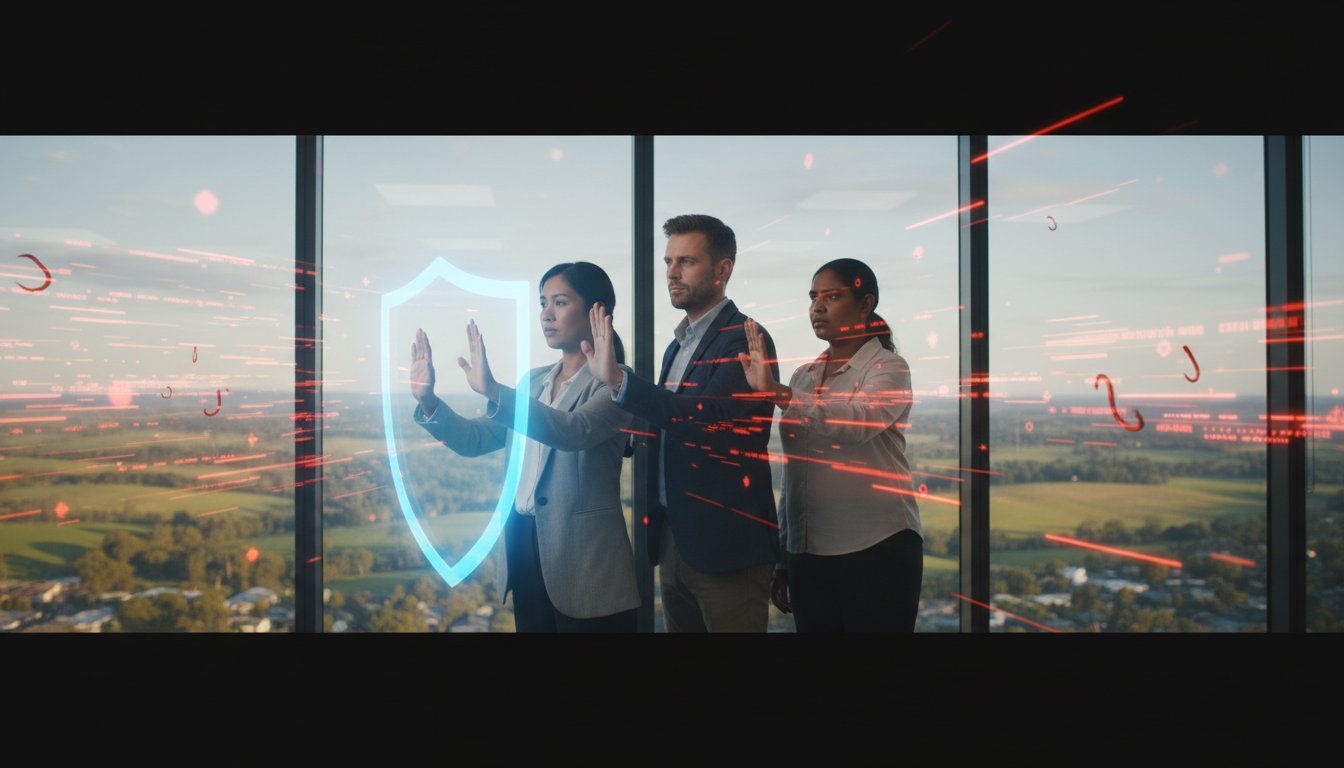

The Australian Signals Directorate reported that cybercrime cost small businesses an average of A$46,000 per incident in 2023. For a family business in Toowoomba, that is a devastating figure that goes beyond just money; it is about losing the hard earned trust of your neighbors. While we provide technical “Active Protection” for your systems, your biggest security gap isn’t your router. It is the person opening an email. Implementing consistent cybersecurity awareness training for employees is the only way to ensure your team doesn’t accidentally hand over the keys to your digital kingdom.
It is exhausting to worry about client data or feel overwhelmed by technical jargon that seems to change every week. We agree that keeping up with Australian privacy standards shouldn’t feel like a second job. This 2026 guide provides a simple, repeatable training plan to turn your staff into a human firewall. We will show you how to build a culture of security that protects your business and gives you back your peace of mind, so you can focus on what you do best.
Key Takeaways
- Transform your staff from a liability into a “human firewall” by addressing the leading cause of data breaches in 2026.
- Identify the evolution of digital threats, including AI-perfected phishing and the specific risks Business Email Compromise poses to local Toowoomba invoice payments.
- Evaluate different training models to determine whether automated monthly simulations or incident-based learning provides the best ROI for your small business.
- Follow a clear, 5-step roadmap to implement effective cybersecurity awareness training for employees and establish a robust security culture.
- Discover how Aspire Computing’s “Active Protection” philosophy helps local firms stay both secure and connected through Chaim Lee’s expert, personal approach.
What is Cybersecurity Awareness Training for Employees?
Cybersecurity awareness isn’t just about passing a mandatory quiz once a year. It’s the combination of technical knowledge and daily habits that keep your business safe from digital threats. At Aspire Computing, we believe true Security awareness involves every staff member understanding their role in protecting company data. It’s a mindset where security becomes second nature, rather than an afterthought.
In 2026, human error remains the primary cause of data breaches, contributing to over 82% of successful attacks. Hackers have moved away from trying to break through sophisticated software firewalls because it’s much easier to trick a person. This is why cybersecurity awareness training for employees is no longer optional for small businesses in Toowoomba and across the Darling Downs.
To better understand this concept, watch this helpful video:
Ongoing training creates a genuine security culture rather than a “tick-a-box” compliance exercise. While one-off sessions provide a temporary boost, a true culture of safety requires regular updates to keep pace with evolving threats. For local firms, the stakes are high. A single breach can lead to reputational damage that takes years to recover from in a tight-knit community like ours. If you need help setting up these protections, Aspire Computing provides the local expertise you need to stay secure.
The Role of the ‘Human Firewall’ in 2026
Technology fails eventually. When a malicious email bypasses your filters, your staff become the final line of defence. Hackers use social engineering to exploit trust, urgency, or fear. They want your team to click before they think. By investing in cybersecurity awareness training for employees, you turn your team into a defensive asset. The ‘Human Firewall’ is an empowered, observant workforce that acts as a conscious, resilient barrier against digital threats.
Why Small Businesses are the New Primary Targets
Don’t fall for the myth that your business is too small to be hacked. Data from the Australian Cyber Security Centre shows that 43% of all cyber attacks now target small businesses. Many of these are supply chain attacks. This is where hackers use a small vendor as a back door into a larger firm’s network. Additionally, recent updates to the Australian Privacy Act mean small businesses face stricter penalties for data mishandling. Protecting your data is about business continuity and meeting your legal obligations to your customers.
- Supply Chain Risk: Hackers target you to get to your bigger clients.
- Legal Compliance: The Australian Privacy Act now carries heavier fines for small firms.
- Local Reputation: In Toowoomba, word of a data leak travels fast.
The Top Cyber Threats Your Staff Must Recognise
Cyber threats have moved far beyond the obvious scams of the past. In 2024, the Australian Cyber Security Centre (ACSC) received over 94,000 cybercrime reports, which is roughly one every six minutes. By 2026, the complexity has only increased. Scammers now use sophisticated tools to bypass traditional filters, making cybersecurity awareness training for employees a vital shield for Toowoomba businesses. You can’t rely on software alone when the target is the person sitting at the desk.
Phishing has evolved from poorly written emails into AI-generated masterpieces. These messages no longer contain the “bad grammar” red flags we once relied on. Instead, they use large language models to mimic the professional tone of your actual suppliers or clients perfectly. Business Email Compromise (BEC) is a particularly nasty variant of this. A staff member might receive a legitimate looking invoice from a local contractor, but the bank details have been subtly changed to a scammer’s account. These invoice redirection scams cost Australian small businesses millions of dollars every year because they exploit trust rather than software vulnerabilities.
We also see growing risks from “Shadow IT.” This happens when your team uses unauthorised personal apps, like a private Dropbox or a messaging app, to share sensitive work files. While they usually do this to be more efficient, it creates a massive blind spot in your security. Physical security is just as vital. A lost USB drive in a car park or an unlocked laptop left in a local cafe can give a thief direct access to your entire network. Understanding the role of employees in cybersecurity helps your team realise that protection is a shared responsibility, not just a task for the IT department.
Modern Phishing and Smishing Tactics
AI tools now allow hackers to scrape data from LinkedIn or local business directories to create highly personalised scams. They might mention a recent local event or a specific project your company is currently working on. We’ve also seen a sharp rise in “Smishing” (SMS phishing). Your staff might get a text on their work mobile that looks like a delivery update from Australia Post or a security alert from their bank. To stay safe in 2026, use this quick checklist for every message:
- Verify the sender: Click the sender’s name to see the actual email address or phone number behind it.
- Inspect the link: Hover over any button to see the destination URL before you click.
- Confirm via a second channel: If a “supplier” asks for a payment change, call them on a trusted number to confirm.
Social Engineering and Psychological Triggers
Hackers don’t just hack code; they hack people. They use psychological triggers like urgency and authority to make staff bypass common sense. The “CEO Scam” is a classic example. An employee gets an urgent email from “the boss” requesting a quick A$2,500 transfer for an “urgent client gift.” Because the request seems to come from a position of authority, the staff member might act without thinking. It’s a high-pressure tactic designed to stop you from asking questions or following standard procedures.
Effective cybersecurity awareness training for employees teaches your team to pause when they feel that sense of panic. If you think a device has already been compromised by a suspicious link, check out our Virus and Malware Removal: Your Complete Guide for the next steps. If you want to ensure your business stays resilient, we can help you protect and connect your systems with a professional security audit.
Comparing Training Methods: What Actually Works?
Choosing the right delivery method determines if your team remembers how to spot a threat or if they forget the lesson by the time they finish their coffee. Traditional “Lunch and Learn” sessions often fail because they treat security as a one-time event. Research shows that people forget 70% of new information within 24 hours if it isn’t reinforced. Automated monthly simulations work better because they focus on frequency rather than duration. A 10-minute module every month is far more effective for long-term retention than a three-hour seminar once a year.
Gamified training is also proving superior to traditional video modules. By using quizzes, badges, and leaderboards, you turn a chore into a challenge. This engagement is vital for cybersecurity awareness training for employees to actually stick. We also recommend “Incident-Based Training,” which provides a teachable moment right after a mistake. If an employee clicks a simulated phishing link, they immediately get a 60-second refresher on what they missed. This real-time feedback loop changes behavior much faster than a generic classroom setting.
DIY Training vs. Managed Security Awareness Programs
Many owners try the DIY route to save money, but the hidden costs add up quickly. You’ll spend hours searching for current info, and by the time you present it, the threats have already changed. Managed programs take this weight off your shoulders. They provide automated phishing simulations that test your staff in the real world without you lifting a finger. For a deeper look at how professional help scales your business, check out our IT Support for Business: A Small Business Owner’s Guide. It’s about having an expert partner to ensure your protection is always up to date.
Measuring the ROI of Employee Training
You can’t manage what you don’t measure. Effective cybersecurity awareness training for employees should provide clear data on “Click Rates” and “Reporting Rates.” You want to see your click rates drop below 5% while your reporting rates (employees flagging suspicious emails) go up. This data is essential for your bottom line. In 2023, the average cost of a cybercrime report for an Australian small business was approximately A$46,000. This makes the cost of a training program look like a bargain compared to a ransomware payout. Additionally, most Australian insurers now require a documented training program before they’ll issue a policy or offer lower premiums. It’s a simple way to protect your cash flow and your reputation at the same time.
A 5-Step Roadmap to Build Your Security Culture
Building a resilient business isn’t a one-time event; it’s a continuous process of improvement. Effective cybersecurity awareness training for employees follows a clear, logical path that turns your team from a liability into your strongest line of defence. According to the 2023 Verizon Data Breach Investigations Report, 74% of all breaches include a human element. Here is the roadmap we recommend for small businesses to change those odds.
- Step 1: Baseline Testing. You need to know your starting point. Use a simple, unannounced phishing test to see how many staff members click a suspicious link. This provides the data you need to tailor your training to specific weaknesses.
- Step 2: Policy Creation. Set clear, written rules. This includes requirements for complex passwords and strict guidelines on using personal devices for work tasks. These policies shouldn’t be long documents; they should be easy to read and follow.
- Step 3: Interactive Training. Move away from technical jargon and long slide decks. Use relatable, short modules that show how a real-world scam looks, such as a fake SMS from a delivery company or a spoofed email from a supplier.
- Step 4: Phishing Simulations. Regularly send safe, simulated “scam” emails. This builds the muscle memory required for staff to spot red flags in a split second.
- Step 5: Ongoing Reinforcement. Security should be a monthly conversation. Share a quick tip in your staff newsletter or during a team meeting to keep the topic fresh.
Implementing Basic Cyber Hygiene Habits
Simple habits often provide the best protection. A “Clean Desk” policy ensures that sensitive client information or login credentials aren’t left visible to visitors or unauthorised staff. We always recommend using a dedicated password manager rather than Post-it notes stuck to monitors. It’s a small change that makes the right choice the easiest one for your team. If your office equipment is struggling to keep up with modern security software, consider how Hardware Upgrades: A Guide to a Faster, Safer Computer can support your team’s efficiency and protection.
Creating a ‘No-Blame’ Reporting Culture
Mistakes happen. If a staff member clicks a malicious link, they must feel safe reporting it immediately without fear of punishment. Rapid reporting is the difference between a minor incident and a total network shutdown. In a small office, you can appoint a “Security Champion.” This is a non-technical staff member who encourages safe practices and acts as a friendly first point of contact for security questions. When people feel supported, they become active participants in your cybersecurity awareness training for employees.
How Aspire Computing Secures Toowoomba Businesses
Chaim Lee has been helping Toowoomba businesses since 1999. His “Protect and Connect” approach isn’t just a catchy slogan; it’s a personal commitment to keeping local firms running safely and efficiently. We believe in an “Active Protection” philosophy that moves beyond basic antivirus software. We look at your business as a whole, combining robust hardware and smart software with the most critical security layer: your people. Comprehensive cybersecurity awareness training for employees is the bridge between a secure network and a devastating data breach.
Every industry in our region faces unique threats. A medical clinic in East Toowoomba dealing with sensitive patient records has different compliance requirements than a local non-profit managing donor databases. We don’t believe in generic, one-size-fits-all training. We tailor our education programs to address the specific risks your staff encounter in their daily workflows. By focusing on real-world scenarios relevant to Toowoomba industries, we ensure the lessons actually stick.
Local Support When Things Go Wrong
Even the best training can’t stop every single mistake. When a staff member accidentally clicks a sophisticated phishing link, you don’t want to be stuck on hold with a call centre in another time zone. We’re local experts who can be on-site at your office in Newtown or the CBD quickly. If a breach occurs despite your best efforts, we’re here to help with the cleanup. Our Data Recovery Services Toowoomba team works tirelessly to retrieve lost files and restore your business continuity as fast as possible.
Get Started with a Professional IT Health Check
Knowing exactly where your vulnerabilities lie is the first step toward a more secure 2026. During an Aspire Computing security audit, we perform a deep dive into your current systems. We help you align with the Australian Cyber Security Centre (ACSC) “Essential Eight” framework. This is the gold standard for Australian small businesses to mitigate cyber threats. Our audit identifies technical gaps and highlights where your team needs more cybersecurity awareness training for employees.
- We check your backup frequency and reliability.
- We review user access levels to ensure the “principle of least privilege.”
- We assess your current patch management for all software and devices.
- We identify high-risk staff groups who need immediate training.
Don’t wait for a cyber attack to find out your back door is open. It’s much easier to prevent a crisis than it is to fix one. Contact Chaim and the team for a security consultation today to protect your business and your reputation.
Secure Your Toowoomba Business for the Years Ahead
Building a resilient business in 2026 starts with your team. Cyber threats aren’t just technical glitches. They’re sophisticated social engineering attempts that target human error. Implementing regular cybersecurity awareness training for employees ensures your staff can spot a phishing attempt before it costs your business thousands in recovery fees. Practical, consistent education is the most effective way to reduce risk and protect your daily operations. A five step roadmap makes this process manageable for any small team.
Since 1999, Aspire Computing has helped local businesses navigate the changing IT landscape. Chaim Lee and our team specialize in small business IT security. We provide the personalized support you need to stay safe. You don’t have to face these digital challenges alone. We’re here to help you protect and connect your business with confidence. Let’s make sure your data stays where it belongs. Our goal is to replace your tech anxiety with genuine peace of mind.
Talk to the Experts: Get a Cyber Security Consultation Today
Frequently Asked Questions
Is cybersecurity awareness training mandatory for Australian small businesses?
There’s no single law that makes cybersecurity awareness training for employees mandatory for every small business. However, under the 2024 Privacy Act reforms, Australian businesses must take reasonable steps to protect personal data from misuse or loss. The Office of the Australian Information Commissioner (OAIC) frequently identifies staff education as a core component of these reasonable steps. Failing to provide training can lead to significant regulatory penalties if a data breach occurs.
How often should my employees undergo cybersecurity training?
Employees should participate in security training at least every four to six months to keep their skills sharp. Research shows that 90 percent of information is forgotten within 30 days if it isn’t reinforced through regular practice. Short, quarterly micro-learning sessions are much more effective than a single annual presentation. We recommend a quick refresher whenever you introduce new software or after a major industry threat is identified in the news.
What is the most common cyber threat for employees in 2026?
AI-driven social engineering is the most common threat facing Australian staff in 2026. Scammers now use generative AI to create flawless, error-free emails and deepfake audio that perfectly mimics a manager’s voice. These sophisticated attacks are designed to trick employees into transferring funds or sharing passwords. Training helps your team identify the subtle psychological triggers these criminals use, ensuring your business stays safe from increasingly realistic scams.
Can training really prevent a sophisticated ransomware attack?
Yes, effective training acts as a critical barrier because human error contributes to 82 percent of successful data breaches according to recent industry reports. Most ransomware requires a user to click a link or download a malicious attachment to enter your system. By teaching your team to pause and verify suspicious requests, you stop the attack before it can encrypt your files. It’s a vital part of our mission to protect and connect your business.
How much does employee cybersecurity training typically cost?
Professional cybersecurity awareness training for employees typically costs between A$50 and A$120 per user each year in Australia. This price often depends on the complexity of the platform and whether it includes simulated phishing tests to measure progress. Small businesses find this a small investment compared to the A$46,000 average cost of a cybercrime report for small firms cited by the Australian Cyber Security Centre (ACSC). It’s a practical way to avoid devastating financial losses.
What should an employee do if they accidentally click a suspicious link?
If an employee clicks a suspicious link, they must immediately disconnect the device from the internet and notify their IT manager or provider. Don’t let them panic or try to hide the mistake, as fast action allows us to isolate the machine before malware spreads through your entire network. We always prefer a false alarm over a delayed report. Establishing a no-blame culture ensures that your team feels comfortable reporting issues the moment they happen.
Does cybersecurity training help with Australian Privacy Act compliance?
Training is a fundamental part of staying compliant with the Australian Privacy Act and the Notifiable Data Breaches (NDB) scheme. The OAIC expects businesses to prove they’ve taken active steps to prevent unauthorized access to customer records. Documenting your training sessions provides a clear audit trail for regulators if an incident occurs. This shows that you’re committed to protecting the privacy of the local community you serve and take your legal responsibilities seriously.
What is the ‘Essential Eight’ and do my employees need to know it?
The Essential Eight is a set of baseline strategies developed by the ACSC to protect Australian organizations against cyber threats. While some parts are technical, your employees need to understand the practical concepts like multi-factor authentication (MFA) and why they shouldn’t have administrative privileges on their daily accounts. When your team knows why these security rules exist, they’re more likely to follow them. This shared understanding forms the backbone of a secure and resilient workplace.

B.App.Sc., Cert. Computer Engineering PC Service and Repair
As the owner of Aspire Computing founded in 1999, Chaim Lee has been working for over 20 years as the Leading Computer Technician.
He has a life long interest in electronics, computing, science and technology. He has completed studies and gained qualifications in Applied Science, Computer Repair and Service, Microsoft Installation and Maintenance, Technical Writing, Workplace Training, and Technical Sales Training.