
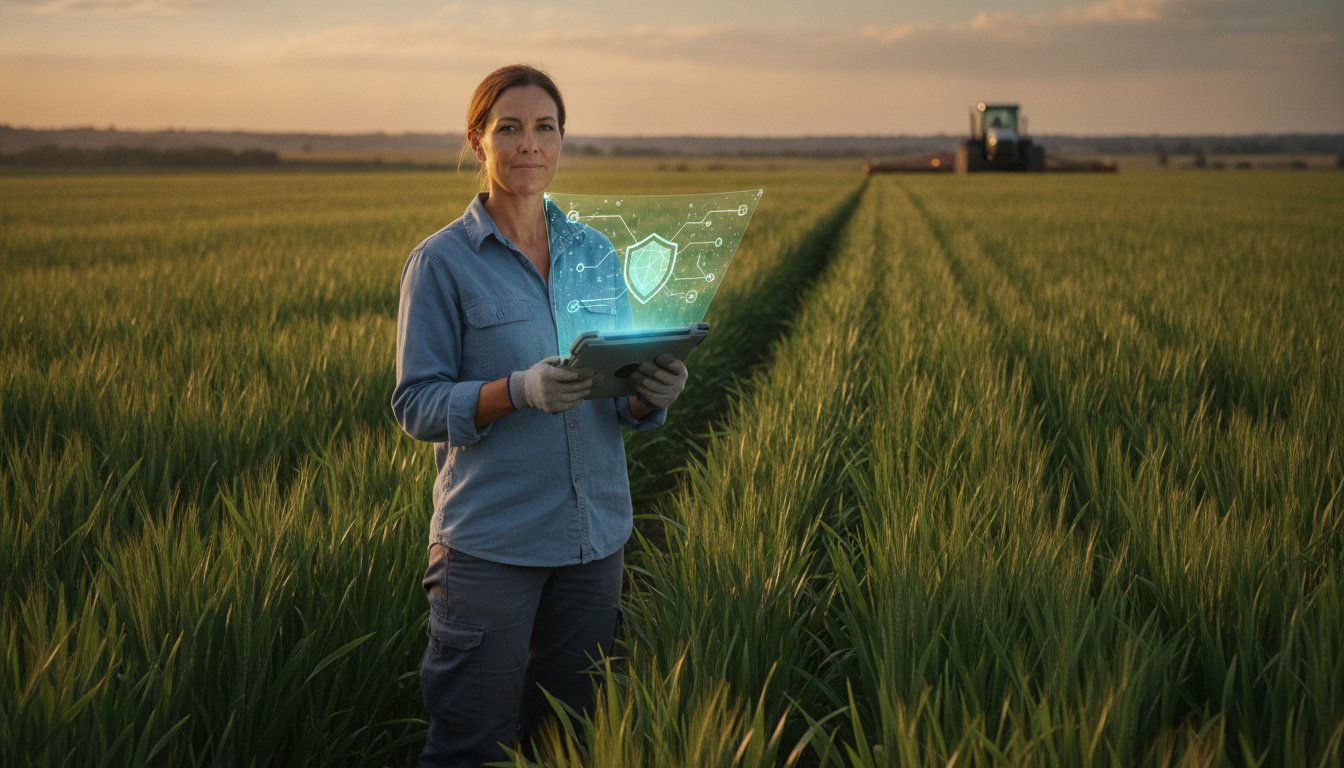
Did you know that the average cost of a cybercrime for an Australian small business has climbed to $56,600? For a primary producer in the Darling Downs or Lockyer Valley, that isn’t just a technical glitch; it’s a direct threat to your harvest and your livelihood. As you adopt more AgTech to stay competitive, the complexity of cybersecurity for agricultural businesses QLD becomes a genuine concern. It’s perfectly normal to worry about operational downtime or wonder how to keep those remote IoT sensors safe when the nearest IT shop feels a world away from your gate.
We understand that your farm’s machinery and data are the backbone of your business. You deserve a clear, reliable way to protect your assets without needing a degree in computer science. This article provides a practical 2026 checklist tailored specifically for the Queensland agricultural sector. It focuses on shielding your operations from ransomware and ensuring your systems stay resilient during the busiest times of the year. We’ll explore how to secure your network, manage your hardware upgrades, and establish a local support plan that keeps your farm running smoothly, no matter what digital challenges come your way.
Key Takeaways
- Map your entire farm network to identify hidden vulnerabilities in both your office computers and remote paddock sensors.
- Learn how to separate your automated machinery from your home Wi-Fi to prevent a single breach from halting your entire operation.
- Discover why Multi-Factor Authentication and off-site data backups are essential tools for cybersecurity for agricultural businesses QLD in 2026.
- Understand the difference between Information Technology (IT) and Operational Technology (OT) to better protect your livestock records and machinery.
- Find out how local, on-site IT support in the Darling Downs and Lockyer Valley can provide a faster response when your technology fails.
Why Cybersecurity is Critical for QLD Agriculture in 2026
Agricultural cybersecurity isn’t just about protecting your farm office computer; it’s about securing every digital heartbeat of your operation. In 2026, this means safeguarding livestock pedigrees, sensitive financial data, and the automated machinery that keeps your business profitable. As we see more connectivity across regional Queensland, the risks for cybersecurity for agricultural businesses QLD grow. Every remote sensor and GPS-guided tractor is a potential entry point for hackers looking for a way in.
To better understand the global shift toward protecting our food systems, watch this helpful video:
Many regional producers believe they’re too small to be noticed. This is the “low-hanging fruit” myth. Cybercriminals often target smaller businesses because they expect weaker defenses. They aren’t just looking for money; they’re after intellectual property or the ability to cause supply chain chaos. This risk even extends to the emerging field of cyberbiosecurity, where the intersection of digital systems and biological data becomes a target for those wanting to disrupt our food security.
The Cost of Downtime During Peak Seasons
A cyber attack doesn’t just steal data; it stops work. If a ransomware attack locks your precision agriculture data during a critical harvest window, the financial loss is immediate. For a Darling Downs grain farm, operational resilience means having the redundant systems and local cyber security support in place to ensure a digital failure never results in a crop left in the paddock. Losing access to soil moisture data or yield maps can set your planning back by years.
Supply Chain Vulnerabilities
Your farm is a vital link in a much larger chain. By 2026, many major distributors and international exporters require proof of robust security before they sign a contract. Secure data sharing is now a baseline requirement for market access. If your systems are compromised, you risk spreading that infection to your partners. This can lead to cancelled contracts and long-term damage to your professional reputation within the QLD agricultural community. Protecting your data is now as essential as maintaining your fences.
Assessing Your Digital Footprint: From the Office to the Paddock
Before you can lock the digital gate, you need to know exactly what’s inside your fence. Most modern farms are more connected than ever. Whether you rely on an NBN fixed wireless link or a satellite connection like SkyMuster, every device that accesses the internet is a potential entry point. Mapping your digital footprint means identifying every laptop, smartphone, and automated system on the property. This visibility is the foundation of cybersecurity for agricultural businesses QLD.
It’s helpful to distinguish between Information Technology (IT) and Operational Technology (OT). Your office computer used for BAS and payroll is IT. Your automated grain dryer or GPS-guided tractor is OT. Both systems are vital, but they often communicate differently. Regional connectivity in Queensland comes with unique challenges, as satellite and fixed wireless links sometimes lack the robust security layers found in metropolitan fiber networks. You must take personal accountability for securing these connections.
Remote access is another area where risks often hide. When you or your staff access farm management software from the field, you’re often using public mobile networks or home Wi-Fi. If these connections aren’t secure, your sensitive operational data could be exposed to unauthorized users. It’s a risk that’s easy to overlook during a busy harvest, but it’s one that requires a clear plan to manage effectively.
The Farm Office Audit
Your farm office is the command center for your finances and records. Start your audit by checking for outdated PCs, laptops, and even printers. Hardware that’s more than a few years old may struggle to run the latest security patches. If your system is sluggish, it might be time for Hardware Upgrades to ensure you can run a modern, secure operating system. Protecting your payroll and financial data is much easier when your equipment is up to date. If you’re worried about your current setup, we can provide remote IT support to help you identify which machines need attention.
Field Technology and Remote Sensors
AgTech has moved into the paddock with moisture probes, soil sensors, and weather stations. Many of these IoT (Internet of Things) devices are installed and then forgotten. This “set and forget” mentality is dangerous. If a sensor doesn’t receive regular firmware updates, it becomes a weak link in your chain. Ensure the data link between your paddock hardware and the cloud is encrypted and secure. Changing default passwords on new equipment immediately upon installation is a simple but effective way to protect your data from being intercepted.
The 2026 Cybersecurity Checklist for QLD Primary Producers
Securing a farm requires more than just high-level theory; it takes practical, everyday actions. For cybersecurity for agricultural businesses QLD, the best defense is a consistent routine. Start by enabling Multi-Factor Authentication (MFA) on every sensitive account. This includes your banking portals and any cloud-based farm management software. It’s a simple step that stops most unauthorized access attempts in their tracks. If a hacker steals your password, MFA provides that vital second layer of protection that keeps them out of your records.
Regular hardware maintenance is just as critical as your machinery’s logbook service. Don’t skip firmware updates for your office PCs or AgTech sensors. Think of these updates as digital fencing. Just as you’d repair a hole in a boundary fence to keep stock in, these updates patch holes in your software to keep intruders out. This applies to everything from your office router to your automated irrigation controllers. Many primary producers in the Darling Downs rely on older hardware that may no longer receive these updates. In these cases, we often suggest a hardware review to see if a simple upgrade could significantly improve your security.
If you’re employing seasonal workers, take ten minutes during their induction to show them how to spot a phishing email. A single clicked link can compromise your entire network. Finally, write down a basic Incident Response Plan. This doesn’t need to be complex. It just needs to list the immediate steps to take if you see something suspicious. Disconnecting the affected machine from the internet and contacting your local IT partner should be at the top of that list. Having these steps ready prevents the panic that often follows a cyber breach.
Password Management and Access Control
Move away from short passwords that are easy to guess. Instead, use long passphrases that combine several unrelated words. They’re harder for computers to crack but easier for you to remember. When contractors or seasonal staff finish their stint, revoke their digital access immediately. Leaving “ghost” accounts active is a major security risk. If you suspect a device has been compromised, professional Virus and Malware Removal is the only way to ensure your network is clean again.
Data Backup and Business Continuity
We recommend the 3-2-1 backup rule. Keep three copies of your data, stored on two different formats, with at least one copy kept off-site or in the cloud. This ensures that even if a fire or a ransomware attack hits your main office, your records are safe. Don’t just set it and forget it. Test your backups every few months to confirm you can actually restore the files. While we offer expert Data Recovery Services, having a working backup is always the faster and more reliable path back to business as usual.

Securing AgTech and IoT: Protecting Automated Systems
Automation is no longer a luxury for Queensland farms; it’s a necessity for efficiency. However, every automated feeder, irrigation pivot, and moisture probe adds a new layer to the cybersecurity for agricultural businesses QLD landscape. One of the most effective ways to protect these systems is through network segmentation. Don’t run your precision ag equipment on the same Wi-Fi network you use for the home office or the kids’ streaming. By keeping your farm machinery on a separate, dedicated network, you ensure that a breach in one area doesn’t automatically compromise your entire operation. This simple separation acts as a digital firebreak for your business.
When you install new AgTech, change the default credentials immediately. Manufacturers often ship devices with generic passwords like “admin” or “1234,” which are the first things a hacker will try. It’s also vital to hunt for “ghost devices.” These are old sensors or controllers that are no longer in active use but are still connected to your network. If they don’t receive updates, they become open doors for intruders. Removing these obsolete devices reduces your attack surface and keeps your network streamlined. Securing automated irrigation and feeding systems is especially critical, as remote tampering could lead to livestock health issues or wasted water resources.
Tractor and Machinery Security
Modern tractors are essentially rolling data centers. Protecting their GPS and guidance systems is critical, as signal jamming or spoofing can lead to costly errors in the field. Ensure your fleet management software is always running the latest version to protect against known vulnerabilities. Don’t forget about physical security either. Diagnostic ports on your machinery can be used to bypass digital locks, so keep your equipment in secure sheds when not in use. This simple layer of protection prevents unauthorized physical access to your tractor’s brain, ensuring your guidance data remains accurate and reliable.
Drone and Aerial Tech Protection
Drones provide invaluable mapping data, but the link between the drone and your controller needs to be secure. If this data link isn’t encrypted, someone else could potentially intercept your aerial imagery or even take control of the flight. Basic encryption for your agricultural data ensures that your yield maps and crop health assessments remain private. Managing the security of this aerial tech is just as important as the flight itself. If you’re unsure how to secure your AgTech network or need help segmenting your Wi-Fi, contact Aspire Computing for a professional on-farm assessment.
Local IT Support: Securing the Darling Downs & Lockyer Valley
When technology fails in a regional area, you don’t want to be stuck on hold with a call center in another state. Local expertise is vital because we understand the specific connectivity challenges of the Lockyer Valley and Darling Downs. Whether it’s a finicky NBN satellite link or a complex network of IoT sensors across the paddock, having a partner who can drive to your gate makes all the difference. This personal touch is the missing piece in many national programs for cybersecurity for agricultural businesses QLD, which often lack a physical presence in regional areas.
On-site support allows us to see the physical reality of your farm office and network setup. We can identify if a router is poorly placed or if a piece of hardware is physically vulnerable in a way that a remote scan would never catch. This “boots on the ground” approach reduces the anxiety that comes with technical failures. You get a reliable expert who takes personal accountability for your systems, ensuring your farm stays operational when it matters most.
Support for Toowoomba and Surrounding Regions
Based in Toowoomba, we’ve been serving the local community since 1999. Our long history in Computer Repairs Toowoomba means we’ve seen every type of technical glitch imaginable. From hardware failures in Newtown to complex network issues on remote stations across the broader Darling Downs, we provide fast, local fixes. We specialize in tailored IT solutions for small agricultural businesses and home offices. We know you don’t need enterprise-level complexity; you need reliable, secure systems that just work so you can focus on your livestock and crops.
Getting Started with a Cyber Health Check
A professional cyber health check is the most proactive step you can take to protect your farm’s future. During this assessment, we look at your entire digital footprint, from the office printer to your newest AgTech sensors. We identify vulnerabilities before they can be exploited by hackers. This isn’t about scaring you; it’s about providing a clear, prioritized plan to strengthen your defenses based on your farm’s unique risk profile. We’ll help you decide which upgrades are essential and which can wait, ensuring your budget is spent effectively.
Don’t wait for a technical failure or a security breach to realize the value of local support. Our goal is to provide the operational stability you need to run a modern agribusiness with confidence. If you’re ready to secure your data and machinery, contact Aspire Computing for a reassuring, professional consultation. We’re here to be your local IT partner, ensuring your technology supports your productivity rather than hindering it.
Building a Resilient Digital Fence for Your Property
Securing your operations is no longer a luxury; it’s a vital part of modern farm management. By segmenting your AgTech networks and maintaining a strict backup routine, you protect your harvest from unnecessary downtime. The landscape of cybersecurity for agricultural businesses QLD is constantly changing, but these foundational steps provide the stability your business needs to grow. You don’t have to tackle these technical challenges alone or feel overwhelmed by complex software updates.
With over 25 years of local Toowoomba experience, we understand the unique needs of small agricultural businesses across the Darling Downs and Lockyer Valley. We specialize in practical small business security and provide the on-site regional support you need to feel confident in your systems. Secure your farm today; contact Aspire Computing for a local IT health check. Taking these proactive steps now ensures your data and machinery remain safe for years to come. We’re here to provide the dependable expertise you need to keep your farm running smoothly and securely.
Frequently Asked Questions
Does my small farm in QLD really need a cybersecurity plan?
Yes, every farm regardless of size needs a plan because cybercriminals often target small businesses with weaker defenses. In the 2024-25 financial year, the average cost of cybercrime for Australian small businesses rose to $56,600. A basic plan for cybersecurity for agricultural businesses QLD ensures that a single malicious email doesn’t lock you out of your livestock records or financial data during a busy harvest period.
What is the most common cyber threat to agricultural businesses?
Phishing remains the most frequent entry point for attackers in the agricultural sector. These deceptive emails often target seasonal workers or busy farm managers, leading to ransomware that can paralyze your operations. Because 80% of Australian farms now utilize AgTech, the impact of these threats is much higher than in previous decades. Training your team to spot suspicious links is your first and most effective line of defense.
How do I secure my farm office if I have a slow internet connection?
Security doesn’t require high-speed fiber; it requires smart habits and robust hardware. If you’re on a satellite or fixed wireless connection in the Darling Downs, we focus on securing your local network and implementing offline backup solutions. This ensures your data is protected even when your connection is intermittent. We can perform on-site audits to optimize your router settings and ensure your office PC is running the latest security patches.
Can hackers actually take control of my automated tractor or irrigation?
While rare, it is technically possible if your Operational Technology isn’t properly isolated. Hackers can exploit default passwords on automated irrigation systems or moisture probes to gain access to your network. This is why we emphasize changing default credentials and segmenting your farm machinery onto a separate Wi-Fi network. Taking these simple steps keeps your automated fleet and critical water management systems safe from remote tampering or unauthorized access.
Are cloud-based farm management tools safe to use?
Most reputable cloud platforms are very secure, but they are only as safe as your login habits. You must enable Multi-Factor Authentication on every account to prevent unauthorized access. While these tools offer great convenience for cybersecurity for agricultural businesses QLD, you should still maintain a local data backup. This ensures that even if a cloud provider experiences an outage, you still have access to your critical farm records and mapping data.
What should I do first if I think my farm data has been stolen?
Your first step should be to disconnect the affected computer or device from the internet immediately to stop the spread of the breach. Do not delete any files, as this evidence is needed for diagnostics. You should then contact a local expert for professional virus and malware removal. If your files have been encrypted or deleted, we can also assist with data recovery services to help get your farm office back on its feet.
How often should I update the software on my AgTech devices?
You should install software and firmware updates as soon as they are released by the manufacturer. These updates often contain critical security patches that fix vulnerabilities hackers use to enter your network. For AgTech devices in the paddock, checking for updates once a month is a good habit. If your hardware is too old to receive new updates, it might be time for hardware upgrades to ensure your farm remains protected.
Is there QLD government support for farm cybersecurity improvements?
The Queensland Government frequently offers support through initiatives like Biosecurity in the Boardroom, which is a collaboration with the Queensland Farmers’ Federation. This program encourages primary producers to integrate cybersecurity into their broader risk management strategies. While specific grants change annually, it’s worth checking the Business Queensland website for current digital transformation or resilience funding. We can help you identify which security improvements align with these government standards during a consultation.

B.App.Sc., Cert. Computer Engineering PC Service and Repair
As the owner of Aspire Computing founded in 1999, Chaim Lee has been working for over 20 years as the Leading Computer Technician.
He has a life long interest in electronics, computing, science and technology. He has completed studies and gained qualifications in Applied Science, Computer Repair and Service, Microsoft Installation and Maintenance, Technical Writing, Workplace Training, and Technical Sales Training.

Write a Comment